Trending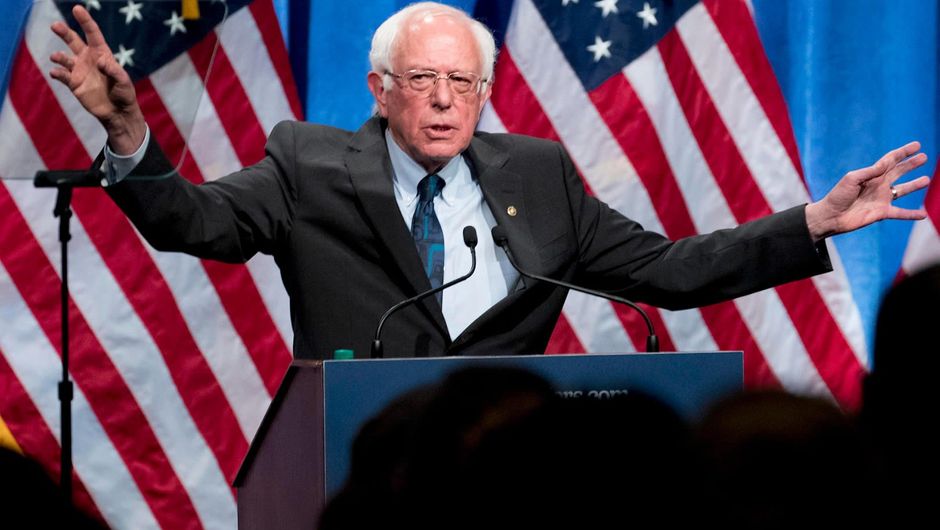
Unionisation is, of course, a big talking point in the gaming industry these days, especially since Activision Blizzard rewarded their employees' efforts in hitting record company revenue with layoffs of of the workforce.
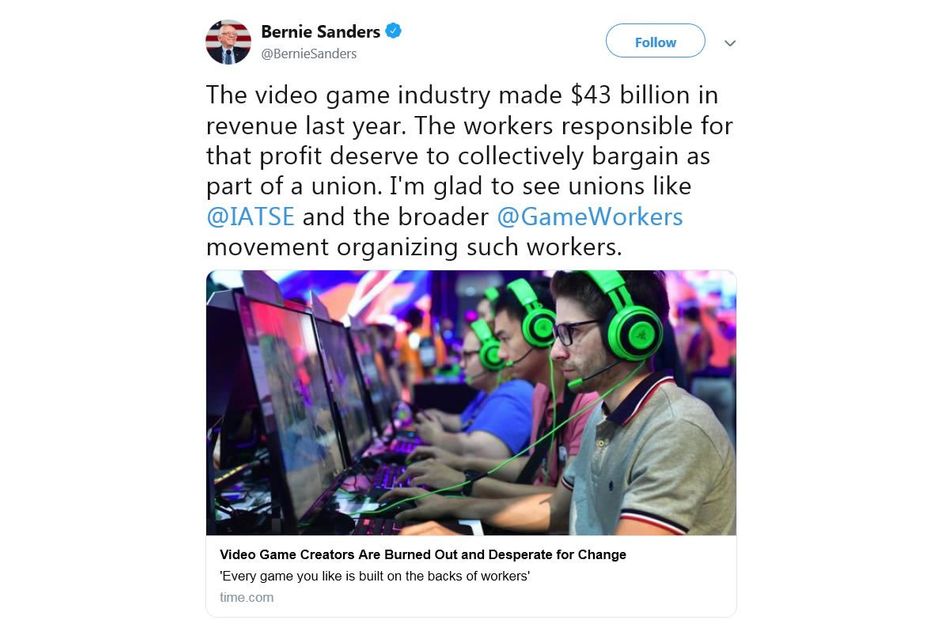
Sanders reminded that the video game industry hit $43 billion in revenue last year, which alone is proof enough we're not talking about a fledgling sector anymore.
"The workers responsible for that profit deserve to collectively bargain as part of a union. I'm glad to see unions like [International Alliance of Theatrical Stage Employees] and the broader [Game Workers Unite] movement organizing such workers", he said.
The gaming industry become an immensely profitable one, but when it comes to worker rights, or more precisely implementation thereof, it still has a long way to go.
Relevant legislatives are often observed in writing only, and when it comes to actual grunt work - they seem to matter very little.
Numerous reports from numerous companies have testified to the fact that official stances have very little to do with how workers are actually treated.
Officially, nobody is forced to do overtime or crunch in the lead up to a launch. In practice, however, nobody wants to dump their workload on the rest of their coworkers, so they just play along. Sometimes it's a few harmless days - other times it's a working hell on Earth.
Interestingly, albeit not unexpectedly, that he thinks unions made most sense when there were more workers than jobs, and when the jobs were low-paying ones, which is not the case here.
"We have fewer workers than we have jobs, and they're high-paying jobs", Zelnick told GamesIndustry, adding, "They make about $100,000 on average, maybe more. It's hard to imagine what would motivate that crew to unionize".