Trending
Pragmata is something I'd confidently call one of the most complete video game experiences I've had in a long time. It's a game that gets almost everything right, and what little it does stumble on never gets in the way of just how enjoyable it is from start to finish.
It's not too short but not too long either, clocking in at around 20 hours for the story and side content, which I generally find to be the sweet spot for anything that isn't a sprawling RPG. And across those 20 hours, I never once felt bored by Pragmata's mechanics. That, for someone who always finds something to moan about, is genuinely high praise.
My opinion on Pragmata shifted constantly during development, which makes where I've landed all the more satisfying. When Capcom first announced it, I was intrigued; the setting looked incredible. When the first gameplay details emerged, I was underwhelmed, expecting something totally different. Then the demo blew me away, even if I still had reservations about the combat going in. Turns out those reservations were largely unfounded.
An unlikely duo on the moon
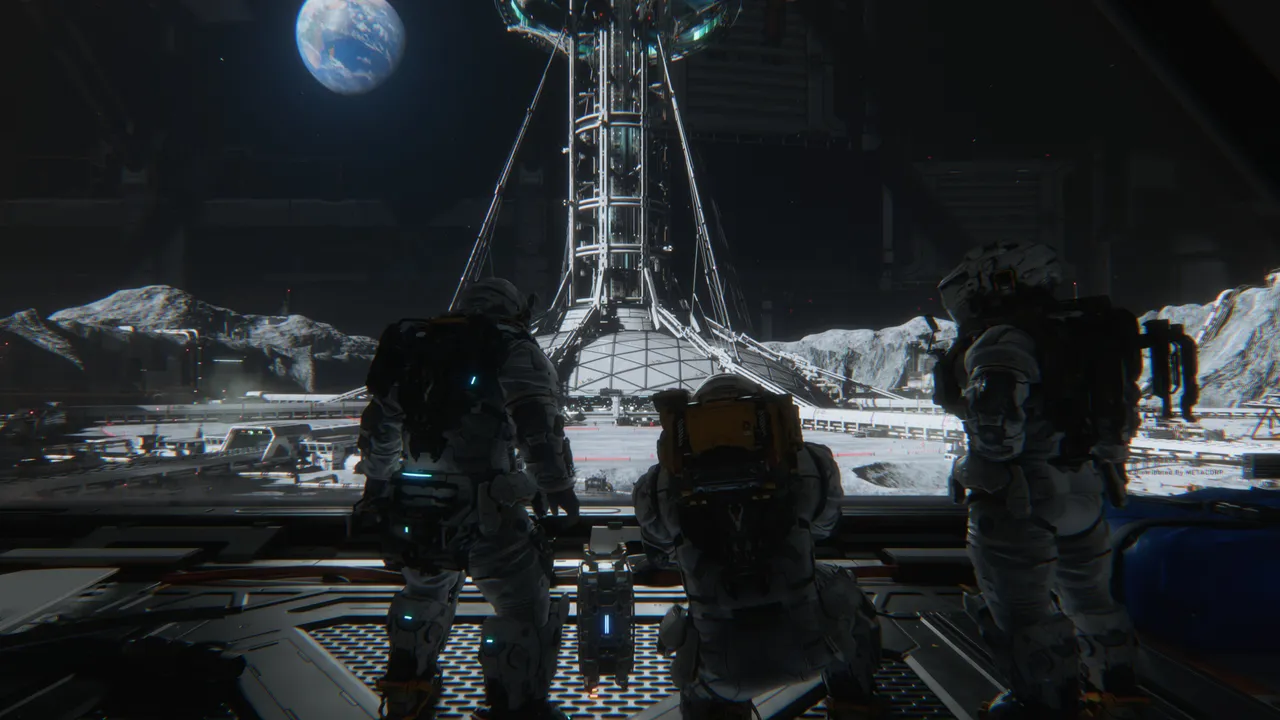
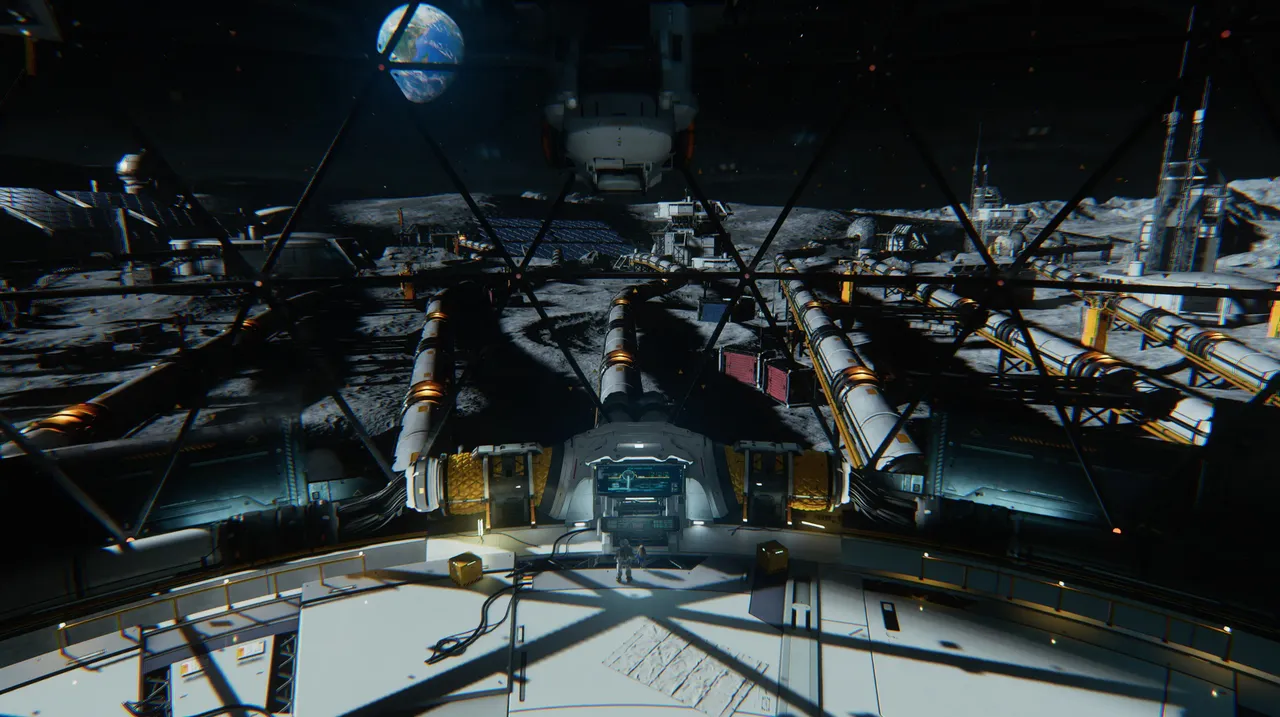
In Pragmata, you play as Hugh, an astronaut engineer sent to the moon with his crew to investigate a large mining base that has gone dark. The base belongs to a Delphi corporation extracting a special lunar ore called Lunum, a material so versatile it can be used to print almost anything: machines, robots, androids, entire cities and forests.
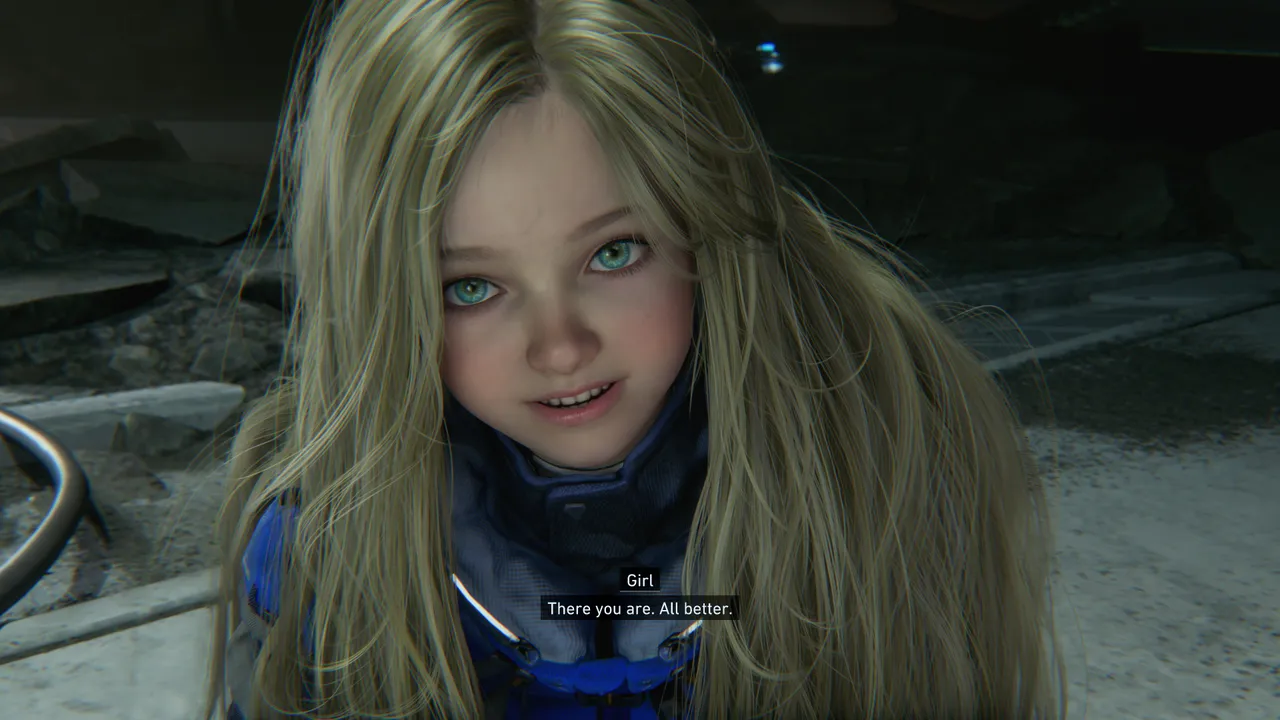
As soon as Hugh and his crew arrive, they notice something is off - no one is there to welcome them, the place is a mess, and not long after, a massive seismic activity kills everyone but him. In the aftermath, he meets the cutest kid you'll ever see in a video game. She turns out to be a fully conscious android, a Pragmata, wandering the base alone. Hugh names her Diana. She latches onto his back, promises to help him get a signal to Earth, and together they set off through a facility that is crawling with hostile androids, with a rogue AI called IDUS seemingly at the centre of it all.
Up until the final third, I'll be honest: I wasn't entirely convinced the story was going anywhere meaningful. There's a persistent feeling in the first half that Pragmata isn't doing quite enough with its incredible setting, and the plot follows a fairly familiar arc of sci-fi films and games - a crew sent to investigate a lost signal, something goes catastrophically wrong, and now you're fighting robots or aliens while trying to get home. It's serviceable, but it doesn't grip you the way the world suggests it should.
That changes. Without spoiling anything, the story picks up considerably as it approaches its final stretch and ends on a much stronger note than it promised early on.
What carries it throughout, though, is the father-daughter relationship between Hugh and Diana. As the game progresses, it becomes genuinely emotional, the bond between the two deepening in a way that feels earned rather than scripted. As an android, Diana has no frame of reference for the things Hugh takes for granted: death, family, and sharing a meal.
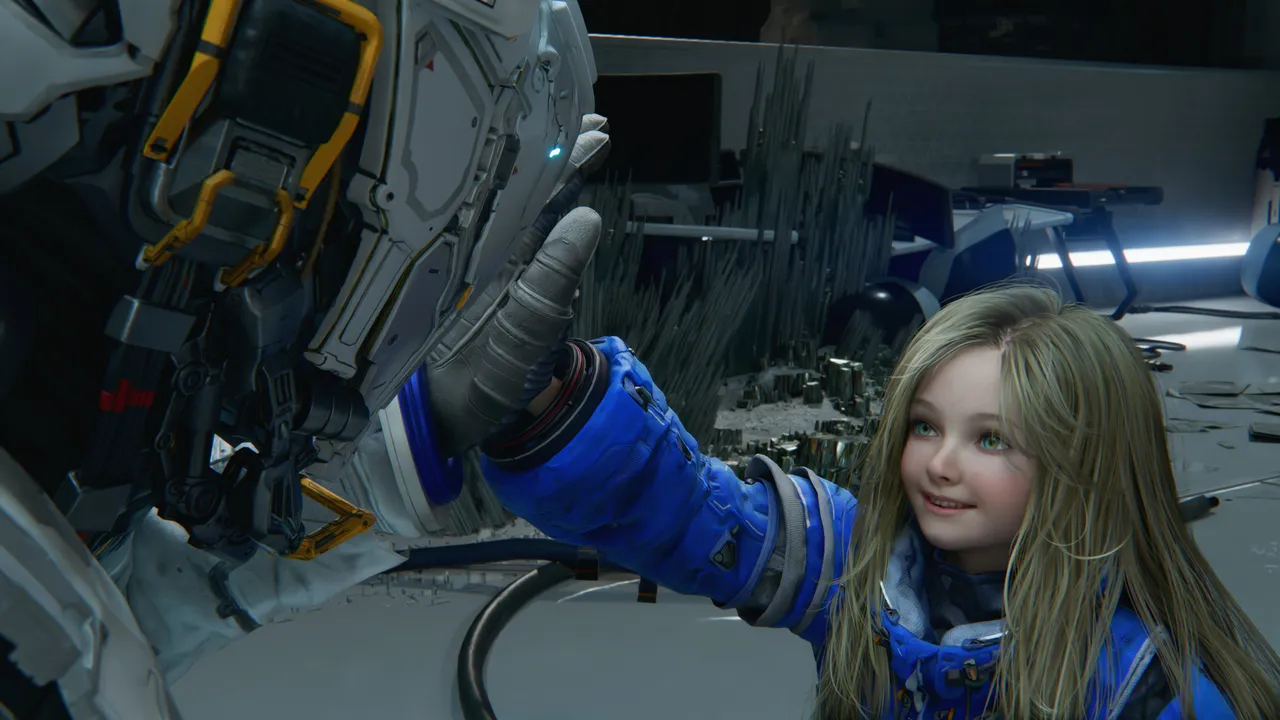
The game uses her curiosity beautifully, creating small philosophical moments where her innocent, literal reactions to Hugh's explanations make you stop and think. Hugh, meanwhile, grows increasingly protective of her as the story develops, though the roles do reverse on occasion. Diana is far from a helpless companion who needs looking after; she's a powerful and essential part of the duo in every sense.
The hacking and shooting combo that makes it all click
The gameplay is where Pragmata truly excels, and the hacking and shooting combination at its core is one of the most intuitive and addictive systems I've encountered in years.
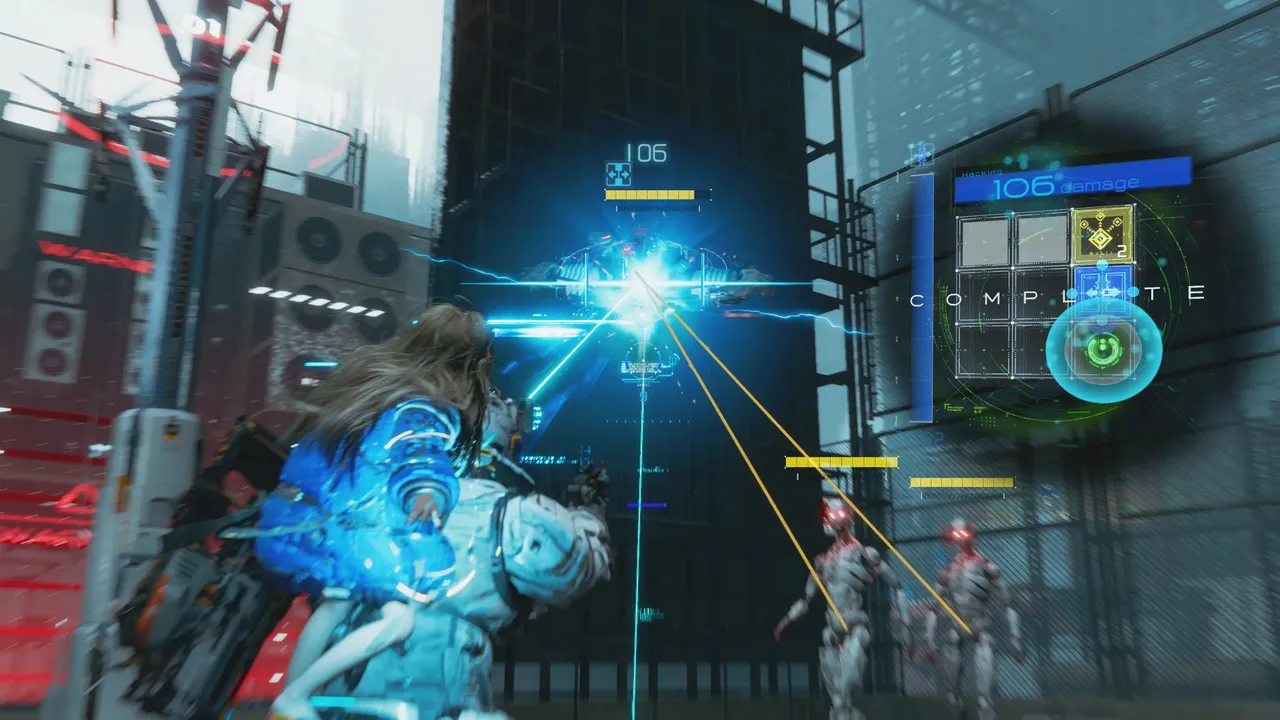
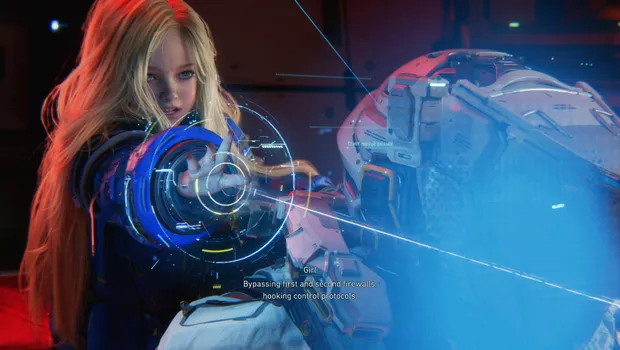
Every combat encounter works the same way: you use Diana to hack an enemy before you can deal any meaningful damage. Shooting without hacking first barely scratches them. The hack itself is a mini-game in which you navigate a grid, collecting blue items that boost your hacking power and trigger special abilities, while avoiding red ones that shut the process down. The goal is to reach the green tile that completes the hack, and the more blue tiles you hit along the way, the more damage Hugh deals once the shooting starts.
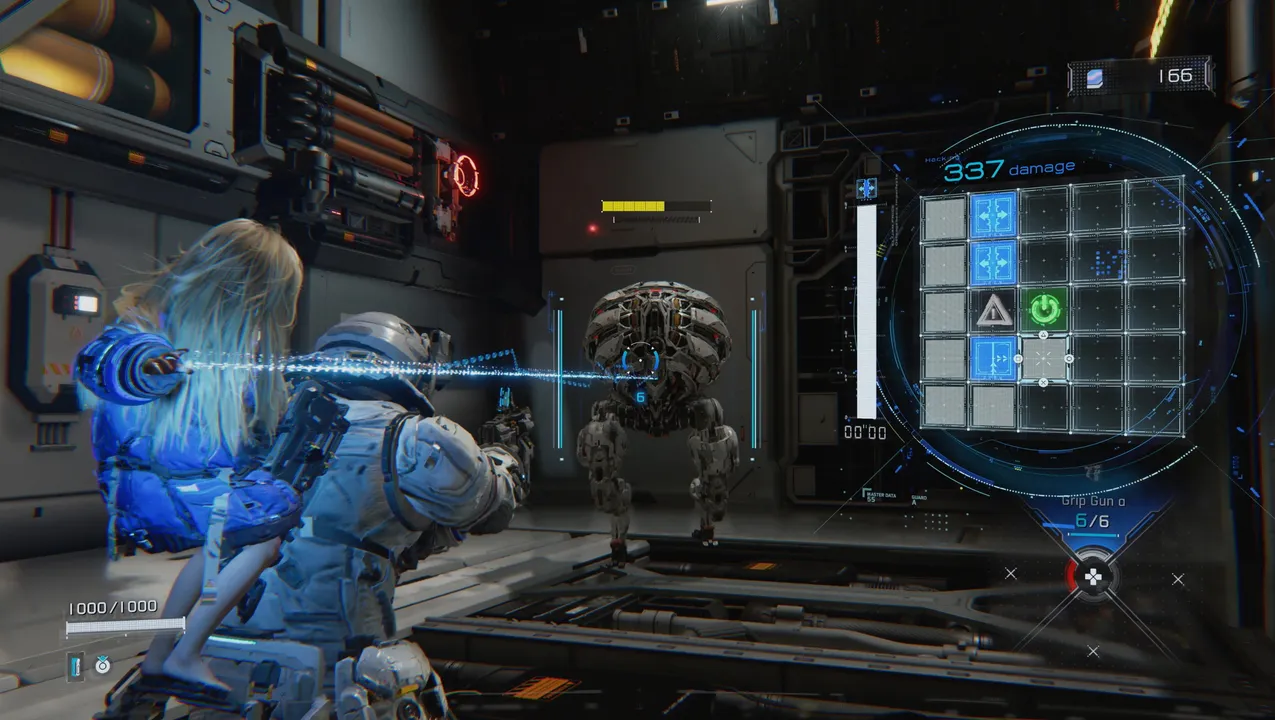
You can equip hacking mods that activate when you pass through them on the grid: stunning enemies, generating heat to open them up for a finishing move, turning them against each other (my personal favourite), and plenty more. It's a system that sounds simple on paper but has genuine depth, and Capcom kept feeding it new ideas all the way to the end. New mods to discover, new enemy types to adapt to, new wrinkles the story introduces that I can't go into here. Not once did I want it to be over.
For those who really aren't keen on the hacking side, there's an equippable ability that automates the process entirely, leaving you to focus purely on the shooting. It's a thoughtful inclusion.
On the shooting side, Hugh has a solid arsenal at his disposal: sci-fi takes on shotguns, assault rifles, pistols, laser guns, rocket launchers and more. Crucially, every single weapon feels distinct and worth using. There wasn't one I wrote off. Each had situations where it genuinely shone: the assault rifle for standard humanoid robots, heavier weapons targeting weak spots on larger enemies, the stasis gun or decoy generator when a crowd needed managing. Later in the game, once the upgrades start stacking up, you'll be melting through enemies with some seriously satisfying firepower.
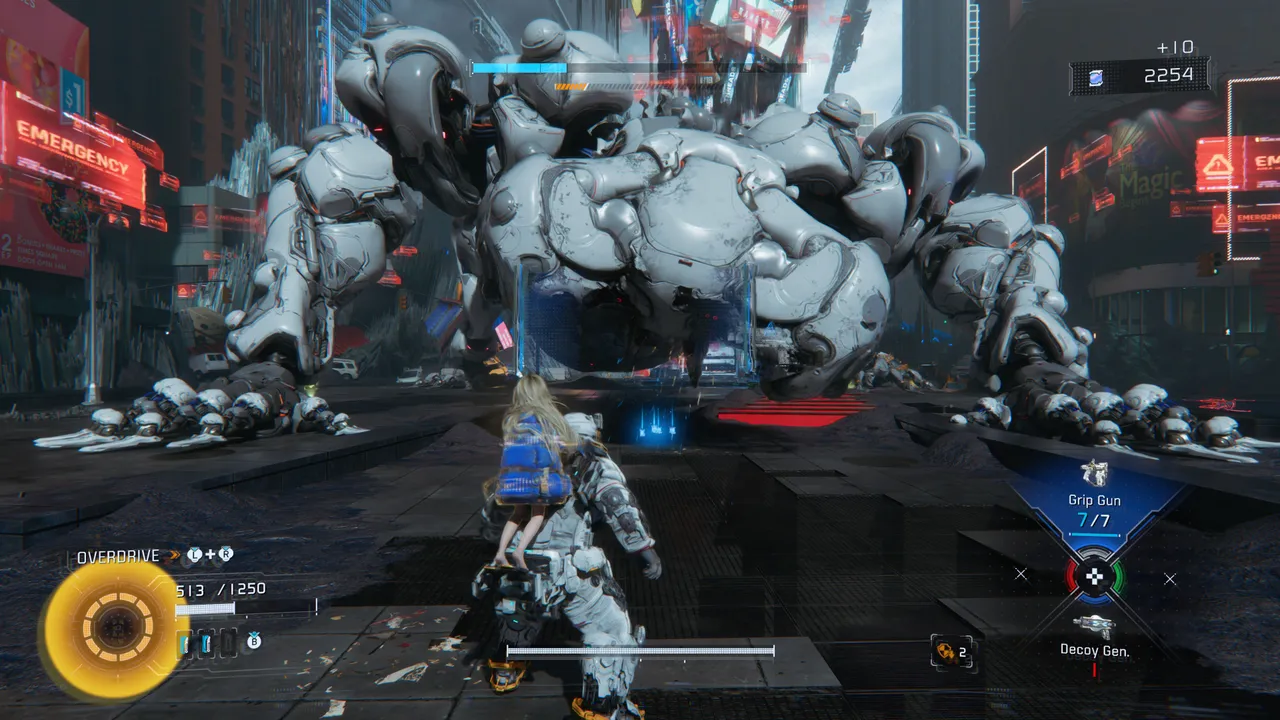
Bosses are where the hacking grid gets genuinely demanding. The grids are larger, the paths more complex, and you're not invincible while the hack is active, which matters because bosses are aggressive and come with some seriously creative attack patterns. That said, on Standard difficulty, they're not especially punishing; I only died once or twice across the entire playthrough, largely thanks to how the game's systems open up the more you engage with them. If you want a real test, beating the game unlocks Lunatic difficulty alongside a new mode that reintroduces the boss fights with faster, more aggressive versions of each encounter.
These require a much more deliberate tactical approach, finding the right window to initiate a hack between attack patterns rather than just reacting. It's still not souls-game territory, but it's a meaningful step up for those who want it. Honestly, I found myself wishing Standard was a touch harder, but the post-game options do a solid job of addressing that.
Progression that never wastes your time
The upgrade system in Pragmata is quietly one of its best qualities. Your suit, weapons, hacking capabilities, mods, even your hub area: all of it is upgradable, and Capcom balanced it so well that I never once felt like I had to grind to make progress. The game naturally provides enough materials to keep you upgrading at a pace that feels right, but there's plenty more to find if you're willing to explore thoroughly. More importantly, nothing in the upgrade tree felt like a waste. Every point I spent felt meaningful, which isn't something I can say about most games with systems like this.
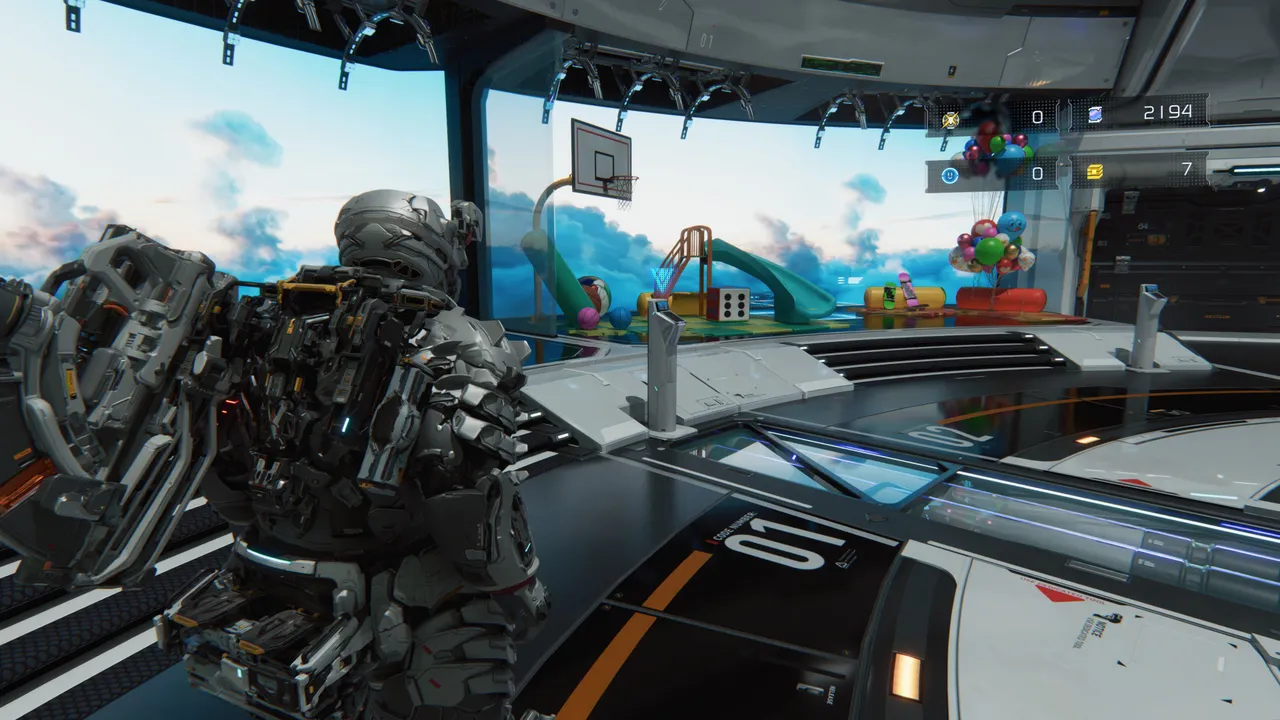
The hub area itself deserves a mention. You can decorate it with collectables called REMs, read earth memories, small objects and scenes from Earth: camping spots, beaches, playground equipment for Diana to use. Watching a sterile, high-tech sci-fi base gradually transform into something warm and lived-in is genuinely lovely. Diana responds to it too, and if you place enough REMs and take the time to talk to her about the things you've encountered on your journey, she'll give you a drawing in return. That moment got me. I won't say more.
Talk to Diana as much as you can, by the way. The conversations are some of the best writing in the game.
Visuals worth showing off
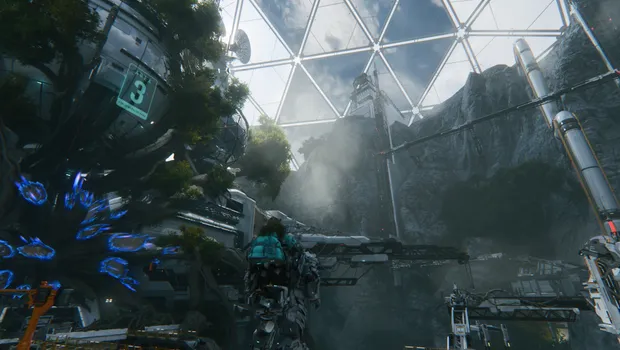
Pragmata is a stunning game. It might look like corridor after corridor from the outside, but the biome variety on offer is genuinely surprising, and most of what Capcom kept out of the official screenshots is worth discovering for yourself.
I played on PC with path tracing enabled for the best possible visuals, and on an RTX 4080 with a Ryzen 7800X3D, it's a demanding mode. At 4K, max settings, with DLSS set to Performance and Frame Generation active, I couldn't hold a stable 60fps everywhere: enclosed spaces sat comfortably above 70, while open areas and heavier combat sequences hovered between 55 and 60. It's a trade-off, but the results are jaw-dropping, particularly in the way reflections behave across glass and metal surfaces in the game's sci-fi environments.
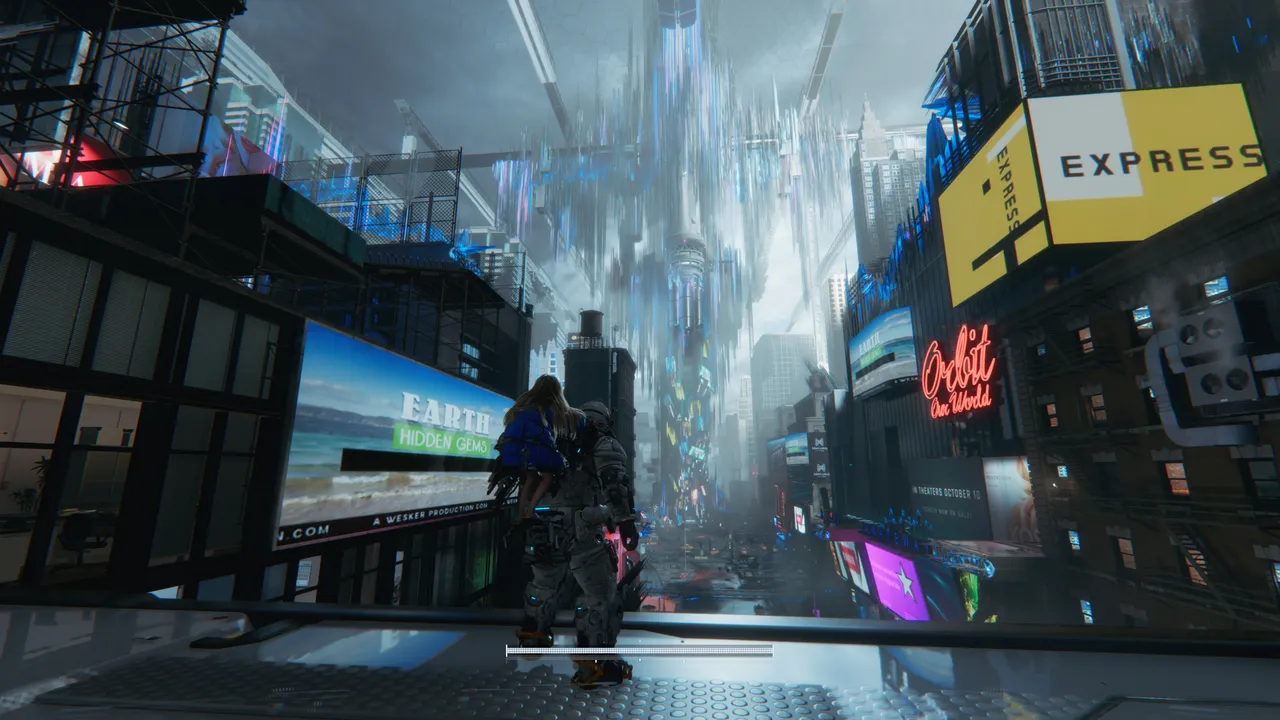
Without path tracing, the game still looks excellent, though turning it off also disables ray reconstruction, which makes standard ray tracing noticeably noisy. My recommendation is either commit to path tracing if your hardware can handle it, or turn ray tracing off entirely.
Audio deserves special praise too. Music is consistently excellent, especially during boss battles. Sound design too - everything from weapons to environmental sounds, enemies, and boss sounds is as good as you'd expect from a publisher of Capcom's pedigree. A nice little touch is the option to play the music in the hub area, while you tune your build, talk or play hide and seek with Diana.
Verdict
I was genuinely surprised by Pragmata, and I don't say that lightly. After the demo raised my expectations significantly, it became one of my most anticipated games of the spring, and Capcom delivered. The combat is continuously excellent, the progression and balance are near-perfect, and the relationship between Hugh and Diana is touching in a way that builds to an ending that genuinely got to me.
The story takes a while to find its footing and leans on familiar sci-fi beats for longer than it should, which is its one real shortcoming. But it gets there, and it never undermines the things Pragmata does brilliantly.
Games like this are rare. It's a reminder of why gameplay and fun factor sit above everything else, and it's one of Capcom's strongest releases in years. I wholeheartedly recommend it, and I sincerely hope it's the start of a franchise.
Pragmata screenshots

The Good
 The emotional relationship between Diana and Hugh
- Exceptional hacking/shooting combo that makes combat fresh all the way until the end
- Fantastic progression and collectables
- Stunning visual presentation, enhanced by path tracing on PC
The Bad
 The story is a bit generic and takes quite a while to get going
- Too easy on Standard difficulty