Trending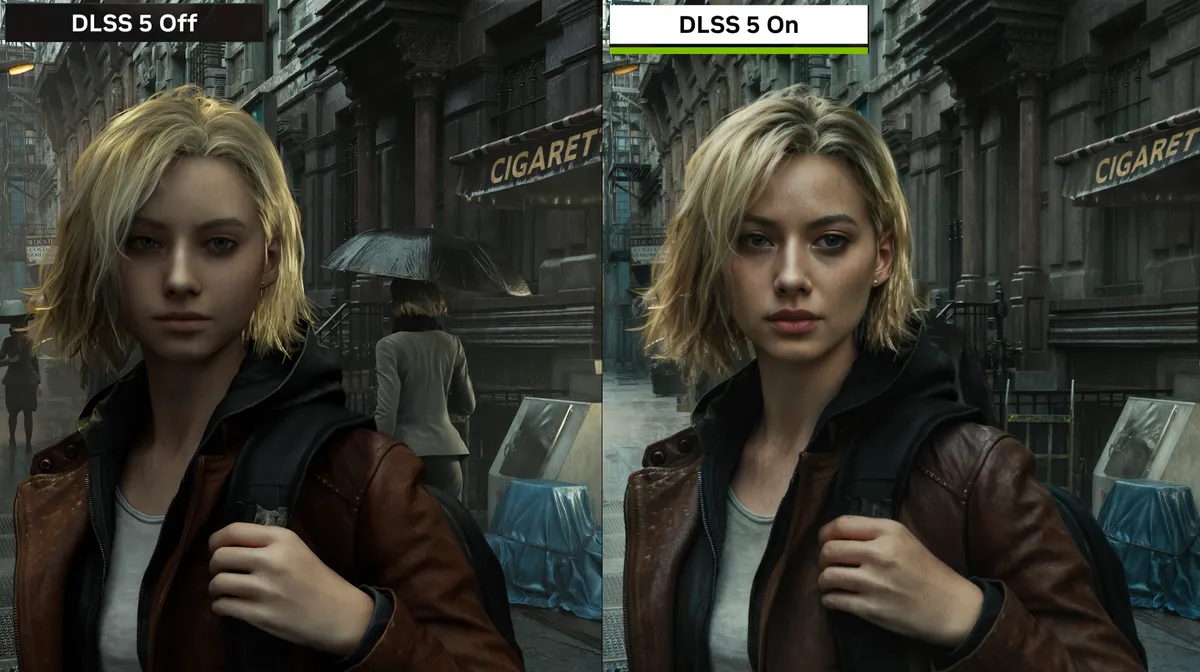

Nvidia just announced the next iteration of their impressive DLSS tech, and on paper, it is genuinely ambitious. Instead of boosting frame rates or generating frames, it uses AI to completely overhaul a game's lighting in real time, applying photo-realistic illumination, subsurface scattering on skin, more convincing hair rendering, and improved ambient occlusion to existing game worlds without changing geometry, textures, or materials.
Some of the games Nvidia showcased include Resident Evil Requiem, Hogwarts Legacy, Assassin's Creed Shadows, Oblivion Remastered, and Starfield. The initial lineup sounds exciting, until you look at the actual comparison screenshots.
Overwhelmingly negative reactions
The community reaction has been swift and overwhelmingly negative. Players have immediately pointed out that DLSS 5 does not simply improve lighting; it appears to fundamentally alter how characters look, stripping away art direction in favour of a hyper-realistic aesthetic that many are comparing to cheap AI photo filters.
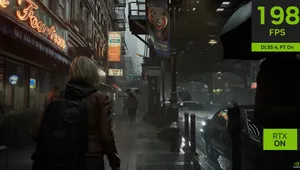
The wizard character from Hogwarts Legacy looks noticeably different, but it is the Resident Evil Requiem comparison that has drawn the most attention. Grace, the game's protagonist, looks like an entirely different person with DLSS 5 enabled, more conventionally attractive, smoother, and completely divorced from the game's original visual identity.
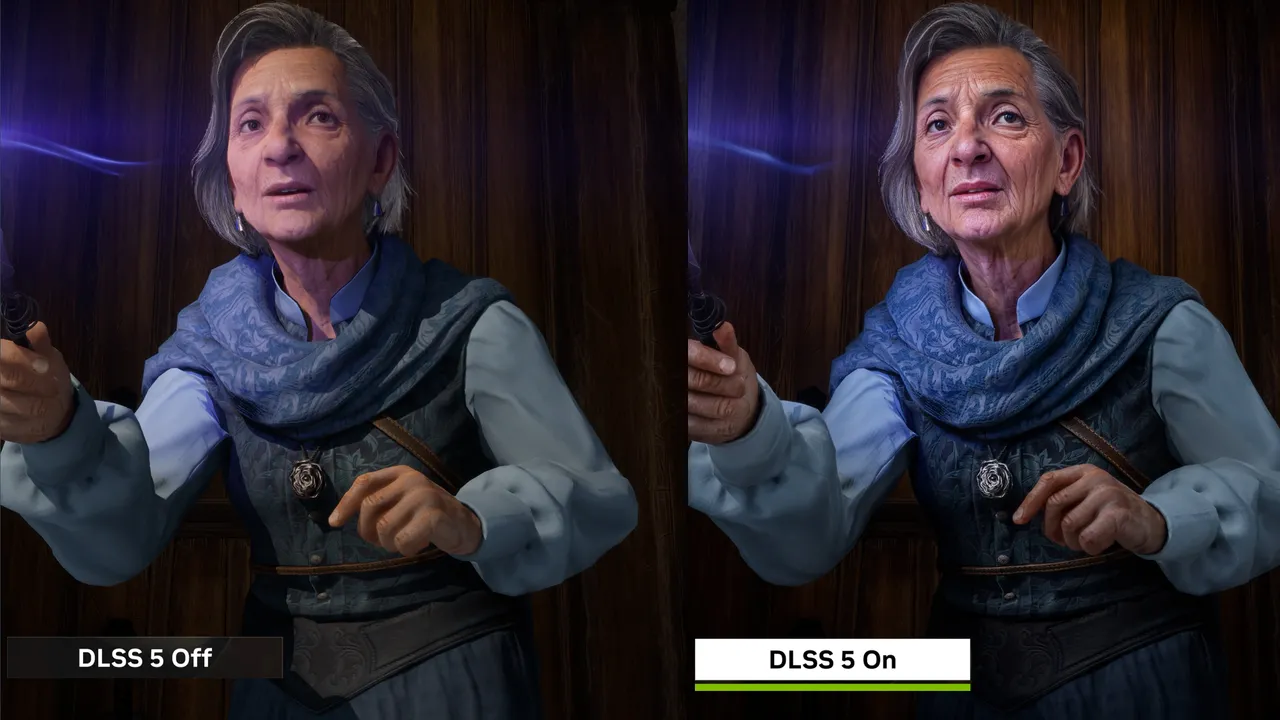
"I thought this video was an April Fool's joke, but it's still March," reads one top comment on Digital Foundry's hands-on video. Another called it "those 'I made the character hot' edits." A third put it more bluntly: "The discrepancy between my emotions after reading the title and after watching the first 20 seconds is still smaller than the discrepancy between the game's artistic vision and the AI slop filter's output."
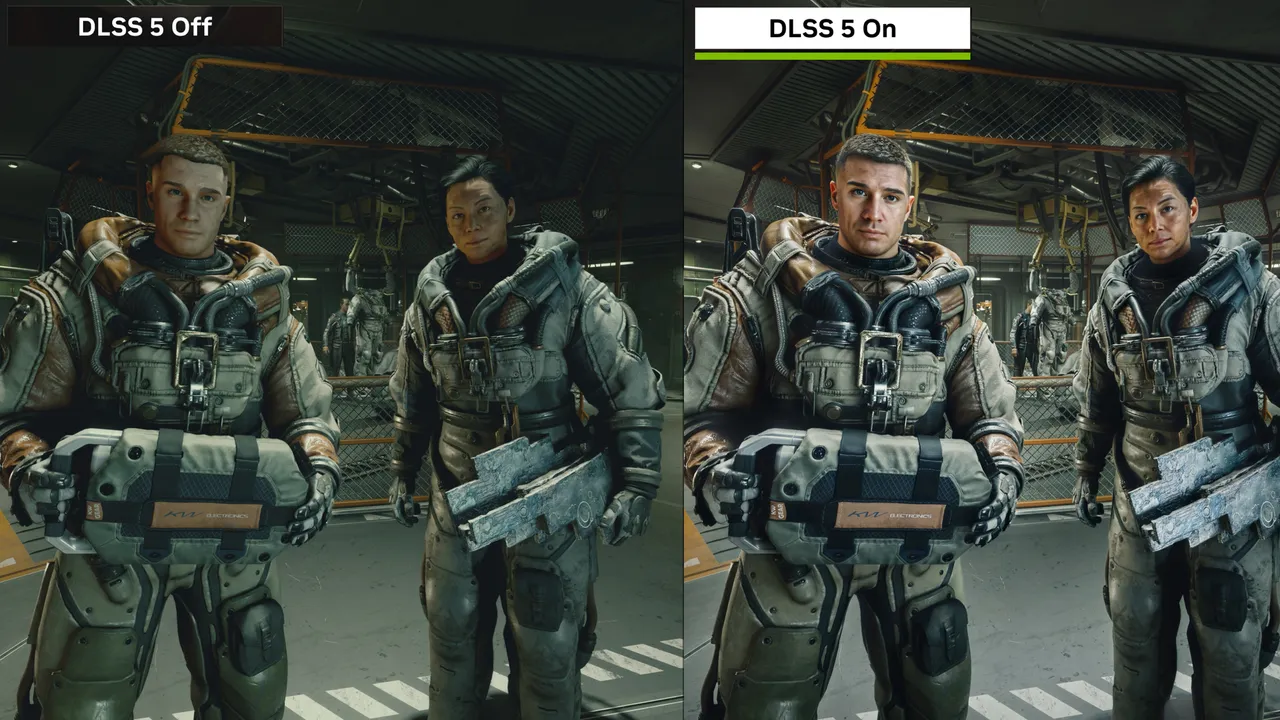
The reaction to Digital Foundry's video is telling in itself. At the time of writing it sits at over 2,200 likes and 1,600 dislikes, a ratio that is highly unusual for DF, a channel that typically commands near-universal goodwill from its technically-minded audience.
Personally, seeing "DLSS 5" announced was genuinely exciting. The idea of AI-driven photo-realistic lighting retrofitted onto existing games is the kind of thing that sounds transformative. But the actual comparisons stopped me cold. Whatever the technology is doing, it is not respecting what the developers made.
Nvidia have not addressed the criticism. DLSS 5 remains on track for RTX 50-series hardware by Fall 2026.