Trending
Moonlight Peaks wasn't on my radar before I picked it up. The concept is an easy sell on its own - a vampire running a farm is the kind of premise that gets attention without trying - but a good concept and a good game aren't the same thing. Novelty like that runs out fast, and what's left has to stand on its own. Here, it does.
You play a young vampire who's walked out on an overbearing father, Dracula, with nothing but a coffin, a three-eyed cat, and a point to prove. You arrive in Moonlight Peaks, a town full of werewolves, witches, and other creatures of the night who aren't exactly rolling out the welcome mat. It's a promising setup, but what makes it work is that the game keeps earning your attention instead of assuming it already has it. I put over 30 hours into it for this review and was still running into new mechanics near the end, which says plenty about how much is actually packed in here.
Life in Moonlight Peaks
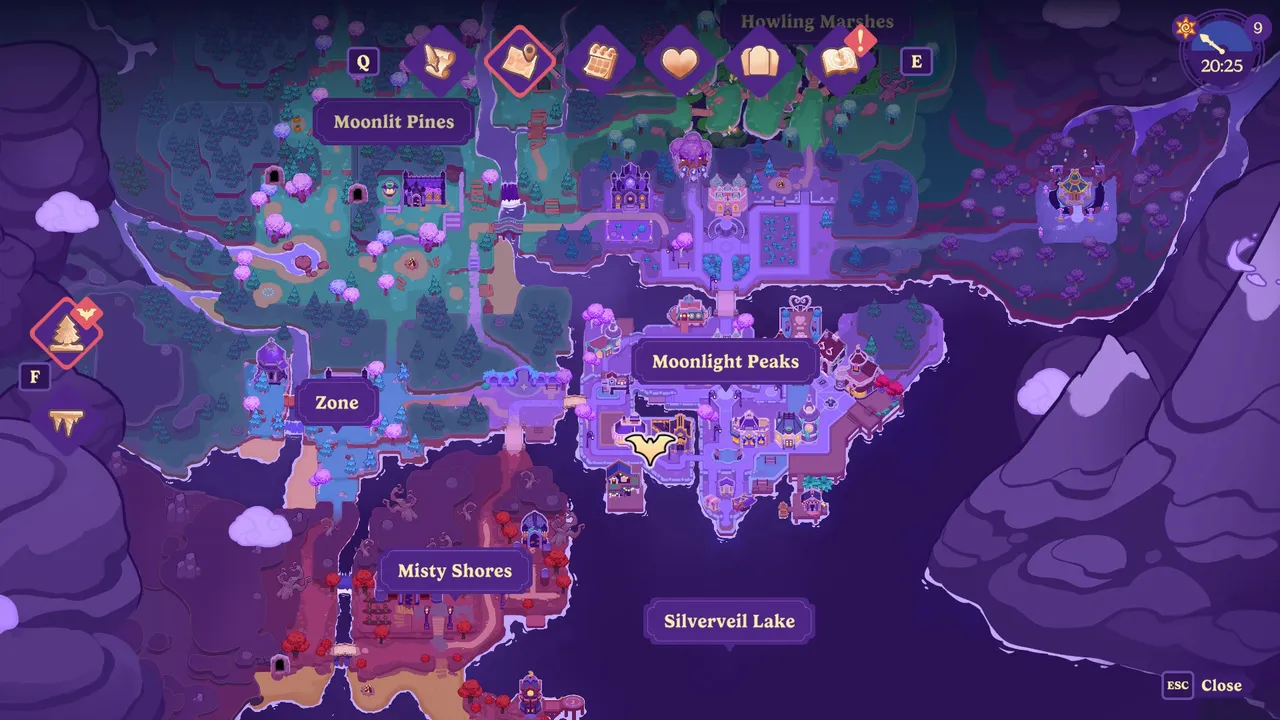
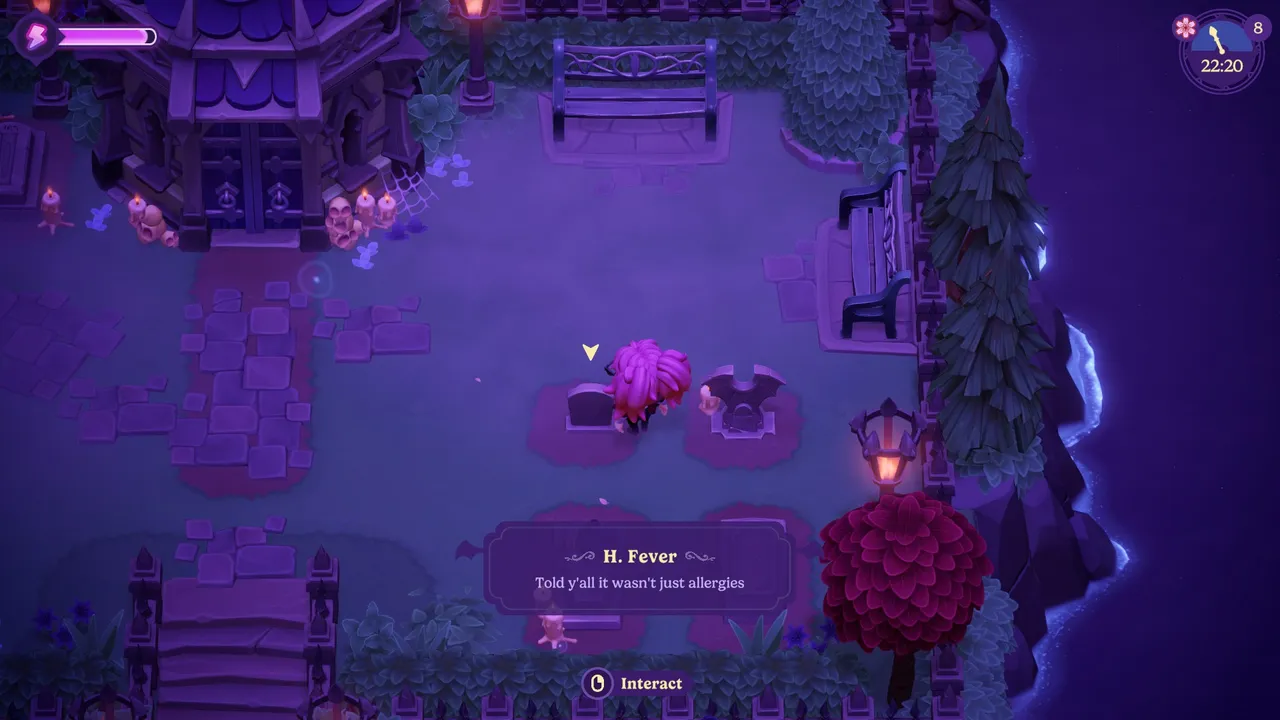
The map is bigger than I expected, split into beaches, woods, and residential streets, with shops like Coffee & Coffins, the Midnight Market, the Broken Lamp pub, and more. You can walk into most residents' homes, which does a lot for the town's sense of place. There's a graveyard worth wandering through too, tombstones doubling as punchlines. One poor soul got taken out by a comet, and another's simply reads: "told y'all it wasn't just allergies."
The humour holds up in the small moments too. Register at the town hall and the mayor whips out a camera, only to remember halfway through that vampires don't show up on photos, so he shrugs and sketches you instead. Little moments like that are all over the place, and they're what convinced me the writers weren't just going through the motions. Same goes for the family drama. Nobody sits you down and explains who hates who, instead you pick it up the way you would in real life, through gossip, side comments, and quests that turn out to be about something bigger, usually with a curse or a family grudge tangled up somewhere inside them. When quests aren't pulling you in a direction, there are caves tucked underground to explore and mine through, giving you somewhere to head on nights you'd rather not farm or catch up with the locals.
Story quests do a good job of teaching you new mechanics, e.g. you learn your cat form during a dinner at the family mansion, woven into the plot rather than dropped in a tutorial, and it feels like a payoff rather than a chore. The town's problems aren't optional noise, you're constantly getting pulled into sorting out one resident's mess or another, and a lot of what you unlock next - new tools, new areas, new abilities - depends on actually following those threads through. Trying to ignore the story and just farm doesn't really work here. The narrative stays tied into the systems, so you end up invested in the town whether you meant to be or not.
That does come with a trade-off. Because so much is gated behind the story, new systems trickle in slowly, and there were stretches where I was waiting on a quest to unlock the next thing. I happen to like the story enough that the pacing worked in the game's favour, it gave me a reason to actually sit through it instead of clicking past it. If you're mainly here for the farm, the slower opening might test your patience.
There are fetch quests and jobs too, this genre never fully escapes those, but most of them point you toward systems you'd want to use anyway.
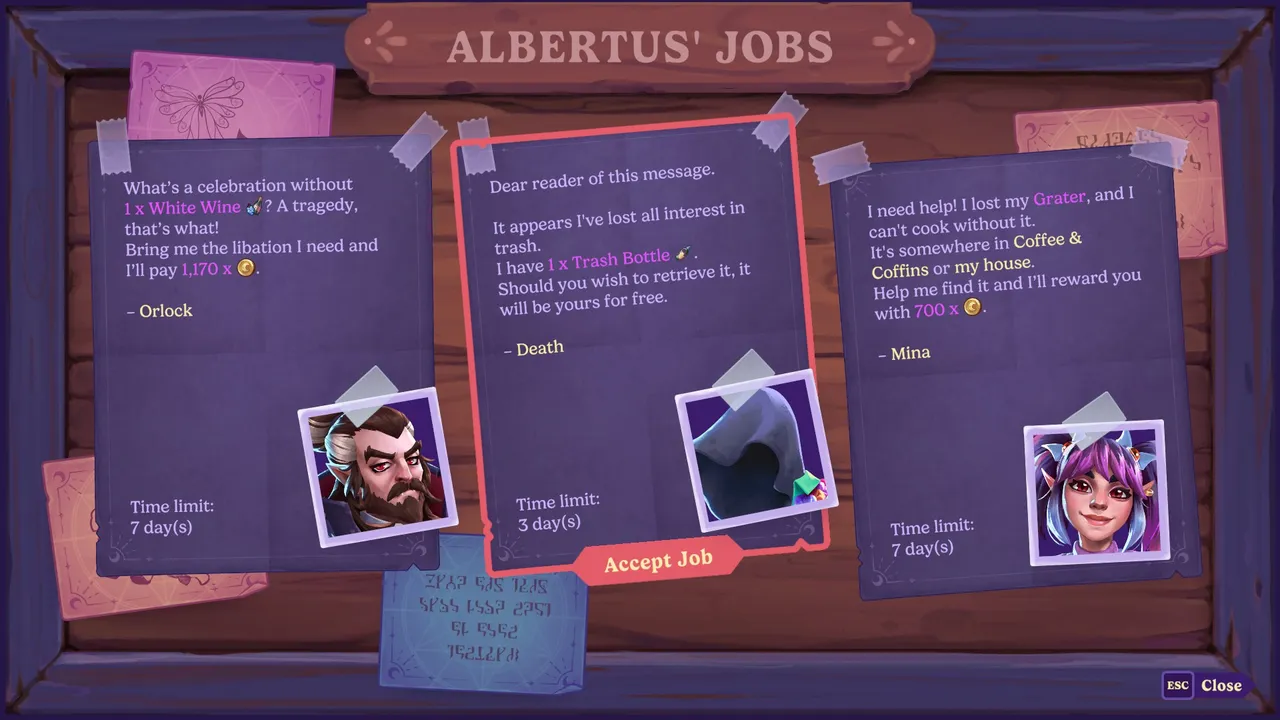
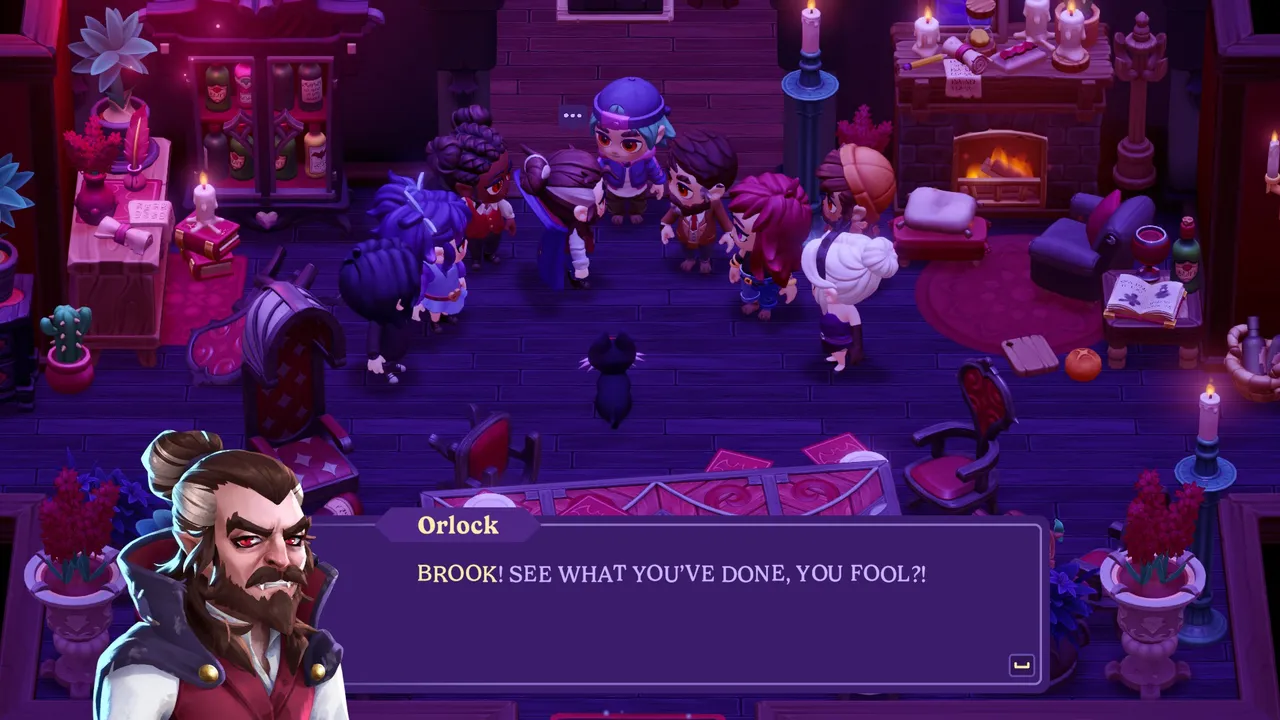
Nearly everyone I talked to had a voice of their own, which is a harder thing to pull off than people give it credit for. There's a real generational split running through the writing: older residents like the wonderfully dramatic Orlock are all old feuds and family drama, while the younger crowd reads distinctly Gen Z. There's a stoner-coded werewolf named Lugo who keeps sneaking off to "eat green leaves" for his stress, and you can connect those dots pretty fast. Deadpan characters, sarcastic ones, quietly kind ones - the whole cast lands somewhere between a modern sitcom and the Addams Family.
Twenty-three romanceable characters is a generous number, and the list doesn't stop at the usual suspects next door. Death itself is on the table, and so is a resident love demon, both written with the same dry humour as everyone else. New faces show up gradually - a character like Pumpkin Head doesn't turn up until autumn - which keeps the town surprising you well past the opening hours.
Take the story stuff away and you're left with crops, livestock, fishing, crafting - the same loop every farming sim fan could play blindfolded - on a generous stretch of land with plenty of room to spread out once you start planning fields, barns, and buildings instead of cramming everything into one corner.
What sets Moonlight Peaks apart is that you live at night. Sunrise turns you into a cloud of bats heading home to your coffin whether you're ready or not, and you rise again the next evening to do it all over. And while most farming sims go bright and sunny, Moonlight Peaks leans into deep purples and shadow that give the whole town a moodier, more nighttime feel, which makes the place feel genuinely its own.
The vampire abilities are where things get interesting. Bat form for exploring, cat form (officially, wonderfully, named Hellkitten form) for actually getting somewhere fast. On a map this size, that speed boost stops feeling like a novelty almost immediately and starts feeling essential. Tools and forms both sit on their own quick-select wheels, and swapping between them stays fast and smooth throughout.
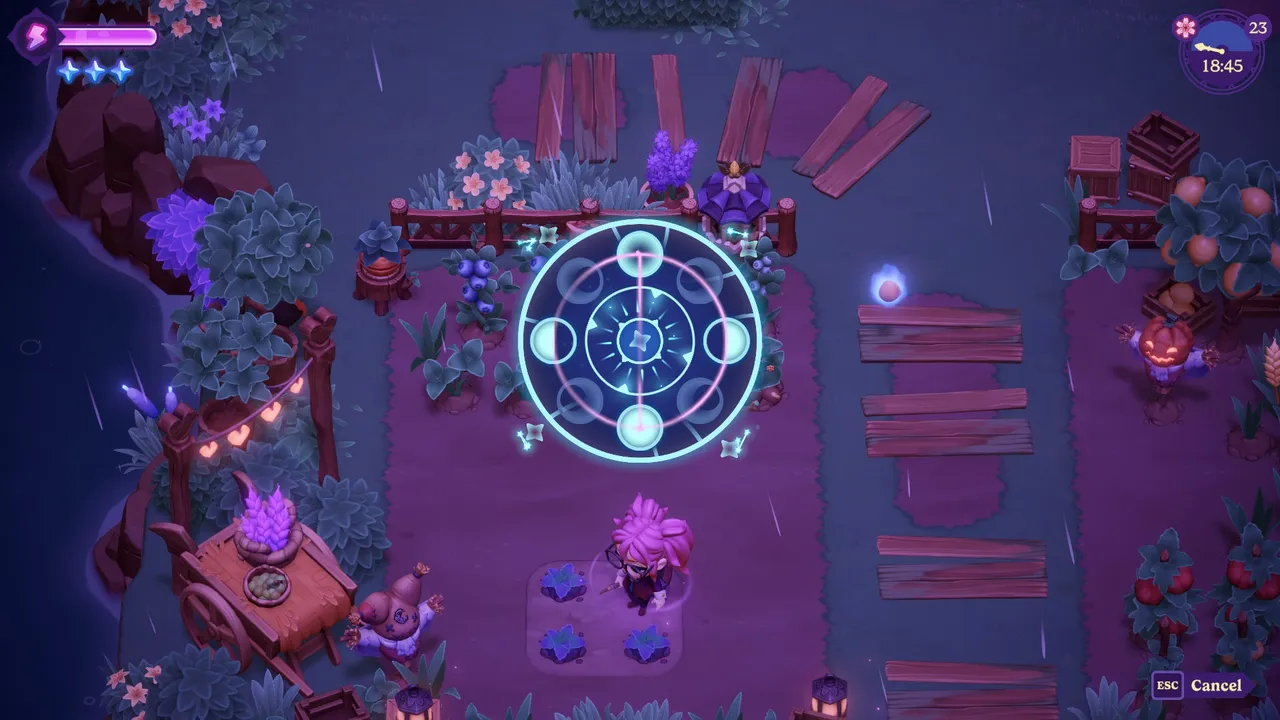
Luna teaches you to farm using magic spells, and casting isn't a menu click - you trace a glyph on screen to pull each one off. You can still farm the old-fashioned way most of the time, but magic sits alongside your normal toolkit rather than replacing it outright, and sometimes it's the only option. Every spell draws on a mana pool you can upgrade at Web of Wonders, and magic crops need spells to grow while ordinary crops don't. Alongside random jobs, farming is your primary way of making money. Run your crops through a Keg, a Mill, or a Jam Maker and they're worth considerably more, making the call between processing and selling raw one of the game's best little puzzles. There's also a magic chest called Chester that auto-sells whatever you dump into it at day's end.
Livestock keeps the joke going. Draculambs, Cowculas, Piggoats and Cheekens all live on your land, giving you fertiliser alongside the usual materials like milk and eggs. Add 53 crops, a full production chain, and a treasure-digging system scattered across the map, and there's a deep web of systems once you start chaining it all together. Seasons add their own pressure: leave a crop in the ground past its season and it just fails.
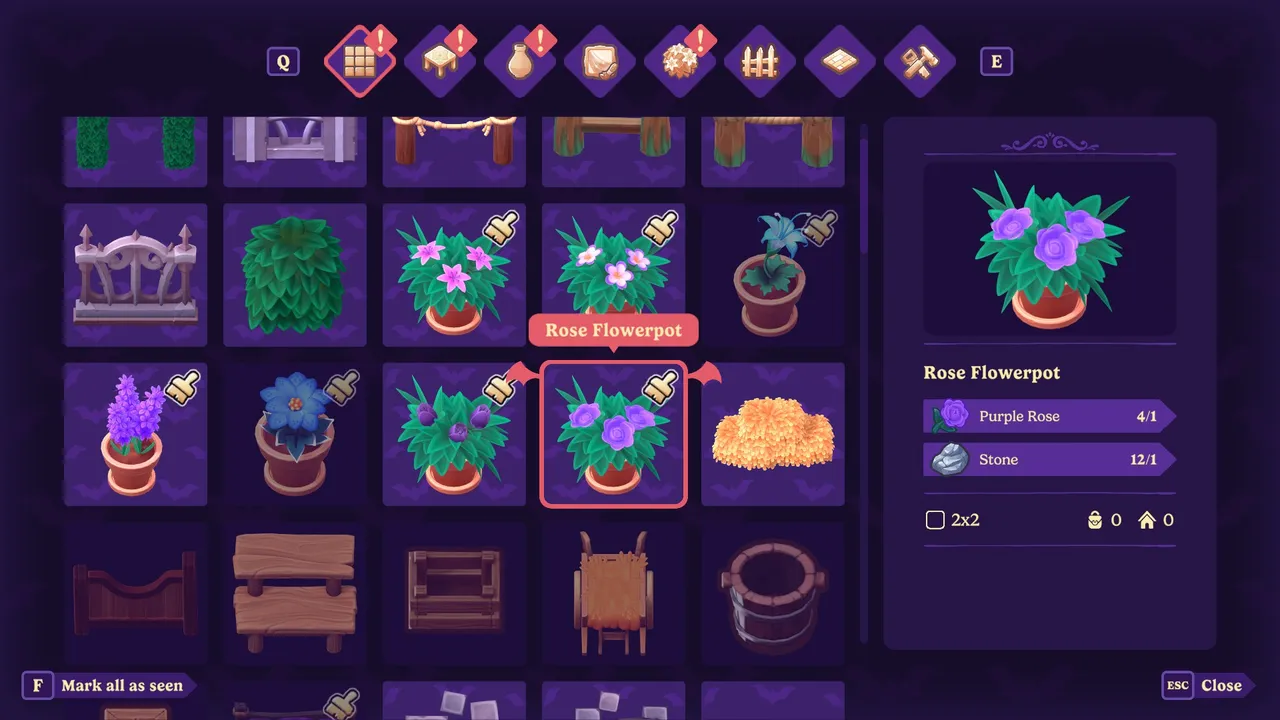
Between the farm and the town, there's a lot of room to put your own stamp on things. Your wardrobe, your house, your buildings, it's all yours to shape, and the game leans hard into that kind of customisation. Don't expect to afford much of it early, though. The economy runs a bit tight, and decorating or upgrading anything meaningful takes a fair bit of saving up first.
An index book keeps track of everything you've learned, and there's plenty to fill it with, alongside pottery, embroidery, and floristry as side activities, plus a card game you can play against the locals. My favourite of the smaller systems, though, is the Soul Blobs: floating skulls scattered around the map that you catch in a net for Death as an ongoing side quest. Catch one and you find out who they were and how they died, same graveyard humour as the tombstones. I'd only caught 13 (out of 100) by the time I stopped counting, and even that was enough to earn a clock from Death that lets you stretch the length of the in-game night. Small gift, but a genuinely useful one.
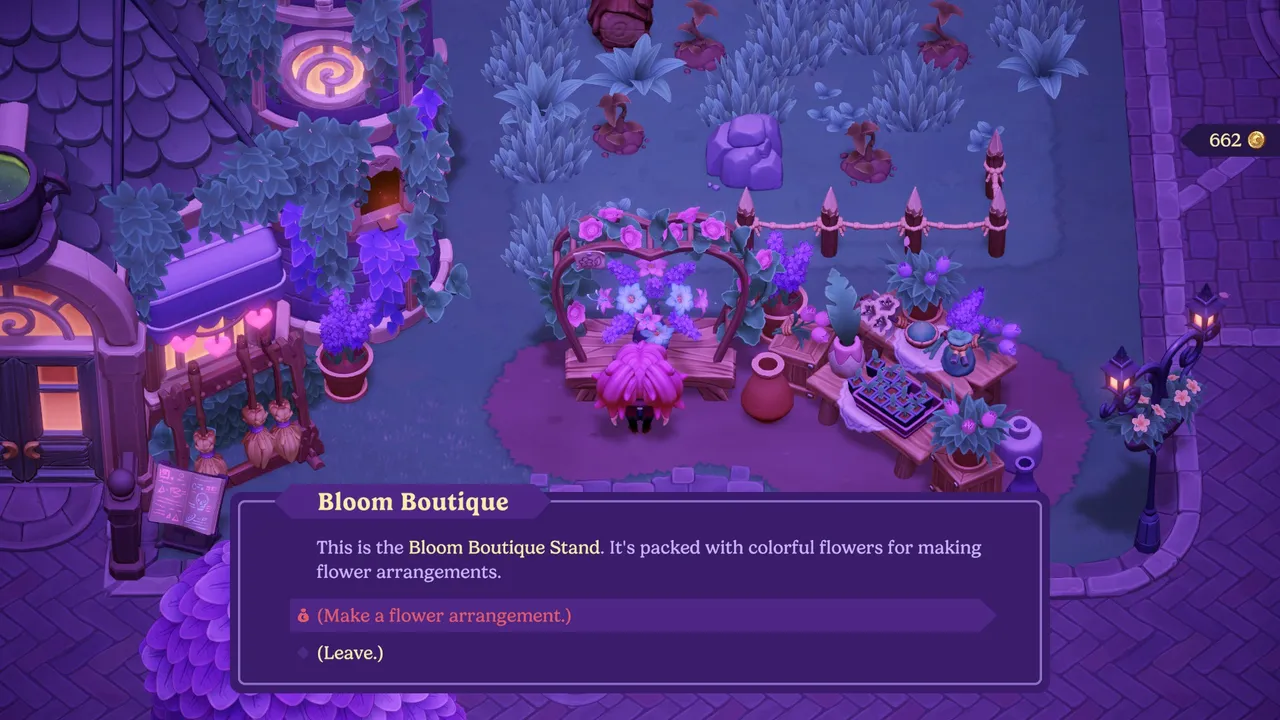
Across more than thirty hours on PC, I didn't hit a single bug, crash, or noticeable glitch, which is exactly what you want from something built for long, relaxed sessions.
Final thoughts
Moonlight Peaks doesn't reinvent the farming sim, and it's not trying to. Underneath the gothic exterior sits a familiar structure of farming, crafting, relationships, and slow progression. What it does instead is use that structure as a foundation, while the vampire setting, the writing, and the cast do the rest.
The world has personality to spare, and there's enough content here to keep you busy for dozens of hours if you let it. But it does ask for patience: the story is a slow burn, the economy keeps your progression deliberately measured, and day-to-day relationships outside the story could use a bit more meat. However, if you want a relaxing farming game with humour, interesting characters, and depth, Moonlight Peaks earns your time.
The Good
 A charming world brought to life by excellent writing, humour, and a lovable cast
- The vampire theme gives a familiar farming sim formula real personality and identity
- Deep progression, rewarding long-term play
- Stable PC performance with no bugs or technical issues
The Bad
 A slow-burn story and demanding economy may test players looking for quicker progression
- Relationships outside of story events could offer more meaningful interactions
- The core farming gameplay remains fairly traditional