Trending
I’ve played my share of metroidvanias over the years, from the more known ones such as Hollow Knight and Silksong, to the lesser known ones such as Well Dweller (can’t recommend this one enough), so when I saw Rin: The Last Child, it seemed interesting to me and I was curious how it turned out. These types of games are always at the top of my lists because you never know what you'll stumble upon, and generally the backtracking that you can do makes the game enjoyable even after you beat it. Or you can be like me, and backtracking to all the parts of the map as soon as you get a new ability, in order to try and get to where you couldn't before (even if you kind of know that you won't be able to).
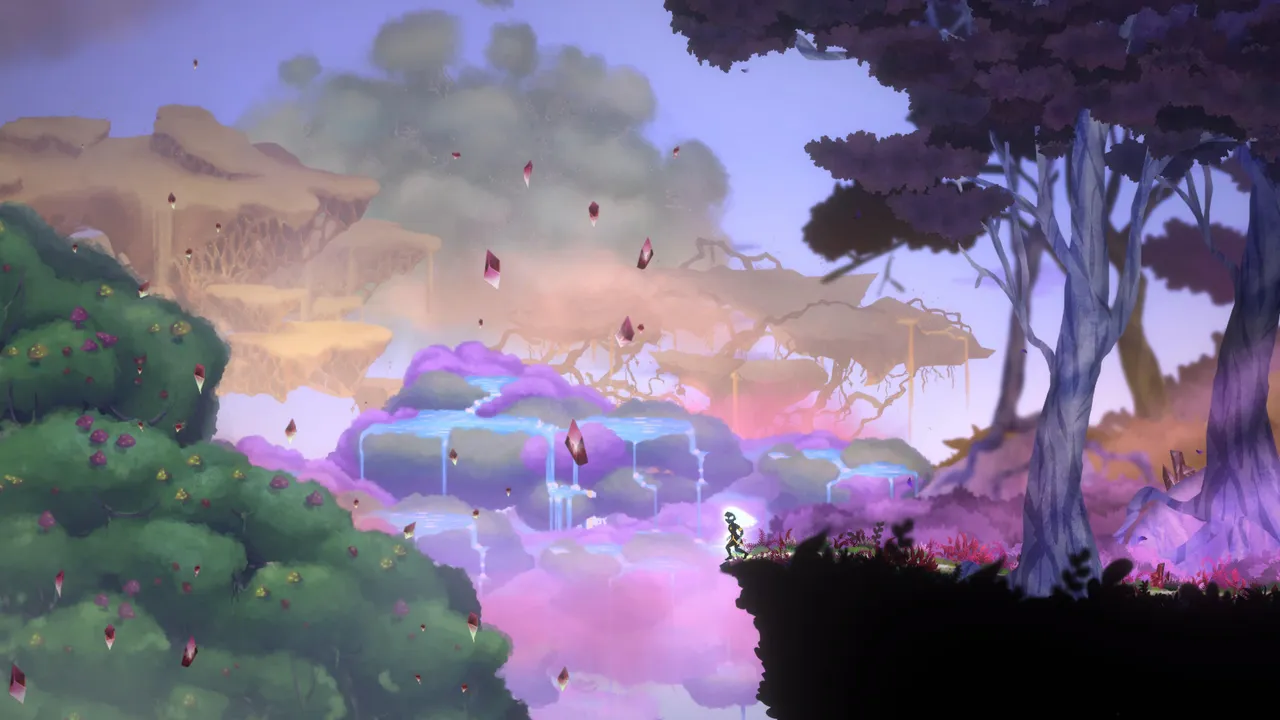
From the very start, you can see some familiarity with games such as Ori and the Blind Forest, which is always a plus in my book. The game carries this mystical vibe which follows you as you’re exploring the world and the story behind it.
It’s a decent game, and it brings a system that I haven’t seen previously, but I just wish the rest of the game had been given the same amount of love and attention.
A rather complicated family tree
The Last Child puts us in the shoes of Rin, one of the daughters of the Teller of Tales who is also the creator of the world. In his vision, the world was a peaceful place, full of harmony, but as these things usually never turn out according to plan, the lands he had built started to crumble and break.
His last chance was Rin, his final child. He gave her free will and set her out to save those beautiful lands and restore harmony.
Like I’ve mentioned, she wasn’t the only one that was given this task. Previously, five of her older siblings were given the same task and they all failed, now actually doing the opposite, filled with corruption and without any care for the world their father created. Instead of restoring the harmony, they want to destroy the world even more.
Rin is the smallest of them, but also the most powerful one, and the only one who isn’t corrupted. As you go through the story, you get to meet her siblings and learn more about them and their secrets, while the journal entries you find can offer you more insight into the world and what is actually happening.
You don’t have to be a Greek Mythology expert to be able to see the similarities of this story and the story of Cronus and his children. The Titan Cronus overthrew his own father, and after hearing a prophecy which said that his children will do the same, he swallowed each and every one of them as soon as they were born. His wife, Rhea, managed to hide one of them, and then everyone’s favourite bearded god Zeus grew up and forced his father to bring his siblings back to lead them in the war against the Titans.
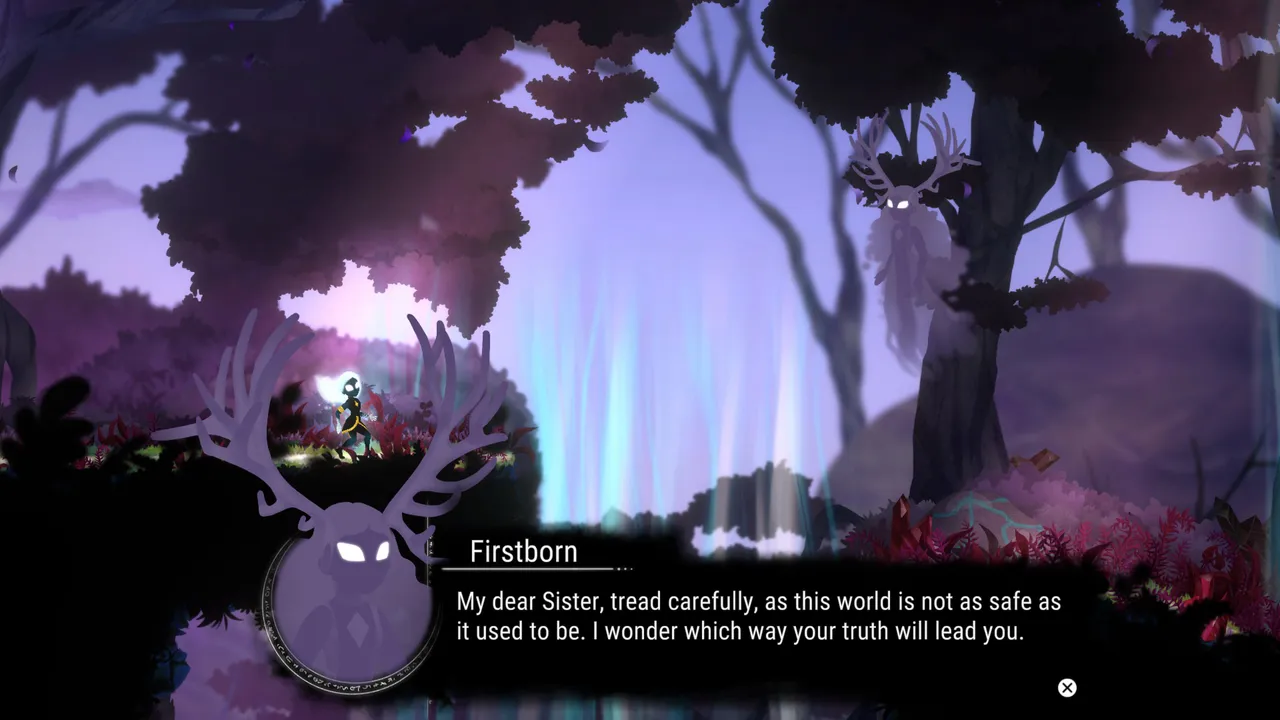
The Last Child adds a twist to this story, where we now have the youngest child going after her siblings on behalf of her father. As I was playing, I found myself thinking why should Rin listen to her father? Why should she listen to the one person that sent her siblings into doom and corruption, why should she believe him? According to him, he values the world more than his children, and as the kids would say, is that not a parental red flag?
That is the question that is at the core of this game, the conflict between doing as your father told you or following the free will that he has willingly given you. The game gives you three possible endings, so prepare yourself to make some choices.
A spell for every occasion
Rin: The Last Child is a 2D side-scrolling platformer that combines exploration, platforming, and crafting. As she explores the world, Rin gathers the powers of different aspects which she can use for her magic.
This is where the game really shines. The elemental magic system is the strongest asset, as it’s really flexible and versatile. Usually in metroidvanias, you get one weapon and a few special abilities, and that’s what you roll with for the entire game. Here, you’ll be able to learn 18 different elemental spells, which are divided into three categories: offensive, defensive, and utility. Some of them are Phantom Blades, Arcane Blast, Frost Aura, and so on.
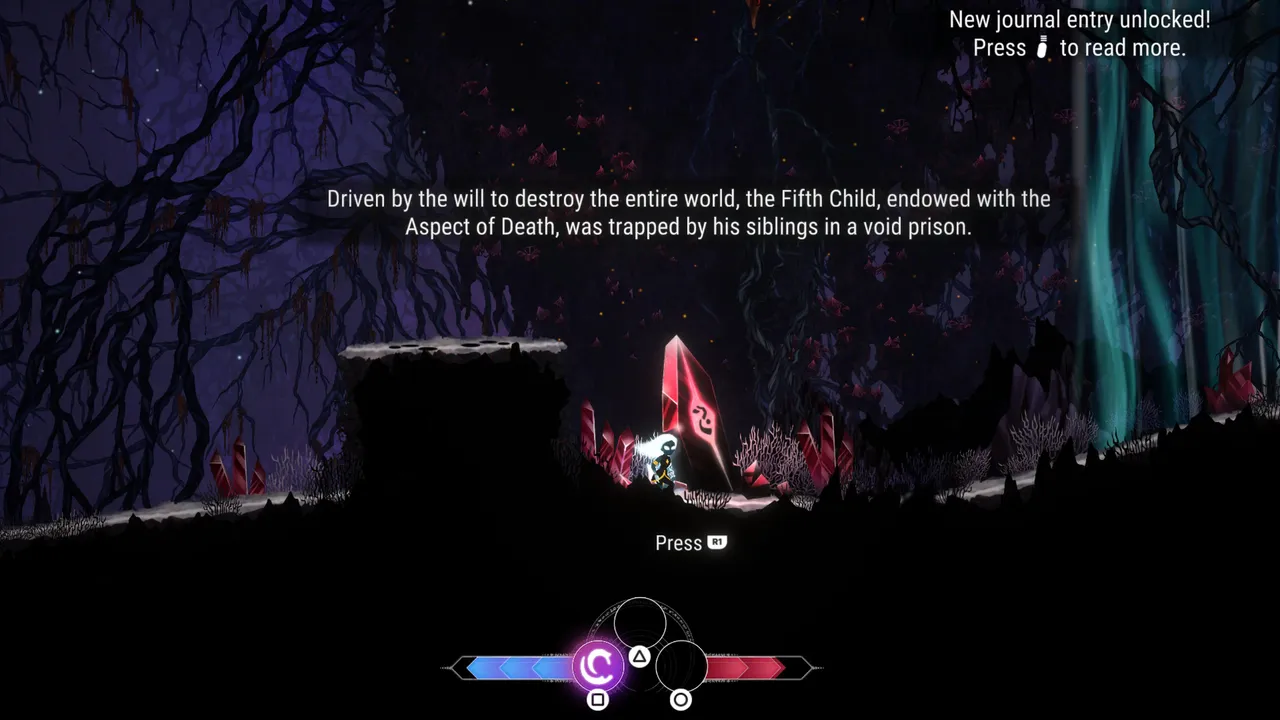
If that isn’t enough for you, there are also five aspects that you can find as you explore: life, space, time, death, and matter. They’re used for crafting and enhancing your spells, and each one comes with greater and lesser runes. Lesser runes will bring minor changes, while the greater runes are a bit more complex and can change the spell completely. You can also upgrade your spells as you play.
If you combine everything from the above, spells, runes, aspects, you end up with around 7,000+ combinations of spells, which is a lot. I haven’t seen any other metroidvania with that much variety in a system. While you can only have three equipped at any time, swapping between them is easy and quick. With these many combinations, no playthrough will be the same.
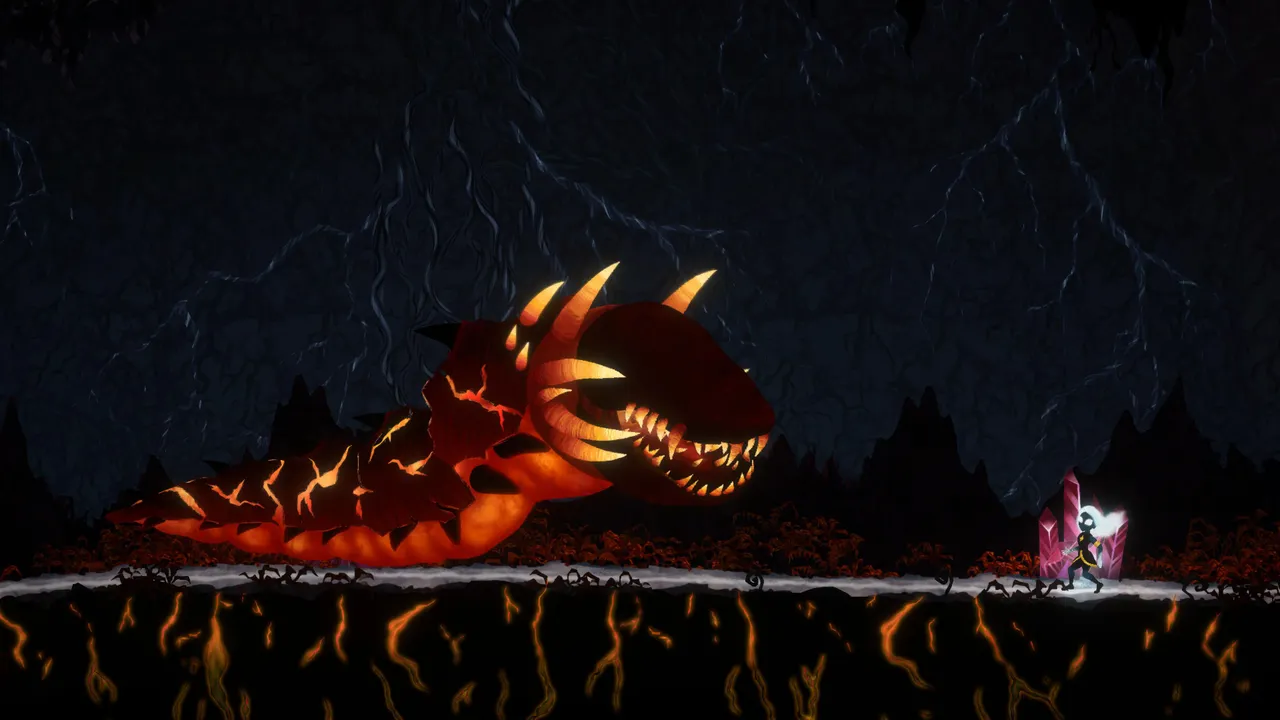
Rin will encounter five bosses - five of her siblings - mini bosses, and a variety of regular enemies, and switching up of your playstyle and tactic is welcome. The problem with enemies, however, is the fact that they aren’t all that exciting. They’re mostly linear, and appear more as an annoyance and less as a challenge. Some of them you can even run past. The game offers three difficulties: easy, normal, and hard.
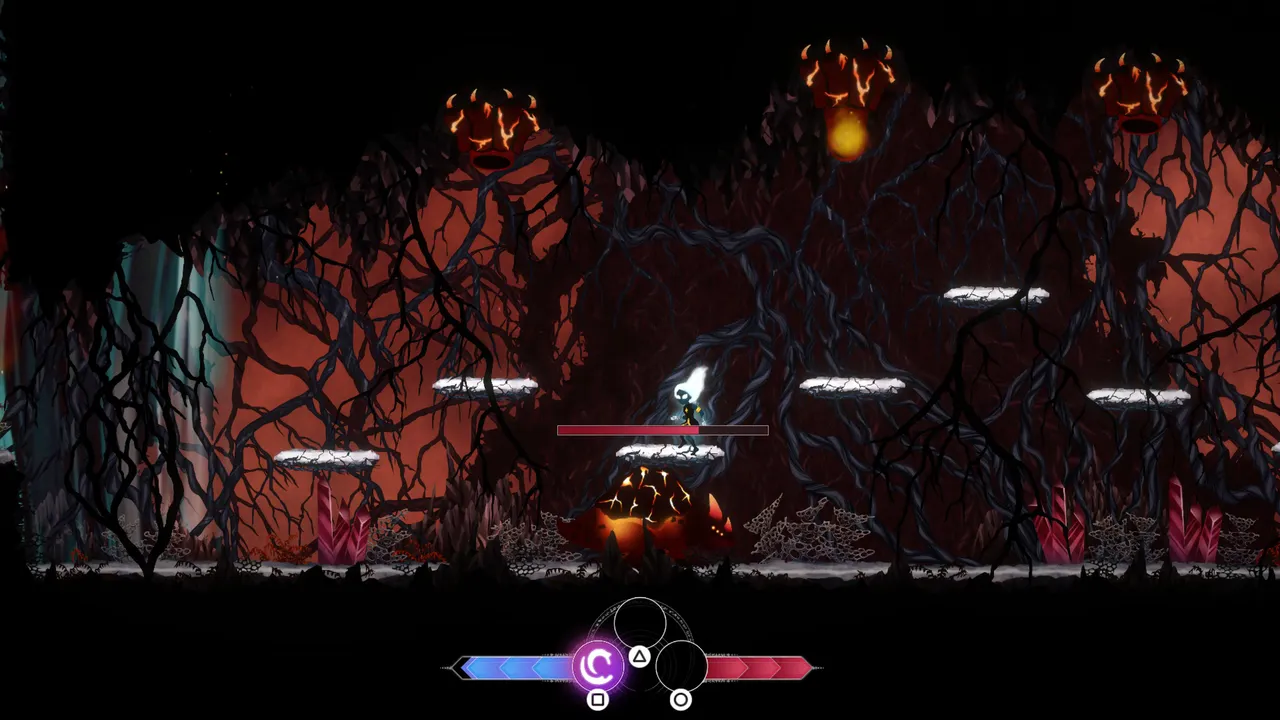
The game doesn’t lack obstacles and platforming, but I found that it wasn’t always precise, and the jumps can feel a bit floaty, which isn’t really ideal when you need to jump a lot.
And the map, which I didn’t really like all that much. It’s huge and a bit hard to navigate, and the fact that there was no dedicated map button slightly annoyed me. While there are a lot of areas to explore, some of them look alike which can make backtracking a pain, and that is something that should be fun and exciting in a metroidvania.
A beautiful world with no pulse
The visuals aren’t bad, but they also won't make you lose your mind. The Last Child is a colourful game, and that’s why the world reminded me of Ori which is a truly beautiful game.
Sadly, it doesn’t have the same life that Ori had. While the world isn’t lacking colour, what it is lacking is a pulse, a heartbeat, it just didn’t feel alive but more monotonous and slow, which is really an odd thing to say when it comes to a game like this. I wish there was more going on as you walk around and explore.
The soundtrack itself is mellow and relaxing, but it isn’t anything to write home about. It’s there while you play and you’ll listen to it, but you won’t be prompted later on to look it up on Spotify. The audio overall in the game is good, I couldn’t find any faults there.
The voice acting - when there is one - is neat, especially the narrator whose voice echoes with authority, but also love and fondness for the person he talks to.
In my time with the game, I didn’t notice any performance issues or stuttering on the PlayStation 5, the game runs smoothly.
A spell book with missing pages
I wouldn’t say that The Last Child is a game that no one would play, I believe that there are people who will certainly enjoy it, for the story, the spells system, and the exploration. My problem was that I finished it and didn’t really have any thoughts or feelings about it, nothing really struck me, which is a shame as it did really intrigued me before I booted it up. You know when you go through something, be it a book, a show, or a game, and you have this feeling that there is something missing but you can't quite put your finger to it? That's how I felt with The Last Child. It didn't feel right to completely bash this game, as I believe there are people who will have a fun time with it.
The magic system alone shows what the game is capable of, and those who enjoy experimenting and switching up their tactic will find plenty to play around with. I just can’t shake the feeling that there should’ve been more, more love and effort put into the rest of the game, not just the spell system. I can’t and won’t compare it with bigger metroidvanias, but even next to the smaller ones, it feels lacking.
It’s almost like the developers had more in mind but were stopped because of time or maybe the budget, for example the enemies actually representing a challenge or the map being a bit more user friendly.
Just like the Teller of Tales gave his last child everything he had and then sent her into the world, I wish the developers did the same with this game.
The Good
 One of the most flexible magic systems
- Quick and easy loadout swapping
- Colourful visuals and a mystical vibe
- An intriguing story with a twist on the myth of Cronus
The Bad
 A huge and confusing map
- Regular enemies are more annoying than challenging
- Floaty jumps and clumsy controls
- A world that feels lifeless