Trending
There is something fun and cosy in building an entire village from nothing, watching as you grow from one person to twenty as a bustling little community forms, and Spiritstead leans completely into that comfort.
The Stardew Valley influence is obvious here from the first minute, it was the first thing I thought when I saw the resource gathering and village expansion loop, but there is also a little bit of Age of Empires in here, without the fighting of course. However, Spiritstead forms its own identity with its cosy tone and a small army of adorable spirit helpers along the way.
It's a relaxing and rather cute game, however it is on the shorter side, if you're counting the story sections, just like any village builder you can continue playing as long as you want after the story concludes. Once you get into the rhythm of building, gathering, and growing, it's not too hard to lose a couple of hours of your day without really noticing.
Rebuilding the harmony
Spiritstead doesn't have a complicated setup, and it doesn't need one either. It's simple and effective: spirits and humans used to live together in the same world, they shared the lands, the resources, everything, until humans decided that harmony just wasn't their vibe anymore. Shocker, I know.
What followed wasn't really a war or something dramatic like that, it was more of a slow and quiet unravelling, which led to all the spirits slowly fading away, drifting out of the world that didn't want them around anymore.
There isn't one moment to point at, or a villain to blame, which makes the loss feel even worse somehow. Usually you expect these outcomes from a big fantasy battle, but here the culprit was that people just didn't care about the spirits or what they do in their villages, they just stopped paying attention and started taking it all for granted, as spirits do help out a lot.
Now, generations later, it's up to the player to mend what was broken. You don't need to defeat anyone, find a grand battle or slay a dragon that's waiting behind the corner, all you need to do is slowly build your village and then, piece by piece, coax the spirits back into the world that pushed them out. Every house and villager you welcome feels like a small step back towards something that existed previously, towards the harmony and life between people and spirits that somehow slipped away.
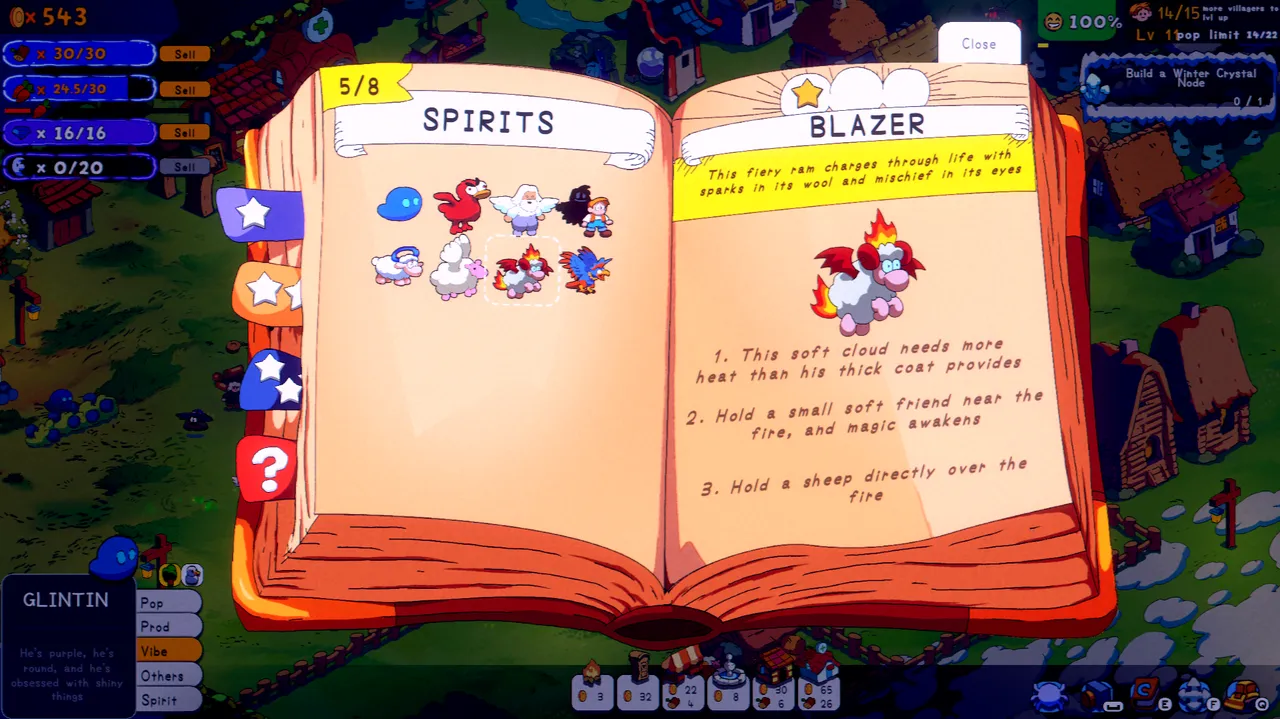
It's a gentle story, in which everything you do has some meaning. Although it might seem like that, but you're not just building houses for the sake of it, you're trying to fix something that was lost a long time ago, and there is something very satisfying in watching it all fall into place and come back to life, one ghost and one villager at a time.
The story itself is a fun twist on the village building theme, however I do wish it was a bit longer as it doesn't take you much time finish it. As someone who played Age of Empires as a kid, I always felt that having a story to back the gameplay up made it way more fun. However, I believe that players who are really into village building gameplay and don't need a lot of realism will be able to enjoy this little game even after the story has ended.
Cosy on the surface, busy underneath
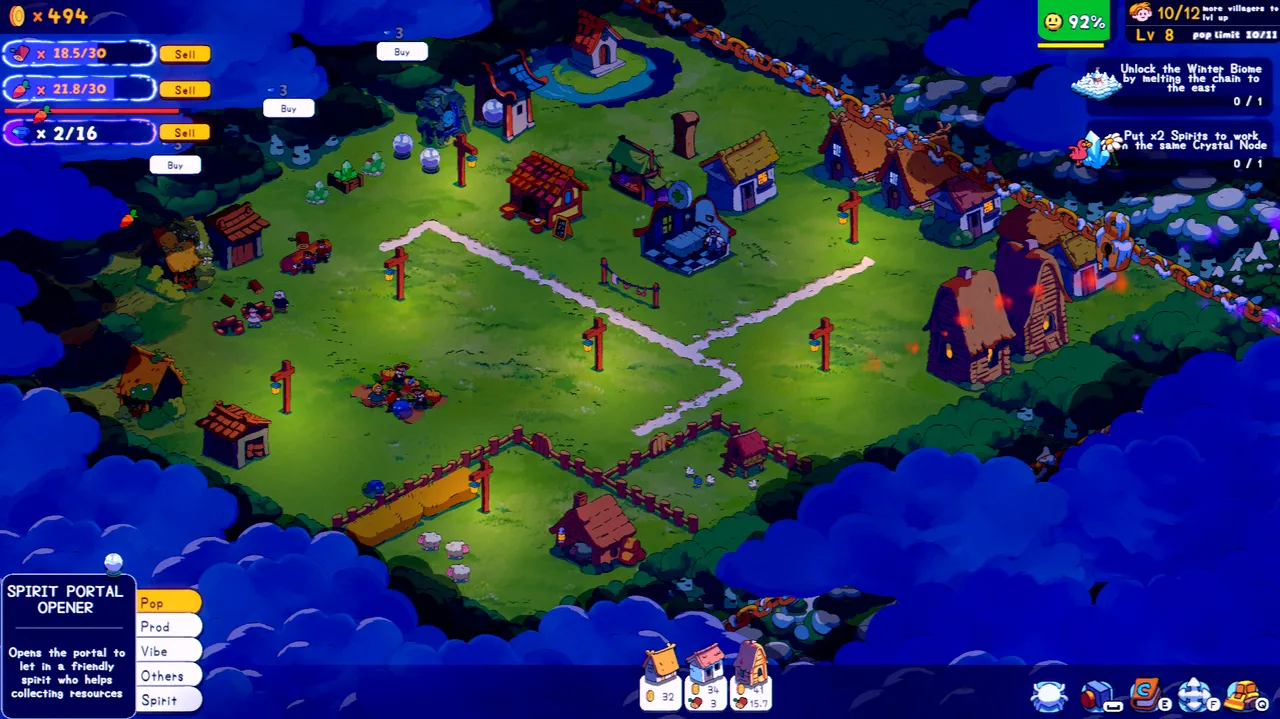
At its core, Spiritstead is a fun, cosy, and not too complicated village building game. You'll spend your days building houses, log stations, and everything in between, you'll have your sheep and your chickens and all kinds of animals too. As your population grows, so does your ability to expand your village and build more structures.
The things you gather and produce, such as food, wood, and so on, can be sold, and these coins you'll end up using to buy new land and new houses, which in turn brings more villagers, and so the cycle keeps rolling forward.
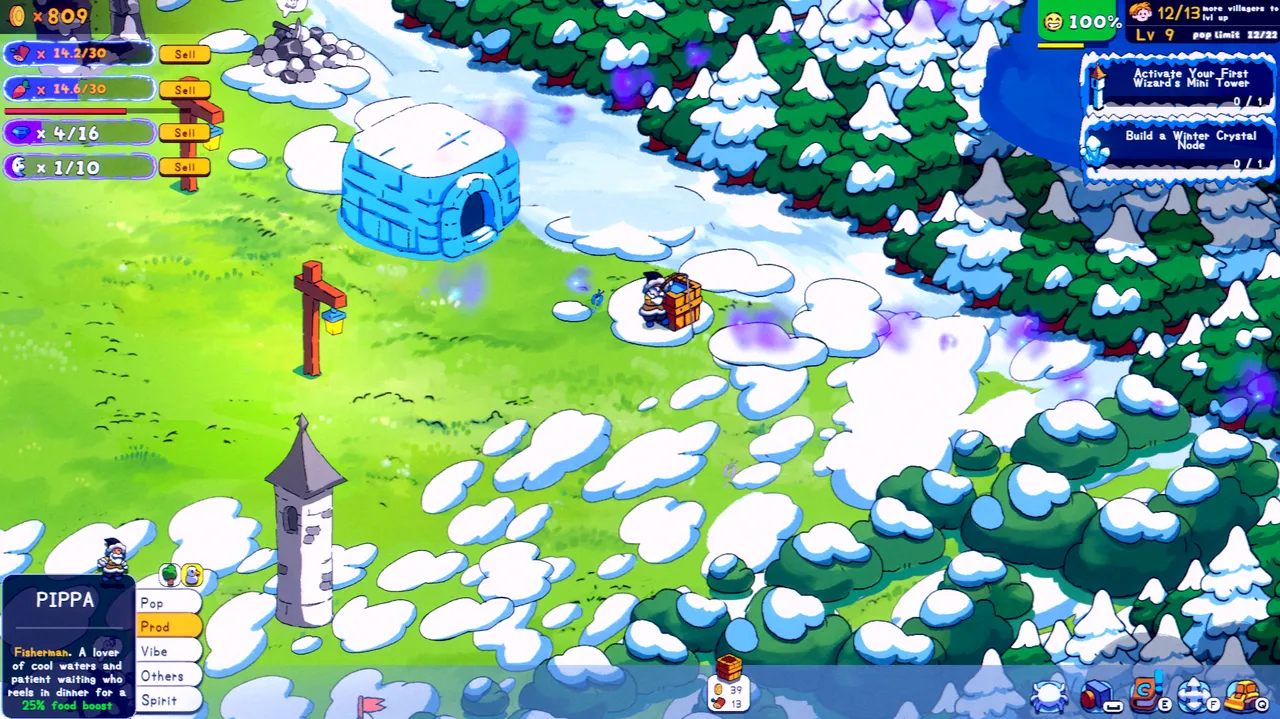
You can build five types of buildings: population (houses), production (things such as pumpkin patches and woodcutting stations, things you need for your resources), vibe (firepits and anything else that lifts the morale and keeps your villagers happy), others (such as doghouses, signs, and smaller things that would fall under decorations), and of course spirits (anything connected to spirits such as spirit portal openers). It's a tidy system that makes sense once you get the hang of it, even if at the start it feels a bit slow as it takes some time for things to open up which is something normal for games of this type.
As for villagers, some are the basic ones which will do any task, while there are also villagers with their own professions, such as a lumberjack or a farmer. Both of those have their own professions and will not go do the job of the other one. It adds a small layer of planning to which villager you'll invite in and where you'll put them.
The moment this game really takes off is when you unlock your first spirit portal opener. Once you invite spirits into your village, you'll get access to really adorable ghosts who handle your resources, so they fly around and gather wood, food, and other things, which does make the game easier as previously you had to manually click to gather and sell your resources. If you don't gather the wood you've got, your villagers will not continue working, and you can imagine how annoying that might seem. For whatever reason, even after the ghosts come to the village, the villagers would sometimes just randomly stop working and seeing them slack off...Not in my village.
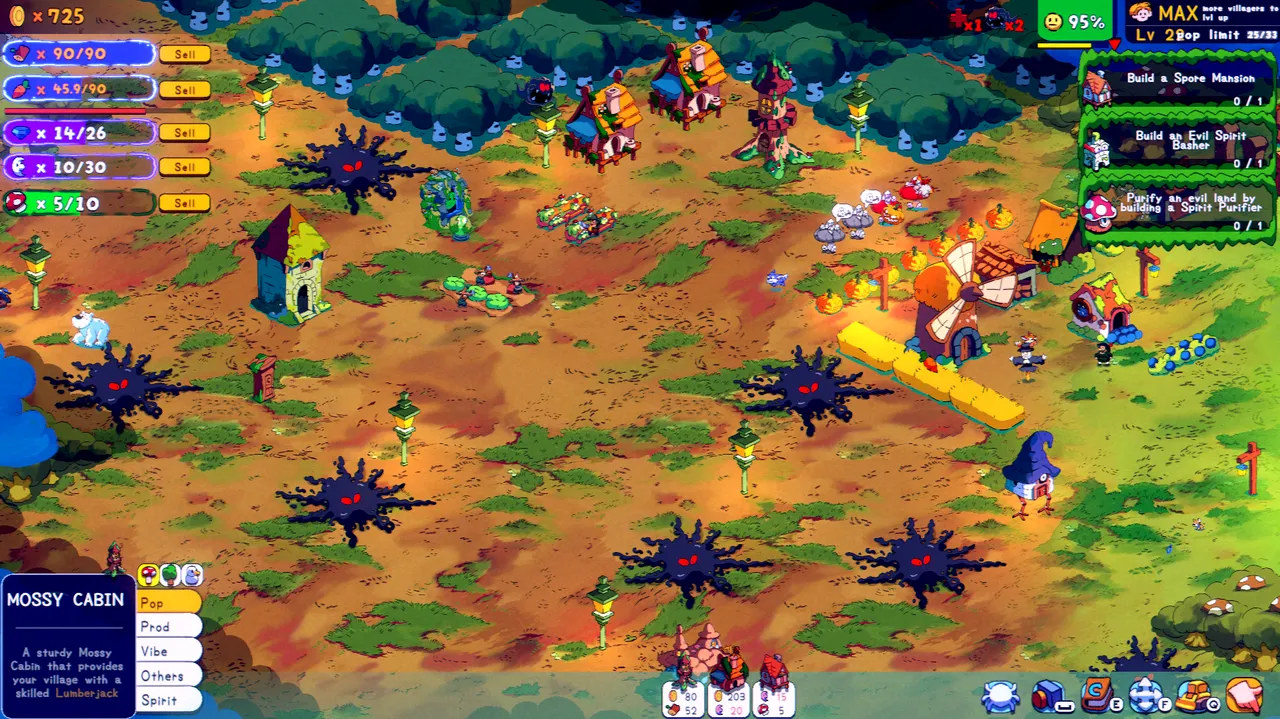
The spirits coming in helps a lot, and some of their descriptions are worth a smile too. For example, one ghost is described as "not in a rush, but no resource gets past him, he's doing his best", and that's what you feel while you watch them fly around, that they're doing their best.
The spirits system has a lot of variety layered on top too. You'll get access to a spirits book, where you can learn about them and unlock more of them after completing riddle-like hints if you get stuck (no worries, you can pay for more hints). Some of them have special powers, such as collecting chicken eggs or collecting the wool from your sheep, while some can also help out and mine the crystal you need.
Your villagers don't just work, they can also dance around the fire, they go to the bathroom and need lamp posts so they don't work in the dark, and if your village is dirty, you best believe they will complain until you clean it all. Your villagers have needs that they need help with, albeit those needs can sometimes be hard to see if you're not playing on a bigger screen.
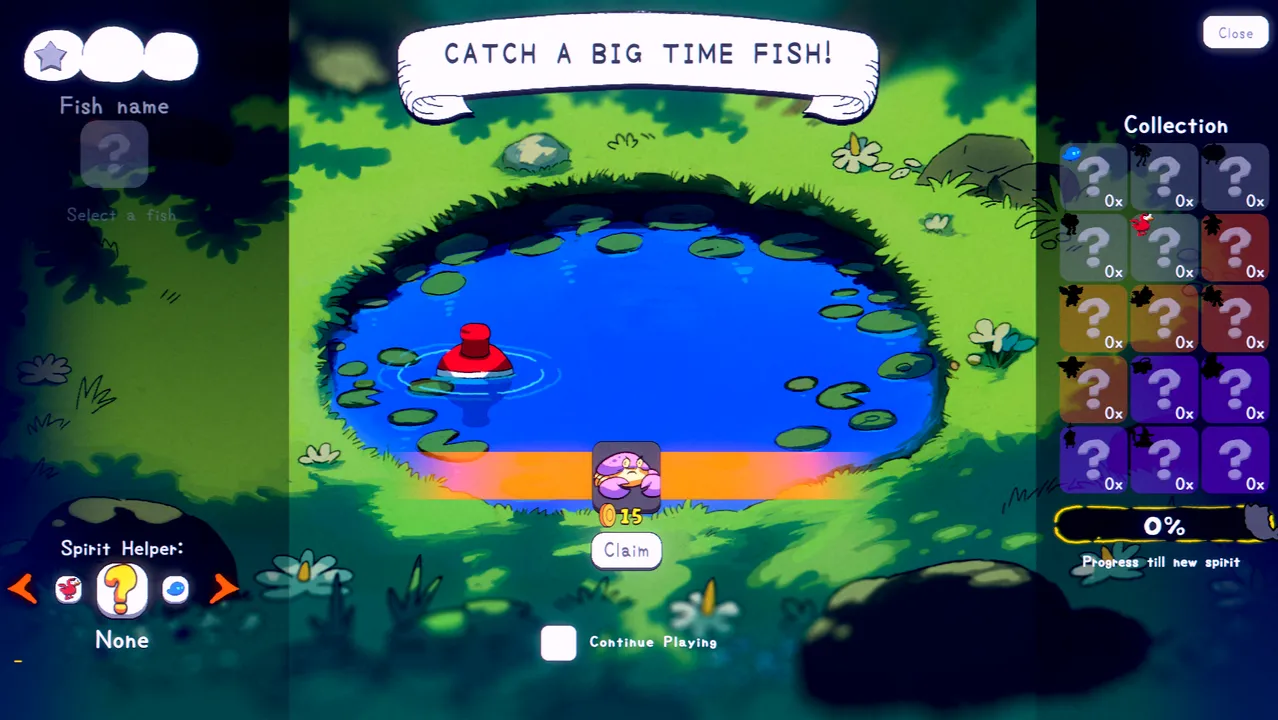
You also get access to a couple of minigames such as fishing, which ended up being a lot of fun. And even then the spirits help you, as certain fishes have a higher percentage of showing up with the help of a certain spirit.
You'll get access to two more biomes, such as the winter area and swamp area, and with them the game opens up a bit more. In the winter one, you'll have igloos and cold-hardy villagers, new building types and new spirits. For the swamp biome, you'll also get a few evil spirits infesting the lands, which means you'll have to cleanse them or your villagers don't want to work with them around. Understandable I'd say.
As you open up the winter biome, you'll find a few towers that you need to unlock. After doing so, the main tower becomes available and there you'll find a grand wizard, waiting. Unlocking him gives you access to a few of his powers, which will also be helpful for getting new spirits. The game kind of manages to surprise you a few times; as for example I really didn't think I'd be seeing an entire mammoth wandering around in the winter biome.
This brings a satisfying sense of progression, even if things can start to feel a bit overwhelming once you have several systems you need to keep an eye on.
The swamp area plays a bigger role though, as here you'll be able to find the Spirit Sanctuary, dormant and destroyed. Restoring that sanctuary, first with the help of humans, then spirits, and lastly animals, is the end goal.
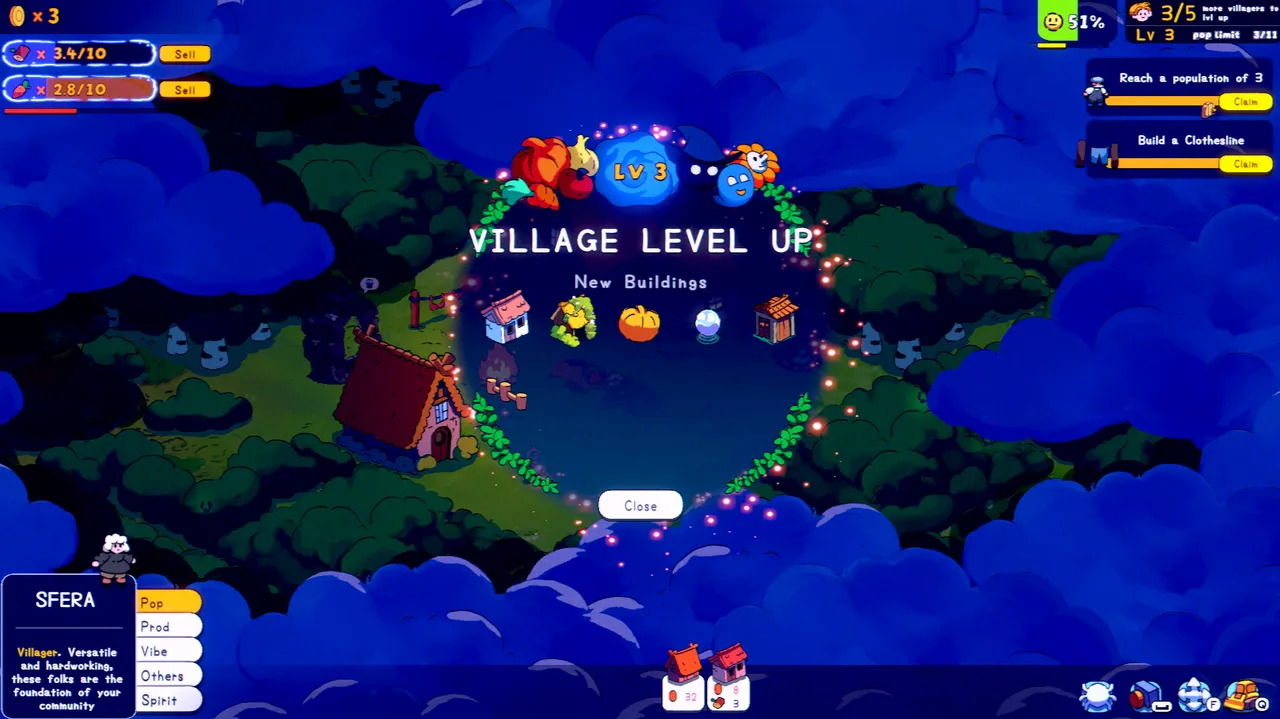
On the rougher side, there are a few things that stood out to me. One of the quests glitched out on me and I was unable to move a house, drag-and-dropping of animals doesn't always work, and selling resources manually (sometimes you still have to do it if you're in need of coins) gets really tedious.
Relaxing on every level
The soundtrack for Spiritstead is as you'd expect it to be, it's relaxing, cosy, and the kind of music that fits perfectly into a slow afternoon of placing houses and watching your village grow. It doesn't demand your attention, but it's always there to reinforce the calm, unbothered tone that has marked the entire game.
Visually, it's just as soft, cosy, and welcoming. The villagers are rather cute, but I think that the ghosts are the real stars of the show, as there is a variety of them and they all look like they would make amazing pets. Dog with wings? You got it. A poop with a wizard hat? Gotcha. A really angry, red chicken? Already got you covered. Their descriptions and looks add a surprising amount of charm, the kind of detail that makes you smile every time you get a new one.
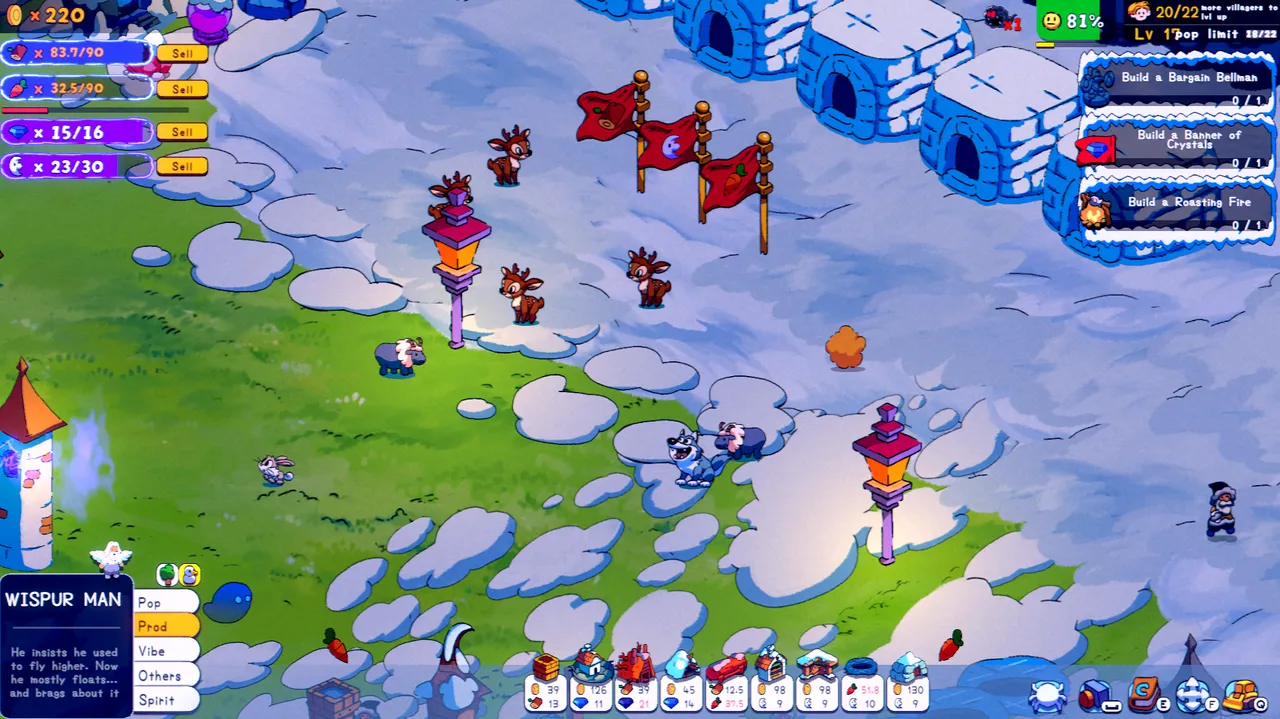
As a big animal lover, I have to give credit to how the game handles their animal roster. All the animals, from chickens to alligators, wolves, and goats, are all represented with the same warmth as everything else.
The game doesn't try to be flashy, and it doesn't need to be, it wouldn't fit the overall aesthetic. It's consistent, comforting, and matches the tone of the game perfectly.
I haven't encountered any major game breaking bugs or fps drops, the game ran smoothly.
Harmony restored
Spiritstead is exactly what it wanted to be: a short, cosy game where you get to rebuild a village and rebuild the harmony between humans and spirits. It doesn't try to stretch farther than that idea and I found that to be the part of the charm. If you're looking for some deeply rooted mechanics in this game, you won't find any.
The loop of building, gathering, and welcoming spirits back in is satisfying, although sometimes it can feel a but overwhelming as if you're anything like me, you'll want to make sure everything works, the production didn't come to a halt, and that there is no dillydallying. The game also made me realise I would be a great foreman in the industrial revolution.
None of the glitches or overwhelming moments you might discover could tarnish the warmth the game builds in you, with it's cute spirits and villagers, and a soundtrack that adds to the experience.
Once you reach the end and the harmony is restored, there is technically nothing stopping you from playing further, but there isn't much reason to either. At the end, I didn't feel like there is anything I haven't seen previously and I closed my game, which doesn't have to be a bad thing. It's better to finish with a bang, than to overstay your welcome.
Spiritstead tells its story, allows you to build your little corner of the world, and then lets you go gently but never locks the door so you're welcome to return if you want. It's not trying to be more than a cosy afternoon spent with a fun game, and sometimes that's just enough.
The Good
 Adorable villagers, spirits, and animal designs
- Satisfying build-gather-expand loop
- Relaxing soundtrack
- Fun mini-games
- New biomes bring fresh buildings, spirits, and villagers
The Bad
 Could be considered too short
- Multiple systems can feel overwhelming
- Manual resource selling gets tedious
- Villagers needs can be hard to see on smaller screens
- Coins becomes trivial once things get going