Trending
Video games are a very versatile medium, and that’s one of the reasons so many people love them. Some people love competitive online games, others prefer good single-player titles with a rich story and meaningful campaigns, but, honestly speaking, there is something in this magical world for everyone.
I personally love all kinds of games: action-adventures, RPGs, shooters, you name it. However, there are some titles I avoid like the plague, and among them is anything with ‘Minecraft’ in its name. Shocked? Don’t be. I mean, why the hell would anyone want to stare at all those cubes when technology has advanced so much that games can look like you’re watching a movie? Yes, that was my argument. That’s how superficial and ignorant I was, right up until I got Minecraft Dungeons II to review.
Minecraft Dungeons II taught me an important lesson: try something out first, then judge. From this day on, I’ll try to be smarter and know better, because this game achieved something many others struggle with: being so simple, yet so devilishly fun.
A Bigger Tale Than Its Blocks Suggest
Minecraft Dungeons II is a sequel to the first Minecraft Dungeons, but you don’t need to have played the original to follow its story. I obviously never played the first game; to be more precise, I never played any Minecraft game, and I think no further explanation is needed. However, I did some research online and found out that the developers built a brand-new dimension and an entirely new quest system for this sequel.
Minecraft Dungeons II picks up some time after the first game, in the very same Overworld. With the Arch-Illager defeated, Villagers are living peaceful lives, but that peace won’t last long.
Three Illagers stumble upon an enormous portal leading to the Sift, a beautiful and colourful dimension where souls sustain all life, and where friendly Echo Golems are willing to share their power with visitors. Instead of accepting this generous offer, the trio kill the golems, take their Soul Blocks, and proclaim themselves the Illager High Council, made up of the Prime Enchanter, the Grand Illusioner, and the Supreme Evoker.
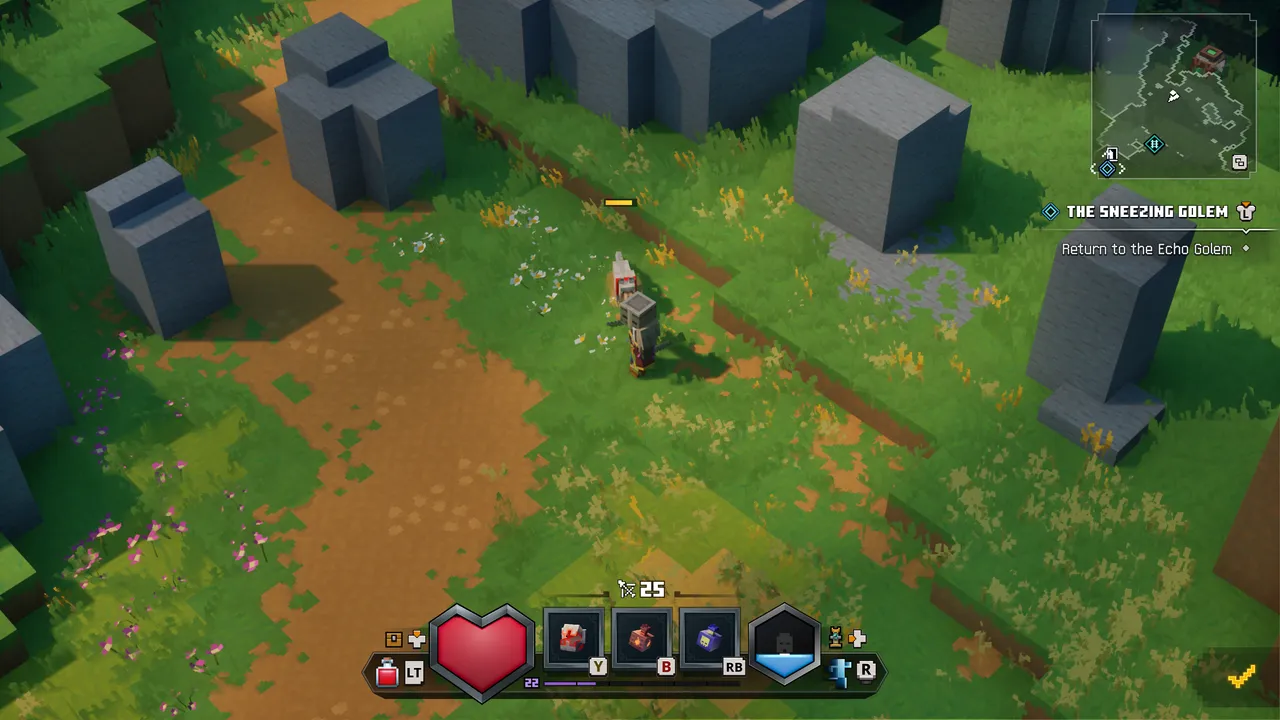
With the Sift as their base of operations, they begin tearing open rifts across the Overworld, spreading fear and unleashing soul-corrupted mobs that destroy Villager settlements in the process.
You play as a hero who is dragged into the conflict by mere chance, and since no one else will step up and defend the people from Illager oppression, you do just that. Step by step, one quest at a time, you show that when someone is willing to stand and fight, no power is too great to be brought to its knees.
Before I started playing, I couldn’t imagine taking the story of a game like this seriously, since Minecraft has never struck me as a franchise that cares much about meaningful storytelling. I expected something light and trivial, but the developers had other ideas. The premise and its execution are so well handled that I was pleasantly surprised, and everything about the story, right down to the anticipation of how it would all end, is fantastic.
One Button, Endless Builds
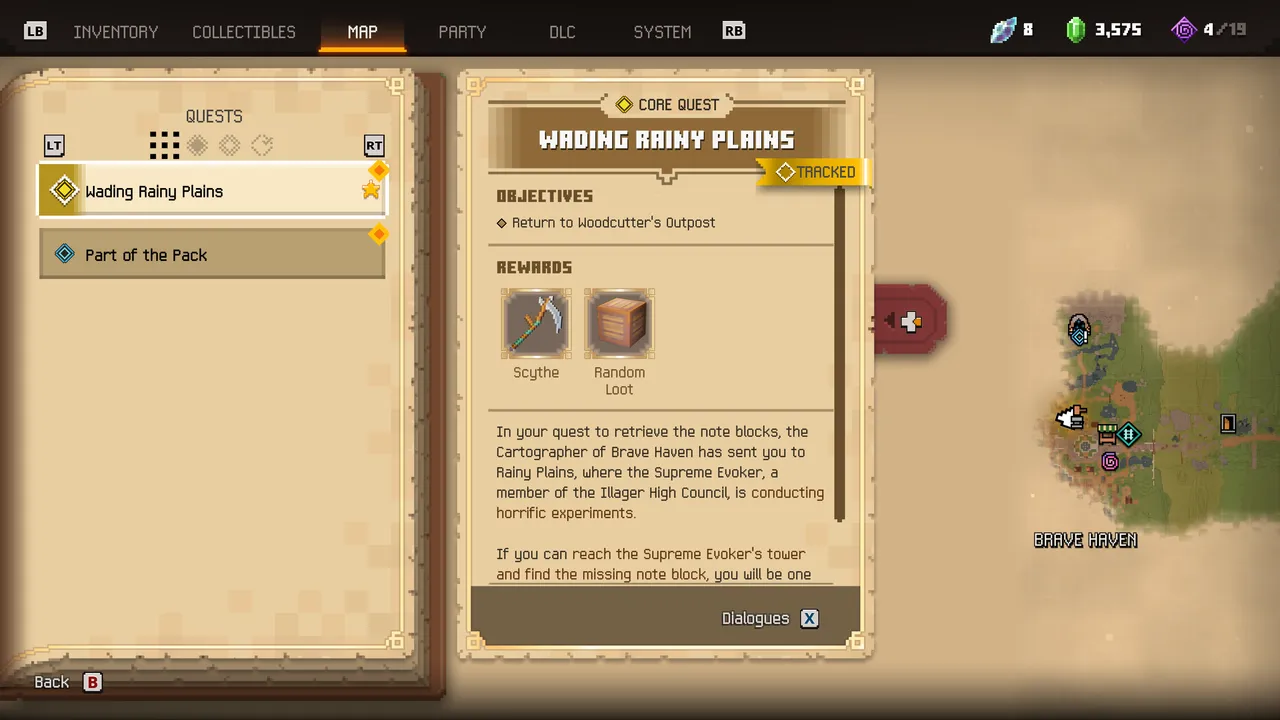
I don’t even know where to begin here. The more I played Minecraft Dungeons II, the more I realised how simple, yet fantastic, this game actually is. At its core, Minecraft Dungeons II is an action RPG with a huge emphasis on proper RPG elements and mechanics. The combat is extremely simple and may seem like nothing more than a button-mashing fest, but it is much more than that. Sure, there’s only one button for attacking (X on the Xbox controller); however, you’ll discover many artefacts that can be added to your inventory, and each of them grants a different special attack. At first, you’ll have just one slot unlocked, but as you level up, more slots become available, which means more special attacks.
These are very fun to use. Some set the area on fire, some launch poison vines, and some freeze everything around you. Elemental statuses play a huge role in Minecraft Dungeons II’s gameplay. Different special attacks deal different elemental damage, and different armour pieces offer different elemental resistances. Yes, you’ve read that correctly: the hero can wear separate armour pieces for the head, torso, and legs, and on top of these, you can equip talismans that grant passive buffs.
In essence, the RPG system surrounding weapons, armour, and equipment in general is very deep, and experimenting with different builds is a real joy. Weapons also come in many variations: swords, daggers, maces, hammers, spears, longswords, and every melee weapon you can possibly imagine, and each has its own attack animations and handles differently. Every piece of equipment can also be upgraded, with upgrade levels always capped at the level of the highest-level item you carry. Your hero levels up too as you gain experience, and all of this adds up to a system that seems complex but is, in reality, well organised and very user-friendly.
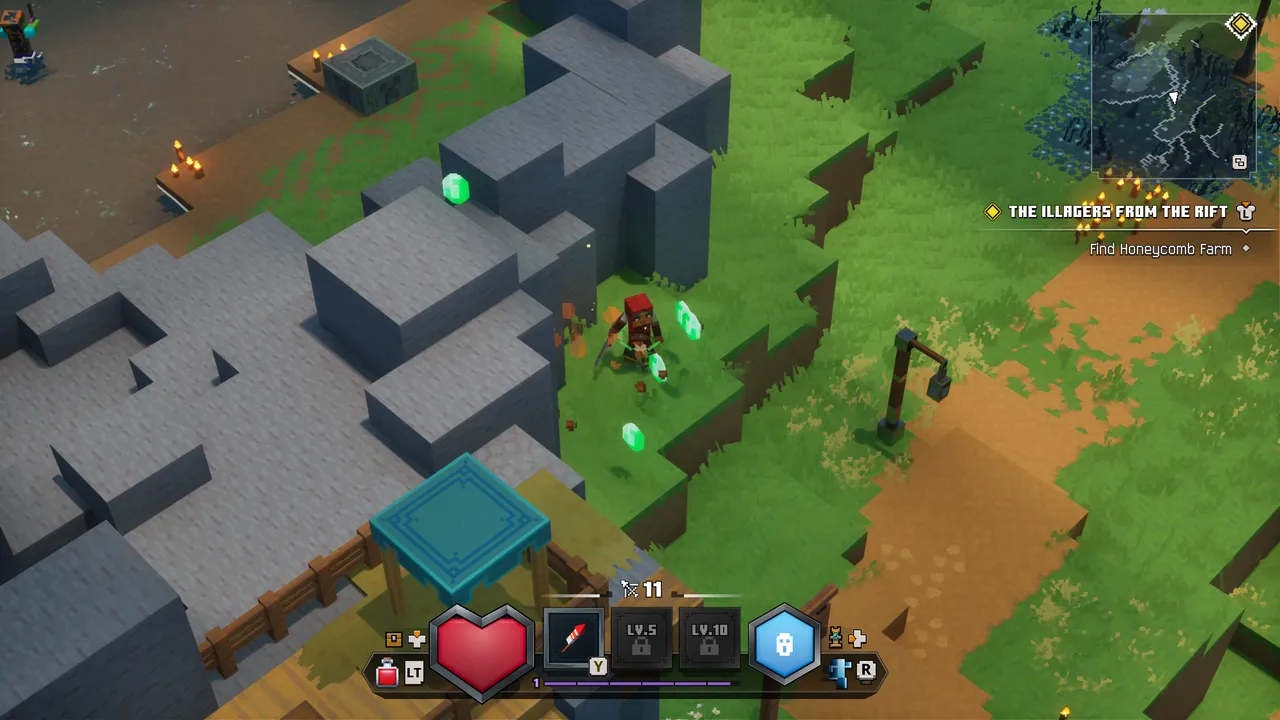
The game has an open-world structure, where you can roam around and pick up missions scattered everywhere. Besides the main quests, there are plenty of side quests, which always reward you with additional XP and loot, mostly in the form of new equipment. One thing that didn’t sit well with me is the sheer amount of equipment you get. Every in-game activity rewards you with a new weapon, armour piece, talisman, or something else. In theory, that shouldn’t be a bad thing, because with so many different pieces you can try out a lot of builds, but I think there should be fewer of them to make discovering new ones feel worthwhile.
Apart from main and side quests, you’ll also be able to explore a huge number of dungeons, mines, and rifts, each packed with mobs to defeat, chests and secrets to discover, and bosses to fight.
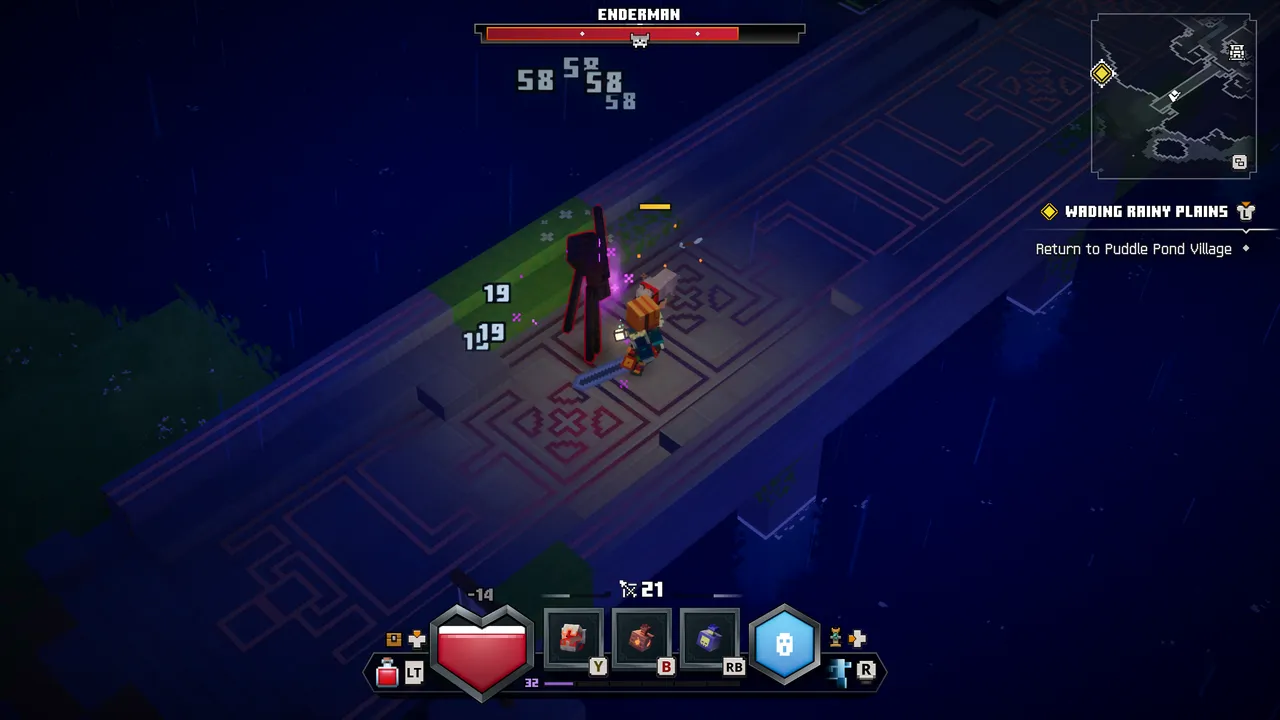
Speaking of boss encounters, they are very good, but sadly, they are designed more with other players in mind. There are some serious limitations when you play solo and want to experience the game on at least normal difficulty, which is what I played on the entire time. Regular mobs are manageable, but once the boss fights begin, all the flaws are laid bare. Bosses deal too much damage and spam attacks constantly, while your defensive options are quite limited. You can only dodge, and I don’t know whose idea it was to make fights this fast and enemies this aggressive, and then put the only defensive mechanic on a cooldown. I mean, what the hell? You dodge an attack once, and then you have to wait three seconds to do it again, while the enemies never stop attacking. I got stuck on one boss fight for a very long time, and I didn’t want to lower the difficulty. For me, this is bad design, and if I had to point out the biggest problem with Minecraft Dungeons II, it would definitely be the decision to put the dodge on a cooldown.
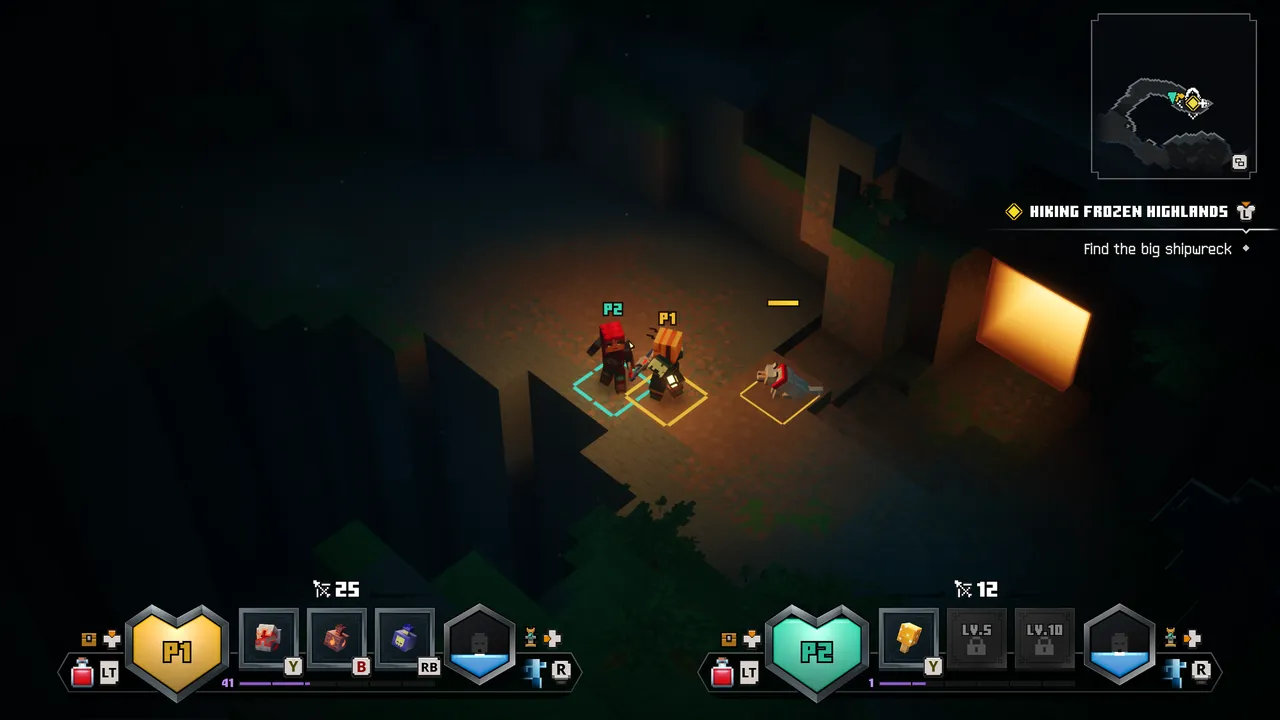
Minecraft Dungeons II can be played solo or in co-op with up to four players, either online or locally. I didn’t have Game Pass, so I couldn’t play online, but I played a couple of couch co-op sessions with my daughter. The experience was, let’s just say, different, because our skill levels are nowhere near equal, and when we tried it, I was level 65 while she started at level 1. However, the game scaled the enemies to both her level and mine, which was a neat little feature that instantly makes the game more accessible.
Same Blocks, Brand-New Colours
What can be said about the looks of a Minecraft game that hasn’t been said already? Probably nothing, because every Minecraft game looks similar to the previous one, with a few new graphical effects added. From a technical point of view, you get exactly what you’d expect: one more Minecraft game, and that’s that.
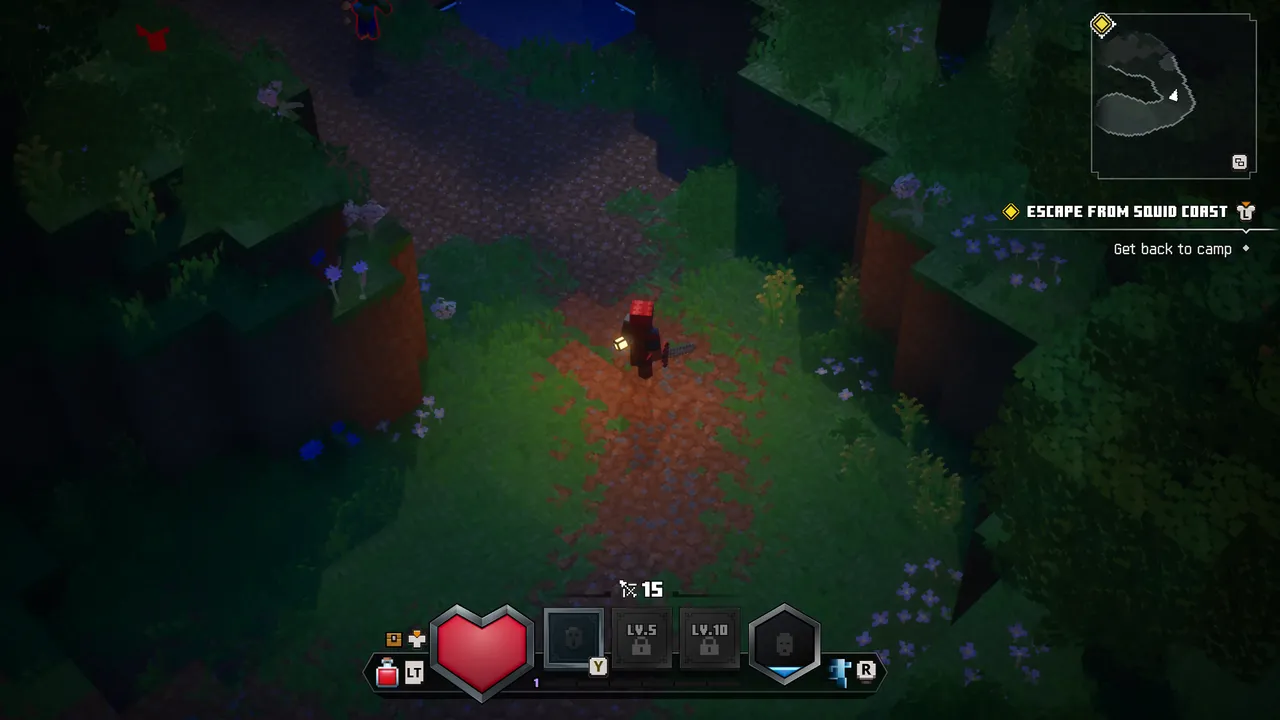
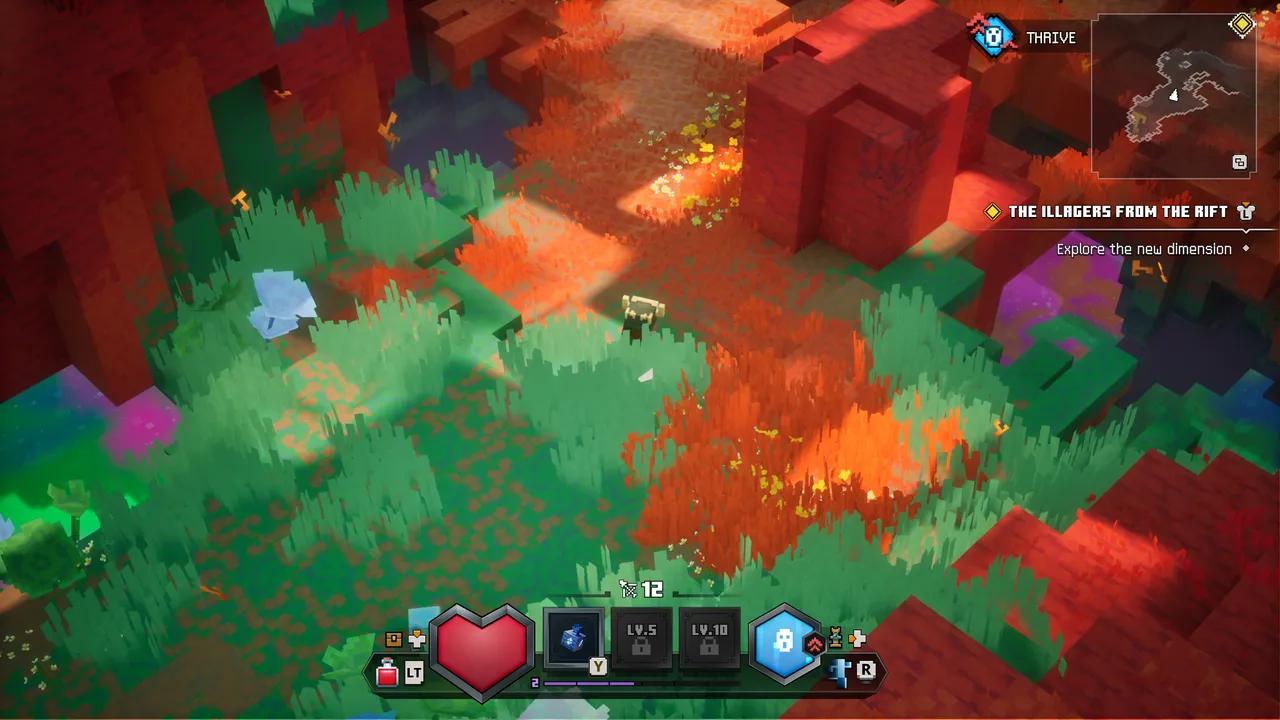
The visual design of the world, on the other hand, is a completely different story. The Overworld is very well known, and its places, characters, and environments will feel familiar to anyone who has ever played a Minecraft game. The Sift, however, is something else entirely. Once you step through a rift into this beautiful place, you’ll spot the difference immediately. The colours here are brighter and more vivid, and the creatures are different too. Since I’m not an expert, I can’t say for sure whether any of them have appeared in Minecraft before, but as far as I know, they haven’t.
The music and soundtrack are amazing. The background music shifts seamlessly between exploration, combat encounters, dungeon runs, and everything in between, and every track perfectly matches the atmosphere.
As for performance, the game runs perfectly on Xbox Series X, holding 60 FPS throughout. I also briefly tried it on PC, just to test it, and on my rig (RTX 3080 Ti, Ryzen 9 5900X, 32 GB RAM), it ran perfectly with all settings maxed out, which is to be expected, because Minecraft Dungeons II is simply not a hardware-demanding game.
Conclusion
Minecraft Dungeons II started as a game I was ready to dismiss before I even booted it up, and ended as one of the biggest surprises of my year. Behind its blocky looks hides a deep and rewarding action RPG, with a gear system that lets you experiment endlessly, an open world stuffed with quests, dungeons, and rifts, and a story that turned out to be far more engaging than I ever expected from a Minecraft game.
It isn’t flawless, though. Solo boss fights can be brutally unfair thanks to the dodge cooldown, the flood of loot makes new gear feel less special than it should, and visually, it rarely strays far from what Minecraft fans already know. Still, none of that stopped me from coming back for one more quest, one more dungeon, and one more build. If a Minecraft sceptic like me can have this much fun, I can only imagine how much fans of the franchise will love it.
The Good
 Surprisingly engaging story
- Deep, flexible build system
- Fun artefacts and elemental combat
- Open world packed with content
- Impressive co-op level scaling
- Excellent soundtrack
The Bad
 Dodge cooldown
- Punishing solo boss fights
- Too much loot