Trending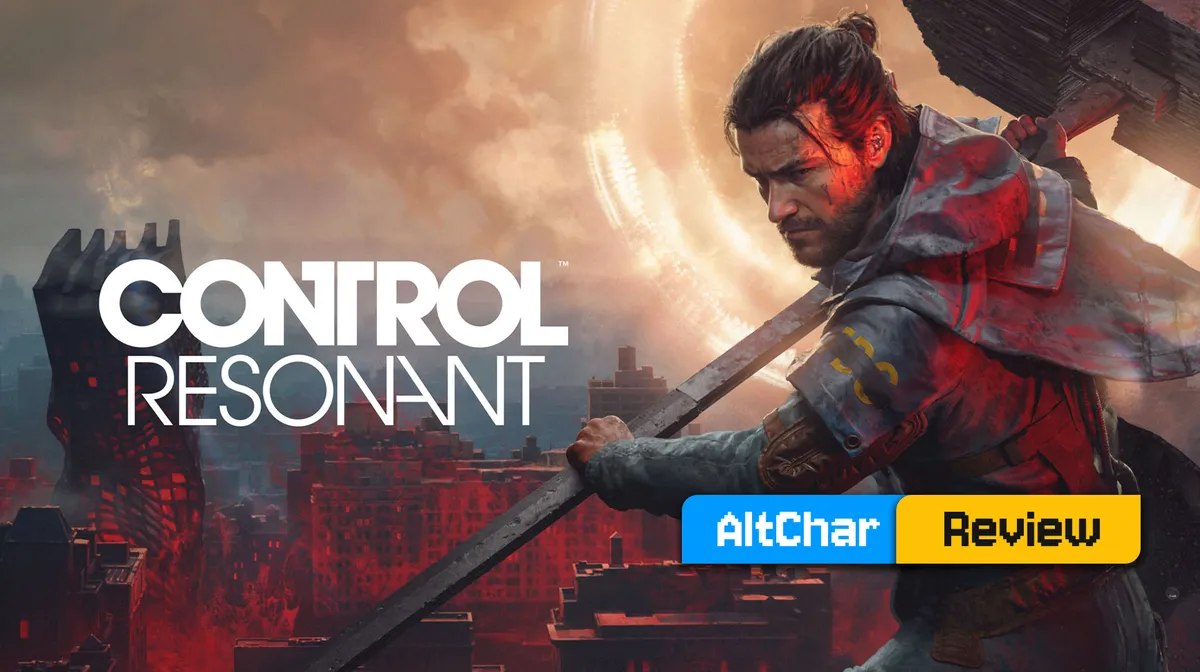
A few years back, I picked up the PlayStation 4 and bought the usual suspects when it comes to that generation, The Witcher 3: Wild Hunt and Horizon Zero Dawn. What I didn’t see coming was that I would be buying PlayStation Plus (the OG, the one we are still mourning today) just so I can play this weird game called Control. Knew nothing about it, just found it interesting and cool looking. To this day I am grateful for that.
That decision turned me into the resident Control recommender for years afterwards, telling anyone who’d listen how this game is worth sticking with once it starts to click. Now, years later, I get the chance to play and review the sequel and step into the shoes of Dylan instead of Jesse, the character that the first game kept circling back to without ever fully letting us in.
Safe to say, it’s been a while since I’ve been this excited to sit down with a new game, I wanted to see what Remedy Entertainmentcame up with, how they evolved the story and shifted the main protagonist from someone like Jesse, who was cool and collected, to a person that has been locked away for so long, and who could have a frantic reaction to the outside world.
I didn't understand Dylan when I was playing the first game, but I also never hated him because I had a feeling he isn't as bad as we might think he is. Turns out, I was right.
The little brother steps out of the shadows
Dylan Faden is Jesse’s younger brother, who was taken by the Federal Bureau of Control as a child after an Altered World Event in their hometown of Ordinary, Maine. I think we should all appreciate the fact that nothing about these games is ordinary, yet the town where both Jesse and Dylan came from is called exactly that, Ordinary. He was determined to be a Parautilitarian with powerful abilities, and because of that enlisted in the Prime Candidate program. Once Dylan refused to play the part, the Hiss took advantage of him and turned him into a Host. In the first Control, Jesse purged the Hiss from him and that’s why he ended up in a coma.
Right from the start, Control Resonant tells you how dire the situation is. Dylan wakes up in his cell, only to find out that the Oldest House has been broken open, and as he walks around the hallways and corridors, all he can see is death scattered around. The Hiss, this strange invasive force that is also mentioned in the first game, is not contained anymore and now wreaks havoc on the city itself. And it seems that it’s on Dylan to stop it, as he has similar abilities to Jesse, and even if he didn't, there is this notion of duty to help stop the Hiss from destroying literally everything, the same way it destroyed him.
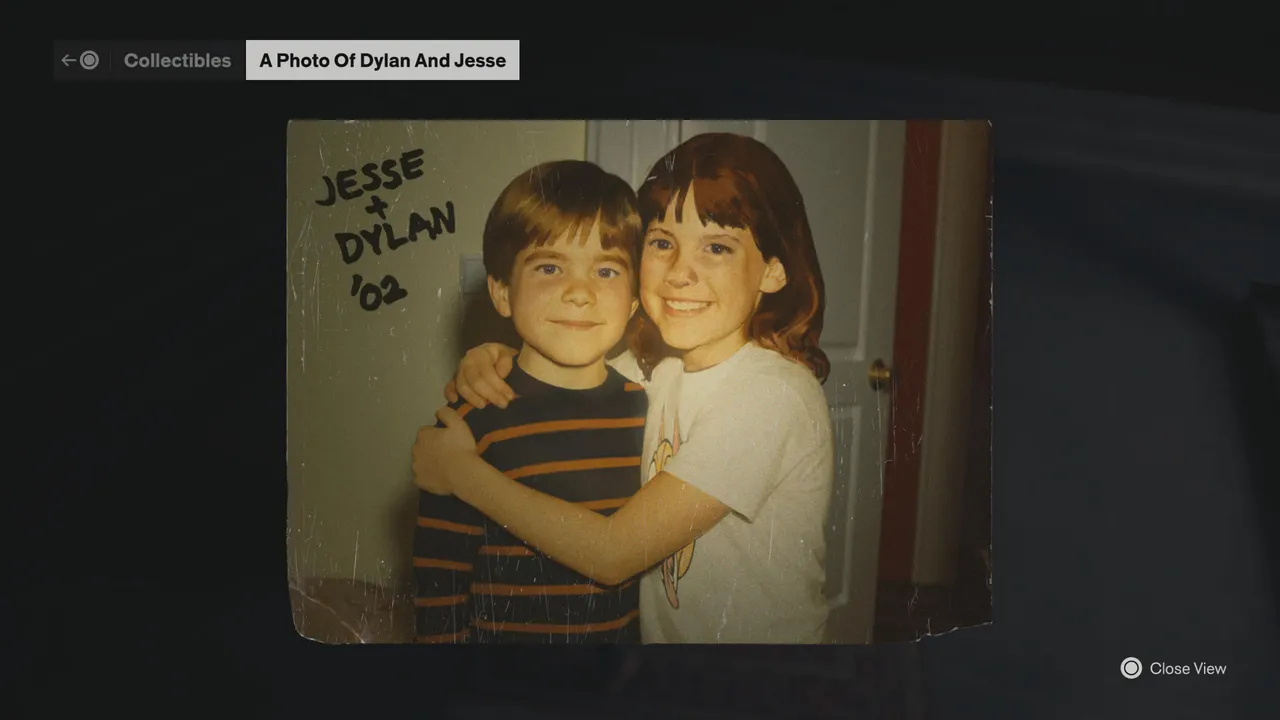
While Dylan is now a good guy, he’s still known as the Parautilitarian, and people will mostly treat him as such. One of the first characters you meet is Zoe de Vera, a FBC contact who becomes his handler throughout the story, and as soon as she figures out who he is, things take a turn for the worse. However, as you play, you can see that he is almost growing on her, and I found the trajectory of their relationship one of the highlights of the game, and I especially liked how after Zoe declined to tell him anything about her life, when it seemed liked Dylan was not making it, she tried her best to save him.
There is something compelling in how the characters react to him, people either fear him outright or actively dislike him. You can hear the chatter of different employees and FCB agents as he walks past them, they're commenting on him or going silent, presumably out of fear. It’s a detail that adds weight to his motivation, as Dylan isn’t just fighting to save the city, but also for a chance to prove that he’s more than what the Hiss made him, and that all the chaos and death he caused in the previous game, he caused not because he wanted to hurt anyone, but because he wasn't himself.
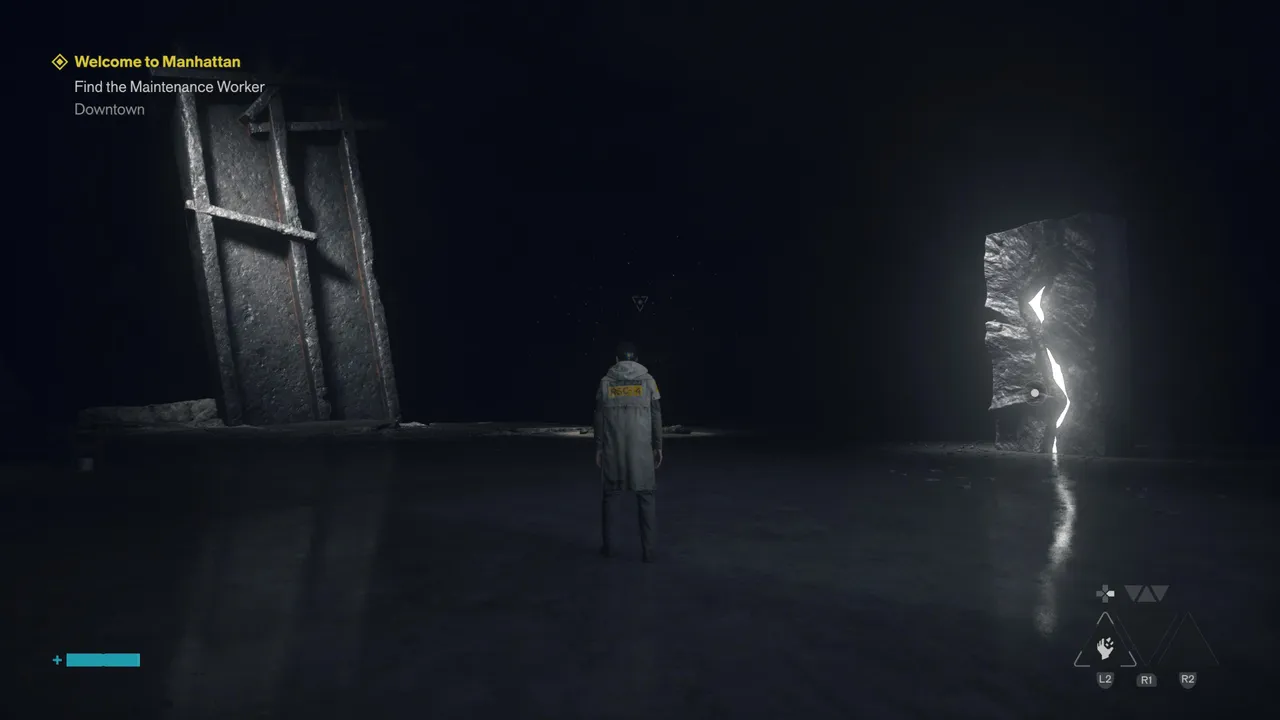
Our favorite FBC director, Jesse, also factors into the story. In the first game, we’ve left her on the duty of the Director of the Oldest House, but in Resonant, we soon find out that she left. I found myself thinking that maybe she abandoned her post and left the city behind, but it didn’t take long for me to reconsider that, although with what she went through, no one could really blame her.
It never really made sense that she would leave Dylan to fight the Hiss alone, after all, no sister would leave her little brother to fend for himself. Remedy has turned the chase upside down, as in the first game we’ve had Jesse looking for Dylan, and now Dylan is the one who needs to find his sister and figure out what the hell is going on, and why she left. It would've been an easier task to complete if they were together, but as usually, things aren't that simple and Dylan needs to find a solution to all the chaos and also find his sister.
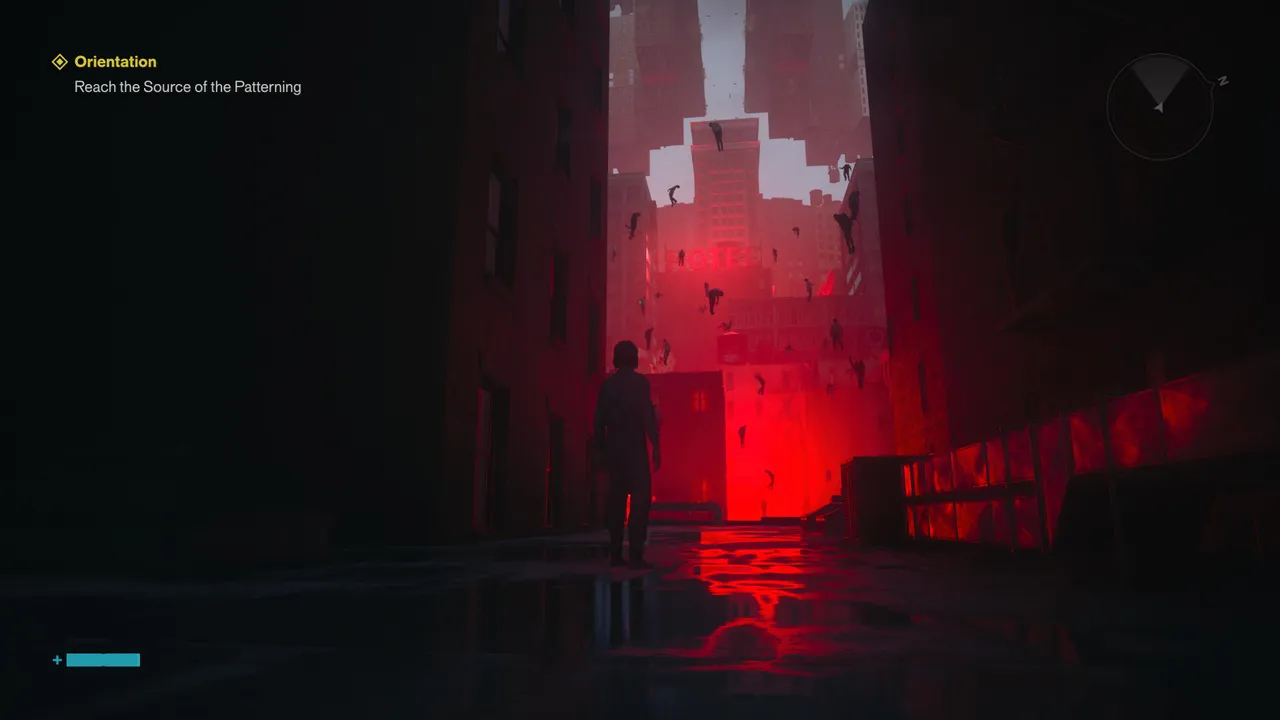
Control Resonant shows us what could’ve happened if Jesse didn’t contain the Hiss in the first game, and how much that force is actually capable of. As Dylan walks around the city, he’ll comment on the destruction, death, and all the things the Hiss have distorted and destroyed. There are enemies everywhere, and a muddy, dark red greets you wherever you look.
It makes you question whether Jesse’s actions and sacrifices from the first game mattered at all.
Fluid, flashy, occasionally spongy
Combat in Resonant trades Jesse’s Service Weapon for something different, the Aberrant, a shapeshifting weapon that can transform into a scythe, hammer, or dual blades. You get the option to choose which one you want, depending on your playstyle, for example if you’re more into getting in close and personal with enemies, then dual blades are your weapon.
Movement is where the game really shines. Levitating, forward dashes, a double jump, changing the direction and jumping from ground to wall, it all comes together very smoothly, and watching Dylan move around the city and through fights just feels amazing. The combat did remind me a bit of Devil May Cry, as you’re jumping around, striking enemy after enemy in flashy combos and a barrage of attacks, with a juicy finisher at the end.
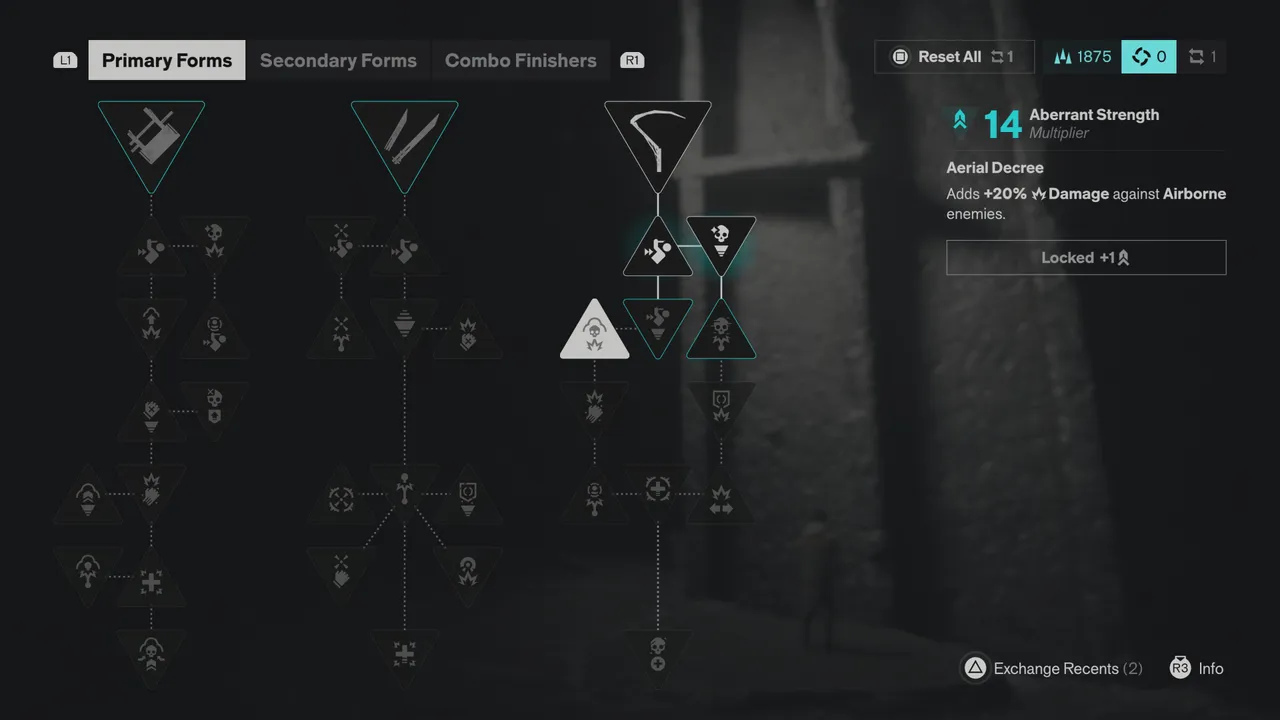
There is also a skill tree you can invest in as you play, making Dylan stronger and giving him a more versatile moveset, which is very much appreciated with the enemy variety that the sequel brings in. If you want to level up, Dylan enters something called the Gap, where you can buy different abilities, try them out, or respec, if you feel like it.
Combat can feel a little bit overwhelming at the start, but it clicks quickly especially if you’ve spent time with the first game. You’re able to equip different special abilities alongside your core combat kit, those abilities coming from these special enemies called Resonants. They are tougher enemies, scattered throughout the city that reward you for taking them down. You’ll meet one rather early on in the game, so you’ll see what I mean. They could be considered mini-bosses, as they are challenging and mostly have more than one phase.
In the regular fights you encounter, there will be the usual, fodder enemies, which keep respawning until you take down their larger counterparts, so focus on them first and only go for the smaller ones if you need a little health boost. Between the weapon forms, movement options, and abilities, there is a real sense of flexibility here, and different players can have different experiences.
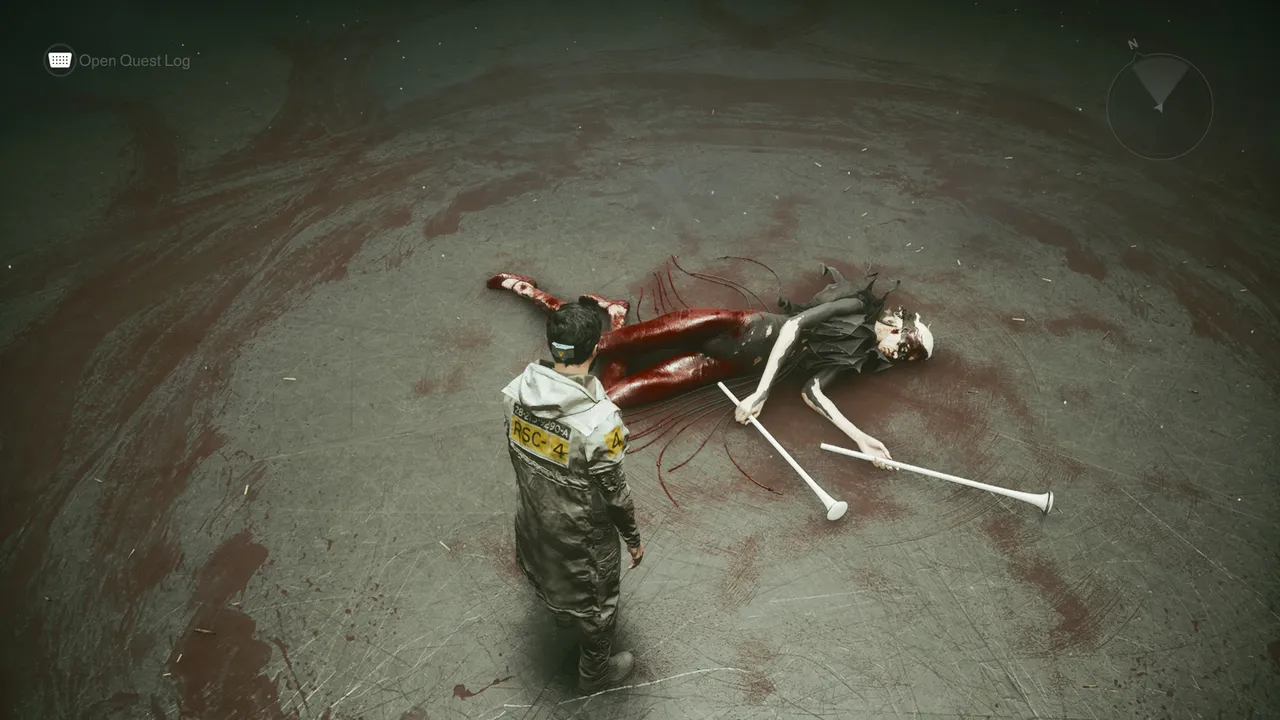
On a less brighter note, enemy balancing isn’t always consistent. I came across fights where I genuinely thought I was underleveled, even though I wasn’t, as some enemies have just very odd, spongy health pools that make the encounters drag on. You find yourself just sitting there and mashing the square endlessly. One of the Resonants particularly stood out as a low point, a fight I got zero enjoyment from because of that, on top of awful camera struggles during that fight.
Beyond the main story, the city is full of things to do. You can talk to important people (and usually get quests), you can draw, hunt down Resonants, and follow different threads that lead you closer to Jesse. Those are scattered during the story, and each time you manage to find one, you’ll get one special ability at the end of the section. The focus is more on saving the city, but the game makes sure you're aware that Dylan wants to find his sister too.
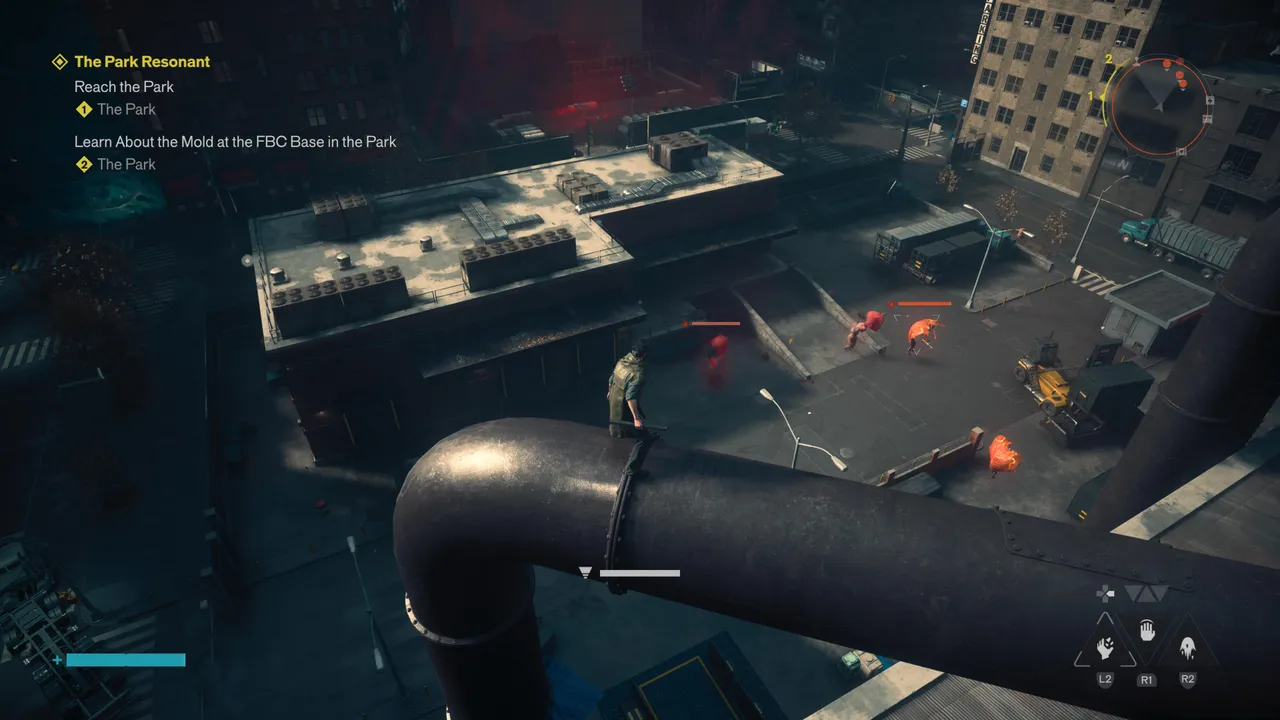
There is a lot of stuff to do and explore, and you won't find yourself bored one moment. If you want a pause from the main story, go hunt Resonants, or look for Jesse, or help someone out. Resonant gives you a bunch of threads to follow.
A city painted in red and grey
Control Resonant keeps the familiar palette that defined the first game: heavy reds, grey, and dark tones dominating most of the environments. I think the happiest colour I could name would be yellow, and even that isn’t all too happy.
I especially liked the dark red that appears here and there over the entire scream, usually when Dylan has some sort of reaction to the Hiss, in my head that’s a trademark of this game. It doesn’t appear all the time, which is why when it does, those moments genuinely stand out and you know you’re in for a show.
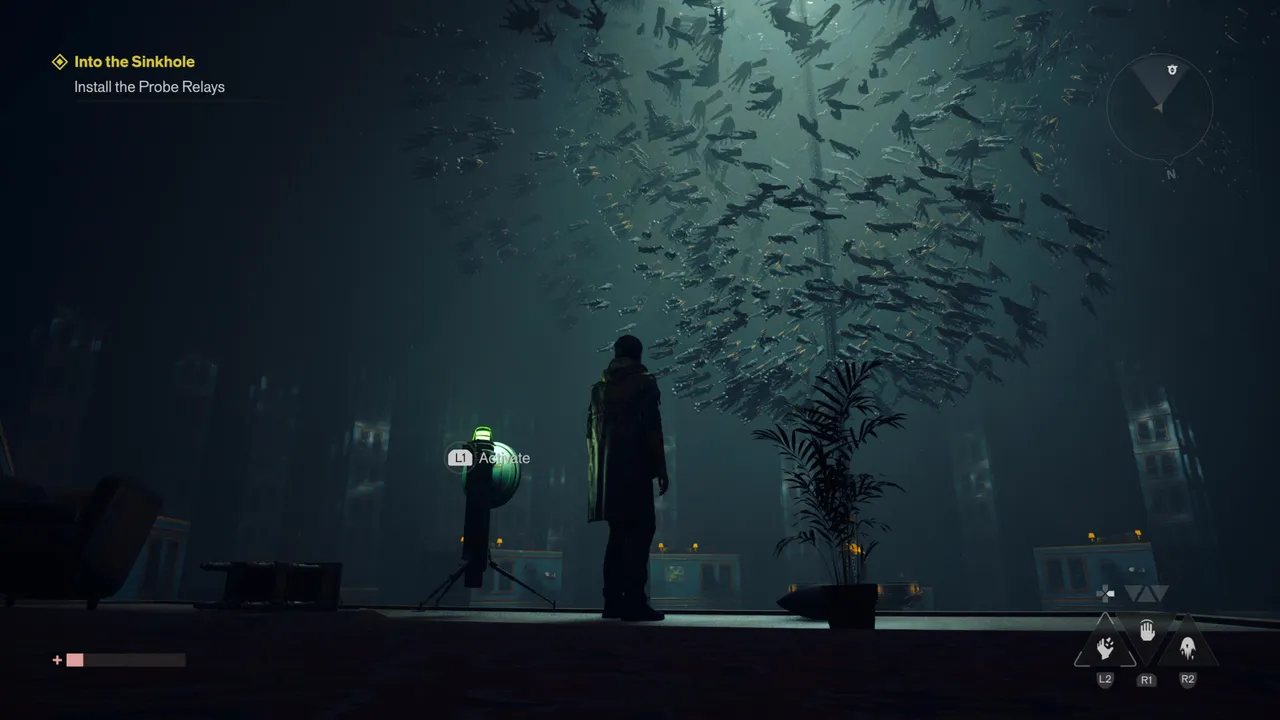
The environments are striking, at times looking like they’re from a dream, or well, a nightmare in this case. The way some of the buildings are half gone or glitching, I could be fooled to think I was watching a Christopher Nolan movie (I know my editor loves his movies). The city's twisted and warped setting fits perfectly in the Control’s established sense of unease, and it’s really one of the game’s strongest visual achievements.
The return of non-animated, live-action sequences is a welcome one too, a defining stylistic choice from the first game that I loved seeing carried over. Voice acting remains excellent throughout the game, and the music is extremely well done, from the choice of songs to the moments in the game when it appears, just superb.
As for performance, I've encountered no issues whatsoever on the PlayStation 5, but I have to mention that some of the environments in the distance seemed a bit blurry and while I did get used to it, it did catch me off guard. However, I did play on Performance mode, not Quality mode.
A sequel that earns its wait
It’s been a long time since I was as excited to play a game as I was for this one, and I can say that Control Resonant delivered that in almost every way that mattered. Moving the spotlight to Dylan was the right call, because he was the one character left unexplored, but also because of his perspective to everything that happened, to him and the city.
Between the fluid, Aberrant-driven combat, the sprawling, warped city replacing the Oldest House as the main stage, and a story that is worth getting lost in, Resonant feels like a confident, worthy continuation of everything that made the original stand out. A few rough edges keep it from being flawless, but none of it comes close to undoing everything that it did right.
I went in as someone who spent years convincing people to give Control a real chance. I'm leaving Resonant ready to do exactly the same thing all over again.
The Good
 Fluid, flexible combat
- Smooth, satisfying movement options
- Compelling story centered on Dylan
- Meaningful and evolving character relationships
- Strong returning visual identity
The Bad
 Inconsistent enemy health balancing
- Distant visuals can appear blurry