Trending
I'm a big fan of the Plague Tale franchise. I've beat and loved both games, but at the end of Requiem, I wasn't really sure where this franchise could go next. I wanted more games, but I also knew that we probably weren't getting another chapter about Amicia and Hugo. While I was perfectly fine with that, I wasn't expecting the answer to be a story about Sophia's past.
After meeting her in Requiem, the second Plague Tale game, getting to see how she became that famed pirate was something I didn't know I wanted until I started playing Resonance. Sophia's past is filled with things that made her who she is now, an adventurer and a fighter, and now we finally have the chance to find out how all of those pieces came together. We get to see people from her past, friends and foes, what she went through, and why she is connected to Amicia and Hugo more than meets the eye at first.
Resonance: A Plague Tale Legacy takes us from the grassy meadows of plague-ridden France straight to the beautiful but dangerous islands of Greece, bringing in a new cast of characters and a completely different type of gameplay experience. Stealth is pretty much gone; the emphasis is on action here.
While it does all sound like a huge shift and a strange combination, it all fits in perfectly.
The past always finds you
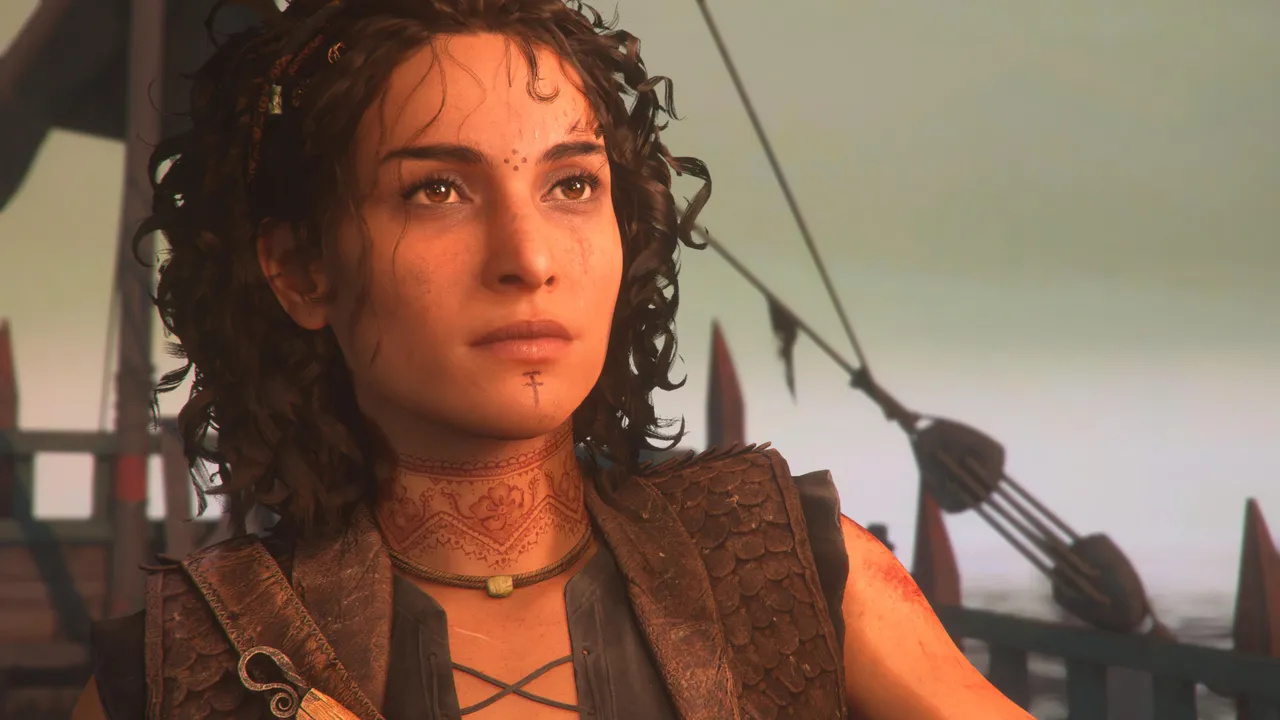
When we meet young Sophia, she's a captive at a convent, experimented on for her visions of places she's never seen. Her father Alec eventually finds and frees her, raising her among pirates until his own fatal treasure hunt leaves her orphaned again - with only her sketchbook of visions and his old crewmate Faro to hold onto.
After one botched attempt at a carnival goes wrong, people die, and relationships get broken, Sophia decides to make her way towards the island she has been seeing in her visions since childhood. And from there, the game starts connecting pieces of Sophia's past with the ancient history of the island, and eventually with Greek mythology itself.
And this is where Resonance takes an interesting turn. As we're following Sophia making her way on this island, we're also seeing the legend of Theseus and the Minotaur unfolding. They are connected, their destinies tied together, and as you play, the game switches between Sophia's time and the Minoan period, showing us two completely different perspectives, allowing you to step into the shoes of Theseus too.
You get to see how the same places that are rundown ruins looked at the peak of their glory, filled with people and warriors, rose petals and gold.
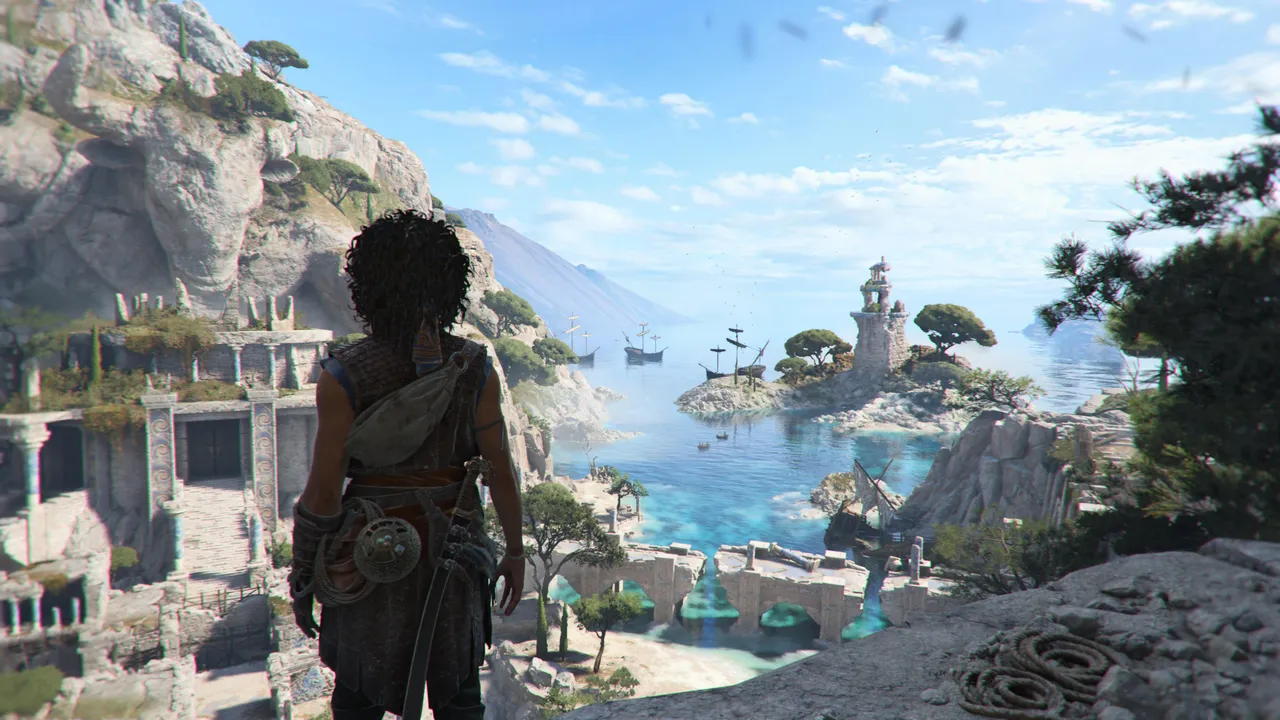
Theseus and Sophia have much more in common than you might initially think, as they are both dealing with things that are bigger than themselves, both are being pulled towards something they don't completely understand, and both have sacrifices they need to make.
The more she explores the same places he walked, the stronger their connection gets, and the game slowly reveals how it is all connected to the Prima Macula, an old affliction that affects the blood of certain families. This connection is what makes Sophia's story work so well within the larger Plague Tale universe. We already know where the Macula leads, and we also know what happened to Hugo and Amicia, but Resonance now gives us another piece of that history without repeating any parts of the previous story. We're going from France to Greece and from rats to ancient legends, but the underlying motives are still the same.
While the shift of the setting is interesting and the addition of Greek mythology as well, this story is ultimately about Sophia herself.
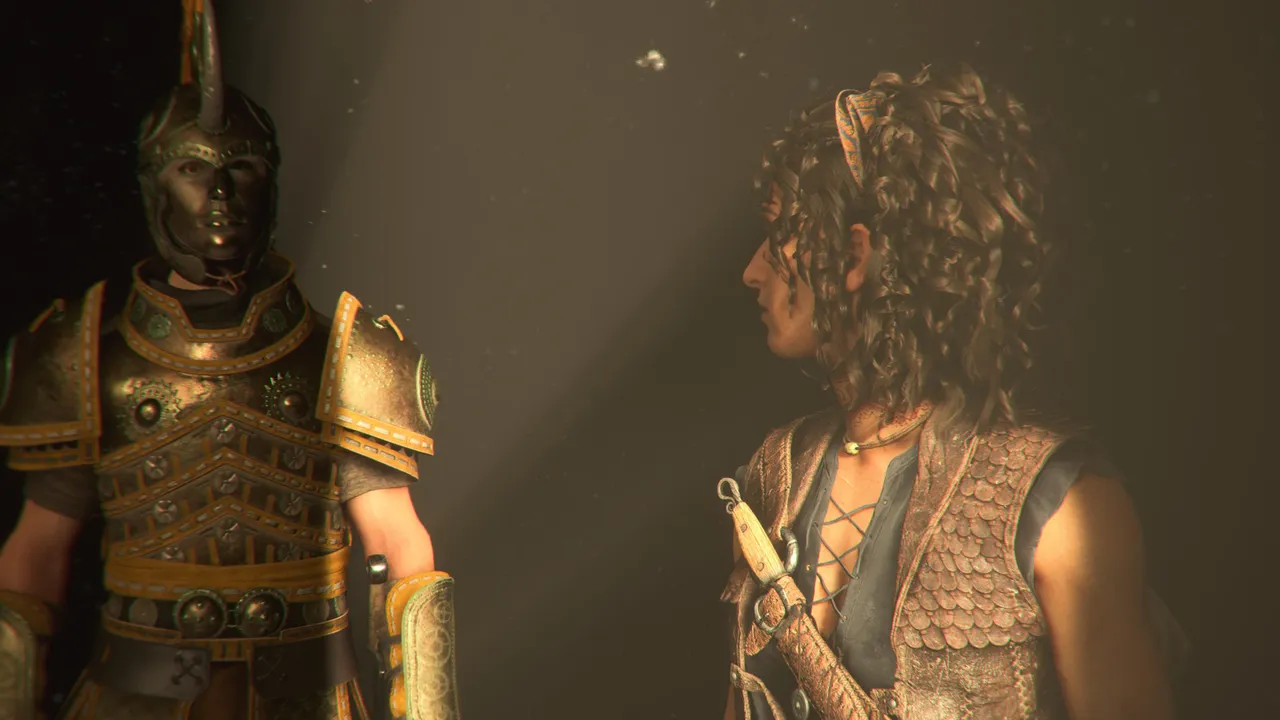
Sophia spends much of the game trying to figure out the connection between the island, herself, and all the visions she had from childhood. The deeper she goes and the more she finds out about the island, it feels like she is finding out more and more about herself too.
The story talks about loss, friendship, betrayal, sacrifice, and finding your spot in the world. Sophia lost her father at a young age, and later she would lose members of the crew she considered her family. Among them were people who taught her how to move, how to fight, and how to take care of herself, so losing them wasn't an easy thing to move past. All of her losses stayed with her, became a part of her. All of the people you meet - Faro, Ezra, Irene - they aren't simply characters who happen to be travelling alongside her. They are all part of the life she built after losing her father, and they help show us the person she became between her childhood and when we first meet her in Requiem.
Sophia's relationship to them gives more weight to the story, especially as she starts to realise that someone has betrayed her and she realises that people she cares about aren't always going to be safe, and that trusting someone can also come with consequences. For someone who has already lost so much, this betrayal feels particularly cruel.
You can feel the weight of loss on Sophia as you play through the game, the more you go down into the island, the more distressed Sophia becomes. There is a sense that she was always going to end up here, almost as if the island had been waiting for her ever since she had that first vision as a child. She isn't a person that can leave her past behind and start over, mostly because that past will always be right behind her.
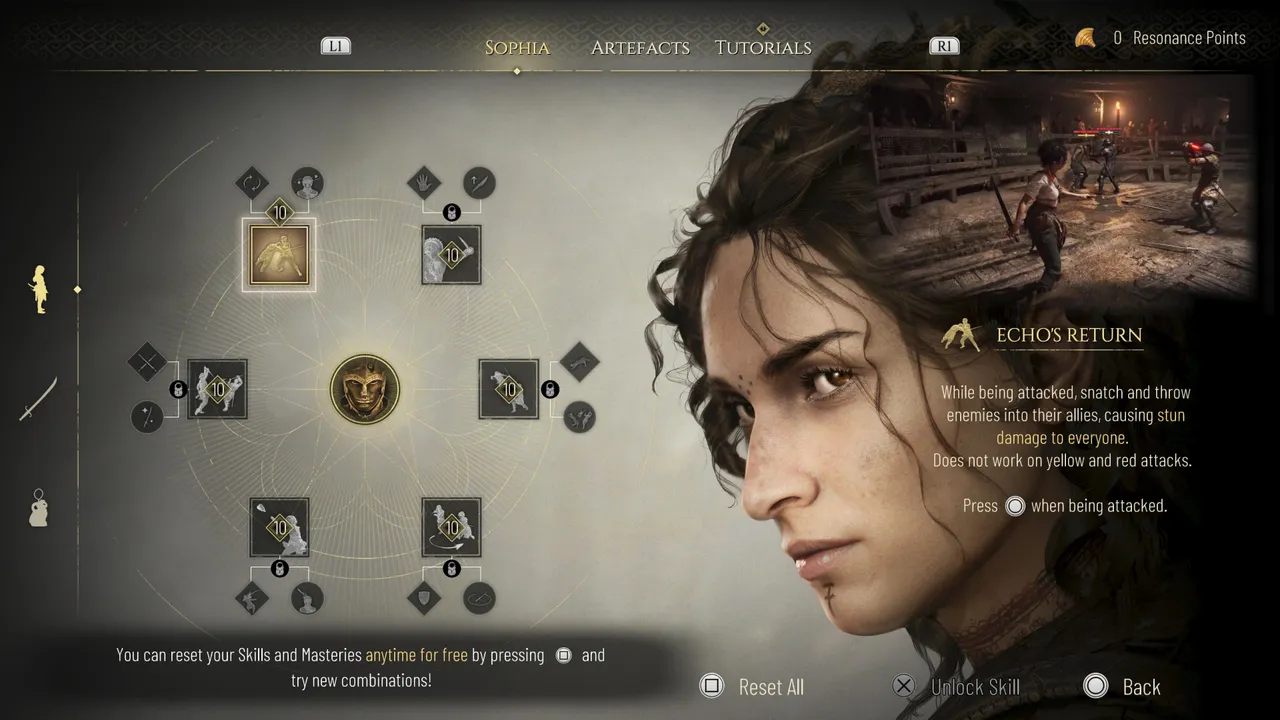
It is very interesting to see all of this knowing where Sophia eventually ends up. When we meet her in Requiem, she's this confident pirate who can guide Amicia and offer her a different perspective on everything around her. But she wasn't always that way, we get to see the person underneath all of that, before she has everything figured out. Someone who is dealing with her childhood, trying to understand her visions, losing people she loves, and trying to figure out where she belongs.
Sophia has enough of her own story to keep you glued to your seat, and the way the game connects her past, Theseus, the island, and the Prima Macula gives this chapter a reason to exist beyond just giving us another Plague Tale game. It feels as if we're discovering something that was hidden underneath the story we already knew.
Light, puzzles, and mystery
The first thing you notice, gameplay-wise, is by far the combat. Previously, we had combat which leaned much more into stealth (which does make sense, as a 13 year old girl can't possibly go hand-in-hand with a grown soldier), but now Sophia is perfectly happy to get up close and personal with anyone who gets in her way. It was a bit odd at first to see a Plague Tale name on a game that doesn't rely on stealth much, but after spending some time with it, I can't complain. The combat is fun, the animations are fluid, and the enemies don't feel like sponges. There is stealth involved later in the game, but not against what we're used to.
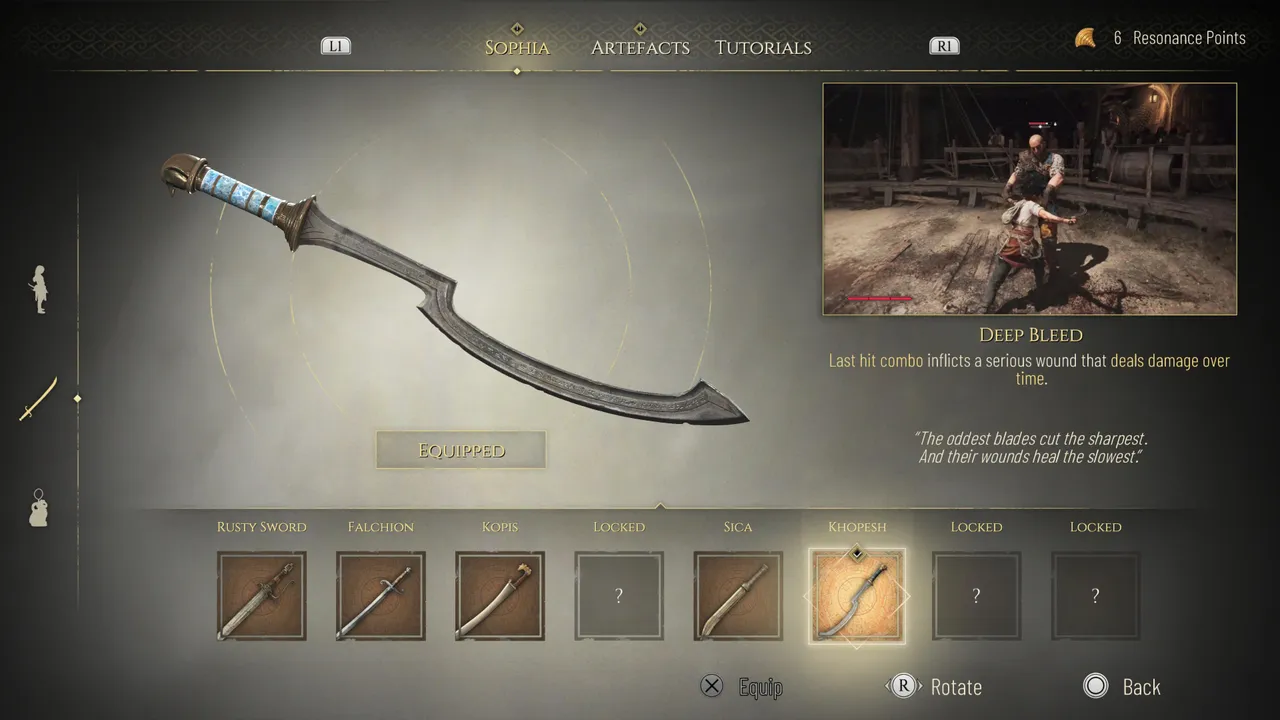
Sophia can parry, dodge, stun enemies, kick them, and also follow up with heavy knife attacks. You can find different weapons that have different finisher moves and attributes, combined with a skill tree which allows you to unlock and improve abilities as you play. You need Resonance Points for this, which you can find in the world but also earn during combat. Sophia can also collect charms and beads, which give her different attributes and perks.
The combat never feels like you're just repeating the same attack over and over again until someone dies. The parry mechanic is something you need to get used to, and while the timing can be tricky at times - especially if you're dealing with several enemies at once - once you get it down, the combat starts feeling less like a series of random attacks and more like a dance. Parry, dodge, strike, kick, finish, and move on. Once you get the timing right, Sophia becomes a mean killing machine.
The combat can be challenging, especially if you increase the difficulty, and if enemies swarm you, they can hit hard and you can't really hope Sophia's knife will solve all the problems. There is a small health system where Sophia has a certain number of health chunks, and defeating enemies can restore one of them, which gives you another reason to be aggressive during fights. I never felt like I wanted to avoid combat; it felt like a fun break from the exploration and puzzle solving, never allowing the game to become boring.
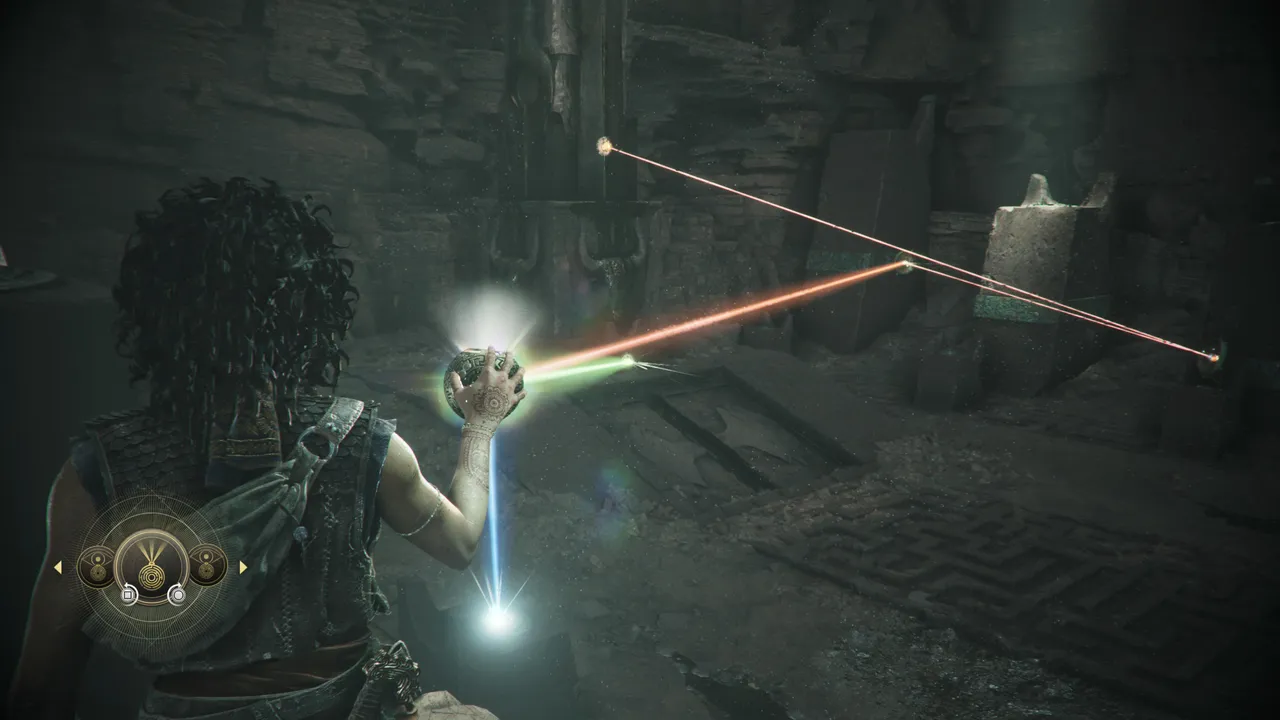
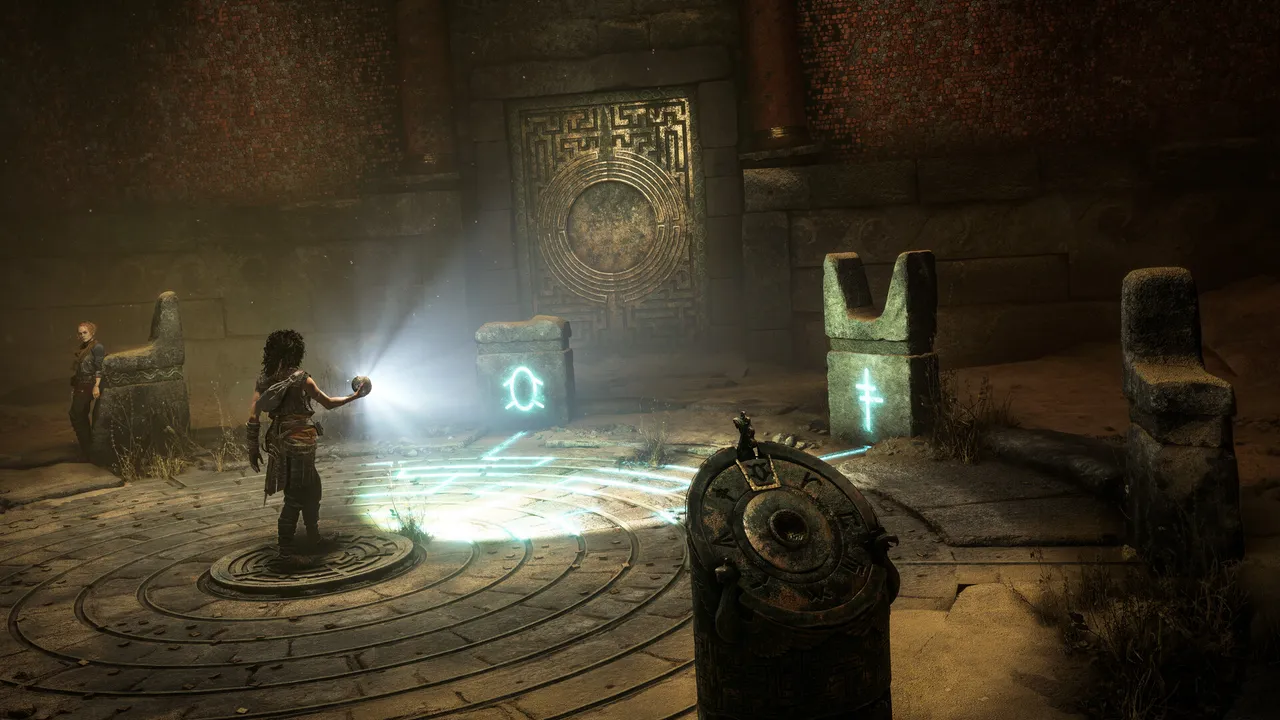
The other difference is the way Resonance handles light. In the previous Plague Tale games, light was something that you used to get away from rats and find a safe path through dangerous areas. Here, it is used in a similar manner, but also to solve puzzles, manipulate coloured beams, and figure out how to get further into the temples and ruins.
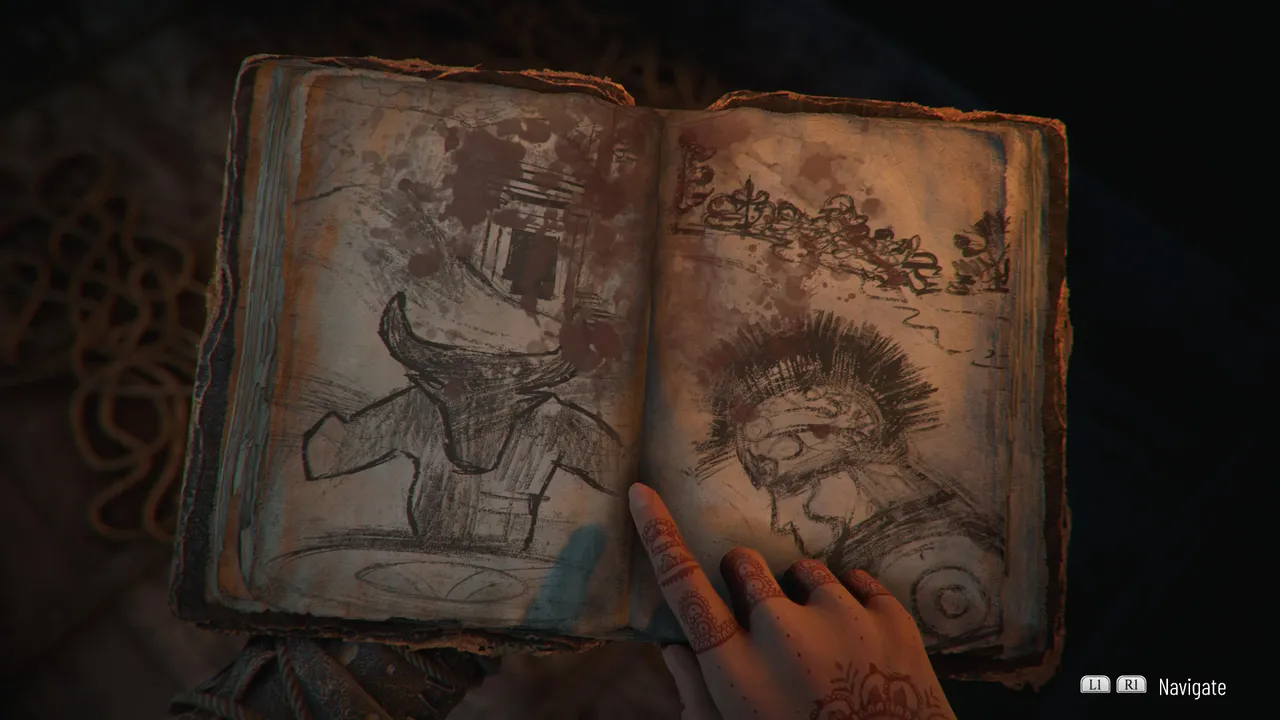
And when I say further, I mean further. The game is taking you down into the island, exploring ancient ruins while discovering more about what happened there. The puzzles aren't particularly difficult; adjusting the light - both coloured and not - can seem tricky but it really never becomes a problem and it usually is simpler than it seems.
What I really enjoyed in the puzzle system was the fact that Resonance gives you a choice in how much help you want. Sophia has her book full of notes, clues, and drawings, and you can look at her sketches to find clues on where to go and how to solve puzzles. There is something satisfying about being shown a little drawing and having Sophia comment on it rather than just being handed a written instruction which tells you what to do. I'm also someone who prefers visual clues, so the system worked really well for me. If you want to spend more time solving a puzzle, you absolutely can sit for ten minutes and think about what to do, but if you want to ask for more clues, you can do that as well. If you ask for enough of them, the puzzle solves itself basically. You companions will often throw in a tip or two, but they won't automatically shout out the solution in God of War: Ragnarok-style, which I appreciated.
It's up to you whether you want to struggle through it or accept some help and move on.
Exploration is another big part of the game, and the influence of Tomb Raider and Uncharted is pretty obvious. You're climbing, exploring ruins, solving puzzles and finding clues, trying your best to figure out what the hell happened.
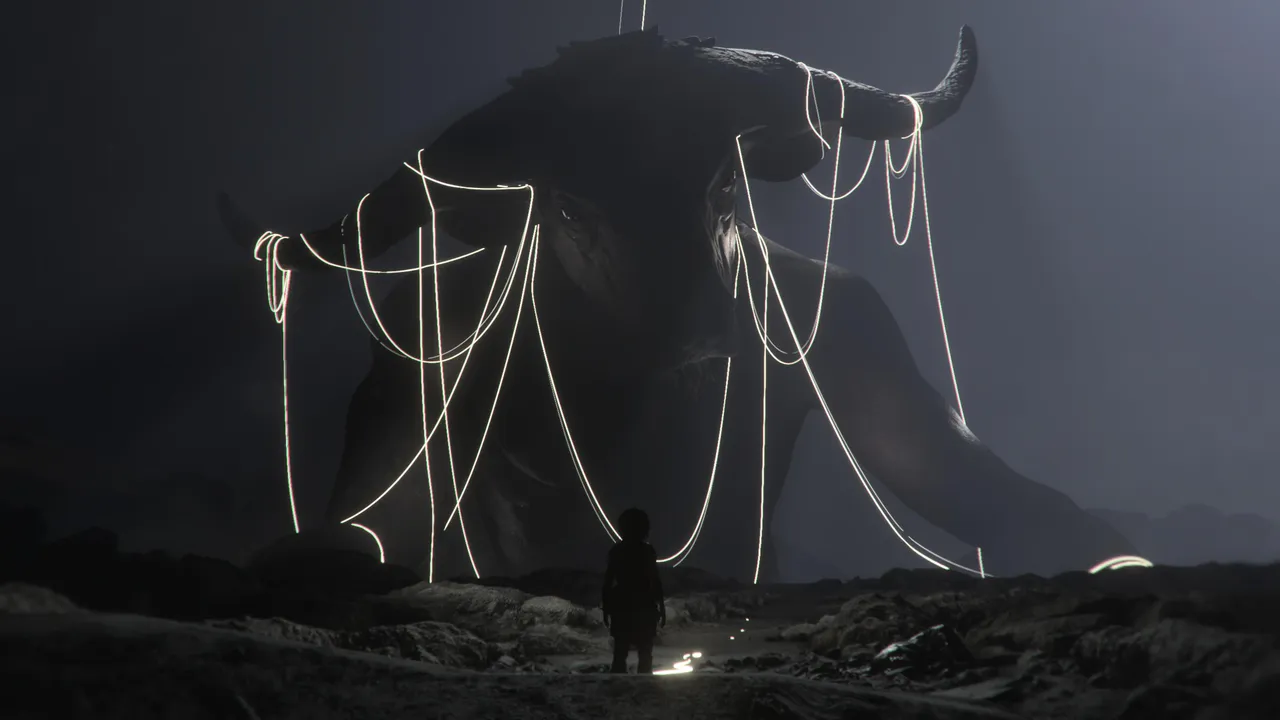
On rare occasions, you'll switch to Theseus, allowing you to explore the island in two different time periods, from two different perspectives.
There's combat too during these brief sections, brining new moveset, so the changes aren't just visual. Playing as Theseus feels different than playing as Sophia, and it gives a bit of variety to the game. What might seem like one thing from Sophia's perspective can be a whole different one in Theseus' eyes. The more you explore the places Theseus once walked, the stronger their bond becomes, and the island itself starts feeling like a familiar place, like a bridge between these two stories. During the Theseus sections, the island becomes alive again and filled with activity you obviously don't see in Sophia's time.
You're slowly figuring out what happened in the past but also what Sophia's place is in the story, which makes exploration feel less like moving from one objective to another.
The world isn't without danger, as Resonance introduces a new supernatural entity that plays with the same idea of light and darkness that the series is known for. It's an homage to the previous games, but it isn't as simple as "oh, the rats are back again". This enemy has its own twists and changes to how you approach it.
Overall, Resonance introduces a confident change for the series. It takes the stealth, light, puzzles, and exploration that the previous Plague Tale games are known for and mixes them up, adding direct combat. It might take a bit to stop expecting that Sophia will sneak around like Amicia did, but once the combat clicks completely, there is a lot of fun to be had in getting into a fight rather than trying to avoid one.
Living, breathing world
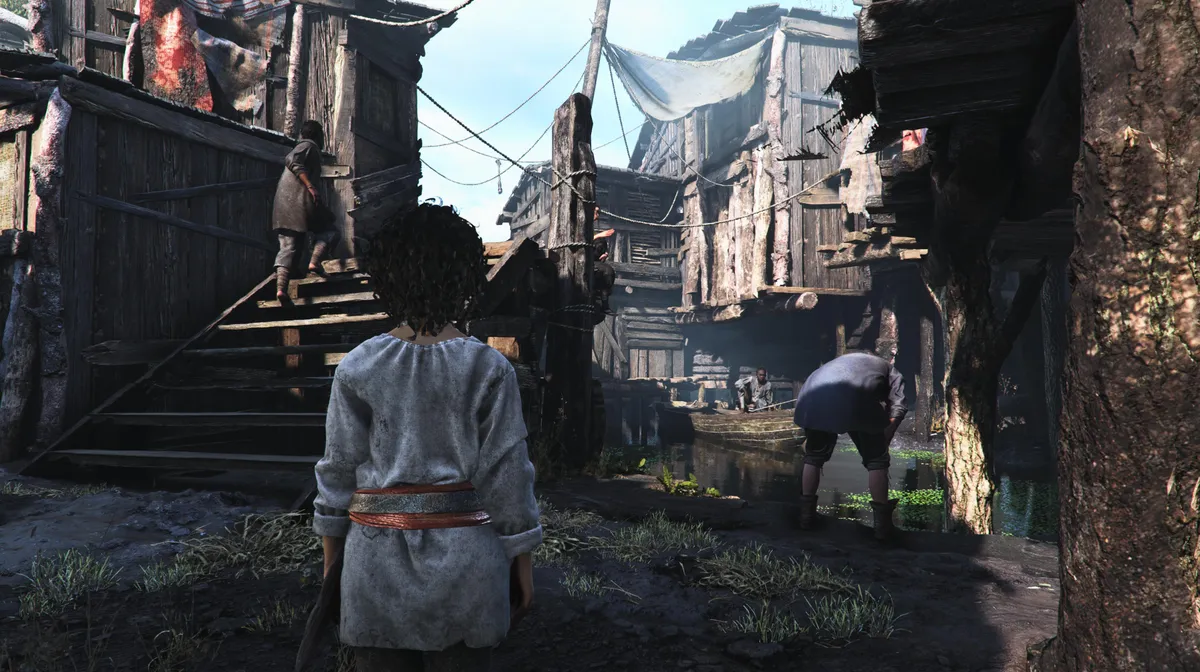
If there is one thing that is a certain hit with Resonance, it's the setting. It's just beautiful, and moving it from France to Greece was always going to give the game a very different visual identity. Whether you're making your way through the lively areas above ground or going deeper and deeper into the ancient ruins underneath, there is always something interesting to look at.
The islands feel alive too, as you walk through them. In the earlier sections, at the carnival, you can hear people talking, dancing, and going about their day, which makes it feel like an actual place rather than a collection of levels. Later on, stunning nature is everywhere, with birds, insects, and ambient sounds constantly reminding you that you're surrounded by living things. The general noise of the island helps to sell the setting, and it changes as you move underground, with the ruins and the temples creating a much more isolated feeling.
Resonance: A Plague Tale Legacy Environments

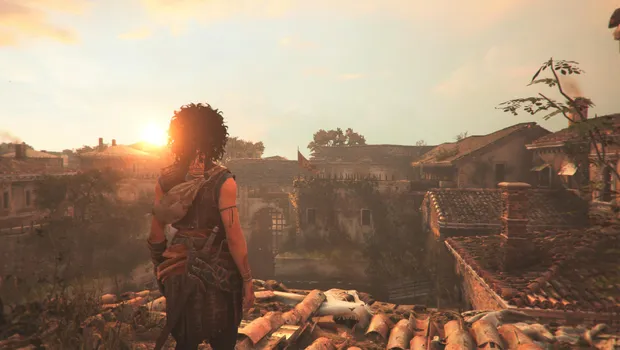
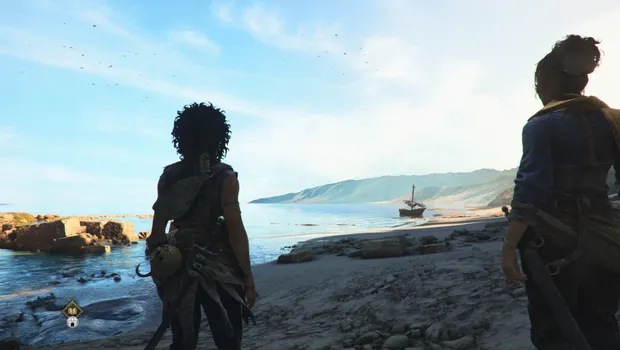
When you're back in the Minoan period, life is all around you, even in the abandoned ruins, with people, colour, and activity everywhere. Seeing these same places in two different periods makes the setting feel much more interesting, especially as you start to see the connections between the present and the past.
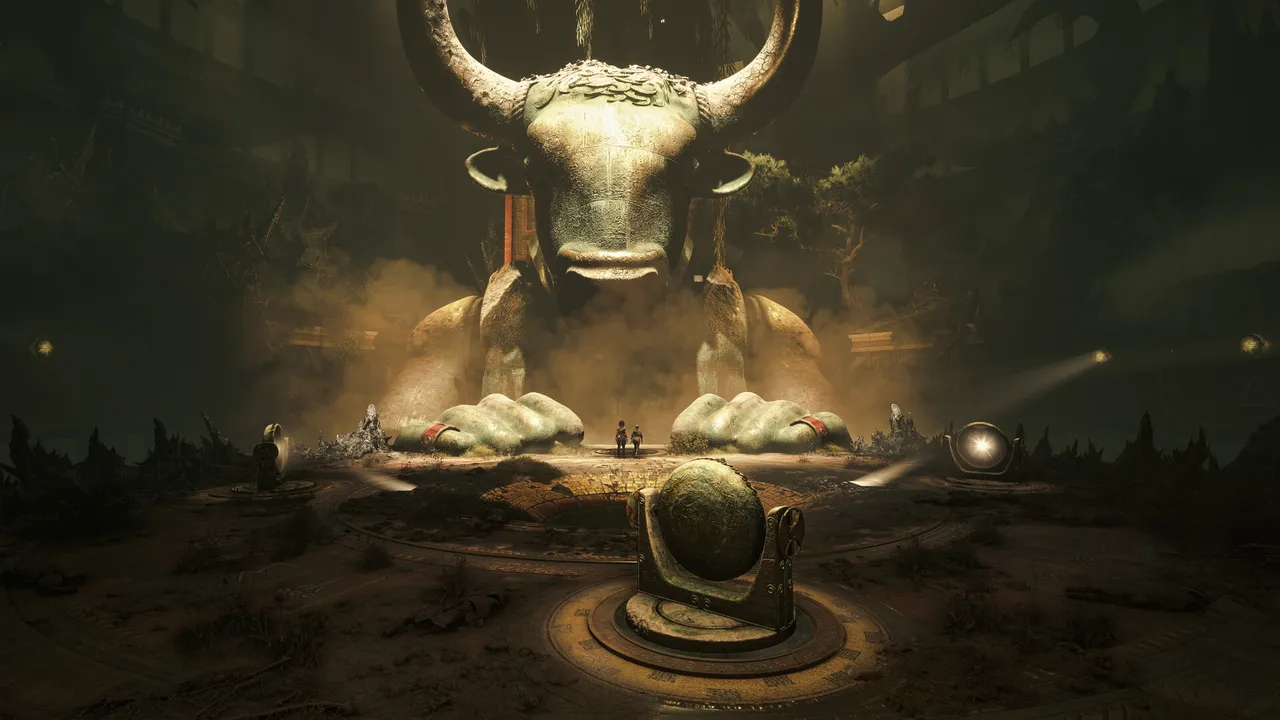
The ruins and ancient temples are their own highlight. As Sophia goes down further and further, the environments become increasingly mysterious, and there is a real sense that you're uncovering something that has been hidden for a long, long time. The visual design works particularly well here because the environments aren't just there to look pretty; they also help tell the story.
The character animations are just as good. Sophia's movements during combat are fluid, and the different attacks, dodges, parries, and finishes all have a nice weight to them, and nothing feels tedious or stiff, which I say is an important thing with how much Resonance is focused on combat.
And then there is the music.
Olivier Deriviere, who also worked on the previous two Plague Tale games, returns for Resonance as well. The moment I saw his name attached to the soundtrack, I just knew I was in for a blast. I absolutely loved the soundtracks of the first two games, and the moment I heard the main menu song in Resonance, I was sold. The Plague Tale soundtracks remain one of my favourite game soundtracks, and I believe that Deriviere is to thank for that, as he makes sure the soundtrack captures the game's essence perfectly (Yes, I'm listening to the soundtrack while I'm writing this).
The soundtrack carries the familiar Plague Tale feeling, while the addition of a Greek Amalgamation Choir - a woman's acapella vocal ensemble from Cyprus - allows it to fit perfectly into the new setting and the Greek mythology that surrounds Sophia. The music helps build the atmosphere as you're exploring the island and moving through its different time periods.
The voice acting is also commendable, with Anna Demetriou doing an amazing job as Sophia. She brings the right amount of emotion to the character, particularly as Sophia's distress increases as she goes further down and learns more about her past. The supporting cast is well acted too, which helps with immersion surrounding the relationship between Sophia, her crew, and the other characters.
On the technical side, I did run into an issue where Sophia just decided to glitch out towards the end of a quest, and I had to restart from the checkpoint. It happened once or twice maybe, and it was an isolated problem and not something that kept on happening during the game. Besides that, my experience was smooth; nothing else technical managed to pull me out of the experience for any significant amount of time.
While Resonance might seem like a step away from the Plague Tale games, visually and musically, it still feels like a part of the same family. The Greek setting gives it a new identity, while the music, atmosphere, and attention to environmental detail keep the familiar Plague Tale feeling alive and kicking.
A tale worth telling
After I finished Resonance, I was surprised how easily Sophia stepped into the spotlight. I went into the game loving the first two Plague Tale entries, but I didn't know an entry without Amicia and Hugo would leave such a big impact on me.
Resonance didn't look over its shoulder, but decided to look ahead and take the series somewhere completely different, which is its biggest strength. The change in setting, the focus on combat, and the Greek mythology give it enough of its own identity that it never feels like a simple continuation made because of the popularity of the previous games.
What I appreciated most was that Resonance doesn't make the Plague Tale universe feel like it's being milked for another story. It actually has something to say, while still giving fans of the previous games plenty of reasons to care about what it's trying to tell them.
I love Amicia and Hugo, and I wasn't sure whether anyone else could get me as invested as they did, but it turned out I just needed to meet Sophia. She reminded me of Amicia, and after finishing the game I could see why they bonded so easily: they both went through similar struggles, but each of them in their own way.
Resonance is different, but a good different. And if this is the direction Asobo Studio is taking the Plague Tale universe, I'm more than excited to follow along.
The Good
 Sophia's origin story recontextualises her role in Requiem
- Fun and fluid combat that never gets old
- The Greek setting is beautiful
- The puzzle and hint system works well
- Immersive atmosphere that makes the world feel alive
The Bad
 An occasional performance glitch