Trending
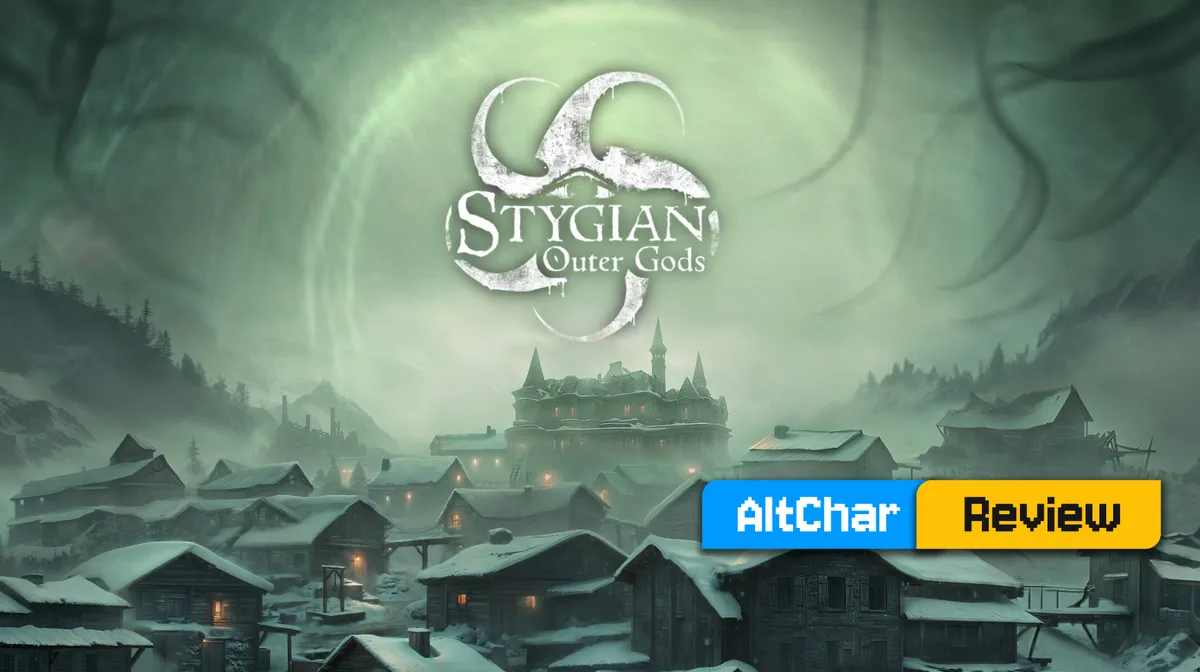
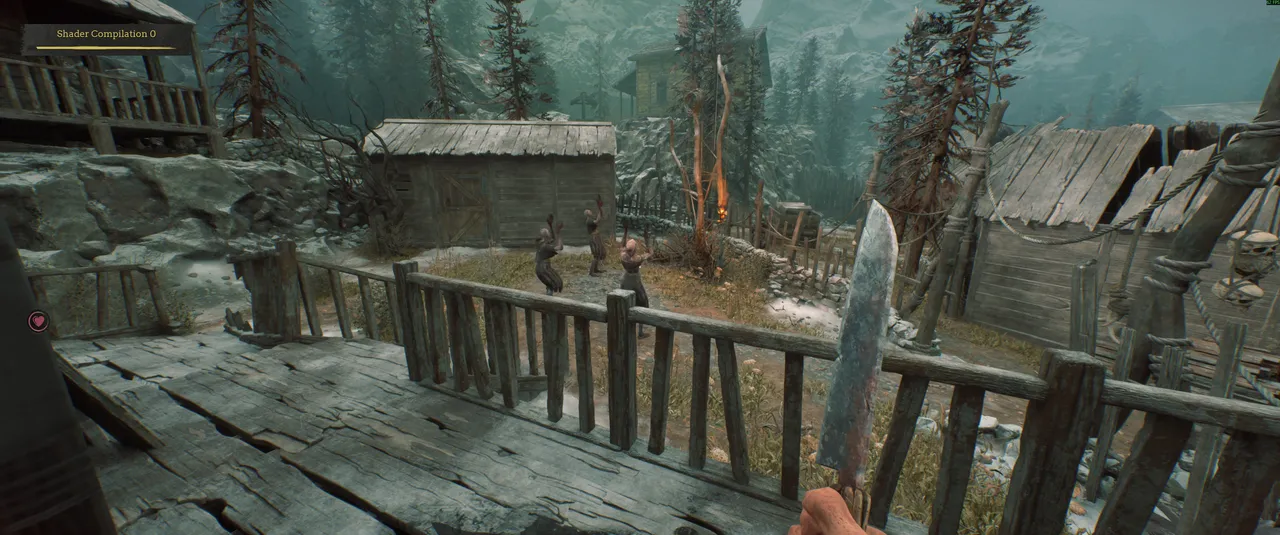
Can a game really be original while, at the same time, it desperately tries to copy another game? Is it even possible? Well, it apparently is, and Stygian: Outer Gods is here to show us how. This survival horror from Misterial Games takes obvious inspiration from Resident Evil: the crafting mechanics, the inventory management and the deliberately slow gameplay that heightens the feeling of dread are all here and accounted for, yet while you play, you never quite get that particular Resident Evil feeling.
The atmosphere is different enough, and the game owns its mechanics well enough to feel truly original. Stygian: Outer Gods isn't a new game for me; I played it last year when it entered early access, and even then I said in my preview that the game had real potential. It seems this potential struggle with a proper realisation is all due to the problems the game can't shake off, but more on that later.
Speaking in Riddles
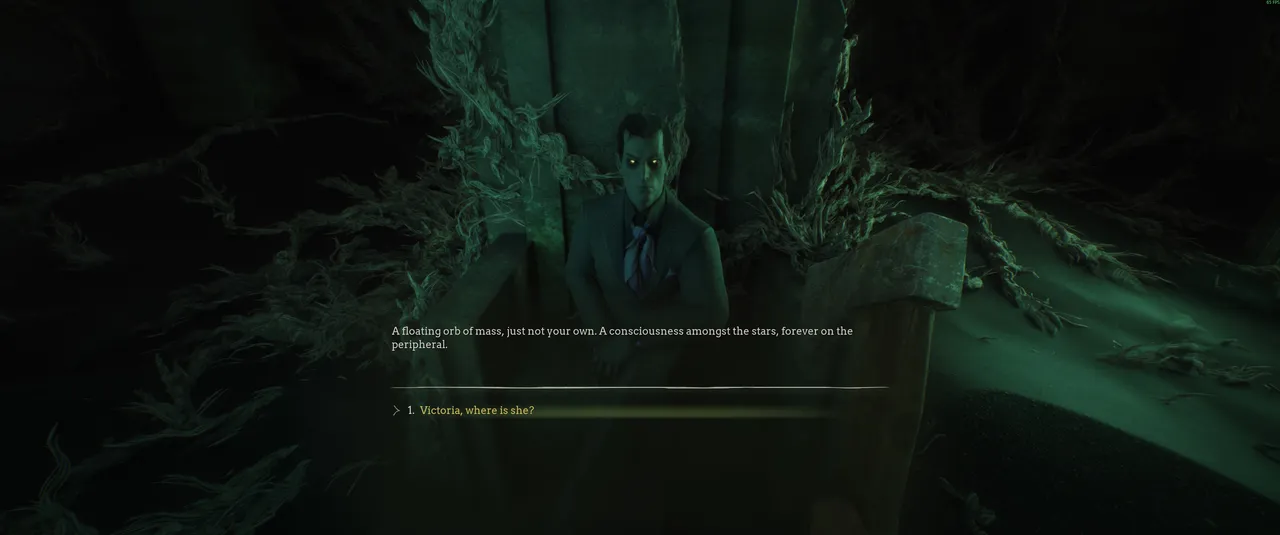
The story of Stygian: Outer Gods is a complicated one, and it will require a great deal of processing to even scratch the surface of its deep and overly complicated lore. The storytelling approach doesn't help much, because the game bombards you with names, terms and events you know nothing about, while the language is deliberately archaic and every sentence can be interpreted in many different ways.
The characters speak in riddles and rhymes, leaving a lot to your imagination, and since this game serves as a kind of prequel to 2019's Stygian: Reign of the Old Ones, you'll need some knowledge of that game to connect the dots. I never played it, and I must confess I had a really hard time understanding the story as it is.
You play as Jack Harrison, a former English soldier who was honourably discharged after suffering a severe injury on the battlefield during World War I. His estranged friend Victoria shows up at his door, claiming his missing father is alive in the strange town of Kingsport, and she urges Jack to travel there and get to the bottom of this mystery. She has an agenda of her own too, of course, because she got funding from Miskatonic University to investigate strange occurrences in Kingsport.
The pair get shipwrecked on the way before anything significant happens in the game. However, Kingsport is far from a normal place. Soon, the streets fill with women who turn into witches, attacking anyone whose path crosses theirs, and since Jack is one of the rare 'sane' people here, the investigation quickly turns into pure survival.
Of course, this is just how the story opens, and it is far from where it ends up. It soon turns into one big mystery involving magic, the occult, strange characters and even stranger places, all woven around Kingsport as the centre of something much bigger and far more complicated, with Jack as the only one capable of standing between the town and the disaster lurking around the corner.
The story is definitely interesting and mysterious; however, its biggest problem is the way it is told. There is sporadic voice acting in Stygian: Outer Gods, but most of the story is delivered through text-based dialogue, and that takes its toll on the story itself. The language is far too complicated and cryptic, and sometimes the dialogue choices are far from obvious. I found myself more than once staring at the provided answers, not knowing which one to choose because I didn't understand what either of them meant.
A Familiar Blueprint
I already said that the game takes inspiration from Resident Evil, and the entire gameplay vouches for it. The pacing is very slow, and the first-person perspective makes the experience even more personal and closer to the action.
The combat is slow and sloppy too. You'll be using melee weapons at first, but as the game progresses, firearms take their place, although only a handful of guns will be at your disposal; four of them, to be exact. You'll use a revolver, a double-barrel shotgun and a rifle, and towards the end of the game, a second revolver becomes available if you complete a small side quest to get it.
Apart from weapons, the game also relies heavily on some hardcore RPG elements, including a talent system in which you collect tarot cards that enhance different abilities, like lockpicking, carrying heavy objects, occult or speech. Each of these abilities can help you along the way, so you'll have to choose wisely which suits your playstyle best.
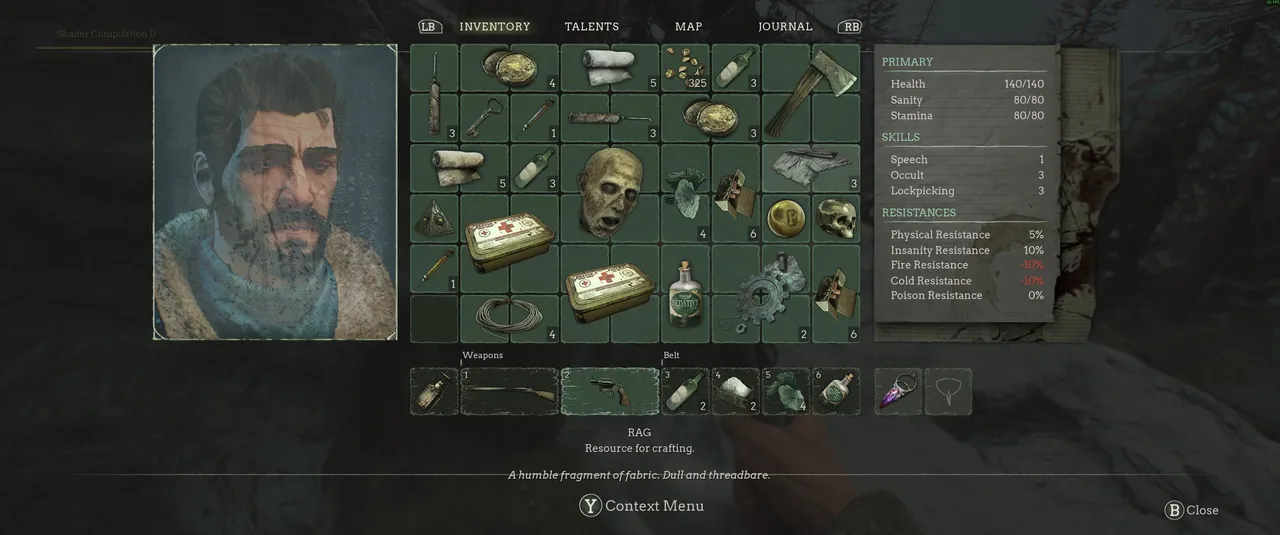
The game also uses status effects like frost, fire and poison, plus a sanity system, making the gameplay even more interesting and engaging. This is what I meant when I said the gameplay borrows heavily from Resident Evil yet is original enough to feel like something completely different.
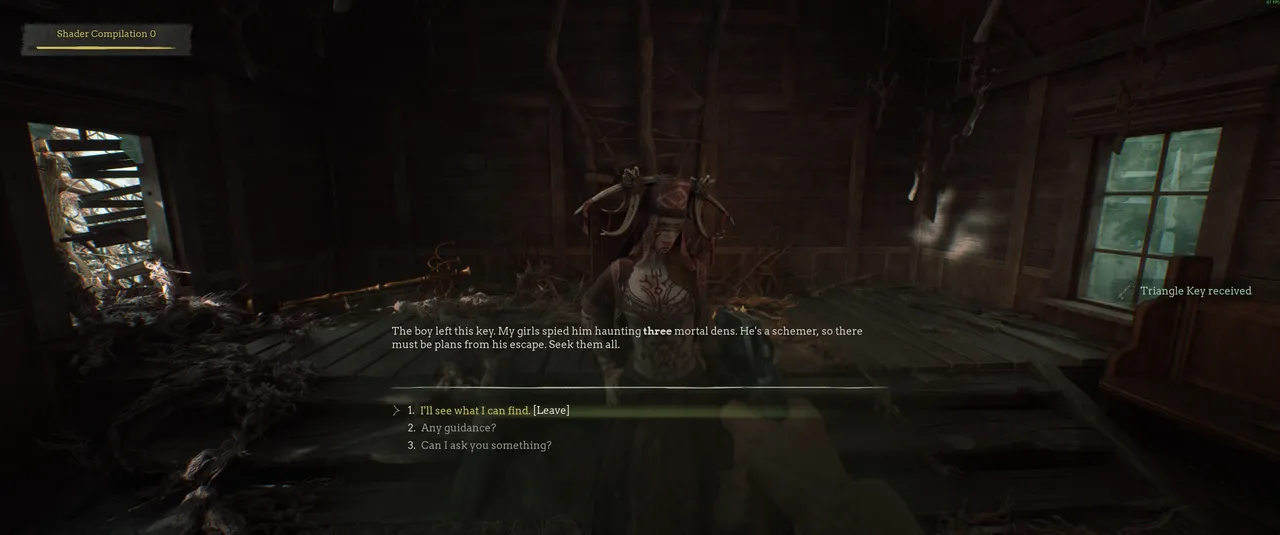
And then there are the puzzles, which are something of a disappointment for me. Every puzzle follows a logical sequence, and they hardly pose any challenge. You'll mostly use your supernatural abilities to see what other humans cannot and follow the clues, and everything is tied to those mechanics. In true Resident Evil fashion, you'll also get those 'three items' quests, where you have to collect three different medallions or three different keys to unlock a gate, but it all flows naturally, without any need for extra thinking or solving complicated puzzles. A bit of a missed opportunity, if you ask me.
The entire game takes place in Kingsport, which has its own map. The map is a missed opportunity too, because it never marks the interesting places you have visited, only the objectives you're supposed to follow. There are some blocked areas you cannot access without the required abilities, but once you gain them, you have no way of knowing where to look, because the map never pinpoints their locations.
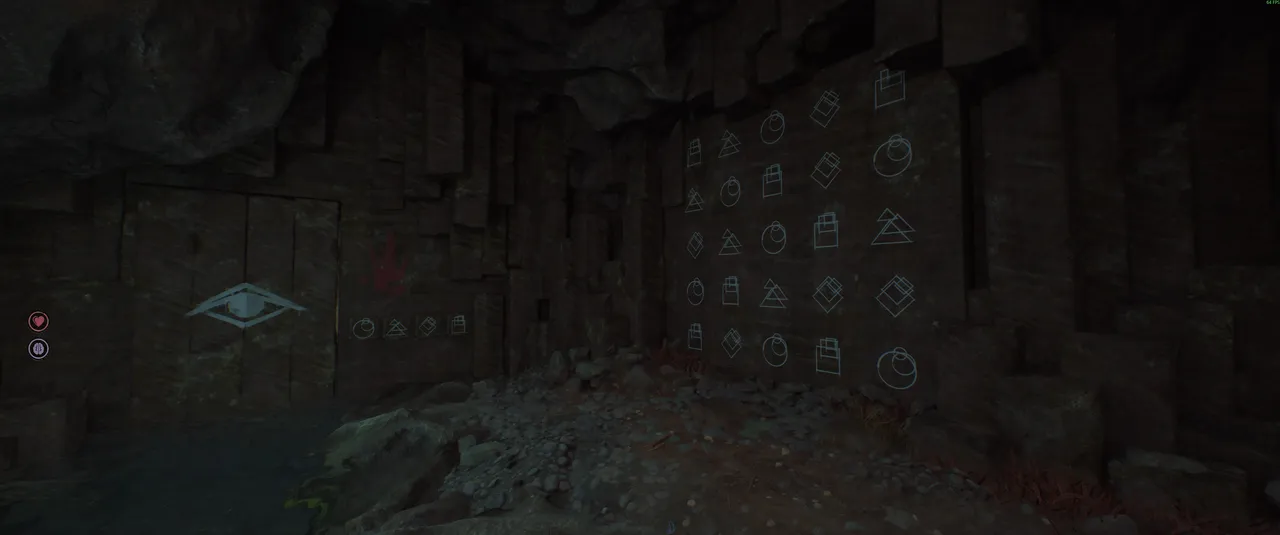
Since the game takes place in one big area, the paths are interconnected, and you'll be able to open doors from the other side and so on; however, to explore everything fully, you'll have to do a lot of walking (luckily, the map isn't too big). Some sort of fast travel would be a good solution, but sadly there is none in the game.
As a survival game, Stygian: Outer Gods has you collecting resources and crafting items to survive, from healing items to different ammo types and more. Crafting takes place only at dedicated workbenches, using crafting recipes you find along the way. It's nothing we haven't seen in many games of this kind, but it's a fine addition nonetheless.
In essence, the gameplay elements are interesting on paper but feel largely superficial in practice. Everything feels like it still needs a lot of work to reach its full potential, and since I praised the game's ambition in my preview a year ago, I cannot say that ambition has been entirely fulfilled.
Stuck in the Fog
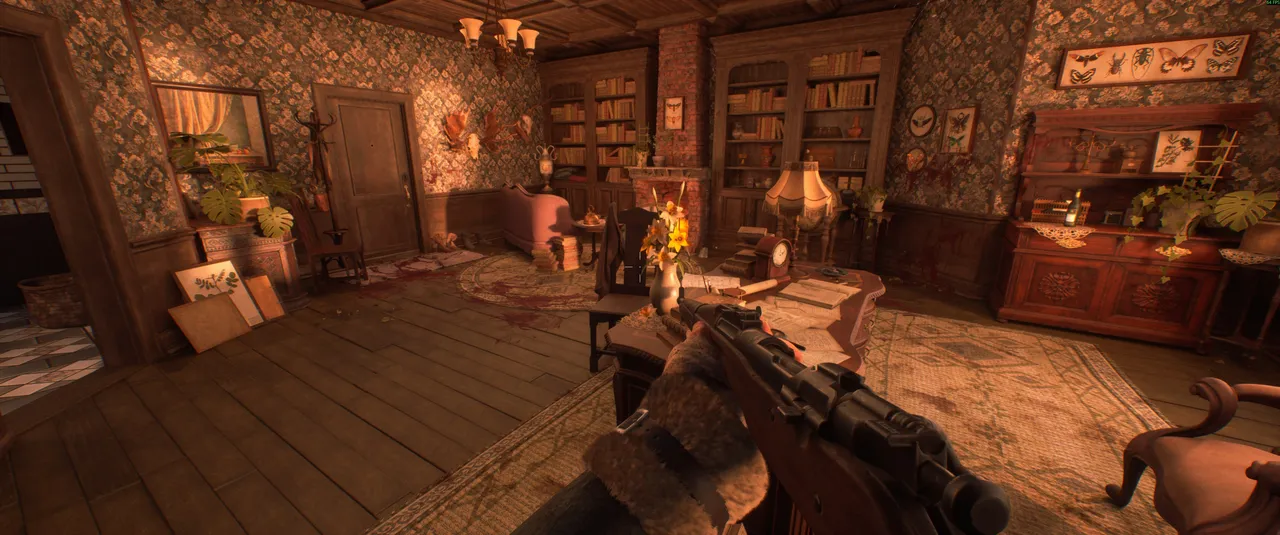
From a visual point of view, Stygian: Outer Gods is neither fish nor fowl. The game won't captivate you at first glance with a striking art style or graphics that leave a lasting impression, but to say the game looks ugly would be a lie.
Kingsport looks like any other seaside town: a foggy place surrounded by pine forests, and the game does a decent job of portraying the dread of emptiness, with strange creatures and witches roaming its streets. Character design, on the other hand, deliberately leans towards a cartoonish look, and I'm not sure this approach is the right one. A more realistic design would serve the game better; I'm just saying.
The biggest problem with Stygian: Outer Gods' presentation is a performance issue inherited from early access, and one that apparently was never solved. My PC (RTX 3080 Ti, Ryzen 9 5900X, 32 GB RAM) should be able to get the most out of this game, yet it struggles considerably to maintain 60 FPS throughout, especially in busy sections when a lot is happening on screen.
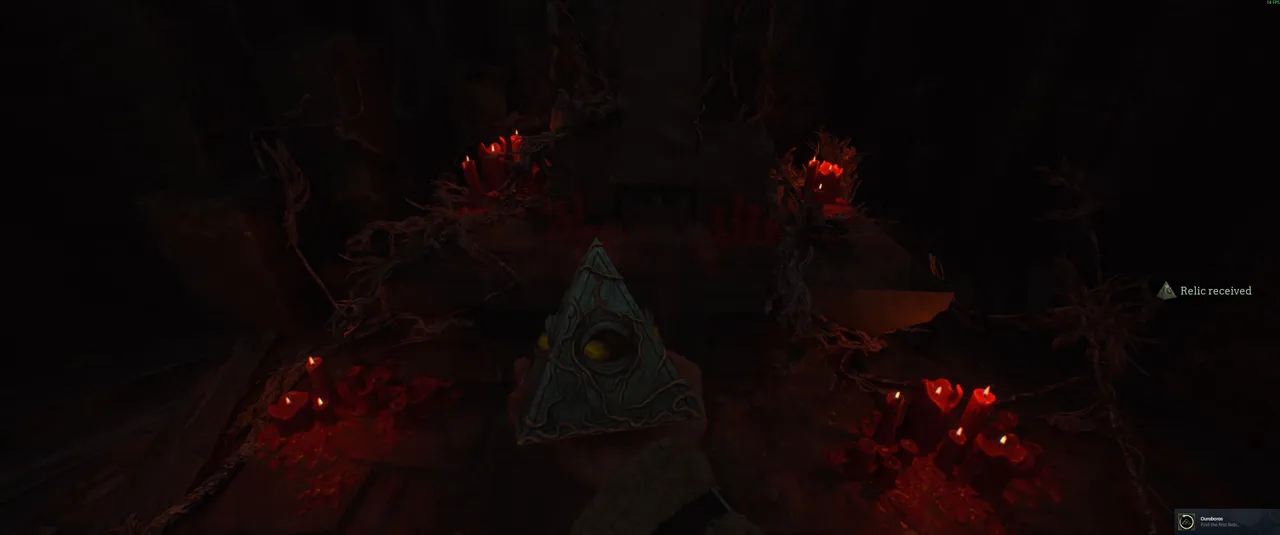
Regardless of the graphics preset, the game still struggles. And then there is the stuttering. Every fast camera movement makes the game stutter like crazy, to the point where it starts interfering with the enjoyment. I tried many different fixes and managed to reduce the stutter somewhat, but it is still a big problem. The developers simply must address this if they want to avoid player frustration, because I didn't enjoy playing the game like this.
The sound is still a bit flat, with what sounds like white noise or a vinyl crackle in the background. I don't know if that was intentional, to make you feel like you're in the 1920s, but it bothered me a lot regardless. The music and soundtrack are almost non-existent, or so unremarkable that I barely noticed them, and that tells you everything you need to know.
Conclusion
Stygian: Outer Gods leaves early access as a game with a strong identity and a weak delivery. Kingsport is a fittingly bleak place to get lost in, the sanity system and tarot-based talents give it a flavour of its own, and the Lovecraftian lore has real depth for anyone willing to dig. The trouble is that the game makes digging far harder than it needs to be, burying its story under archaic, riddle-laden dialogue that left me guessing more often than understanding.
The gameplay follows a similar pattern. The ideas borrowed from Resident Evil are sound, but slow and sloppy combat, puzzles that solve themselves and a map that refuses to help keep them from going any deeper than the surface. Add a stutter that has followed the game since early access and sound design that barely registers, and it's hard to recommend Stygian: Outer Gods to anyone but devoted cosmic horror fans with patience to spare. The potential I saw a year ago is still there; it just hasn't been fully unlocked.
The Good
 Oppressive Lovecraftian atmosphere
- Tarot card talent system
- Sanity and status effects
- Interconnected Kingsport layout
The Bad
 Cryptic, archaic storytelling
- Slow, sloppy combat
- Puzzles pose no challenge
- Unhelpful map, no fast travel
- Persistent stuttering and frame drops
- Flat sound, forgettable music