Trending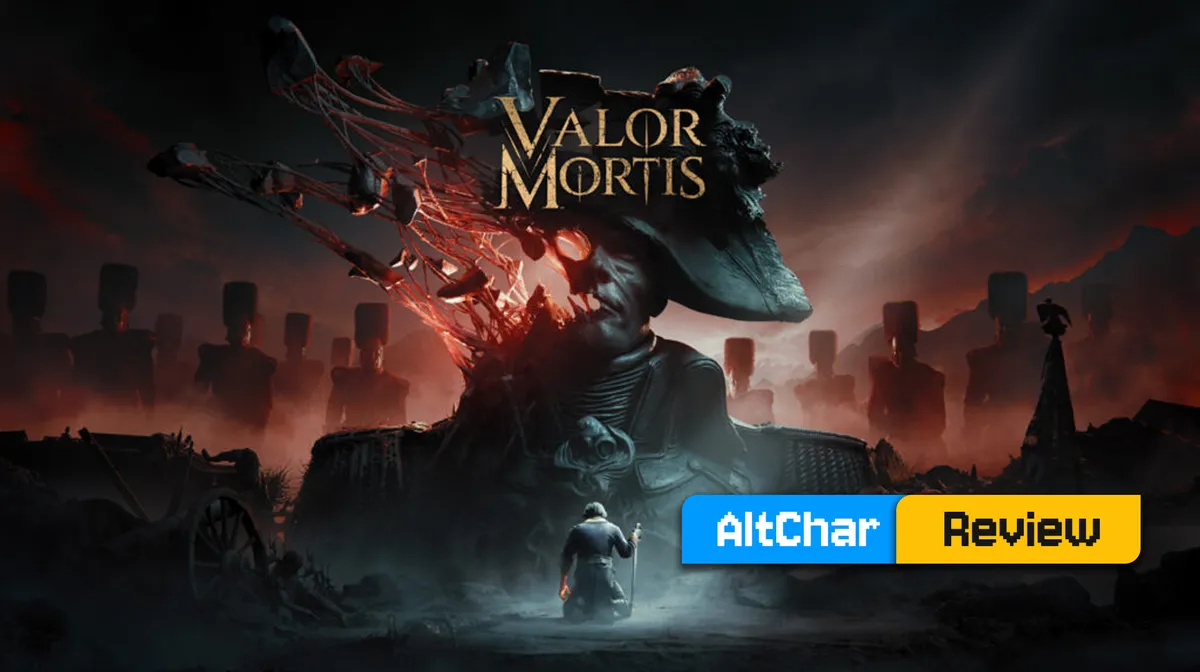
Valor Mortis is a first-person soulslike from One More Level, the Polish studio behind Ghostrunner and Ghostrunner 2, and the setting will catch your eye well before anything else does. It has the Soulslike genre basics, with stamina, parries, lantern checkpoints, shortcuts and currency you drop when you die, but overall it plays more like Dishonored than Dark Souls. You can see From Software’s fingerprints all over it, but the first-person view gives it its own feel.
You play William Dowsett, a soldier in Napoleon’s army who wakes up in a battlefield grave. In this version of history, Napoleon won at Waterloo with the help of Nephtoglobin, a substance that raises the dead and mutates the living. Most of Europe is now monsters, and the same stuff gives William powers he uses against Napoleon’s Eternal Guard. Napoleon mutters in his head the whole time, and a resistance leader called Shrike joins in as a second voice.
First person keeps you on edge
Playing in first person puts you in the middle of every fight. Backstabs and crits hit harder when you’re in an enemy’s face, and I was jumpier than I usually am in these games. You can’t see anything behind you, and the game knows it. Enemies attack from outside your view all the time, and ambushes are roughly 80% of the game, so a good headset helps a lot.
The tension shows up in small moments, too. You walk down a corridor and spot an item on the left, check the right to make sure it’s clear, and head for the item, only for an enemy to drop from the ceiling just when you think you’ve covered everything. Ranged enemies are placed to catch you the moment you leave cover, and if you don’t spot them in time, you’ll take a hit from off-screen before you know where it came from.
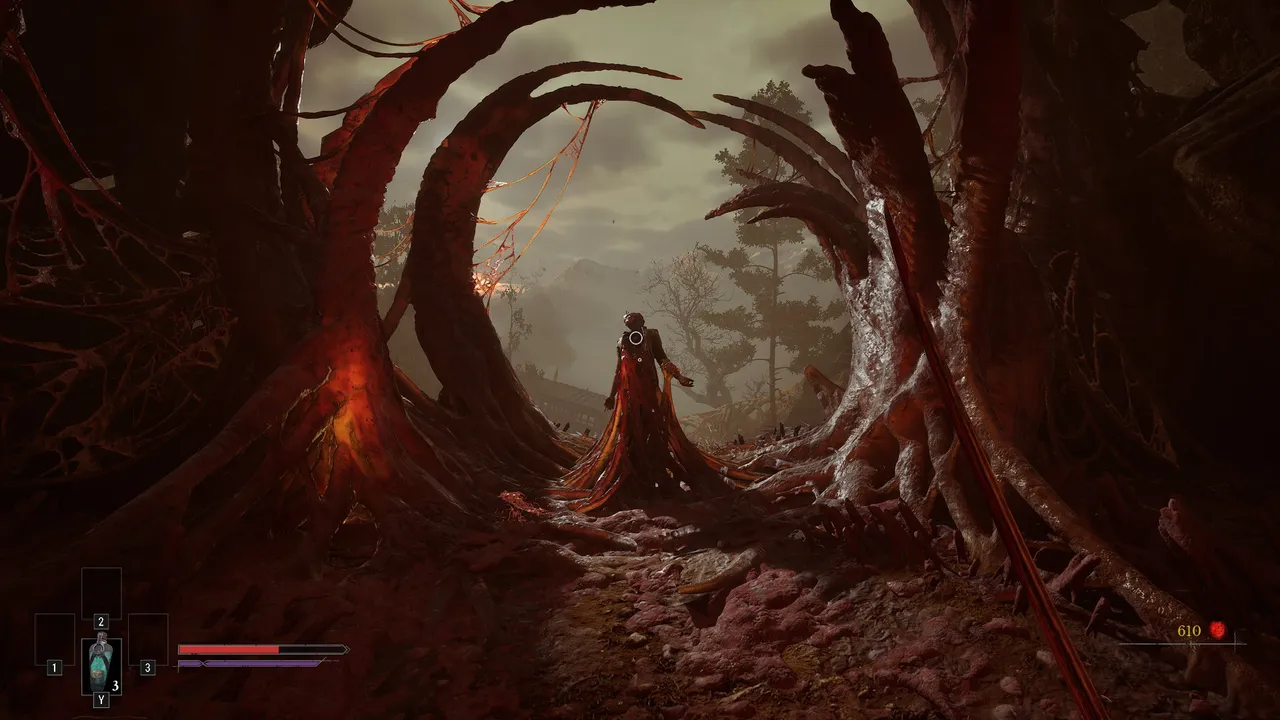
Lock-on is optional. There’s a slight snap toward enemies when it’s off, which works well enough, and I only locked on for certain one-on-one duels.
Parrying is the backbone of the combat, and it’s where Valor Mortis is at its best. Attacks, dodges, parries and blocks all cost stamina, though the bar is more forgiving than in most third-person soulslikes, and red attacks can’t be blocked at all, so you have to dodge them. Enemies have a posture bar that perfect parries and attacks chip away at, and once it breaks you get a finisher that can take off limbs or heads. Chaining three parries on a boss, then charging a heavy or blasting them in the face with the blunderbuss and finishing with a crit is the best feeling in the game.
The parry window feels a touch tight, and a lot of elite attacks are hard to read. I guess some of that is me being bad, but those fights turn into baiting out the one or two attacks you can parry and dodging the rest. The combat doesn't feel quite as demanding as Sekiro: Shadows Die Twice or Lies of P, with enemies generally being less aggressive, but it’s executed very well.
A toolkit built around the Rapier
There are nine tools in total, including three melee weapons, three guns and three transmutations. You get all of them through the main story, which means no secret sword or legendary gun waiting in a hidden corner. That’s a missed opportunity in a game with this many branching paths, since finding new gear is one of the best rewards in a soulslike.
The Saber is your starting weapon and the most balanced of the three. You can block and parry with it, and blocking gives you grey health you recover by staying aggressive. It’s also my favourite to look at, with a flow that reminded me of the Dancer of the Boreal Valley from Dark Souls 3. The Claymore is a two-handed weapon with heavier hits that comes into its own against groups. With both hands occupied, your spell input changes: hold the button for a Stasis shockwave around you, or tap it to send a wave of fire forwards. Big weapons aren’t my thing though, so I barely touched it.
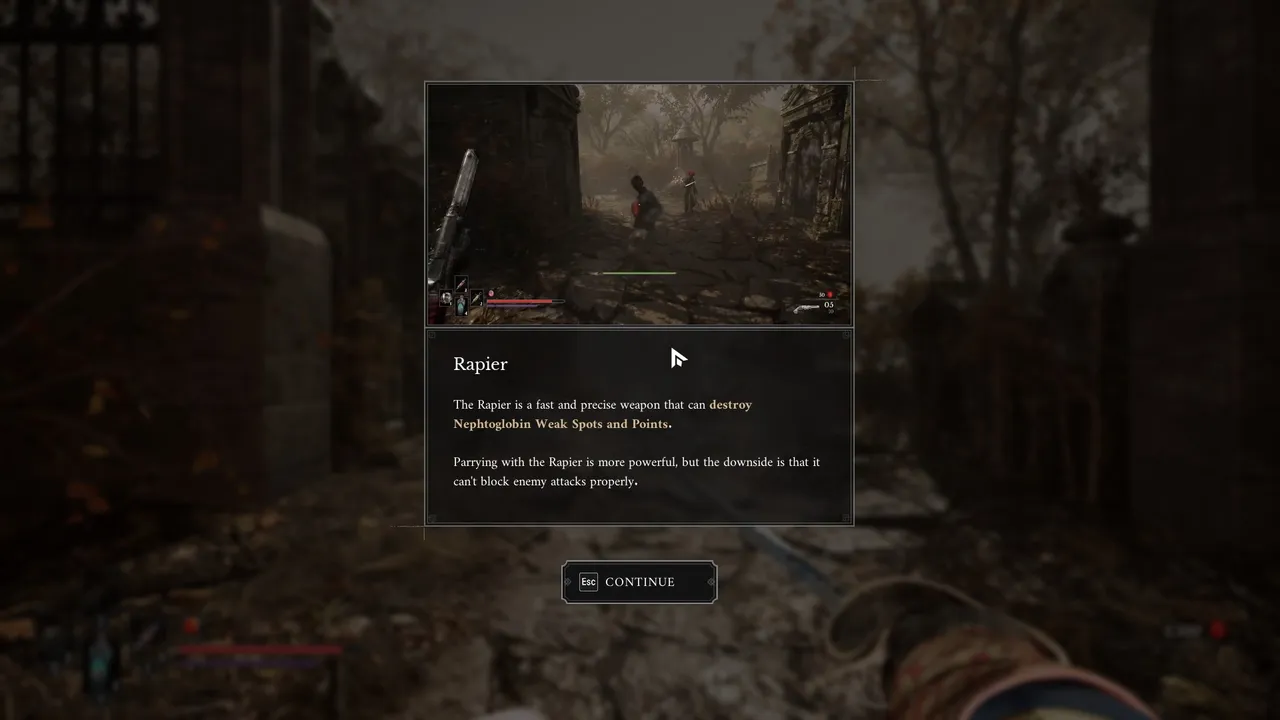
I spent almost the whole game with the Rapier. It’s faster, it stunlocks enemies, and it pops Nephto weak spots, which do a tonne of damage, and drop Nephto you can walk over to refill your meter, which is used for casting spells. It’s at its best when you get into a rhythm, parrying several attacks in a row before opening an enemy up to a weak spot. The parry animations have a nice flourish, with the Rapier spinning slightly, and the clang when you land one feels great. The trade-off is that you can only parry with it, and a mistimed parry costs you a hit, whereas the Saber’s block gives you recoverable grey health. That makes the Saber the easier weapon, and I liked its upgrades more, but the Rapier suits a more aggressive style and I never needed to switch.
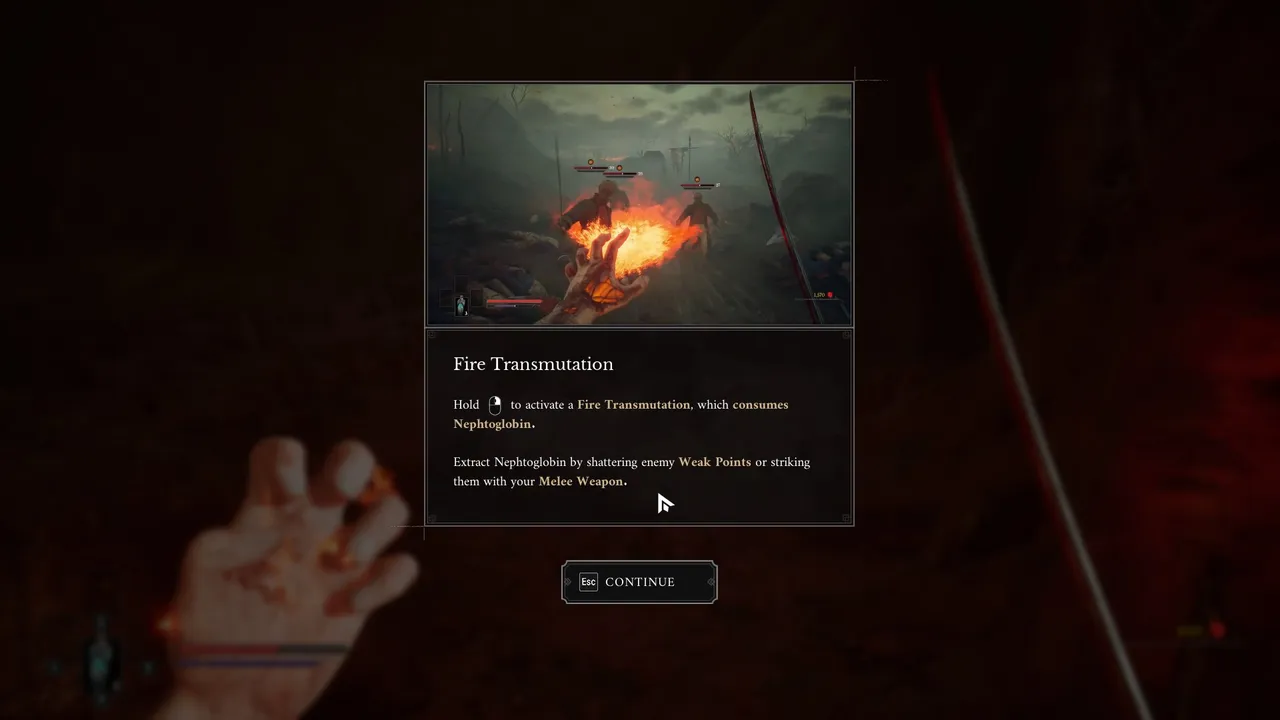
Transmutations are the other half of the combat. Fire is my bread and butter: hold the button to fill a meter on the enemy, and once it’s full they stagger and burn, which gives you time to shoot them or lunge in with a heavy. Stasis arrives later and freezes an enemy so your next heavy attack does big damage, but tougher enemies need three to five meters filled and that drains your Nephto fast, so it only worked for me once I respecced and started playing aggressively. Shield, the third, lets you cross poison areas and gives you a reason to revisit places you couldn’t reach before. It is found way late into the game so I only played around with it a bit. It was not really worth using in combat since it drains your Nephto when getting hit. Fire and Stasis also burn web-like gates and stop machinery.
The guns all have a purpose. The five-shot pistol suits medium range, and its first upgrade lets you infuse a shot with Nephto for posture damage without spending ammo, which is overpowered against low-level enemies and a good tool to keep the posture meter up on elites and bosses. The two-shot blunderbuss handles close quarters and big bursts on bosses and elites, and the bolt-action musket pops heads and weak spots like grapes from miles away. Ammo is capped but trickles back from kills and respawns, so I rarely ran dry.
Builds come down to perks and ambers more than weapons. The skill tree is mostly passive bonuses, you can slot up to five ambers and upgrade each one three times, and respeccing costs a bit of currency. Most of my points went into Endurance, Nephto gain from melee attacks, parry effectiveness and melee damage. My build revolved around the Rapier, with Fire for most encounters and Stasis for elites and bosses. As for ambers, Dominatus, which heals you on a finisher, was a favourite, along with Fire Breathing, which creates a fiery shockwave when you dodge-attack, Bountiful Harvest, which restores HP when you pick up Nephto remnants, Warrior’s Fury, which boosts your damage and speed with each kill, and Lunatic’s Grasp, which makes applying Burn and Stasis easier at the cost of being more susceptible to them. Consumables are worth using instead of hoarding, and I leaned on grenades, Nephto refills and pistol buffs.
Elites steal the spotlight
The elite enemies hit harder than most bosses, and they caused most of my deaths. The curved-sword elites were by far the biggest offenders. They chain attacks relentlessly, with fencing-like stabs that close the distance almost instantly.
Bosses arrive at roughly one per chapter. They’re manageable once you’ve learned the timings and brought your whole kit. One boss fight is built entirely around parkour and grappling, which is an odd use of a boss slot when you’re already doing plenty of that, but a humanoid boss shortly after was a lot more fun. The most memorable was one I beat on my first attempt. It reminded me of Elden Ring’s Divine Dancing Beast, albeit an easier fight, and its moveset felt reactive and fair, with reacting to what was on screen mattering more than memorising a sequence.
Valor Mortis: Combat

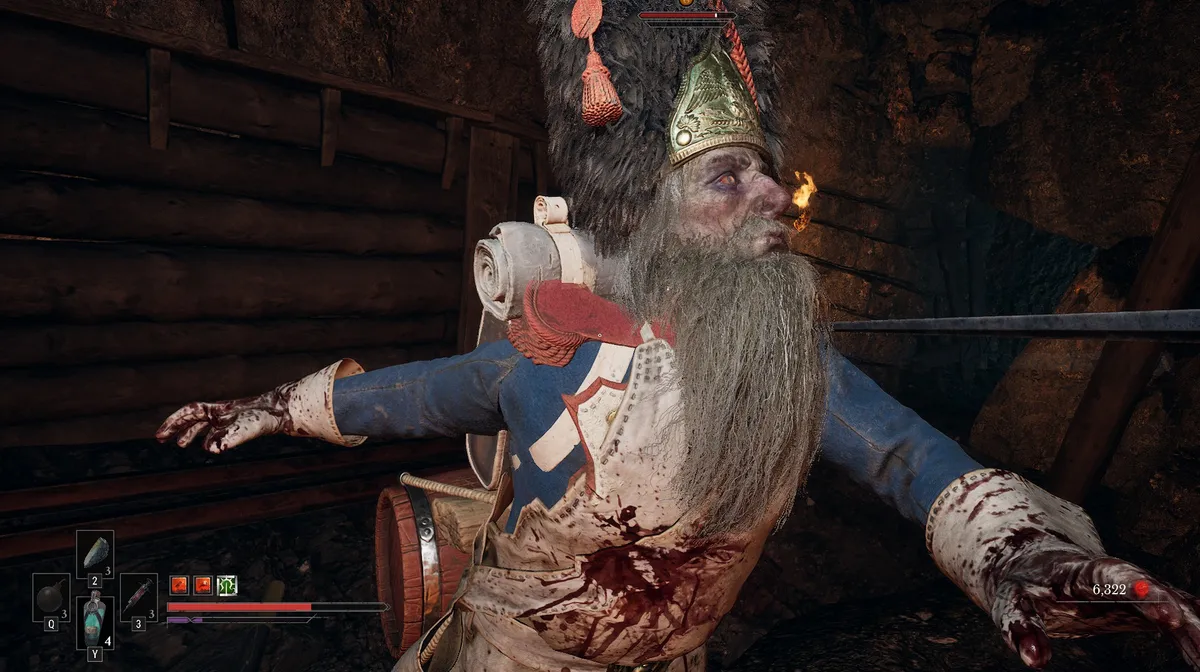

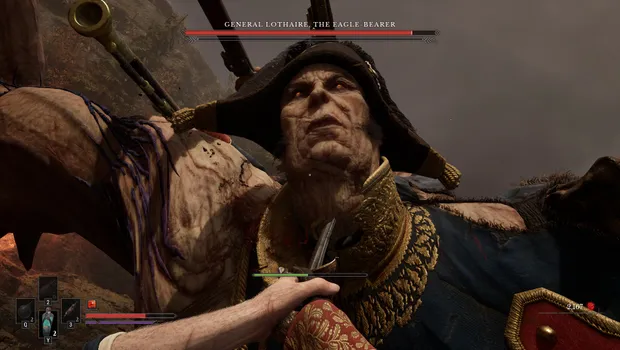
Beyond the elites, ambushes and flask-draining ranged enemies make up most of the difficulty. It sometimes felt cheap, though never frustrating, because you can usually get the jump on them. The enemy pool is small, and even late in the game the regular enemies hadn’t changed much apart from a few elites. If you’re struggling, save spells and guns for elites, learn your parry timings on weaker mobs, use consumables whenever you need them, and equip ambers that restore health. Beyond that, you’ll have to learn the combat, though you can always farm currency to improve your odds.
Plenty of road between the lanterns
The game is split into chapters and is linear at heart, with a church-style hub, no map and plenty of backtracking. Areas alternate between wide arenas where you can approach fights from different angles and cramped spaces like ruined houses, where ambushes get nasty. You’ll pass through battlefields, countryside canyons, hamlets and cornfields. The poison swamp and mountain chapters felt like the longest stretches, and Chapter 5 was the biggest offender. It has the makings of a promising mountain area, but navigating it was more annoying than enjoyable.
The game picks up as it goes, with later levels asking more of your traversal and spells, and Chapter 8, Shrike’s chapter, was easily my favourite. Its alleyways, rooftops and ruined buildings create a fantastic atmosphere, and you spend the chapter talking to the Mice, Shrike’s followers. Their story is the most captivating of the lot, and the notes scattered around give you a reason to explore beyond looking for loot. Some corners are really dark, but equipping Fire lights them up nicely, which is a small touch I wish more games had.
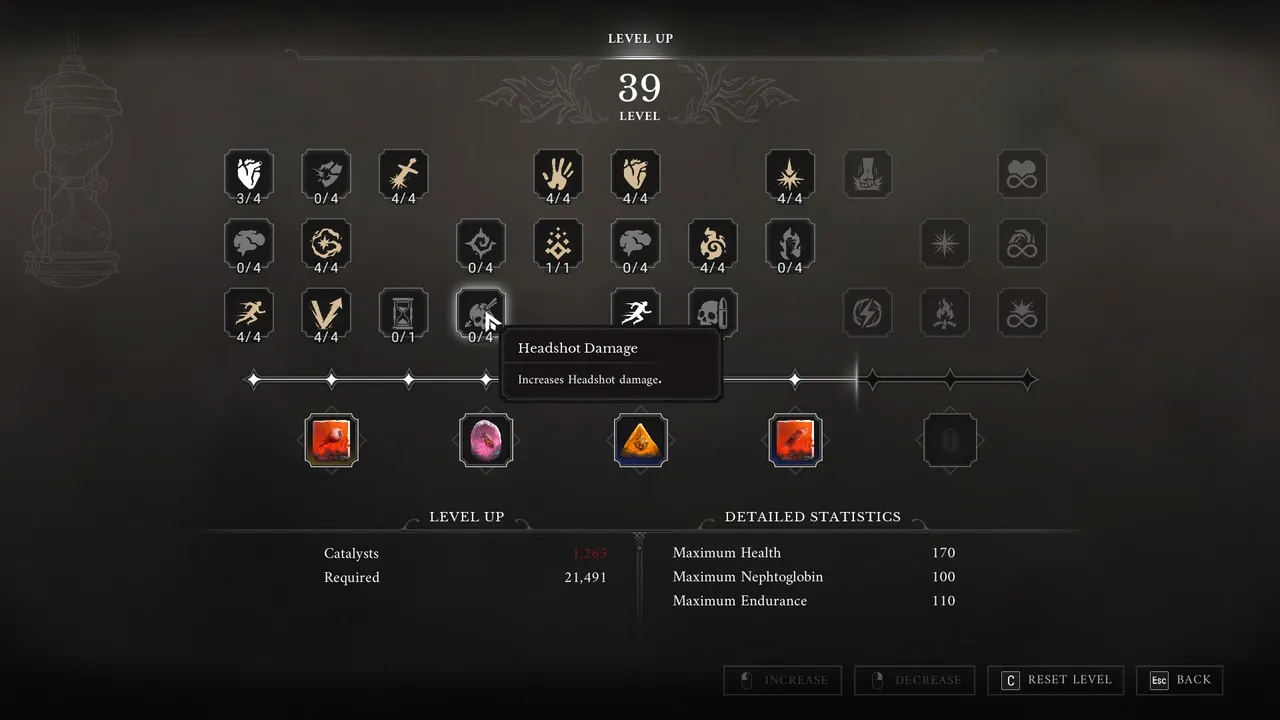
Exploration overall does pay off, usually with upgrade materials or amberstones, and a few secrets reward paying attention, like shooting explosive barrels through a crack in a wall. Shortcuts are everywhere. You’ll often find a lantern and spot an obvious shortcut a few steps further on, usually a door locked from the other side. The best one was in the poison swamp. I’d walked east for what felt like three hours, only to reach a lantern with a door beside it, facing west and bolted from the other side. I figured I’d spend the next three hours looping back to it. Later in the chapter I finally did, and I breathed a heavy sigh of relief as I unbolted the door.
What the game really needs is a quest marker for side content. I skipped a sidequest in Chapter One, and finishing it now means walking back to the first lantern and retracing areas I’ve already cleared, with nothing on the travel menu to point me there. I’d happily have taken a horse. You do discover a Shield spell close to the end of the game, which lets you revisit areas covered in lethal poison that are scattered throughout chapters. Traversal includes vaults, wall-runs, branch jumps and a grappling hook. It felt like a gimmick at first and gets more involved in later levels, where you have to pick platforms and grapple points carefully, and the parkour is basic but smooth.
Atmosphere over plot
The story comes through NPC dialogue, the voices in William’s head, the environment and notes scattered around, with hardly any long cutscenes. I didn’t read every note, and the plot wasn’t what really kept me playing, but if you pay attention, you get a decent puzzle to piece together. One note stuck with me: a mother’s recipe for tree-bark bread, left next to a few stale pieces of the bread in a house ruined by war. Little things like that add a lot of atmosphere.
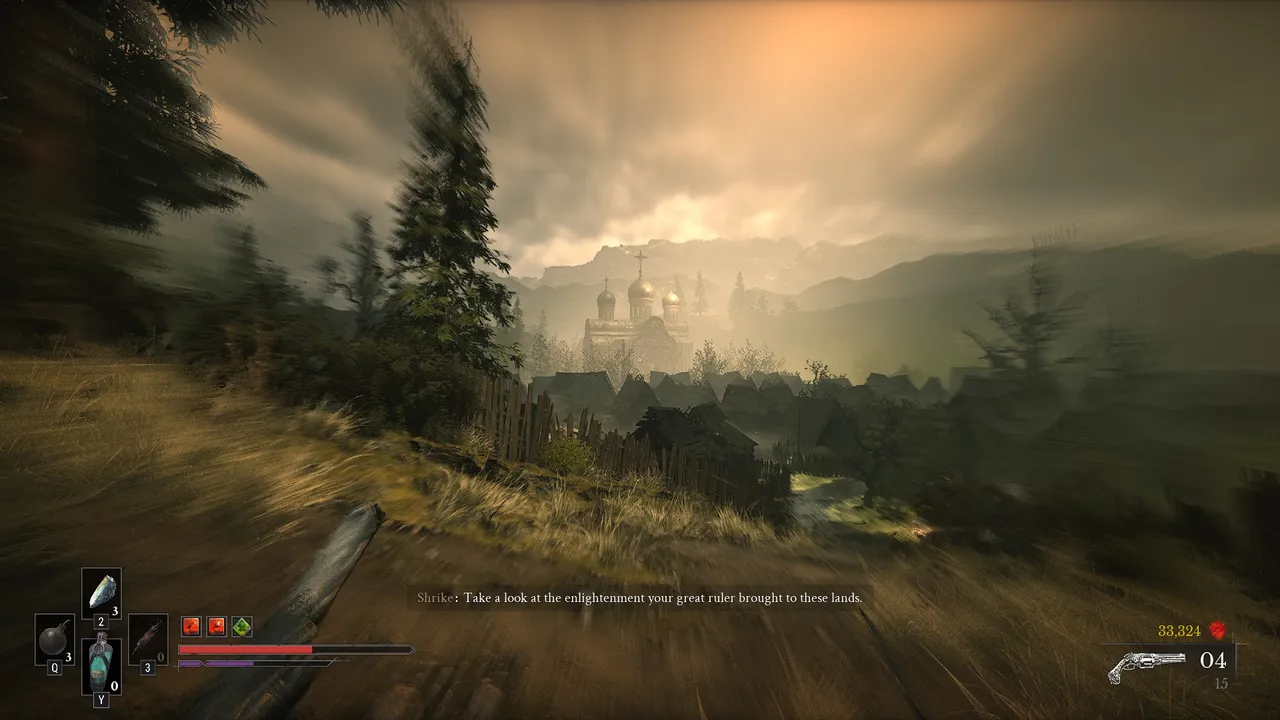
The setting reminded me of Lies of P, both in how the lore is presented and in how enemies look and behave. Napoleon gave off bad-guy vibes as soon as he started talking in William’s head, so I was more inclined to listen to Shrike. There aren’t many NPCs, but Lucjan stood out. He’s a regular-looking gentleman who guides William and believes he’s the one who can end the war, and he answers questions with half-answers, which gives him a certain mystique. From what I gathered, it’s a moral dilemma about whether the ends justify the means, as William, one of Napoleon’s biggest supporters, slowly starts to question his Emperor.
William sounded a bit goofy at the start, but I got used to him quickly, and Napoleon sounds permanently annoyed, which works. The voice acting is good overall, particularly in the blue, ghostly remnants that replay events from the past, with a French accent that adds to the atmosphere. Lines like “Traitors to His Majesty the Emperor” sound even better in a Frenglish accent.
A grim world that sounds as good as it looks
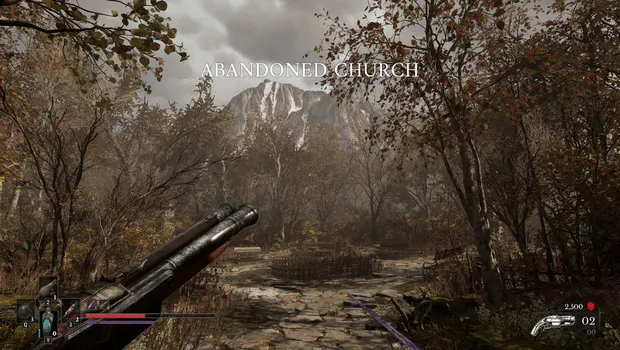
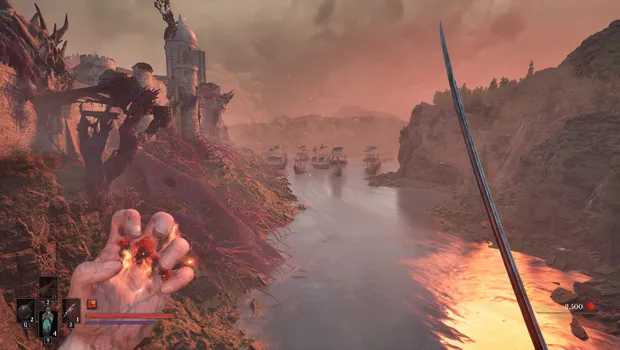
I really like the art style. It reminds me of Lies of P with some BioShock and Dishonored mixed in, with scorched, muddy battlefields, smoke and haze drifting over ruined battlements, and a supernatural goo marking where the corruption has spread. The fidelity isn’t groundbreaking, but that’s fine, and the lighting is really good for the most part. Enemy design is where the game is weakest. If you’re into soldiers with oversized hats, Resident Evil 4-style peasants and meat golems, you might find something to like, but not much feels super original. The most disturbing enemy is a creature with several human arms sticking out of its body, moving around like a spider, which first appears as a boss and returns as a regular enemy later.
Valor Mortis: Environments
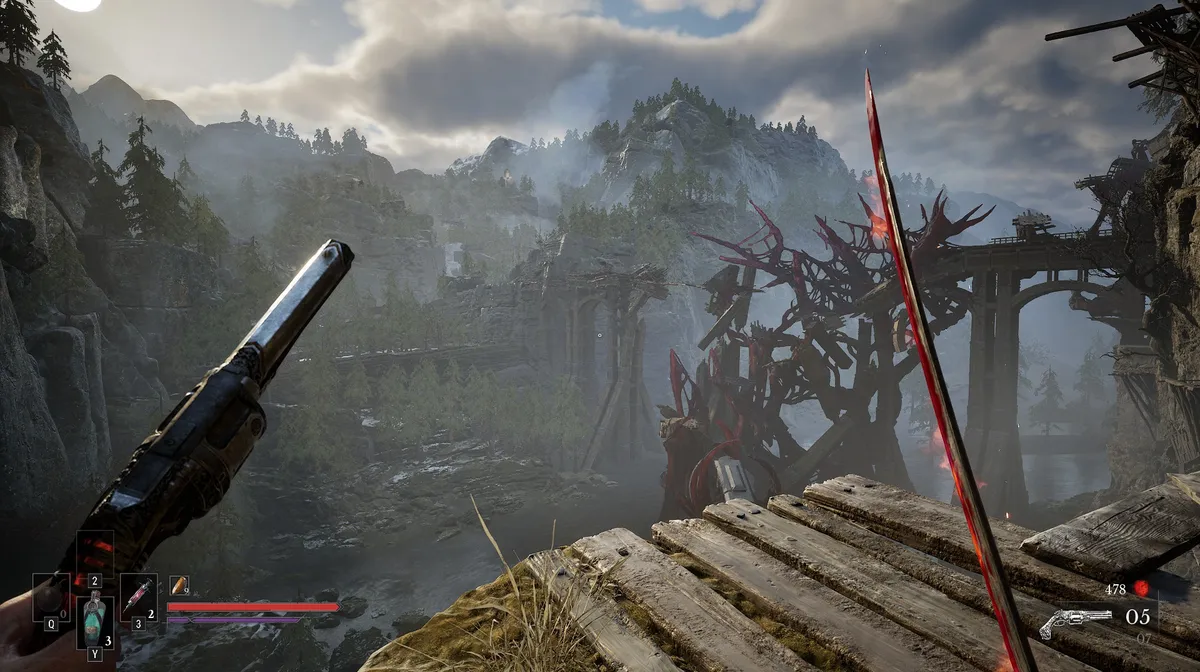
The sound design, though, is great. Monster screams, gunshots and environmental audio all land well, and the stabbing sounds meaty. Audio matters a lot in first person, and there are visual indicators as backup. The parry sound never gets old, and the finishers are particularly satisfying, especially the one where William shoves his pistol into an enemy’s mouth and blows their head off.
Performance holds up
I played on PC with a Ryzen 5 7600X, an RTX 4070 and 32 GB of RAM at 1080p. With a mix of medium and high settings, DLSS Quality, frame generation and ray tracing on, I sat around 160 FPS. Pushing everything to Ultra with ray tracing and frame generation gave me around 130 to 150 FPS, and turning frame generation off brought that down to 90 to 100 FPS.
The only noticeable stutters were in areas with lots of water, reflections and particle effects, but they never affected combat. I had one crash towards the end of my playthrough, and no collision bugs or progression blockers. The only other oddity was a minor audio bug where Napoleon’s dialogue cut out if I did something else while he was speaking.
There’s no difficulty setting, and accessibility options are limited. Subtitles are on by default; you can choose from five controller schemes, and there’s an option to automatically lock on to another enemy when your current target dies, but there isn’t much to tweak beyond the basics.
Final thoughts
Valor Mortis is for people who like medium-paced combat, looking for traps, planning how to approach a fight and using everything they’ve got, with almost no handholding. The combat is satisfying, the setting has plenty of atmosphere, and the best stretches, Chapter 8 in particular, are a treat. At $39.99 it’s a really fair deal, and the 25 hours it took me felt well spent.
On the other hand, a small boss roster, repetitive enemies and the lack of quest markers keep it from being a genre standout, and with only nine tools, replay value is limited, though a run that sticks to the main path should be much shorter than a first one.
Valor Mortis shows that a first-person soulslike can work. The parries don’t quite match Sekiro or Lies of P, but the mix of weapons, spells and guns gives it a flavour of its own, and the fights are good enough that I kept pushing through the backtracking to reach the next one. When the combat clicks, it’s well worth the walk.
The Good
 Smooth first-person combat
- Satisfying parries and finishers
- Weapons and spells that each fill a clear role
- Ambers that add real build flavour
- Awareness-driven ambushes that keep the tension up
- Strong art direction and sound design
- Solid PC performance
- Fair price
The Bad
 Few bosses and limited enemy variety
- No map or quest markers, with heavy backtracking
- Tight parry window and some hard-to-read elite attacks