Trending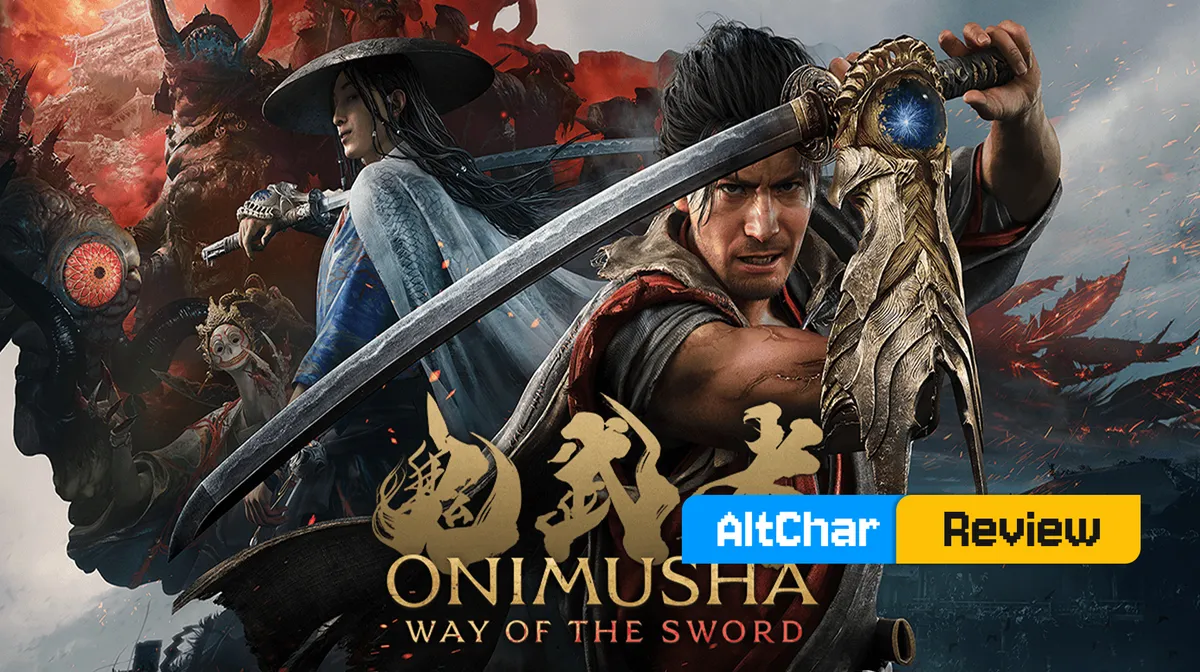
It has been nearly twenty years since Onimusha last had a mainline entry. Dawn of Dreams closed out the original run back in 2006, after which the series sat dormant until its surprise announcement at The Game Awards in 2024. Now, somewhat remarkably, 2026 has turned into one of Capcom's strongest years in recent memory, with Resident Evil Requiem and Pragmata both landing among the year's best-reviewed games. Onimusha: Way of the Sword arrives as the latest big swing from a studio that clearly hasn't lost its touch.
I should probably get the confession out of the way: I had never played the original Onimusha games.
That may explain why my first six hours with Way of the Sword were a little colder than I expected. There was no denying from the first hour that combat was the headline. The animations were excellent, the attacks had weight, and everything simply felt good to control. The story was interesting too, presented with enough confidence that I was immediately curious about where it was going.
But I kept focusing on what wasn't working for me. Then, somewhere around the ten-hour mark, something finally clicked. The story opened up, the combat became a lot more interesting as I started understanding what it wanted from me, and the world began giving me more reasons to wander away from the main path. More importantly, I realised what Way of the Sword is. It's not trying to be Capcom's Sekiro, and it's not an open-world samurai adventure stuffed with hundreds of meaningless activities either. It is a boss-focused, story-driven samurai adventure with a deep and well-executed combat system, a strong cinematic streak, and just enough exploration to make the journey feel like more than a series of corridors.
Once I started playing it on those terms, I enjoyed it a lot more.
Musashi has a very bad day
Way of the Sword takes place in early 17th-century Japan, but Capcom takes that relatively stable historical backdrop and turns it into something far less peaceful, transforming Kyoto into a dark fantasy setting filled with Malice and Genma.
You play as Miyamoto Musashi, a smug and extremely capable samurai whose reputation has already begun to precede him. Onimusha leans heavily on real Japanese history and folklore, then takes plenty of liberties with both. That blend of history and dark fantasy gives the story its own flavour, and I found myself looking up some of the characters between sessions, which sort of gave the whole playthrough a little more purpose.
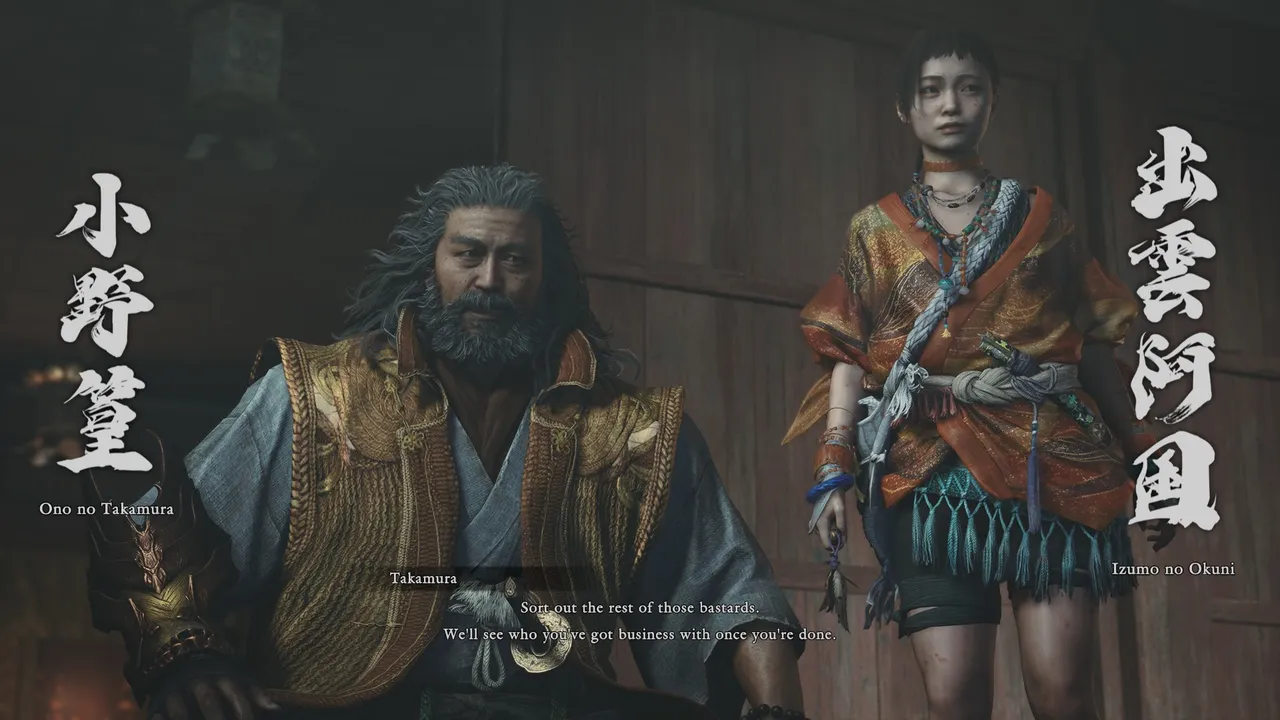
The opening also does a very good job of establishing the tone. Musashi walks through an impoverished village on his way to duel a school leader, with the fight doubling as your combat tutorial. His victory is followed by an increasingly cinematic chase through the surrounding area, complete with a few deliberately goofy moments that made me laugh. At times, Way of the Sword feels like an expensive samurai action film. The surprising thing is that it works. There were several occasions when a cutscene ended and I was actually disappointed to be handed control back.
Then the game gets weird.
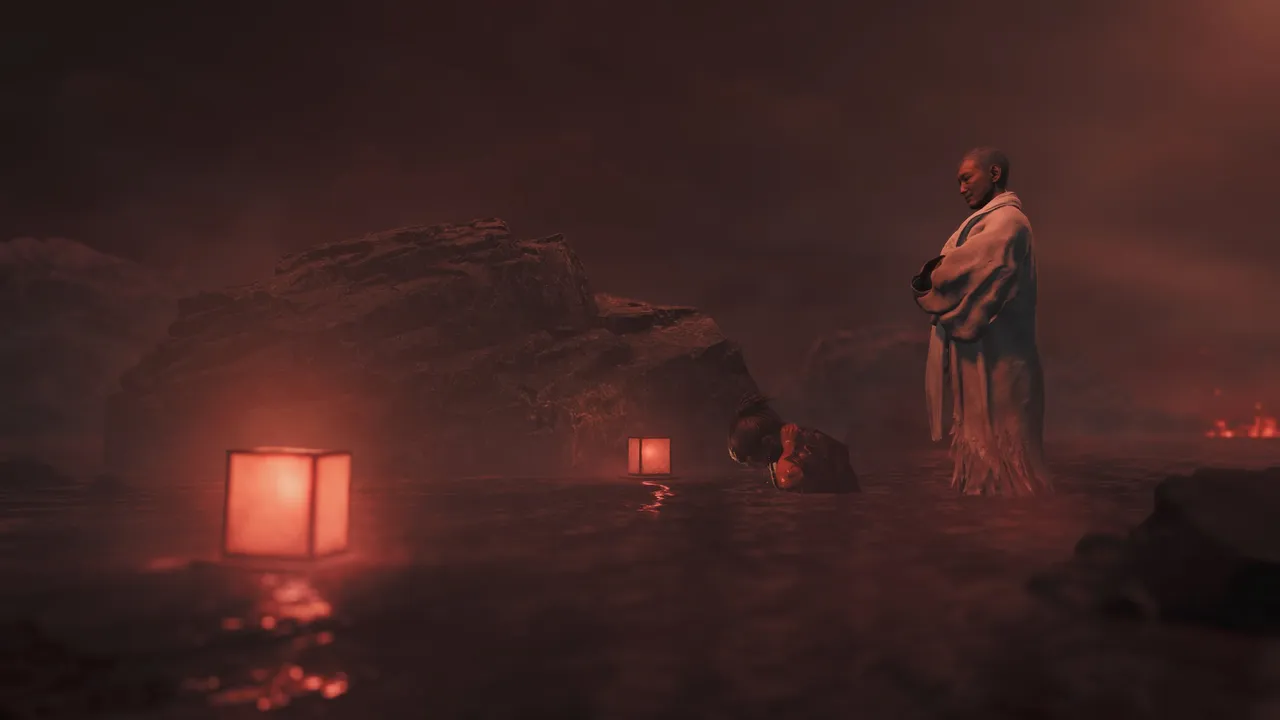
Musashi is killed, dragged through Hell's Maw and pulled back from the brink by the mysterious Man in White, who returns him to the living world with the Oni Gauntlet attached to his arm. The voice coming from the gauntlet belongs to Shizuka, who spends much of the early game directing Musashi towards his next destination with businesslike efficiency and not much warmth. Their relationship develops nicely. They initially butt heads, but both characters change as the story progresses, as does Musashi's attitude towards the gauntlet and what it represents.
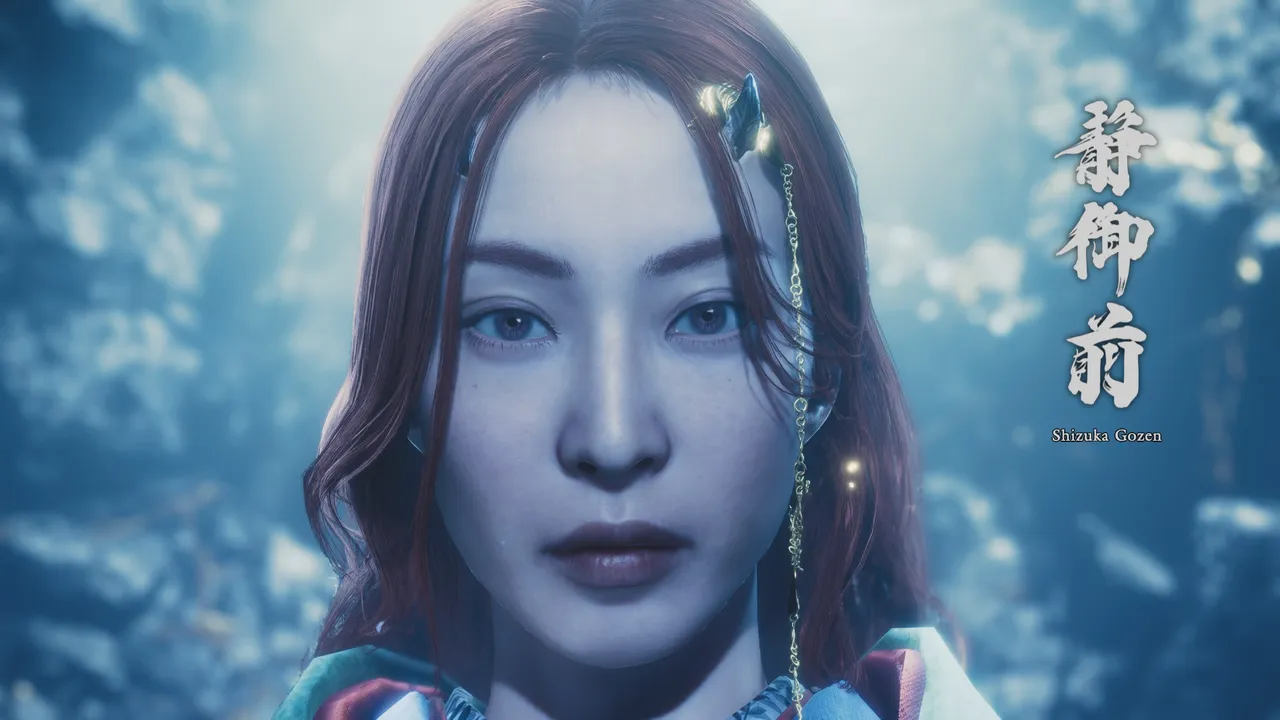
Musashi is also fun to spend time with. Every time he clears a group of enemies, there's a smug one-liner ready to go: "You're too slow," "small fry," and the like. Shizuka occasionally chimes in with her own jabs and compliments when you're clearly steamrolling something, and the two play off each other well. It gives the quieter parts of the journey a welcome bit of personality.
The wider story runs on familiar Onimusha lore. The Oni are the beings of the underworld tasked with containing the Genma, creatures that want to invade the human world. Human wrongdoing creates Malice, Malice opens rifts, and the Genma come through them. Most Genma are little more than killing machines, but some have intelligence and motives of their own. Musashi's job, as the wearer of the Oni Gauntlet, is to put the mess right. Early on, he's sent to purify Kiyomizu-dera Temple, one of several sanctuaries that need cleansing to keep the Oni Gate strong enough to hold.
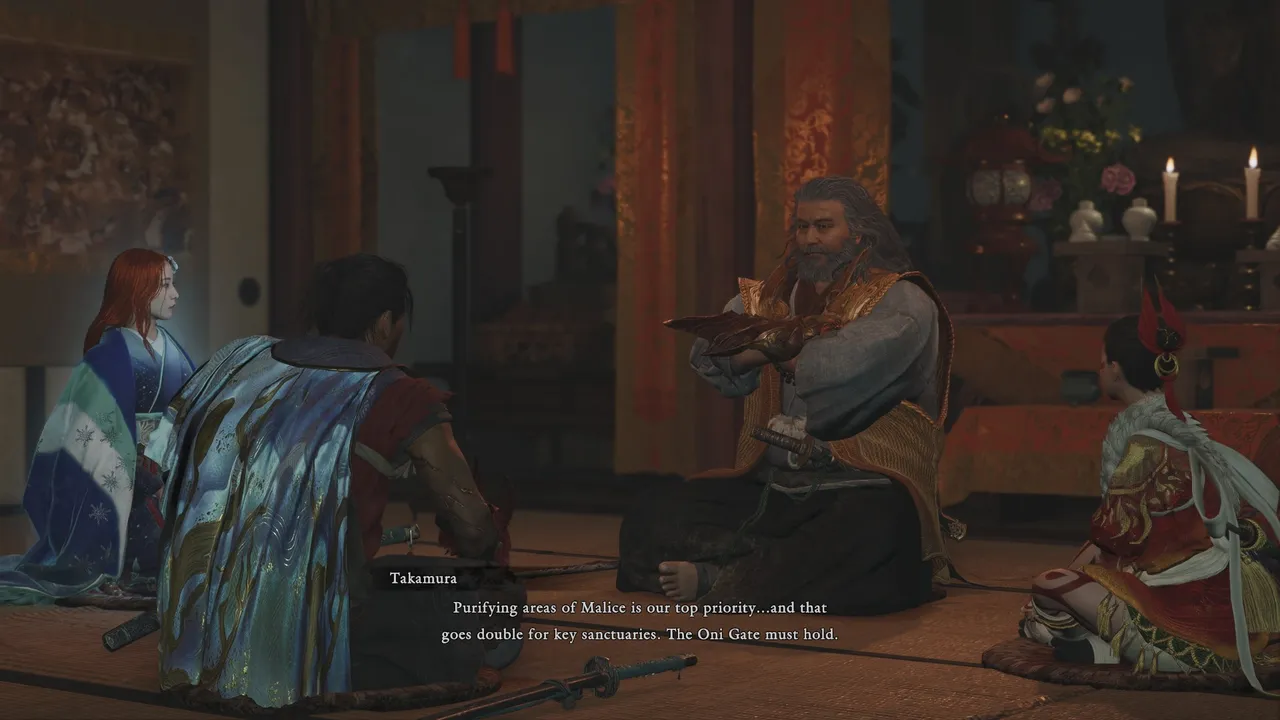
It's a fairly straightforward setup, but the more time you spend with it, the more it earns its keep, and a lot of that comes down to how well the environments carry it.
Kyoto is beautifully miserable
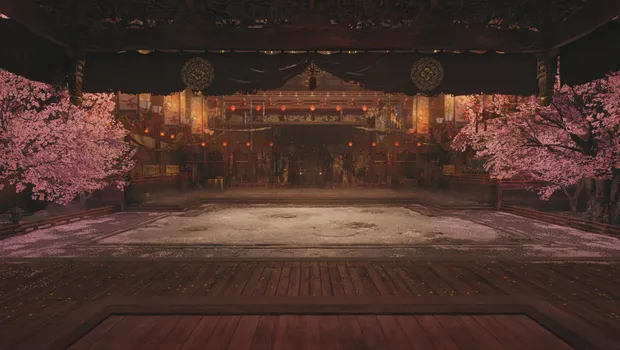
The story is linear, but the environments along that path are frequently excellent. Lighting and fog do most of the heavy lifting, turning Kyoto into a place that looks beautiful while remaining almost entirely unpleasant to inhabit.
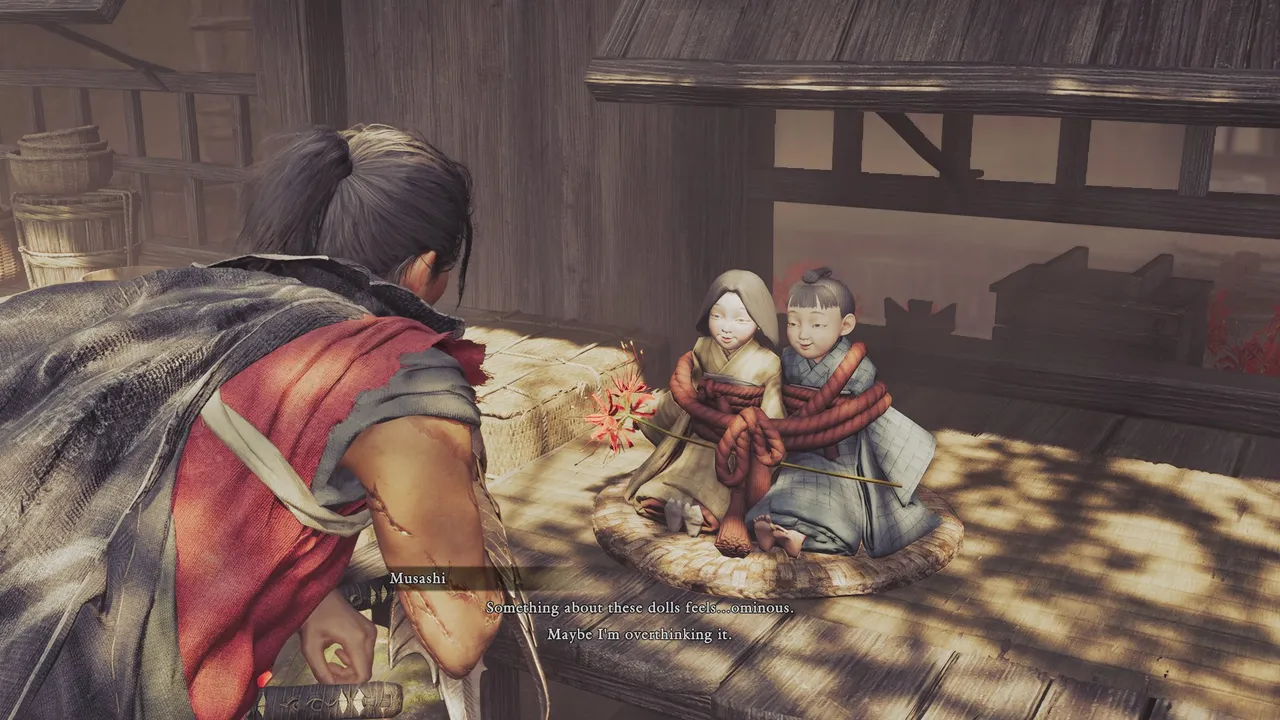
One of my favourite early areas is a strange garden that appears after crossing a particular threshold in Kyoto. At first, it looks almost peaceful and provides a welcome break from the surrounding gloom. Then you discover what the shrine there actually does with people's wishes. A woman obsessed with comparing her looks to others loses her eyes. A man with a bad knee loses a leg. A couple who swore never to be apart end up as wooden dolls. It's creepy in exactly the right way.
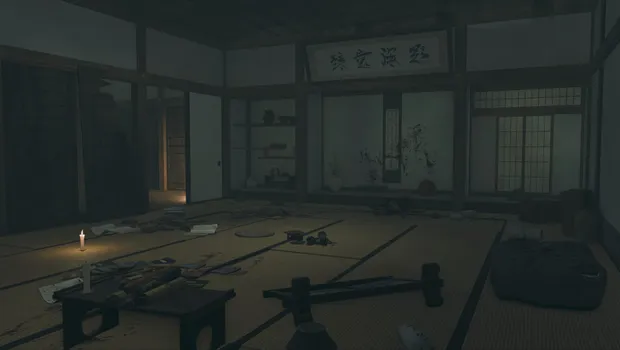
Then there is Dokyo. Dokyo is a twisted Genma who kidnaps people and splices them with animals to create new creatures - essentially Nue from Japanese folklore. Her level was by far my favourite stretch of the entire game. It has a wonderful horror-puppeteer atmosphere filtered through a classic Japanese ghost house. There's an environmental puzzle partway through that makes proper use of the space rather than existing purely as an interruption between fights, a good example of the game doing more with its environments than just making them pretty backdrops.
Not everything is quite as convincing, though. Background NPCs are basically furniture. They'll stand around staring at Malice, but bump into them and nothing happens. At one point, after being told that the gauntlet feeds particularly well on humans, I tried attacking a few NPCs just to see what would happen. Nothing happened. Musashi didn't even have a line about it. I'm not expecting everyone in Kyoto to have a full daily routine, but even a little reaction would go a long way towards making the place feel inhabited rather than decorated.
Kyoto is open enough
Way of the Sword isn't an open-world game, at least not in the modern sense, and I'm glad it isn't. Instead, Kyoto works as a relatively compact hub that gradually opens as the story progresses. Other locations are far more linear and exist primarily to move the story forward, while Kyoto gives you somewhere to wander around between those larger quests.
Call it a pseudo-open world, if you will. It's wider and more layered than a traditional linear stage, with side paths, hidden areas, vendors, NPCs and plenty of materials to collect, but there is also almost always a marker telling you exactly where the main objective is. You can follow it. Or you can ignore it for an hour and comb the side streets for materials instead.
Onimusha: Way of the Sword environments

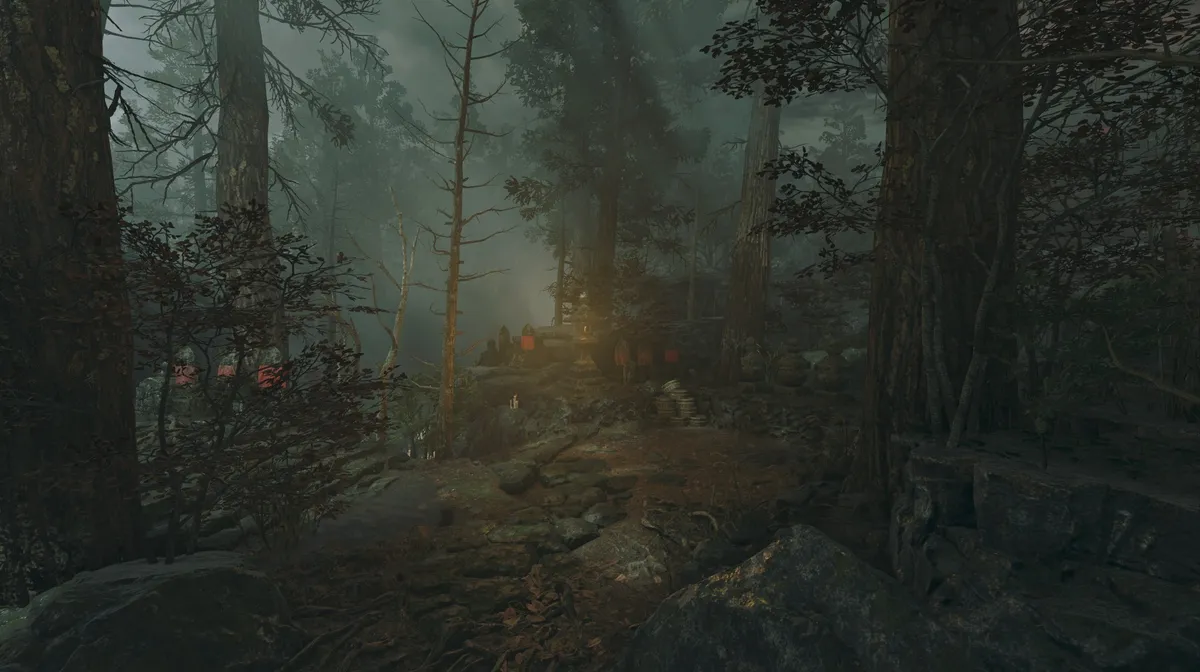
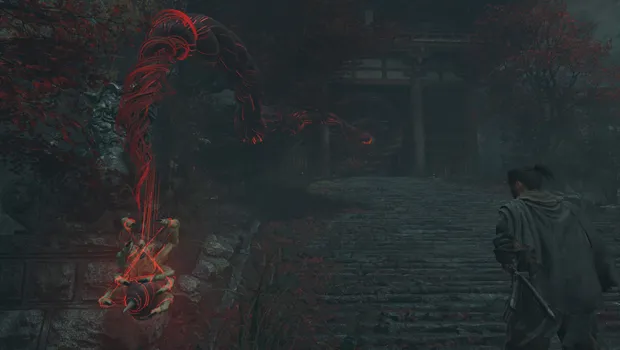
Most side quests that aren't simple fetch-and-save jobs hide a small navigation puzzle, like an alternate route through a gap or up a ladder to get where you need to go. Sometimes the map drops an exact pin, sometimes just a general area, and you work out the rest yourself. Whatever you find feeds back into upgrade materials for your weapons, clothing and gauntlet, or unlocks new stories and appearances.
Kyoto also changes as the story progresses. Areas initially blocked by concentrated Malice become accessible later, opening new streets and introducing additional requests from residents. Oni Portals are hidden around the city too, only becoming visible when you sweep the area with Oni Vision.
It's not a huge world, but it gives the main journey enough room to breathe without swallowing it whole.
The swordplay is amazing
The swordplay is where Way of the Sword is at its best.
It's generally a little slower than something like Sekiro, but Musashi's attacks have weight, his defensive moves are deliberate, and the game gives you enough time to read what's happening. This is, fundamentally, a defensive combat system built around reading an attack and choosing how to respond to it, rather than mashing your way through. That emphasis runs through practically every combat mechanic.
The katana has one- and two-handed stances for light and heavy attacks, while blocking, parrying, deflecting and a reflex dodge round out your defensive options. Parrying also builds a separate Blaze gauge that eventually triggers Blazing State for a temporary damage boost. There's also a bow that doubles as a ranged weapon and an environmental puzzle tool. There's no running attack, light or heavy, and I missed having one.
Combat isn't honour-bound, either. Musashi isn't playing the restrained, code-of-the-samurai type you'd get from someone like Jin Sakai in Ghost of Tsushima. He'll use the environment against enemies whenever it's available, and the game leans into that from the tutorial onward.
It also doesn't shy away from gore. There's proper dismemberment here, with Musashi able to cleave clean through limbs and heads using Break Issen or one of his other finishers. It's brutal, and the animations are impressively clean.
Onimusha: Way of the Sword combat
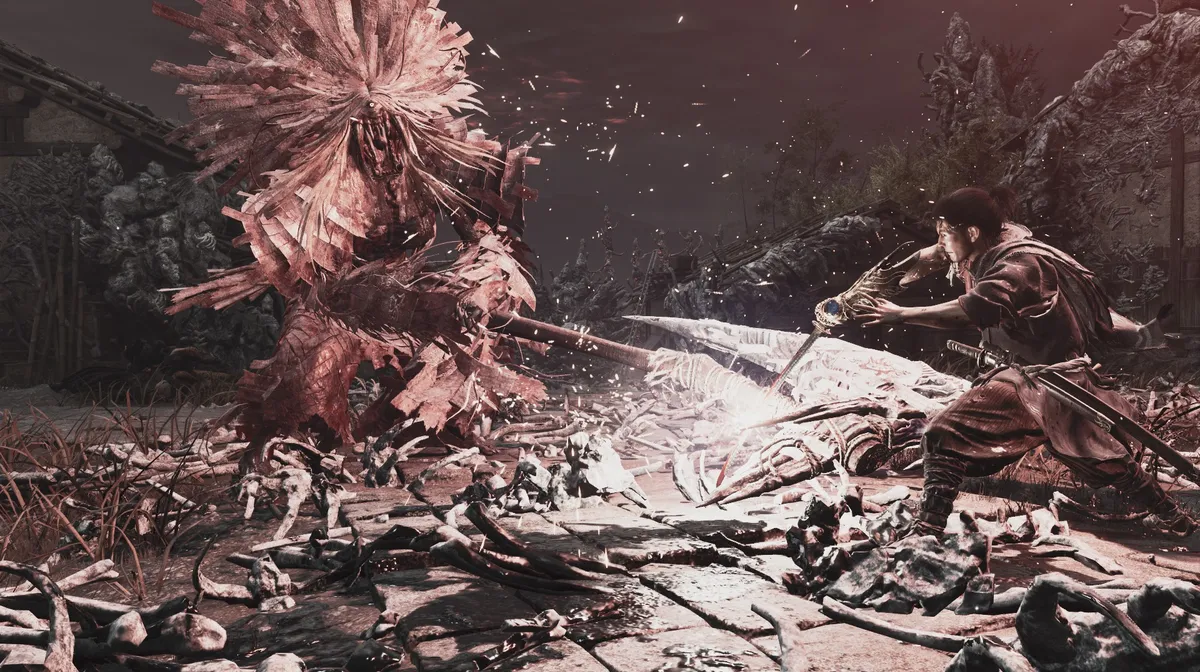
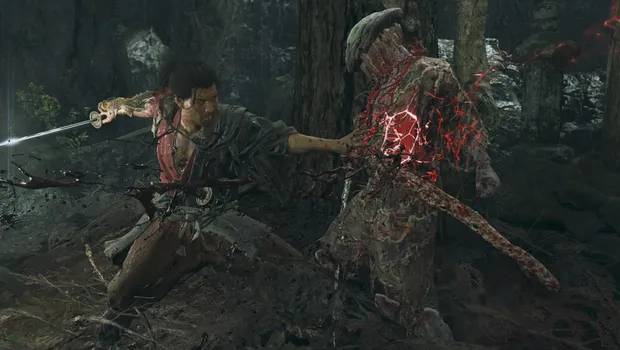
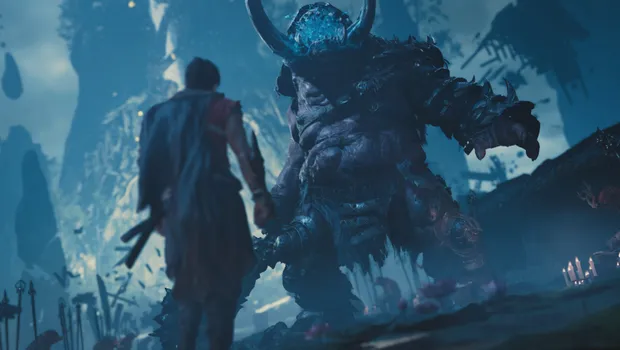
Blocking, deflecting and dodging are how you create openings, but the game's standout mechanic, Issen, is the clearest expression of this philosophy. Issen asks you to do something slightly counterintuitive: instead of getting out of the way of an incoming attack, you attack immediately before it connects. Get the timing right and Musashi cuts through the enemy's attack with a spectacular counter. It feels fantastic. It's also far harder to pull off consistently than it looks, especially once you're surrounded, and that's where the game's real challenge lives, more than in any individual enemy.
Regular attacks drain enemies' posture as well as their health, and once an enemy's posture is gone, you can pull off a Break Issen to finish them in spectacular fashion. Against bosses, Break Issen gets more interesting because you can choose where to strike: red zones deal extra damage, while purple zones reward you with more souls. Both come with their own special animations.
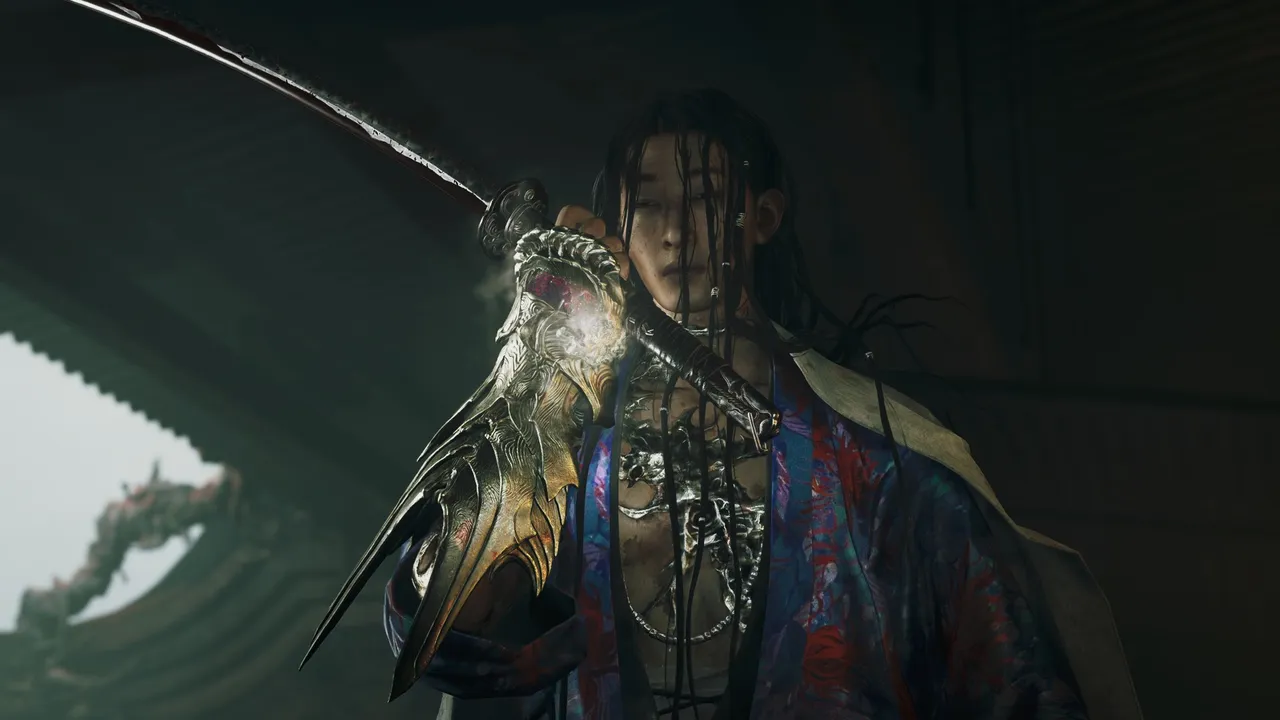
Overall the combat gradually becomes less about asking "How do I kill this thing?" and more about asking "How stylishly can I kill this thing?" That's where Way of the Sword is at its best. Once I understood that the game isn't especially interested in making every fight difficult, but instead wants to make fights look spectacular, I started loving it. Chaining perfect parries, perfect dodges and Issen counters together ends up mattering more than the fight itself, and a clean run against a mob or a boss becomes its own reward.
The Oni Armaments, essentially your special weapons, are a mixed bag. The naginata, officially the Wind-Whipper, was easily my favourite. Its whirlwind attack is great for clearing groups, and it ignites into a fire attack if triggered near an open flame. By the end, I'd settled into a simple rotation: naginata for groups, daggers for health recovery, spear for big damage against bosses.
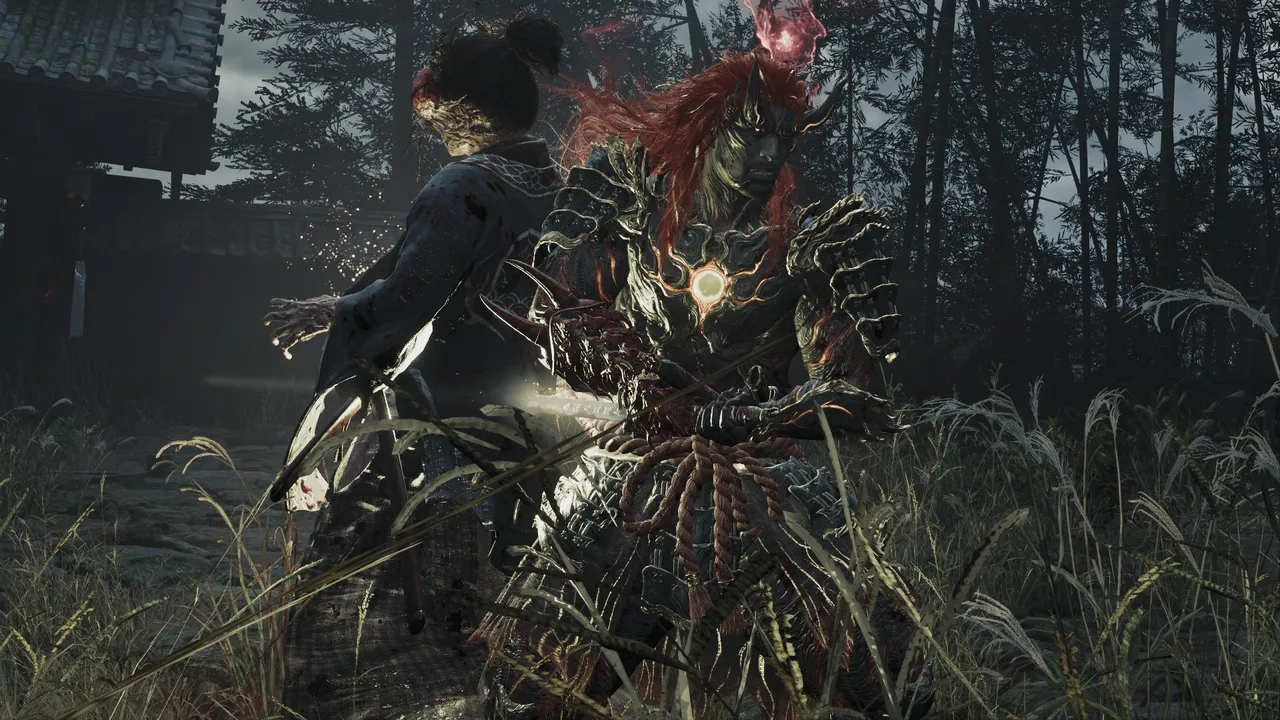
Then there's Oni Form, probably the purest expression of the game's power fantasy. Musashi transforms, moves faster, hits harder and gets new attacks. You can let it run out, or cancel it with a huge cleave that clears weaker enemies or takes a real chunk out of a boss. Feels great.
Lots of systems, little clutter
Gear is split into three independently upgradeable pieces. The sword raises regular attack power along with Issen and Oni Armament power, clothing raises health and stamina, and the gauntlet raises your maximum Oni power and how quickly and how far you absorb souls.
You'll also unlock skills tied to your moveset, charms, Armaments and other Oni powers through a separate tree.
Charms have their own economy on top of that. You level them up at Enma's Hall using red souls plus a currency called favour, earned by offering up items picked up around the world and helping people out.
The various soul types keep combat moving. Red restores stamina and works as upgrade currency, yellow restores health, blue fills the Oni Armament gauge, and purple builds towards Oni Form. It's not just you fighting for them, either. Certain enemies will scramble to absorb loose souls and power themselves up if you let them get there first.
You also get two six-slot wheels during combat: one for consumables and support items such as health regeneration and defensive talismans, and another for Oni Armaments, special weapons like the whirlwind-generating naginata or a flute that staggers and burns. Separately, there's an upgradeable Hozuki Pouch for on-the-fly healing, plus charms that passively boost healing, Armament damage or Awakening fill speed.
It sounds like a lot when written down. In practice, it becomes surprisingly natural.
Grunts vs the real threats
My biggest gripe is with the early grunt encounters. They're just too easy. Rush into a group, land a few attacks and watch most of them disappear. Worse, enemies you're not currently fighting will often just stand there and watch. Dodging and parrying are almost optional against these early groups because there's little reason to use the defensive systems when the enemies barely pressure you. Things improve once more enemy types and tougher variants show up. Eventually, some encounters do force you to pay attention to dodges, counters and positioning. At that point, fighting grunts becomes less about killing them and more about killing them stylishly.
Ranged enemies still need some work, though. They take so long to draw their bows that I kept thinking about the Orm slow bow-drawing scene from The Norsemen.
Bosses are another story entirely. The difficulty curve sits in a good spot: they're tough enough that you can't sleepwalk through them, clearly designed to challenge you more than anything else in the game, without ever tipping into outright punishing. Some are reused throughout the game, and I eventually stopped treating these encounters as proper bosses. They're more like particularly angry members of the Genma army being thrown at you again, and that framing made the repetition easier to accept for a while. The problem is that it stops working late in the game, when the reused fights start showing up during moments that are clearly supposed to feel important. I wanted fresh threats there.
Onimusha: Way of the Sword's ghost house is the game's best level
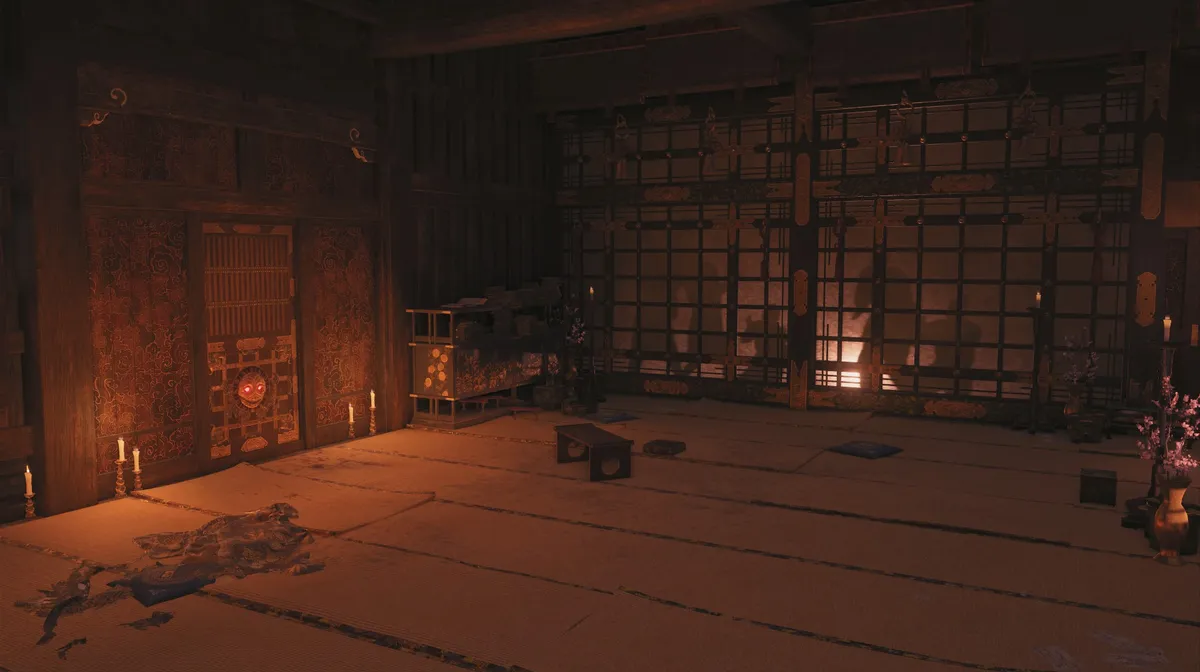
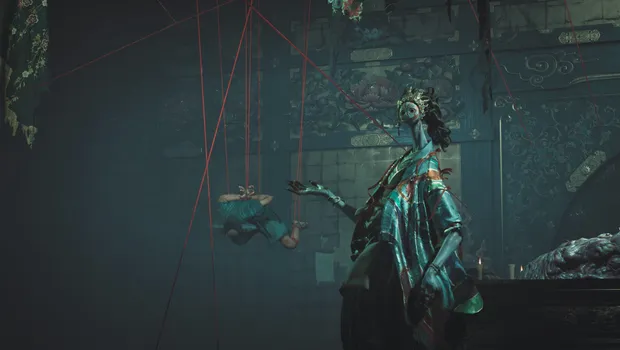
The main story bosses are where Onimusha gets it right. Fights like Sasaki Ganryu and Dokyo have individual designs, proper narrative context and unique movesets that put the game's combat system to full use through Break Issen zone targeting and cinematic finishers. When Way of the Sword gives you something worth fighting, it sells the fantasy of being an absurdly capable samurai brilliantly.
Japanese is the obvious choice
Voice options cover English, French, Italian, German, Spanish, Russian, Mandarin, Brazilian Portuguese and Japanese - but Japanese is the obvious pick. There were scenes where I caught myself thinking that some of the best moments wouldn't feel out of place in Demon Slayer's Entertainment District Arc. I looked up the cast afterwards and, unsurprisingly, a lot of the names were familiar, with several having appeared in Demon Slayer itself.
Musashi works especially well, but the supporting cast earns its keep too.
One odd wrinkle is that most conversations outside the main story aren't fully voiced. Takamura and Shizuka are two clear examples: Takamura grunts out a couple of words, while Shizuka's lips move and all you get is a moan. It happens with plenty of NPC chatter too. It happened often enough that I couldn't tell whether it was a bug or an intentional choice. If it's the latter, it's a strange one, especially when the main story is so well voiced.
Cinematic highs, uneven faces
For the most part, Way of the Sword looks fantastic. The major narrative scenes are polished, but the cracks show up when the camera isn't using the best-looking assets. Facial animation during regular gameplay can be noticeably stiff, with strange mouth movements and characters barely moving their faces. Some in-engine cutscenes also look distinctly worse than the proper narrative cinematics, creating an awkward drop in quality between scenes.
PC performance is easy to praise, though. Running almost everything at Ultra, I got a steady 100-110 FPS throughout, with no performance problems or bugs to report.
The UI stays out of the way during combat, and the menus make it easy to track quests, upgrades and story progress. Accessibility options include colourblind support, adjustable text and UI sizes, and the option to enable or disable dismemberment. You can also switch between story-focused and combat-focused difficulty without penalty, a nice touch for anyone who wants the story without committing to the tougher combat.
Final thoughts
Way of the Sword isn't a difficult game, and I don't think it's trying to be one. It's a style points game, built around making you look incredible rather than making you suffer for the privilege, and once that clicked for me, everything about it opened up. The story turned out to be superb too, easily the biggest surprise of my time with it.
There's a Carnage difficulty sitting there that I haven't touched yet, and I'm already planning to come back to it a bit later in the year. This feels like a game that was built with that mode in mind, like what I've just played through is a tutorial for the version that actually counts.
Capcom is having one of its best years in a long time, and Way of the Sword closes it out on a high note. I loved the bosses. I loved the story. It isn't a flawless game, and I don't really care. Way of the Sword is a good game, and often enough, a great one. Whatever the studio does next, it has earned the benefit of the doubt again.
The Good
 Excellent, emotionally grounded story
- Great character dynamics
- Excellent main boss designs
- Fast, responsive combat
- Cinematic combat flair
- Memorable level design
- Amazing Japanese voice work and presentation
- Excellent PC performance
The Bad
 Grunt encounters are a pushover for much of the early game
- Reused bosses wear thin by the late game, especially at high-stakes moments
- Background NPCs feel lifeless
- Unvoiced/partially voiced NPC conversations
- Gameplay cutscenes lag behind narrative ones in quality