Trending

In Manor Lords, mastering the art of farming is crucial for the prosperity and development of your medieval settlement. As you embark on the journey of managing your own feudal domain, cultivating the land becomes indispensable for sustaining and advancing your village.
Farming serves as the backbone of your domain's economy in Manor Lords, ensuring its upkeep and facilitating its growth over time. To navigate the intricacies of agriculture within the game, here's a comprehensive guide covering everything you need to know about farming in Manor Lords.
While farming is pivotal for settlement sustenance, diversifying revenue streams through Trade Logistics or Better Deals upgrades can mitigate reliance solely on crop production for economic stability.

Crop Types
Manor Lords offers four main crop types that players can cultivate using the Farmhouse building. Each crop serves a specific purpose and can be refined into different resources:
- Emmer (wheat): Emmer can be processed into Grain or Flour at a Mill, which is then used to produce Bread at a Bakery.
- Barley: Barley is essential for brewing Ale in Taverns, contributing to the village's economy and happiness.
- Flax: Flax can be refined into Linen at the Weaver Workshop, providing materials for crafting Clothes and Gambesons.
- Rye: Rye is similar to Wheat and can also be processed into Grain for Flour. However, Rye cultivation requires unlocking through the Rye Cultivation upgrade in the town development tree.
Soil fertility explained
Understanding soil fertility, such as Emmer fertility, is vital for successful crop production in Manor Lords. Emmer fertility indicates the suitability of the soil for growing wheat.
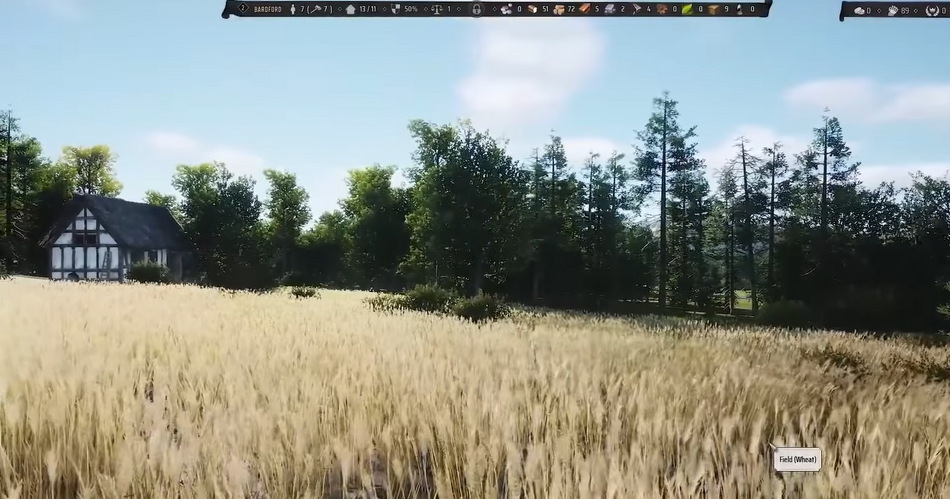
To assess soil fertility, players need to construct a Field. Within the game interface, they can utilize fertility filter options to identify areas with optimal conditions for specific crops, including Emmer, Flax, Barley, and Rye. Green areas denote high fertility, while orange or red areas indicate lower fertility. Additionally, a plus symbol highlights exceptionally fertile spots for specific crops.
What is crop rotation?
Crop rotation is a fundamental strategy in Manor Lords to maintain soil fertility. Certain crops, like barley, can deplete soil nutrients rapidly, necessitating rotation with other crops like emmer to allow the land to recuperate.
Monitoring the fertilization percentage is crucial, as higher percentages signify faster crop growth, whereas lower percentages indicate slower growth rates. Allowing land to lay fallow, or unused, between production cycles can aid in soil restoration.
Best development points for farming
As players advance their settlement in Manor Lords, they earn development points that can be allocated in the town development tree.
Key upgrades for optimizing farming operations include:
- Heavy Plow: This upgrade introduces Plowing Stations equipped with oxen to expedite field plowing and crop transportation, reducing manual labor.
- Rye Cultivation: Unlocking Rye cultivation enables players to grow this crop in areas with lower fertility, expanding crop diversity and resource options.
- Fertilization upgrade: This enhancement allows players to convert unused fields into pastures, enhancing fertility restoration rates and promoting sustainable farming practices.

DON'T MISS:
- City builder Manor Lords gets April 26, 2024 release date
- Starfield: Shattered Space DLC - Release date, all details so far and how to get the expansion
- Starfield play button greyed out on Steam? It's an easy fix
- Capcom are finally fixing Dragon's Dogma 2's most annoying mechanic
- League of Legends brings back Arena, champion changes and more on Patch 14.9