Trending
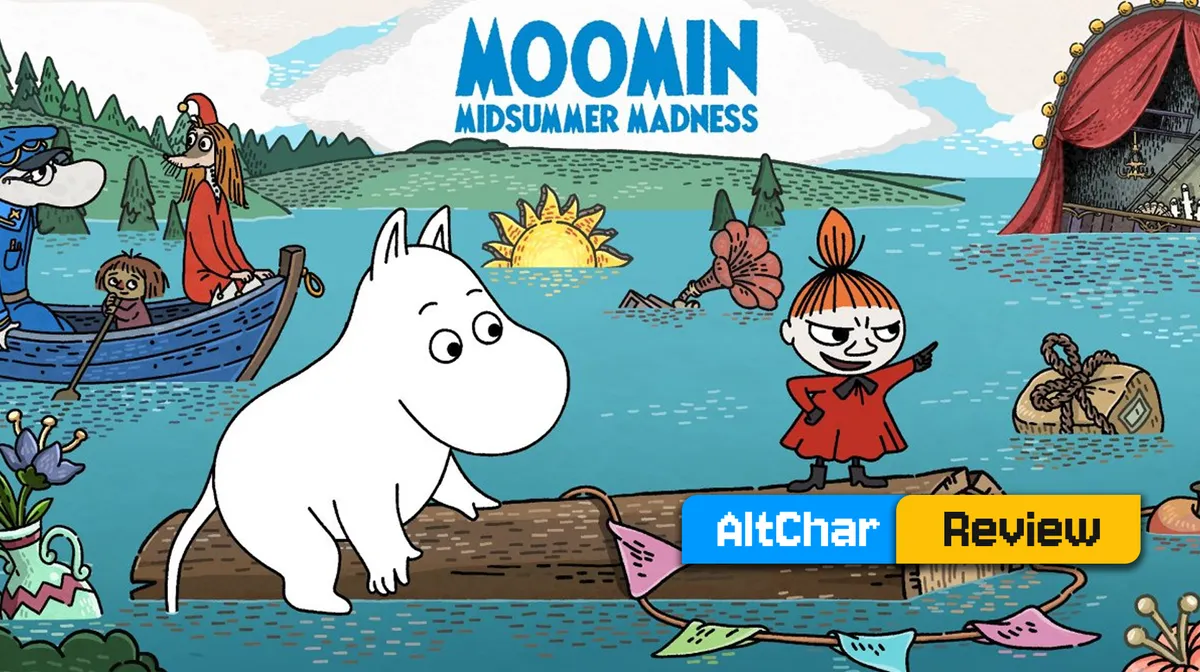
I know most of us watched the Moomins when we were kids. It was around 2000 or so, I remember sitting in my living room, patiently waiting while my dad was on the roof trying to fix the TV antenna so the picture could get clearer and I could watch the new episode. Those truly were easier times, when the biggest problem was a fuzzy screen and Moominvalley felt like the most peaceful place you could possibly escape to.
So, without a doubt, Moomin Midsummer Madness teleported me right back to my childhood. The moment you load into the game, you’re greeted by familiar faces you haven’t seen in years, and it’s hard not to smile. It’s a bit like running into old friends and realising that, somehow, none of them have changed.
That’s exactly what makes this game so special. It’s full of personality, and there’s no shortage of nostalgia as you play. Everything about it feels gentle and calm, the kind of game you can sink into after a long day without having to think too hard about anything.
It might not be perfect, and it isn’t trying to reinvent anything. But it’s a warm, heartfelt reminder of why so many of us fell in love with Moominvalley in the first place, and why, after all these years, it still feels like home.
A summer storm in Moominvalley
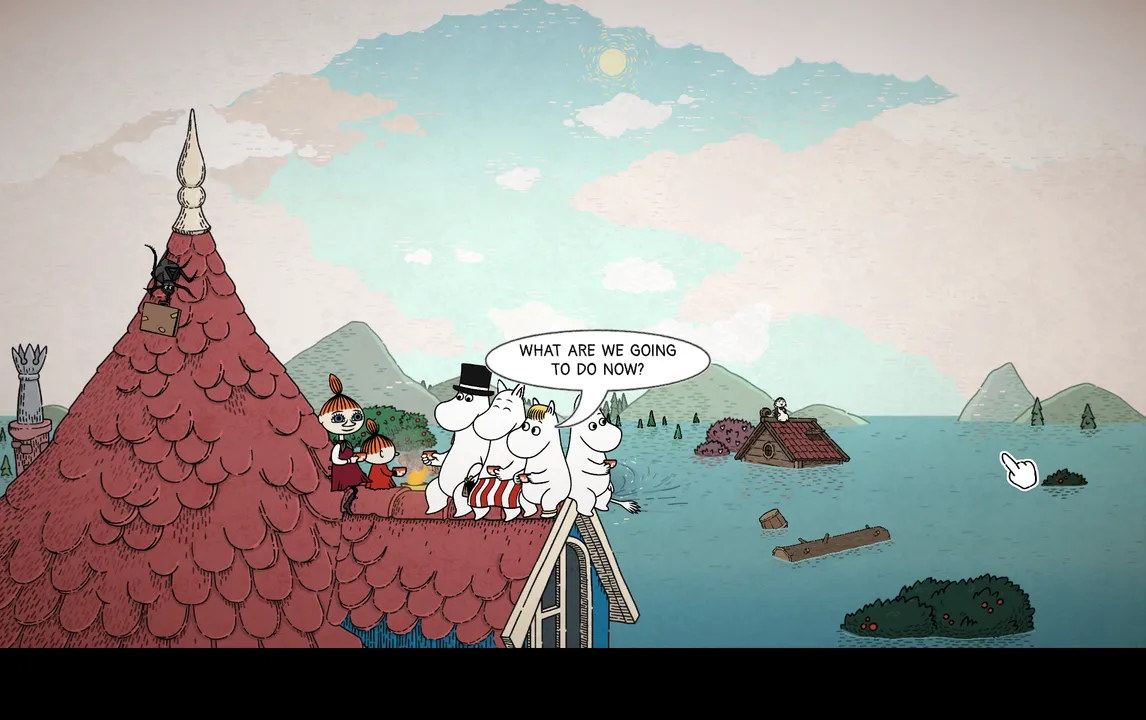
Moomin Midsummer Madness is an officially licensed Moomin game inspired by Tove Jansson’s 1954 novel, Moominsummer Madness, the fifth book in the Moomin series. Midsummer is just around the corner when a storm hits and a sudden flood sweeps through Moominvalley, washing the Moomin family away from their home. The Moomins can only watch as their iconic house is being covered in more and more water, until they eventually need to move from it.
From there, Moomintroll, Little My, and their friends end up scattered across the flooded valley, and they need to find each other and make their way back to their home. The game brings in scenes from the book, along with new story material, encounters with a whole bunch of Moomin characters, and a mysterious setting to uncover. At its heart, it’s a story about friendship, kindness, curiosity, and helping each other.
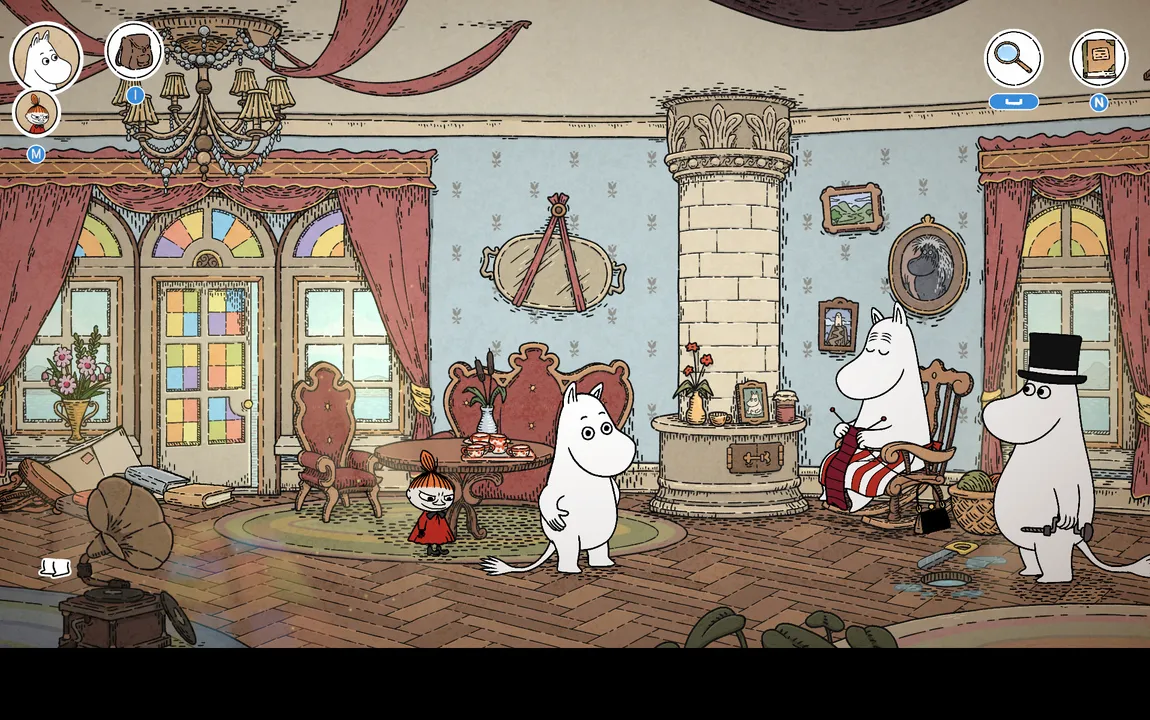
The characters are spot on. Little My is a menace, Snorkmaiden is clumsy, and Moomintroll is as in love with her as he always was. The game is faithful to the original Moomin universe, and even though being swept away by a flood is a pretty hectic situation to be stuck in, the way the Moomins and their world are presented keeps everything feeling peaceful and very chill. I mean, not only their home but the entire valley is flooded, and they're all so chill about it, with the first thing they want to do is have breakfast and some coffee. It makes me feel like I did when I was a kid watching it on the tv, and I always felt like it would be so nice to live in Moominvalley, and hang out with all the characters that live there because none of them really get angry, annoyed or stressed.
It’s also worth mentioning that the Moomins have a surprisingly long history in video games. Between 1995 and 2009, there were plenty of older Moomin games, such as The Moomins and the Hobgoblin’s Hat on PC and Moomin’s Tale on the Game Boy Color in 2000. Many of those were simple children’s games featuring the Moomin characters. More recently, though, developers have taken a different approach. Instead of simply putting the characters into a game, they’re trying to recreate the atmosphere, emotions, and themes of Tove Jansson’s original books. Snufkin: Melody of Moominvalley in 2024 is a great example, and Midsummer Madness follows in its footsteps.
Sink or swim
Moomin: Midsummer Madness is a point-and-click adventure where you explore illustrated environments, find clues, solve puzzles, play small mini-games, and use the abilities of different characters. The game is split into six chapters, each taking place in a different setting.
One of the more interesting parts of the game is how it uses its characters. Not everyone in the Moomin family is good at the same things. Some are good swimmers, while others can squeeze through narrow spaces, and you’ll need to make use of those differences to get past certain obstacles. Moomintroll and Little My in particular have abilities that are important for solving puzzles, so switching between them becomes a natural part of how you play. It’s a simple idea, but it fits the game’s themes of friendship and helping each other really well.
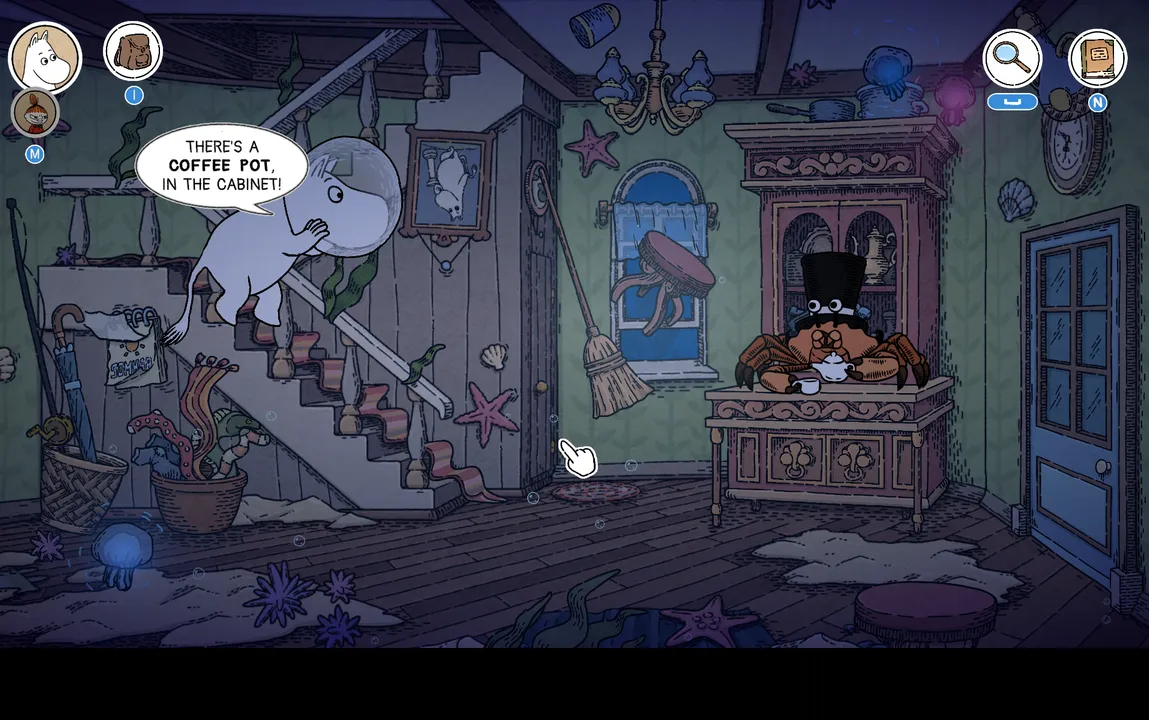
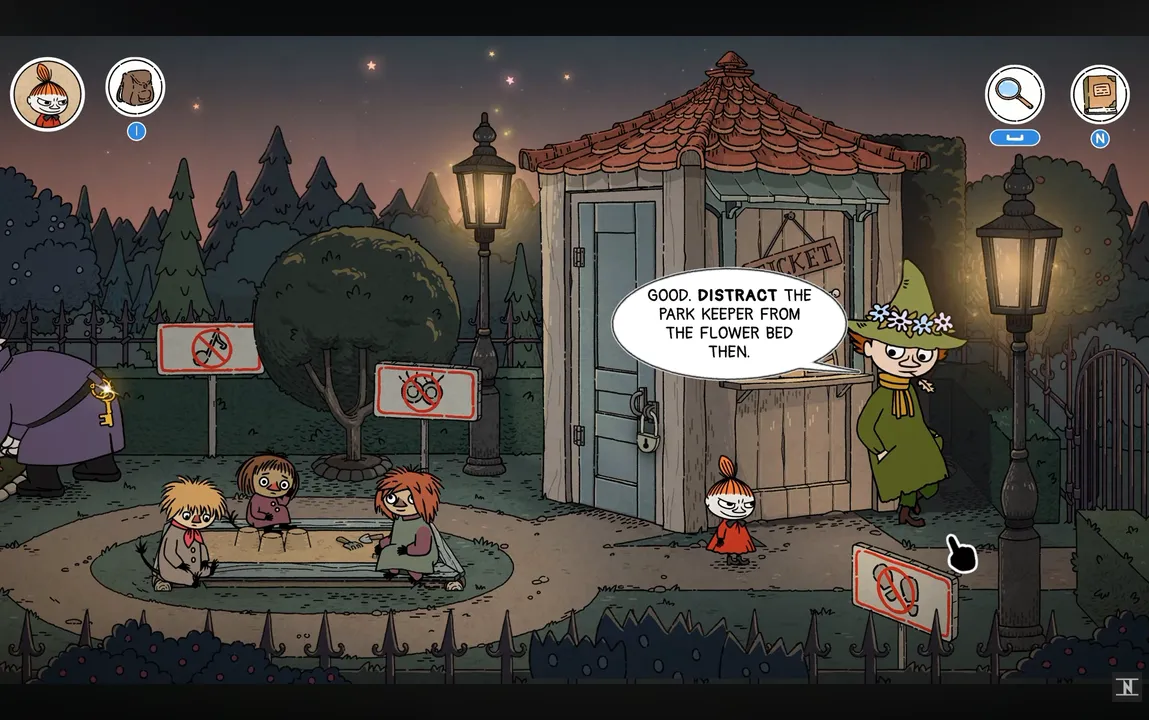
As you explore, you’ll gather all sorts of items in your inventory, and you can also combine them to create something new. Like most point-and-click adventures, a lot of the fun comes from figuring out what goes where. And if you ever find yourself stuck, sometimes all you need to do is take a better look around you, as the solution is usually closer than you think. To make things easier, there’s also a little notebook where everything is written down, so you’ll never forget what you need to do next.
The mini-games add a nice bit of variety too. In one of them, for example, you need to rebuild a broken ship by combining objects and then fitting them into the right place. You can skip some of these if you want, and they can sometimes be a bit confusing, but I think it would be a shame to skip them, as they help break up the exploring and puzzle-solving, and they usually rather fun.
When it comes to difficulty, the puzzles are easy, and the game is easier than the previous Moomin games. That makes it a great fit for younger players, or anyone who just wants a relaxing time. That said, some puzzles can still feel frustrating. While they’re all more or less simple, sometimes you just don’t see the outcome, and combining inventory items can also be confusing at times. If you do get stuck, there’s a hint system to help you out, although its cooldown can be pretty annoying when you just want a nudge in the right direction. I really felt like it didn't need it, so either give us a hint system that has no cooldown, or don't give us one at all.
It’s all rather linear, but I don’t consider that a bad thing. The game knows the story it wants to tell, and it guides you through it at a comfortable pace. At around four to six hours long, it’s a relatively short adventure, but that makes it perfect for a couple of cosy evenings.
Mumbles and melodies
Moomin: Midsummer Madness is a 2D illustrated game, and it’s full of colour and whimsy, just like a storybook. The hand-painted environments and colourful backgrounds are packed with little details, making each place a pleasure to explore. Of all the locations, the mysterious floating theatre is one of the best-looking, and it’s easy to see why the game builds so much of its adventure around it.
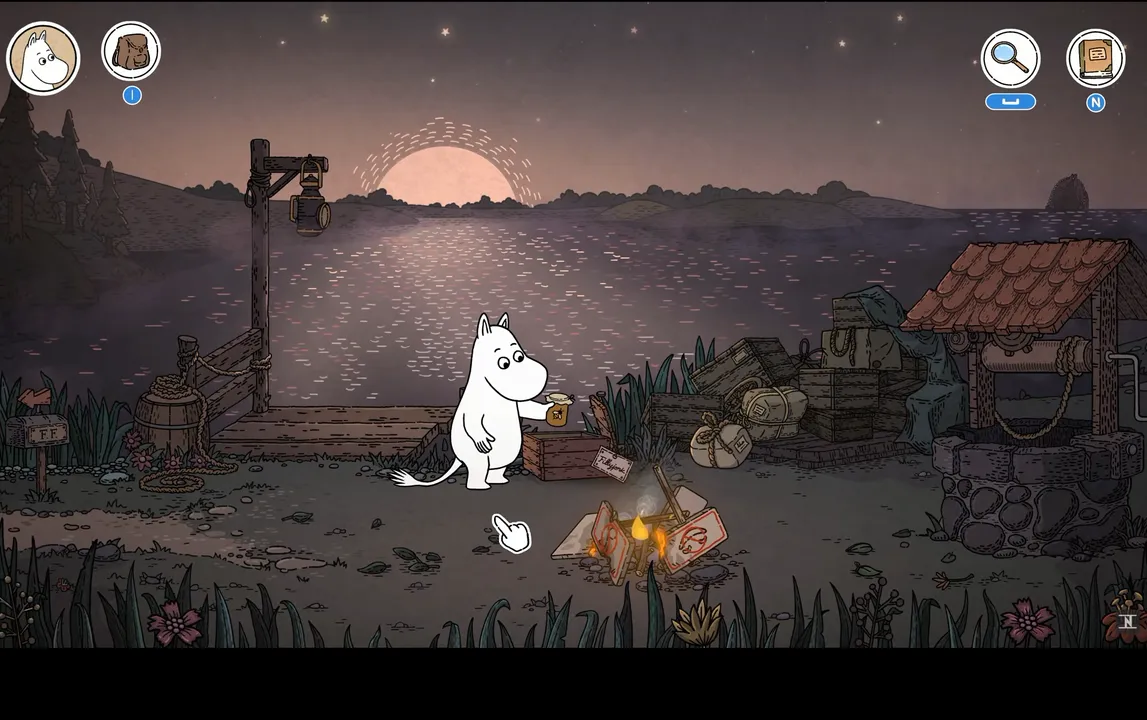
The music is soft and whimsical, and it goes perfectly with a game of this type. Together with the visuals, it creates a charming, relaxing atmosphere that matches the gentle pace of the adventure.
Everyone communicates through speech bubbles, and all we hear are mumbles. But even those are enough to convey the personalities of the characters, from Little My’s mischief to Snorkmaiden’s clumsiness.
On the technical side, the game runs well, with no significant technical problems.
The end of a midsummer dream
Moomin: Midsummer Madness is a short and sweet adventure that stays faithful to the Moomin universe in every way that matters. It’s beautiful to look at, lovely to listen to, and filled with the kind of characters you never really forget, even if it’s been years since you last saw them.
It does have a few rough edges. Some puzzles can feel frustrating, combining items isn’t always as clear as it should be, and that hint cooldown tested my patience more than once. But none of these issues take away from what the game does so well, which is wrapping you up in the gentle, peaceful world of Moominvalley.
It’s easy to recommend to younger players, who will find its puzzles approachable, and to anyone who grew up with the Moomins and wants a cosy trip down memory lane. It continues the newer approach of capturing the heart of Tove Jansson’s books rather than just borrowing her characters, and it does that with a lot of care.
The antenna in our living room is long gone, but it turns out I didn’t need it to find my way back to Moominvalley. This time, the picture was perfectly clear.
The Good
 Beautiful, hand -painted storybook visuals
- Lots of familiar characters
- Charming music and a relacing atmosphere
- Character abilities that add variety to puzzles
- Fun mini-games
The Bad
 Relatively short
- Some puzzles can feel frustrating
- The hint system has a weird cooldown