Trending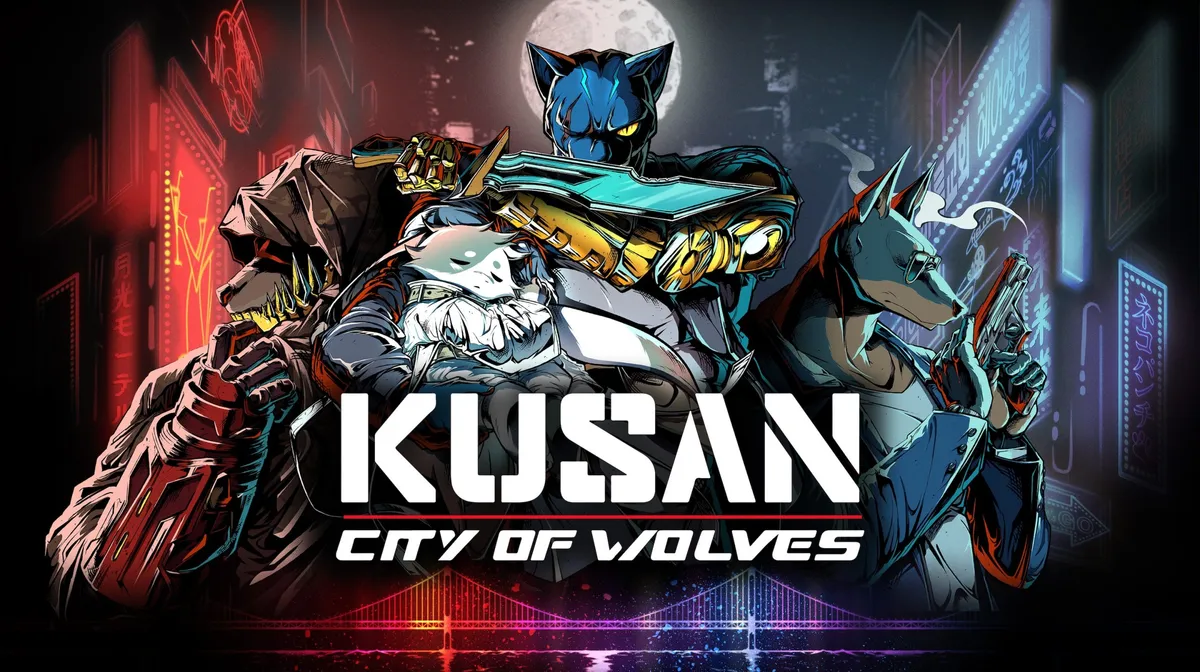
When I first saw Kusan, I noticed the fast gameplay, a cool looking panther, and beautiful visuals, and I was sold.
What I didn't notice was the one-hit dying, the brutality, and punishing gameplay loop, but nevertheless, still sold. I couldn't back down, could I? Now I had something to prove, considering the fact that I am deathly afraid when it comes to playing horror, I have to pull my weight somehow!
It's a brutal game, but it's also stylish and it'll absolutely test your patience. And on top of that, with the grades at the end of every floor, gaming perfectionists will lose hours and hours in this rather short game. While there are no difficulty options, and the game will punish every mistake, there is so much satisfaction when you clear a floor and kill everything on it. The rhythm of plan, fail, learn, repeat, and then eventually succeed makes you feel like the coolest, toughest panther in the city.
And in Kusan, you actually are.
A blast from the past
While roaming around Kusan, one thing is for sure: you really wouldn't want to live there. It's a city that is consumed by crime, corruption, and a handful of factions who don't care about anything else but dominating the city, even if that means killing everything in their way.
Jin, our protagonist, knows how to handle the city as he is a former soldier, now turned fixer, and armed with a combat prosthetic and the kind of skills you wouldn't learn at a regular 9 to 5 job.
His current job seemed simple and quick, but what he didn't expect was the actual stake in it, for everyone. Saving a little white bunny called Haru, seemed like a one and done job, however what he didn't know was that she was an artificial psion, carrying enough power to level the entire city.
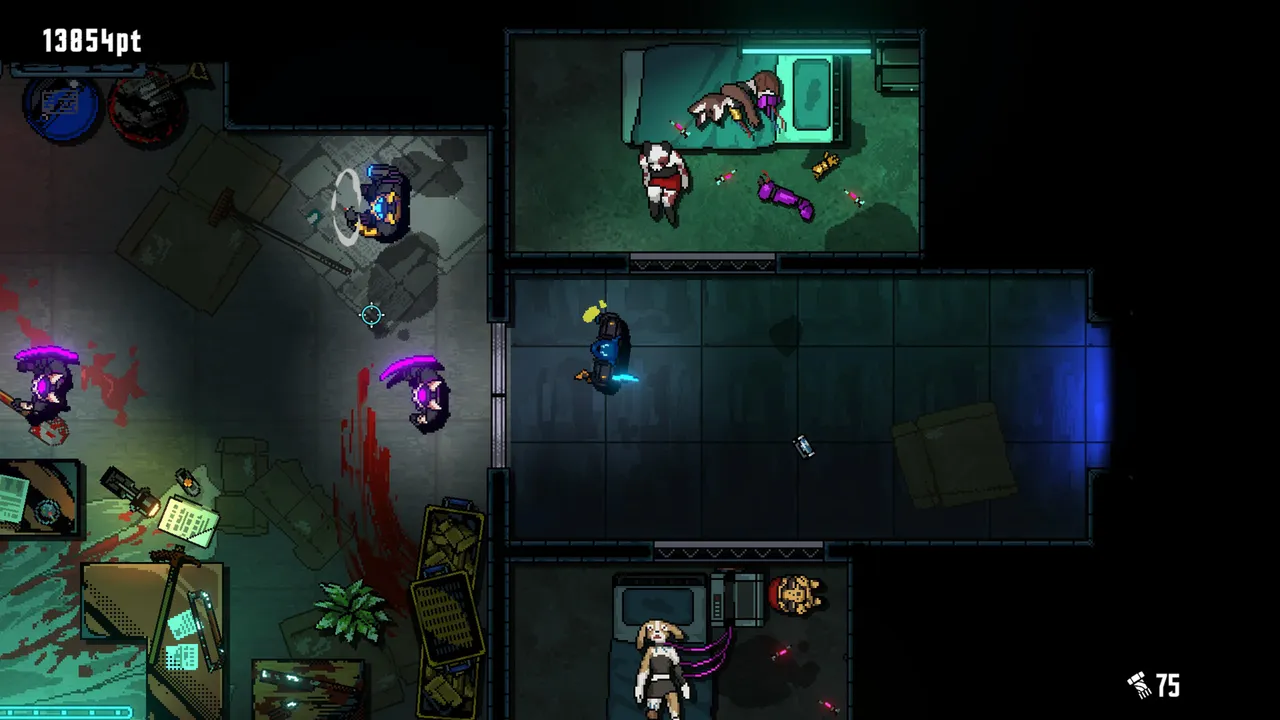
Haru's situation isn't just bad luck, it's tied to something much bigger. The National Security Bureau has been locking away psions, people considered dangerous enough to be treated as threats, and they've created Project Origin, which is aimed at creating artificial ones instead. Obviously Haru is tied to that experiment, making her less of a person and more of an asset people want to control.
To make things even more complicated, the leader of the Diamond Wolves, a faction that will stop at nothing to get Haru, is Colonel Hoban. Before he turned to the dark side, he was a commanding officer in the army, the same unit where Jin was. And just like that, protecting Haru isn't just a simple job anymore as things have now become personal, with the game introducing a person who helped shape Jin into what he is today.
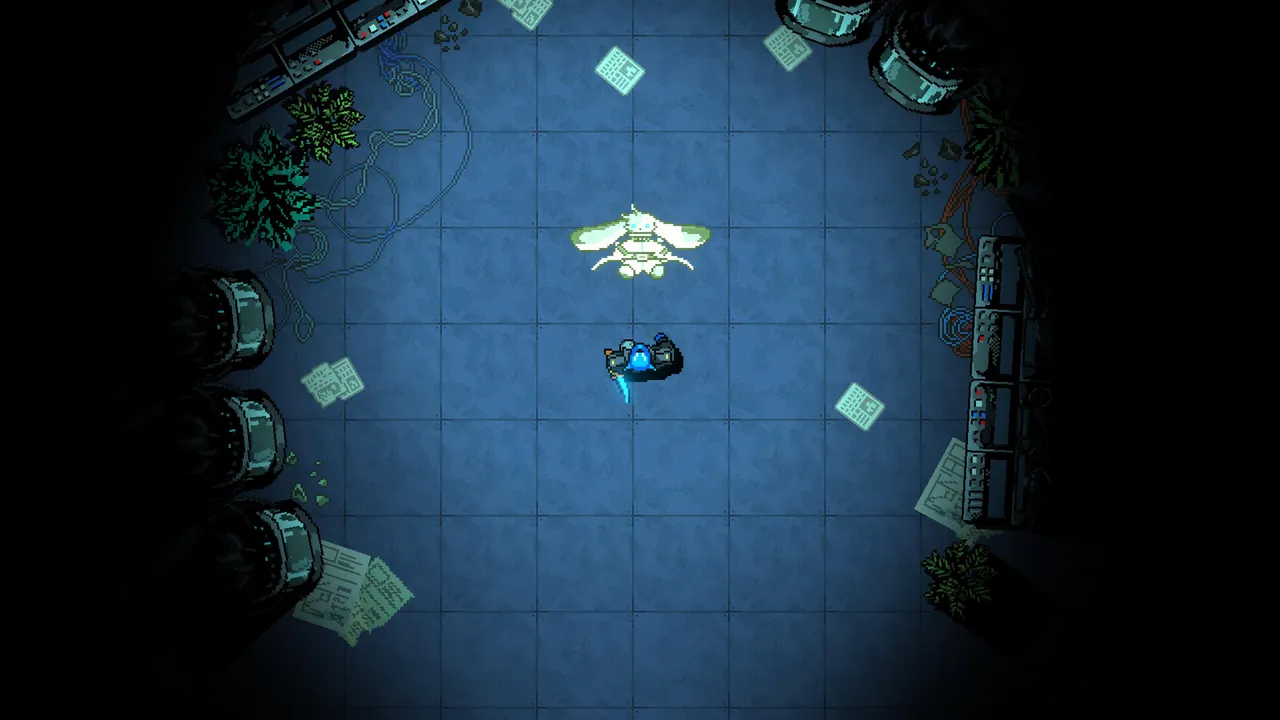
The story gives us glimpses and insights into Jin's past, which isn't just a backstory dressing. As you make your way through the city, you'll come across war flashbacks and little clues that show us who he was before he became the guy people hire to clean up their mess.
These aren't just passive cutscenes, because you'll get a chance to play through Jin's older battles, putting you directly into the shoes of the soldier he used to be, instead of just being told about him.
Our badass panther is carrying his own baggage, and the game gives us small glimpses into it instead of keeping it neatly separated in a cutscene.
The game talks about themes of survival, loyalty, and betrayal, making you ask yourself why Jin just can’t leave his past behind and move on. However, a past like his isn’t something a person easily leaves behind.
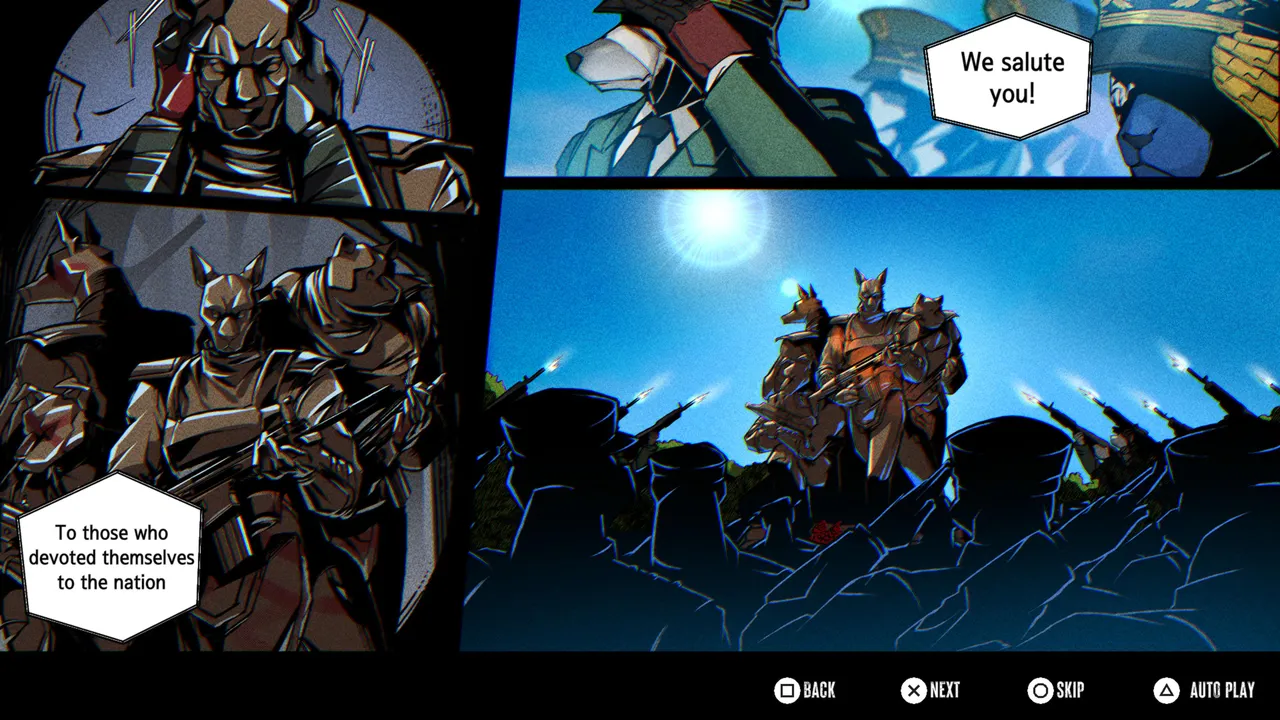
As you play more, you realise that Haru isn’t just a simple job, she is actually tangled up in the same violence that made Jin who he is today, and the worst thing about it is that neither of them really got a choice in that.
The story isn’t always as clear as it could be, some threads are easily followed while others take some untangling to clear up, which is why some players might consider the story secondary and something they don’t really care about. I enjoyed it as it reminded me of stories from games such as Yakuza. I still remember the gasps I gasped while playing through Yakuza 0.
What it doesn’t miss is intrigue, as you slowly learn who Haru is, why Jin is struggling with loyalty and betrayal, and how it’s all connected.
At its core, Kusan is telling the story of the strong protecting the weak, except that here the “weak” one happens to be wired to enough power to completely destroy a city, which obviously complicates things.
Plan, fail, repeat
To explain it as simply as I can, the gist of Kusan is this: you’re dropped into a floor full of enemies, and your goal is to kill all of them, which allows you to progress to the next floor, or level. Sounds simple, right?
However, it only sounds like that. Nothing about doing that is simple, because one hit kills them, but it also kills you. “Oh but what about the bosses?”, you might ask. Well, the same applies…For you. The bosses have a health bar, you die in one hit.
The top-down perspective isn’t just a stylistic choice, it’s something you need to survive, as it’s much easier to plan your routes and figure out where an enemy is when you get to see the entire floor. The Hotline Miami homage is more than obvious here, and Kusan wears it like a badge of honour.
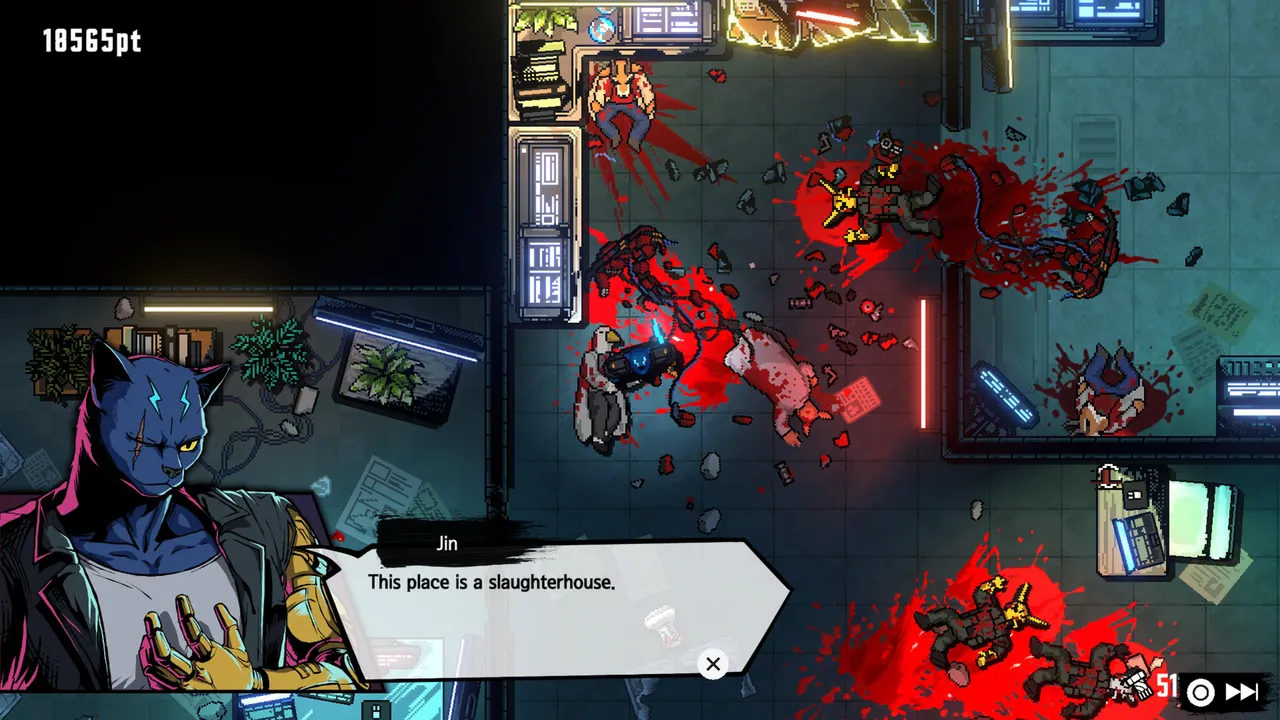
At the start of the game, Jin is equipped with his prosthetic, War Hand, and a Quantum Knife, but as you progress you’ll be able to unlock new moves and weapons, guns, crossbows, shotguns. You can slice, punch, shoot, and parry too. Walls become your friends, and breaking line of sight is always a recommendation to avoid a very quick death.
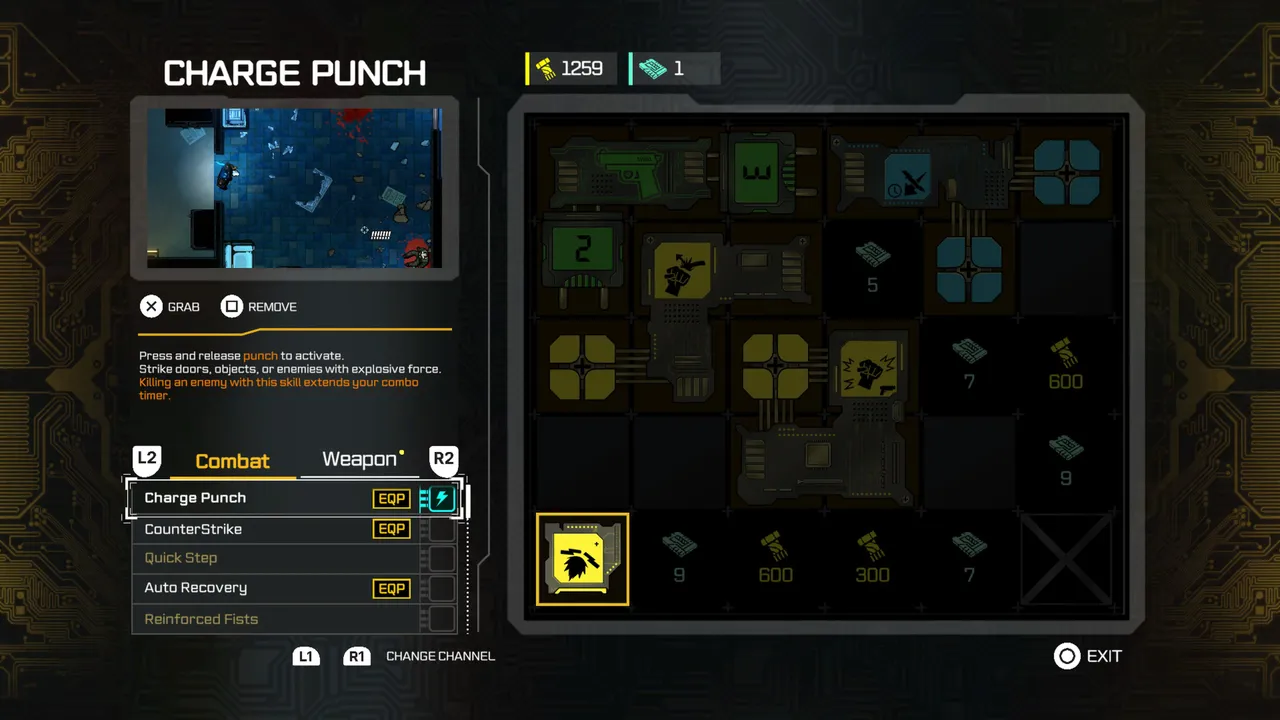
The inventory is not what you think though, as it’s a Resident Evil style management system, where you move and unlock new boxes, in order for it all to fit. Instead of just clicking to acquire abilities and upgrades, you’ll have to make room for them, and manage the space where you’ll fit new ones.
It’s not a bad idea, as it adds some variety, but what I didn’t like was that certain slots you can only buy with Limbus pieces, which you get from solving Limbus puzzles.
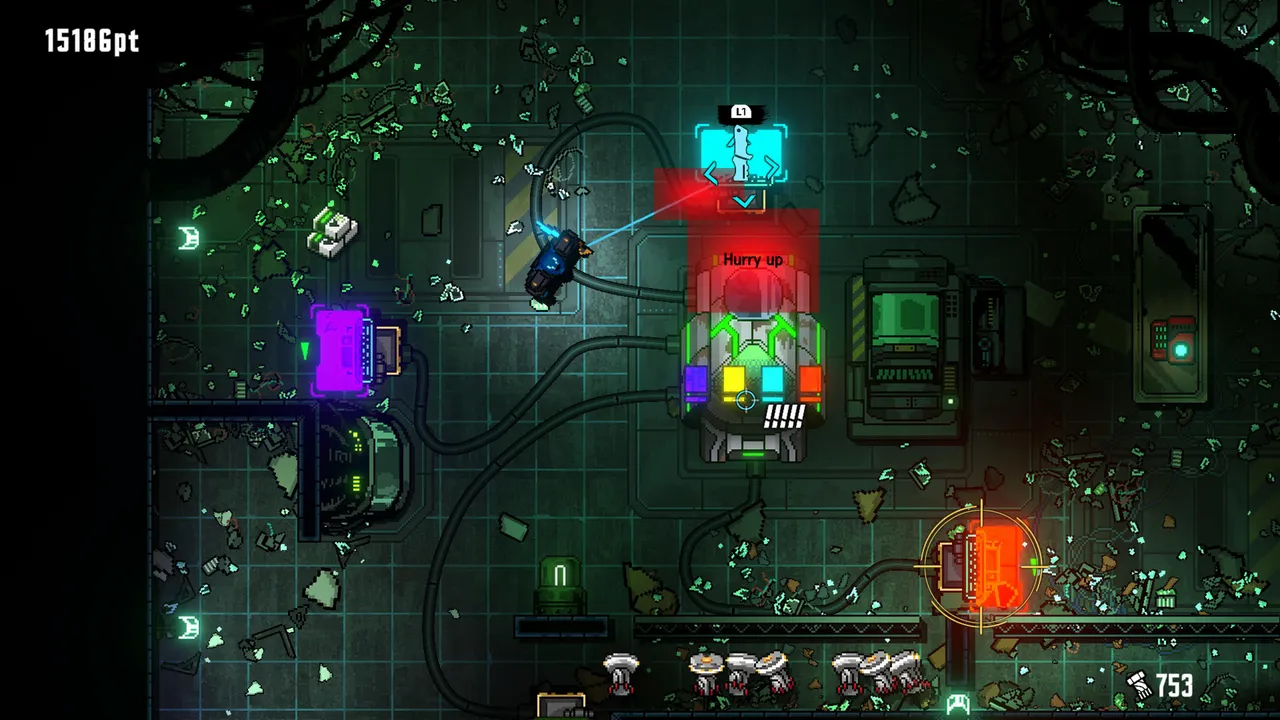
My issue isn’t with the puzzles themselves, you get the rhythm down after a few tries. My issue is that they kind of seem a bit out of place, and the fact that you don’t get the bullets back which you need to solve these puzzles. And searching for bullets after a cleared floor is pointless, as there is rarely any left to grab.
Another shaky thing are the controls. They feel a bit rigid, almost stiff compared to how fast the game wants you to move and manoeuvre, and they’ve been the reason I died many times. Now mind you, my reflexes aren’t what they were before, and I did get the hang of moving Jin around to aim, but I remember dying to DJ Garak so many times because he just didn’t want to aim the gun at him. Awesome fight soundtrack, awful aiming.
Trial and error of this game doesn’t make it annoying, but dying because your gun got a mind of its own does.
After every floor, you get a grade, plus a Devil May Cry-style meter that rewards if you manage to chain together flashy combos, shoot someone, throw your knife, or just pummel them into mush with the War Hand. Getting good at this game takes practice, and a bit of luck, but when it clicks, every floor you clear makes you feel awesome.
A couple of times you’ll have a companion, but his contribution is minimal, so don’t get too excited when you see Ayn with you. It shakes things up a little bit, it’s mostly still you and your guns and skills clearing the floors.
Restarting after each death is very fast and painless, so you won’t even notice when you start over. At some point, it just becomes a blip, you die, press R1 and start over, without too much thought. There is no waiting around or wasting time, you’re straight back in the action, which does minimise the “pain” of dying seventeen times in a row.
Blood, beats, and no bugs
If there is anything that Kusan does well, it's the soundtrack. It's amazing, funky, hip-hop expired with a clear Korean influence and it fits perfectly into the violent rhythm of the gameplay. It could easily be just your background noise, but in Kusan it adds to the gameplay flow of the fights, and I found myself really enjoying it. It almost makes dying less painful.
The visuals are the same. The pixel art is beautiful, vivid, stylish, and colourful, and the comic-book cutscenes - with the panels and speech bubbles - fit the story perfectly. Character design is great as well, Jin, Haru, and the rest of the cast are very well done, distinct and memorable.
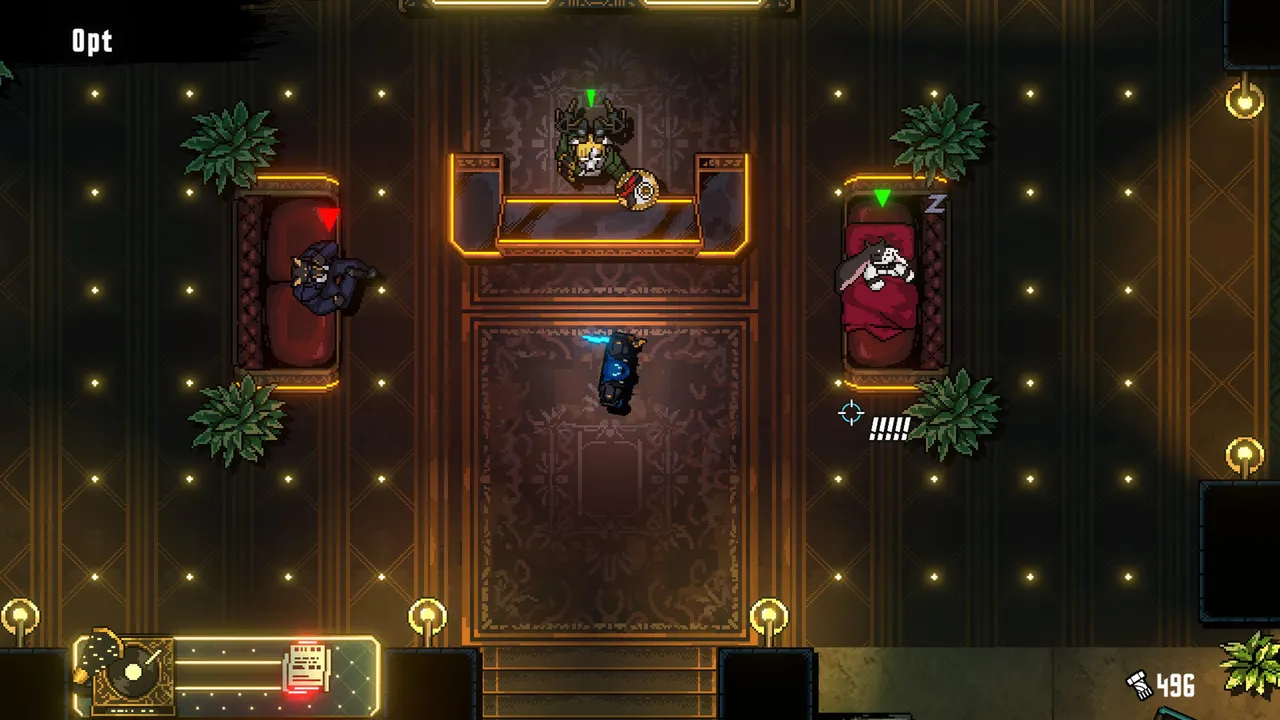
The city of Kusan, which obviously draws some inspiration from the Korean city of Busan, feels alive in its own way, whether you're inside a building or you're smashing heads on the pavement. Nearly everything can be destroyed, and pools of blood linger after every kill, so when you're done with clearing a room, it'll look like a warzone...because it is one. After Jin leaves the place, it's unrecognisable from how it started.
On the technical side, no complains from me. It ran smoothly on my console, and I didn't run into any performance issues throughout my time in Kusan, no crashes, no noticeable frame drops, nothing pulling me out of the experience. Kusan runs as cleanly as it looks.
Fast, fatal, and worth it
What Kusan promised, they've delivered: a fast, brutal, stylish, and without any hand-holding. It offers zero difficulty options, kills you in one hit, and grades you after completing every floor, just to let you know how far off "perfect" you actually were. And yet, it's such a fun experience.
The entire gameplay loop never stopped being interesting and fun, if you have to restart a floor you just do it and try again. I've never found myself annoyed with the game if I had to go again, only disappointed in myself if I made a dumb mistake, especially if it's the last enemy on the floor. Kusan asks for a lot of your patience, and it doesn't always play fair with its controls, but when everything lines up...Clearing floor and floor feels genuinely amazing.
While the story doesn't always seem really clear, it carries enough weight to keep you invested between the bloodshed, and the presentation and soundtrack are firing on all cylinders throughout.
Kusan: City of Wolves is not a perfect game but for what it wants to be, it succeeds, and commits to that vision without looking back. It is definitely a game I recommend checking out, but you should know that if you want to see those end credits roll, you'll have to get your hands bloody.
The Good
 Stellar, funky design
- Beautiful pixel art and comic-book presentation
- Satisfying gameplay loop
- Unique grid-based upgrade system
The Bad
 Rigid and finnicky controls
- Story can be hard to follow
- Out-of-place puzzle sections
- Style meter can get stuck for no reason