Trending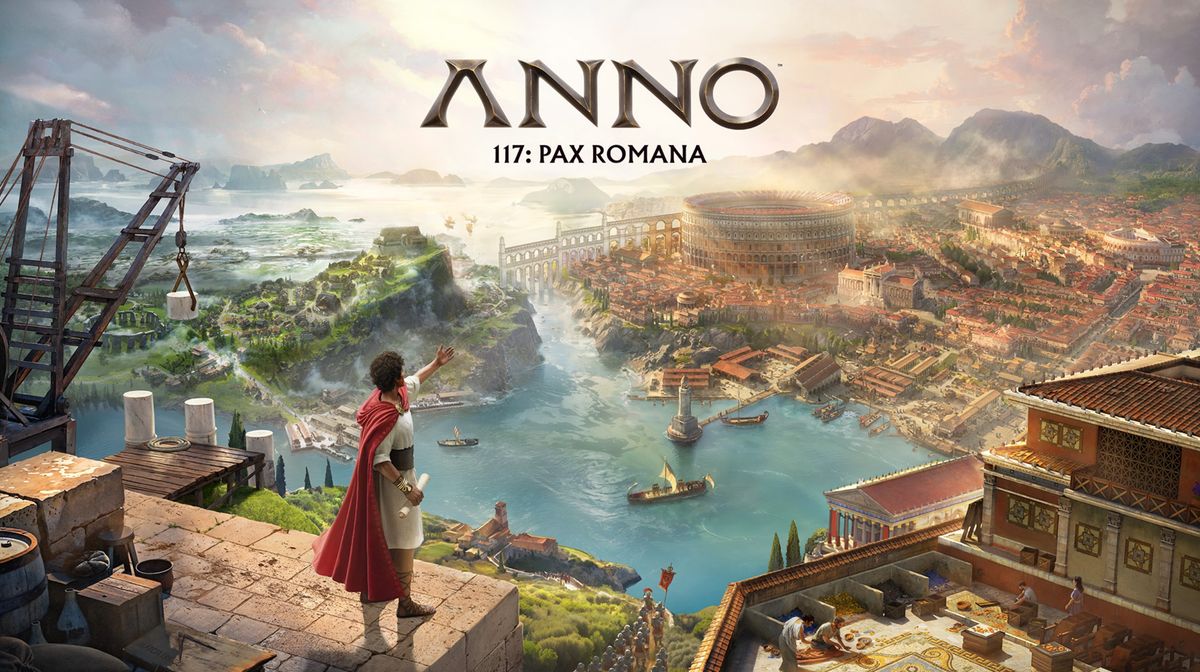
After three preview sessions and countless hours building Roman cities for this review, I can confidently say Anno 117: Pax Romana has laid the foundation to become one of the best city builders ever. The operative word being "foundation", because whilst the core experience is exceptional and the visual presentation stunning, the campaign feels frustratingly unfinished in ways that genuinely dampened my enthusiasm.
A city builder at its finest
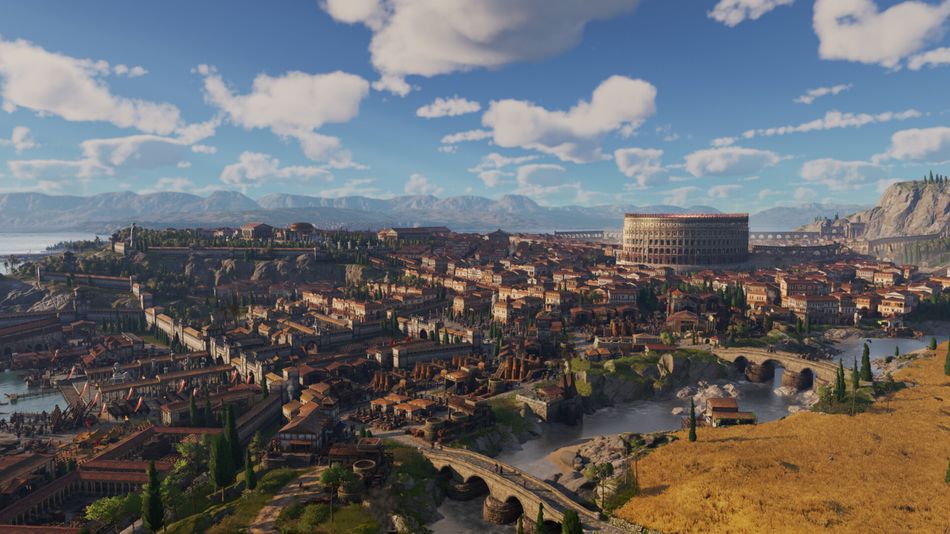
Let's start with what Ubisoft Mainz absolutely nailed. This is hands down the prettiest Anno ever made, and possibly one of the most impressive-looking strategy games I've come across. In my mind, Frostpunk 2 takes that crown but Anno 117: Pax Romana is certainly close. The Roman setting is dripping with atmosphere and detail, from the way your cities get painted in beautiful golden hour colours during sunrise and sunset to the impressive day-night cycle that creates some genuinely spectacular vistas.
The attention to detail extends beyond just visuals. Playing through the Roman-focused maps feels like Ubisoft poured genuine love into recreating this period of history. The Pax Romana setting, that 200-year period of Roman peace, expansion, and prosperity, provides the perfect backdrop for the classic Anno experience of growing provinces, building efficient cities, and keeping your citizens happy.
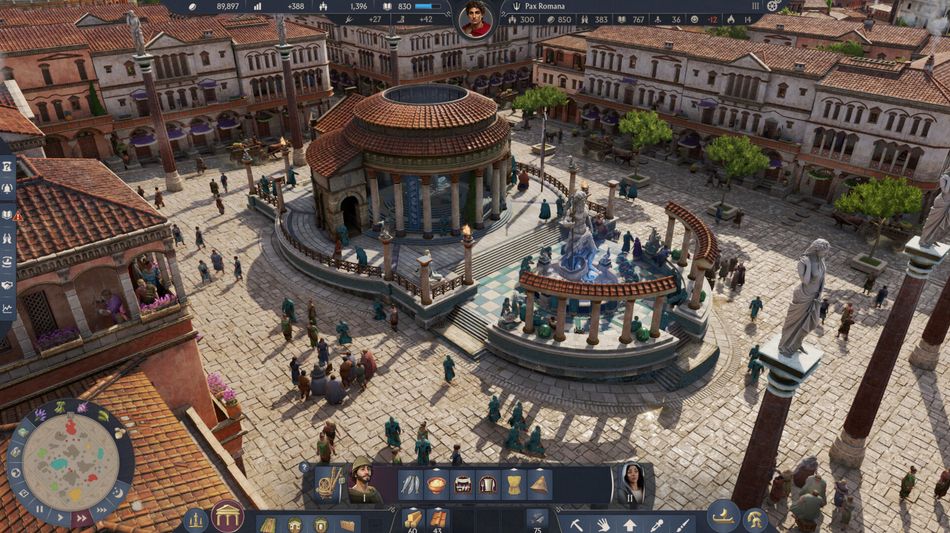
The core gameplay loop works exactly as it always has, and that's a good thing. You start with nothing but a ship and a dock, quickly establishing your first houses before building the Governor's Villa, a new building that serves as your headquarters (you can only have one per island). From there, it's the familiar dance of unlocking new food, products, and buildings whilst doing your best to increase productivity across your province.
New additions like diagonal building placement are welcome quirks that add a bit more flexibility to city planning, though let's be honest, if you're min-maxing for efficiency, your city will still end up looking like a soulless grid of perfectly optimised bricks. You can't really have maximum efficiency and aesthetic beauty so pick your poison.
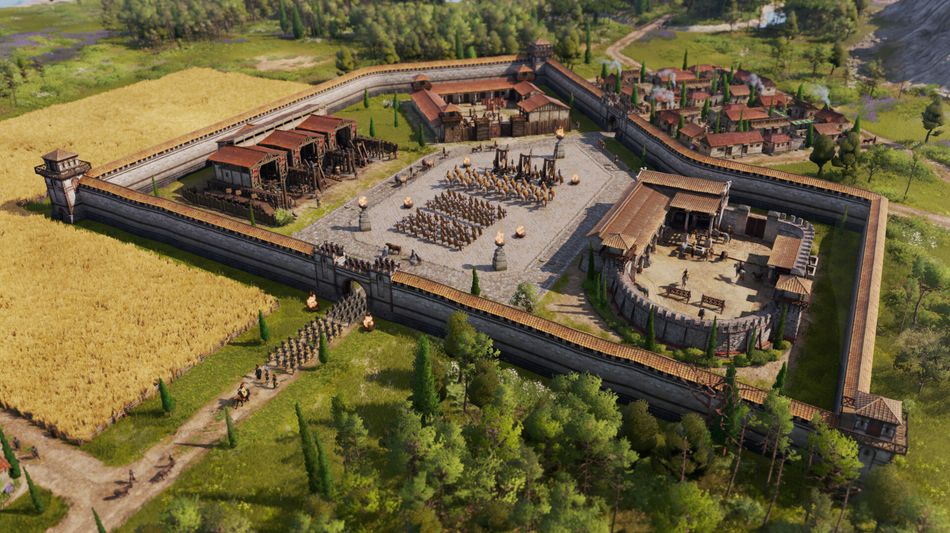
The research tree is another solid addition that adds strategic depth without overcomplicating things. Land combat represents a genuine evolution for the series, giving you the option to either relax and build your Roman paradise or go full conqueror mode as a proper Roman general. It's implemented well enough that it feels like a natural extension of Anno rather than a tacked-on feature.
Surprisingly welcoming
One aspect that genuinely impressed me is how newcomer-friendly Anno 117 feels. Even after years away from the series (my last proper Anno was 1404), I found the game surprisingly approachable. Sure, it can seem overwhelming at first with all those UI elements and interconnected mechanics, but Ubisoft has done a wonderful job explaining everything through clean tutorial pop-ups and a steady drip-feed of features throughout the campaign.
Unlike some other city builders, there's no tedious micromanagement here. Your job is to build and ensure various local businesses sync up with each other to achieve maximum efficiency. The game strikes that difficult balance between accessibility and depth, it's welcoming without being dumbed down, engaging without being exhausting.
That said, veterans of Anno 1800 with all its DLCs might find the base game somewhat less complex. There's definitely room for future expansions to add more layers, but the foundation here is solid and worth hundreds of hours of gameplay on its own merit.
Where Albion falls short (slightly)
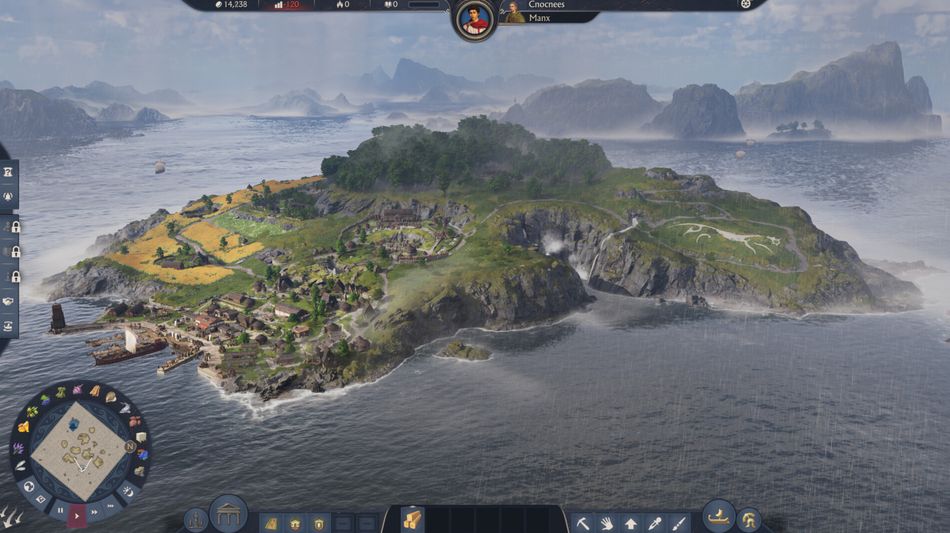
I also spent time with the Albion map, which offers a Celtic-inspired setting with gloomy marshlands and scattered isles. Whilst it's still atmospheric and enjoyable, you can feel there's slightly less love poured into it compared to the Roman setting. The choice between Romanising the locals or respecting their traditions hints at meaningful strategic depth, unlocking unique production options depending on your path, but the map itself doesn't quite reach the same heights as the Roman locations.
The campaign problem
Here's where Anno 117 stumbles badly: the campaign is a complete letdown. You start by choosing between a male or female character before being sent to rebuild the ruins of Ambrosia, a city destroyed by a natural disaster. The setup is promising, and surprisingly, the story is actually engaging for the first few hours, which is refreshing in a genre where narrative is usually an afterthought.
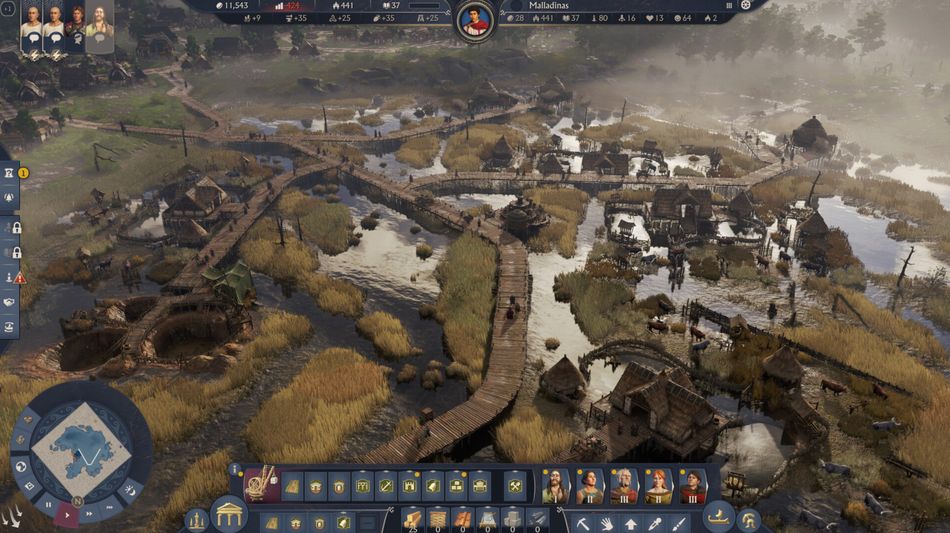
But then, right when things are getting interesting, right when you feel like the story is building to something meaningful, it just...stops. No conclusion and no epic final confrontation. Nothing. The game abruptly dumps you into sandbox mode with no conclusion whatsoever.
It's anticlimactic to the point where it feels genuinely unfinished, like Ubisoft ran out of time or resources to properly complete the campaign. For a game that actually bothered to have an engaging story, which is rare and commendable in this genre, to then not deliver a proper ending is deeply frustrating.
Technical concerns
Performance is another issue that needs addressing. Playing on a high-end PC with a Ryzen 7 7800X3D and RTX 4080, Anno 117 struggled to maintain 60fps at 4K with ray tracing enabled and DLSS set to Balanced. Frame rates hovered around 40-50fps, and I noticed some stuttering when zooming in and out of the city view.
The optimisation could certainly be better, but it's fair to say that Anno 117: Pax Romana truly delivers a visual spectacle and this certainly isn't one of those cases where the game looks and performs poorly.
AltChar's verdict
Despite these significant gripes, I'd still call Anno 117: Pax Romana a safe buy for series fans. The core city-building experience is exceptional and true to the Anno formula. That addictive, time-melting gameplay where you suddenly realise you've been playing for hours without noticing? It's absolutely here. The visual presentation is stunning, the Roman setting is fantastic, and the new features like land combat and diagonal building enhance rather than detract from the experience.
But it's impossible to ignore that unfinished campaign. This feels like a game that needs its DLC roadmap to reach its full potential, much like Anno 1800 did. The base game provides a classic Anno experience that you'll safely be playing in 10 years, but right now it feels incomplete in crucial ways.
If you're an Anno veteran, you know what you're getting into, and the core experience won't disappoint. If you're new to the series, be aware that the campaign will leave you hanging, but the sandbox mode offers endless hours of satisfying city-building. Rome wasn't built in a day, and neither was Anno 117: Pax Romana, so hopefully the post-launch support will finish what Ubisoft Mainz started here.
The Good
 Hands down the prettiest Anno ever made with stunning visuals
- Addictive core gameplay loop that makes hours disappear
- Roman setting is brilliantly realised with fantastic atmosphere
- Solid foundation for hundreds of hours of gameplay
The Bad
 Campaign abruptly ends with no conclusion whatsoever
- Performance struggles even on high-end hardware
- Less complex than Anno 1800 with all its DLCs
- Albion map feels less polished compared to Roman locations