Trending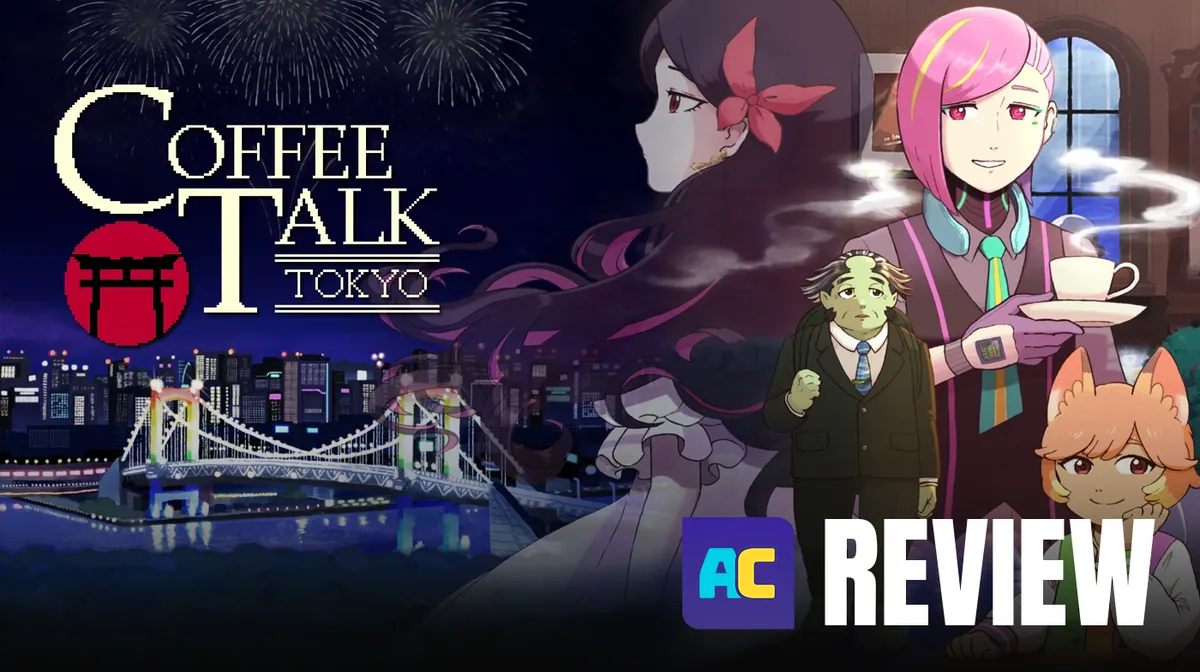
While games like these aren't rally something I play, I've enjoyed Coffee Talk 1 and 2 immensely. The idea of just making coffees and chilling behind a counter seemed very fun to me - a welcome change of pace from being a god of war or hunting monsters around Novigrad.
Coffee Talk Tokyo continues the same formula, bringing the series to modern day Tokyo, Japan, shifting the setting from Seattle's rainy nights to neon-lit streets where humans and all kinds of mythical beasts coexist, but keeping the same core: you're a bartender running a late-night coffee place, listening to your regulars talk and share their problems, and serving drinks that might - just might - help them figure things out.
This is a game for lovers of coffee, lovers of cosy games, or both. The chill setting, accompanied by even chiller music, blend perfectly with the polished pixel art and Japan-inspired aesthetic. The stakes are low during playtime, you won't be deciding whether someone lives or dies, and sometimes that's exactly the change of pace you might need.
Low stakes, high comfort
Coffee Talk Tokyo, as the name says, is set in Tokyo in the year 2026, in a world where the supernatural and mundane coexist and blend into one another. While they may not look the same, most of the characters are living similar lives, they have jobs, families, tasks and obligations. Humans work alongside yokai, spirits hold down jobs, dragons navigate the modern live, and no one bats an eye when a ghost walks into a café looking for closure.
The normalisation of the unfamiliar, fantastic and Japanese folklore inspired characters creates a grounded and relatable atmosphere - there is no epic quest involved, they're just people (and spirits, and deities) that are dealing with everyday problems: relationship issues, career anxiety, retirement, grief, creative blocks.
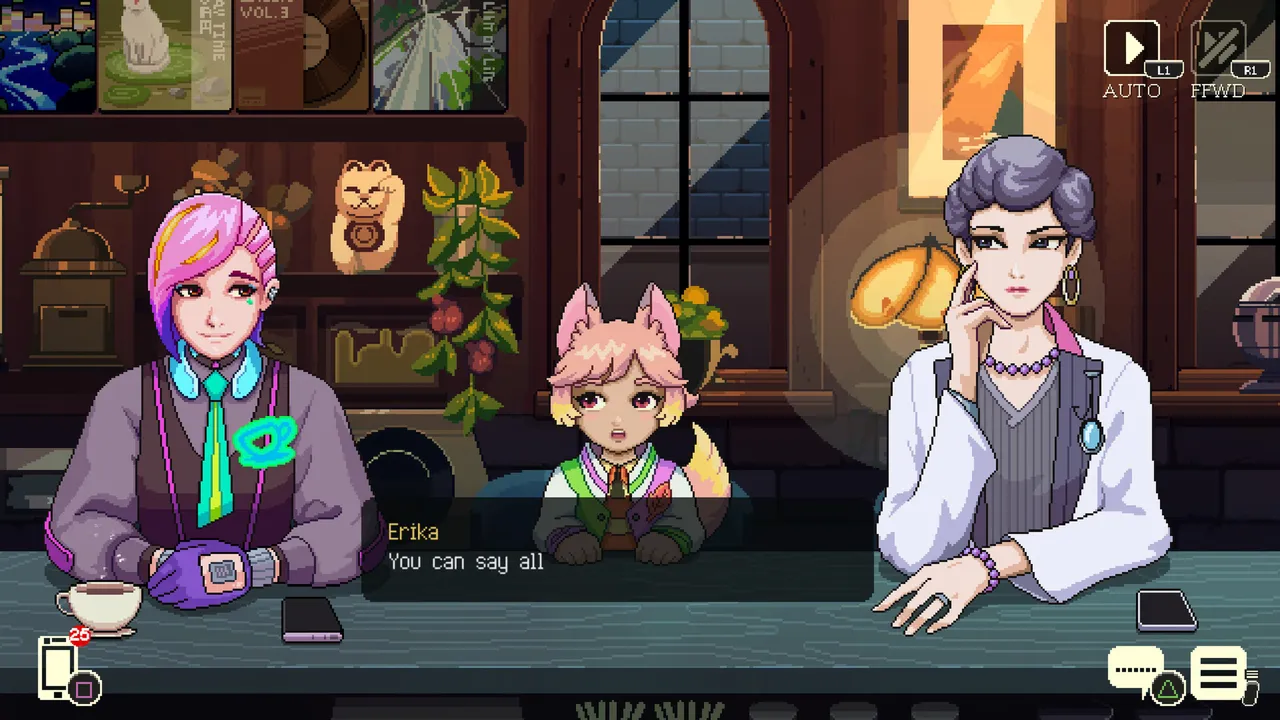
Your character - which you can name and you best believe I named him after my cat - is running a coffee shop with Vin, your helper and assistant who is dealing with his past. The café is open during the night, so your customers are mostly regulars and it never gets that busy, which allows the game to focus on meaningful conversations rather than frantic service mechanics. While the coffee is important, it's secondary to the conversations and people that happen in your coffee spot. Each customer gets time and attention, and you get to know them all across multiple visits across fifteen days of game time.
You'll learn their patterns, anticipate their orders, and recognise if they're having a rough night. The café becomes a regular part of their lives, and they become a regular part of yours. I found myself sad when I had to say goodbye to them, as at the end of the game, when the last day rolls away, there is a genuine sense of loss - these people and the routine you've built with them will be missed.
Many different people will come seeking coffee and companionship, some of them even very familiar, such as Hendry, who travelled from Seattle to Tokyo with a special mission. Besides him, you'll meet a bunch of different species such as Kenji, a kappa that is retiring and feels weird about it, or Yuki, a ghost that has lost her partner and is now dealing with grief. Each character brings a part of their own cultural context, influenced by Japanese mythos, and bringing in a bit of the Japanese attitude toward work, relationships, duty, and the spiritual.

The setting of the café has got the same vibe as the shops from the previous games, it's cosy and intimate, but adjusted slightly to fit the shops you'd find in Japan. The game's aesthetic is polished pixel art, with clear Japanese influence on the layout, the decorations, the way the light of the giant billboards filters through the windows. It feels like a place you'd find in the middle of the night while walking through Tokyo and misinterpreting your Google Maps directions.
The structure of the game is consistent: you've got fifteen days and each day you'll get to know your customers a bit better, understand their troubles, and serve them some good coffee. When the guests leave, the day is done, you mumble something (usually wise) to yourself, and another day comes where you'll get to see whether your words and drinks made any impact on the visitors of the previous day.
The stakes are, intentionally, low during playtime. You won't make any wrong choices, you won't get fired or make a customer angry if you mess up their drink - regardless of it all, the game will move forward.
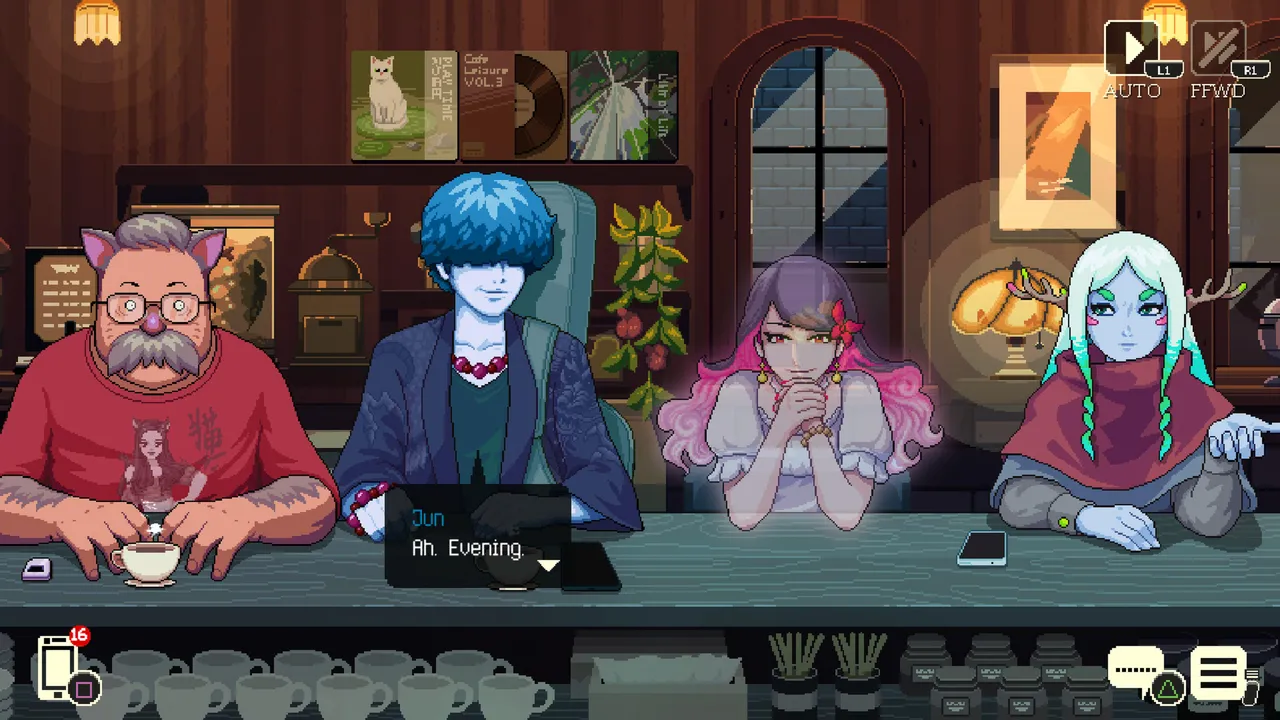
While you might seem like just a bartender, sometimes all people need is someone to listen to their issues and give them advice from time to time. The delicious beverages are just an added bonus. I'm sure everyone has found themselves wishing to talk to someone about their issues and problems, and sometimes the fact that they have just met you makes it even more impactful because the feedback you'll get will surely be objective, as they don't know anything about you.
This space where you can talk, share your thoughts and maybe concerns that you're too afraid to tell your family or friends, that space can feel extremely inviting and warm, even though it might be unknown. That's the core vibe that Coffee Talks operates on, you're not going to solve mysteries or uncover conspiracies, but provide a space where people can talk, and that's equally important. You're bringing presence, attention, and satisfaction of making something meaningful with your hands, while listening to some that needs to be heard.
Brewing, listening, and vibing
The core gameplay of Coffee Talk Tokyo is simple and satisfying: you get a customer, you chat with them, they order drinks - which are sometimes your suggestion, sometimes their favourite drink, and sometimes just something that feels right in the moment - you brew it, and serve it while the conversation continues. They might leave, or another customer might come and join the conversation, and the cycle repeats until the end of the day.
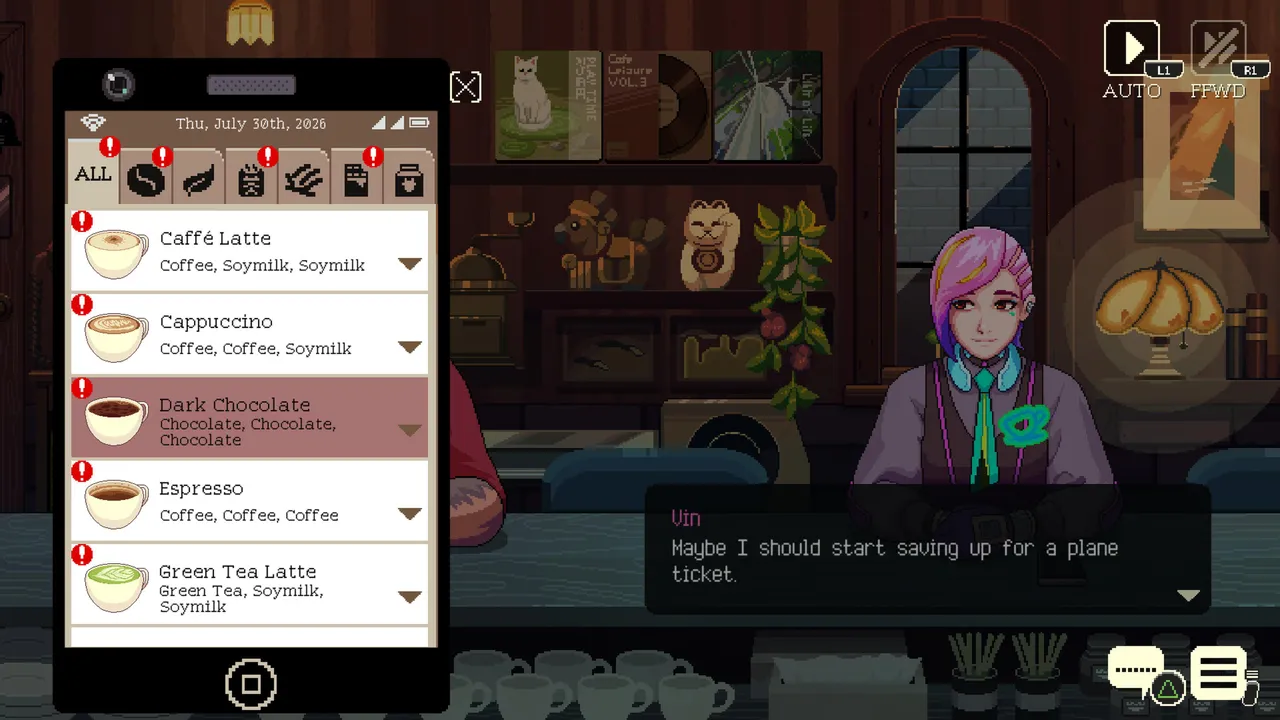
It's meditative, low-pressure, and more or less as complex as it needs to be without endangering the cosy atmosphere. Your interaction is locked to the counter: chat with customers, serve drinks, check your phone to see what everyone is doing. All of this is intentional, as this is a slice-of-life talking simulator, not an open-world game. These limited interactions create focus, as your job is to listen, serve, and be present in a place where people come to relax and decompress.
Because the café is open at night, that means regulars and no crowd, creating an intimate atmosphere. Every one of your customers will get the attention they deserve, and even then, the game makes sure you're never overwhelmed.
For the drinks, you'll be using an intuitive interface. Select ingredients from your available stock - coffee, tea, milk, ginger, matcha - combine them according to a recipe (sometimes the customer might give you some hint, such as they want a lot of space and sweetness) and choose whether to serve it hot or cold. If you're going for cold, you can even add ice cream or whipped cream.
If you're unsure what the customer wants, you can grab your Tomodachill and see whether you can check the ingredients for that drink. if it's not there, that means you haven't discovered it, however once you do, it will be listed and you'll be able to check the ingredients any time you need. Besides that, you can also use it to check on your friends as well as switch up the music in the café.
It's simple and quick, there are meters to tell you how sweet or bitter something else, and the brewing itself is handled through cute cutscenes. You have the option to trash the drink five times, but even if you mess it up, it's not a big deal. This approach removes the anxiety that could undermine the chill vibe. You're experimenting, learning, and occasionally messing up, which are all fine.
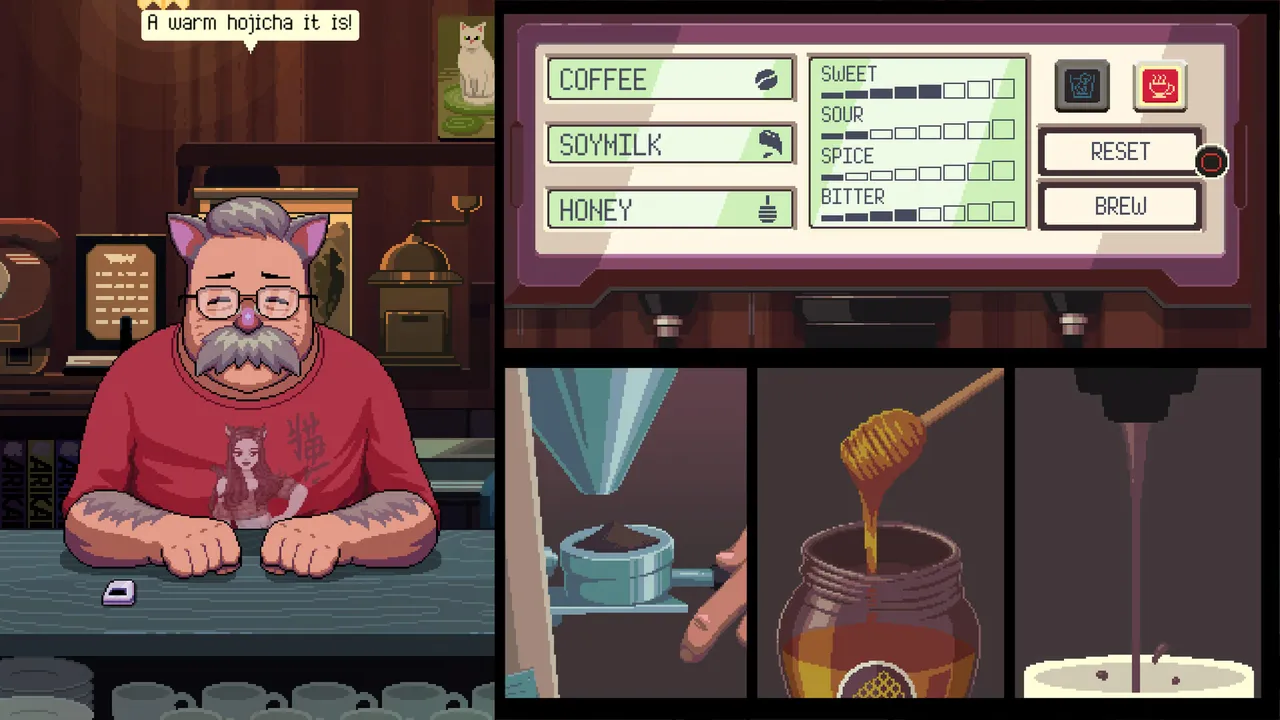
One mechanic did confuse me a bit: choosing between hot and cold drinks. The interface doesn't really make it clear what you're choosing, and I spent the first couple of days not really understanding how to toggle between these two. I mean, the buttons are there but the way they choose to showcase which one you're choosing could've been a bit clearer.
It's not a game breaking thing, just a small friction point in this well-oiled machine. After you make the drink, it's easily visible whether it's cold or hot, but if you've messed up it's too late then, you'll have to retry anyways.
Tokyo even expanded on beverage personalisation, as now on top of being able to make latte art, you can also use stencils. Now you can add patterns and designs to drinks, and this small addition adds even more personality to the brewing process, and is perfect for all you creative souls out there (can't relate, to be honest).
The loading screens between days also didn't go to waste, as they will give you fun facts about the beverages you can serve, adding some educational flavour, because who doesn't love a few fun facts. These small touches, during the loading screens as well as the brewing process, show that the game wants to give the player some interesting bits but also respects your time and attention.
While brewing a perfect cup of coffee is important, so is paying attention to your characters. Not because there will be a quiz at the end or there is some locked content, but because you're missing out. if you decide to skip through the dialogue to get to the next drink, you're missing out on the emotional payoff and the things that make this game good. Coffee Talk is designed for players who want to relax and slow down, absorb stories, and exist in a place where your biggest decision will be whether to add milk or honey to someone's tea.
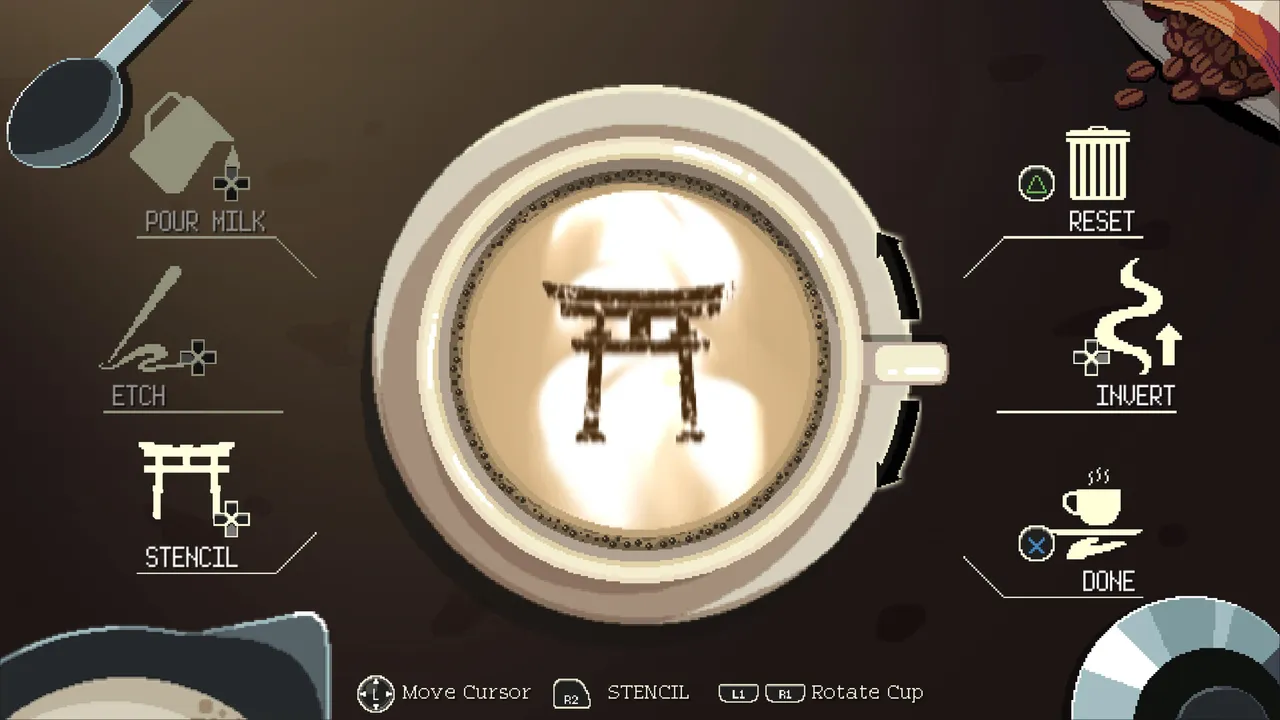
You won't decide whether someone will live or die, you won't unlock any big secrets by mastering complex mechanics or perfecting every drink order, but you might make someone's night better by listening, serving the right drink at the right time, and being a consistent presence in a world that is moving faster and faster.
This isn't a game you should rush through. It's a game where you stay for a while, like visiting a favourite café where the barista knows your order and where you know you can stay as much as you want.
Pixel art, chill music, and zero friction
Coffee Talk uses polished pixel art, with a clear Japanese influence throughout the entire game. The café itself feels like something you'd find in a back alley in Tokyo: the layout, the warm lighting, the small details that would make you feel special if you were a customer.
If you've played the previous games, you'll notice that the recognisable art style, but also vibe in general, carried over to Tokyo. It'll be familiar, but also fresh.
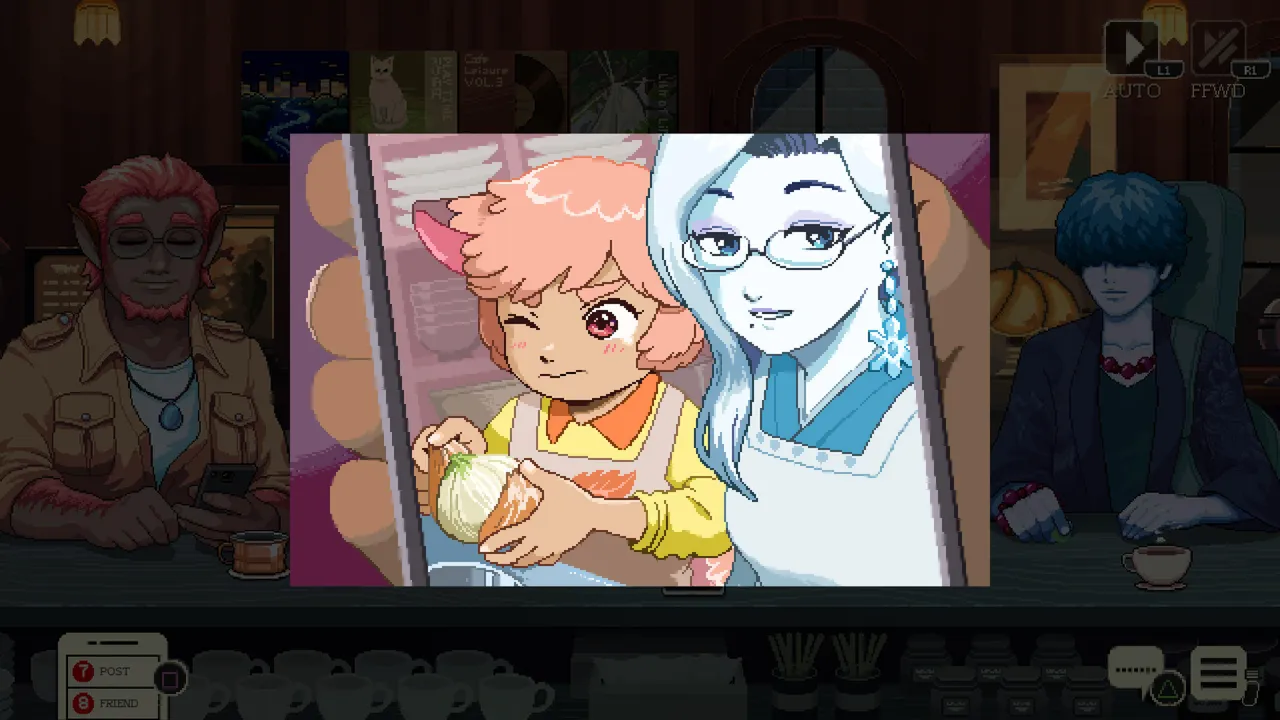
Characters are expressive despite the pixel art animation, they are all conveying their emotions either through movement, albeit limited, but also facial expressions shown through subtle animations. Each of the regulars has a distinct visual personality, and you can be sure that there won't be two similar customers. All of them are unique. The differences between characters also reinforces the idea that these are real people, with their own lives and routines, instead of simple NPCs whose dialogue you'll skip through.
Depending on what you make, the drink preparation cutscenes will change, showing different ingredients being added, mixed, and poured. This is something really enjoyable, and a small touch that helps with immersion and makes the brewing process fun and interesting. You're watching the drink come together, and not just appear in front of a customer.
The soundtrack is mellow, chill, lo-fi beats that match the atmosphere of the game. Music that is calming, non-intrusive, and relaxing, designed to fade to the background. As this game doesn't have the traditional dramatic moments, the soundtrack perfectly allows for emotional ones, small revelations, and gentle resolutions.
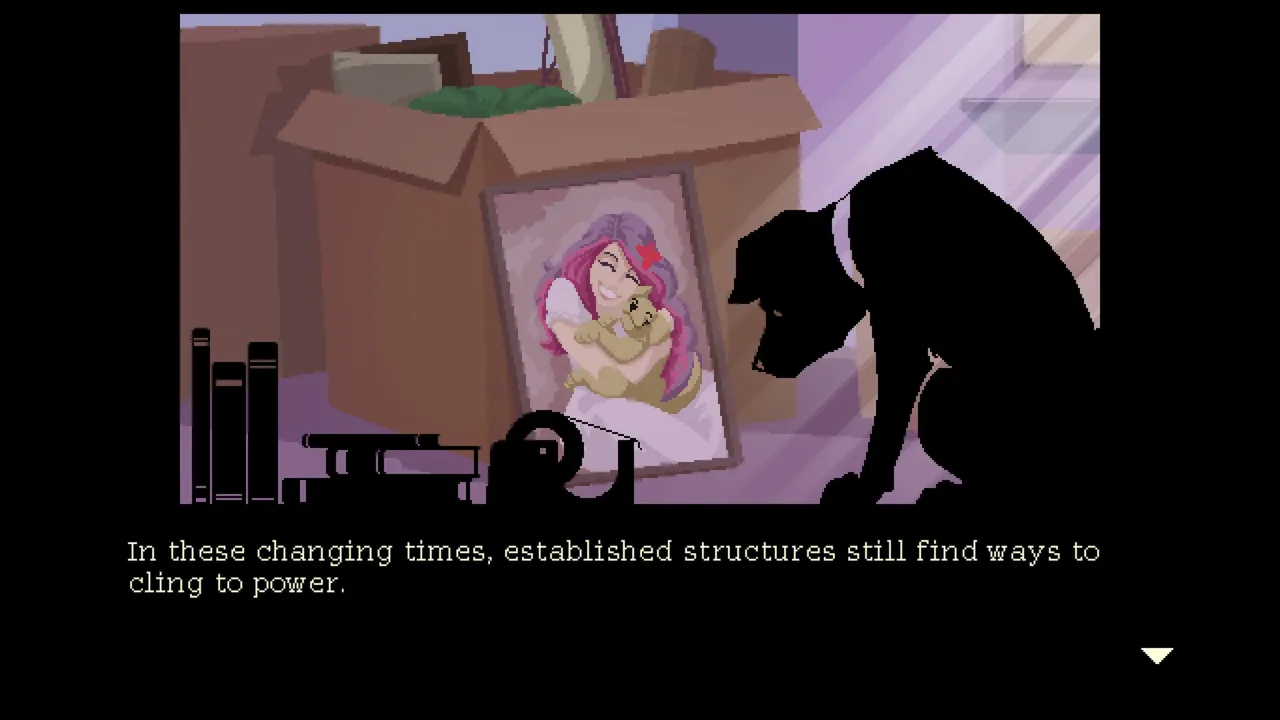
I've found zero issues while playing the game, it ran perfectly on my PlayStation 5, and it also looked amazing. For a narrative game, where mood and atmosphere are very important, technical stability matters a lot, and Coffee Talk Tokyo delivered flawlessly.
Sometimes listening is enough
Coffee Talk Tokyo understood the assignment: sometimes all people need is someone to listen to their issues. Sometimes they're not even looking for advice, but simply for someone to be there for them. That philosophy is what drives every element of this game, from the forgiving drink-making to the low-stakes storytelling to the chill atmosphere.
You're not saving the world here, you're running a late-night café where all kinds of creatures can come and have a warm drink and someone willing to pay attention.
I've enjoyed Coffee Talk 1 and 2 a lot, and just like with those games, I've found myself wanting a coffee whenever I sat down to play them. The third game in the series did everything the previous ones did well, but it also added new elements to feel fresh rather than repetitive. The interesting characters grow on you, the stories bring weight to them, and you find yourself relaxing with a cup of coffee and caring about small, human (and non-human) struggles.
if you haven't played the previous entries, I highly suggest you give them a shot, as they will show you that sometimes we all need to just sit down, make a cup of coffee, and listen.
The Good
 Extremely relaxing atmosphere
- Chill, lo-fi soundtrack that matches the game
- Polished pixel art with Japanese influence
- Relaxing gameplay that respects your time
- Setting feels authentic to Tokyo
- Interesting, diverse characters
- Low stakes but high emotional investment
- Forgiving drink-making system
- Slice-of-life storytelling done right
The Bad
 Not for players who need constant action or challenge
- Hot and cold drinks choice initially confusing