Trending
Ever since Saros was first released, I was extremely excited to see whether Housemarque was about to deliver yet another banger. As someone who loved Returnal enough to go through the biomes countless times in order to get the platinum trophy - I will use my bragging rights here - my expectations were high for Saros.
I wanted to see whether they could bring us another game where the atmosphere, combat, and mystery all worked together so perfectly that every time I died, I jumped back in right away. And after spending hours going through the dangerous nightmare of Carcosa, the answer is mostly yes.
Saros doesn't hide its intentions, it's a fast and demanding roguelike that wants to always be on alert and never relaxed, throwing you into chaotic and dangerous encounters and a world that obviously doesn't want you there...or alive.
While I have to admit that I haven't connected with the story in the same way I did previously, it is undeniable that the core gameplay loop and atmosphere were strong enough to keep me glued to my controller.
Silence, signals, and psychological decay
In Saros, the story follows Arjun Devraj, an enforcer who is working for Soltari, sent with the Echelon IV crew to Carcosa to look into missing colonists as well as oversee a mission rooted in lucenite extraction. Right from the start, you feel like something is wrong.
The deeper you explore the mysterious and hostile Carcosa, the more you notice that it's not only hostile in the physical sense, but also psychological, as it's slowly eating away at the minds of Arjun's crewmates.
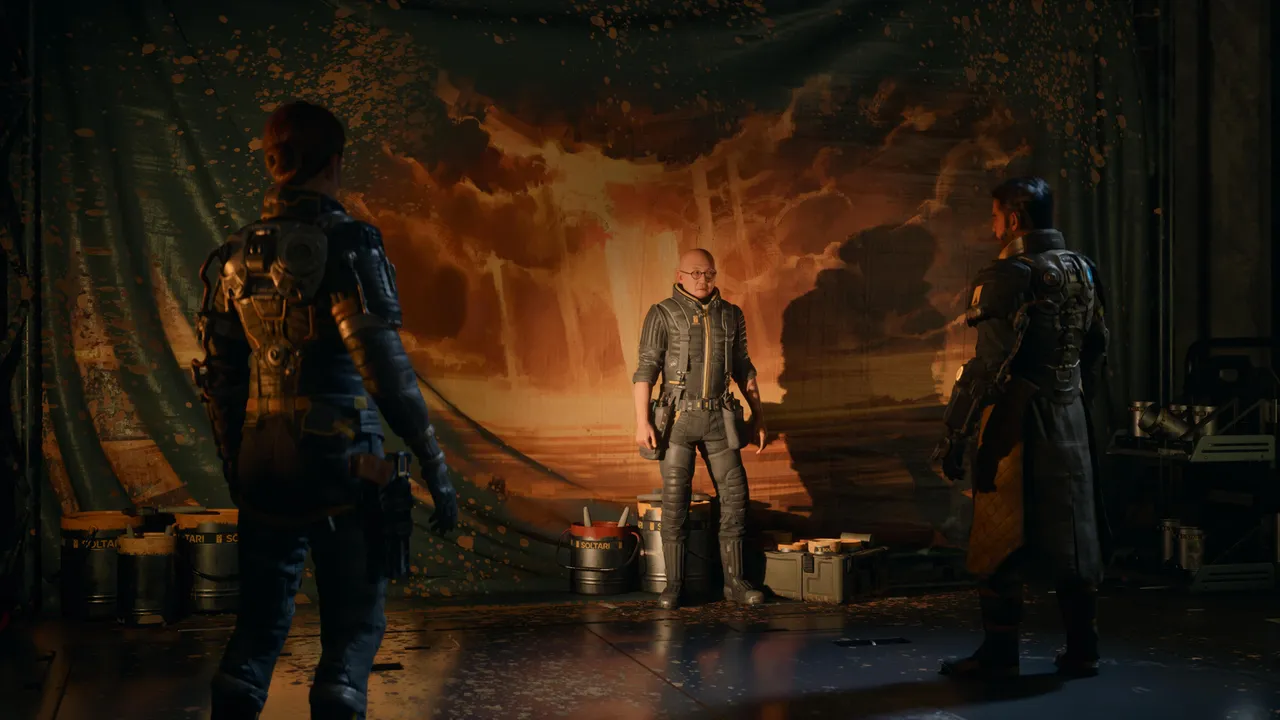
A big part of the narrative is how the crew slowly unravels. When you load up the game and return back to the Passage - which is your main hub - one of the first things you'll see is Sheridan, Echelon IV's commander, blowing the brains out of Tarn, a crewmate who lost his mind to Carcosa's powers. Your crew aren't just background noise, they are active participants in the descent to instability. Primary, a large robot that you use to communicate with Soltari, is in charge of the entire crew, but also makes sure to remind us that Soltari has one interest, and that is lucenite.
The way this hostile alien planet takes over the minds of the crew members plays a big role in the story, and it is one aspect that did get to me, every time I went back I wondered who went insane next.
Unlike Selene, Arjun gets to chat to the crew and through these repeated interactions, the conversations at the ship, and the slow shift in tone after each failure, you get to see how Carcosa's influence spreads beyond the surface of the planet and into the people that are trying to understand it. It all slowly turns into paranoia, fractured beliefs, and for some just full on cult-like obsession.
Arjun himself is in the middle of all this, trying to stay sane and maintain a sense of duty while also dealing with his personal search for a mysterious woman from his past. This narrative line goes alone the main mission, however it's not grounding him but creating more instability instead. It affects Arjun, he reacts in conversation with the few crew members that know about it, and it is another aspect where we see how Carcosa infiltrates further, shifting his reality during eclipses and high-risk runs, almost taunting him at times.
Just like in Returnal, there is a layer of environmental storytelling; audio logs, text entries, and recovered data from previous expeditions all give the player a glimpse of the past. These pieces play a big part in the story, painting a picture of failure after failure after failure, as well as corporate exploitation that doesn't learn from their mistakes and doesn't really care much about casualties.
However, as much as I appreciated the ambition behind it all, I never really connected with the story in the same way I did with Returnal. The themes are clear and the world-building is strong, and as much as Rahul Kohli did an amazing job, as did the rest of the voice actors (fun fact: Jane Perry, who voices Selene also voices Sheridan in Saros), I found myself not really caring too much about any of them. I was curious as to what is going on, who is the woman he mentions, and how is Carcosa doing what it's doing, but for all I cared the crew members are just icons on my map.
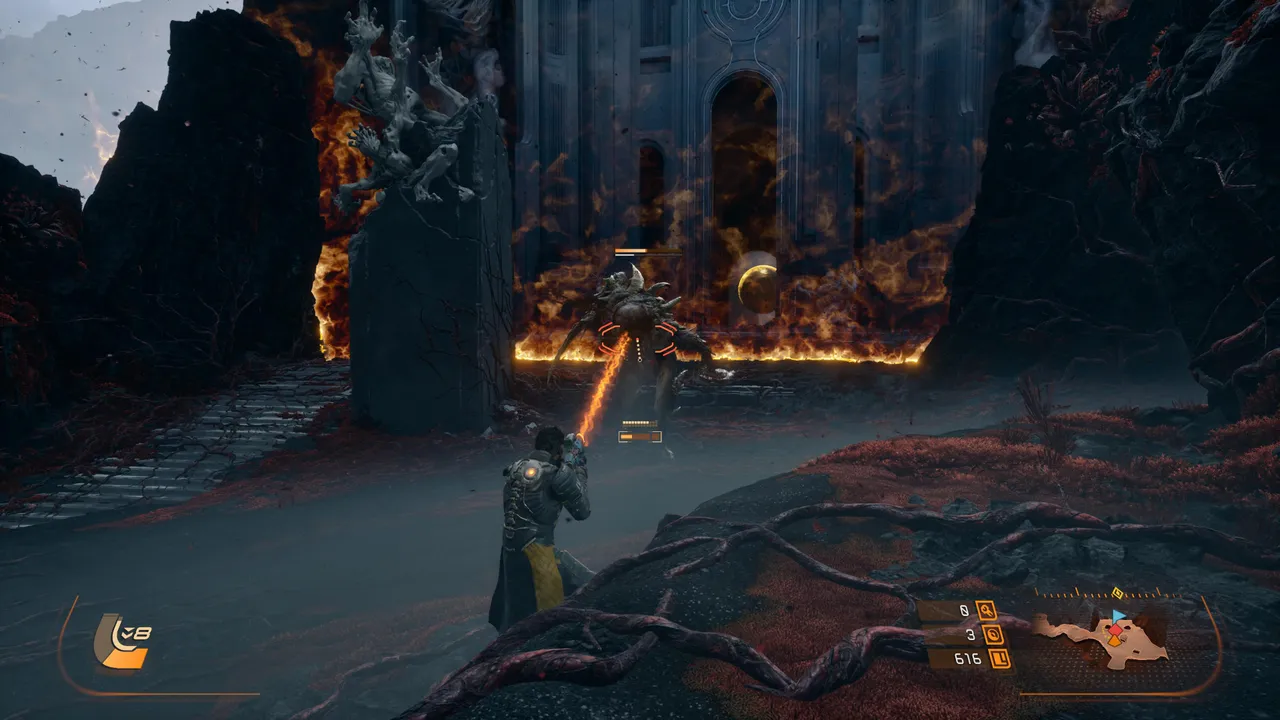
I understood what Saros was trying to do, I understood where Arjun was coming from, but I feel like it didn't grip me the same way as his older brother. There was even less story given to us then, but just the way Selene was always alone, commenting, and then finding voice memos of herself, something about that notion of dread, loneliness, and hopelessness gripped me and never let go, which isn't something I can say for Arjun and his journey.
Chaos, movement, and control
The gameplay in Saros is exactly what you'd expect from Housemarque, especially if you've played their previous entry. I'm talking fast and reactive gameplay, a screen covered with Christmas lights vomit and built around movement rather than holding your ground. Standing still is not an option here - enemies will surround you, they're coming from multiple angles, and projectile patterns will fill the screen.
Survival is linked to positioning, awareness, and learning when to attack and when to disengage, and the game will force you to adapt the "run first, shoot second" mindset, which isn't really something you'll encounter in any game where there is shooting involved. While I was standing still, I've found myself in a pickle countless times as enemies would just surround me, filling my screen with bright coloured bullets. Once you adapt, it becomes incredibly satisfying.
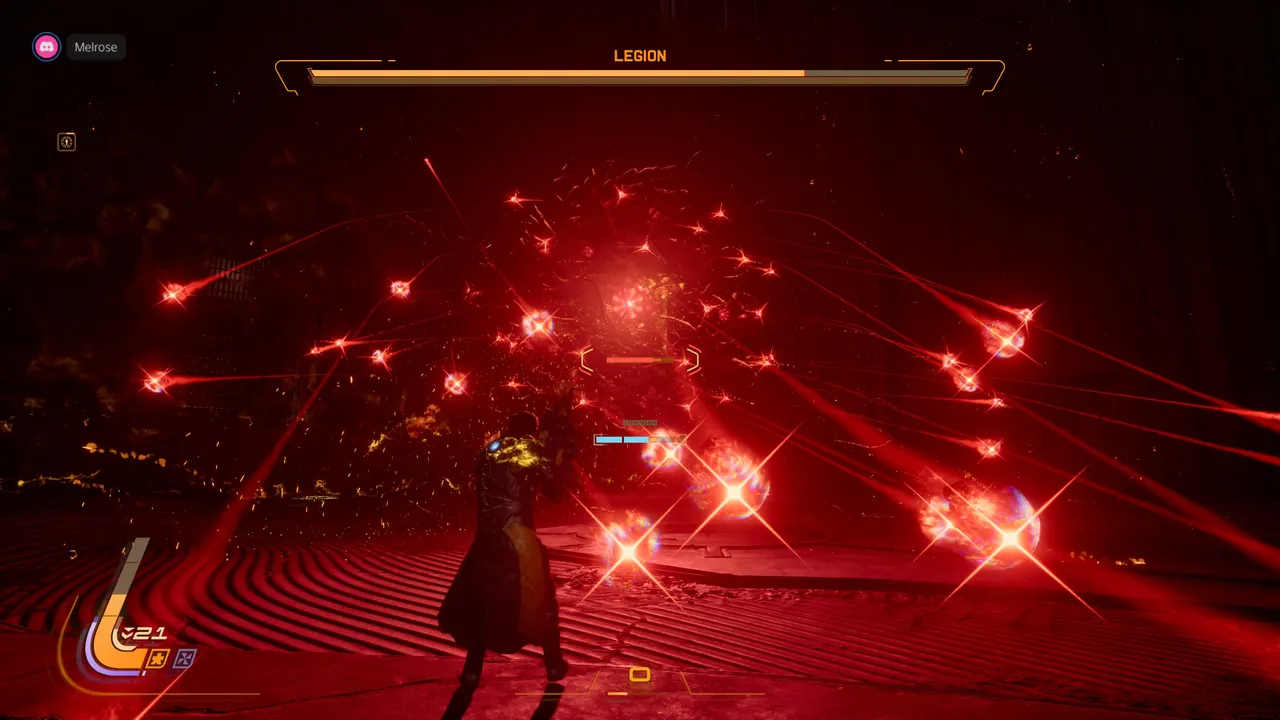
The combat itself: amazing. Gunplay is punchy and responsive, and encounters can quickly become chaotic in the best way possible, you're dashing, jumping and running through bullets, trying to maintain some sort of control over the fight. It's easy to get outnumbered and surrounded, which makes every room cleared feel like a major success. Enemies maybe aren't as varied as I'd like them to be (and some of them drew inspiration from Returnal), but they are aggressive, and when the solar cage closes, you know you're in for a fight.
Housemarque took excellent advantage of the haptic feedback, with the DualSense adding a special feel to weapon fire, movement, and environmental interactions, making everything feel more tactile and immersive. It enhances talking to Primary, walking past laser beams, or just general combat feel. It's a detail that improves the feel of the game, and I genuinely wish that more games took advantage of this.
The bosses are interesting, and I'm sure their names have a deeper meaning for which I'll need to watch a 40 minute long YouTube video to understand, but that's also part of the charm. Each of the bosses puts you to the test, for example Prophet will test your dashing ability, while Bastion will check how well you can use the jumping pads.
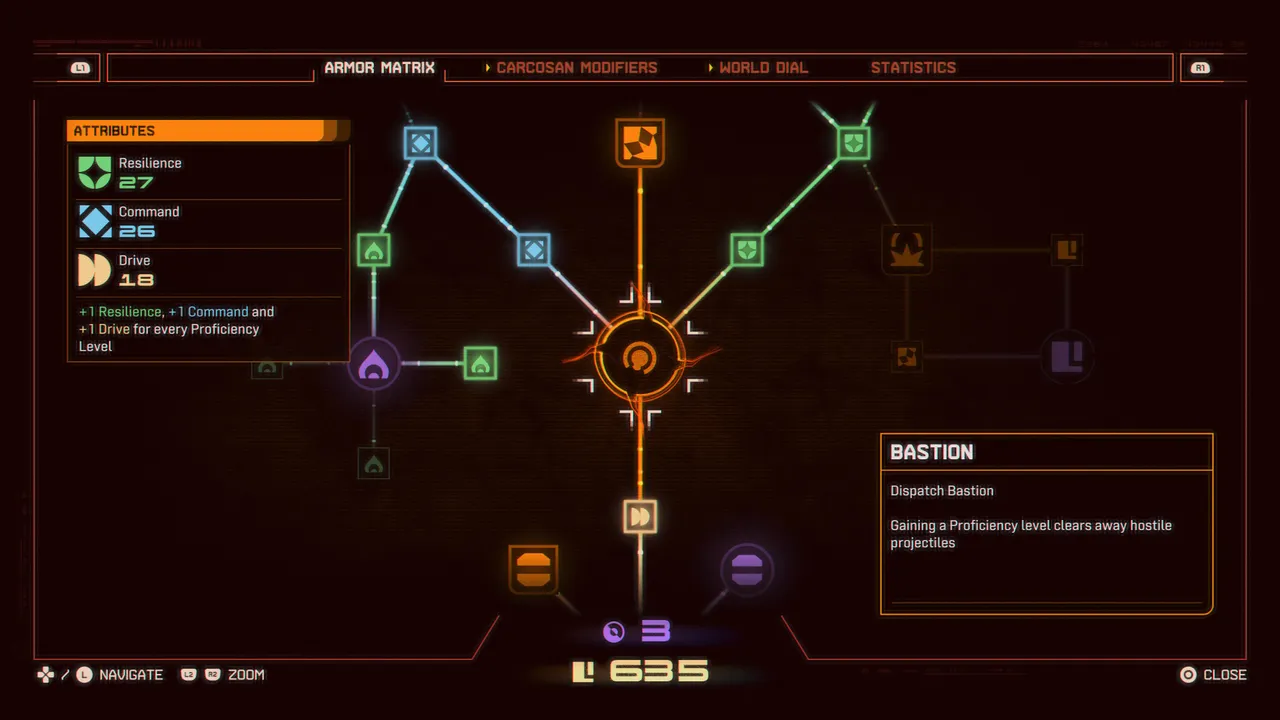
The key system in progression is through proficiency and upgrades. When you're proficiency goes up, so does the chance of finding stronger and better weapons. There is also a skill and progression layer outside individual runs, with permanent upgrades through a skill tree called Armor Matrix, which gradually makes you stronger. Combined with modifiers, Saros gives you an option to crank up the difficulty and make your runs more punishing. If you want a tougher experience, or you'd like just a little help to completely enjoy their game, Housemarque has given you a way to achieve it.
Going through biomes again and again is not punishment for a failed run, but just an opportunity to learn and improve, it's a way to learn the systems, enemy patterns, and layouts. I've ran through the biomes in Returnal countless times while cleaning up trophies, and it took me a long time before I found them boring. There is a sense of accomplishment and power that you feel when you just blast through a room because you know the enemies and how they behave.
Lucenite is the main currency of the game which you collect during your runs, and you lose - albeit not everything - when you die. The better you play, the faster you'll upgrade your Armor Matrix and become more powerful. The game will not gatekeep you from progression, it's all up to you.
Traversal and movement are also more flexible this time around. We've got our good, old grappling hook which opens up both exploration as well as combat itself, letting you quickly reposition or access areas that were out of your reach previously. You also gain other abilities, such as parrying, which adds another layer of timing-based risk and reward, you'll either parry perfectly or get hit.
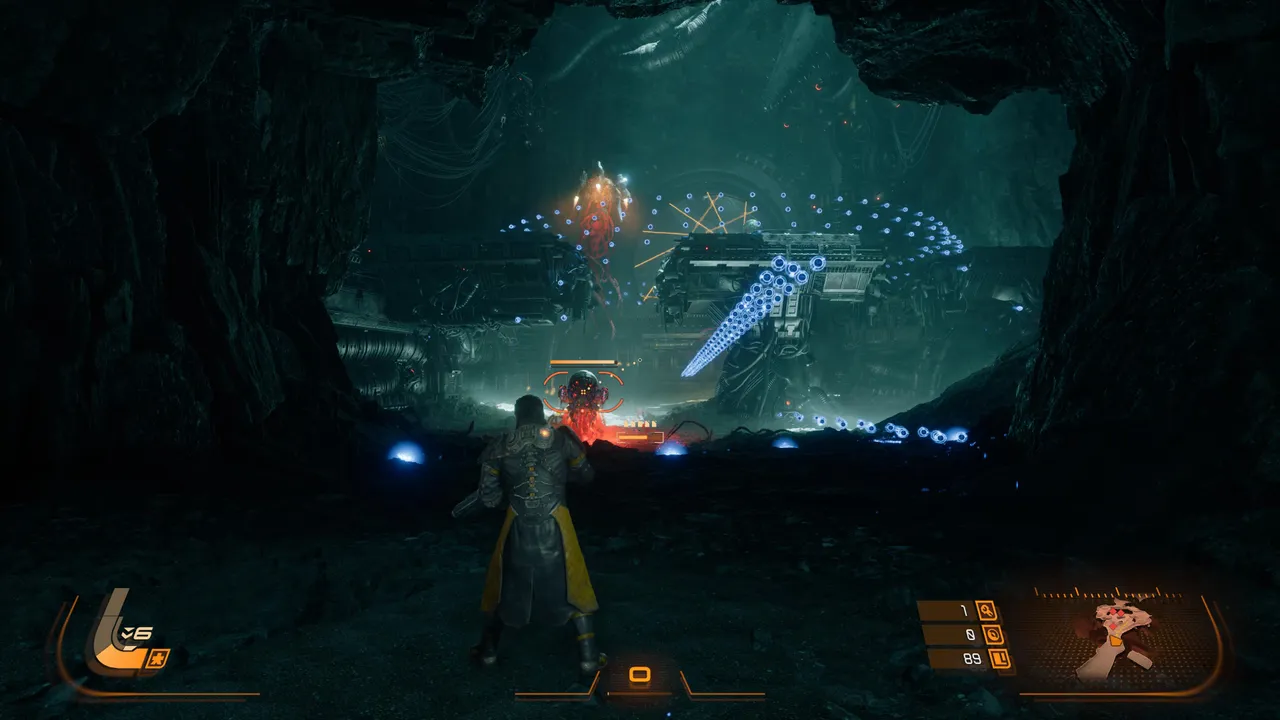
One of the new systems that Saros introduced are eclipses. At some point in the level, Arjun will activate an eclipse, which is when everything escalates - enemies become more dangerous, the rewards scale up, and now there are also corrupted projectiles you need to watch out for. The environment changes, making sure you know that Carcosa basically hates you even more now. Corruption is another key layer to the gameplay, as it puts pressure on the player, asking how much do you want to push the run. Although you don't have to activate it every time (which is something I wish I had known from the start), there are certain spots where it is mandatory in order to progress.
Overall, while Saros doesn't really reinvent the formula, it does refine it in meaningful ways. The devs took the criticism and decided to make a game a bit more approachable, but still demanding enough that you need to learn a couple of things and as the kids say "get gud" in order to really enjoy the game. Once the game opens up, it brings us the familiar Housemarque formula: loop of chaos, movement, and control done extremely well.
Clean, loud, and responsive
Visually, Saros is incredibly beautiful, but in a decaying and melancholic way. That's very deliberate, as Housemarque doesn't really chase realism, but leans more into atmosphere, colour, and readability in the middle of all the chaos.
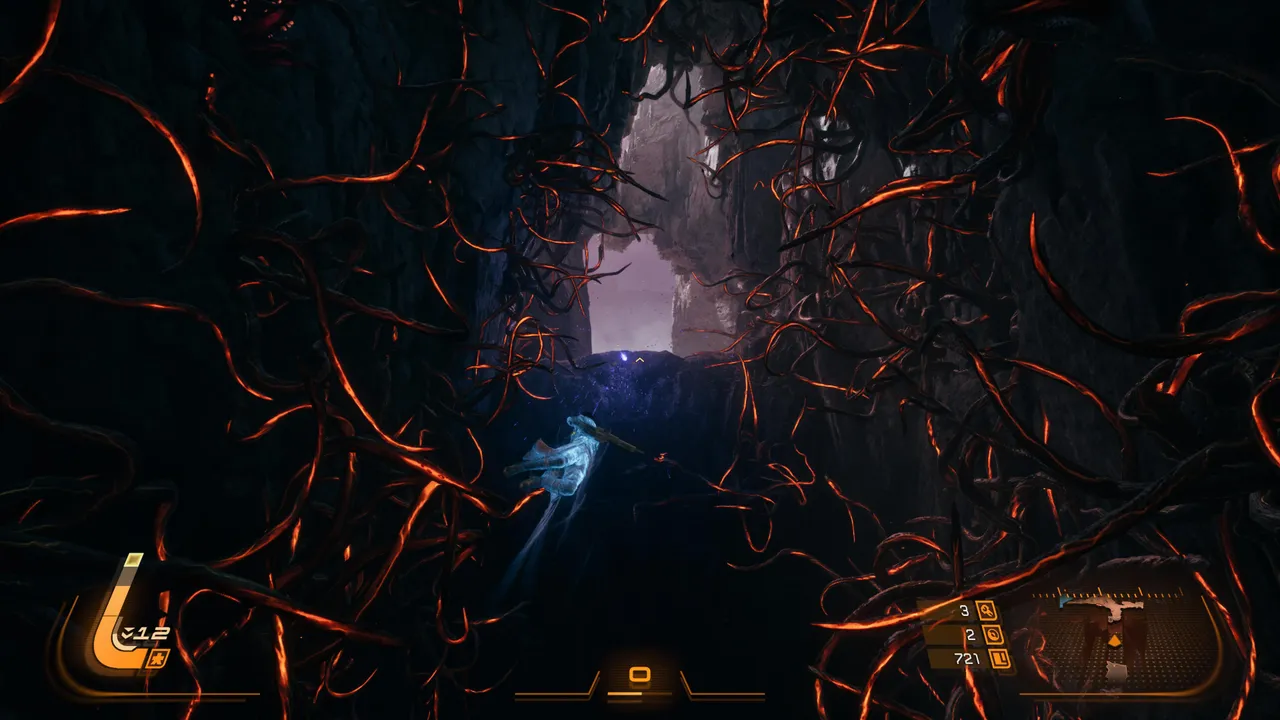
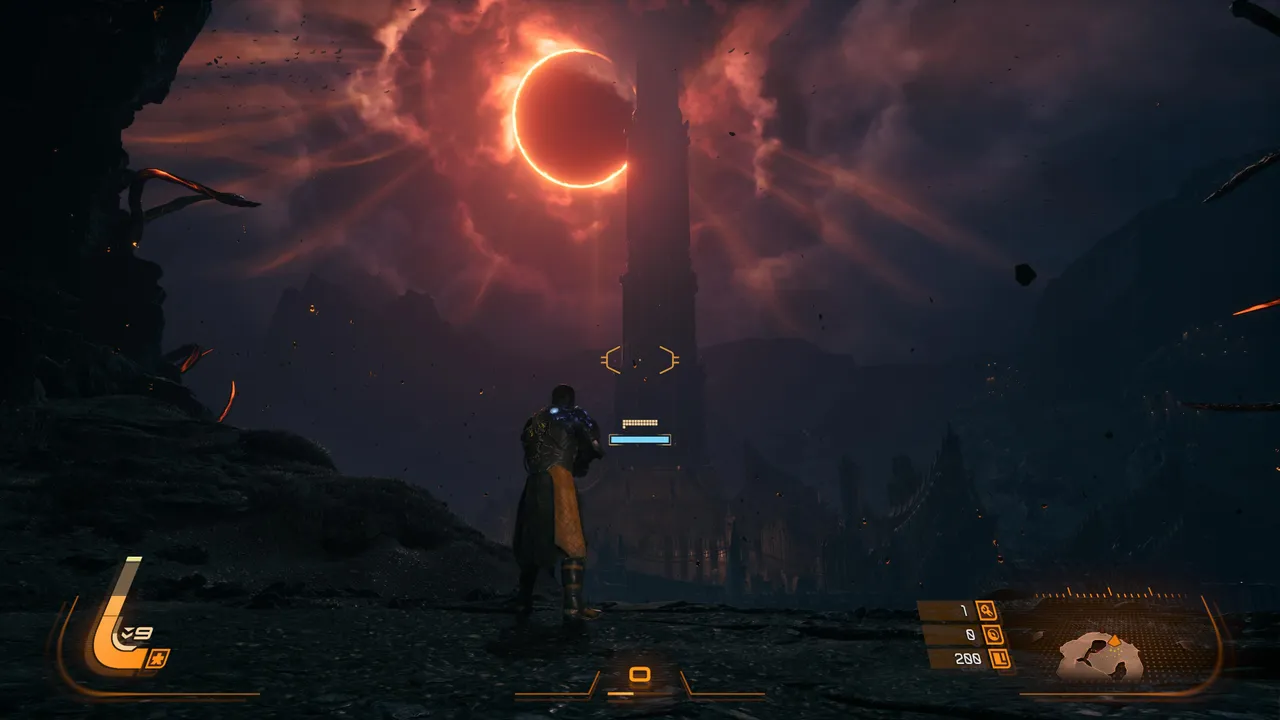
Carcosa is mesmerising, but it's also unsettling with its alien environments, constantly shifting, and reinforcing a yellow-dominant visual identity that ties to the game's tone and story themes. You want to look around at the environment, but at the same time, you get this eerie, weird feeling, as if you're not welcome there. It's strange, it's unknown, and it's unwelcoming.
Performance-wise, the game runs smoothly in my experience, which is something I'd expect from a PlayStation exclusive. During the chaotic encounters where the screen is filled with projectiles and enemies, no FPS drops or stuttering has been seen. The performance is as stable as you need to be while dealing with these overwhelming moments. I think I remember one weird glitch, but I feel like that was on me as I stood a bit too close to the crew member I was talking with.
Solid sound design, but intentionally not the main focus. Environmental audio, enemy cues, and UI feedback all do their job without ever taking attention away from the action or the soundtrack. I haven't really focused on the music, as I'm usually looking around and waiting to see what screech I will hear, as some enemies you can recognise by it. I will be listening to the OST, but I honestly doubt that I will ever hear a masterpiece such as Hyperion theme.
The voice acting and motion capture is generally strong, but there were times where the characters felt a bit stiff or just awkward in the way there were standing or moving during a dialogue sequence. It's not something that happens all the time, but it's noticeable enough.
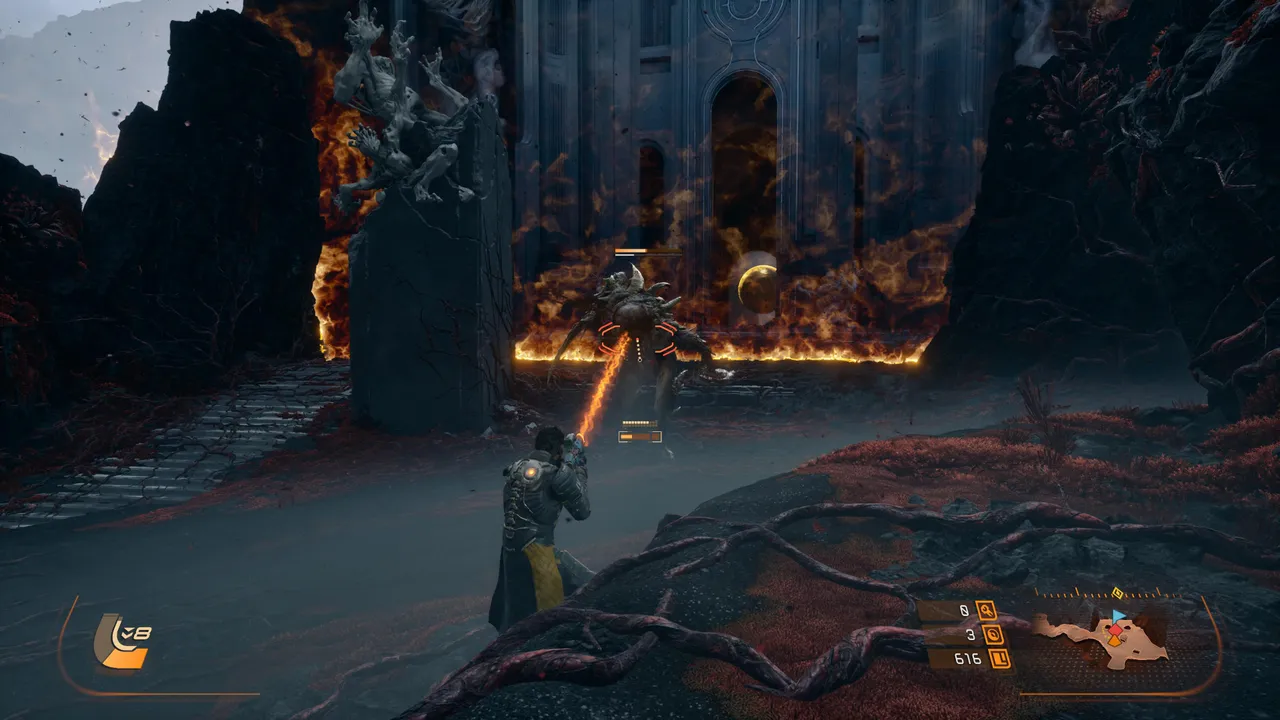
Saros is both technically and visually a beautiful and very solid game. It's focus is on clarity, atmosphere and immersion, and it does succeed in all three of these, even with a few rough edges that hold the experience back from being entirely seamless.
A familiar chaos
Saros is at it's best when it plays right into what Housemarque already does best: fast and reactive combat, an unsettling atmosphere, and systems that click into place the more you play and learn them. While I didn't really connect with Arjun's story the way I did with Selene her journey - even though I really wanted to - I enjoyed every minute I spent on Carcosa, and I went back for more each time I died.
Through every biome you're pushed to go further, go through one more room, clear one more boss, listen to one more audio log, until you've gained a sense of control in all that chaos. Depending on the player it might feel very overwhelming early on, but I didn't feel that way, not because I am extremely good at these games (I run on enthusiasm and 15 years of gaming rage) but because Housemarque made sure that if the story is overwhelming, the gameplay isn't.
It's you and your gun against Carcosa. As you play and learn the ropes, the game throws new challenges your way.
The hostile alien world pulls its weight too. The shifting biomes, the escalating tension of eclipses, and the constant feel that things are somehow getting worse instead of better all help put the pressure on, even when you repeat your runs. Even if you're not that connected to Arjun's story, you'll have no issue being interested and engaged in the world that he lives in.
In the end, the story of Saros didn't reach the same emotional heights as Returnal did for me, and I'm okay with it. While it would've been nice to have a story that forced me to watch more YouTube explanation videos than I'd like to admit, I can still appreciate the younger brother for what it brought: a refined formula filled with constant movement, pressure of every encounter, as well as the process of slowly turning chaos into something understandable.
It's a refinement of a well-known formula, not a reinvention, and when it clicks, it delivers an unmistakeable Housemarque feeling: being overwhelmed one moment, feeling completely in control the next.
The Good
 Fluid, fast, highly responsive combat
- More accessible
- Strong boss and mini-boss encounters
- Variety in traversal and combat flow
- Good risk-reward system
- Clear progression and upgrade system
- Beautiful environments and strong soundtrack
- Excellent DualSense haptic feedback
- Collectibles that enrich world-building
The Bad
 Dialogue can feel distracting during gameplay
- Forgettable story
- Gameplay can feel overwhelming
- Occasional awkward character animations