Trending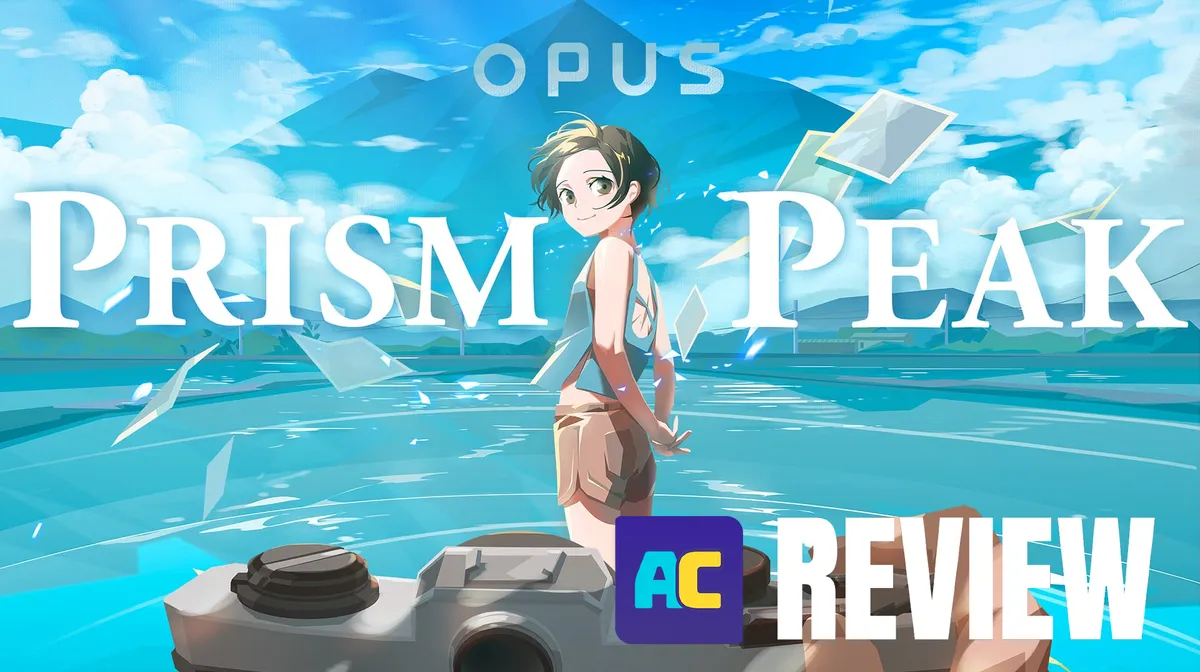
There are games that are able to perfectly entertain us, games that can challenge us to the point where the controllers fly and keyboards get broken, and then, unfortunately very rarely, games that do something altogether different. Games that reach inside you and meddle with your soul quietly, leaving you sitting with the controller in your hands long after the credits have finished rolling, not quite ready to return to the world outside.
OPUS: Prism Peak is one of those rare, very special games. It is also, and I say it without any reservation, one of the finest stories told in video games, and the fact that it has not received wider recognition is a real mystery to me.
Story
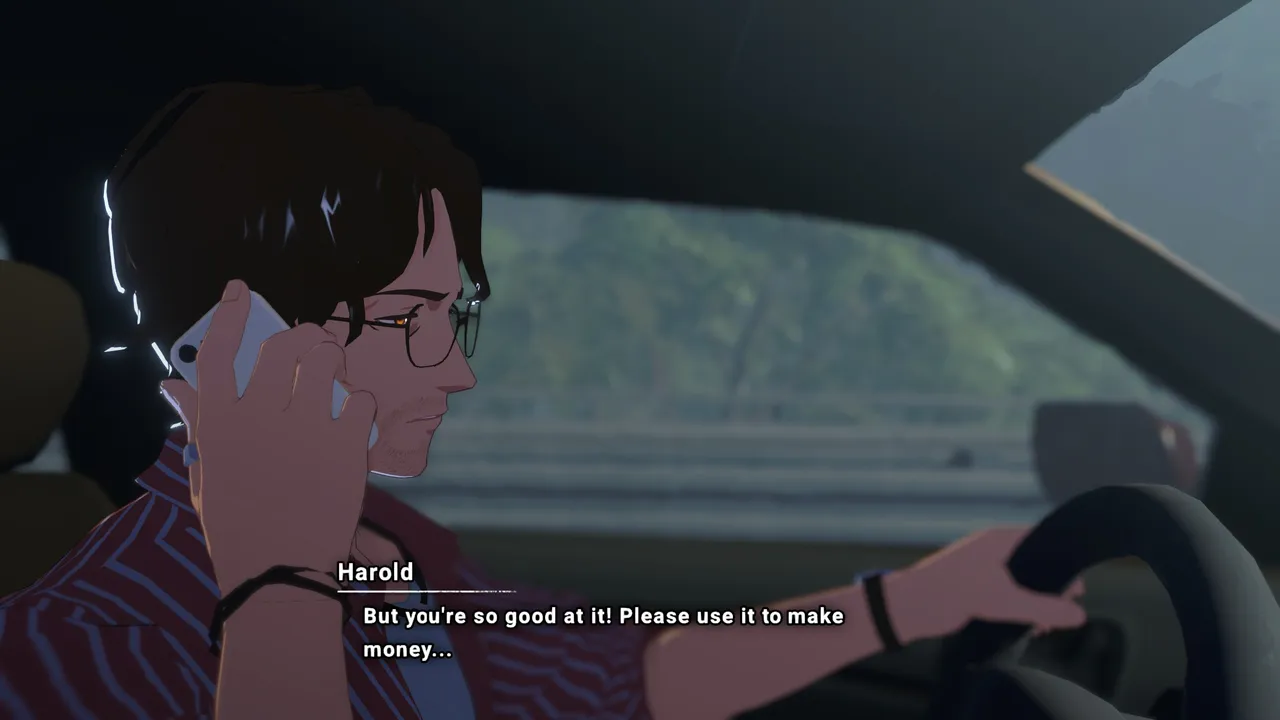
The story follows Eugene, a forty-year-old ex-photojournalist driving back to his small mountain hometown to attend the funeral of his grandfather, the one figure in his life who gave him both purpose and the camera through which he chose to see the world. Eugene is one of those guys who hate themselves and consider themselves failures. A collapsed marriage, a failed business, a photography career abandoned, and a bunch of relationships left broken behind him. He carries all of it with the particular heaviness of a man who has spent decades convincing himself that the misery of his life is entirely his own doing.
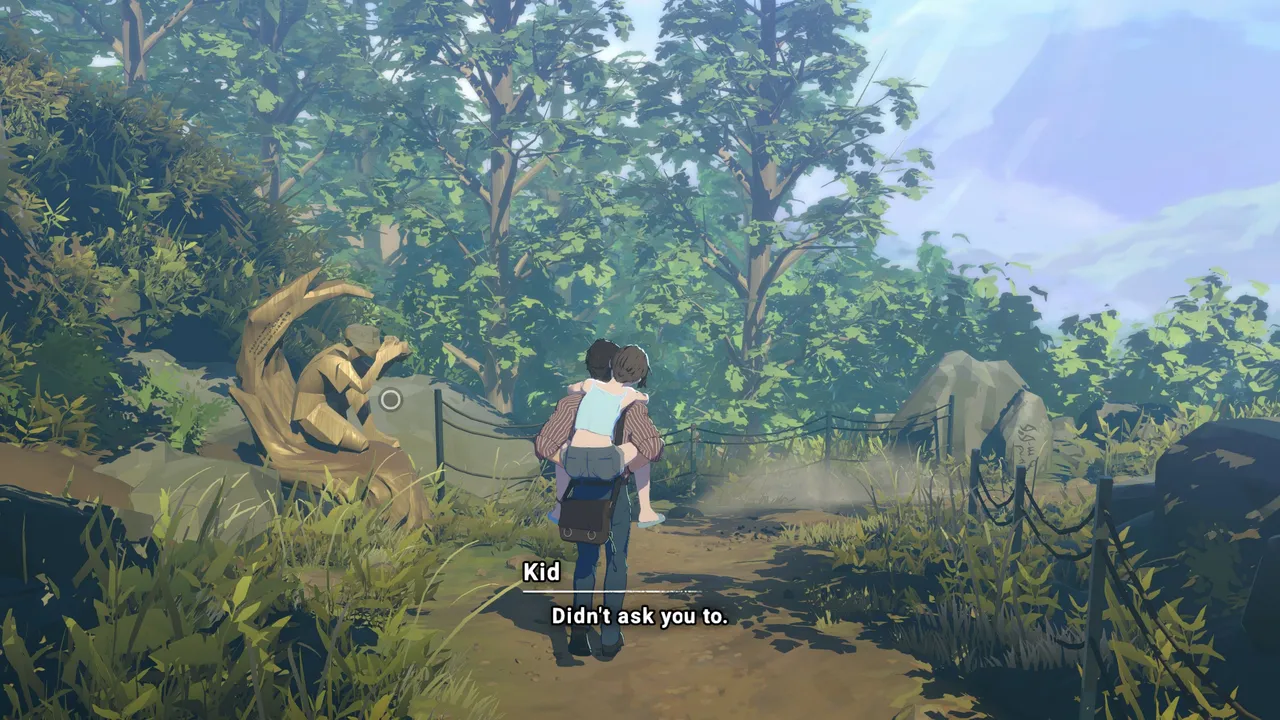
On the way through the mountain tunnel, a thick fog rolls in, and Eugene crashes his car. He wakes to find a small girl warning him to run, and together they flee into what he will soon discover is another world entirely, a mystical realm called the Dusklands, populated by animal spirits and shrouded in beautiful and unsettling fog, with a distant mountain that the girl, Ren, knows instinctively she must reach. The problem is that Ren remembers nothing about herself – nothing but the fact that she needs to reach the mountain's summit like her very life depends on it.
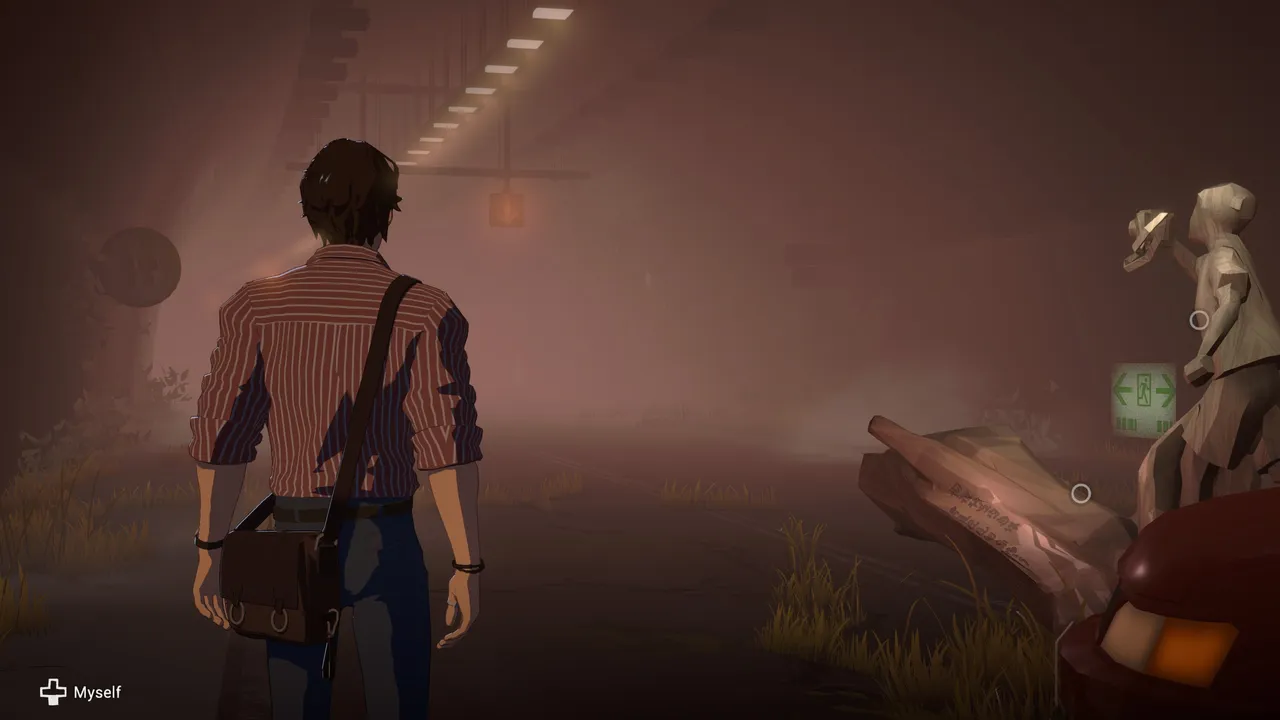
What follows is one of the most emotionally charged stories I have encountered in a video game in a very long time. The story cleverly shifts between Eugene's present-day journey through the Dusklands and flashbacks to the crucial moments of his life, presented in black and white in a visual novel style that gives them the quality of old photographs, frozen and fragile.
The animal spirits Eugene encounters in the Dusklands each represent someone from his past, and part of the game's quiet genius is the process of working out who each one is and what they meant to him. The memories these encounters surface are often messy and uncomfortable. Sometimes Eugene was let down by someone he trusted. Sometimes he was the one who failed to show up for the people who needed him. The game does not shy away from either truth, and it is all the more powerful for it.
Gameplay
The gameplay is built around photography, and it is definitely way more complex than that its description suggests in the first place. Eugene can raise his camera at any moment, switching to a first-person perspective to frame, focus, and capture the world around him. As the game progresses, additional tools become available: different lenses, adjustable exposure settings, shutter speed controls, and various filters that change both the look and the meaning of a photograph.
The photography is not merely a mechanical system but rather the tool for telling the story. Taking a photograph forces you to look carefully, to consider what you are seeing, to understand the ins and outs of a scene in front of you before hitting the shutter button.
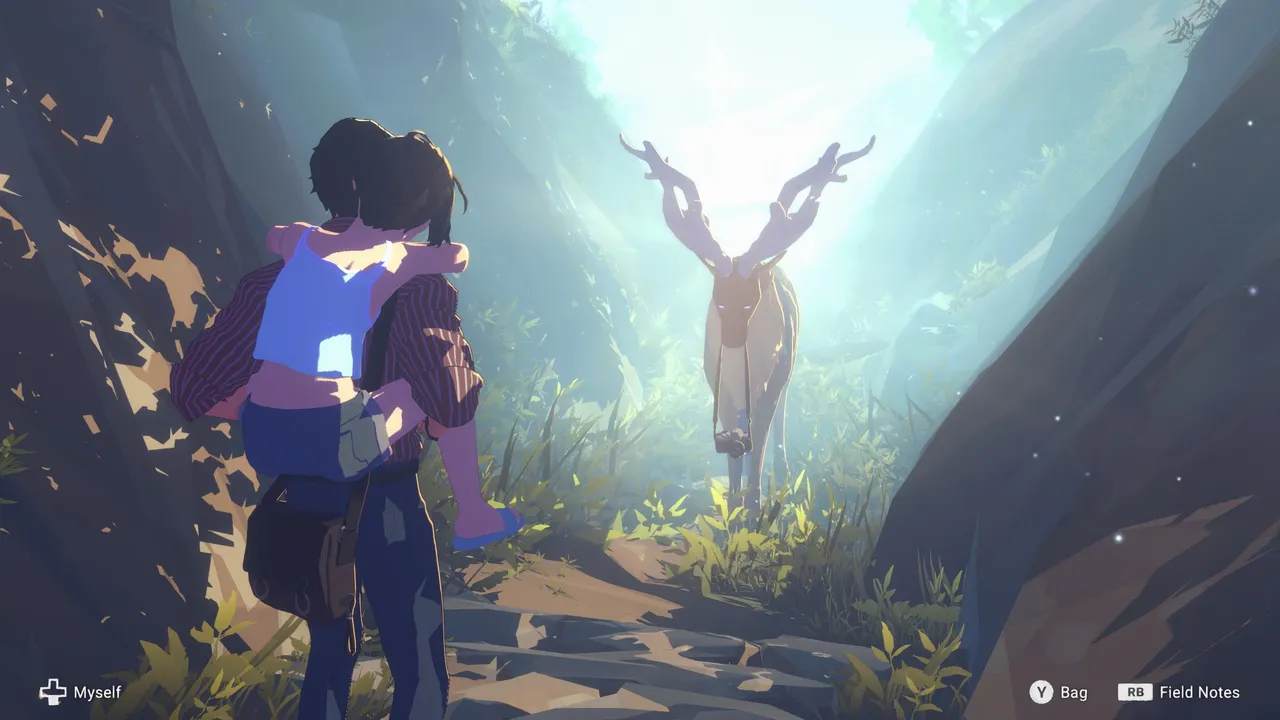
Photographs are used in several ways throughout the game. Some are presented to sacred flames to unlock story branches or receive upgrades. Others fill in sections of Eugene's notebook, a journal that tracks the story and the spirits encountered throughout the journey. The notebook system is thorough and ambitious, though it can feel overwhelming at times, especially during busier sections of the game where you must put a lot of information in it.
The world itself is relatively linear, featuring stunning environments worthy of exploration. Collectables and missable moments can be found hiding all over the levels, and it is quite easy to reach the end of a first playthrough feeling as though you have left a great deal undiscovered, which both can be a real strength and an occasional frustration.
If you fail to discover something important in the game, it can end completely differently, which encourages new playthroughs rather than just finishing the game and forgetting about it. The action sequences, rare moments when Eugene must run from a mysterious dark force called The Shade, occasionally feel out of place and out of pace and can easily make those sections feel like they came from an entirely different game.
Visuals, Performance, and Sounds
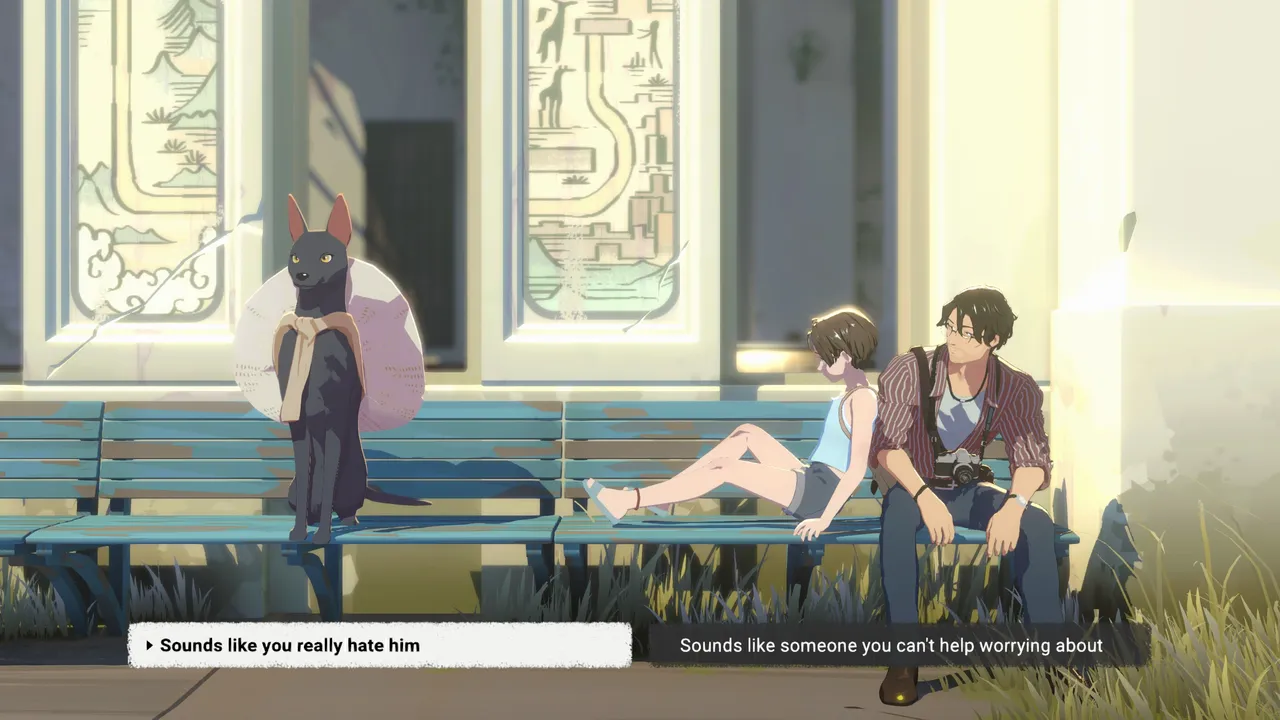
Visually, OPUS: Prism Peak is simply gorgeous. The 3D anime art style is vivid and very striking, with perfect lighting and very visible contrast that changes across landscapes that range from colourful and alive to worn down and quietly heartbreaking. Every environment, regardless of its state, has been designed with the eye of someone who understands that beauty and destruction can make a beautiful cohesion that can truly impress.
The black and white flashback sequences, presented in a visual novel style reminiscent of illustrated newspaper strips, provide a visual contrast that perfectly fits into the game's theme and the melancholic state Eugene is constantly in.
Regarding performance, my PC, whose specs you can see at the beginning of this review, has zero problems running it. To be honest, OPUS: Prism Peak isn't the most hardware-demanding game on the market, and I truly believe even the weaker and older rigs will be easily capable of running it with no problems at all. The FPS sat above 100 all the time while playing without a single crash or hiccup.
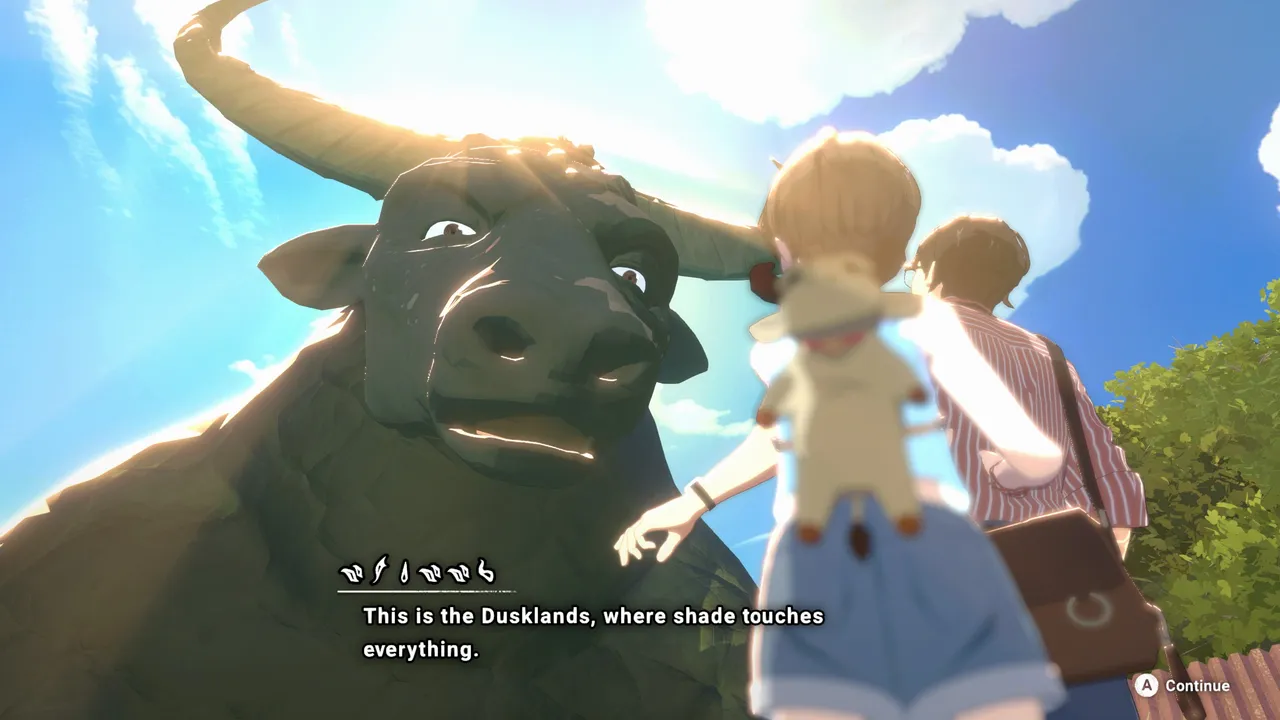
What didn't sit well with me, however, was the lack of ultrawide support, and since my monitor is ultrawide, I was forced to watch two black bars all the time while playing, which is never ideal.
The soundtrack, on the other hand, is exceptional. The mix of electronic tones and solo piano is perfectly fitted to the emotional moments the game is always trying to highlight, without any intention of being intrusive or anything; it simply fits in perfectly with the atmosphere. You know those tunes that continue to play in your head long after you have stopped playing? This is the exact kind of soundtrack you'll experience in OPUS: Prism Peak. On top of that, the voice acting is also exceptional across all characters, so when it comes to the sound presentation, I have nothing but praise for it.
Conclusion
OPUS: Prism Peak is a masterwork of narrative game design, and it deserves to be spoken of way more than it actually is. It is a game about regret, about the people we fail and the people who fail us, about the photographs we carry in our memories rather than in our pockets, and about the stubborn, quiet persistence of hope even in the people who feel most certain they have forfeited the right to it. It made me shed a tear while watching the credits, and that alone speaks volumes about the sheer quality of this game
The notebook system could be simpler, the action sequences could be better integrated, and the linear structure means the world never quite opens up in the way it definitely could. But none of that matters very much when everything around those imperfections is this good. OPUS: Prism Peak is a game worth lingering in, worth returning to, and worth recommending to anyone you know who still needs convincing that video games can be genuine works of art.
The Good
 One of the most emotionally resonant stories I experienced of late
- Nuanced and thoughtful photography mechanic that deepens with time
- Stunning anime-influenced visual style with gorgeous lighting and environments
- Exceptional and perfectly calibrated soundtrack
- Multiple endings and a rich story tree reward patience and repeat playthroughs
The Bad
 The notebook system becomes overly complex in some places
- Action sequences feel tonally jarring against the contemplative pace
- Linear world structure limits the sense of genuine exploration