Trending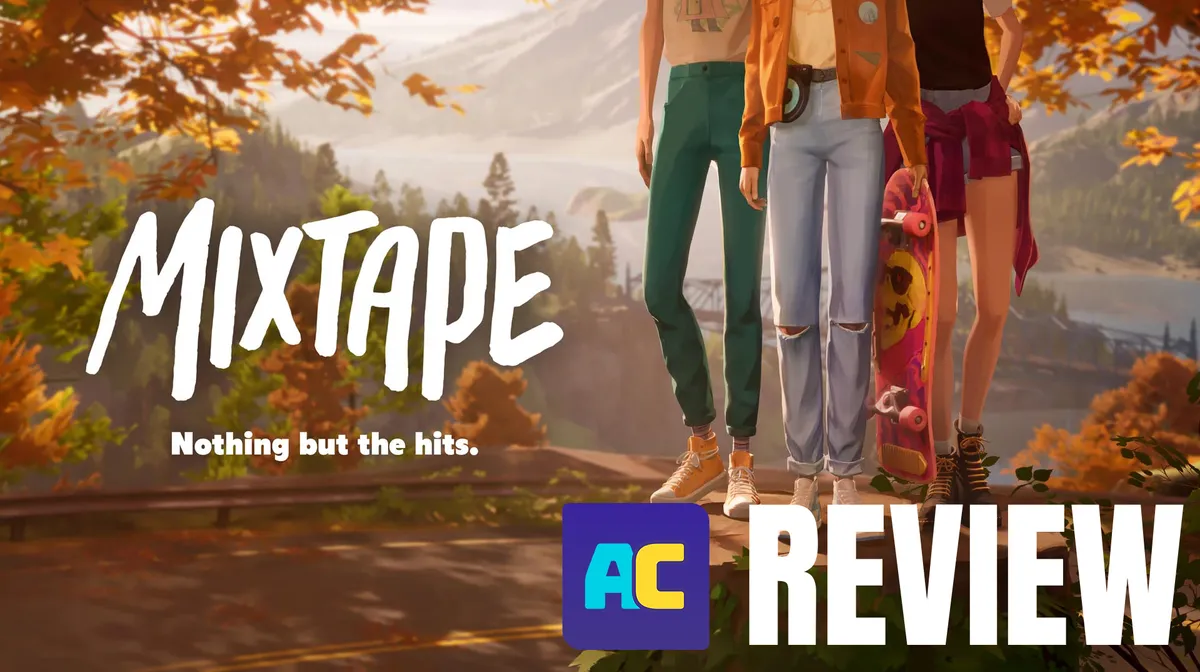
There are very few publishers in gaming that I trust unconditionally, and Annapurna Interactive is at the very top of that short list. After the extraordinary Stray, one of the most original games I have ever had the pleasure of playing, I found myself reviewing People of Note just a month ago, a game that blew me away in an entirely different way.
And now here we are with Mixtape, developed by Melbourne-based Beethoven and Dinosaur, the studio behind the BAFTA award-winning The Artful Escape. An amazing art style, an even more amazing and emotionally charged story, and a soundtrack that will stick with you for a very long time. Hats off to Annapurna Interactive for continuing to give us games that push boundaries and remind the industry what genuine creativity looks like, and for adding Mixtape to what is already one of the finest catalogues in gaming.
Story - Press Play
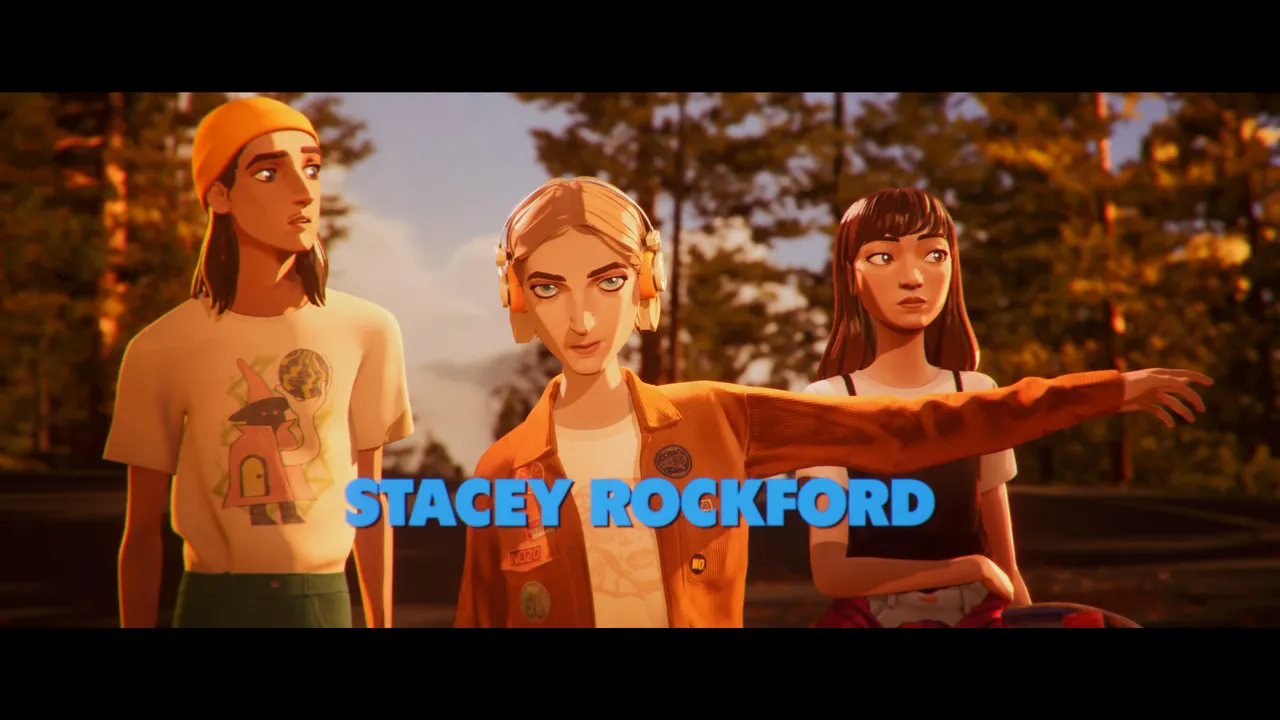
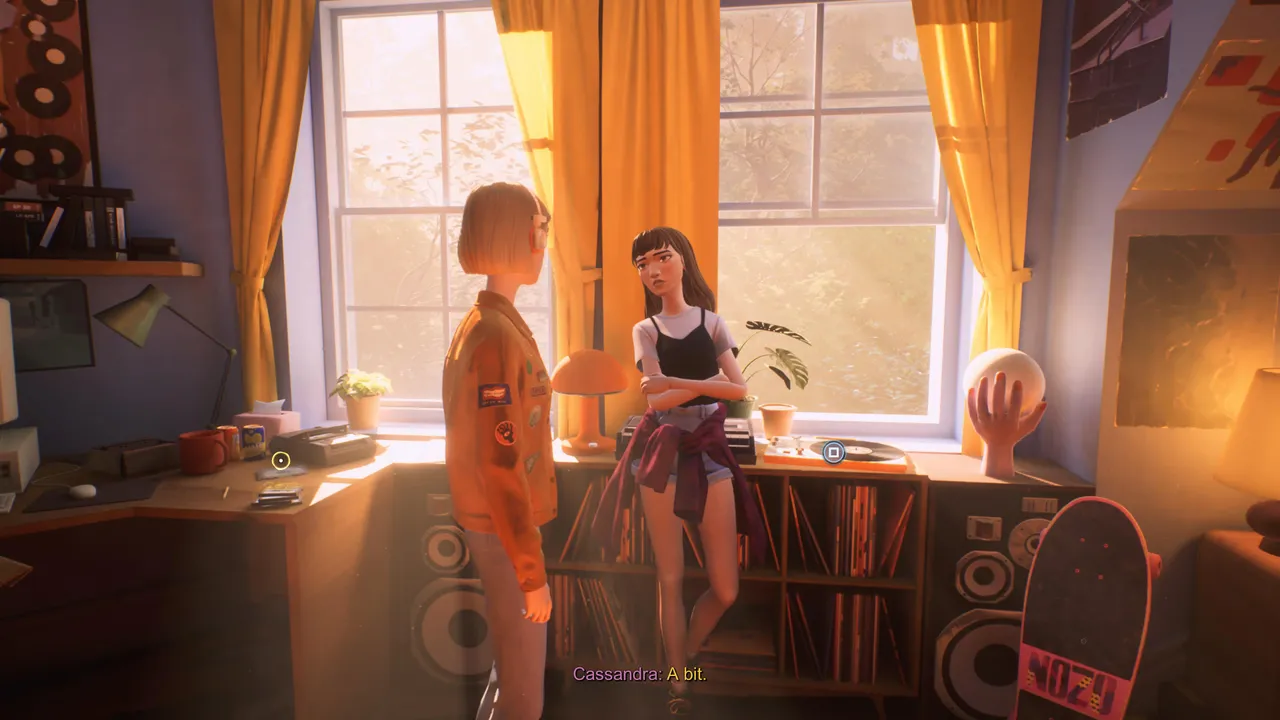
The story of Mixtape is, quite simply, something else. Set in the 1990s, you follow Stacey Rockford, a teenager who has just been offered the opportunity of a lifetime, becoming the music protégée of Bella Deltone and heading to New York to pursue her dream career as a music supervisor. Before she goes, however, she has a handful of days left with her two best friends, the sharp and charismatic Cassandra and the laid-back and more relaxing Slater, and they intend to make every single one of them count.
What follows is a celebration of adolescence in all its messy, reckless, deeply felt glory. These three are rebellious and impulsive. They ride skateboards, they chase parties, they find ways to smuggle weed and booze with the kind of creative determination that only teenagers seem to possess, and they do it all with the conviction that these moments are the ones they will carry with them for the rest of their lives.
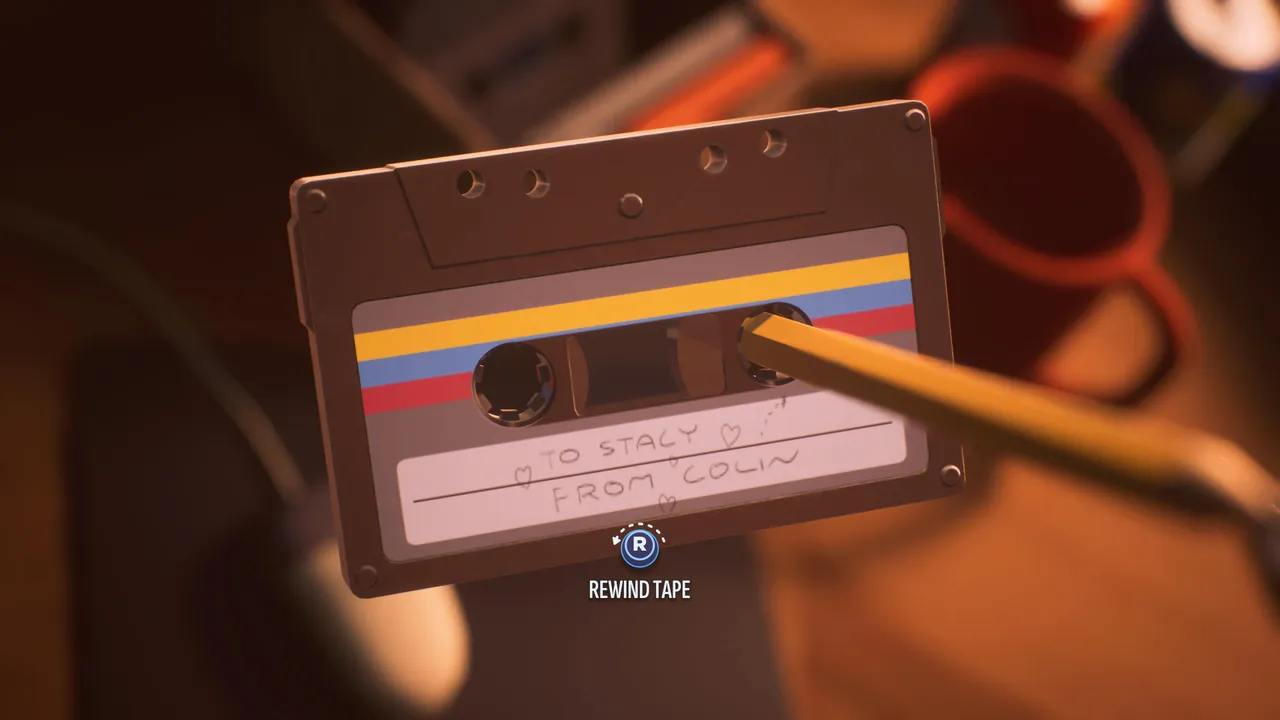
The game is told through a series of memories, fragments of shared experience that Stacey, Cassandra, and Slater relive together as the hours tick down towards her departure, each one unlocked by a new chapter of the mixtape Stacey has mixed up for their final days together. Because that is what Stacey does. That is why she got the job. She takes music and turns it into something that feels like a life story.
The story handles these memories with real emotional touch. There is joy here, and humour, and a real warmth, but there is also the particular ache that comes with knowing something is ending. Mixtape understands that the best coming-of-age stories are never really about the events themselves but about the feeling of living through them, and it communicates that feeling with a grace and a confidence that most games twice its length could never manage. By the time the credits rolled, I sat quietly for a moment, which is all you ever need to know about whether a story landed.
Gameplay - Play It Back
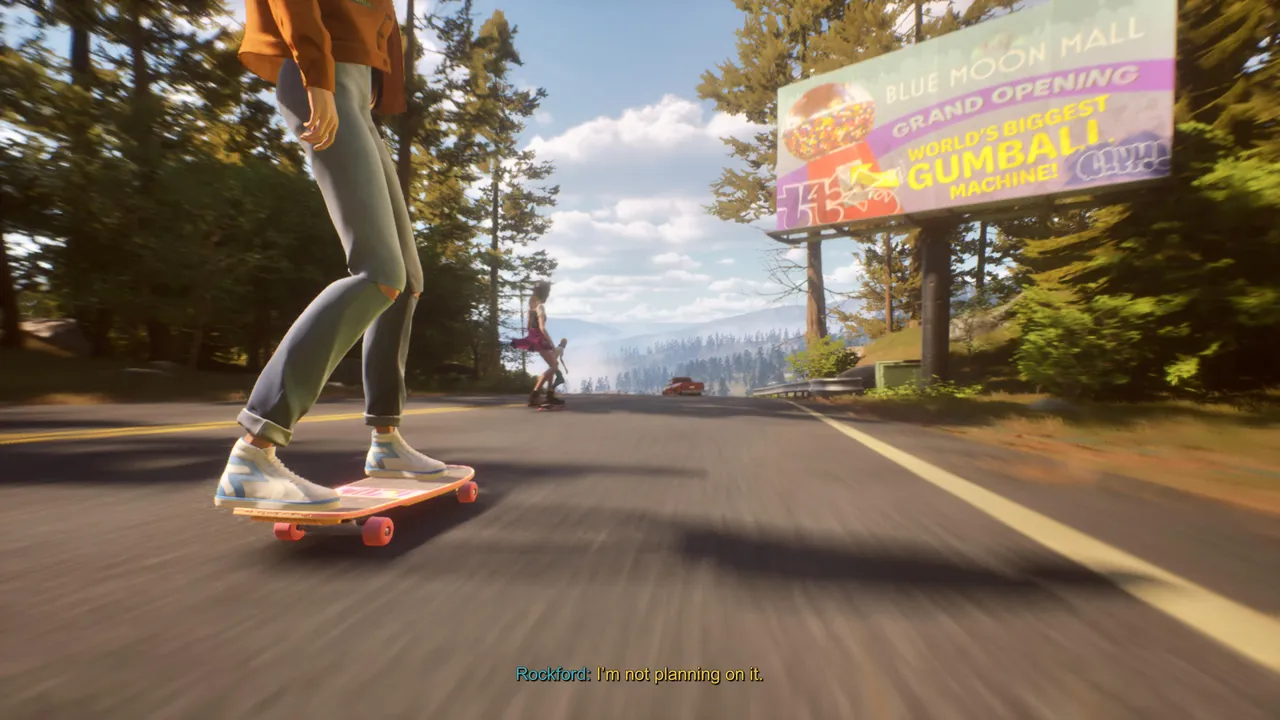
The gameplay of Mixtape is, by design, largely subordinated to the story it is telling, and for the most part this is exactly the right call. The primary mechanic during the majority of the game is skateboarding, and it is quite well done. The movement feels free and alive, and the game cleverly removes the frustration of failure entirely. If you crash, time simply rewinds to a safe position, keeping the momentum going and ensuring the energy of each sequence is never interrupted by a loading screen or a restart.
Beyond the skateboarding, the gameplay changes between just a couple of options depending on the memory being relived. Walking and exploring, gathering notes, piecing the story together through the fragments left behind in each scene. The variety of what is on offer across the full experience is broader than it might initially seem, taking in everything from skateboarding and flying to photography, baseball, and fireworks in the back of a car. Each segment matches its song, its mood, and its moment, and the result is something that feels more like playing through a playlist than working through a traditional game structure.
That said, the gameplay does have one true shortcoming that I cannot quite overlook, and that is the almost complete absence of puzzles. The interactive elements, while varied and charming, never demand very much of the player beyond basic engagement, and there are moments where Mixtape feels as though it is asking you to press forward rather than truly inviting you to participate. The gameplay is too simplified in places, and it is the one area where the game clearly had room to grow. It is a minor complaint in the context of everything else Mixtape gets right, but it is worth noting, and it does hold the game back from the very highest tier.
Visuals and Sounds That Will Leave You In Awe
Visually, Mixtape is stunning, and you'll have to see it with your own eyes to believe, really. What impressed me the most was the stop-motion-inspired animation technique, clearly drawing influence from the Spider-Verse films, which does something genuinely special here. It gives every scene a texture and a hand-drawn quality that feels entirely in keeping with the game's themes of memory and nostalgia, as if you are watching something that was always slightly more vivid in recollection than it could ever have been in reality.
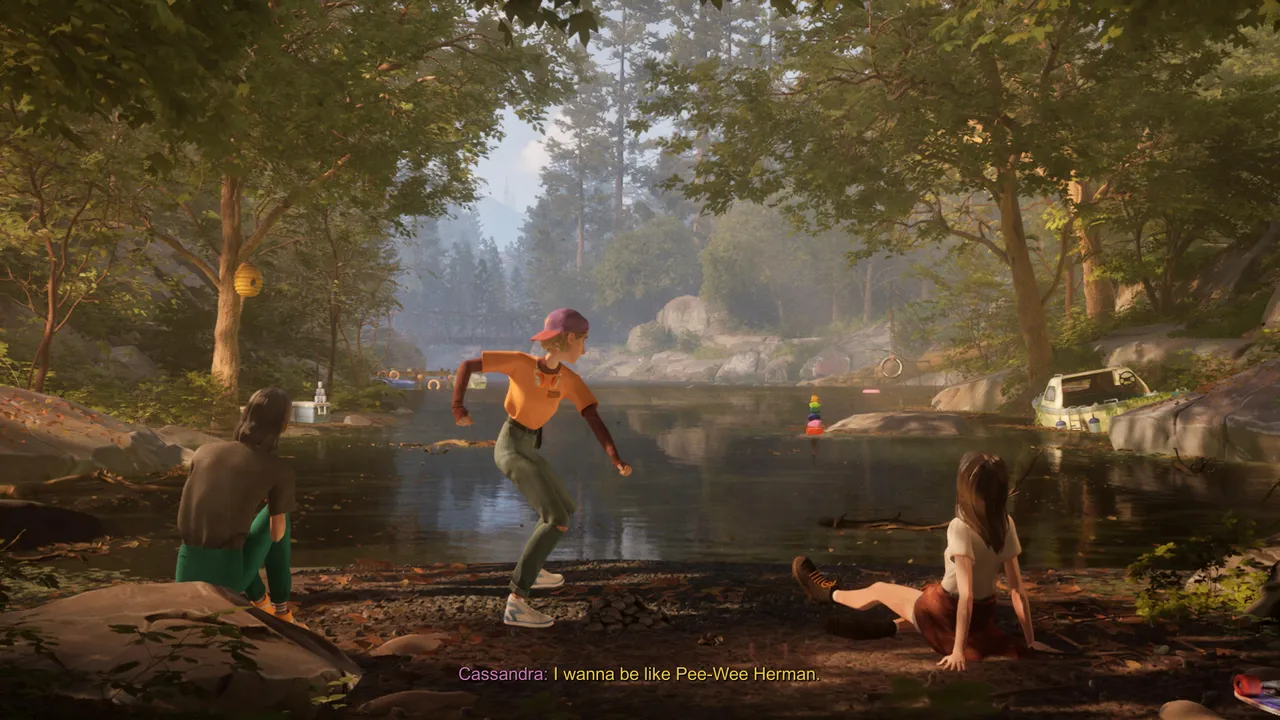
The art style is distinctive and confident, and it suits the game perfectly in every frame. Each new area you visit, each new chapter, will always have the same effect: they will, quite literally, take your breath away. Whether you're visiting lush forests, sidewalks that stretch all the way by beautiful shores, or a lake on which you'll throw rocks in the water to break the skipstone record, every piece of this digitally created world is breathtaking.
The sound design is, fittingly for a game about music, no short of spectacular. The soundtrack is the backbone of Mixtape, and it carries the game with the kind of authority that only a truly exceptional selection of music can provide. Spanning pop-rock, electronic, and hard rock from across the last century, featuring artists including DEVO, Roxy Music, The Smashing Pumpkins, Iggy Pop, Siouxsie and the Banshees, Joy Division, The Cure, and many more, every single track earns its place and lands at exactly the right moment. This is a game that understands music the way Stacey Rockford does: not as background noise, but as the thing that tells you who you are and where you have been.
The voice acting matches the standard set by everything around it. The performances across the board are top-notch, and the chemistry between Stacey, Cassandra, and Slater feels entirely genuine, which is no small achievement and essential to making the emotional core of the game function as well as it does.
Conclusion
Mixtape is a remarkable piece of work. It is the kind of game that reminds you why storytelling in this medium can be so extraordinary when the right people are given the freedom to follow their instincts all the way to the end. Beethoven and Dinosaur have created something deeply felt, visually inventive, and musically brilliant, and Annapurna Interactive have once again demonstrated why they are the publisher I trust above all others to deliver games that mean something.
The simplified gameplay and the absence of any real puzzle design hold it back from a perfect score, and that is an honest assessment rather than a reluctant one. But everything else here – the story, the characters, the art, the music, and the performances – operates at a level that very few games reach in any given year. Mixtape is not just a good game. It is an experience worth having, and one I suspect I will be thinking about for a very long time.
The Good
 One of the most emotionally resonant stories I experienced of late
- Outstanding art style with a stunning stop-motion inspired technique
- An exceptional, era-spanning soundtrack that earns every moment
- Charming and varied gameplay vignettes that match their musical counterparts
- Top-notch voice acting across the entire cast
The Bad
 Lack of puzzles is a genuine missed opportunity
- Some sections feel more like press forward than genuine participation