Trending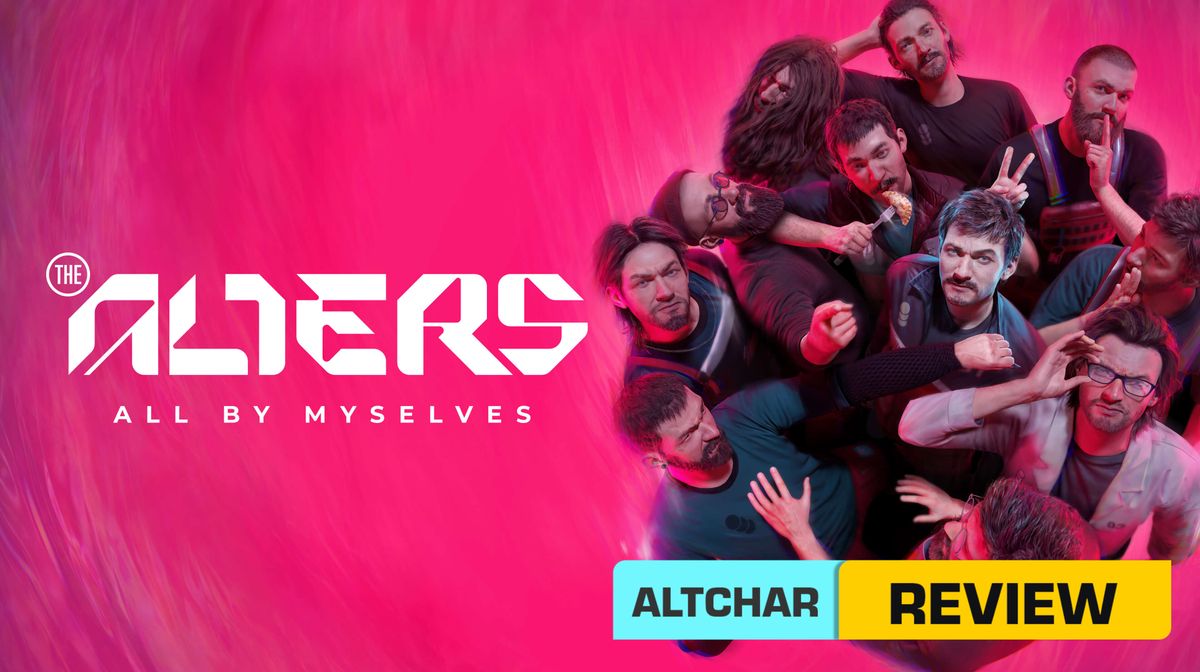
In an era where the gaming landscape is increasingly filled up with new releases, originality and variety have become essential for a title to achieve success. Only those games that introduce fresh and innovative experiences stand a genuine chance of thriving in the highly competitive world of video games.
When I received a preview demo of the survival game The Alters last year, I found myself more intrigued than I had been by any title in quite some time. The game presented a concept unlike anything I had encountered before, featuring compelling survival mechanics and a narrative that hinted at exceptional potential.
Originally slated for release last summer or fall, The Alters experienced delays, resulting in a full year passing between the demo and the launch of the complete version. Whether the anticipation was warranted—and how the final product measures up—will be explored in the review that follows.
Story—Many Lives of Jan Dolski
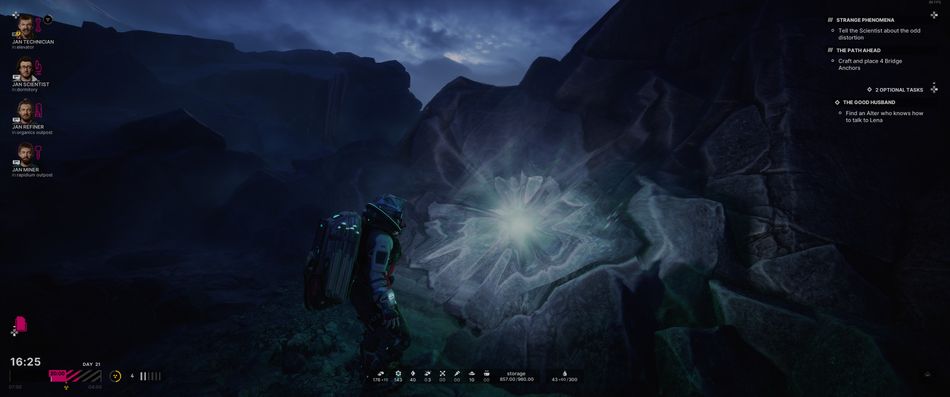
In The Alters, players assume the role of Jan Dolski, a labourer who has secured a position on a space expedition in search of a rare and newly discovered element known as Rapidium. This element possesses unique properties essential to the cloning process. However, following a mysterious incident during the landing, Jan's entire crew perishes, leaving him as the sole survivor. Faced with the daunting task of maintaining a massive and complex base, it quickly becomes evident that managing it alone is virtually impossible—rendering Jan's situation seemingly hopeless.
While searching for vital resources, Jan eventually discovers Rapidium and is prompted by a mysterious figure at the base to test its properties. Upon confirming that the element is indeed functional, the enigmatic contact proposes an unthinkable solution: that Jan clone himself, creating alternate versions—known as Alters—to aid in his survival.
Confronted with the inevitability of death on one hand and profound ethical dilemmas on the other, Jan chooses the rational path and initiates the cloning process. From that point forward, the narrative centres around managing the Alters, navigating the tension between scientific advancement and moral boundaries, and unravelling a series of unexpected twists—both in Jan’s interactions with his Alters and in his relationships with other characters he encounters.
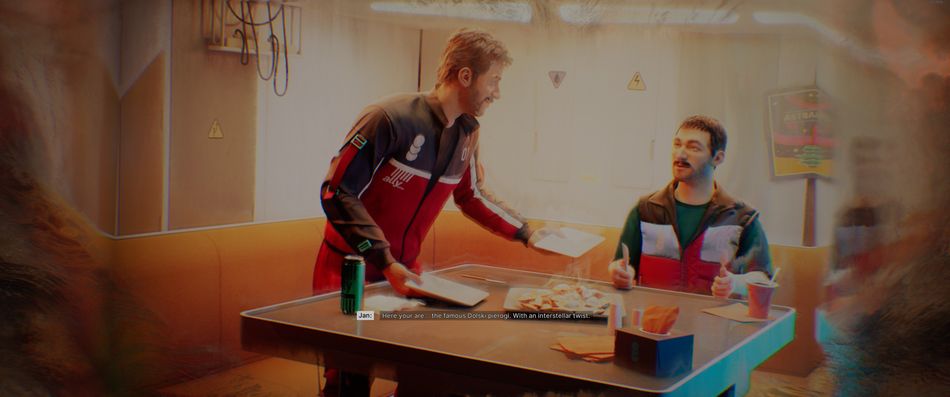
If you’re concerned that this section of the review contains major spoilers, rest assured—everything mentioned thus far is limited to what was already revealed in the demo. The true depth of the narrative and its intrigue unfold much later. Remarkably, for a title rooted in traditional survival gameplay—where storytelling often takes a backseat—The Alters delivers a surprisingly rich and compelling narrative that left a genuinely positive impression.
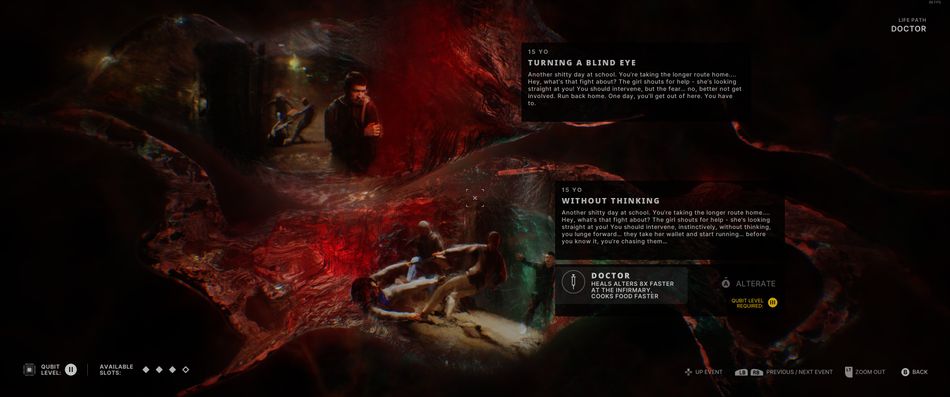
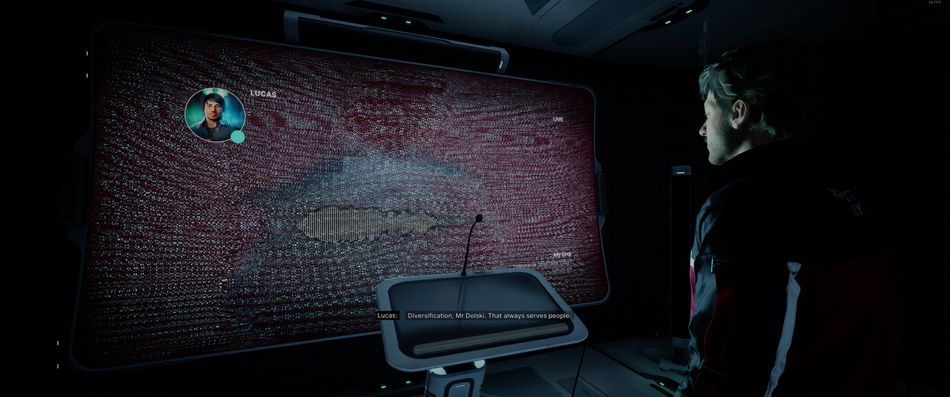
Another aspect of the narrative that truly captivated me was the detailed portrayal of Jan’s life and his fully developed backstory. Each Alter, created at crucial moments in Jan’s past, emerges as a distinct individual with unique interests, behaviours, and personalities. It is genuinely fascinating to witness a single actor breathe life into such a diverse array of characters—who, despite their differences, all originate from the same person. This element is executed exceptionally well and adds significant depth to the game's story.
Overall, the story in The Alters is excellent. Even if the game focused only on its narrative with very simple gameplay, it would still stand out as one of the better story-driven titles. What makes it even more impressive is how well the gameplay is blended with the story, making the whole experience significantly stronger.
Gameplay—The Peak of Survival
Seriously, you won't find many games out there that feature such a varied array of survival mechanics like The Alters. The setting itself—a planet with extreme conditions where work is limited to daylight hours due to harmful radiation and the impending destruction caused by the sun—creates a dynamic and challenging environment.
Apart from that, this game features very good base-building mechanics, the Alters management, crafting, upgrading, and almost everything you can think of; every feature found in any other survival game is here in one way or another.
The best way to illustrate what awaits you in The Alters is to walk through a typical in-game day. Due to the heightened radiation levels at night, all essential tasks must be completed during daylight hours. Each day begins with you waking up and preparing to carry out various objectives, which are organised in a clearly structured quest system that’s easy to follow. Tasks can be completed either by Jan himself or delegated to one of the Alters. Like Jan, the Alters follow a daily routine—they have designated working hours, and afterward, they spend their time relaxing, socialising, or sleeping, each with needs and behaviours similar to your own.
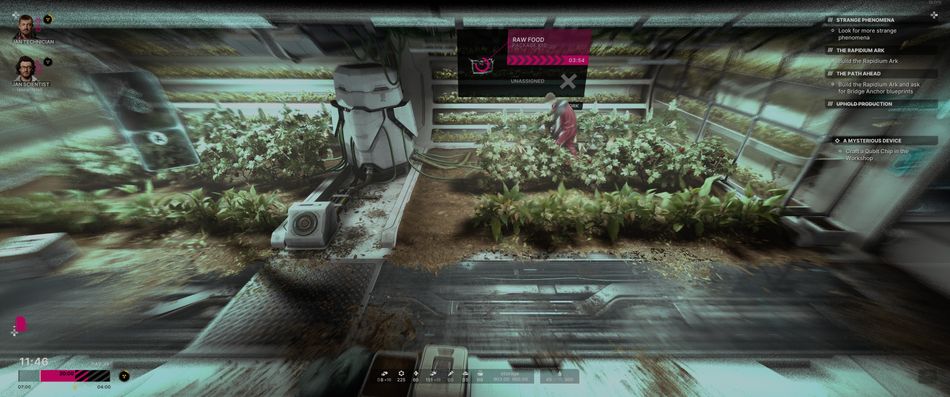
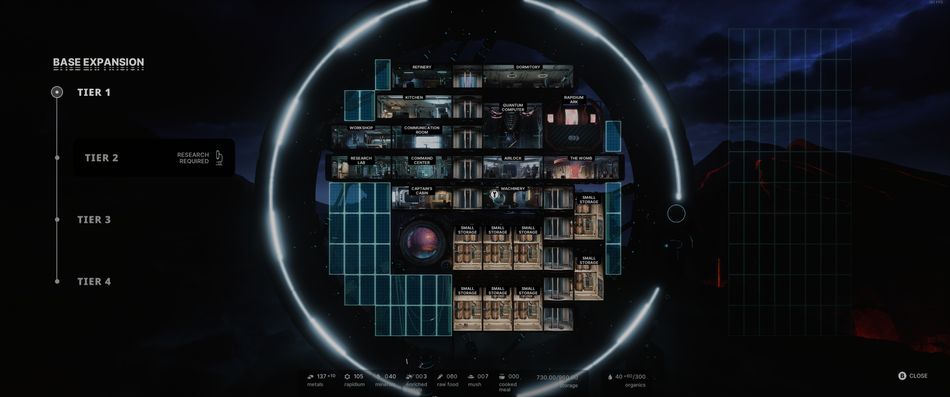
Surprisingly, in The Alters, your primary concern isn't your own survival but that of the Alters. Ensuring their well-being becomes your main responsibility—you'll need to keep them fed by building a kitchen and greenhouse to grow food, all of which require various resources such as energy, metals, and other materials. These resources must be gathered outside the base during daylight hours. Additionally, you'll have to manage systems like radiation filters to protect the base, build recreational facilities such as a gym or a party room to support the Alters' mental health, and regularly maintain the entire base. In short, playing The Alters means constantly juggling responsibilities—your hands will always be full.
And now we come to the aspect that left a less favourable impression: the overwhelming number of tasks. As previously mentioned, the game often feels overloaded, requiring constant attention to a wide range of responsibilities. This, combined with the ever-present pressure to complete everything on time before the sun catches up to you—bringing certain death—can make the experience feel more stressful than engaging at times.
Some might argue, “Isn’t that the essence of survival games?” But believe me—it’s not. The constant pressure and overwhelming number of tasks in The Alters often kill all the joy. At times, I found myself simply stopping, unsure of what to prioritise or where to begin. What should have been an engaging and immersive gameplay loop instead became an exercise in stress, overshadowing much of the game’s potential charm.
I don’t believe the developers have managed to strike a proper balance when it comes to the issue of overload, and I’m confident this will be a significant drawback for many players. Unfortunately, this isn’t something that can be easily addressed through patches or updates—it’s a fundamental aspect of the gameplay. Simply put, the game is built around this structure, and what you see is what you get.
Graphics, Sounds, and Performance
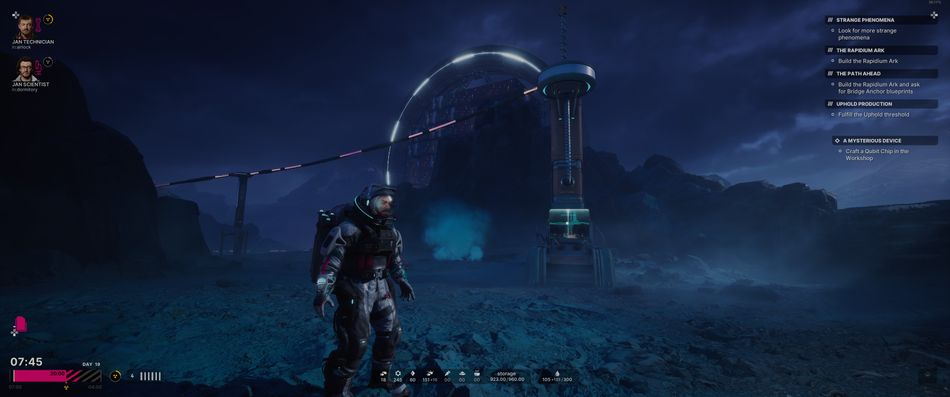
Graphically, The Alters is a solid but unremarkable title. While it won’t leave you in awe visually, it would be unfair to say that it doesn’t look good. Overall, the game delivers a competent visual presentation that can best be described as average. The planet itself is rather monotonous, featuring a barren and uneven landscape with no signs of life—certainly not a setting one would call visually appealing.
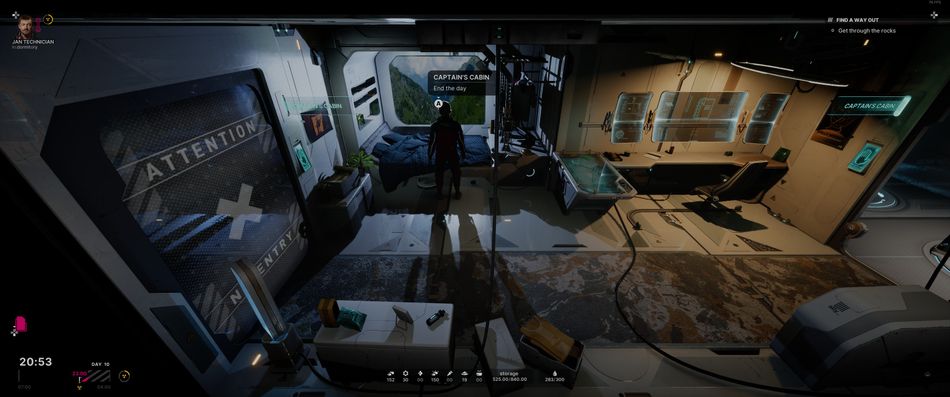
However, certain visual effects—such as the depiction of intense radiation exposure or the persistent rainfall early in the game—are quite well-executed and add to the atmosphere. The game’s visual strengths are most evident when you're inside the base. Unlike the external environment, which is rendered in 3D, the interior of the base is presented in a 2D perspective. Despite this, the level of detail and visual variety within the base is impressive and will likely come as a pleasant surprise to many players.
Each facility within the base is uniquely designed with a remarkable level of detail, giving the entire structure a highly realistic and immersive feel. The transitions between the wider view of the base and the close-up perspective focused on Jan are executed with impressive smoothness, making them feel completely natural. These transitions occur frequently, as they are essential for navigating the base and understanding Jan’s current location and objectives.
In terms of performance, I played The Alters on PC and encountered no issues whatsoever. The game runs exceptionally well, maintaining high frame rates even at maximum settings with Nvidia DLSS set to Quality. Even on my relatively older GPU (RTX 3080 Ti), the game consistently delivered between 80 and 100 FPS at 1440p ultra-wide resolution, ensuring a smooth and stable experience throughout.
The sound design in The Alters is generally adequate, though not particularly standout. The most noticeable element is the music, which tends to be quite loud and repetitive when you're outside the base, clearly aiming to create a sense of tension. Personally, I found it more irritating than intense, though that may come down to personal taste. As for the rest of the audio—the ambient sounds and effects—they are well-executed and leave little to criticise.
Conclusion
The Alters delivers one of the greatest stories and a rich survival experience that sets it apart from many games in the genre. Its unique story, well-developed characters, and engaging gameplay mechanics create a world that is both immersive and challenging.
However, the game’s demanding task management and constant pressure may prove overwhelming for some players, killing a lot of enjoyment in the process. Despite this, The Alters remains a solid and memorable title, especially for those who appreciate a story-driven survival game with depth and complexity.
The Good
 Unique cloning mechanic
- Strong, well-written story
- Detailed base design
- Smooth performance
- Engaging survival systems
The Bad
 Overwhelming task management
- Constant time pressure