Trending
Even though I'm not a huge fan of rogue-like titles, I can say that I really liked my time with Ravenswatch. I did lose my patience with the game countless times but in the end, the feeling I got upon beating a stage or making my character stronger to try again once I failed is really special and made me learn to appreciate this fine piece of gaming art.
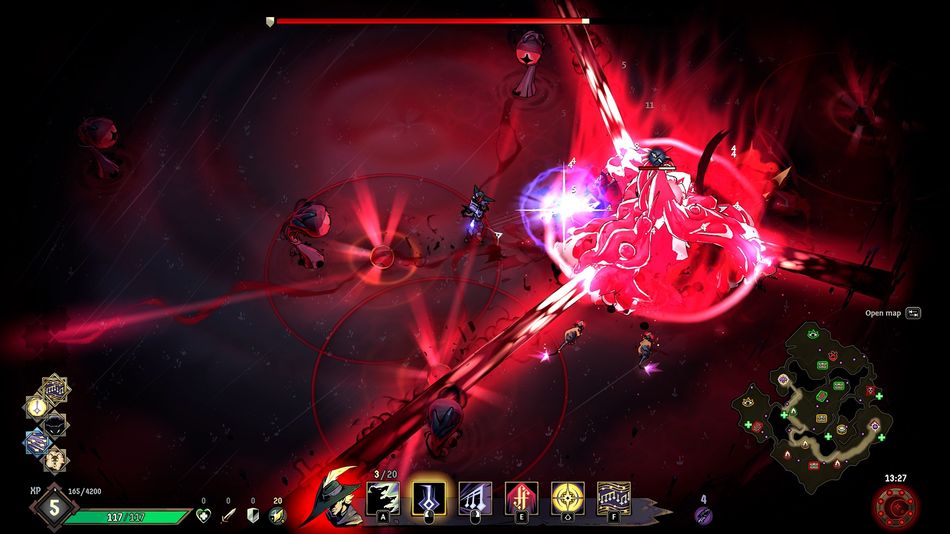
In Ravenswatch, you play as one of the four heroes who represent the last stand against the Nightmare that threatens to consume the magic world you live in.
The story of Ravenswatch is as simple as the concept mentioned above—your job is to prevent the Nightmare from consuming your world, and that's pretty much everything that is regarding the story.
And since there isn't much to the story in this game and because the story isn't something that will keep you going here, I'll shift my attention to the more important segment, the gameplay. As I already mentioned, Ravenswatch: Fall of Avalon is a true Rogue-like title, with the gameplay almost copied from the Hades games with a bit of a mix of Diablo.
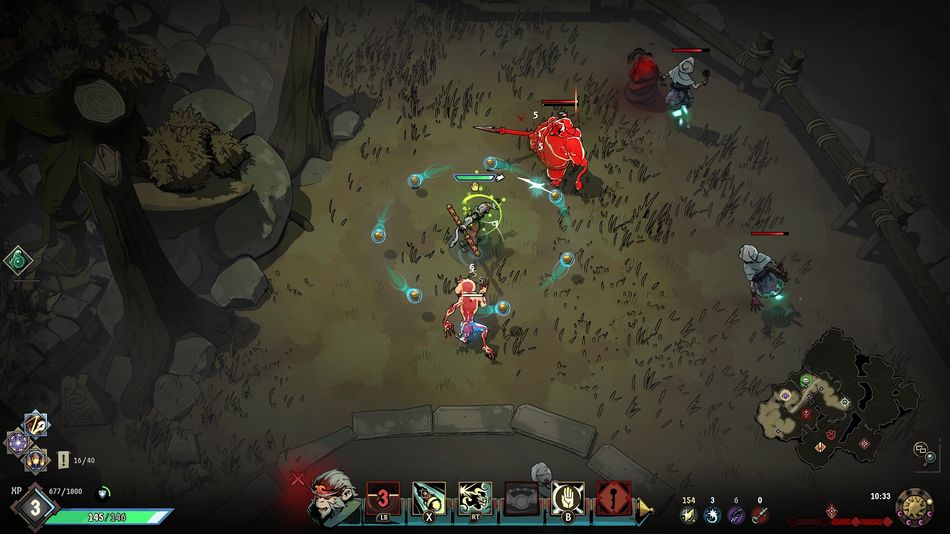
While it's not always productive to compare games, it’s almost impossible to avoid drawing parallels between Ravenswatch and Hades or Hades 2. If you've played either of those, the moment you start Ravenswatch, the similarities are striking.
I bring this up because I recently had the chance to play the early access for Hades 2, and even in its current state, I said it could easily be a game-of-the-year contender. Supergiant Games' gem highlights all the shortcomings of Ravenswatch, but it's not all that bad for Passtech's contender.
Ravenswatch is a top-down roguelike action RPG whose gameplay will fascinate you at the very beginning of the game, but sadly, that fascination will eventually fade away due to the game's rogue-like nature which results in repetitiveness.
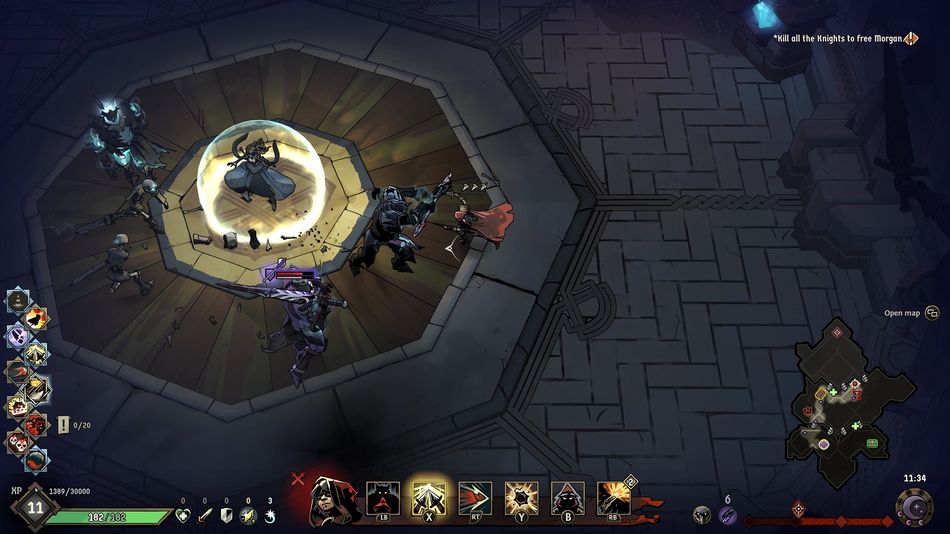
For example, Hades 2 has a beautiful and very intriguing story, and every time you die in its cycles, a new piece of the story will unravel along with different dialogues and new pieces of information required to pass through a tough part of the game. Unfortunately, this isn't the case with Ravenswatch because, as I already mentioned, the story isn't its strongest suit; in fact, the story is almost nonexistent, and there will be nothing to push you forward.
Given the fact that the game is extremely hard, the motivation to continue once you find yourself dying over and over again will not be easily found, and I am afraid, due to this fact, many players could leave the game at its early stages.
At the beginning of the game, you'll choose one of the four available heroes (an additional four can be unlocked when you complete the first stage with other characters), and each of them has a different set of skills. Once you select your hero, talents and buffs, you can start doing your runs which last for three in-game days, during which you'll explore the map, fight all sorts of creatures and gain XP to make your hero as strong as possible for the eventual fight with the Nightmare, which acts as the final boss of the run.
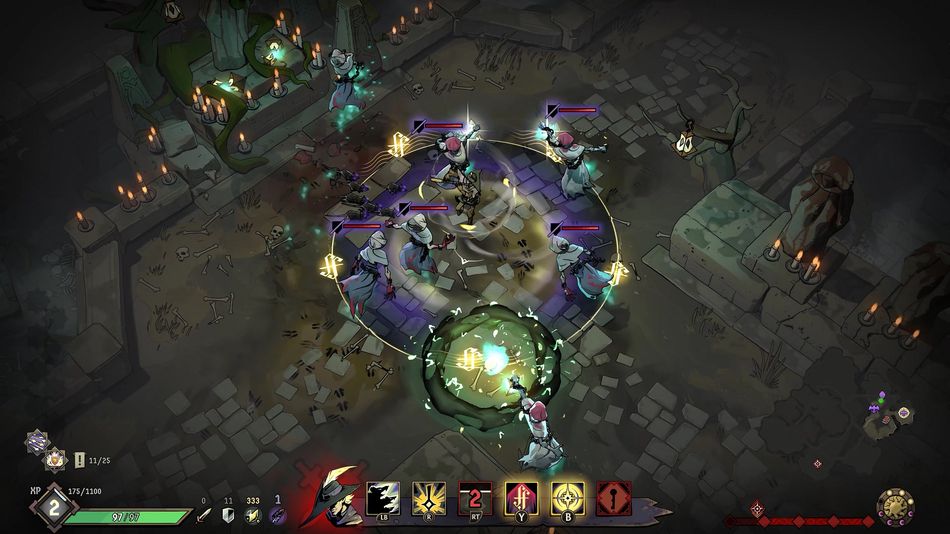
Within each run, the hero can undergo the levelling-up process. Every new level offers a new talent, and every talent buffs your character. Some talents can be gained by exploring the levels or by solving some optional objectives within those. In essence, the more talents you own, the better your chances are to beat the Nightmare. If you manage to beat it, you'll enter the second phase of the stage where the enemies become stronger and the rate of survival decreases even further. Solve three phases, and the stage is done, but this is definitely much easier said than done.
Once you die, the next run begins, but not without rewards because your character gains permanent experience and becomes stronger, so if you cannot beat a phase, all you have to do is be persistent because sooner or later, you'll level your character up enough to concur that particular stage.
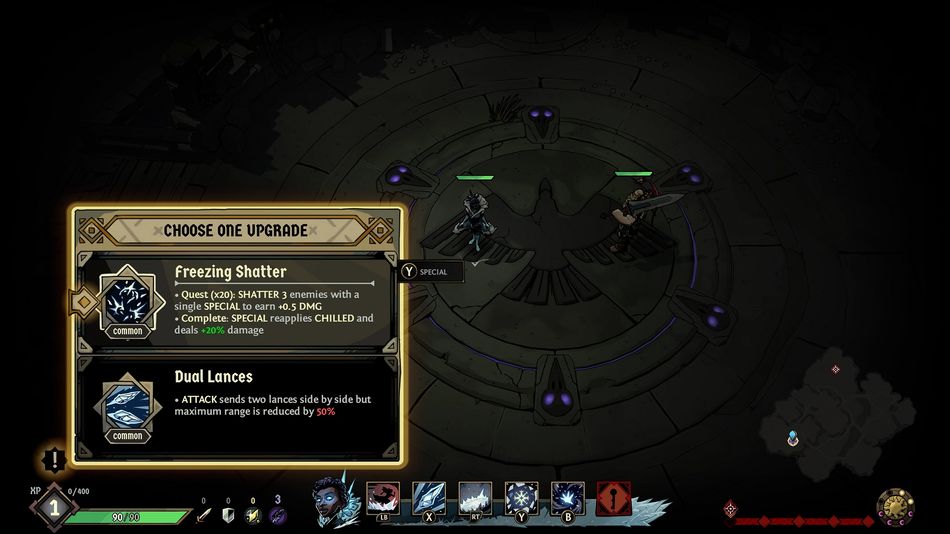
However, the XP is not shared between characters, and if you want to play a stage with a different one, you'll have to go from scratch. But this isn't a bad thing at all because each character gives a completely different experience and enormous replayability, provided you're tolerant of repetitiveness during runs.
The combat, on the other hand, is probably the star that shines the brightest in Raveswatch. Regardless of the chosen character, each one of them has a different set of moves and attacks, making the combat system of this game very commendable and enjoyable.
You'll be using a classic action RPG set of attacks, including light attack, heavy attack, and a bunch of special attacks, characteristic of every character. Every attack can be buffed through different talents, and apart from the offensive options, you'll be using defensive ones as well, like evade and dodge (this one can be offensive too if you decide to dodge towards enemies).
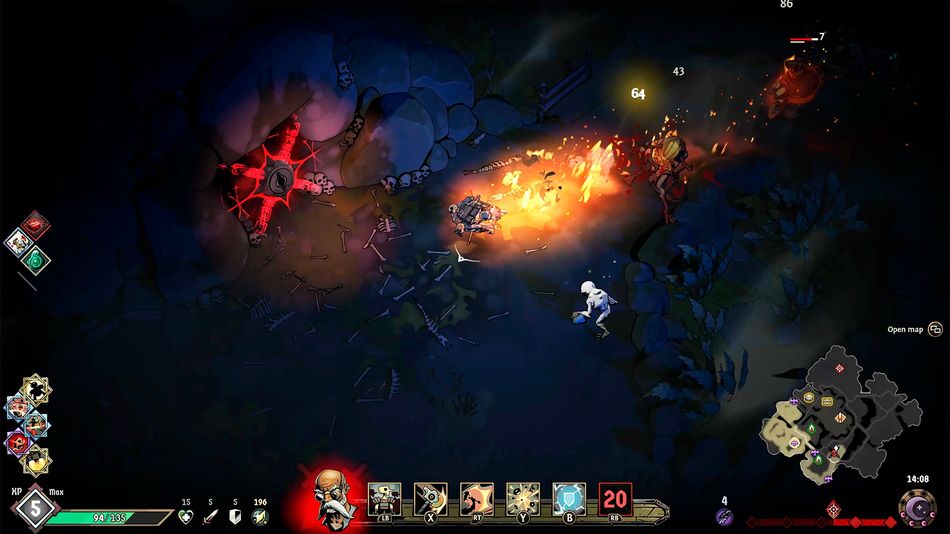
Every attack, apart from the light one, has cool-down periods and you'll have to keep this in mind and strategise accordingly if you want to succeed in battles. Health is depleted very quickly, but several talents can work to your advantage to regain it. Also, every bigger enemy slayed gives a chunk of lost health, making you want to fight them specifically and avoid the small enemies.
The main boss of the game is the Nightmare but apart from it, you'll face the other bosses too. Every boss fight is very well-designed, and I truly enjoyed every single boss encounter throughout the game.
Another key aspect of this game is the ability to play in co-op, which likely transforms the experience entirely. I say "likely" because during my time playing—whether due to server issues or a lack of players during the test phase—I was never able to connect with anyone. However, once the co-op is fully functional, it will undoubtedly elevate the game to a whole new level.
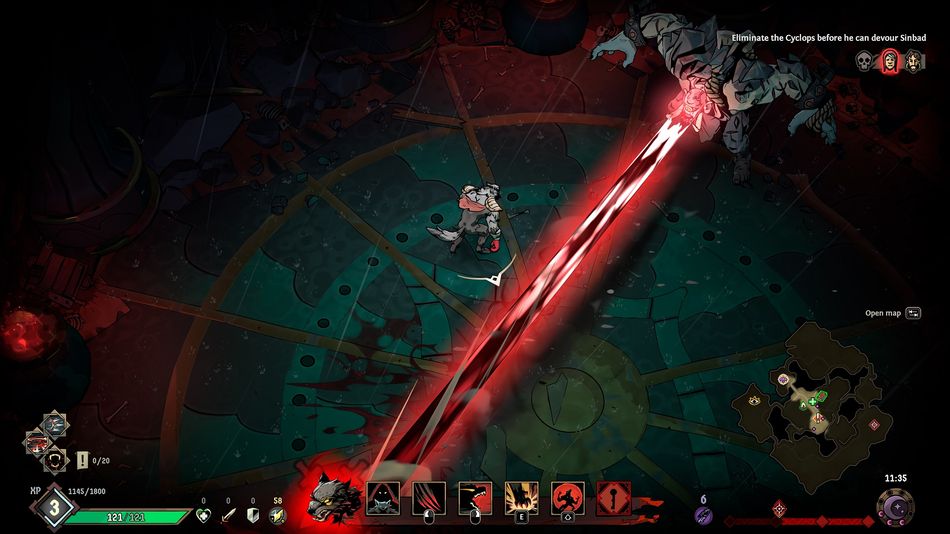
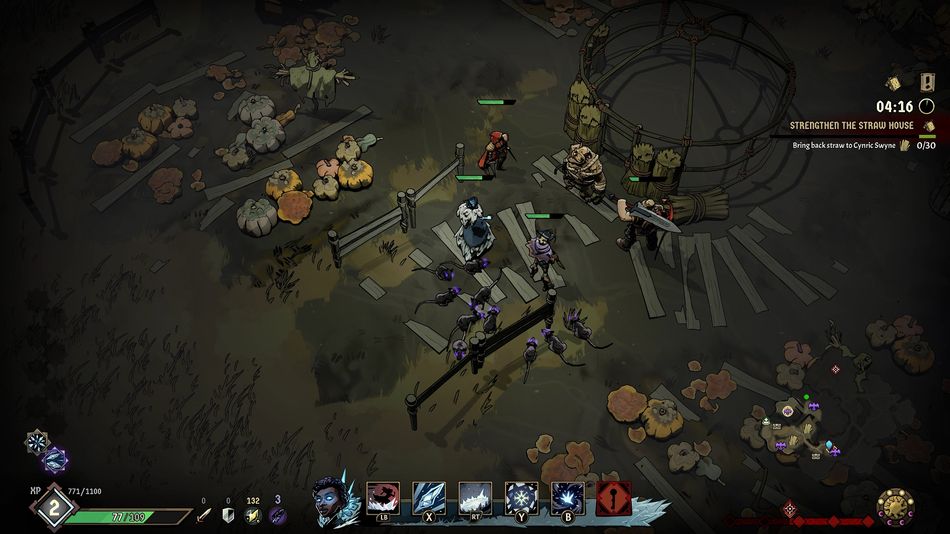
Just as I praised Ravenswatch for its gameplay, particularly the fantastic combat, I have to mention one aspect that I really didn’t like: the level design. Don’t get me wrong—Ravenswatch is visually appealing with great graphics and well-designed characters and environments. However, the levels all feel quite similar, lacking much variation, and it often feels like you're playing through the entire game in the same location.
From a graphical standpoint, Ravenswatch is a visually appealing game with a style reminiscent of a high-quality fantasy cartoon. The textures are sharp and detailed, and visual effects like weapon strikes, dust, and fire are well executed, despite the game not being particularly demanding. The PC version offers limited graphic settings beyond basic options like resolution and refresh rate. That said, the game runs smoothly without stuttering or crashes, and in that regard, there's nothing to complain about.
The soundtrack, in particular, is well executed, featuring tracks that evoke a mediaeval vibe, filled with violins and a dreamy atmosphere, perfectly complementing the fantasy setting. The music adapts to different situations, and during battles—especially when fighting the Nightmare—it becomes memorable and impactful. The other sound effects are solid and do their job effectively.
Conclusion
Ravenswatch is, overall, a solid top-down, Rogue-like action RPG. While its mechanics are initially captivating, they can be a bit repetitive after a while. However, with its appealing art style and the option for co-op play, I believe many will love this game, especially fans of this genre.
However, given its similarity to other titles—Hades 2 in particular—I believe Ravenswatch falls short in comparison, mainly due to the absence of a good story. The lack of a compelling story is a significant drawback, as a good storyline is exactly what would propel a game like this towards a more satisfying and engaging conclusion.
The Good
 Engaging combat system
- Appealing art style
- Memorable soundtrack
- Co-op play might be a great asset
- High replayability with different character experiences
The Bad
 Lack of a compelling story
- Repetitive level design with minimal variation
- Gameplay can quickly turn from captivating to boring