Trending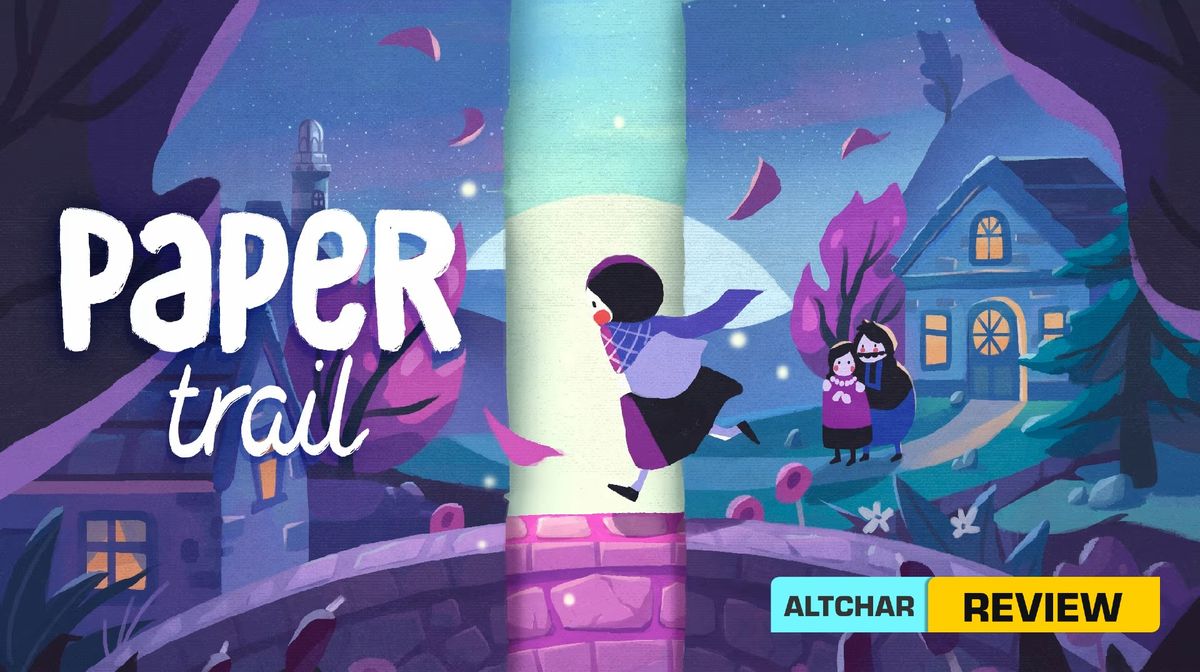
The simplest titles in gaming can give us a load of joy and loads of frustration as well. If you try to define Paper Trail, the definition will be just like that: the game that can be such a fun and relaxing experience but can also get on your nerves over the simplest solution, which you somehow failed to see.
This is a game with a very simple yet very clever and effective concept: the main character, Paige (a very convenient name, I must say), has the ability to twist reality by folding and changing it, like pieces of paper, and doing so she will solve puzzles, progress through levels, and unravel the pieces of the story.
I must say the game won me over from the start with its very charming presentation, unorthodox approach to solving puzzles, and unique storytelling. However, everything might look sympathetic and charming at first, but as you start to immerse yourself in the game, boredom can come as well.
Story
In games like Paper Trail, you cannot anticipate a sophisticated story like in some premium, story-related titles, but to be honest, this game's story is a very good one.
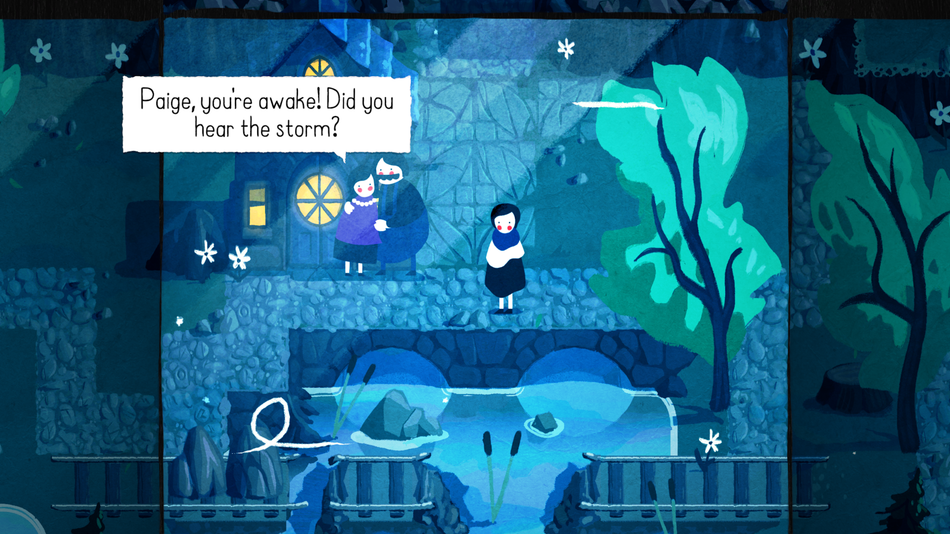
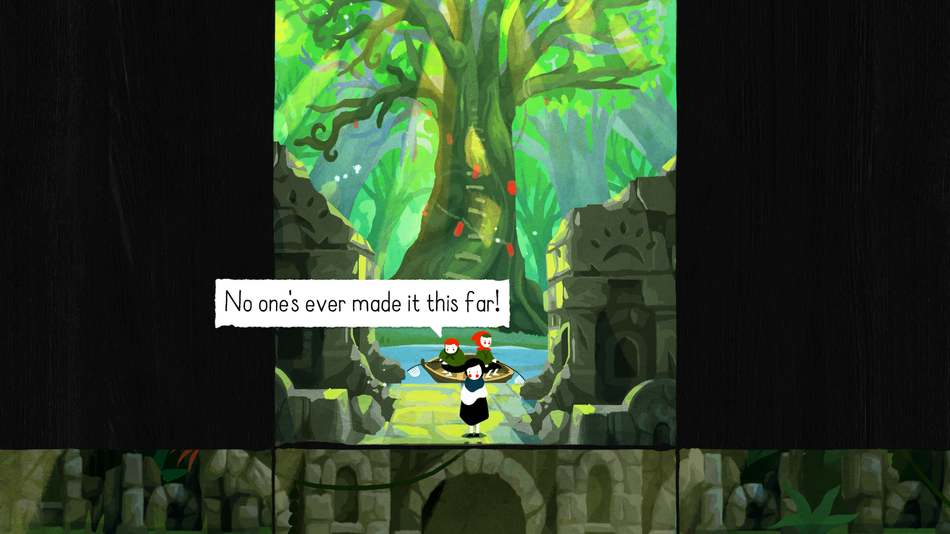
It tells the tale of Paige, a girl who has been accepted into university, and as she prepares to leave her village to pursue her dreams, a huge thunderstorm happens that will change her life forever.
Soon she will realise that she has an unusual ability to shift the very fabric of reality by changing what was and what it will be, mixing them together, and creating new paths for herself and for the people around her.
Some parts of the story will be a bit confusing because you won't be able to tell precisely what's reality and what's something else because, in many chapters, she will visit her memories of the events that already came to pass, so differentiating between those timelines can be a bit confusing.
The story is told using two different techniques. The first one is through cutscenes where Paige narrates as the only character who has an actual voice, and the voice actress who borrowed Paige her voice did a very good job. During those cutscenes, the biggest part of the story will be revealed.
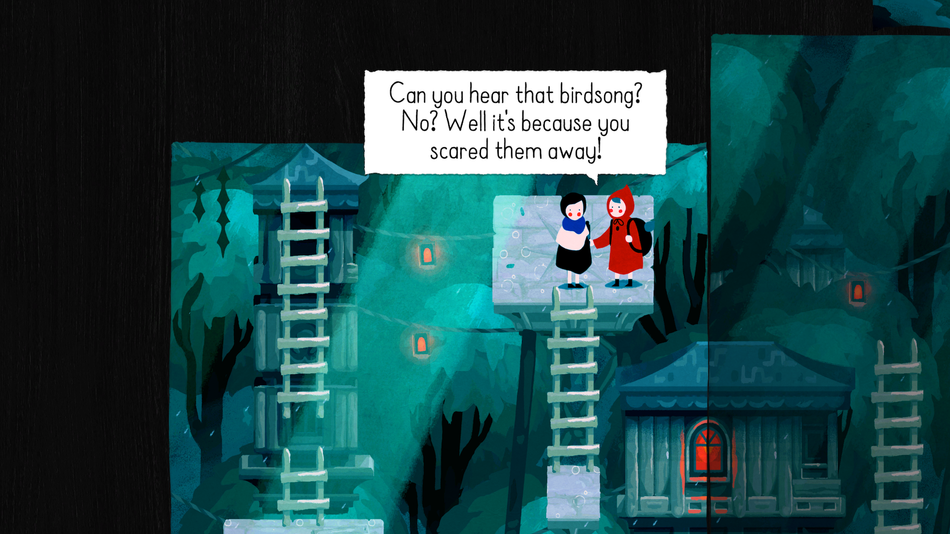
The second technique is through the conversation of Paige and other characters that is portrayed in the form of speech bubbles, where there is no actual talk—the characters speak some unarticulated language, and this storytelling happens during the puzzles or between them.
To be completely honest, the story is quite interesting, but it is there more to serve as the connection between the levels and puzzles than to be some great game's asset. For the scale of the game's production and as far as the game's genre is concerned, the story serves its purpose and will be fun to discover.
Gameplay
Paper Trail suffers from the same illness that many games of its kind do, and it is boredom after several levels. The idea and concept of the game are genius; I assure you, those puzzles are very unique and original, featuring very special mechanics. But the problem is that there's nothing in the game apart from those puzzles.
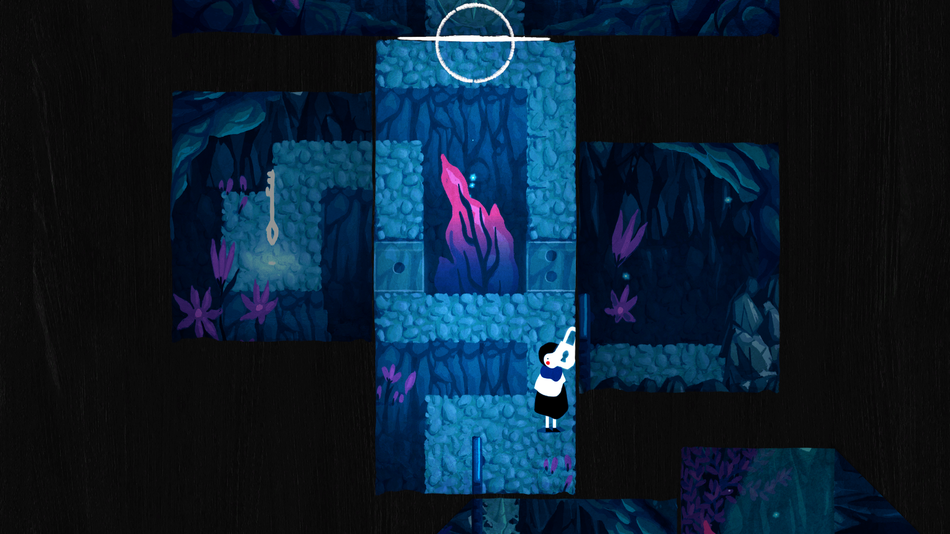
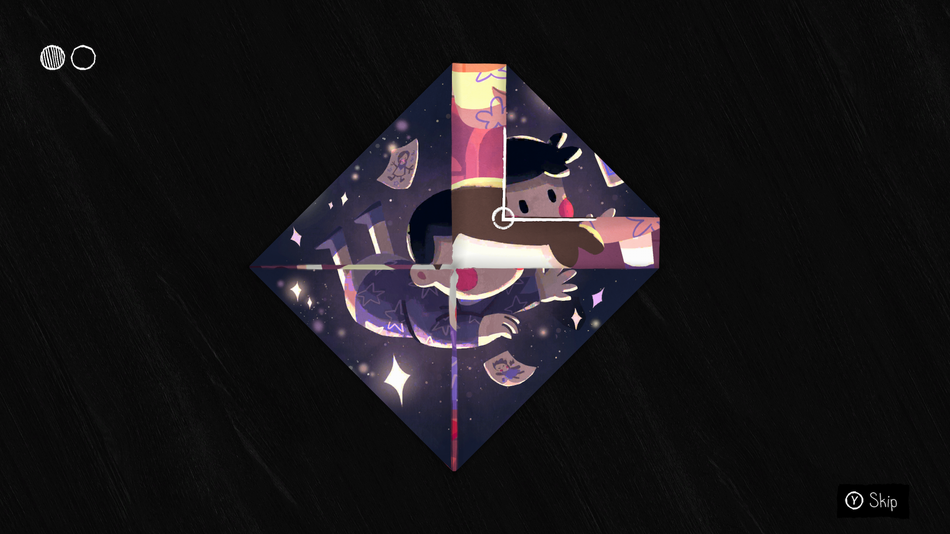
The puzzle concept goes like this: every level is one piece of paper that has paths drawn on it over which Paige can move. Every paper has stuff drawn on the back side as well, and you can fold the paper in eight different directions: from right, left, up, and down, and from all four edges.
Folding paper creates new paths, and that's the way you solve puzzles. Of course, as you progress in the game, new mechanics become available, like merging the symbols that can open doors, rolling the rocks on the plates, rotating platforms, and more.
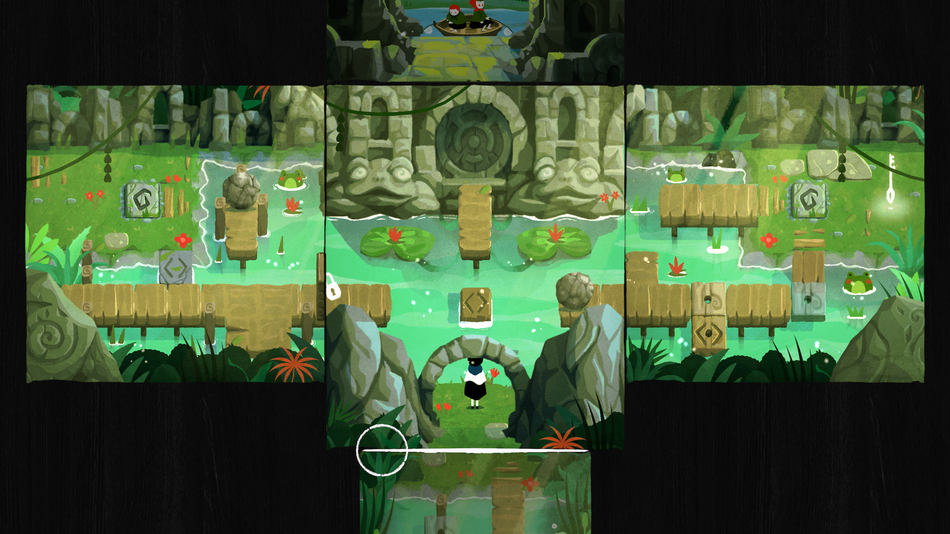
In theory, it all looks diverse, but in reality, you have a feeling that it is all the same puzzle that repeats all over every level, and after solving several of them, you become overwhelmed, and what at first was a charming and interesting puzzle-solving run soon becomes a tedious endeavour that I personally forced myself to finish on several occasions.
Solving those puzzles can be very complicated sometimes, which can frustrate you beyond measure. Luckily, there is an option or command, to be more precise, that can help you a lot in solving them. By simply pressing the Y button on the Xbox controller, a small, interactable video pops up that explains what edges to fold to get to the solution.
This command is good if you're stuck and can help you a lot, but at the same time, it simplifies the gameplay to the point where it all becomes super easy and super simple. Of course, it is entirely up to you whether you will be using this option or not, but since it is there and since you can get stuck very easily, it is more than obvious that you will use it on many occasions.
The game is designed in some sort of 2D isometric view, where Paige is moving over predetermined paths, climbing ladders, and moving over platforms, and she can do all that while she is on a single page. Once she moves to the next page, the new puzzle pops up. Every new page is a new puzzle, and solving one usually means finding a path to the other.
Level design feels a bit similar, to be honest. Every next page looks a lot like the one before and the one that follows. There are different areas you'll be visiting, but the levels within those areas look almost identical without any diversity in design.
All in all, solving puzzles can be fun and engaging during the first couple of levels, but as you progress further into the game, it tend to become repetitive and you'll most likely drop it before the end of the game. I know I wished to do that, but for the sake of this review, I had to endure it to the end.
Visual and Sound presentation
Visually speaking, Paper Trail is a charming game with beautiful and cartoonish graphics that will get under your skin from the very beginning of the game.
The colours are very vivid, with interesting palettes specific to the different levels, or worlds, as they are called in the game. You'll explore caves, forests, swamps, a city, an ocean, and more, and each of them has a different colour and design.
There are nine areas in total; however, the same problem I mentioned earlier in the gameplay section can be mentioned in the graphic section too, and it is the lack of diversity in levels within one section; they, unfortunately, look very similar to one another.
But apart from that, the art style of the game is just beautiful and is, without doubt, the game's strongest asset. The effects within the game, like rain, thunderstorms, wind, and snow, are very well-presented and add to the overall atmosphere.
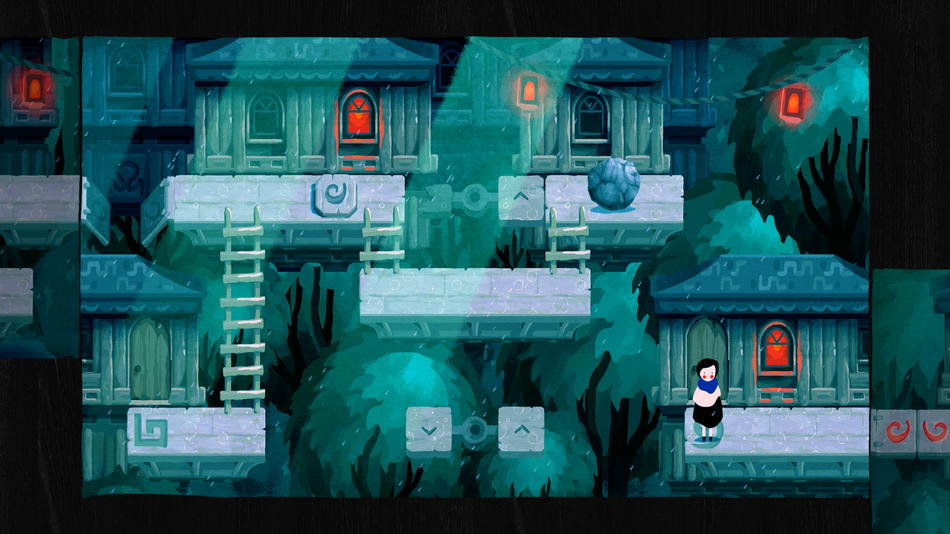
I experienced Paper Trail on the Xbox Series S, and on this console, the game runs and looks just perfect. I didn't come across a single problem in terms of bad performance or game stutters or crashes, so regarding the performance, no complaints at all. At least not on the Xbox; I cannot speak for other platforms, though.
Apart from very good visuals, the sound presentation shines bright too because the sound and soundtrack within the game are really something. This game has a therapeutic effect on the player, apart from those frustrations when you cannot solve a puzzle, of course, but its art style coupled with soothing music will relax you beyond words, and for that alone, this game deserves all recommendations.
For instance, when you're solving a puzzle in the level where it is raining, the soft, soothing music that plays in the background will be so relaxing that you might even fall to sleep; I know I almost did more than once playing this game. Perhaps it won't be interesting to everyone, but having a game in which you can escape from reality and just relax is something you don't see every day.
Conclusion
Paper Trail has the power to relax you and frustrate you at the same time; you'll get all that in one package. Add to that very charming visuals and a very good soundtrack, and it seems like a perfect combination, but unfortunately, it isn't exactly like that.
Despite all the good sides this game clearly has, the greatest problem, which can be a deciding factor for many, is that it tends to be very repetitive to the point where it becomes boring and even frustrating at times. I'd be lying if I said that I didn't like the game because I did, but those downsides are just too big to be ignored.
The Good
 Charming presentation
- Unique and clever puzzle concept
- Interesting and engaging story
- Beautiful, cartoonish graphics
- Therapeutic and relaxing soundtrack
The Bad
 Repetitive level design
- Story can be confusing at times