Trending
The best way to describe Layers of Fear in a single sentence is to use the famous internet meme, including Christopher Columbus: "I came searching for horror, and I found a very good story instead." Layers of Fear is trying to be a good horror game, that's for sure, but does it succeed? Well, that's a million-dollar question.
The classic jump scares are present in Layers of Fear as they would be in any other horror game, albeit in considerably fewer quantities than in, say, Resident Evil or games of a similar nature. I would venture to say that scaring players is where Layers of Fear most desperately tries to succeed and considerably fails.
Don't get me wrong, this game will scare you from time to time, but to call it "Fear Reimagined," which is the game's official motto, is an exaggeration to say the least.
Story
Layers of Fear's biggest forte is, without a doubt, an excellent and complex narrative. If you're one of the gamers who is quickly captivated by a compelling narrative in a video game, you should not pass up playing Layers of Fear since you are sure to like not just the narrative but also the way it carefully and gradually develops throughout the entire game.
The story primarily depicts the protagonist's psychological state, her internal conflict, and her attempt to keep her sanity through writing, which is undoubtedly a result of numerous traumas that will surface in the game. The most terrifying fear in the game is the anxiety you have as a result of knowing that everything takes place inside the mind of someone whose mental health is questionable, to say the least.
The story follows the writer, who came to the lighthouse located in some remote place to regain lost inspiration for writing and catch up with the deadlines set by people she signed a writing contract with. Inside the lighthouse, she starts to relive the lives of the previous lighthouse's inhabitants, going through the problems and psychological traumas they lived through.
If you add a brand-new narrative she is working on that is actually a story for itself but is very well connected with the story of the lighthouse family, you get four intertwined stories that will literally blow your mind away with their complexity and cleverly executed plot twists.
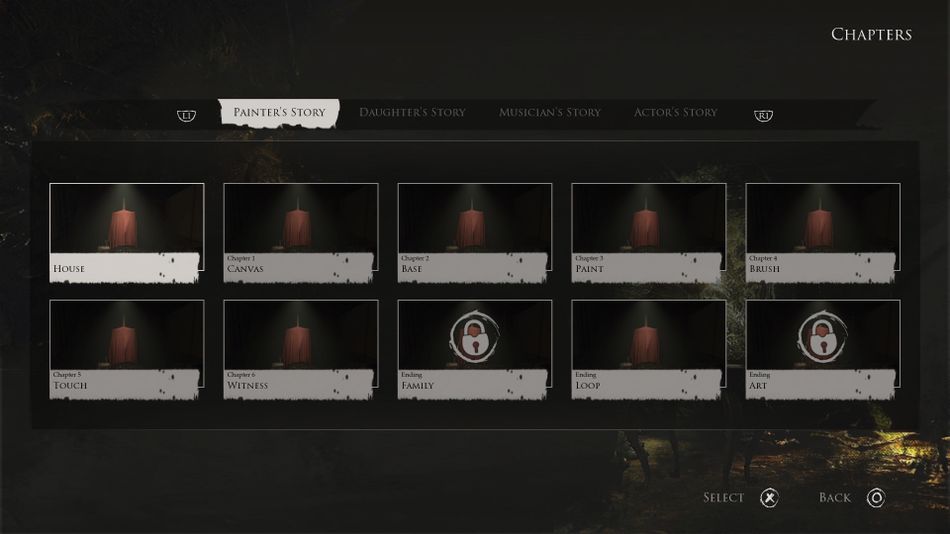
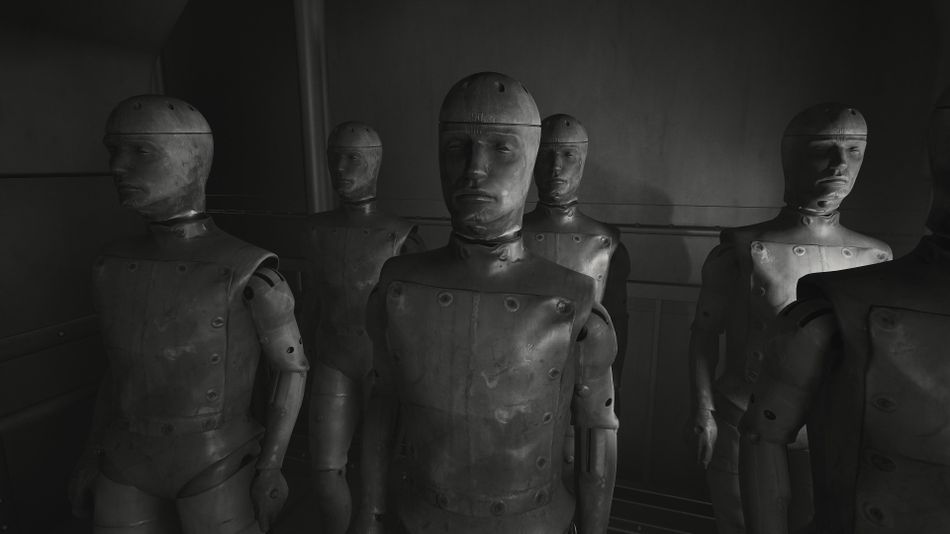
Layers of Fear features four stories, with the main one being the "Writer's Story," which tells the tragic events of the mentally unstable father, who, by the way, too lost the inspiration to paint; the "Musician's Story" follows the story from the perspective of the mother, who was once a very good musician but lost her ability to play due to a terrible accident; the "Daughter's Story" shows us what happened from the perspective of their little daughter; and finally, the "Actor's Story," the one written by the writer, takes place on a boat and differs in location compared to the other stories.
The fact that your gameplay choices will have consequences and have the power to alter the story's direction is another intriguing aspect of the narrative. Nevertheless, after you finish the game, you can choose a chapter from the Chapters menu before making a crucial choice and change the course of the game if you want to know how it might have ended differently. The replay value of the game itself is undoubtedly increased by this strategy.
The style of storytelling is the only thing I have to criticise. The majority of the story can actually be learned through the documents you collect while playing the game. We are all aware of how tedious it is to read such documents, but the developers decided to include voice acting for the majority of them, i.e., the voice that reads the letters, to make it less monotonous to follow them in the end.
The problem is that many of these documents are missable, especially the ones that can be found during chase sequences, because you will be well occupied saving your own skin rather than reading some documents, which means that if you don't read some of them, you might find parts of the story to be a little confusing.
To conclude, Layers of Fear is a game you simply must own if you enjoy engaging narratives in video games.
Gameplay
The gameplay in Layers of Fear is almost nonexistent because this game is basically a walking and door-opening simulator and nothing more. The main gameplay mechanics will be to grab the door handle and pull it in or out, depending on which direction the door is opening, and to walk and "run" throughout the rooms and hallways; yes, there is a button for running, but the character moves so slowly that even running looks like slow walking in other games.
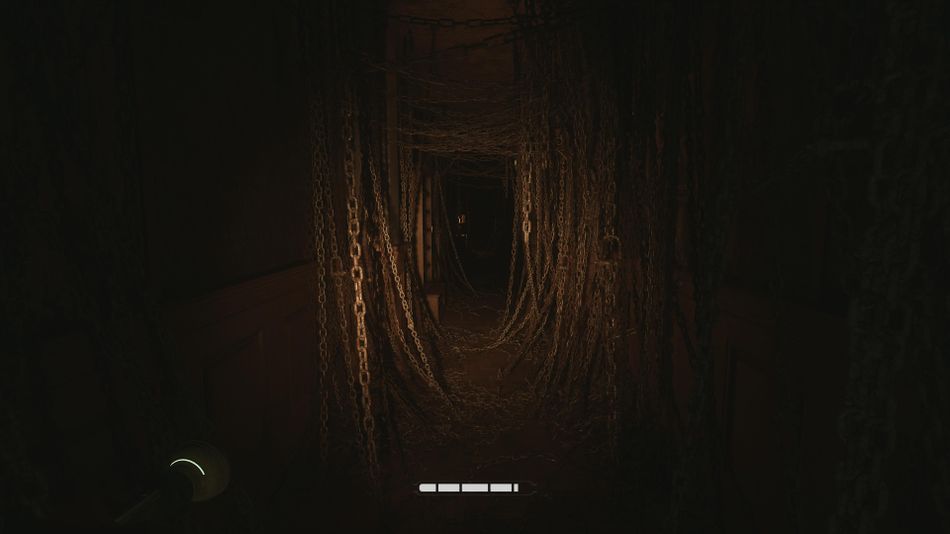
Of course, those slow movements and slow door opening mechanics are there for a reason, especially during chasing sequences, and if there's one thing in this game that will honestly freak you out, it's these chase sequences; you'll know what I'm talking about once the very spooky lady, for some unknown reason, starts chasing you down the hallways, and the only weapon you will have at your disposal will be a rechargeable lamp that can easily get overheated.
Those sequences are, unquestionably, the best part of the gameplay, provided you like a good scare in the game, but sadly, very soon you grow tired of them once you learn that nothing special happens if she actually catches you and once you learn how to easily fool her. In the boat sequence of the game, which is considerably less spooky than the lighthouse one, there will be a similar monster that will chase you down, but for some reason, it failed to have the same scary effect on me as the lighthouse lady had.
I've already stated how gathering letters and documents will help the game's narrative. These documents are also one kind of collectable in the game; I say one kind since these collectables can only be tracked on trophy counters and are only required to unlock specific trophies.
In addition to the documents, there will also be various figurines and mysterious objects, some of which the protagonist will pick up and will later be visible in the main room; for the lighthouse, it will be the room with the main portrait, and for the ship, the captain's cabin.
The puzzles, which are present in every game of this type, are the next topic to be talked about. There are a few puzzles that are fairly challenging in Layers of Fear, but overall the game's puzzles are quite straightforward and unimaginative, and there aren't too many of them.
Not to be overlooked is the fact that Layers of Fear draws inspiration from a number of popular titles that somehow relate to this genre. Thus, the level design, atmosphere, and general character movement will be strikingly similar to the last two Resident Evil games (the ones from the first-person perspective); the story's foray into the realm of mental health will be strikingly similar to Hellblade: Senua's Sacrifice; the theme of a writer who has lost inspiration will be similar to Alan Wake; and the second part of the story, which takes place on the ship, is strikingly similar to the A Plague Tale games.
Then, one would presume that Layers of Fear is merely a carbon duplicate of the aforementioned titles. However, this game took the best elements from them, blended them, and created a wholly original game that, while bearing some resemblance to the aforementioned titles, is truly original.
Graphics and Sounds
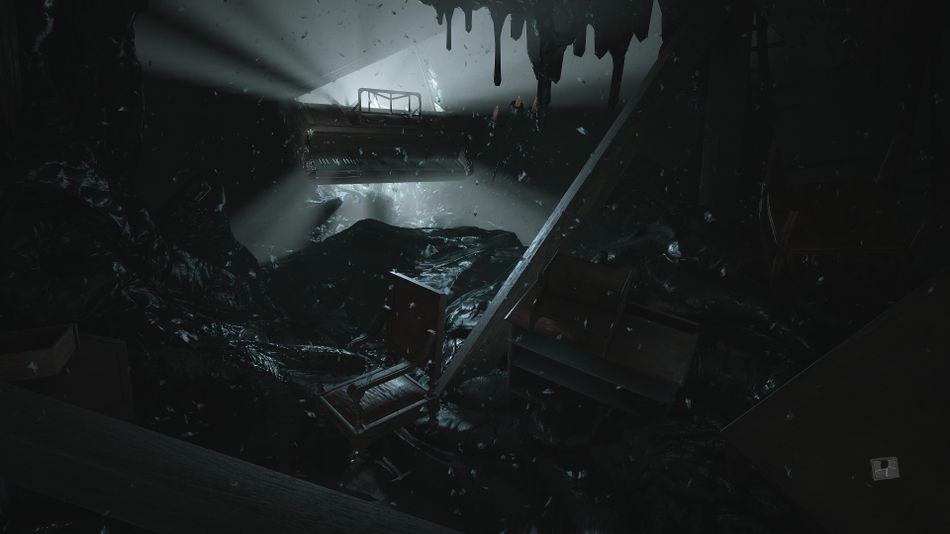
Layers of Fear is one of the first games to use Unreal Engine 5, so you might expect some very advanced graphical settings with beautiful visuals that will take your breath away. Well, I expected the same but found myself quite disappointed once I ran the game for the first time.
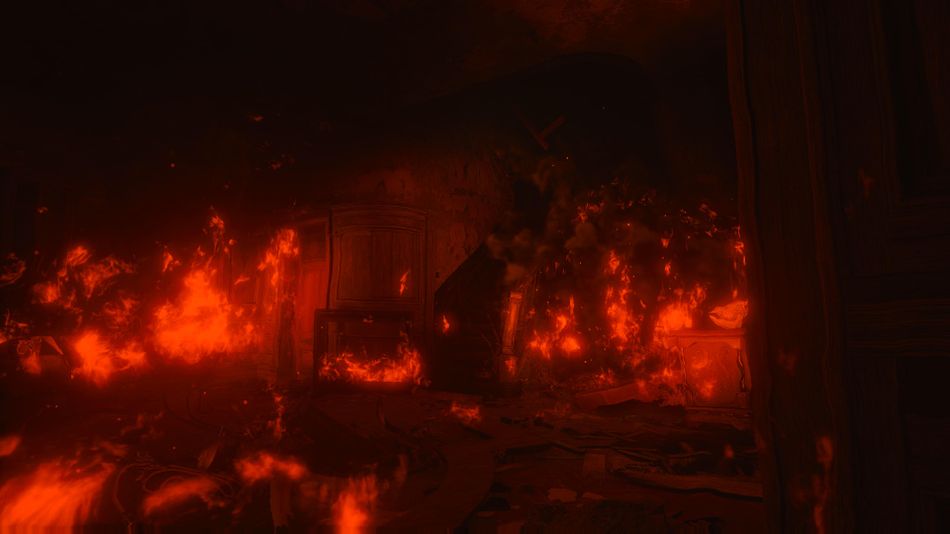
Don't get me wrong, the game looks nice, but that's all. Just nice, nothing spectacular. The only graphical effect that blew me away was the fire and other particles wherever the developers used them; those effects are quite impressive. Even though the game supports ray-traced reflections and improved lighting, I only found two or three occasions throughout the entire game where these reflections were visible.
Also, the difference between performance and quality mode on PlayStation 5 is almost nonexistent quality-wise, so the logical choice was to go for performance. I must say that the game performs really well on the PlayStation 5 without a single problem or bug. The textures in the game are very good and sharp, and it seems Unreal Engine 5 showed its true potential, at least in this field.
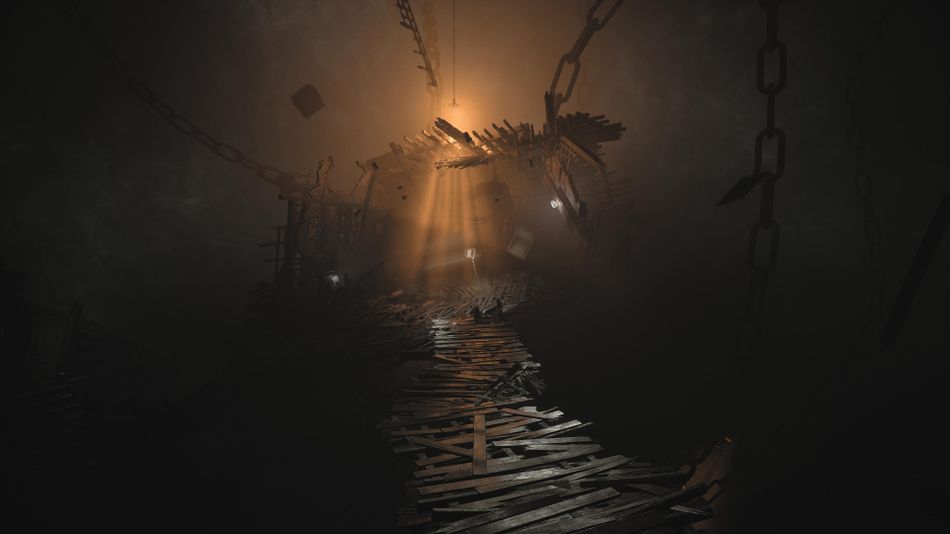
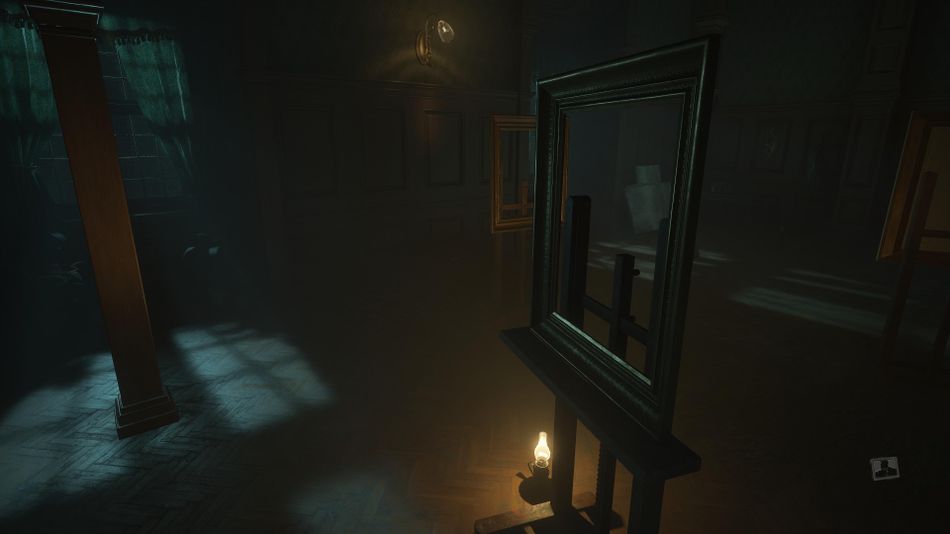
The level design in Layers of Fear is something I want to particularly praise. Despite the fact that there are only really two locations where the action takes place, the levels are not as predictable and dull as one would expect them to be. In Layers of Fear, for instance, you might walk down a hallway and come to a locked door; then, when you turn around, the hallway won't be there, but another door or another hallway that leads in another direction would appear. The levels can completely alter in a split second, and it is done so exquisitely and of the highest calibre that even if you get confused, it won't bother you at all.
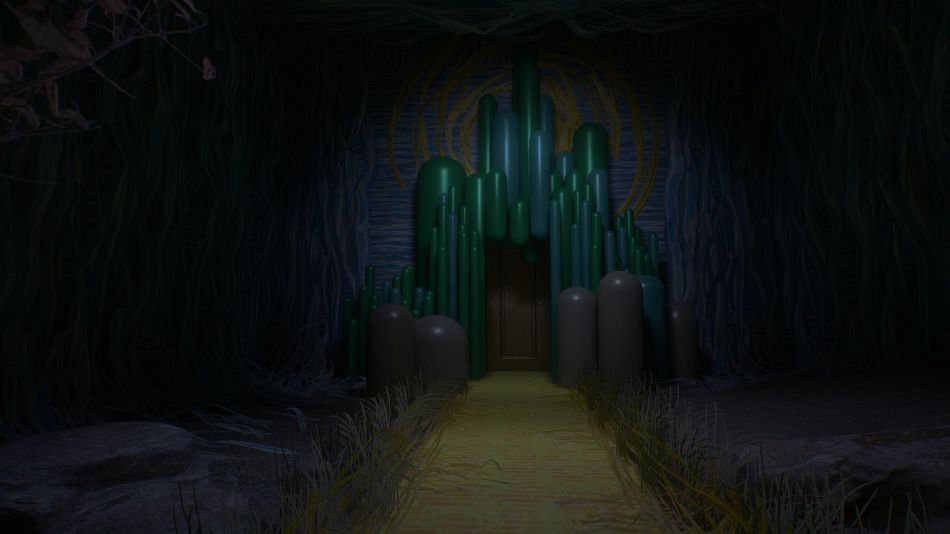
I also found the animations to be extremely weird in Layers of Fear. At the very beginning of the game, the protagonist will speak on the telephone, and her gestures and movements will be unusual, to say the least. Given that the game is played in first person and you don't meet any actual people during the game, the developers didn't have to worry about the design of the people's faces and models. For this reason, the animations of the hands, as the only visible part of the body in the game, should and had to be done at a much higher level. I think it's not an exaggeration to say that the developers here have failed significantly.
The sounds, on the other hand, are simply wonderful in Layers of Fear. I promise that you will love every sound that the game produces while you play, whether it's the in-game sounds, the eerie silence with the rare blunt echo that can be heard throughout empty hallways, or the soundtrack that is practically flawless and perfectly complements the game's spooky mood.
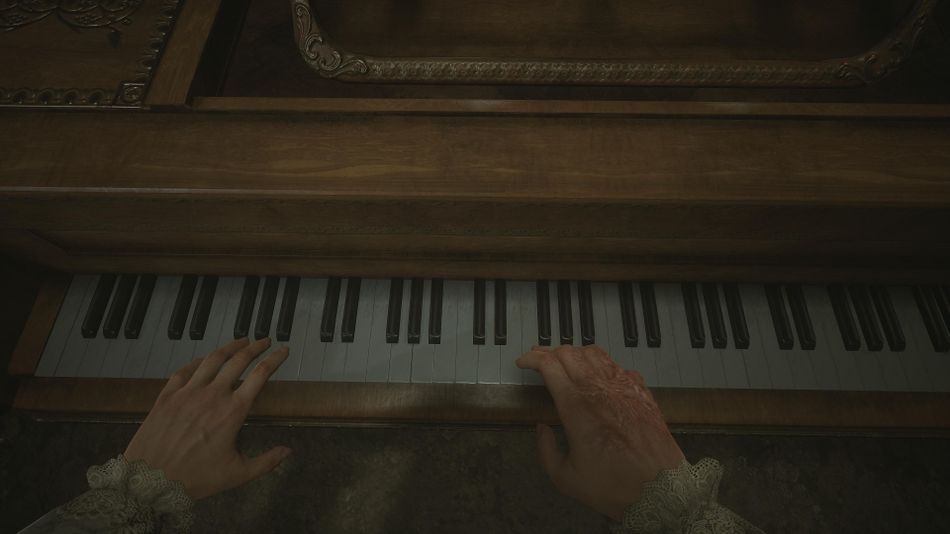
Considering the protagonists of all four stories are artists, it is only logical that the music that plays will be artistic as well; thus, the soundtrack will be mostly made by piano and violin, which is beautiful and very terrifying at the same time, and whoever made the soundtrack in Layers of Fear definitely deserves the highest praise.
Conclusion
If you are a fan of a good story that will hold your attention until the very end, then Layers of Fear is definitely the game for you. If, on the other hand, we ignore the fact that Layers of Fear just failed where it was most expected to excel, which is instilling fear in the player, and you are ready to forgive this significant flaw, then I can say that Layers of Fear is actually a must-have title for you.
In any case, Layers of Fear will give you around 15 hours of very enjoyable story and some moderate horror with almost perfect sounds and decent graphics, and I think these several things are more than enough to at least mask its other flaws and imperfections.
The Good
 A complex story told through four different perspectives
- A huge replay value
- Very imaginative level design
- Perfect soundtrack and sounds in general
- Decent visuals
- Chasing sequences
The Bad
 Isn't very scary
- Weird animations
- Story is told through documents and letters