Trending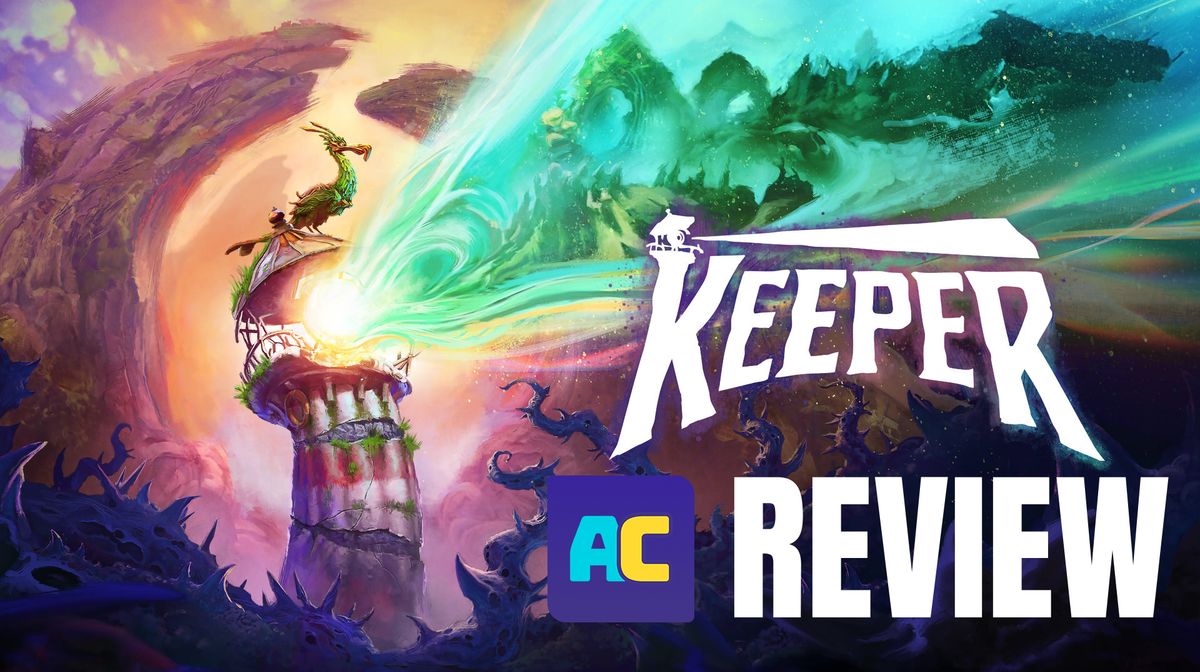
Telling a story without saying a single word is a remarkable feat and something truly special, especially in a video game.
But is one remarkable trait enough to win players' hearts? Of course not. It might get our attention at first, but to keep us invested until the end, to make us truly fall in love, a game needs much more than just an unconventional approach.
Keeper tells its story without a single word of dialogue, which is both its greatest strength and a hint at its limitations. Playing as a walking lighthouse helping a lost bird through a corrupted world is as charming as it sounds, but beneath the striking visuals and unusual premise, there are cracks that prevent it from reaching its full potential.
Story
Keeper is a game that will make you feel like a child: small, curious, and uncertain about the world around you, where every step feels like a new challenge. Why? Keeper offers no clear objectives or explanations for why you're there - you simply trust your instincts and move forward.
That’s exactly how the story in Keeper unfolds. As mentioned, there are no markers, no dialogue, and not a single spoken word, because, believe it or not, you play as a lighthouse. Sounds strange? It gets even stranger. Yes, the protagonist of this game is an actual lighthouse that spends the entire journey helping a small bird, separated from its flock and lost in a world consumed by corruption, a darkness that only light can drive away.
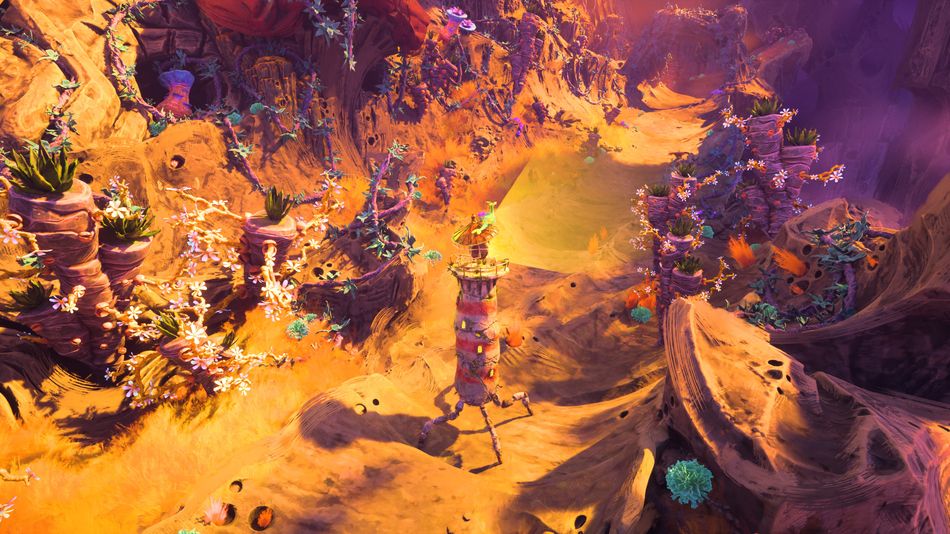
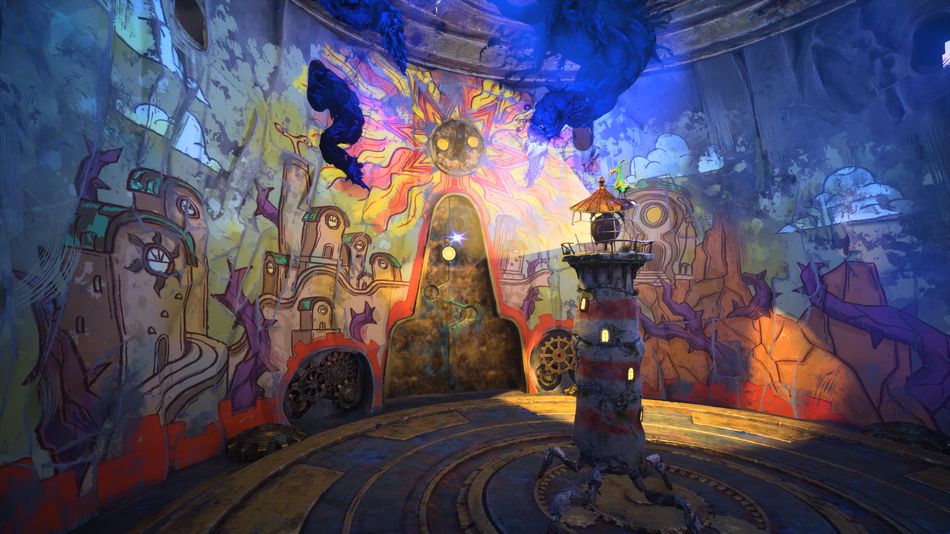
Before long, the lighthouse breaks free from its foundation and sprouts four oddly amusing legs, wobbling around in the most delightfully clumsy way. A little bird builds a nest on its roof, and together they set off on an adventure to… well, to do what exactly? Honestly, no one really knows, and that’s part of the charm. After all, who needs logic in a world where a lighthouse can walk and become best friends with a bird?
However, don’t be mistaken; the story does have meaning. By the time the game reaches its end, Keeper will deliver a heartfelt message without uttering a single word. Some of the emotional beats hit surprisingly hard - don't be shocked if you tear up by the end. As strange and improbable as it all sounds, Keeper's story will resonate only if you're willing to meet it halfway.
Gameplay
Keeper’s gameplay can be broken into two main elements: navigating linear levels that grow more complex as the game progresses and solving puzzles, puzzles that don’t just complement the experience but define it. Why do I say that? Because in Keeper, nearly every step you take feels like a puzzle in itself.
The problem is that the puzzles lack depth. Each area introduces a new puzzle type, exhausts it, then abandons it entirely for the next section. There's no sense of progression or mastery - just a parade of one-off mechanics that never develop into anything meaningful. It’s a somewhat inconsistent and illogical approach, but it is what it is.
Not to mention that the puzzles are so simple and straightforward that you’ll breeze through them without breaking a sweat. Everything flows almost too smoothly. One step naturally leads to the next until the solution practically presents itself without much thought or effort.
I was also quite disappointed by the lack of additional content: no collectibles, no side objectives, nothing to encourage deeper exploration. Each level simply revolves around solving puzzles that guide you to the exit. The only extra feature I encountered was a few hidden areas where, by using light, you can restore a statue or a lighthouse, which in turn unlocks an achievement. And that’s about as far as the “extras” go.
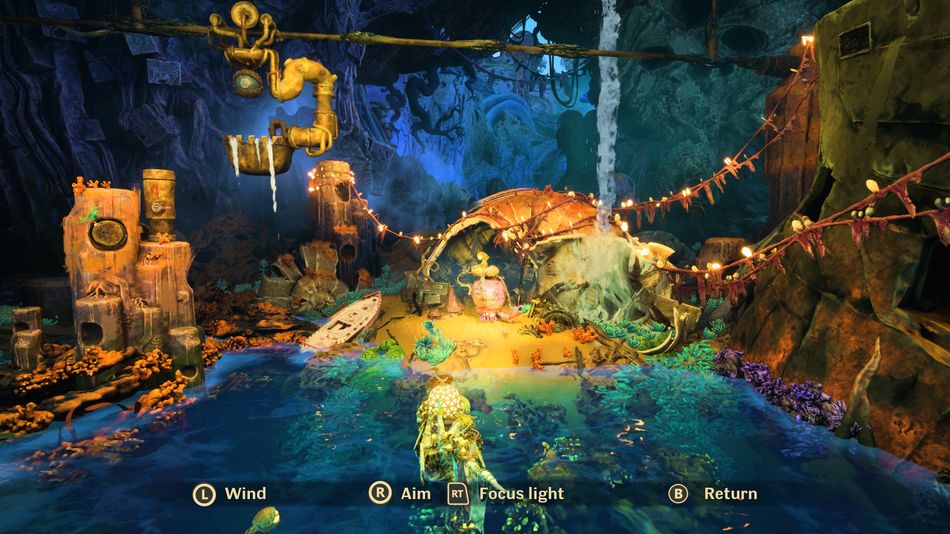
Speaking of light, it’s the core mechanic of the game. As the lighthouse, your primary “tool” is the beam of light, which you can focus to activate various mechanisms. Beyond that, you’ll give commands to the bird and solve puzzles by combining your actions with theirs. And this brings us to perhaps the most frustrating aspect of Keeper: the camera.
Keeper has no manual camera control. The right stick moves your character, but the left stick only directs the lighthouse's beam. The camera moves automatically, constantly "adjusting" to angles that are almost never helpful. It's baffling.
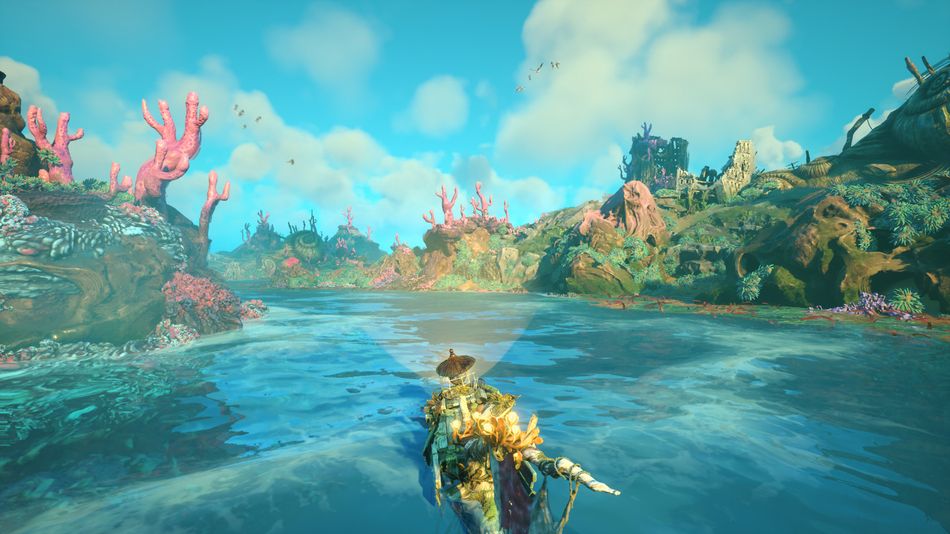
It gets worse: you also need to hold the left trigger to manually aim the light for certain puzzles, which means wrestling with both the auto-camera and the beam simultaneously. I know I've spent a lot of words on this, but it genuinely ruined large sections of the game for me. I completed the entire game without ever getting fully comfortable aiming the light while trying to work with the camera.
The second key aspect of gameplay is the movement of the lighthouse, which, believe it or not, won’t always remain just a lighthouse. To avoid spoilers (though I doubt there’s much to spoil), I won’t go into too much detail. Suffice it to say, as the game progresses, the lighthouse gains new abilities and alternative ways to move, which at least adds some variety and depth to this part of the experience.
Graphics, Sounds, and Performance
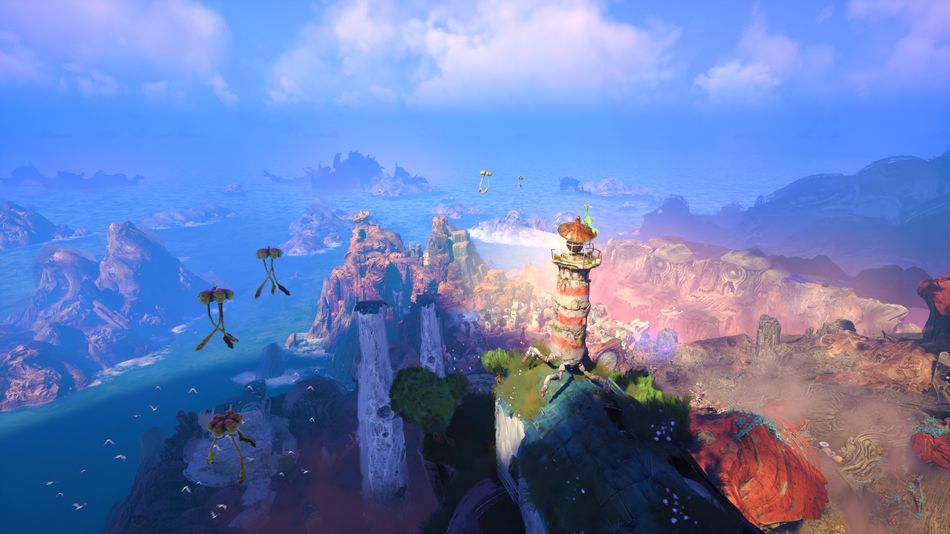
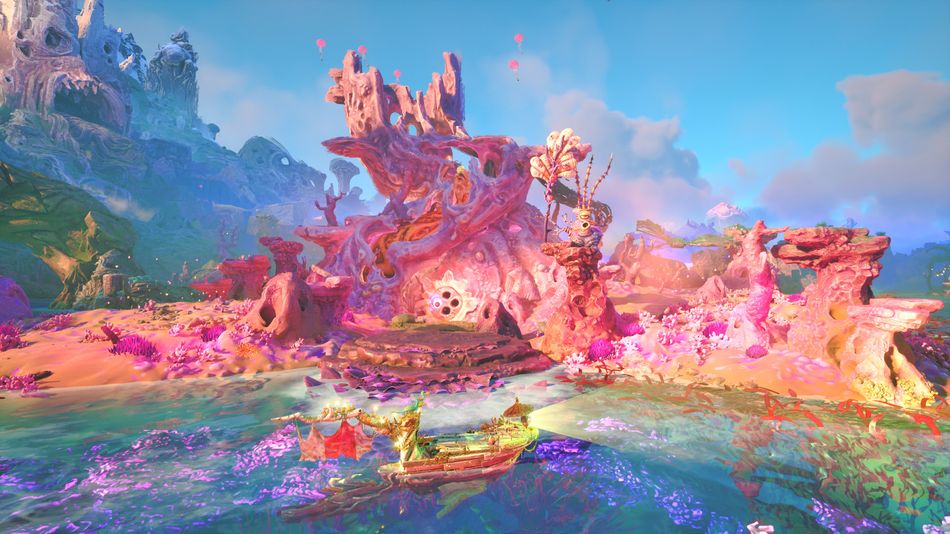
Keeper has a highly abstract art style that resembles a painter's canvas - dreamlike, deliberately vague, with stunning landscapes. Playing it felt like wandering through a modern art exhibit, admiring work I didn't fully understand but found beautiful regardless. Keeper is truly a feast for the eyes.
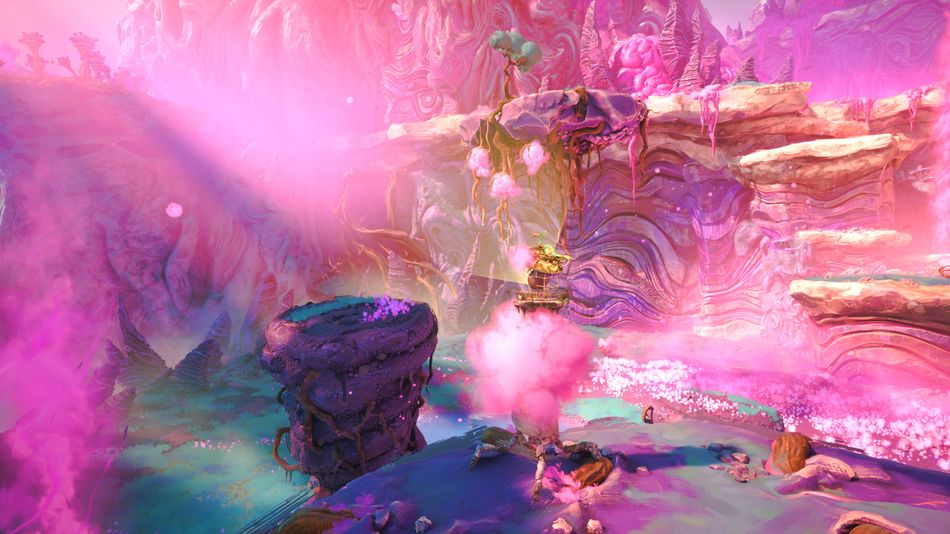
Just as the lighthouse evolves in movement and form throughout the game, the visual style also shifts dramatically. It quickly transitions from painterly, canvas-like visuals to a vibrant explosion of colours, reminiscent of Windows XP-era music visualisers, if you remember those. Some levels experiment with colour and palette to such an extent that the effect can actually be dizzying.
The only small drawback is that the colours appear a bit washed out across most areas. I experimented with turning HDR on and off, but it made no difference. This is noticeable on both Xbox Series X and PC.

All in all, the visual style and graphics in Keeper are, to say the least, striking and easily one of the game’s strongest suits. Performance is also impressive: on the Xbox Series X, where I played most of the game, as well as on PC, it runs flawlessly without any stuttering or issues. The game isn’t particularly demanding, either. What held me back from playing on PC, however, was the lack of ultrawide support, which meant dealing with black bars on either side of the screen - not something I was willing to overlook.
Given that the game has no voice acting, the music naturally takes on one of the roles of storytelling, and Keeper delivers perfectly in this regard. The soundtrack and overall sound design are top-notch. Calm, soothing music accompanies your carefree exploration, offering an almost therapeutic effect, while tense sequences are matched by equally gripping sounds. Altogether, the sounds complement the stunning visuals, making a truly beautiful and cohesive whole.
Conclusion
Keeper leans heavily on its artistic credentials and unusual premise, and in those areas, it delivers. The abstract visuals, excellent soundtrack, and wordless storytelling create something genuinely unique.
But those strengths can't fully compensate for shallow puzzles, frustrating camera controls, and a lack of meaningful content beyond the linear path. It's a beautiful experience that's constantly undermined by gameplay that doesn't match its ambition.
But all is not lost with Keeper. While it’s certainly not a game for everyone, those willing to look past its obvious flaws and embrace its odd charm will find a quietly unforgettable experience: a deeply abstract journey that might even touch your soul.
The Good
 Walking lighthouse protagonist is delightfully bizarre
- Striking, abstract art style
- Beautiful soundtrack
- Emotional wordless storytelling
- Smooth performance on both Xbox Series X and PC
The Bad
 Puzzles are one-note and forgettable
- Frustrating camera controls
- Lack of additional content or collectables
- Colours can appear washed out in many areas