Trending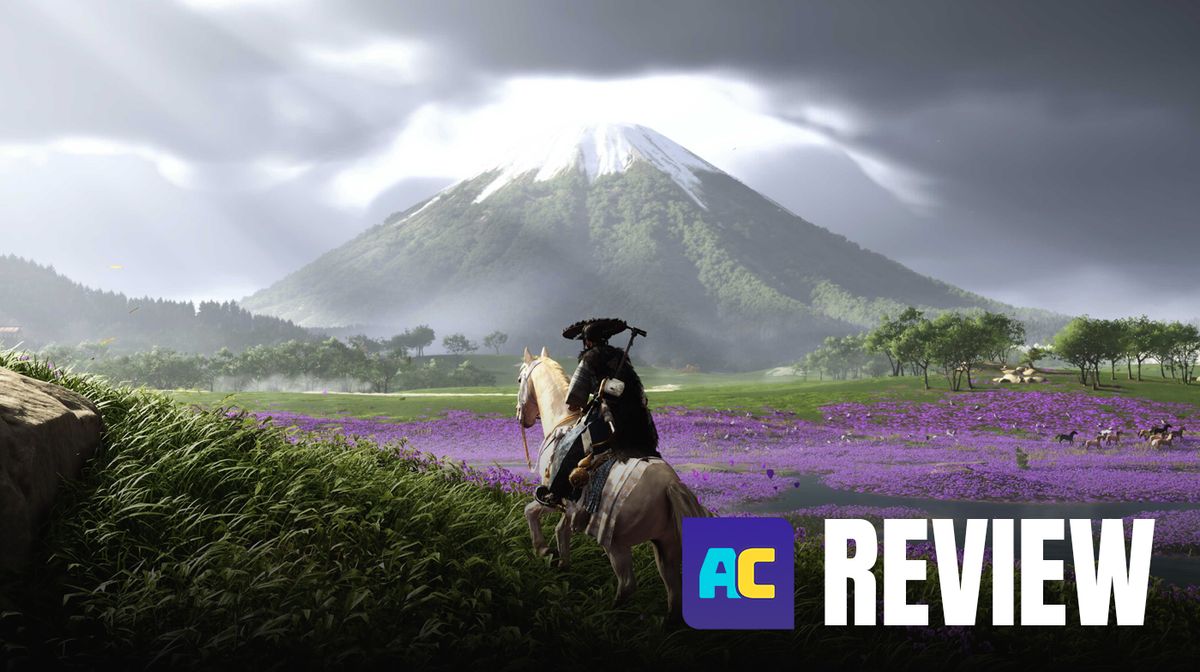
It feels like a lifetime, and not only five years since I got my hands on Ghost of Tsushima, coming right after beating Sekiro. I had no expectations, just wanted to wield a katana again, or a sword, or a spear. The land of the rising sun was such a gorgeous setting, I couldn’t get enough. Now, finally, the wait is over, and to say I was excited was an understatement.
It looked bigger, bolder, and beautiful. I was ready to dive back into the story, but remembering how fun the collectables were in Tshusima, I was equally excited for that as well, if not more.
STORY
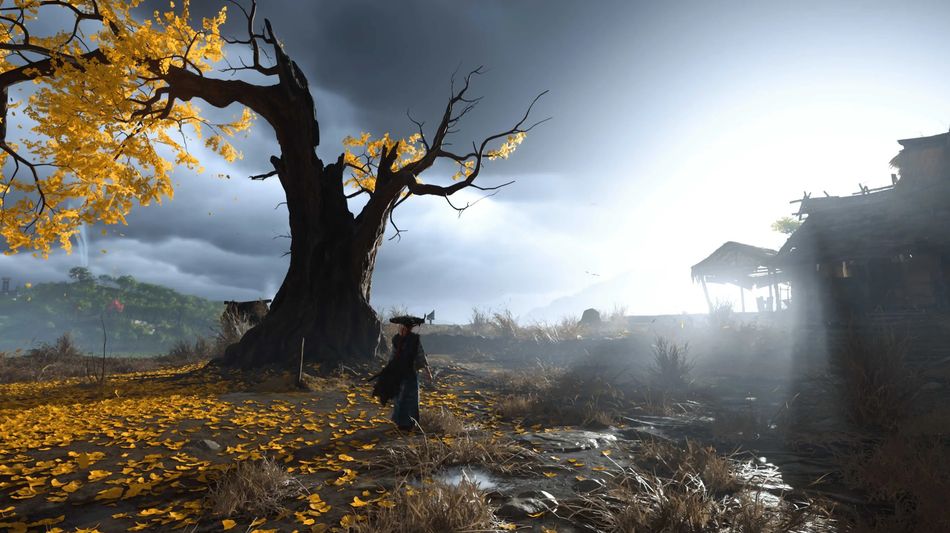
Atsu’s story is set in 1603, in Ezo, which today would be Hokkaidō, Japan. We’re playing as an adult Atsu, a wandering mercenary with a personal vendetta, hunting down the Yōtei Six, who sixteen years before the main story brutally murdered her family, burned her home, and left her for dead pinned to a burning ginkgo tree. What they couldn’t predict was that she would survive.
The Snake, The Oni, The Kitsune, The Spider, The Dragon, and Lord Saitō, are the Yōtei Six and the ones being hunted; their death is the ultimate goal for Atsu, who returned with the same katana that Lord Saitō used to pin her to the tree. She is travelling through Ezo, looking around for clues and meeting different people, some friends and some foes, in order to find out the location of each member and cut them down swiftly.
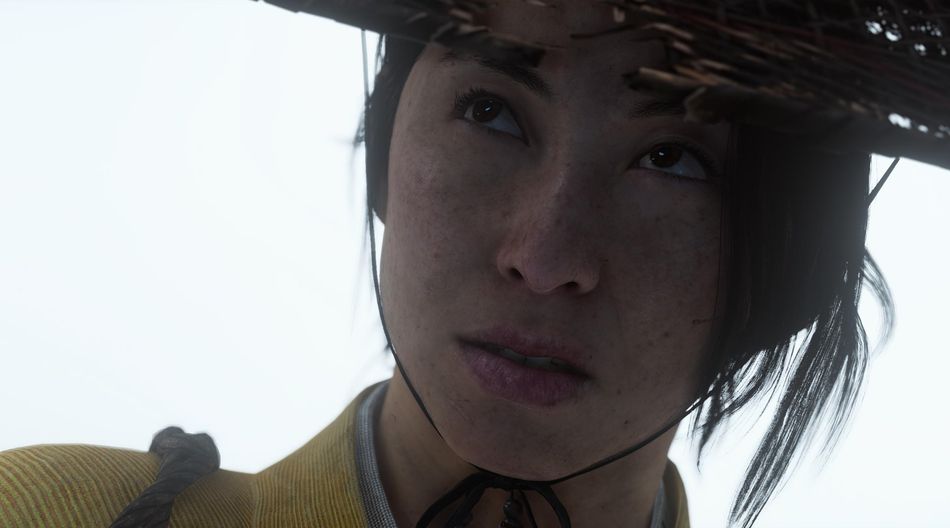
On the surface, there is the classic revenge story, with a character that has been wronged and who now is searching for a way to let all that anger and grief out, but between fights, Atsu is also given a chance to slow down, to get to know the land and the people, and also herself. It is a dilemma that has been explored in different games as well as different movies, and that is, what comes after revenge?
What is left behind when your one goal is fulfilled? It isn’t a truly groundbreaking thing, but as expected, Sucker Punch didn’t disappoint when it comes to storytelling. That kind of atmosphere is there for a reason: the isolation, the cold, the vibe of being haunted. Atsu feels like she is a character in a folktale, not a samurai epic that Kurosawa would direct.
GAMEPLAY
Ghost of Yōtei is an action-adventure game that delivers exactly what you'd expect, and then some. It adds a richer world, improved combat, and more activities to do when you need a break from hunting your enemies for vengeance. In its core, it stays true to the original formula, but the new additions and polish make it feel both like a unique standalone experience and also a worthy sequel. Yōtei brings the familiar combination of combat, stealth and exploration, so different playstyles can be sated, which plays hand in hand with the different difficulty options for the game.
All the usual side activities are back, such as bamboo strikes, hot springs, fox dens, but we also get some new treats such as a gambling game called Zeni hajiki, wolf dens and sumi-e painting. In case you need some guidance, take some time to learn shamisen songs, which are used to influence the winds. If at any point you get overwhelmed, you can take a moment to sit down and make a camp where you can cook, sleep, play the shamisen, make ammo or talk to one of the many merchants that are a part of your wolf pack, which is way nicer than running from place to place for a merchant. Another mechanic is the present-past switch, which you can trigger when visiting your old home, where the player gets to experience a moment from Atsu’s past.
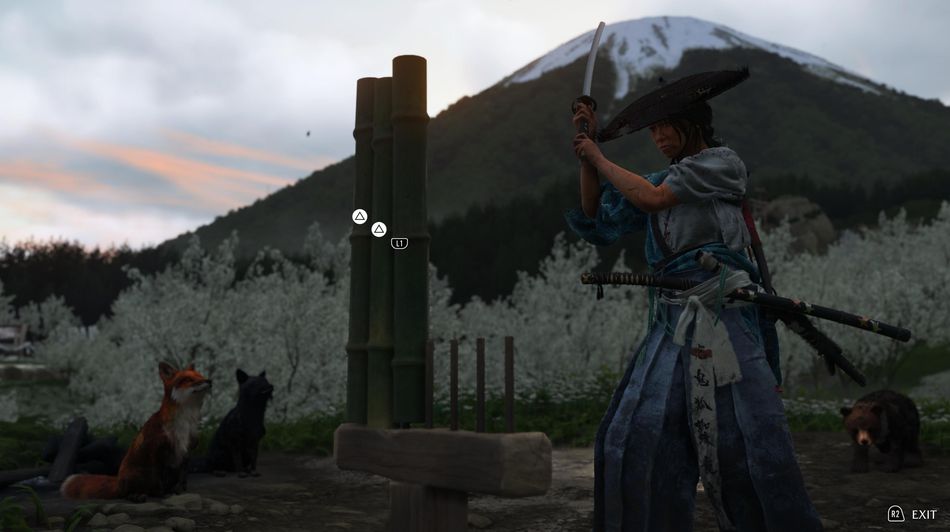
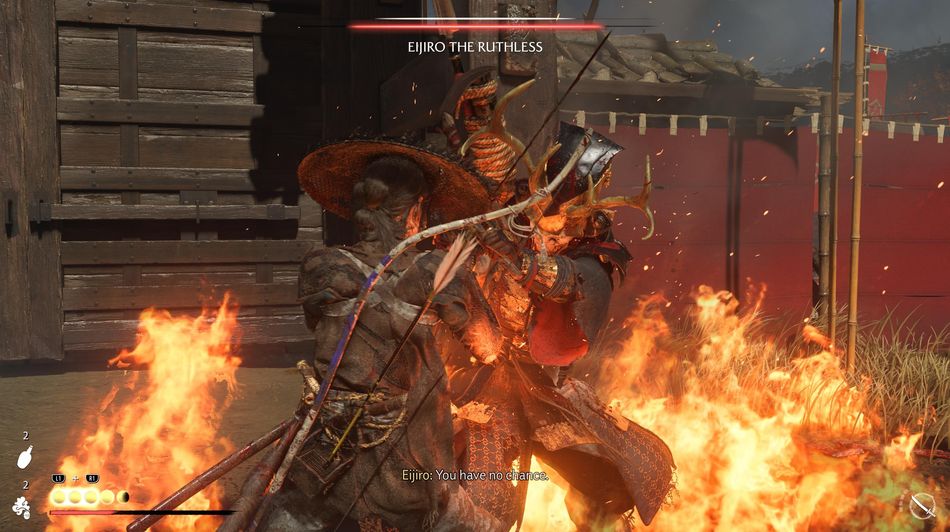
Another addition is the bounty system, where Atsu hunts down different criminals around Ezo, while also having a bounty on her head. When it comes to weapons, you get your trusty katana and grappling hook, but that’s not all. In Yōtei, the weapon arsenal gets expanded to dual katanas, a spear (yari), a kusarigama, a tanegashima (matchlock rifle), and more. Fret not, stances are back…More or less. Now, weapon stances basically are the different weapons you use. Each weapon and stance has their own advantages and disadvantages. Or you can disarm your enemies completely.
As previously mentioned, besides foxes and the beloved yellow bird, Atsu has another furry friend, the wolf. Early on, it appears infrequently and unpredictably, but throughout the game, you get to build out your bond with it by clearing Wolf dens. In combat, the wolf will mirror your playstyle, if you go for stealth, it will stalk along, and if you’re more head-to-head combat, it will jump in and help out. It can also be a part of a standoff. Of course, Yōtei also brings the usual side activities such as interactable NPCs, hidden tales and quests, discoverable collectibles and lore.
VISUALS, PERFORMANCE, SOUNDS
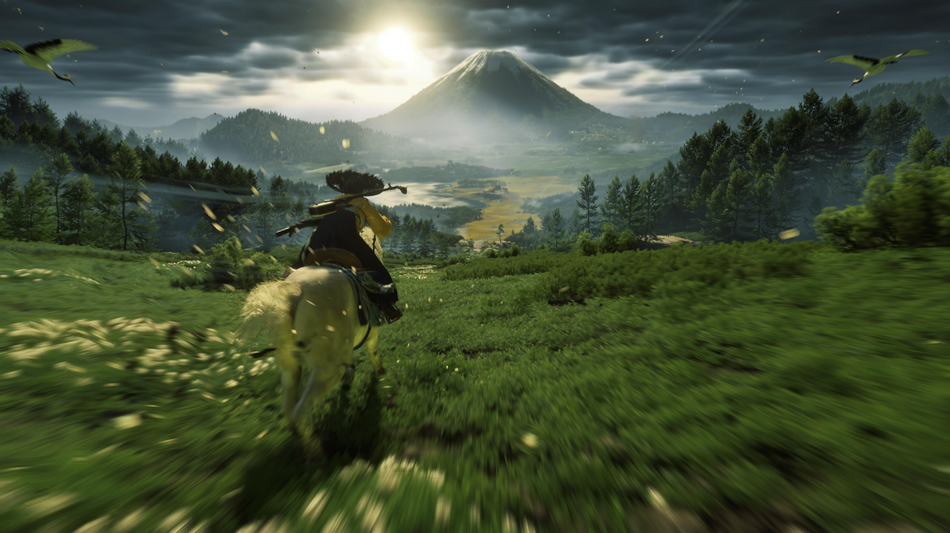
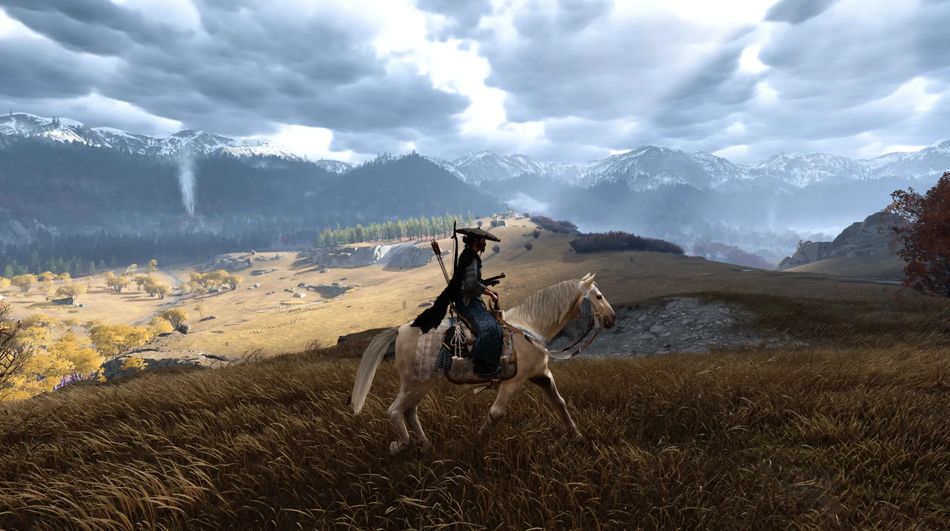
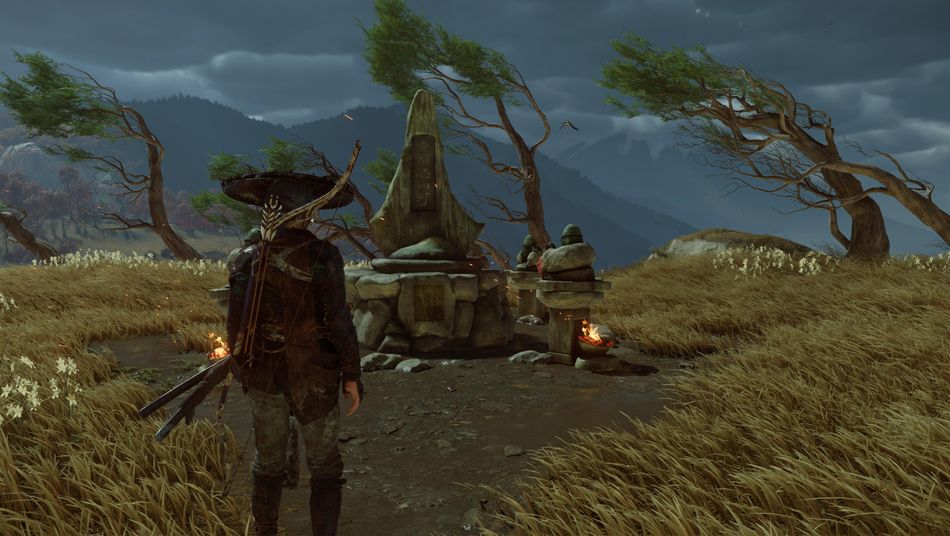
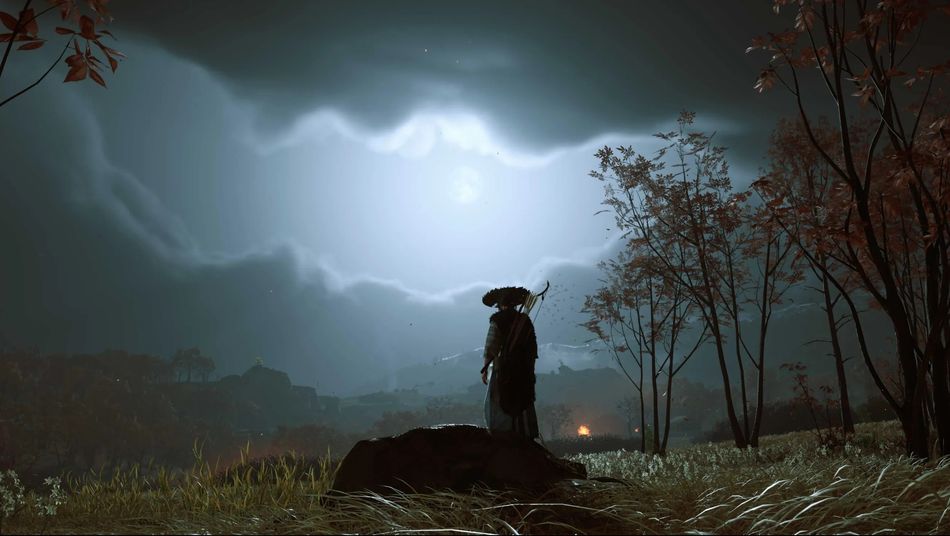
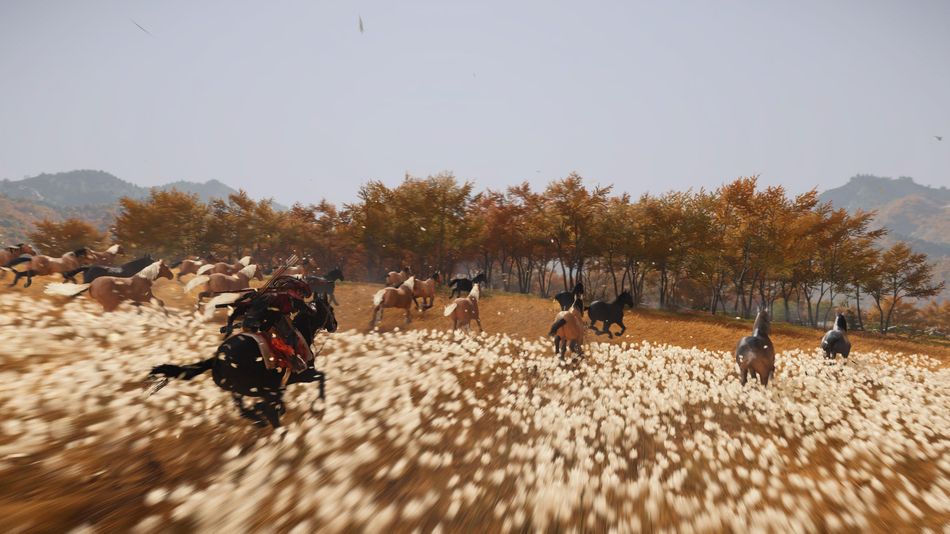
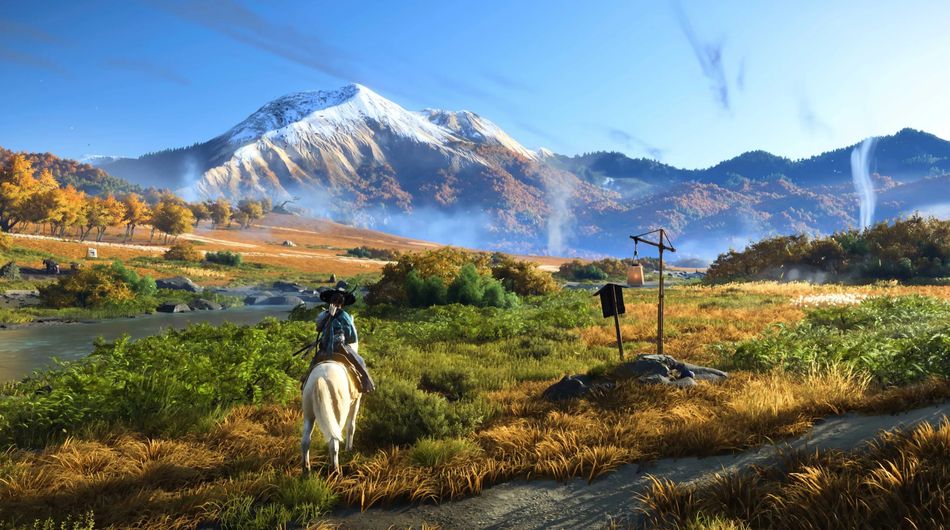
The lands of Ezo are simply gorgeous, from dense forests to snow-capped landscapes, golden autumn trees and drifting pollen, and especially the way weather transitions are handled, it all contributes to a very immersive experience. Just like you can change the languages, you can also pick between different cinematic modes, such as Kurosawa (black and white, after the legendary director Akira Kurosawa), Miike Mode (more gore/ mud, more gritty. I tried this and noticed the amount of mud just annoys me), and Watanabe Mode (lo-fi music and more relaxed vibes.)
As for the sounds and music, the wind and the rustling leaves, sounds of weather changes and animals, all pristine and very well done. In combat, the “swooshing” of blades and impact sounds all add to the immersion. No complaints for the voice acting either, although I did play with the English dub, not the Japanese. The addition of the shamisen is a neat little touch, and the traditional aspect plays very nicely into both Atsu’s background and the land in general.
I have not noticed any issues performance-wise, no FPS drops or glitches, and the loading times are very fast. I did, however, notice that sometimes it takes the game a bit longer to open the map, but that might just be me being spoiled. There were a few minor bugs, such as my horse running in loops and some clothing intersecting oddly, but nothing too terrible.
CONCLUSION
Ghost of Yōtei is a worthy successor to its older brother; it brings fresh and new ideas and a more refined and mature experience, building on the things Ghost of Tsushima did so well five years ago. If you enjoyed Tsushima, Atsu’s story is something you shouldn’t miss, and while it does have some flaws, it truly is a masterpiece.
The Good
 Interesting, more personal story than Ghost of Tsushima
 - Evolved combat and exploration
- Meaningful side additions such as wolves and the shamisen
- The gameplay encourages different approaches and experimentation
- Fun environmental storytelling
- Incredibly atmospheric and immersive
- Masterpiece of a soundtrack
- Gorgeous visuals
The Bad
 Combat against certain enemies can be frustrating
- A chance of being overwhelmed at the start
- Some cutscenes can get a bit boring after a while