Trending
There are two types of city builders: those that have a serious note where diplomacy and good trading connections are crucial aspects of the game, and those that tend to be more relaxing, so to speak, where everything happens naturally and you can play the game with minimum involvement.
Fabledom falls into the second category, and if you're looking for a city builder in which you can spend loads of time with zero stress and frustration, then look no further, because Fabledom is just that—a casual city builder with cartoonish characters that will relax every fibre of your being.
Story
As it is well known for any city builder out there, the story is always almost the same, meaning you're the one who created it, and it is usually a zero-to-hero kind of story. Of course, Fabledom isn't an exception in this regard.
You start by choosing your character, which can be a prince or princess, whatever you prefer. After you've chosen, a pretty big tutorial commences in which you'll learn all the basics of the game and also how the story will unravel further.
Your decisions will shape the destiny of your entire kingdom; therefore, the story can go in any direction. For example, if you decide to build some good relations with neighbouring kingdoms or even go for a marriage to strengthen those relations even further, then the story will go in a peaceful direction and all will live happily ever after. But if you decide to go to war with that kingdom, then the story can go very differently.
The point is, you cannot define the story of this game; you're the creator of your own destiny, so create it in the way you think is best for you and for all the people under your wing.
Your way of playing will influence the overall story in a big way because your decisions will attract different kinds of settlers, and their relationships and mutual connections will form different kinds of alliances that can shift the story in entirely different directions.
Gameplay
As I've mentioned earlier, this is a kind of sit-down-and-relax city builder that is more focused on carefree casual playing, where the most work will be done automatically with minimal involvement from your end. Your task will be to give commands, and your "fablings" (guys and girls working for you) will do the rest.
You'll begin your journey by building a small settlement, in which you'll employ your first four fablings. Every couple of minutes of in-game time, new fablings will arrive, and your task will be to give them work and make them useful. In general, managing your fablings will be your biggest concern.
They can be employed to work on farms, mines, and fields, to be builders, to maintain your buildings and keep them operational, and to do several other tasks, and their morale and satisfaction will form the axis around which the entire gameplay will be based.
As your settlement progresses, it will attract more advanced fablings, and more advanced fablings will bring more advanced technologies and craftsmanship. Settlement will soon turn into hamlets, hamlets into villages, villages into cities, and before you know it, you'll have an entire kingdom under your care.
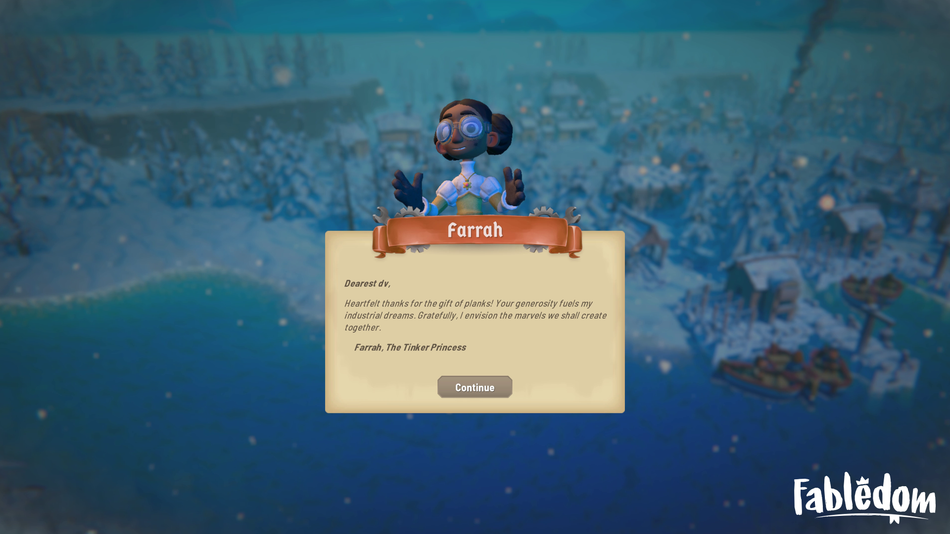
Of course, kingdoms require a different kind of management, and very soon, instead of managing fablings, you will be promoted to a guy who must maintain good diplomatic relations with other kingdoms, build trading routes, and, if you decide, even start wars with those who prefer conflicts over diplomacy.
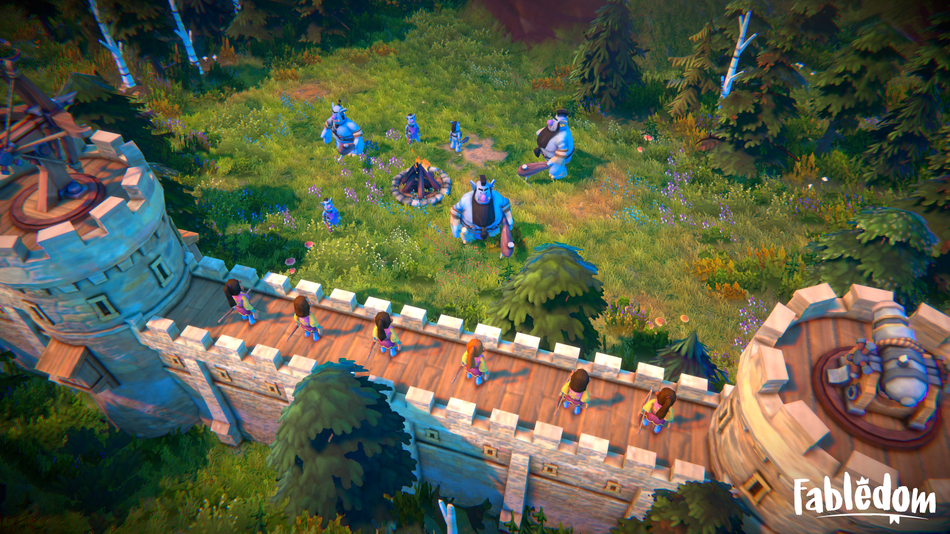
From the very first conflict, you will notice that Fabledom definitely isn't made to be a war game. The battles are too simplified, with no or very little of your involvement. When your army faces another one on the battlefield, there will be no room for strategizing; the only thing you'll be able to do is watch whose army has greater numbers, and probably that's the army that's going to win.
Luckily, you can finish the entire game without involving yourself in a war, even for a single time; if your diplomatic manoeuvres can work magic, who needs wars anyway?
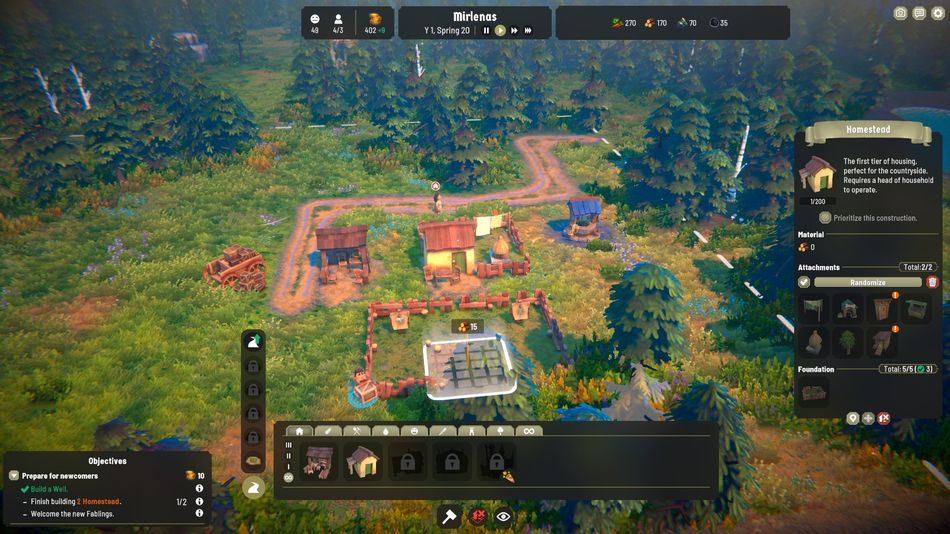
Regarding commands and the gameplay in general, the game is pretty simplified and has a very "friendly" interface. You'll be able to use shortcuts on the keyboard for many commands, but everything can be done using the mouse only, which is very commendable, I must admit. The interface isn't overly crowded, and everything seems in its place, so to speak.
Once you click on a building or a fabling, the options of what to do with them will immediately pop up, and even for a guy like myself who isn't too much into games of this kind, everything looked and felt so natural, and I must say I didn't have any problems adapting to this gameplay.
One super cool addition to the gameplay are different guilds that can help you do different research. For example, the Messengers Guild will give you the ability to explore beyond the borders of your kingdom, which will lead to meeting new rulers and forming alliances with them. The Heroes Guild will let you enlist different heroes who have the ability to train soldiers and maintain defences. These guilds will help you during your rule on a large scale.
In essence, Fabledom will give you all any city builder can offer, only with a bit more relaxing and easier gameplay. Seeing all your fablings doing their jobs is very satisfying on its own, and the biggest satisfaction lies in the fact that all that is your own doing. I know I felt like I was really the one who gave them all that and made them happy, and I must say it made me very happy as well.
Graphics and Sounds
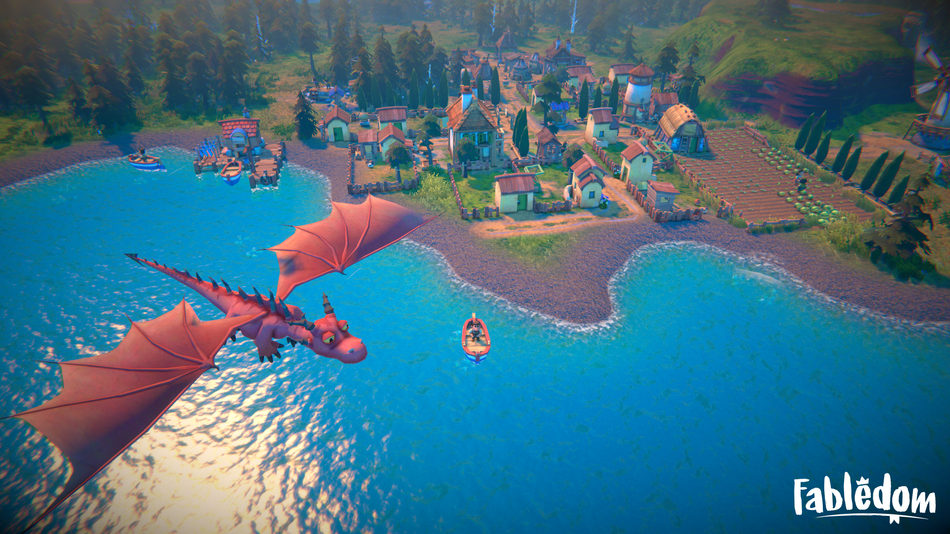
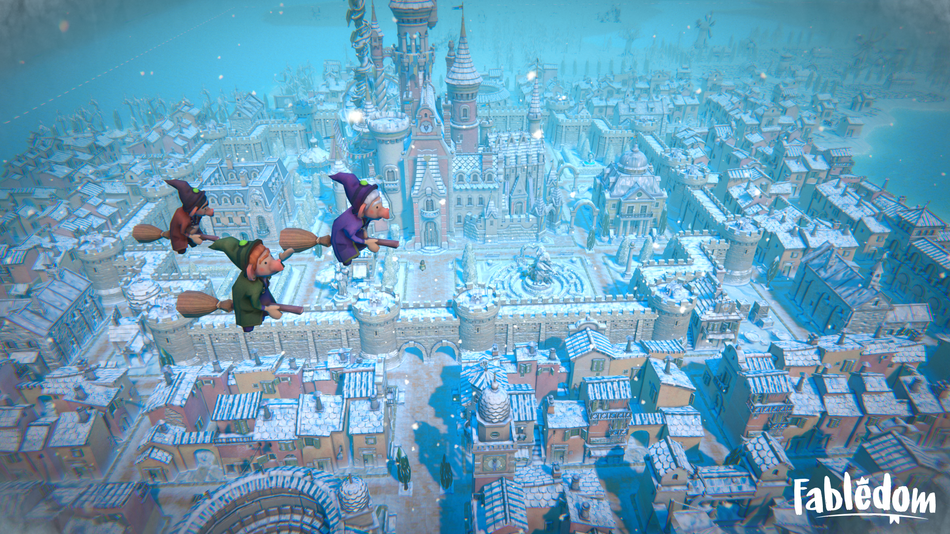
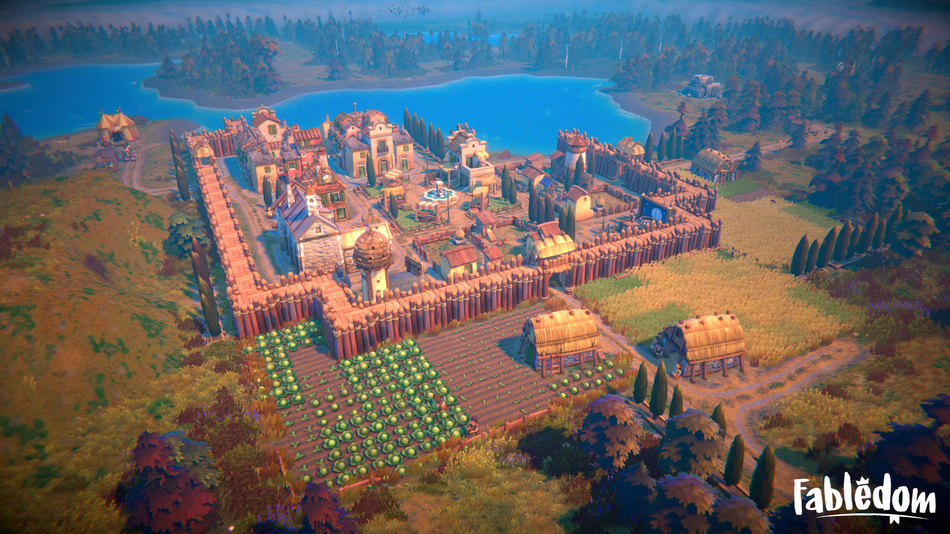
Graphically, Fabledom is really nothing special, with the visuals reminiscent of the games that came out a decade ago or so. However, the game has certain charm when it comes to the visual presentation. Even though the graphics look really dated, they are attractive in a certain way.
Thanks to its rather less serious tone, Fabledom looks and feels like a fairy tale. The design of the characters, buildings, and environment in general has a cartoony, almost fairy tale-like look reminiscent of children's colouring books.
It seems the developers did this intentionally, because even the main narrator sounds like one from a fairy tale. The narrator has that charming accent of an elderly British, who can occasionally bring up a line or two containing that classic British humour. Even though this humour can be cringey at times, it is very sweet and adds to the overall atmosphere.
The world of Fabledom is very detailed. From charming fablings who walk like they are about to fall at any moment to very detailed structures and buildings along with the portrayal of different stages of building, I must say that, in this regard, the game can compete with the greatest titles of this genre.
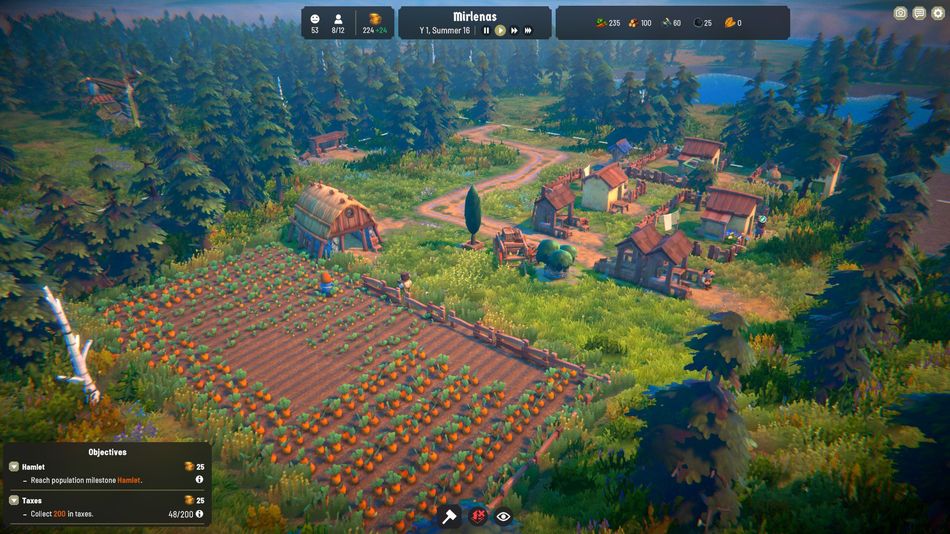
For example, when your farmers grow vegetables or crops, every single one of them is easily recognisable, and once they load the carts with them to transport them to a barn, you can see that the cart changed due to the bigger load they are transporting. Those small details make this game graphically very appealing, even though the graphics are not its strongest asset.
There are a few graphics options to choose from in the game's settings, such as turning on or off wind, film grain, or anti-aliasing, but no next-gen settings are available, which speaks much about the graphic presentation you can anticipate from Fabledom.
The sounds and soundtrack hold a certain quality. I've already mentioned the great narrator and his excellent voice acting, but apart from him, the soothing music that plays in the background while you play the game is very nice and of high quality. The gameplay sounds, like the ones during building constructions or battle cries are fine and I'd say they serve their purpose.
Conclusion
If the city-building genre is your cup of tea and you can consider yourself a fan of it, then Fabledom might not be the game for you. It is a more relaxing game that will require minimal involvement from your end, with greater focus on the world, what's happening in it, and the enjoyment of the final fruits of your labour.
Its fairy tale-like presentation and certain charm seem to be targeting a more casual audience than die-hard fans of the genre, but do not worry, this game has everything one city builder should have, if only with a slightly different approach. If nothing else, this game is worth playing for the sense of accomplishment and fulfilment that comes from seeing everything you achieved and how you built it all from nothing.
The Good
 Relaxing, casual gameplay
- Charming, fairy tale-like presentation
- User-friendly interface
- Detailed world with charming characters and structures
- Quality narration and soundtrack
The Bad
 Dated graphics
- May not appeal to die-hard city builder fans