Trending
Games that simulate fishing, hunting or similar hobbies are usually simple in structure, emphasising raw gameplay and precise mechanics above everything else. I have played a lot of them, so I can tell firsthand.
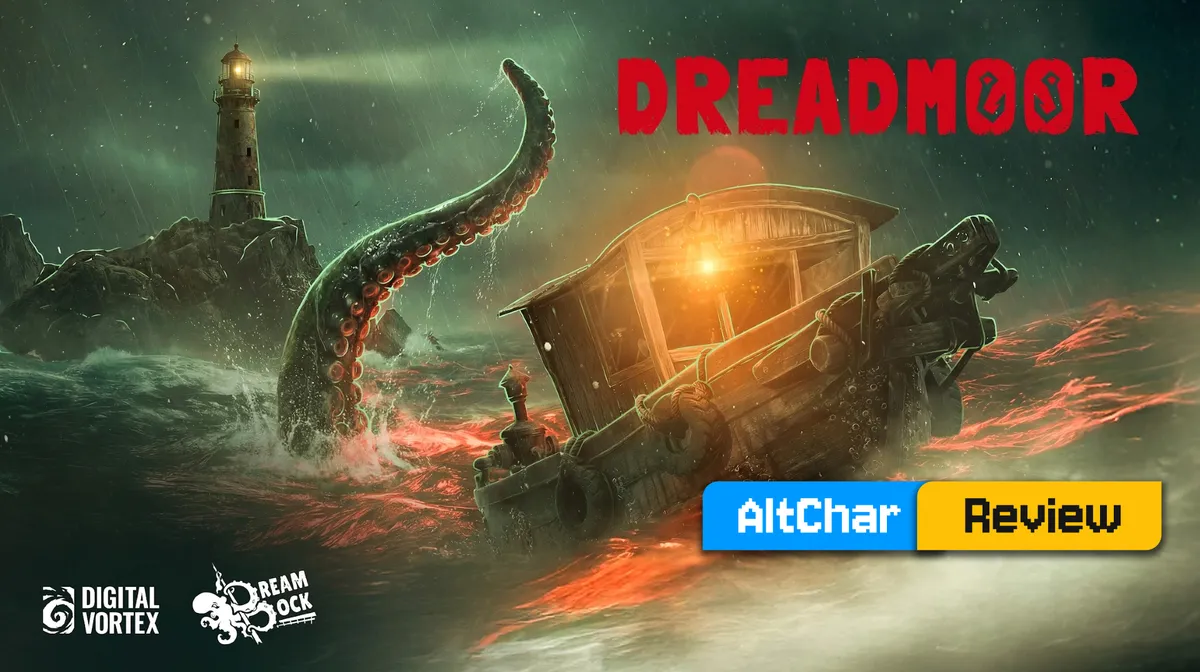
Dreadmoor is a game about fishing, and that was pretty much all I knew about it before I was given the chance to try it out. However, as soon as I loaded the game, something felt "fishy". The atmosphere, the proper plot that pulled me in instantly, and a world so intriguing that my first thought was, "Someone is messing with me. This cannot be just a fishing game. Something deeper and more interesting is happening here." And I was not wrong. At its core, Dreadmoor is a fishing game, but luckily for us, it is much more than that.
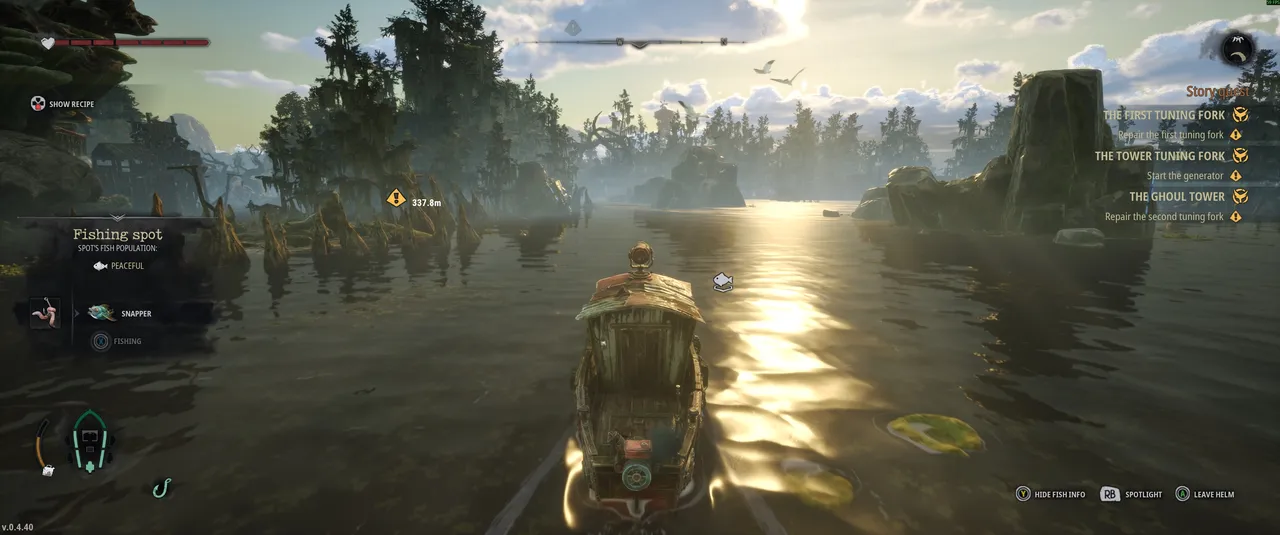
Story – A Mystery Worth Reeling In
Fishing in games is usually a side activity. Games like Red Dead Redemption 2, Crimson Desert and Stellar Blade have excellent fishing mechanics, but there is no deeper story behind them apart from catching fish for food or as part of in-game collectibles. Dreadmoor, on the other hand, has a proper story, and not a bad one either.
You play as Malcolm, a lone fisherman from the Slough who finds himself in the Submerged Lands, a flooded area ravaged by a disease called Blight that turns animals into mutants, and where the survivors live in makeshift settlements built above the water level. You have lost contact with your family, and to find them, you'll have to get hold of a boat and play along as a fisherman, solving quests for local traders, catching fish for them and unravelling the mystery of your missing family.
The story is very mysterious and intriguing, and it rarely gives you more than you need at any given moment. Every answer seems to open two new questions, and the world itself keeps hinting that whatever drowned these lands was no natural disaster. More than once, I sailed out just to see what the next conversation would reveal.
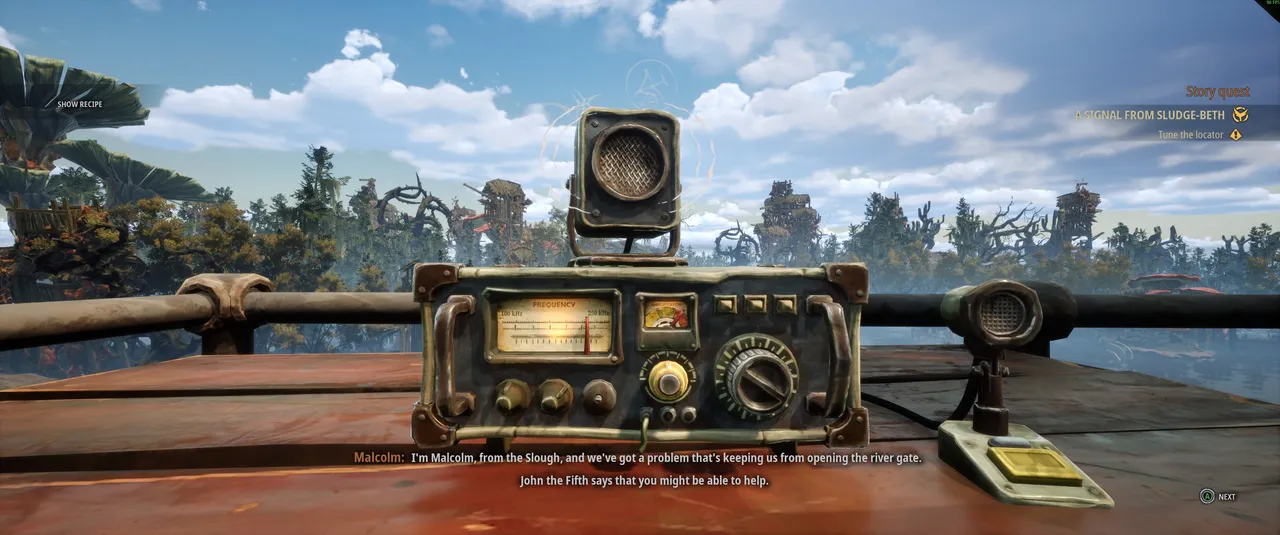
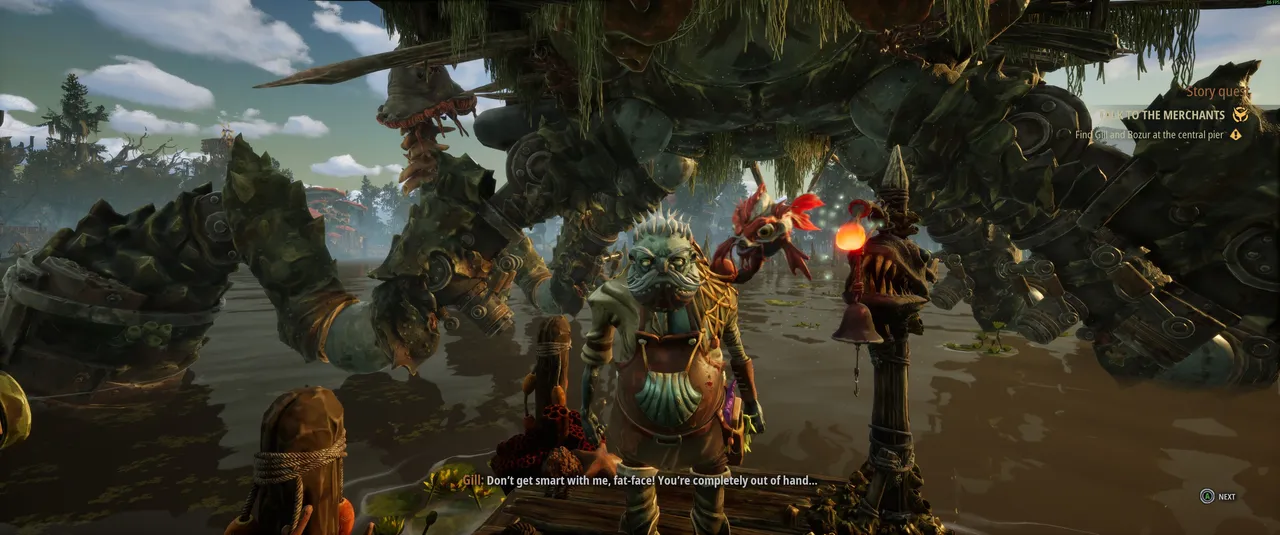
The characters play a big part in that. The traders and survivors you meet, from the bickering merchants Gill and Bozur to the gruff old engineer John the Fifth, are odd, unsettling and often a bit grotesque, yet each of them feels like a person with their own story to tell. And even though Dreadmoor is an indie title, the voice acting is top-notch. Every character sounds believable, and the performances do a lot of heavy lifting in selling this strange, drowned world.
The full story is already available in Early Access, and once it wraps up, you can keep fishing and upgrading your gear.
Gameplay – Great Catch, Poor Errands
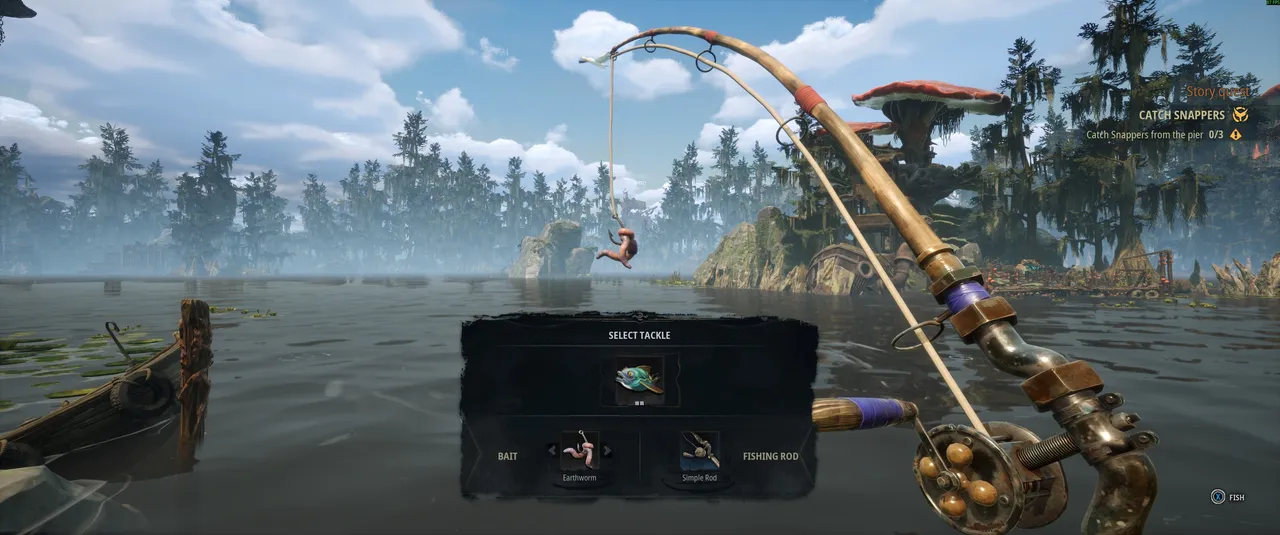
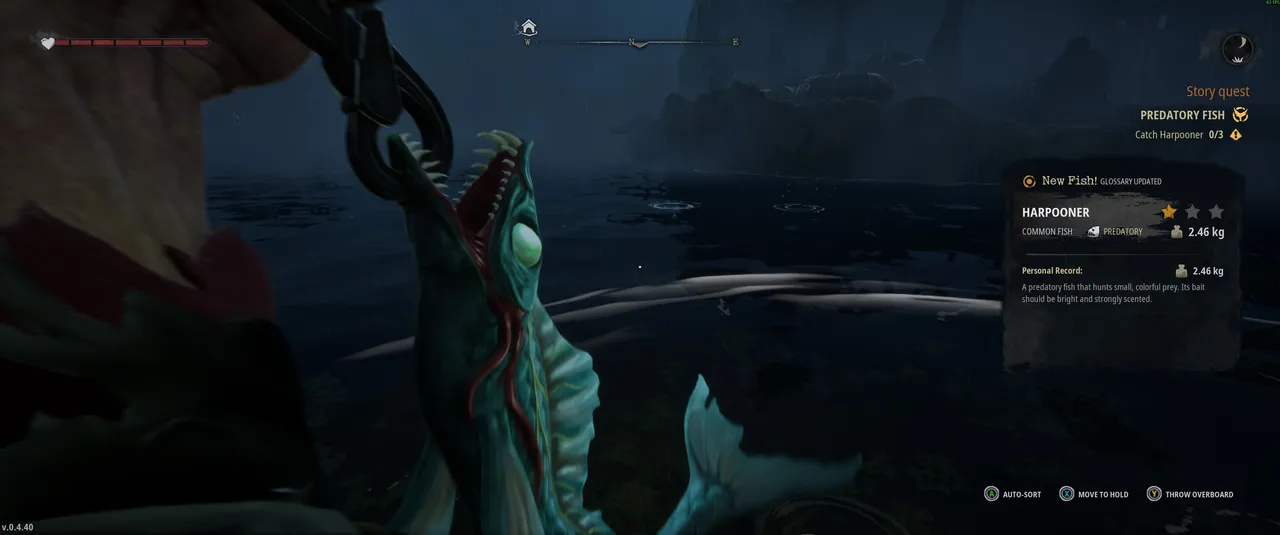
The fishing mechanics are the highlight of the game. Dreadmoor uses pretty much the same formula as the games I mentioned above, but the way it is executed is very smooth and satisfying. Once a fish bites, you have to keep an eye on the direction it is moving and reel on the opposite side. The line can snap, so you must watch the tension as well. It sounds simple, and it is, but wrestling with a big catch feels great every single time.
More demanding fish require better equipment, and this is where progression kicks in. Everything can be upgraded, starting with your tools, including the fishing rod, and, of course, your boat. To upgrade the equipment, you have to collect different materials scattered across the Submerged Lands, and almost everything in the game is paid for with fish. Your catch is your currency, which ties the whole loop together nicely: fish to earn, upgrade to fish better, then fish better to earn more.
What I didn't like at all were the quests. The game is built around blindly following the quest system, and each quest feels like a chore: go there, fetch that, catch this. The creativity in quest design is non-existent, really, which is a shame considering how interesting the world and its characters are. The story deserves far better missions than a list of errands.
Combat is another weak spot. The enemies are very simply designed, and you'll fight them with melee weapons that do nothing more than a single animated attack. Every encounter plays out the same way, and a few different combos or attack types would go a long way here.
Boat controls are another big problem, at least on a gamepad. You don't accelerate with R2/RT as you would expect, but by pushing the same stick you use for turning. As a result, every time you try to turn the boat, you'll end up going backwards or spinning in circles instead. Docking and manoeuvring between rocks and piers quickly become a nightmare. Playing with a keyboard is a bit better, but with a gamepad, the controls are really awful.
The next thing that bothered me was how fast time passes. The game features a day and night cycle, which makes sense since some fish can only be caught at night. However, each cycle is very short, and doing anything during a particular part of the day will almost certainly take up the whole period. You simply won't have enough time to catch enough fish before the day breaks, and planning your trips around the clock quickly becomes more frustrating than fun.
Visuals, Sounds, and Performance – Beautifully Strange
Dreadmoor looks very nice. The game goes for a more cartoonish look, and this style is perfect for a game like this. It keeps the horror stylised rather than gory, while still making the Submerged Lands feel cursed and dangerous. The area struck by the disaster, full of monsters and flooded ruins, is one of the better-depicted settings I have seen in an indie game.
The day and night cycle gives the whole game different visual vibes. Calm daytime waters turn into something far more threatening once the sun goes down, and the lighting does a great job of selling that shift.
The character design is especially good and very creative. Every character looks original and unique, designed in a weird and strange style that I liked a lot. No two traders look alike, and each design tells you something about this world before the character even says a word.
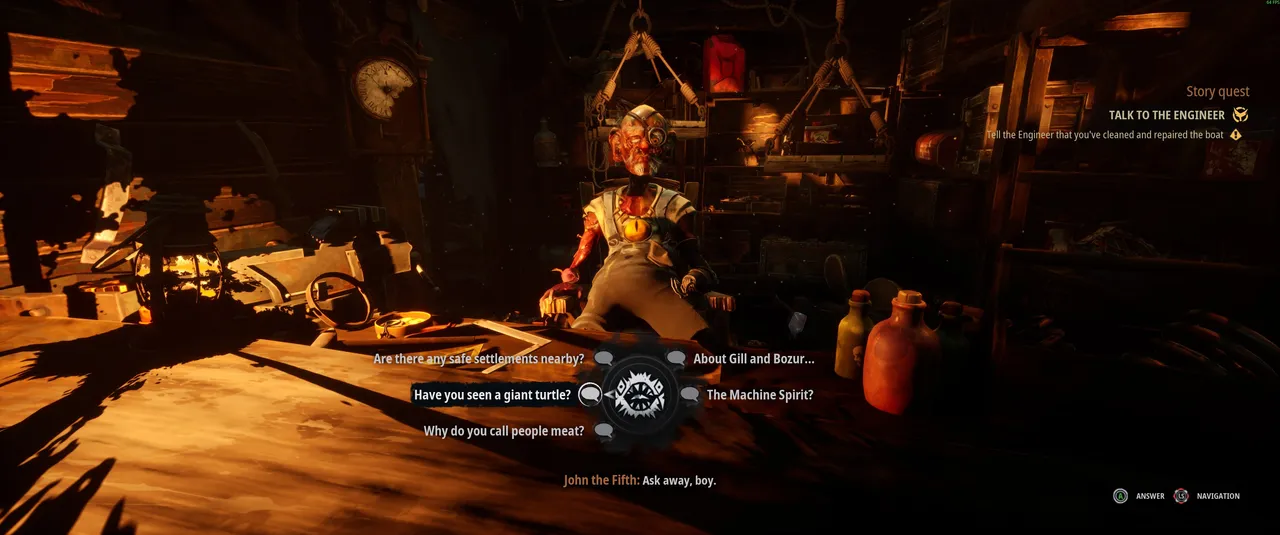
Sound design is good overall, especially the voice acting, which I have already praised. The soundtrack, on the other hand, isn't memorable. It does its job in the background, but I couldn't recall a single track once I put the game down.
I played Dreadmoor on PC (RTX 3080 Ti, Ryzen 9 5900X, 32 GB RAM), and the performance was amazing. The game stayed above 100 FPS at all times, even with all the modern settings turned on, including ray tracing. For a game that looks this good, that is an excellent result.
Conclusion
At its core, Dreadmoor is a fishing game, but its mysterious story, memorable characters and excellent voice acting turn it into much more than that. The fishing itself is smooth and satisfying, the upgrade loop is rewarding, and the cartoonish, strangely beautiful world is one of the better indie settings I have explored. Unfortunately, uninspired fetch quests, shallow combat, clunky boat controls and a day cycle that runs far too fast hold it back. Dreadmoor is still in Early Access, so there is plenty of room to fix these issues, and if Dream Dock does, it could become one of the best games in its niche. Even in its current state, it is well worth casting a line.
The Good
 Mysterious, intriguing story
- Top-notch voice acting
- Smooth, satisfying fishing
- Rewarding upgrade loop
- Creative character design
- Excellent PC performance
The Bad
 Chore-like fetch quests
- Shallow, one-attack combat
- Clunky gamepad boat controls
- Day cycles pass too fast
- Forgettable soundtrack