Trending
Few games made me feel such a blend of intense love and frustration as Dragon Age: The Veilguard. I was constantly amazed by everything Dragon Age: The Veilguard had to offer, yet irritated by certain choices that seemed completely out of place in its rich fantasy setting. Bioware's new RPG drove me to the edge, maintaining a strange mix of awe and annoyance throughout the entire experience.
As a long time fan of fantasy RPGs, I was thrilled when the code for Dragon Age: The Veilguard hit my inbox. I was excited to start my adventure throughout northern Thedas, thinking about the grand story and the characters I'll meet on my journey. But then I started to realise that The Veilguard might not scratch that big fantasy RPG itch.
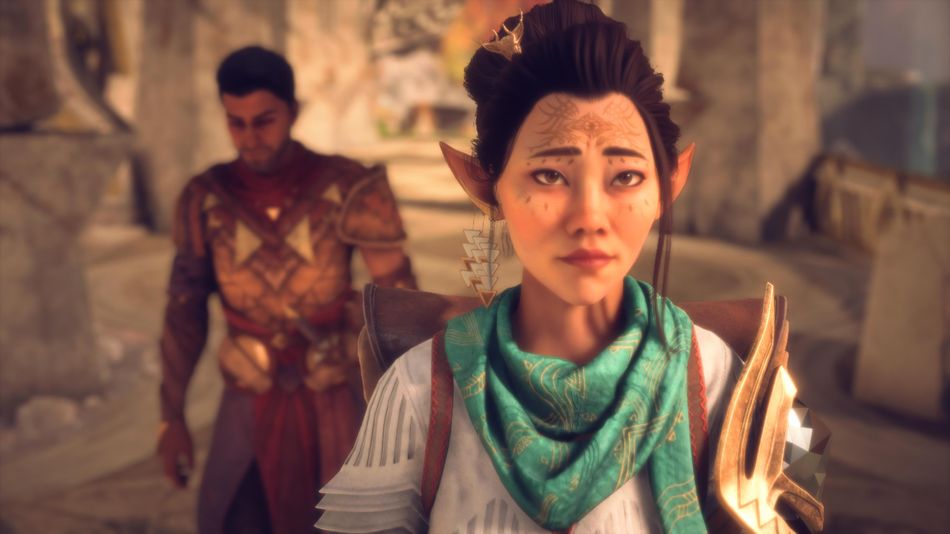
One of my first interactions was with a young Asian elf. I thought, Okay, no big deal. The elves I’m used to are a bit different, sure—I’ve probably been spoiled by the high fantasy of Lord of the Rings—but I guess not every elven person needs to be as tall, beautiful and wise as the ones from Tolkien's mind.
Still, what I couldn’t quite stomach was the way she spoke. It felt like I was listening to my 16-year-old daughter, full of slang and casual phrases I could never quite get behind.
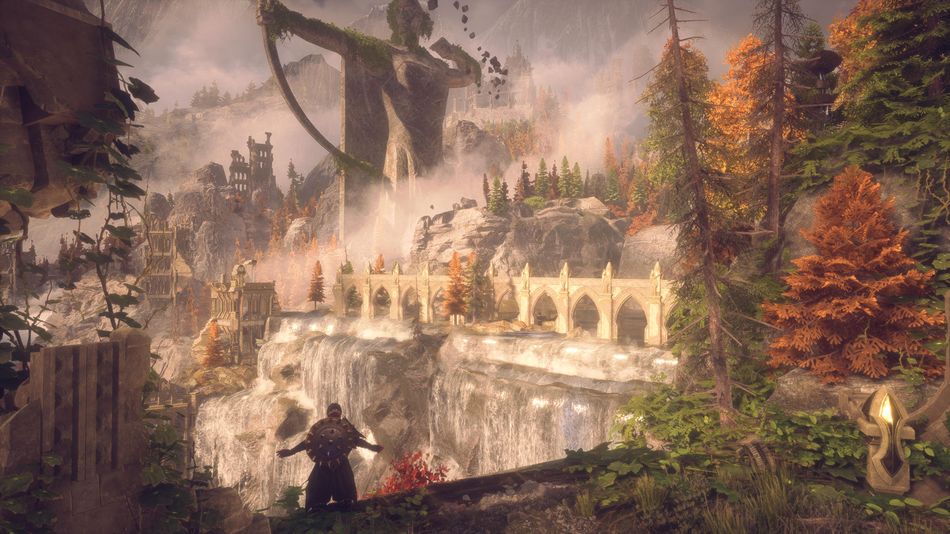
But then, things took a surprisingly positive turn. The first few hours of the game were surprsingly impressive. It wasn’t quite the classic RPG I’d been hoping for, or the one I’d eagerly awaited, but it was definitely a fun ride—set in a world so beautiful and breathtaking that it almost made me forget the grating dialogue.
Story
I’ll admit from the start that I’m not deeply versed in Dragon Age lore—I’ve only played a few hours of Dragon Age: Inquisition and briefly tried Dragon Age: Origins. Yet, even with references to past events, locations, characters, and terms sprinkled throughout, I had no trouble following the story. It’s genuinely interesting and told in a wonderfully engaging way.
At the start of the game, you'll create a character named Rook, who becomes part of a team tasked with stopping Solas, an Elven god who wants to tear the veil, the substance that holds the raw magic from pouring into the world that could bring countless monsters and probably destroy the world in the process. Sounds familiar? Yeah, Tarnished, because it is.
The team will succeed in their endeavour, but not without consequences. They imprison Solas, but in his stead, two evil Elven gods, Elgar'nan and Ghilan'nain, break out from the same prison, wreaking havoc throughout the world, so the team's new mission becomes stopping these gods in their evil intentions, by all means necessary.
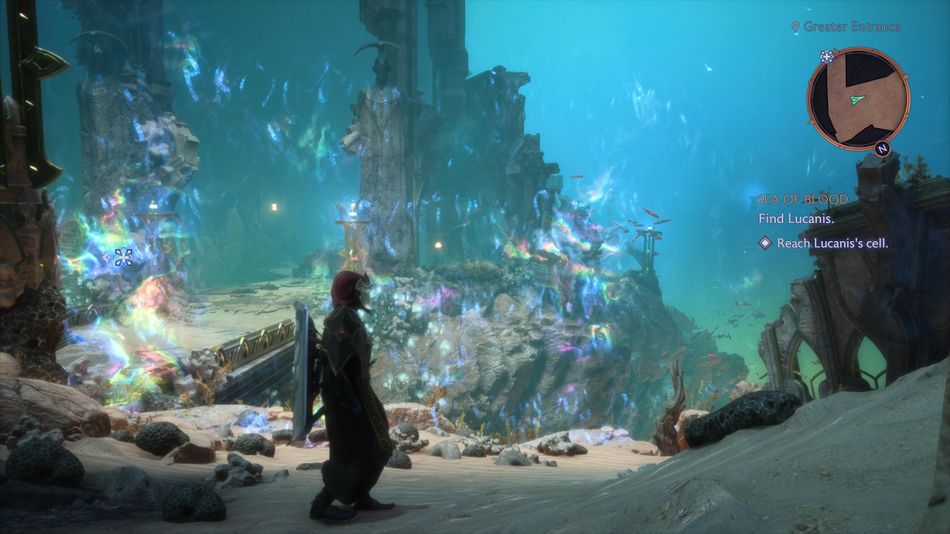
On the surface, the story might not seem all that groundbreaking. However, it's undeniably engaging and delivered in just the right doses. The true strength of the narrative lies in its scope—it's vast, with a wide array of characters and an equal number of subplots. What’s truly impressive, though, is how BioWare manages to weave all of these elements together into a cohesive and compelling whole.
You’ll be joined by seven companions, each representing a diverse range of races and classes. What sets them apart is the depth of their individual backstories—each one is as rich and engaging as the main plot itself, and in some cases, even more so. Many sidequests will be directly connected to the characters and their personal problems, and whenever such a quest appeared, I left all the activities and went to solve them because they were that interesting.
A part of the story that impressed me the most was the special sidequest covering the story of Solas and the reasons why he became what he is now. Even though the requirements for finishing this sidequest were to collect six wolf figurines, with some of them hidden behind the game's hardest bosses, I fought those bosses against all odds, just to uncover parts of Solas' mysterious background.
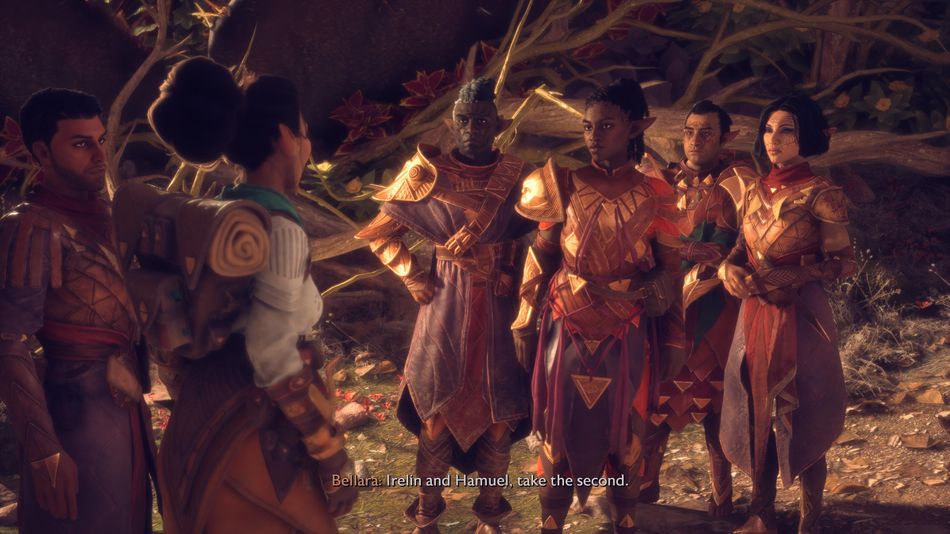
While the story of Dragon Age: The Veilguard is genuinely great, the dialogues—one of the primary ways you’ll uncover the narrative—are often poorly written.
Being a fantasy RPG, you'd expect the dialogue to carry a certain gravitas, often with refined British dialects. Instead, you’re met with modern teenage slang that feels completely out of place and disrupts the immersion. This may not be a dealbreaker for everyone, but for those it does affect, it’s hard to ignore.
On top of these issues, there’s another aspect that might bother some players: the inclusion of certain themes that feel out of place in a fantasy series. I won’t specify, but I’m sure you know what I mean. While I believe everyone has the right to their choices, I still think that forcing elements in the way that Dragon Age: The Veilguard does it isn't beneficial to the medium. But I’ll leave that debate to others.
Gameplay
Dragon Age: The Veilguard is designed to be a true RPG, but in practice, it doesn’t quite hit that mark. While it’s marketed as such, the gameplay leans more towards an action RPG, and in doing so, it misses some of the core elements that define traditional role-playing games.
To be fair, all the key components you'd expect from an RPG are present: character development, dialogue choices, and branching paths. The issue lies in the weight these elements carry within the game. In a truly immersive RPG, decisions should feel consequential—affecting not just the narrative but the gameplay itself.
In Dragon Age: The Veilguard, the actual "big" decision is made only once throughout the entire game, and it is (I hope it isn't much of a spoiler) to decide which town to save and which left to be undefended. But any decision you make will not change the final outcome at all.
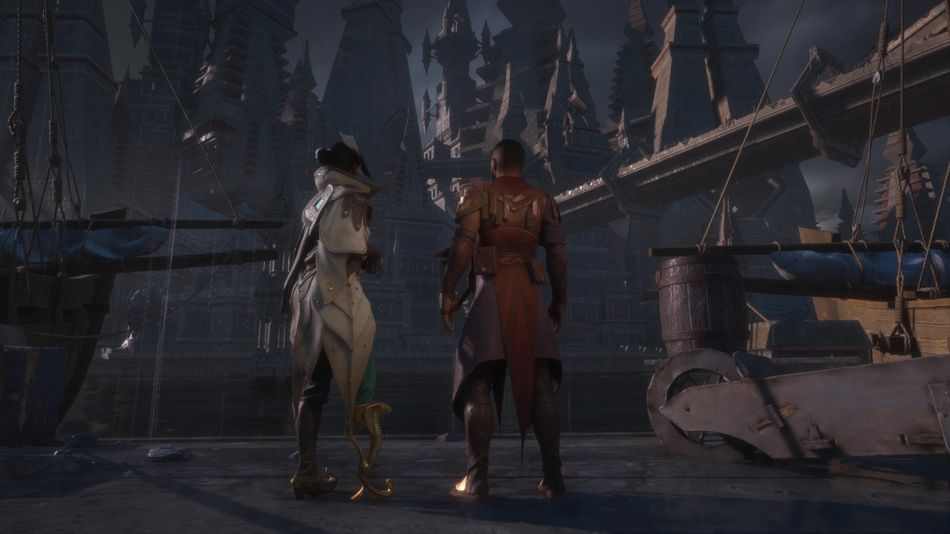
At the end of the game, you can trigger a so-called "good ending," but your choices and decisions do not play a crucial role in it; well, not directly, anyway. The good ending will trigger only if you play all sidequests and level up the trust of all the factions from which your companions come, and, unfortunately, not by making tough decisions.
As I mentioned earlier, you have seven companions at your disposal with only two of them being able to venture into the wild. Some quests will require a specific companion, and in such cases, you'll be able to choose only one.
You can build relations with your companions by making choices that please them during conversations or by doing quests with specific companions. The pinnacle of the relationship will be romance, and in this regard, I can say that the developers did a solid job. Up until you step into a romantic relationship with one companion, you can flirt with all of them, but once the romance starts, the romantic choices with other characters will disappear. Doesn't make a lot of sense to be honest but it is what it is.
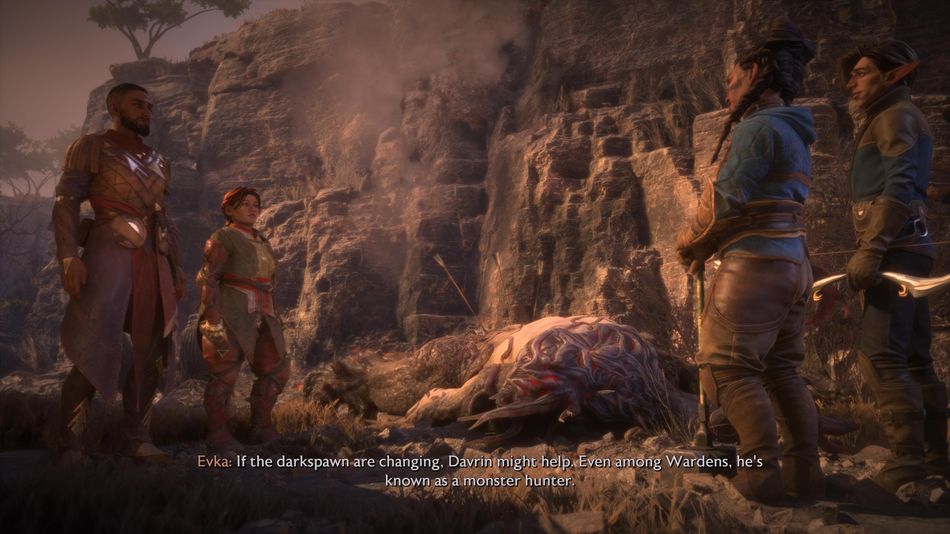
The combat is quite sophisticated and perhaps one of the best aspects of this game. It's designed in a hack-and-slash style with light, heavy and charged attacks while also giving you and your companions a slate of abilties to use.
The good thing about the combat is that by pressing a button on your controller, the game pauses and you can use either your or one of your companion's abilities, making every encounter the game of nerves and strategically planned actions and attacks. At the start, this system looks a bit hard to comprehend, but once you master it, every encounter is a pure joy.
Speaking of combat, I must mention weapons, and this aspect left a lot to be desired too. Depending on the class you choose at the beginning of your journey, you'll have two main weapons at your disposal. I chose warrior class, and I was quite disappointed, to say the least.
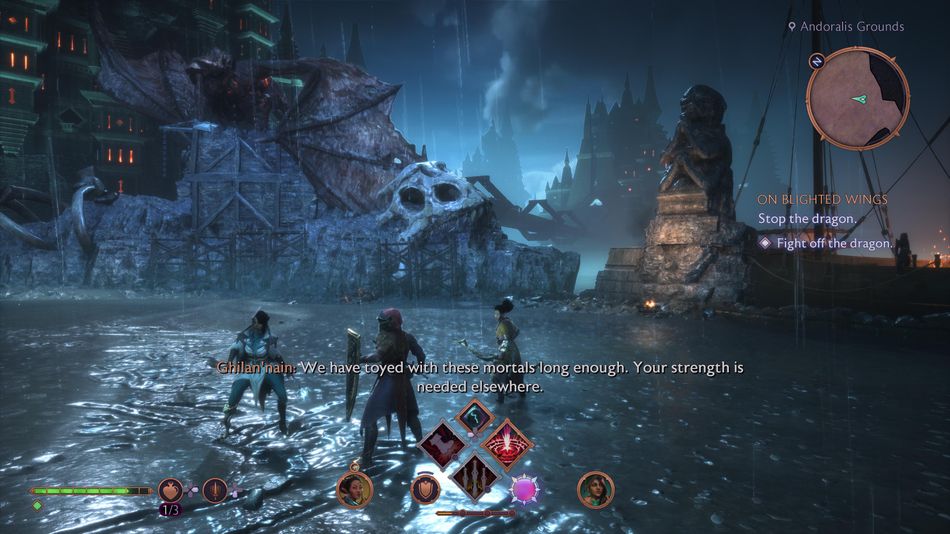
Warrior class uses sword and shield as one option for faster attacks and heavy weapons as the other, and even though you'll find a lot of weapons all over the world, they, just like the other equipment, feel more like cosmetic additions. If you decide, you can even use one desired appearance of weapons and equipment, and no matter which one you choose, it will always look the same.
Every weapon can be upgraded by levelling it up, and apart from that, each weapon comes in different rarity levels.
The exploration is one of the better aspects of Dragon Age: The Veilguard. Each level can be explored once you unlock it for the first time, and inside those levels, you'll find chests and some other collectables that can upgrade your health and give you additional skill points.
The levels are full of path blockers that can be unlocked only by specific companions, but a good thing is that Rook can replicate their powers even though they are not with him through a special dagger, so the good advice is to wait with level exploration until you unlock all companions.
Graphics, Sounds, and Performance
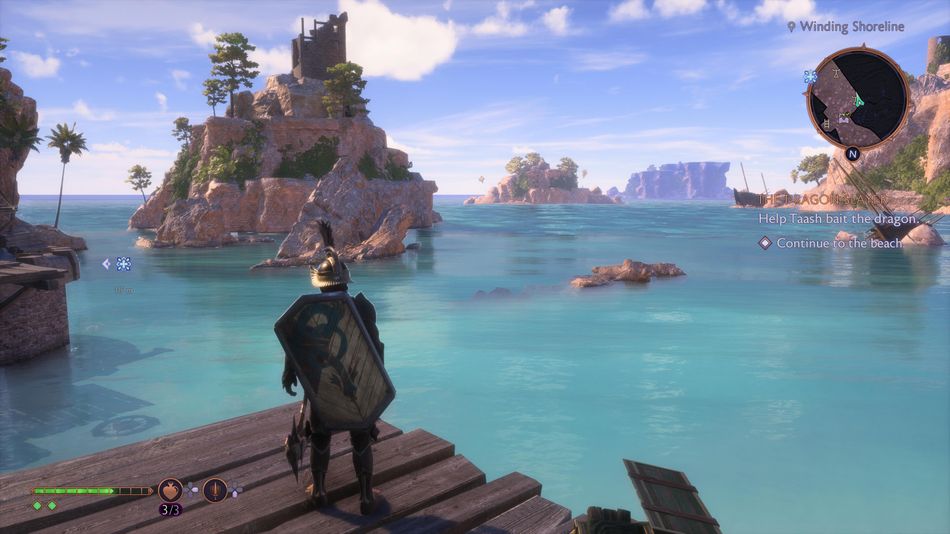
It’s clear that not everyone will appreciate the graphics of Dragon Age: The Veilguard, and for a good reason—they, along with other aspects, just don’t quite align with the fantasy world. However, it would be unfair to say that The Veilguard doesn’t look good because that would be far from the truth.
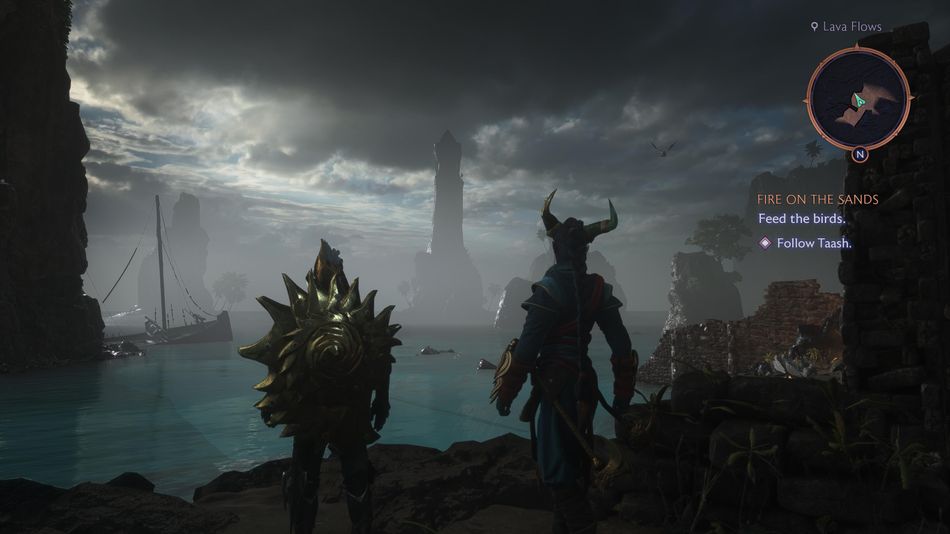
Dragon Age: The Veilguard is undoubtedly the most visually stunning game in the series, with breathtaking graphics in most areas. Whether you’re wandering through an enchanted forest inhabited by elves, exploring dwarf mines, delving into underground necropolises, or scaling snowy peaks, each location feels alive and beautifully crafted.
Now, you may wonder why I said that these graphics don't align with the fantasy world. The main problems are the characters and their design. The character design is more cartoonish and less realistic, which someone might appreciate, but in my opinion, it feels somewhat off.
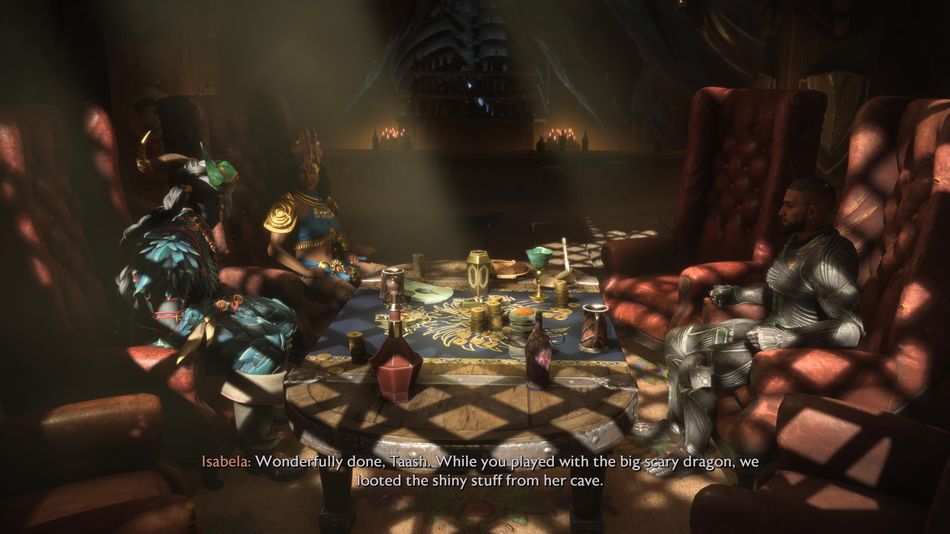
The face models are well done—no complaints there—but for this type of game, they feel a bit too light-hearted and don’t quite match the atmosphere. However, the facial animations and character portrayals are excellent, greatly enhanced by strong voice acting.
Speaking of graphics, I have to highlight the excellent enviromental design with beautiful and diverse biomes. There are many locations to explore throughout the game, each with its own unique style and thoughtful design. I still remember visiting a hidden Dwarven kingdom during a side quest—those grand halls lined with towering statues carved from marble were a sight to behold.
The sound design is quite impressive too. So many locations require the same number of music themes, and fear not, the sound designers got you covered here. The soundtrack is pretty good, with compositions created to fully complement the game's setting, contrary to all other aspects that feel off, as I said earlier.
Performance-wise, the game is perfectly balanced. I played the PlayStation 5 version of the game and didn't experience a single problem. The PlayStation 5 version supports fidelity and performance modes, and each mode works like a charm.
Conclusion
As I began, so I’ll conclude this review: Dragon Age: The Veilguard is truly an impressive game, but it might have fared better without the Dragon Age title, as it doesn’t entirely align with the series' concept. Unfortunately, certain controversies have overshadowed the game’s quality, pushing its merits into the background—a situation that’s never ideal.
Another major criticism of BioWare is that they didn’t take bold enough risks with the game. It feels like they played it too safe, likely aiming to appeal to a broader audience. As my colleague put it during our discussion, Dragon Age: The Veilguard isn’t an RPG that will be remembered a decade from now as one of the greats.
That said, Dragon Age: The Veilguard is undeniably a high-quality game. If you’re not a die-hard RPG fan, it offers tonnes of enjoyment with its engaging story, impressive graphics, refined combat system, and breathtaking locations. If you’re willing to overlook the controversies and the game's departure from its roots, I can promise you’ll have a great time—I certainly did.
The Good
 Impressive story with engaging subplots
- High-quality graphics and visually stunning environments
- Sophisticated combat system
- Diverse, well-designed levels with unique locations
- Strong voice acting
The Bad
 Poorly written dialogues that break immersion
- Inclusion of themes that feel out of place in a fantasy setting
- Lack of impactful choices and decision making
- Overly cautious approach