Trending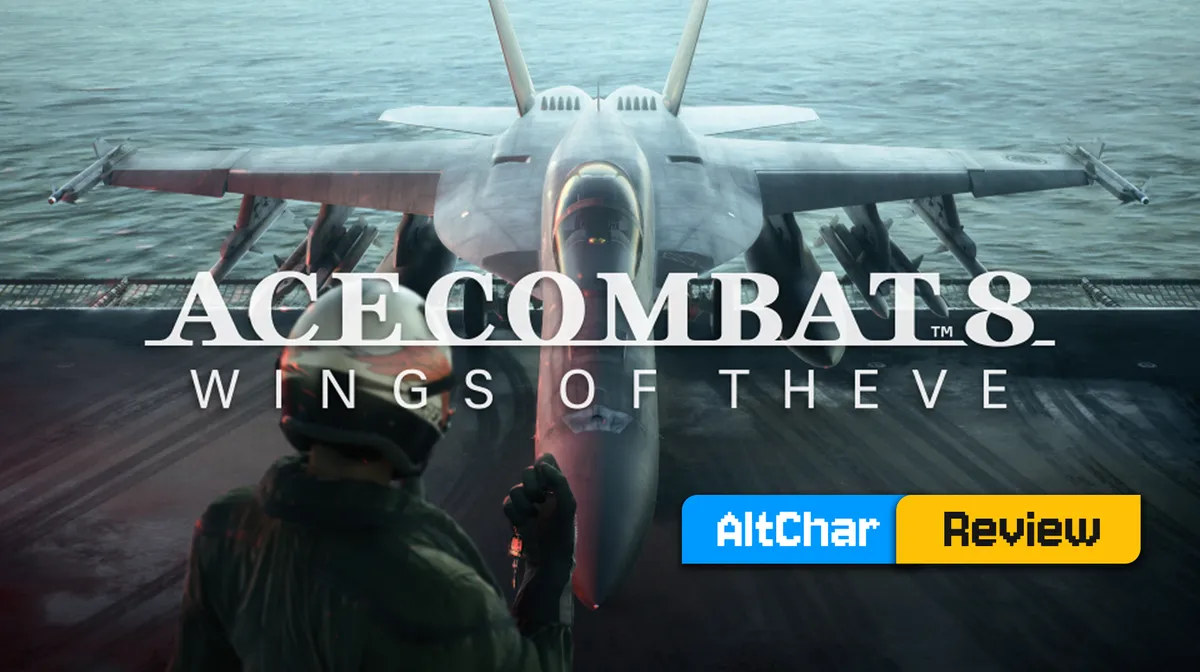
When I think of combat military planes and airborne warfare, I think of Top Gun, and that, my friends, is a huge misconception. Everything this Hollywood masterpiece with a young Tom Cruise taught us is far from the truth, at least when it comes to handling sensitive, high-tech military aircraft. I’m no expert on the topic, of course, but I’m pretty sure there are plenty of them at Bandai Namco Aces, the studio behind the Ace Combat series and its latest instalment, Ace Combat 8: Wings of Theve.
I, like many of you, I’m sure, was led to believe that combat planes are something else entirely and that airborne combat is snappy, fast, and demands millisecond responses. Yes, that’s how Hollywood portrays it, and the moment I started playing Ace Combat 8: Wings of Theve, my first reaction was exactly like that popular internet meme: “Brother, ew, what’s that, brother?” I swear to God, this is how I felt.
The plane flew at normal speed; turning it 360 degrees was a real pain, and aiming and hitting a target mid-flight was an art form, so I thought, “What are these controls?” Only then did I realise that nothing was wrong with the game; the only one to blame was me, and I’m not ashamed to admit it. Ace Combat 8: Wings of Theve is a real flying masterclass once you understand it properly and leave everything you think you know about combat planes behind.
The Ghost in My Headset
Let’s make something clear from the start. Ace Combat 8: Wings of Theve is my first Ace Combat experience, and I won’t pretend to know anything about the series’ lore or its broader story. Watching the trailers, I saw that Bandai Namco was determined to deliver a proper campaign with a real story this time, and truth be told, I’m glad this is my entry point to the series, because I really appreciate a good campaign.
If the developers wanted to show us a good campaign, then as someone who knows nothing of the previous games, I can say they succeeded, because this campaign, along with its incredible story, truly rocks. You play as a guy who is rescued by helicopter after his country is invaded by its hostile neighbour. After the rescue, you’re brought to an aircraft carrier, and since there’s a shortage of pilots, you’re assigned to assist none other than the legendary Joker 1, or the “Legendary Ace”, as he’s known among friends and foes alike.
Now, there’s an interesting catch regarding this “Legendary Ace”. He’s just an ordinary pilot, but since information is the strongest weapon in war, there’s a whole marketing machine behind the “Legendary Ace” phenomenon. The government wants its enemies to fear this pilot, so it has hired a full crew of journalists to live on the carrier and film promotional material about him.
In the opening mission, this guy dies (hardly a spoiler, since it happens before you even get to control your first plane). He, along with you as his sidekick, is shot down by an enemy plane during a recon mission. He dies, you survive, and as soon as you’re rescued once again, you’re presented with a plan you might not like but must go along with: you’ll take his place and continue his legacy, whether you like it or not.
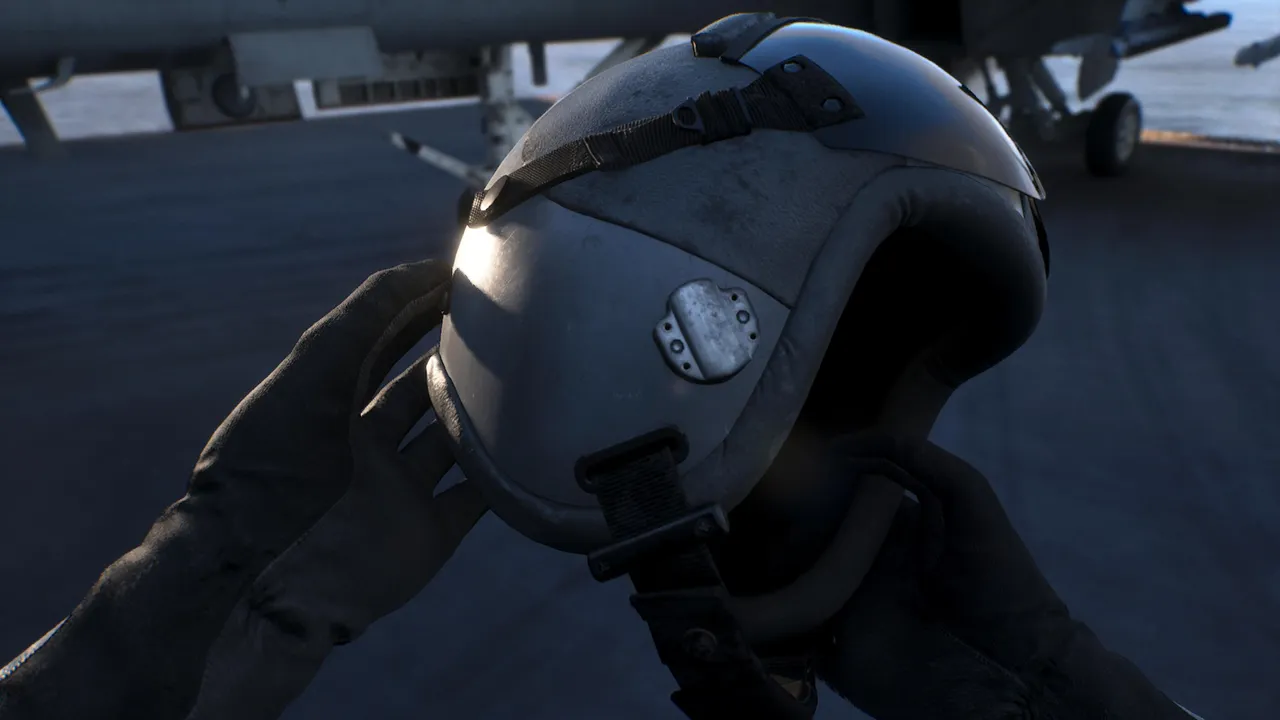
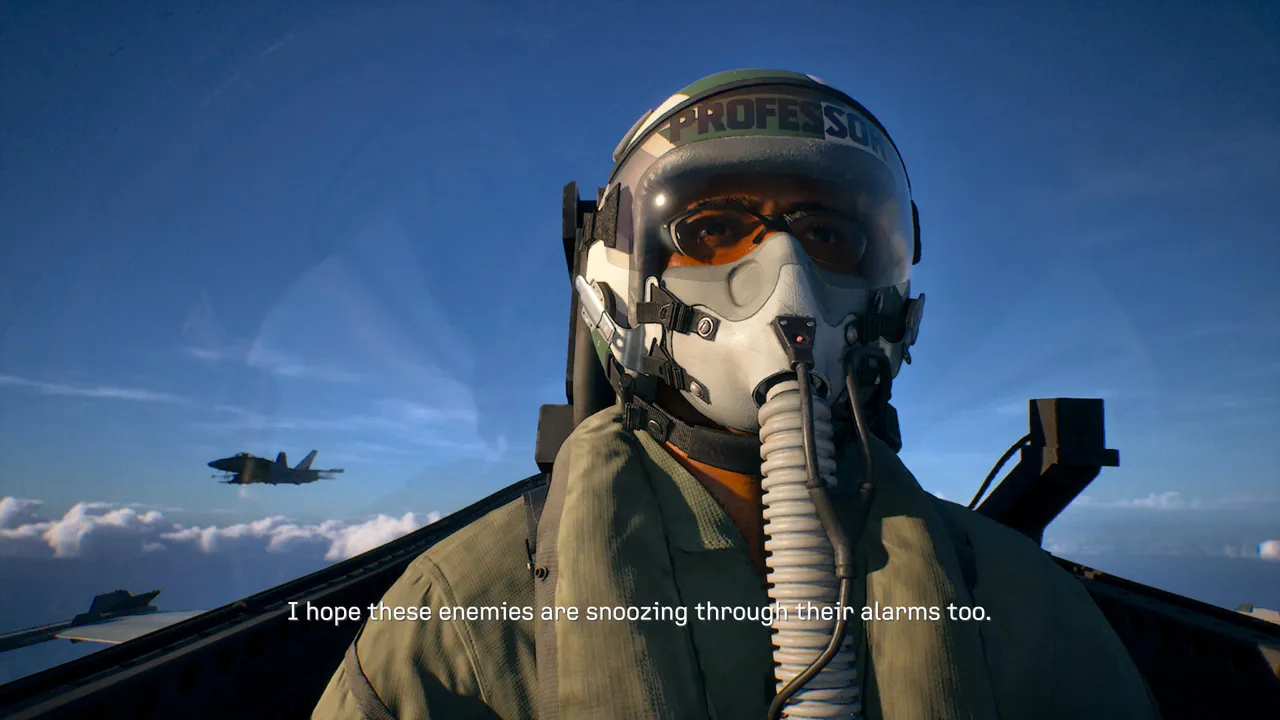
You’re given his signature helmet, and from that moment on, only you, your teammates, the journalist crew and the chain of command know your true identity; to the rest of the world, you’re the Legendary Ace. The real twist comes when the Legendary Ace himself starts talking in your ear because, by some miracle, his spirit survived, and he’ll stick around to give you a heads-up whenever he can. It’s a bit of a strange writing choice, but trust me, it all adds up later.
What truly amazed me about this story is how grounded it tries to be at all times. Much like my earlier point about misconceptions of air combat and military aircraft, Hollywood works hard to sell us stories about fearless soldiers and pilots who fly without asking questions. The hero here is not some handsome dude who goes jet nose first into the action. And it's not just him, as the spirit of the previous Legendary Ace keeps reminding him that there is nothing heroic about flying into almost certain death. It’s terrifying, and every mission you come back from alive is a blessing.

One more thing about the story. The countries and locations here are all fictional, part of Strangereal, the alternate world the Ace Combat series has used for most of its history. Honestly, that’s a far better approach than telling a story about real countries; someone can always end up offended.
Fly Like a Pilot, Not a Movie Star
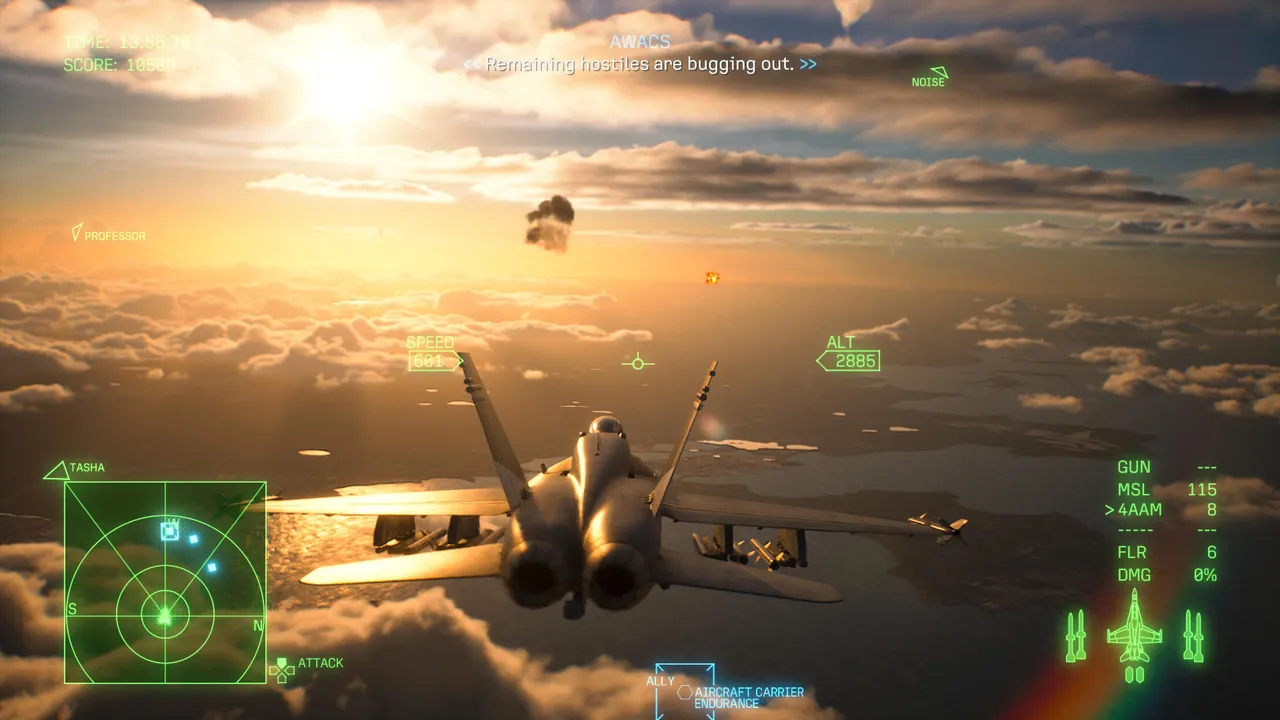
Just as the story tries to stay grounded, the gameplay aims for realism too. There are no heroic acrobatics or magical target lock-ons that leave the enemy no way out. The planes fly at normal speed, which you can increase or decrease at the press of a button. You get unlimited machine gun ammunition (it’s very hard to hit anything with it) and missiles, which are finite, but once you run out, you wait ten seconds or so and get another two. Every plane also carries special weapons that you can buy and equip before the mission starts.
In the campaign, you’ll be sent on missions. Before each one, you’ll receive a briefing, after which you can choose a plane and loadout and fit newly obtained parts to personalise your experience. Speaking of personalisation, before each mission you can also buy skills, custom parts and even new planes in the Aircraft Tree, using the currency you earn by completing missions. I was quite surprised that the game doesn’t feature any optional objectives or side quests. The main objectives are all there is, and you won’t be going home until you’ve completed every one of them.
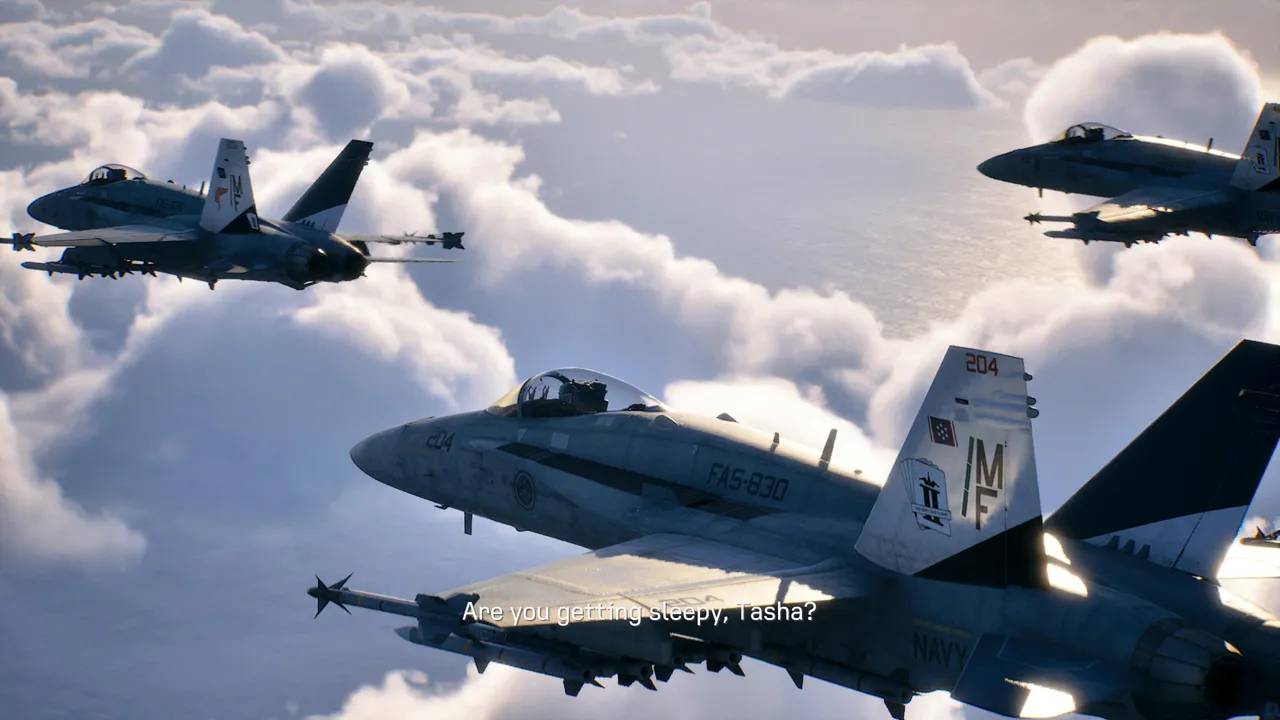
Once a mission is done, and before you return to the carrier, you can replay the entire mission from different angles and cameras and assess how you did. It’s a nice, entirely optional touch, especially if you pulled off some badass moves and want to see them from every angle.
The biggest problem I had with the game was the controls, which I couldn’t get used to for a big chunk of the game, and that was entirely my fault. As I mentioned earlier, I’m used to games with simplified, user-friendly inputs. Here, everything is about immersion; you’re meant to feel like a real pilot, and once everything clicked, I started enjoying the game enormously. And the controls I used are actually the more arcade-style scheme designed for players who haven’t played many Ace Combat games; for the real experience, you can switch to the advanced controls. Did I try them? Absolutely not. I was quite happy with the “simplified inputs”.
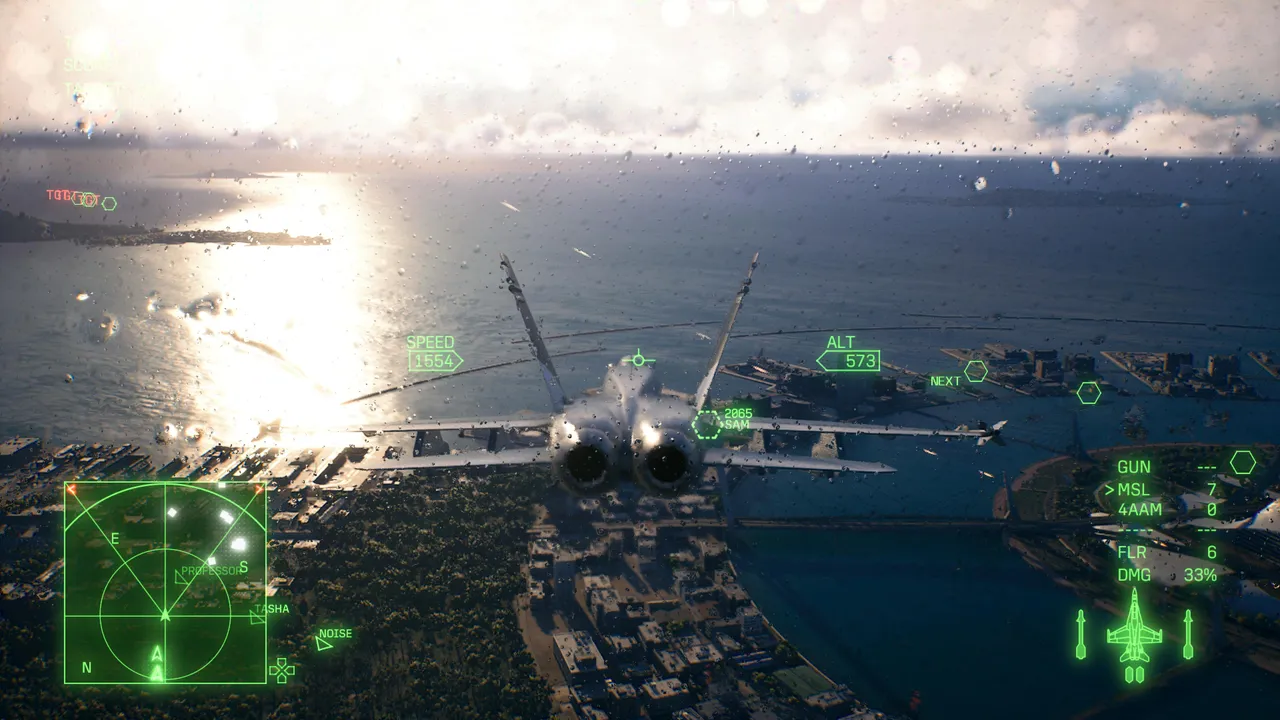
Another issue in Ace Combat 8: Wings of Theve is mission variety. Fighting enemy aircraft and bombing ships, tanks, SAM sites and other military targets is all well and good, but sooner rather than later, the game runs out of ideas. The missions seem different on paper: one time you’ll intercept an enemy attack, another you’ll join your teammates to destroy enemy bases, or even take part in liberation missions. In essence, though, everything plays out the same way: you fly the plane, destroy enemy targets, rinse and repeat.
There’s also an online mode where you can fly with players from all over the world, but sadly, I was locked out of it, not by choice but by the game’s design. Every time I tried to access it, the game warned me that I first had to finish the campaign. Since the campaign is quite long, around 20 hours, and even longer if you’re as bad at flying as I am, that takes time I unfortunately didn’t have, so I focused on the campaign. I tried accessing the online mode anyway, just to check it out, but the game kept throwing a “connection timed out” error, and I never found out why.
Heads in the Clouds
Ace Combat 8: Wings of Theve is a prime example of how a combat flight game should look. First, the cinematics are stunning. The story is told mostly through well-crafted cutscenes of the highest quality, and the character models, facial expressions and everything else about those set pieces are a real work of art.
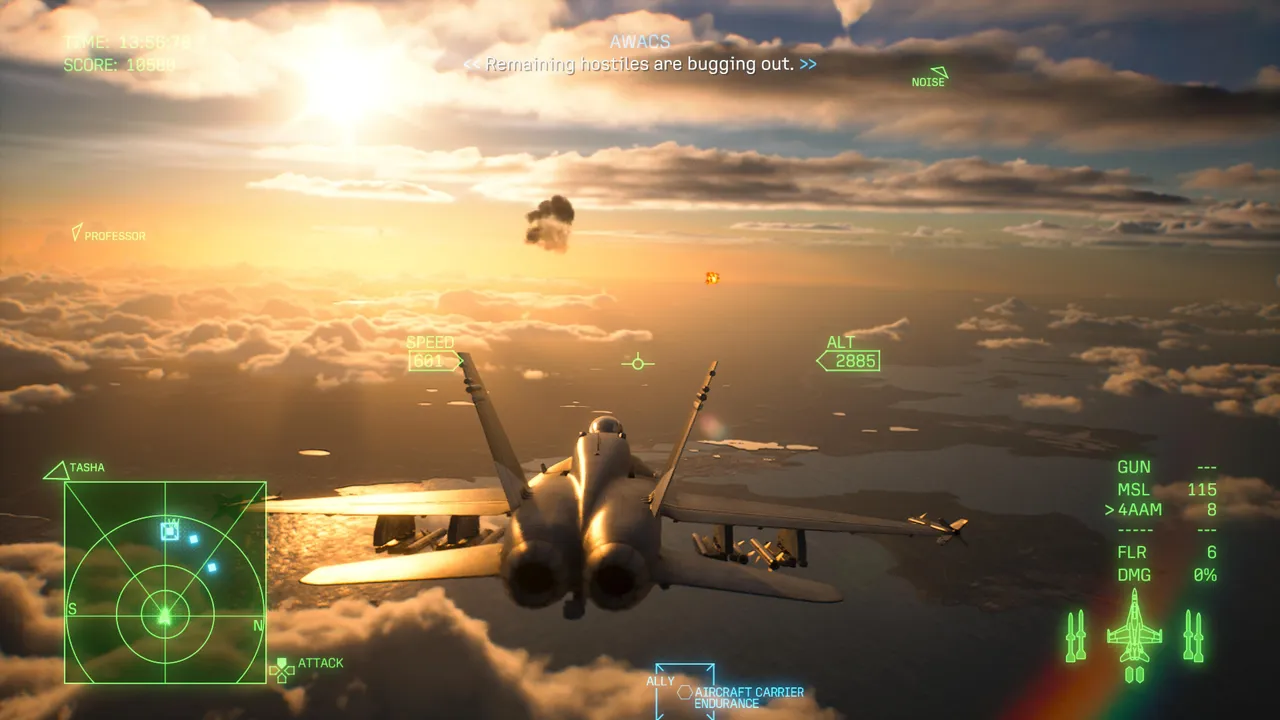
The plane models are stunning too. I’m no aircraft expert, but they look fantastic, and the on-screen interface looks convincing, whichever camera you pick (first-person, cockpit or third-person). I remember playing that iconic jet mission in Battlefield 3 and being stunned by what DICE managed to pull off at the time. Stepping into the cockpit here for the first time had the same impact on me, if not a stronger one, since everything looks far better and more immersive.
The skies, the ocean, flying through clouds and raindrops hitting the canopy are all rendered perfectly and incredibly lifelike, and every time I saw these sights for the first time, my jaw dropped.
As for sound, the designers did an amazing job as well. The planes sound loud and powerful, as they should, and the radio chatter is authentic. The music is a bit odd, especially the main theme, but I respect the choice. I’d rather listen to some hard rock or even metal while flying around and downing the bad guys, but the official soundtrack works well too.
I’d also like to praise the voice acting, especially the ghost, whose voice brings a sense of calm to the chaos of aerial battles, as well as the rest of the supporting cast, who did a stellar job. All in all, from a technical standpoint, Ace Combat 8: Wings of Theve comes very close to perfection. Speaking of which, the PlayStation 5 version I played ran flawlessly, without a single crash or hiccup. The game offers two modes, Quality and Performance, and both do what they’re supposed to. I played in Performance mode, and it held 60 FPS the entire time.
Conclusion
Ace Combat 8: Wings of Theve made me feel like an idiot for the first few hours, and I’m grateful for it. Once I stopped expecting Top Gun and started flying the way the game wanted me to, it turned into one of the most immersive flying experiences I’ve ever had, backed by a grounded, surprisingly emotional story about a scared pilot wearing a dead man’s helmet and a presentation that comes very close to perfection.
It’s not without flaws. The missions blend together after a while; there’s nothing to do beyond the main objectives, and locking the online mode behind a 20-hour campaign is a questionable choice. Still, as my first Ace Combat, it won me over completely. Just give it time, and leave everything Hollywood taught you at the door.
The Good
 Grounded, emotional story
- Stunning cinematics and visuals
- Immersive cockpit experience
- Excellent sound and voice acting
- Flawless PS5 performance
- Hugely rewarding once it clicks
The Bad
 Repetitive mission design
- No optional objectives or side content
- Steep learning curve for newcomers