Trending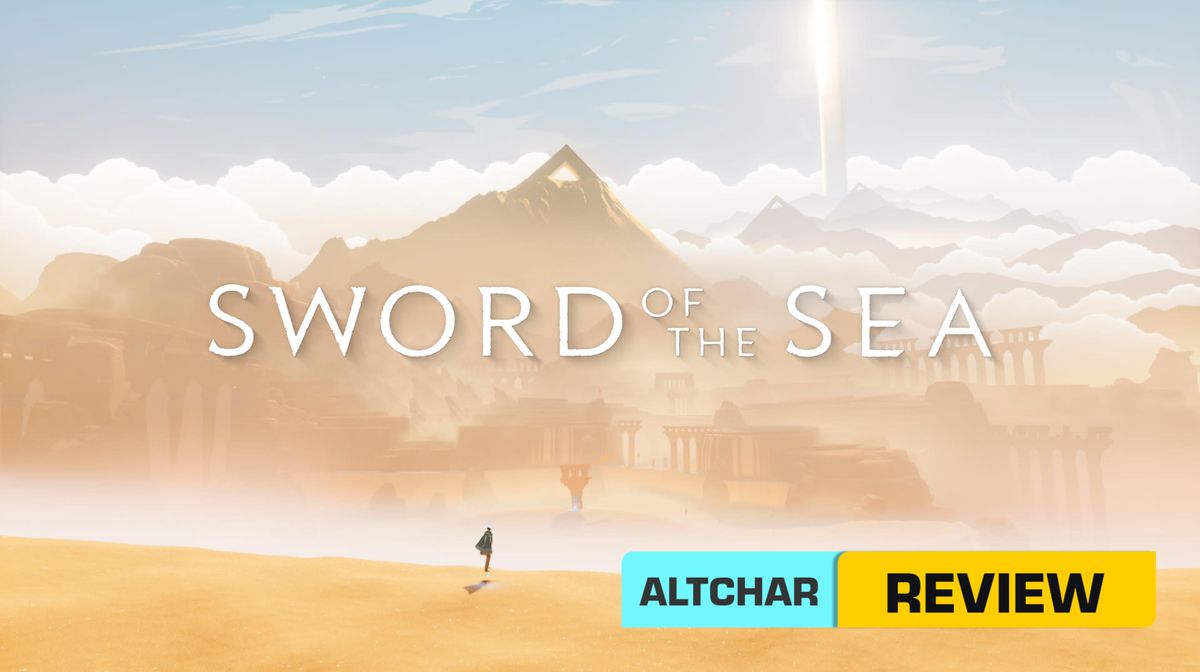
It is very hard to explain what the art actually represents. For some of us, something will be art, while others will consider the same thing pure junk or vice versa. However, some things are true art, and there's not a living soul who will say otherwise.
The first time I loaded Sword of the Sea and immersed myself in the game for a bit, it became so evident that the developers of this game wanted us to feel this game as a real work of art, and from the very beginning, the game actually felt that way.
From the very beginning, the game won't bother to explain a thing. You'll see your protagonist, a wraith with a strange helmet and a white flame-burning mask, who will draw his sword and use it to cut down his enemies, splashing the rivers of blood all around him—Nah, I'm kidding, of course. His sword isn't for fighting enemies; instead, its function is to be used as a surfboard.
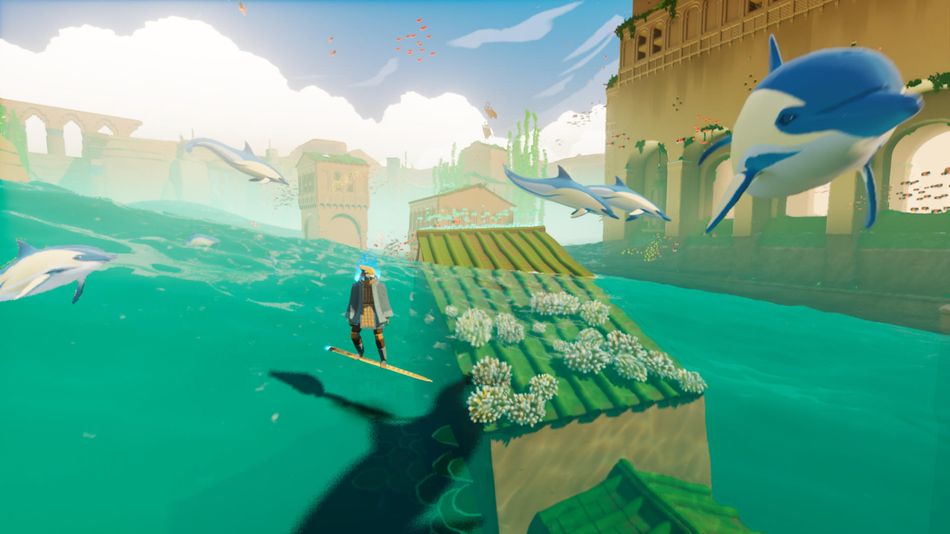
Yes, Sword of the Sea is a surfing simulator set inside a fantasy world full of sand and desert dunes, stretching as far as the eye can see—or at least since you intervened and turned the sands into a beautiful ocean. This is your main goal in this game: surf through the sands, find the special places, and return the water to the desert.
When water is restored, sea creatures will return too, and what was once empty and dead will come to life again, but not everyone is happy with such an outcome, for there is a primordial creature, made from pure chaos, who doesn't like the idea of life and wants everything to be dead again; it will become your main enemy.
The game's story is told through very perplexing cutscenes and several lore stones you'll find throughout the game. Those lore stones will be cryptic too, but if you read each one of them very carefully, you'll be able to piece together the story, which is, truth be told, quite good.
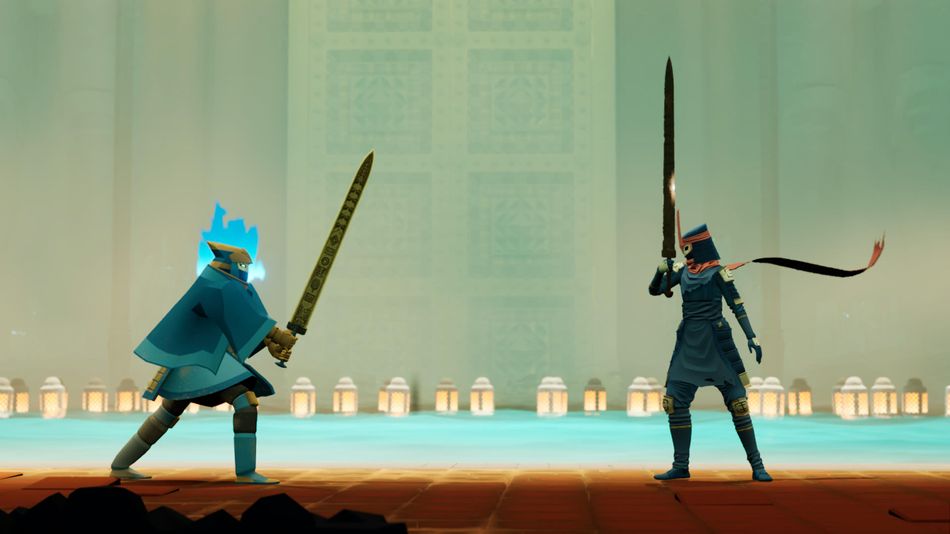
In terms of gameplay, you won't find Sword of the Sea that entertaining. Don't get me wrong, this game is fun, and in some sections even quite challenging, but its gameplay mechanics are as simple as they can be. You'll surf through sand, snow, water, ice, and many other surfaces.
You'll be able to jump, do tricks in the air, slide over huge chains, do stun jumps in dedicated places, and even tackle some time trials, but in essence, you'll mostly try to reach your objectives, which contain passing the obstacles and activating the next piece of objective that will allow you to reach the next area, and that's pretty much it.
You'll be doing all this inside quite linear levels that can open up in some areas and allow you to explore further. The exploration will let you gather special coins, which can be given to a certain NPC who will exchange them for the new tricks and abilities.
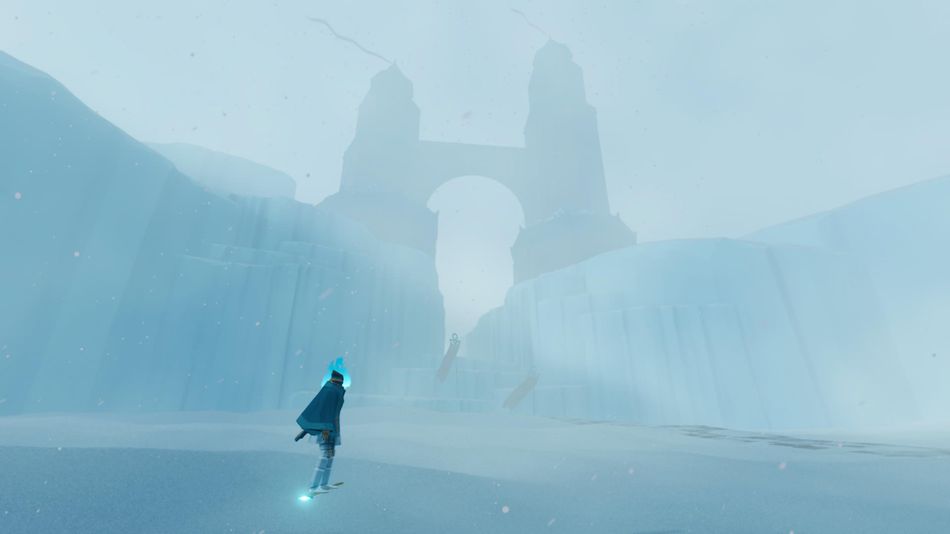
Sword of the Sea doesn't have enemies or fall damage; the only way to die is to fall into the abyss or the lava later in the game, and the game will even have one final boss fight. However, checkpoints are quite generous, so you shouldn't expect any frustration.
And why should you? This game is designed to relax you to the max, not the other way around, and this relaxation comes from its two amazing segments: a gorgeous visual art style and amazing music that makes this game even more relaxing and enjoyable.
The PlayStation 5 version of the game is just beautiful. I played the game on the classic PlayStation 5, not the Pro version, and the performance and the presentation are both flawless. Whether you find yourself inside huge desert dunes, whose sparkling yellow sands will amaze you with their beauty, or through the restored ocean full of beautiful seaweed and even more beautiful sea creatures, I assure you, you'll be in a constant state of awe while playing this beautiful game.
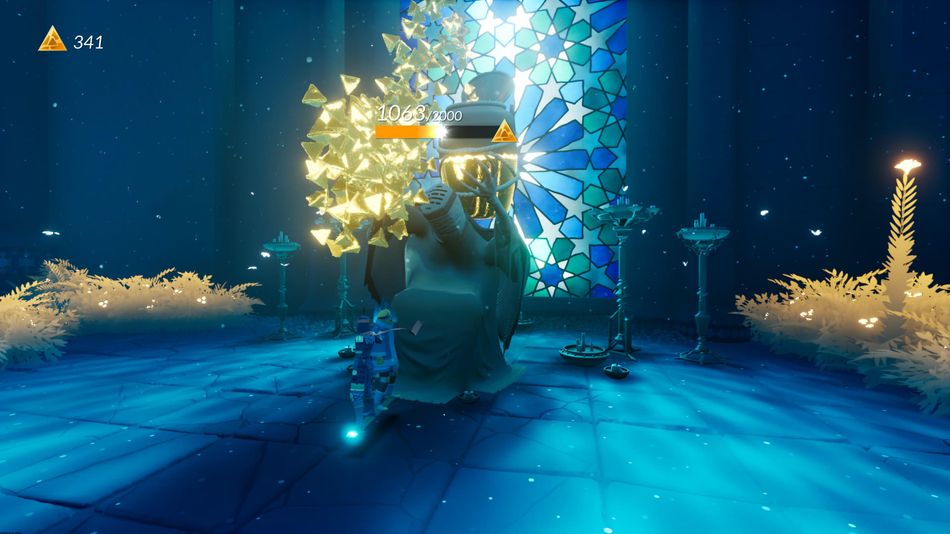
Not to mention the later frozen landscapes, especially the areas filled with sparkling ice, whose portrayal is one of the most amazing in any video game I've played (really, it's not an overexaggeration); the art style of this little indie gem is a thing of beauty.
The sounds, especially the music that follows the action all the time, will add to the atmosphere significantly, too. One thing, though, that was a bit annoying was the too-loud surfing sound that comes out of the DualSense's speaker. This can be changed in the PlayStation options, but no matter how you tweak this sound, it's still too loud.
Turning it off entirely is one of the solutions, but then the experience isn't quite the same because those sounds really add to the overall atmosphere. The other sounds are okay and without any complaints from me.

Conclusion
Sword of the Sea has a therapeutic effect on you while playing it and will relax you beyond words if you decide to approach the game with this mentality and not require something the other games can offer you, like some complex gameplay or something of the sort.
In this game, you'll surf, enjoy the scenery, and relax while doing so, because in terms of the visual and audio presentation, Sword of the Sea can go head-to-head with many of the AAA titles, and since the game is part of the PlayStation Plus subscription from day one, if you're a respective owner of it, there's not a real reason not to give it a go; who knows, perhaps you'll like it as much as I did.
The Good
 Stunning visual art style
- Relaxing and therapeutic gameplay experience
- Beautiful and atmospheric music
- Day-one availability on PlayStation Plus
The Bad
 Simple and limited gameplay mechanics
- Loud and sometimes annoying DualSense speaker sound