Trending
Stealth action games were always my kind of games, ever since I could call myself a gamer, and I always had a soft spot for games like Splinter Cell, Metal Gear Solid, Thief, and the like, but never, in my quite lengthy gaming career, did I have the opportunity to play the Styx game, even though I got many recommendations to try one at least.
However, working in gaming media has its perks, that's for sure, and one of those perks is playing all kinds of games, even those you never would have chosen on your own, and for some unknown reason, Styx fell under that category in my books.
Was I wrong? Yes and no. Playing the newest Styx game, Styx: Blades of Greed, as my first game from this series left a sort of bittersweet taste in my mouth. Bitter because it failed to meet my, perhaps too high expectations, and sweet because, even though Styx: Blades of Greed is far from a perfect game, it still has moments that deliver consistent fun.
Story - A World That Assumes You Already Belong
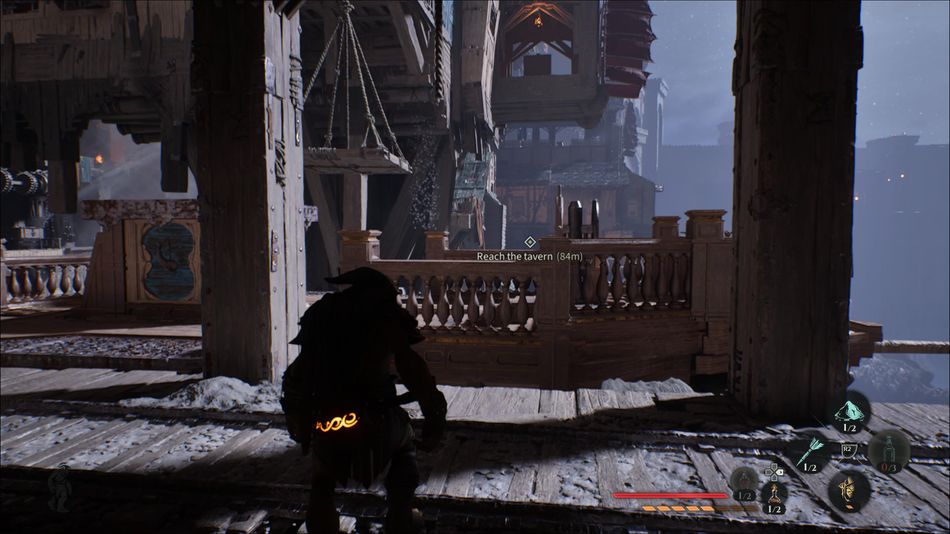
Styx: Blades of Greed has one huge problem when it comes to storytelling, and it is a total disrespect for the newcomers to the series. I stated already that this is my first Styx game; however, from the very beginning, the game treated me as if I know everything that is to be known about this universe I found myself in.
New characters without a single piece of lore to back them and places, towns, races, and events that are probably old but new for me; the game simply assumes you're already very well acquainted with the world of Styx and won't bother to give you any further explanations.
Styx: Blades of Greed's story revolves around Styx, a special goblin who, as I managed to understand, is the only one of his kind who isn't mindless and knows how to speak a common language and behave like someone with an ounce of common sense.
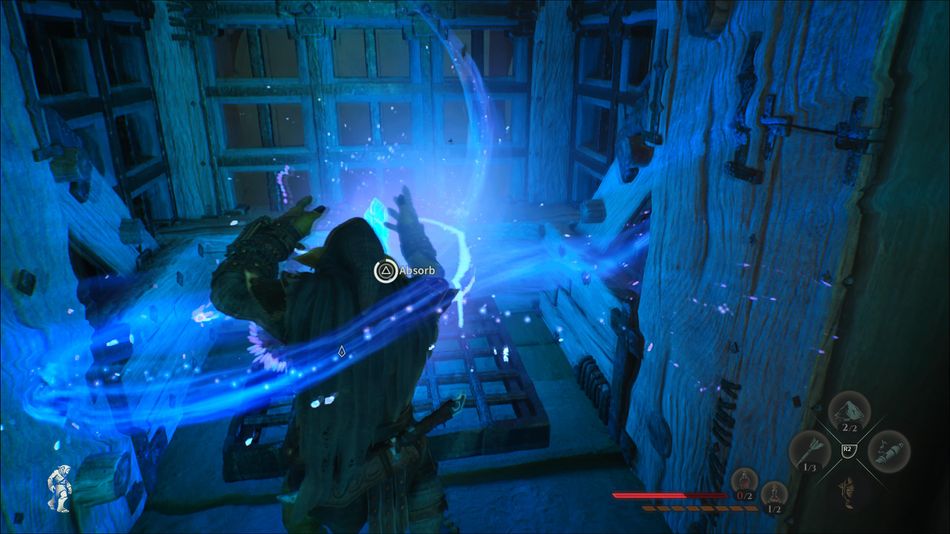
Somehow, he got in contact with quartz, a special sort of crystal that emits some sort of energy, and he, as curious and impulsive as he is, decided to interact with it, absorbing its power in the process. Now his main obsession becomes finding as many of those crystal shards as possible and absorbing them all.
In this endeavour, he will be backed by his crew. First, there is a human and an elf in his crew, and as the story progresses, this crew will grow larger and become the very axis around which the entire gameplay revolves. It is all well and good, but the main problem is that I really didn't understand any of that.
Who are those guys? What does this quartz represent? Hell, who even is Styx, and what is his connection with the mentioned characters? So many questions, yet so few answers. I tell you now, Styx: Blades of Greed is a total unknown for the newcomers, and if you're playing a game for a good story, this one has potential, but prepare to swim with fish you've never heard of.
Gameplay – A Joyfully Addictive Stealth Loop
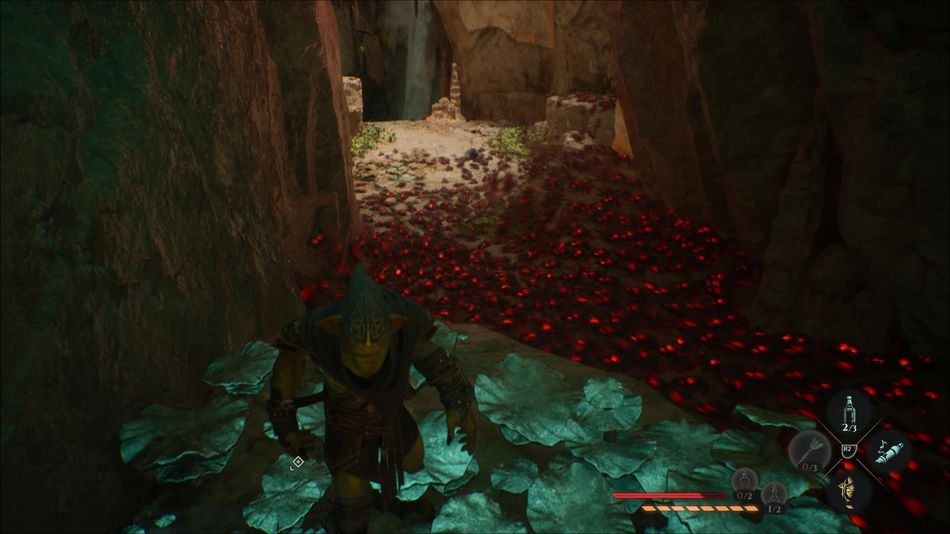
In Styx: Blades of Greed, the gameplay is very simple but fun as hell, and at least for me, it provided something many games fail to provide nowadays, and it is total engagement.
Unlike the story segment, where there will be a lot left to be desired, the gameplay segment is explained in the smallest detail. You'll have a huge tutorial at the beginning of the game that will explain everything you'll be facing in Styx: Blades of Greed.
The gameplay loop revolves around common stealth mechanics, like sneaking, stabbing, darkness management, climbing to position yourself well, distracting enemies, and using many tools at your disposal. If you're a fan of stealth games like me, you'll be overwhelmed with joy because it never gets old.
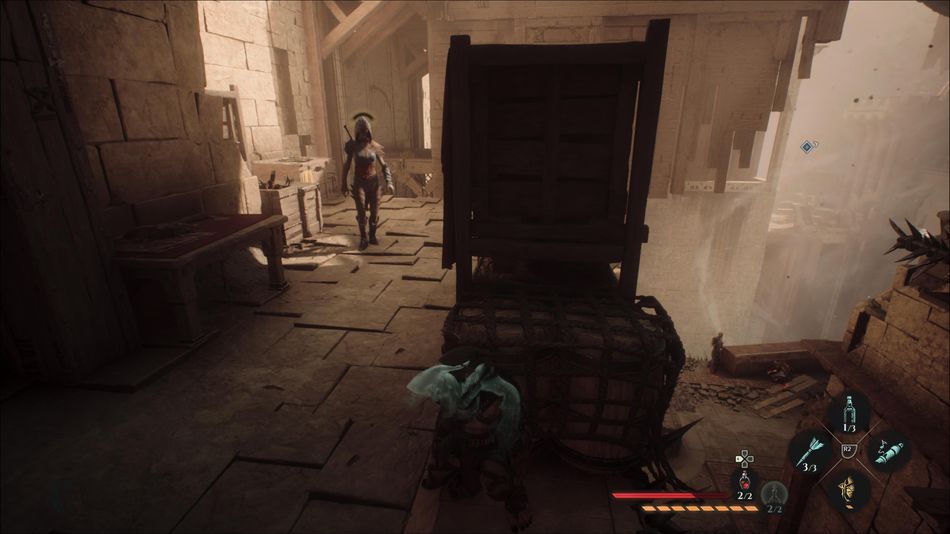
The game is designed in a semi-open-world way. You'll be using a zeppelin to travel between several areas, and each area will have different sub-areas. Those sub-areas will have unlockable zeppelin stations that serve as fast travel points.
The levels are designed in a way to fully support stealth gameplay. Since Styx is a small goblin, he'll be able to go through many holes and cracks that regular folk cannot, and you'll use this as an advantage all the time. Also, the world is created to have many cliffs and ambushes to push and pull your enemies into.
Your main weapon is a dagger, and you'll be using it to kill enemies mostly from behind, in a stealthy manner; however, you'll be able to engage in combat as well, if you prefer, but my advice is: don't! This game is simply designed to be played in stealth. You'll have a chance in a face-to-face battle only with a single enemy, and even then, it is highly questionable if you're going to survive.
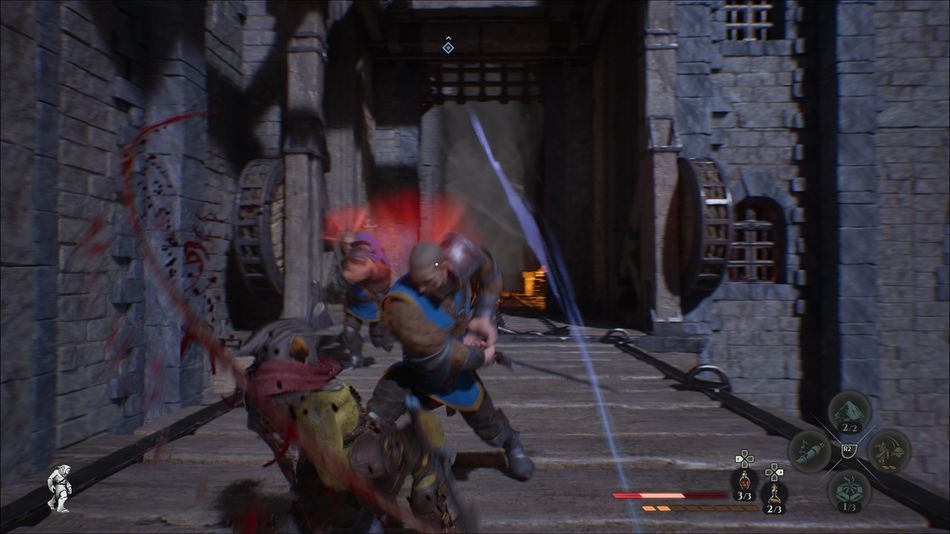
You'll be facing many types of enemies in Styx: Blades of Greed. From the common humans, elves, goblins and orcs to huge bugs and bug swarms, every level brings a new type of enemy, and with them, new strategies to beat them or avoid them your choice.
Apart from regular enemies, you'll be facing many brutes and fully armoured dudes, who will be impossible to kill with a sneak attack, so you'll need to get creative. In those cases, creativity usually means using the environment to your advantage and, say, bringing down a crate full of heavy stuff on enemy heads. You'll also be able to poison sources of food and drinks to dispose of bigger enemies, but those are actually heavily scripted.
Speaking of enemies, I have to mention the AI, which is wildly inconsistent rather than simply bad. Enemies can shoot you through walls and poison your hiding spots, yet hang completely oblivious if you're dangling over a ledge. It's less 'broken' and more unpredictable, which creates frustrating rather than challenging encounters.
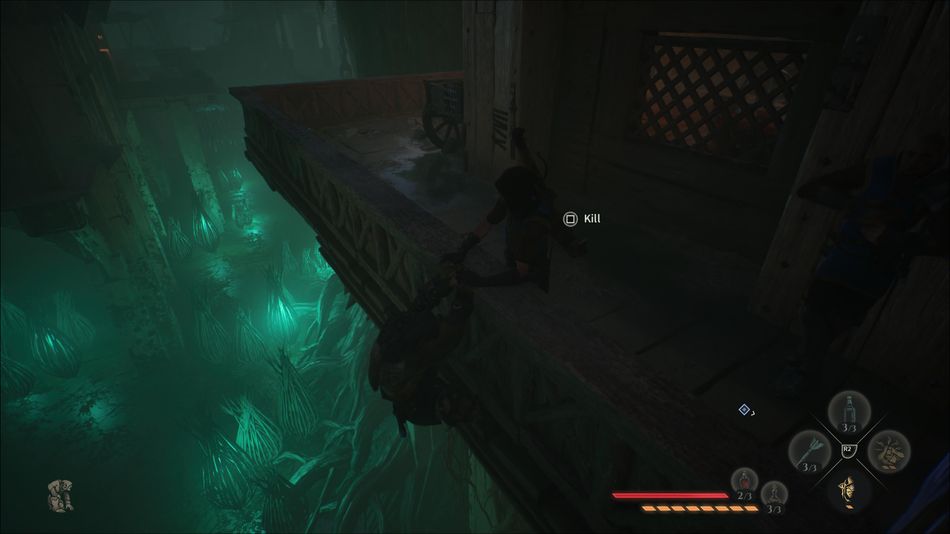
Apart from his signature dagger, Styx will use many other abilities you'll be able to unlock after accumulating enough XP. The XP is accumulated by consuming crystal shards and by finding special collectibles containing XP points. Collecting XP will add talent points and resonance points, which will both be used to upgrade and unlock additional Styx's abilities.
At some point in the story, you'll unlock runes, which will give Styx some passive buffs, while the blueprints, also found through exploration, will be used for upgrading different tools.
The gameplay, especially for the fans of stealth games, is extremely fun and kind of contagious, and you simply won't be able to drop it. In most cases, even though I could just walk through the enemies, I opted for killing everyone and scrubbing the place clean because I could, and it was a lot of fun, and if nothing else, for this only, Styx: Blades of Greed deserves my recommendation.
Visuals, Sounds, and Performance – Atmosphere Over Fidelity
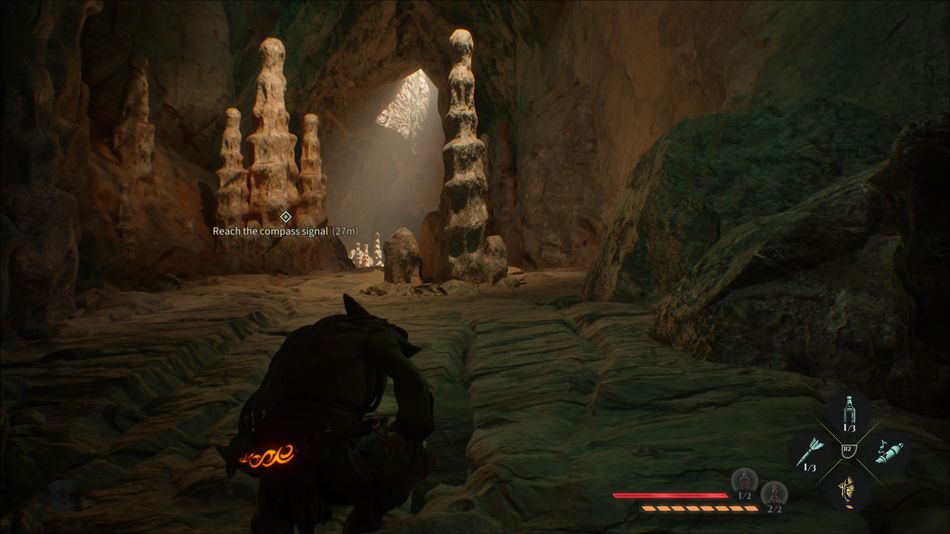
Graphically speaking, Styx: Blades of Greed has its moments, miles from being a visually stunning game. When I said this game has its moments, I mostly thought about decent character models and very nicely designed interiors where modern lighting really comes forth.
Light and dark sections are very distinguishable, and you'll know, without the need of any on-screen indicator, where the enemies will be able to spot you and where the darkness will cover you. Also, I must give special praise to the lighting in the torch- and fireplace-lit rooms. Those rooms cast beautiful reddish light, and once you use one of the in-game mechanics to extinguish those lights, the scenery drastically changes – a very nice graphical feat, really.
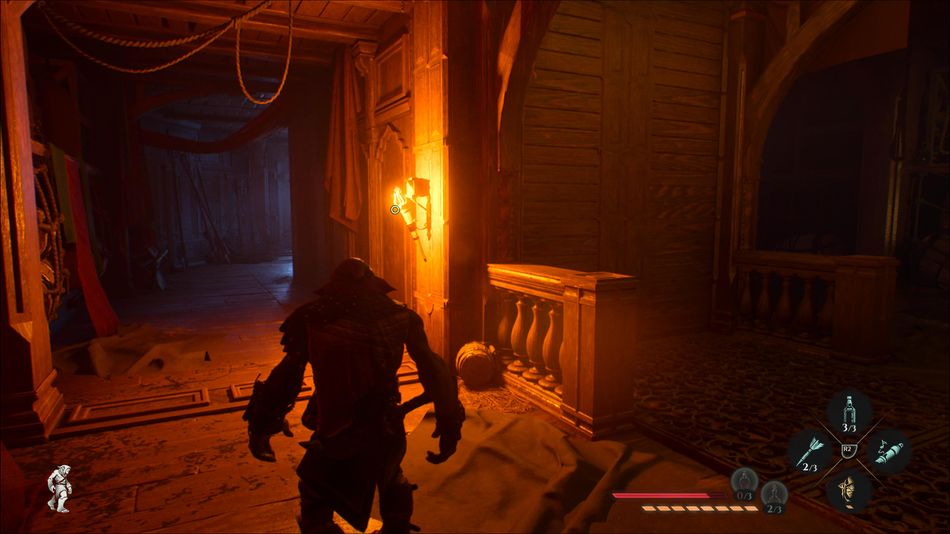
Sadly, other visuals in general look very dated. The biggest problem is the textures that take an eternity to load. Every time, mostly during cutscenes and sometimes even during gameplay sections, once the scenery changes, or you enter a different room or something, the textures take forever to properly load, which can look really unattractive and even frustrating.
On PlayStation 5, the game doesn't let you choose between quality and performance mode; all you can change is the level of brightness. It does aim for 60 FPS, but in reality, it isn't the case all the time. In some more demanding sections, and generally when much is happening on screen, FPS can drop to 30 or 40 FPS. Perhaps those issues will be addressed as soon as the first patch comes out, but the situation is far from ideal now.
Sounds, especially the soundtrack, are decent, but no more than that. Voice acting is very good, in-game sounds are okay, and the music that plays in the background during gameplay changes with the situation. I found the sound of the violin particularly soothing, and it gave me comfort while playing.
Conclusion
In the end, Styx: Blades of Greed is a game of sharp contrasts. As a stealth-focused experience, it delivers exactly where it matters most: level design that rewards patience, creativity, and experimentation and a gameplay loop that is endlessly engaging, delivering consistent fun. For fans of classic stealth mechanics, sneaking through shadows, manipulating enemies, and cleaning out entire areas without being seen remains devilishly satisfying.
However, the game stumbles hard when it comes to accessibility for newcomers, with a poorly explained story, uneven AI, and noticeable technical and performance issues holding it back quite a lot. Styx: Blades of Greed isn’t a polished stealth masterpiece, but it is an enjoyable and addictive stealth playground. One that I can recommend primarily for its gameplay, as long as you’re willing to forgive its narrative and technical shortcomings.
The Good
 Highly engaging stealth gameplay
- Smart, vertical level design
- Wide range of abilities and tools
- Satisfying enemy manipulation
- Strong use of light and darkness
The Bad
 Confusing and inaccessible story
- Poor onboarding for newcomers
- Inconsistent and broken enemy AI
- Textures take ages to load