Trending
The genre of story-driven games has been around since the early days of gaming, as many titles have prioritised narrative above all else. However, despite their strong emphasis on storytelling, these games always included some form of gameplay. After all, a game ultimately needs to have gameplay to truly be considered a game.
However, Slay the Princess: The Pristine Cut is actually the real proof that a game without gameplay is not just possible but even commendable at some level. The entire idea of this game revolves around making dialogue choices and deciding what to say at specific moments. Surprisingly, this isn't a drawback at all, because for a game like Slay the Princess, this format seems like a perfect choice.
This game can be described as an interactive visual novel where your choices shape the final outcome, all centred around a seemingly straightforward premise. You're in a forest, and an unknown voice—referred to as the narrator—tells you to enter the cabin ahead. Inside is a princess, and you must kill her, or the world will end. Sounds simple, right? Well, not exactly, because taking the life of someone you’ve never met for reasons you don't fully understand is far from easy.
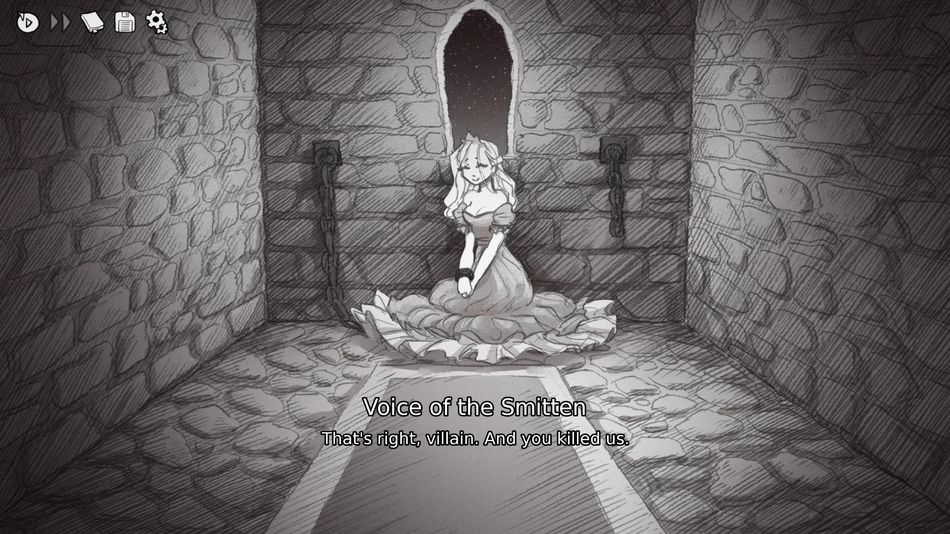
And now the only gameplay mechanic comes into full bloom—the choices. Once the narrator tells you what to do, you'll receive a lot of choices on how to respond, and each choice will bring a different outcome. But you might wonder how you can explore all those choices and outcomes. Once you make one choice, your character will return to the beginning and do the slaying or saving of the princess, which can be done in many different ways.
Now, to avoid spoilers, I won't speak of choices; the only thing I'll say is that the story, or should I say stories, that come out of those choices are truly amazing. I dare to say that the story this narrative gem features is one of the most complex and hardest to understand, but once you get to the bottom of it, I assure you, it will be worth it.
The quality of the story in Slay the Princess is further elevated by its well-written dialogue, filled with layered meanings and hidden messages that will leave you pondering for quite some time. Many of the protagonist’s conversations with the final iteration of the princess are deeply philosophical, and I often found myself taking screenshots of certain lines to reflect on later. Even the great Immanuel Kant would likely be impressed by some of the game's philosophical insights.
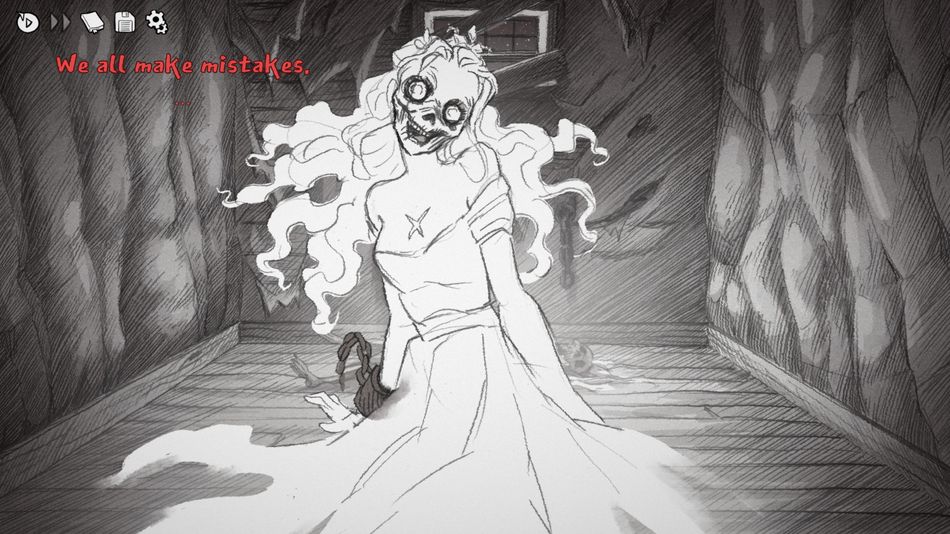
As mentioned earlier, decisions play a crucial role in Slay the Princess, with different choices leading to various iterations of the princess as well as different inner voices for the protagonist. These versions of the princess are unlocked after completing the game, revealing multiple possible endings. Once you finish the game, a gallery becomes available, offering hints on how to unlock other iterations, which significantly boosts the game’s replay value.
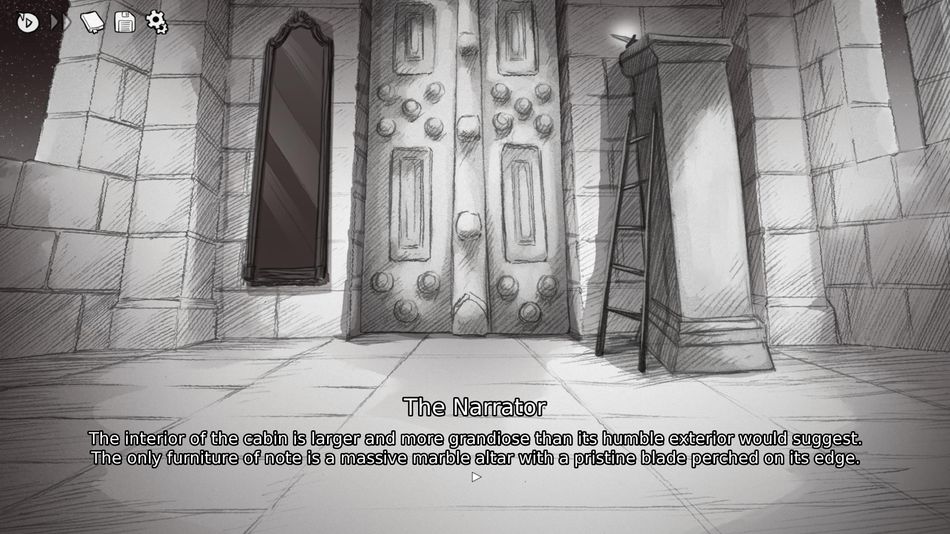
Regarding the game's visual presentation, let's just say it is unusual, with a very interesting choice of colour palette and visual art style generally. Slay the Princess is designed as a hand-drawn comic book using a graphite pencil. The colour palette used in the game is mostly black and white, with a very rare appearance of other colours—I encountered the other colours only once, near the end of the game, although there might be more during different endings, which I haven't tried.
Some dialogue options are written in red to make some situations more alarming, and apart from the aforementioned appearance of the colour at an ending, this will be the only colour you'll see on the screen.
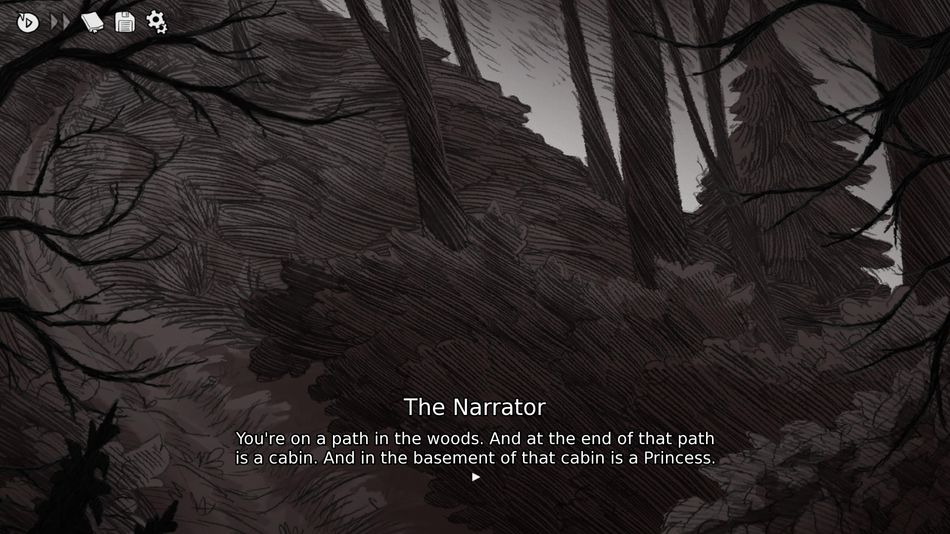
The animations are almost nonexistent as well because the whole game is showcased through moving images as you watch an interactive comic and not a video game. However, the game doesn't shy away from presenting powerful and sometimes disturbing imagery.
For instance, depending on your choices, there are moments where the princess attempts to bite her own hand off, and later, with her consent, you finish the job with a knife. While there's no explicit animation, these scenes are unsettling and uncomfortable to witness, leaving a lasting impact.
Although Slay the Princess is classified as a horror game—at least on paper—it won't scare you in the way the other horror games do, perhaps only disgust you if you have a weak stomach. That said, sound design plays a crucial role in building the intense and eerie atmosphere, and I must admit, the game delivers well in this area. The audio presentation is quite effective at enhancing the overall experience.
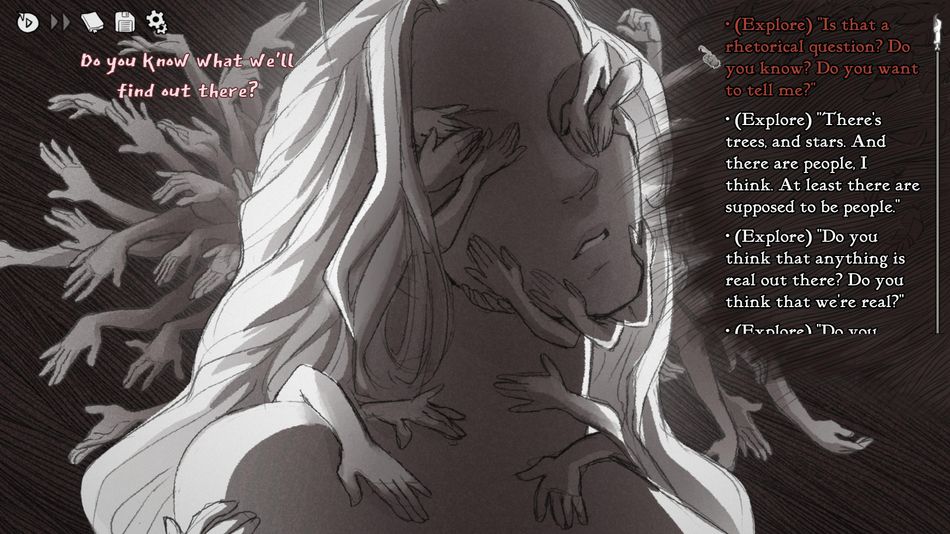
I’d especially like to commend the excellent voice acting, which is particularly impressive considering only two actors voice the entire game. It feels like there are many more, thanks to their ability to shift and adapt their voices. Essentially, the game revolves around just two characters: the princess and the protagonist, who can embody both a hero and a killer, with multiple personalities, just like the princess, depending on how you interact with her.
Apart from great voice acting, the soundtrack is fantastic as well, with the songs that play in the background as you play the game. These songs are not overly aggressive, and you won't even notice them until it's time to notice them—every situation dictates a different composition, and in this regard, the sound designers really hit the mark.
Conclusion
If you appreciate narrative-driven games with minimal gameplay involvement that also tell a fantastic story, then you probably won't find it better than Slay the Princess. This game will give you a fantastic story with so many endings that you'll probably lose count of them. Each ending is a story for itself, and in this regard, you'll get incredible replayability.
However, the gameplay is almost nonexistent because Slay the Princess is more a novel than a game. But if you can tolerate the lack of gameplay as well as the quite unattractive visual presentation, then by all means try this game because it will provide the experience like few other games can.
The Good
 Strong emphasis on narrative and storytelling
- Complex and thought-provoking dialogue
- High replay value with multiple endings
- Effective sound design and excellent voice acting
The Bad
 Minimal gameplay involvement
- Unattractive visual presentation