Trending
Fresh ideas in everything, including video game development, are usually a very welcome feat, but sometimes developers simply go too far. Being creative is one thing, and it is very commendable, to be honest, but believing you can justify the lack of quality ideas in the development by creating a charismatic character who, by the way, feels totally off, is a prime example of underdevelopment in a game.
Those words seem very harsh, especially when they're spoken in the very introduction of a review, but I felt like I had to say them, not because I hated my time with Rusty Rabbit—on the contrary, I actually even enjoy it on some rare occasions—but more because I feel very angry when the publishers are trying to sell us a game focusing on one and only one feature, putting all else on the margins.
I probably sound very cryptic right now, but I fully intend to explain myself in the following lines. Rusty Rabbit is a Metroidvania-like 2D platformer that aims to sell us a bad-ass main character and his cheap humour way more than a good game we will enjoy.
How is that, you might ask? Well, Rusty Rabbit might seem like an ordinary platformer in which you'll cruise through levels, kill baddies, and collect all sorts of stuff, being fairly entertained in the process, but it is sadly anything but. All that is present in this game, yes, but it is all simplified to the point where you'll ask yourself, is there anything else I should be doing apart from destroying thousands of junk cubes to collect some screws and similar garbage?
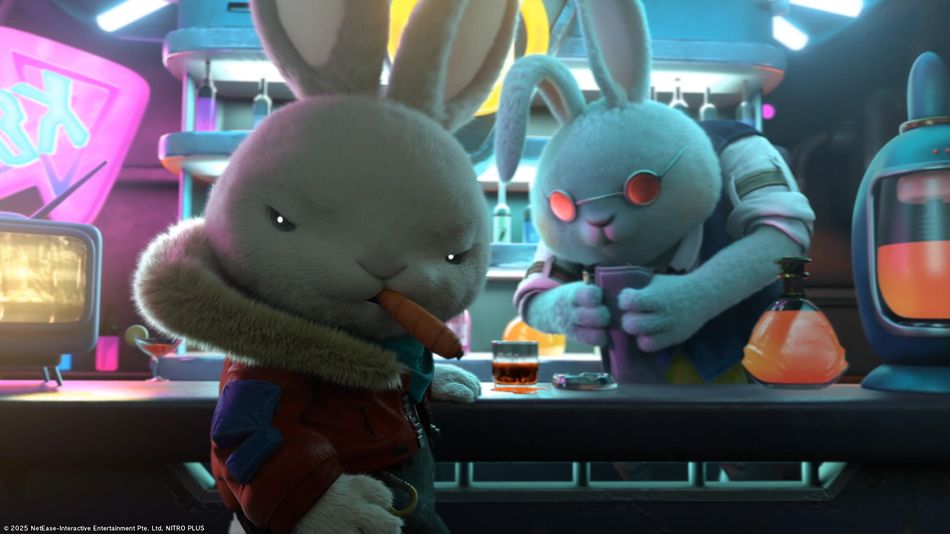
The main protagonist of this game, an old, grumpy rabbit called Stamp, is a guy who lives like someone who doesn't have anything left to live for—his main preoccupation is his job as a junker, which he takes too seriously for his own good. The game takes place in a postapocalyptic, post-human era, where fluffy rabbits and other cute beings dig through the junk left by humans to scrap by.
Stamp owns an exoskeleton robot-like vehicle equipped with drills and some other tools for defence, and every day he leaves in the world to collect junk, then he returns back, goes to the bar to drink all he earned, and the cycle goes all over again every day, or at least until one day, their town is visited by a small gang of young junkers who decide to collect junk in their town, making Stamp feel even older and grumpier than ever before.
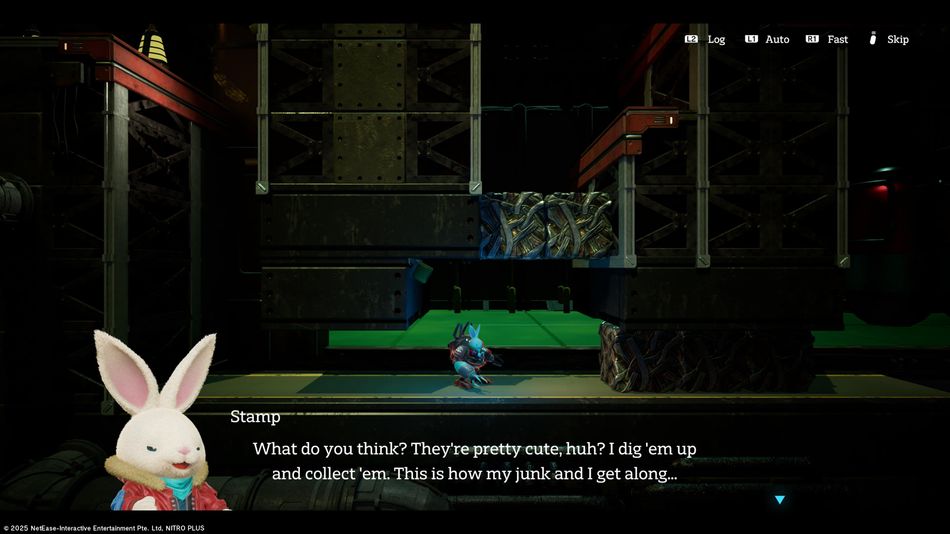
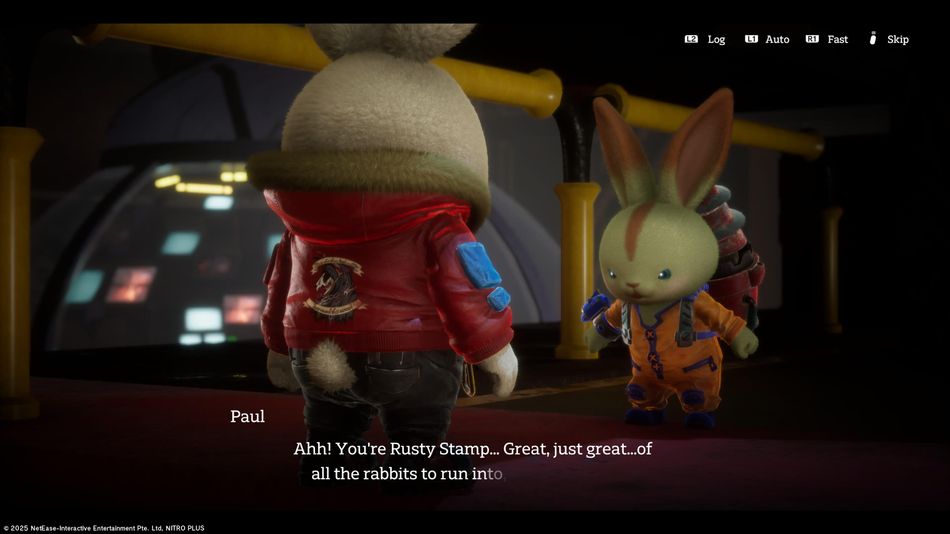
The story of Rusty Rabbit is both told and designed to be reminiscent of the stories of AAA titles with very high-quality production cutscenes and voice acting, especially the one of the Stamp, that even some highly sophisticated games wouldn't be ashamed of.
Once you experience such cutscenes and such seriousness in storytelling, you might expect to meet the gameplay that at least comes close to it, but no, when you start playing this game, you see how generic and oversimplified it actually is.
All you'll be doing in Rusty Rabbit, once you take control of the game, will be moving through the levels and destroying tonnes of junk cubes stuck suspiciously symmetrically all over the places you visit. Seriously, you'll come across walls full of cubes you'll have to destroy to clean the path and reach the end of the level. Who, with an ounce of sound mind, could enjoy such a concept?
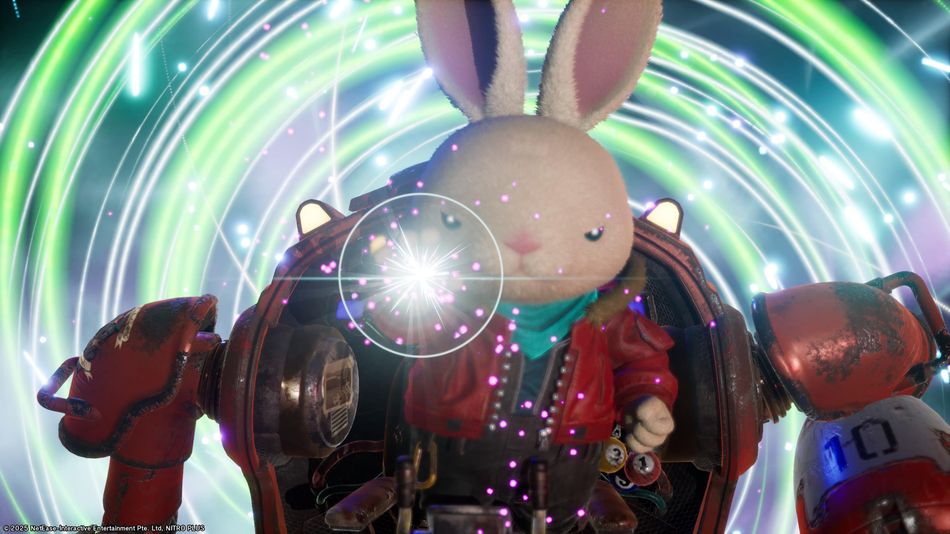
The exoskeleton he is using will allow him to jump, glide, drill, and even kill some foes that will get in his way. The first weapons are quite generic and oversimplified, so you'll engage with the simple press of a button. As the game progresses, the weapon choices expand, and some of them are even fun to use.
All the junk you're gathering serves as an upgrade for the exoskeleton and its tools, so the game is basically a huge cycle of grinding—go visit a dungeon, gather as much junk as possible, use it to upgrade yourself to be able to gather even more junk to upgrade yourself even more, and so on and forth.
The grind itself is nothing really new; I mean, a big number of games are designed in almost the same way. The problem here is the lack of anything else that could possibly propel you forward into the game. If it weren't for my obligation to finish this game, I highly doubt I would find the patience and strength to go past the first two stages. Everything feels and looks like you're repeating the same mission and the same level over and over again.
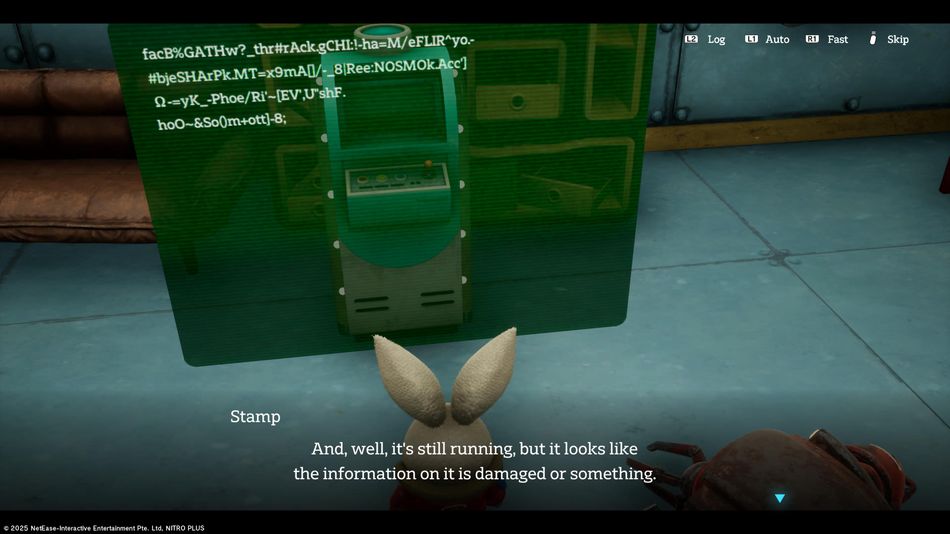
The only thing that I could single out as fairly interesting is the exosuit building progress. Apart from gaining materials with mindless junk cube grinding, you'll also gain experience, and you'll be able to invest XP points into a skill tree. Unlocking new suit abilities is a nice feature, and I found it, let's say, more tolerable than fun.
The graphics are nothing special as well, and Rusty Rabbit definitely isn't one of those games where the gameplay and other aspects of the game are a failure, but the overall presentation is there to make amends. The graphics are good and tolerable during the cutscenes, but once the real gameplay starts, everything is so plain, and, as I mentioned before, all the levels look pretty much the same.
The biggest problem, for me, is those numerous cubes you're destroying. Due to such a design, it is impossible to make a level that has its own touch. Even though the dungeons you're exploring are in different locations and are different in general, once you enter them, the cubes always take the first row, overshadowing everything else.
The sound design is not bad. The aforementioned voice acting is very praiseworthy, and the credit must be given where credit is due. I dare to say that the main character and its voice acting, both English and Japanese, are the real highlights of this game.
Conclusion
Rusty Rabbit is a 2D platformer with a very strange concept, bad implementation of ideas, and a very good main character, whose charisma and bad-ass appearance are simply not enough to carry the entire game on his back.
With very repetitive gameplay that puts you into a mindless grind cycle, graphics that are really nothing special, and sound design that is not bad at best, it's really hard to find anything in this game that can be worthy of my recommendation.
The Good
 Charismatic and well-voiced main character (Stamp)
- Skill tree and exosuit upgrade system is fairly good
The Bad
 Oversimplified and repetitive gameplay loop
- Excessive grinding with little meaningful progression
- Level design is bland and visually repetitive
- Graphics are plain outside of cutscenes