Trending
It seems that lately only indie game developers dare to experiment with something new and different because, with triple-A titles, the developers seem to be too cautious, as they are afraid of making a mistake and losing their investment, which is quite understandable when put like that.
This is exactly why, in some lesser-known indie titles, you will sometimes come across a real small gem that does not hesitate to present itself in a slightly different light and even venture into some themes and topics that flirt with controversy and some "forbidden" grounds, like Indika bravely does.
The themes treated in Indika are so sensitive yet so interesting that the story on its own will be more than enough to pique your curiosity to give this very interesting and, dare I say, very unique game a chance to play it and try something refreshing in the world of video games.
Story
By far, the greatest asset of Indika is its sophisticated and controversial story, which tells a tale about a very young and attractive nun living in an orthodox monastery somewhere in the frozen hell of Siberia during the nineteenth century.
Right from the start, you can tell something's off because Indika doesn't belong in this place at all. It's filled with old, unfriendly sisters, and she seems out of place like she's trying hard to fit in but never quite succeeding. Whatever she does simply isn't enough.
Things start to change for Indika when she's given a seemingly impossible task: delivering a letter to the cardinal in the city all by herself. However, a series of unfortunate events leads Indika to get involved in a murder, albeit indirectly, all to save someone's life, including her own. That will lead her to meet Ilya, an escaped prisoner whose faith is so strong that it will make Indika question her own for the rest of their journey.
This story is special because Indika, mostly when she's alone, hears voices in her head—the voices she believes are the devil speaking to her. Every time Indika is alone, she starts an argument with the devil about whether her actions have pure intentions or are the product of the lowest passions. These conversations, especially the arguments presented by the alleged devil in her head, are truly a written masterpiece that, together with good voice acting and some special effects, paint a portrait of pure madness.
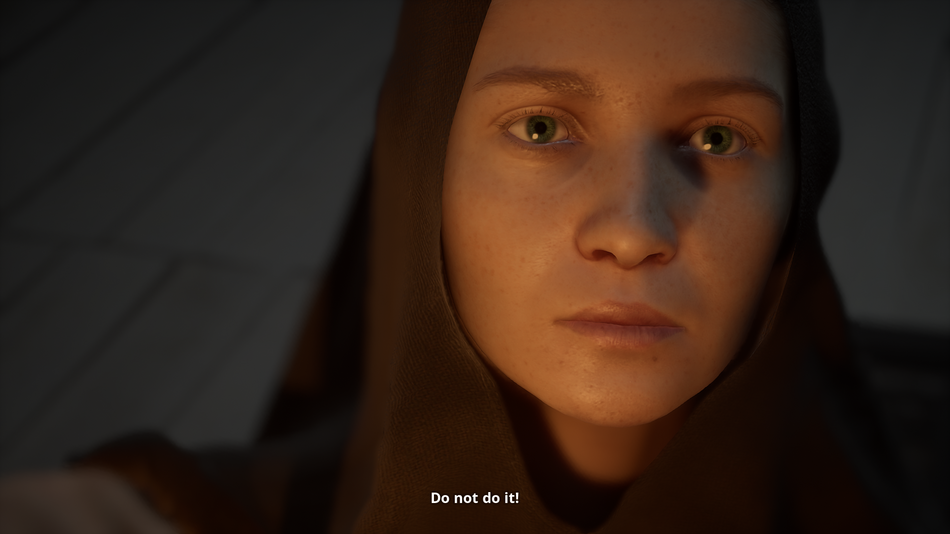
And of course, all believe she is actually crazy, not possessed, or anything of the sort, and her looks and behaviour don't help either to convince others otherwise. Every time you put her face close to a camera, her gaze is lost and ashamed, and she is always looking aside. Her face paints a picture on its own, and it is enough just to look at her to see that there's more to this girl than meets the eye.
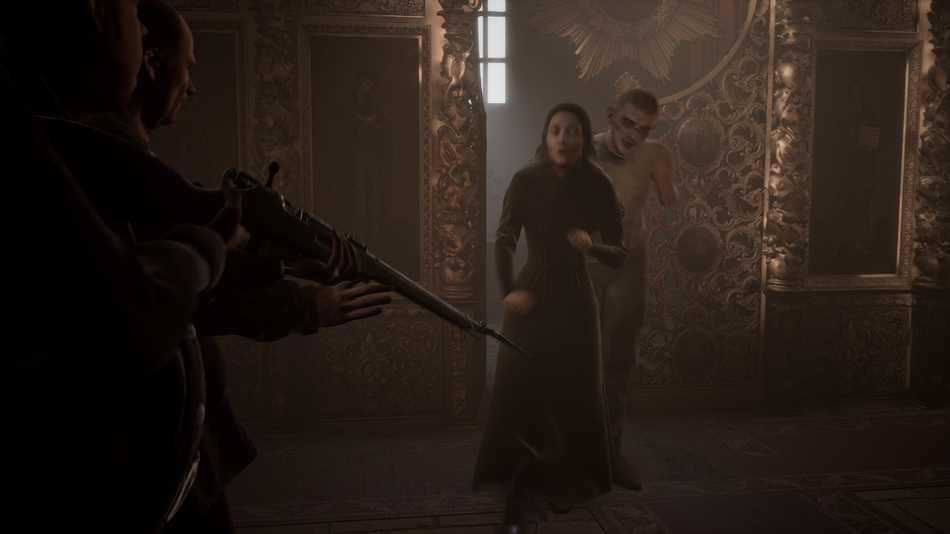
The story is told through the chapters in a linear style; when one chapter concludes, one portion of the story is told, but what makes this story particularly interesting and mysterious are the small, 2D-presented chapters that vaguely tell us Indika's dark past and all about her previous life, the one she led before the monastery and her being a nun.
The way this story is told is simply flawless. With each new chapter, fresh details surface, along with new doubts and questions that flood Indika's bewildered mind. Despite her efforts to be the voice of reason and connect with God as a nun, the game skillfully portrays her as a person struggling with a plethora of pressing problems like all regular people.
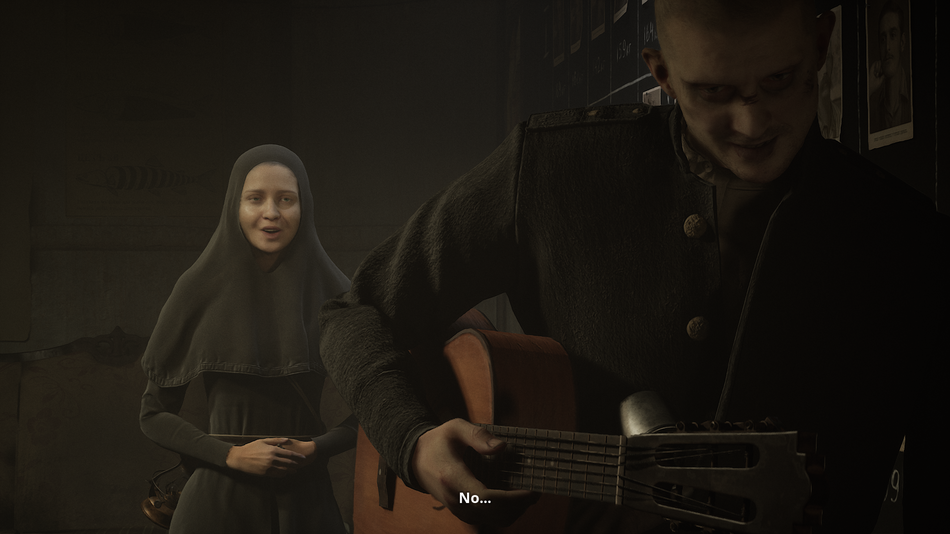
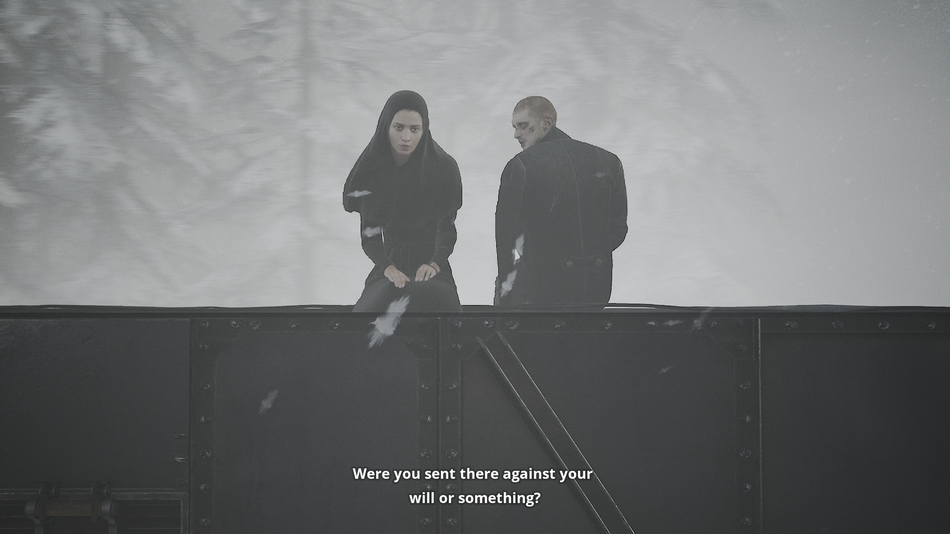
Conversations between Indika and Ilya are another standout aspect of the story. Although at first it seems that Ilya is just an ordinary runaway criminal and nothing more, his kindness and strong beliefs add depth to their interactions, often venturing into philosophical territory with occasional religious zeal that lacks solid foundations. However, their conversations are always engaging. In a way, they remind me of the memorable exchanges between Altair and El-Muallim in the first Assassin's Creed.
Despite its strengths, the story does have two significant flaws that greatly detract from its overall impression. Firstly, it is very short and leaves much to be desired, and secondly, towards the end, specifically in the last chapter, all ends suddenly and definitely not in the way one would expect. I won't argue about the storytelling techniques or about the messages the writers wanted to send us, but it's impossible not to notice that the story simply doesn't feel finished. It all seems like a couple of additional chapters would suit the story well enough to give it a different, more satisfactory conclusion, but it is what it is.
Gameplay
Indika is one of those games where story is at the wheel and everything else simply takes a back seat. So, one would anticipate that the gameplay is minimalistic here, with several quick-time sequences that have a simple role to differentiate the game from a movie or TV show. Well, on one hand, it is true, and on the other, it isn't, so let me elaborate.
The gameplay in this game is unique at its core, considering that the protagonist is frail and weak nun. Due to her religious attire and calling, you cannot expect her to be agile, so do not expect some fast-paced action, parkour elements, or such things.
However, Indika is far from a no-gameplay game, so to speak. The game has a classic third-person perspective where you control Indika. She can walk, sprint, climb some small obstacles, and, like any other godly person, she can pray and cross herself; yes, there is a command for crossing, and even though it is completely useless, it adds to the authenticity of the game's theme.
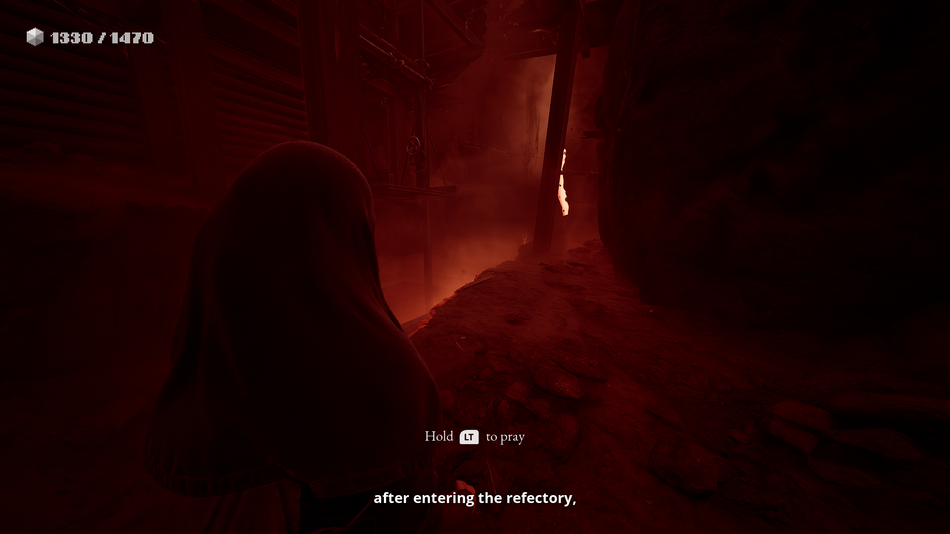
Praying helps Indika enter the state of prayer, which changes the environment around her, allowing her to solve some environmental puzzles connected to this mechanic.
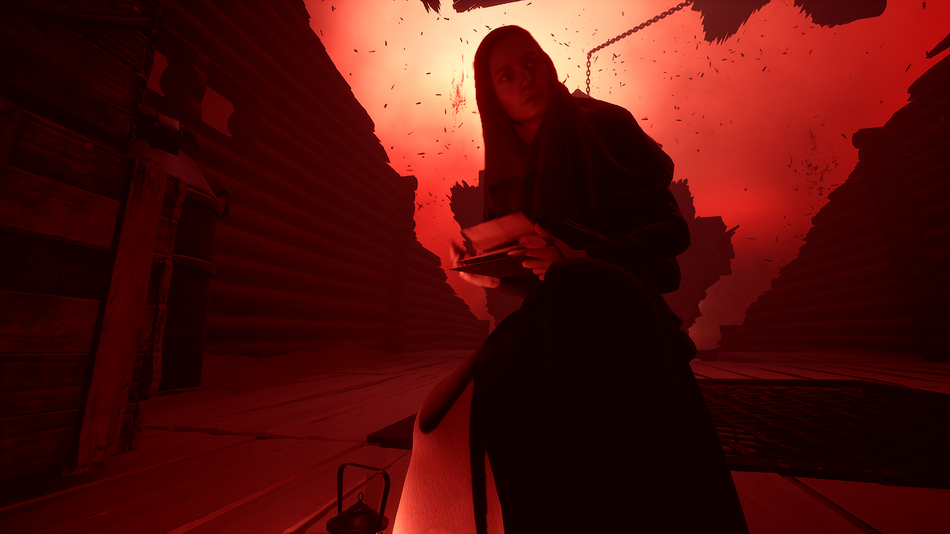
Speaking of puzzles, it is worth mentioning that they are very interesting and very well-crafted and can go hand-to-hand with the puzzles seen in some triple-A titles without any problems. To be honest, there's not much to the gameplay except the puzzles; Indika isn't using weapons or driving cars, so the game's main forte is puzzles, and I must say that the developers did the job with them spectacularly.
However, I might have lied a little when I said that Indika isn't driving cars. She isn't driving cars per se, but in one chapter, she drives some sort of motorcycle, and it represents one of two chasing sequences in the game. The one is with the forementioned bike and the other is with a huge dog. Those sequences are highly stressful and perhaps the only intense part of the game.
Another commendable aspect of Indika is that it doesn't "hold your hand" throughout the gameplay, so to speak. There are no indicators or instructions telling you what to do. The game doesn't even explain new mechanics; you have to figure them out on your own. This approach encourages critical thinking and allows you to come up with your own solutions.
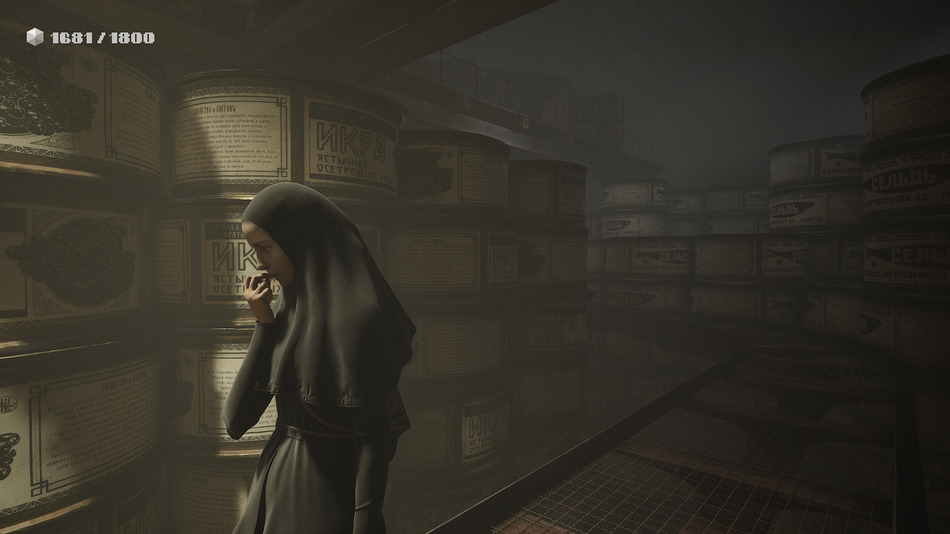
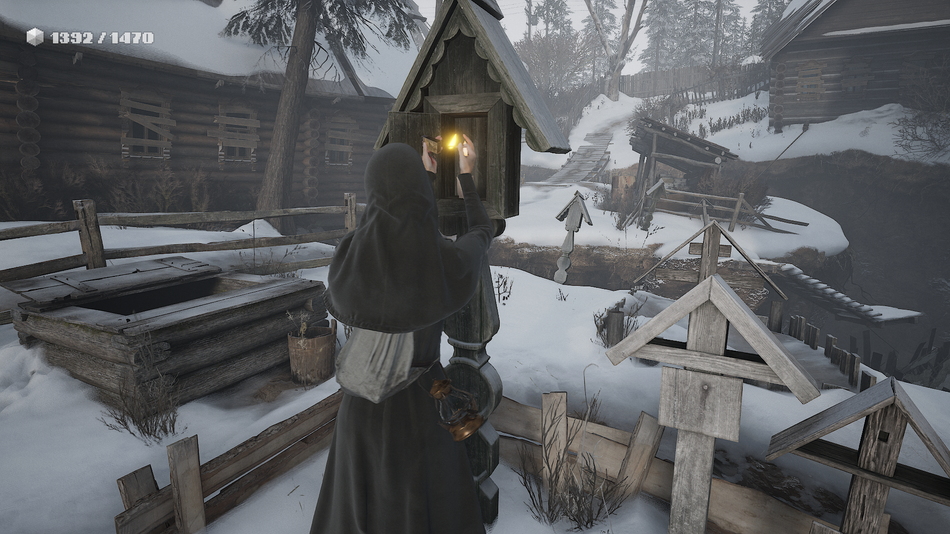
The game has some kind of levelling system, which, to be honest, remained a total mystery to me. You level up Indika by finding some sort of faith points throughout the game. Those faith points are obtained once you finish a chapter or find a religious site that serves as some sort of in-game collectible, where Indika stops and lights a candle. Once she does that, a certain number of points are awarded to you, and when you reach a certain milestone, you can enter the progress menu and spend a point in one of two categories: one rewarding you with three more points upon reaching the next level, and the other with additional faith points.
What does it mean, and how does it change gameplay? I really don't know. Perhaps the developers encourage us to read between the lines. On one loading screen, you can read the next sentence: "Do not weep for the lost points; they are useless anyway." However, I won't be the one to comment on it; I leave that to you to draw a conclusion. Those topics are sensitive as they are; there is no need to push anything further, right?
Gameplay, in general, is not the richest one you'll ever encounter, but you will be entertained; do not worry. Even though the gameplay isn't the main emphasis of the game, solving puzzles, participating in chase sequences, and finding collectables are enough to make it interesting and even engaging at moments.
Graphics, Sounds, and Performance
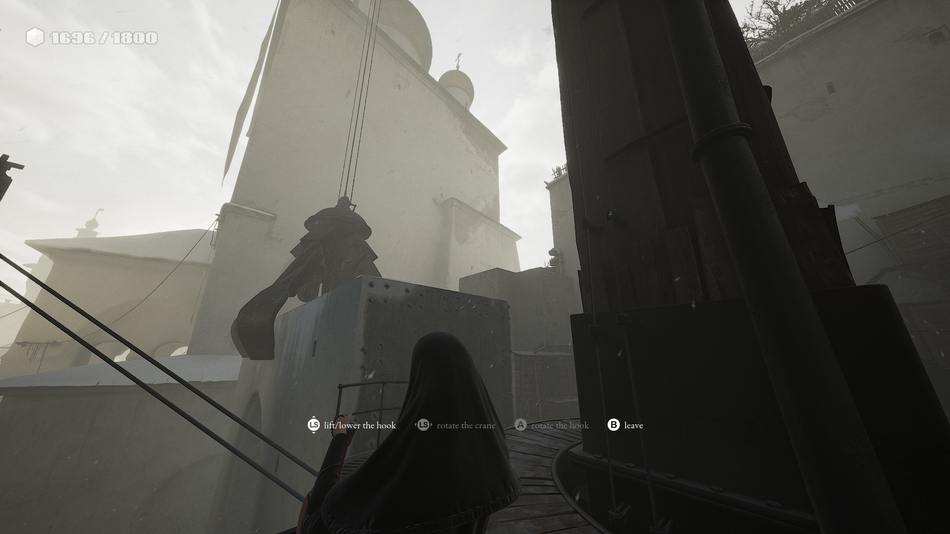
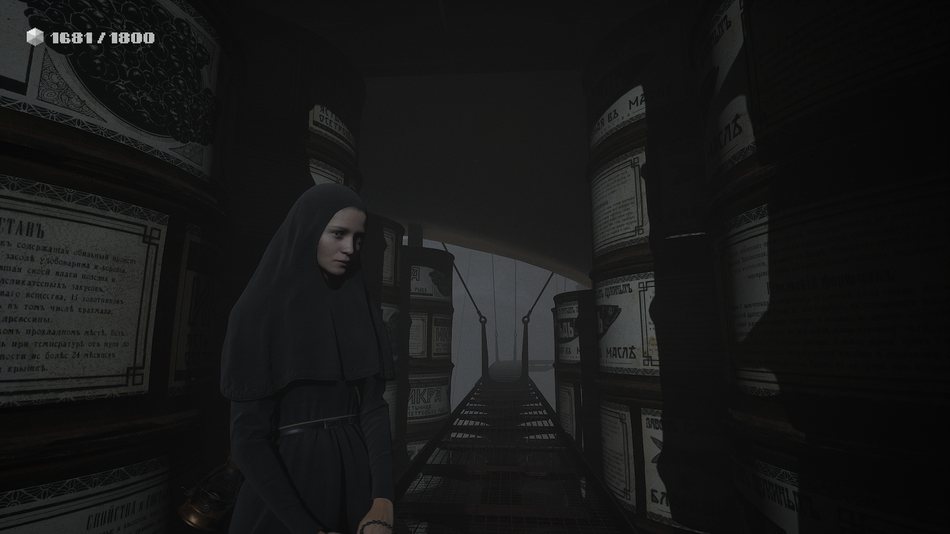
As is the case with the gameplay, from the graphical point of view, Indika is a very interesting game, to say the least. When I say interesting, I mean it isn't all black and white, even though this game's colour palette is just that, almost black and white. It seems the designers of this game did this on purpose to portray depression and hard life in nineteenth-century Russia, especially in the rural northern parts of the country. The black and white colours are dominant, but it isn't a completely colourless palette. The other colours are just too faded and not as dominant as those two.
The game is made using the Unreal engine, and that by itself speaks volumes, because we all know how beautiful games can be made using Epic's tool. Indika, however, isn't a visual masterpiece, so to speak, and it relies more on its unique art style.
I also noticed that there is a huge gap in the character design quality of Indika and all the other characters. Her face model and details on her face, all together with almost perfect facial expressions, look amazing, while all the other characters look like the ones from the PlayStation 3 era, which is simply unacceptable. Long story short, Indika holds next-gen quality graphics while everything else is barely on par with something released decades ago.
The graphic settings on the PC version of the game are not that rich, to be frank. You can choose the level of graphic quality without venturing into details. The only options you can change are upsampling and the DLSS values. The textures seem okay without loading problems and such, but when you look more closely, you can see the lack of texture quality with everything looking so old and dated.
As I previously mentioned, the game features several 2D levels—the ones that tell us about Indika's pre-nun life. The design of those levels is really charming, fueling nostalgia for those old 2D games, and it represents a total contradiction to the main game's design. Another developer's hidden message, perhaps? Who knows. All I know is that they look very nice, and that's enough for me. Those levels are different not just in design, but their colours are different too, more vibrant and colourful, perhaps reflecting the different stages of Indika's life.
The sound presentation is solid, with the voice acting being one of the game's best qualities, apart from an excellent story. All the actors, from Indika to every other character, especially the one lending a voice to the devil, are just amazing and worthy of all the praise. The best moments where the sound effects truly shine are during the devil encounters, where Indika must pray to keep her sanity. The sounds of the devil's constant talk vs. dull silence during Indika's prayer are as effective and beautiful as they are scary and annoying; you simply don't know what to feel.
The soundtrack is nothing special, I would say, but the song or two will stick to your memory, even after the game is finished and the credits roll. All other sounds are without particular complaints and serve their purpose.
Performance-wise, the game is more than good. There are some occasions, especially at the beginning of the levels, where the game stutters, perhaps due to the texture loading. I would say it isn't a game-breaker, but can be problematic and will bother some people. To me, it wasn't that much of a problem, but I must mention it for the sake of the review's objectivity.
The game runs very smoothly on my not-so-strong, rather mid-range PC. I locked the frame rate during the gameplay at 60 FPS, which didn't cause my PC any problems. When I left the frame rate unlocked to test the performance, it was running at around 90 FPS, which is more than enough. As it comes, Indika is not a performance eater, and even low-range PCs will run it with zero problems.
Conclusion
Indika is something different, and I encourage you to try it by all means. Its full price is $25, and for such a price, it will deliver, no doubt. If those religious-fueled, bizarre stories are your cup of tea, you mustn't miss this game. However, be prepared for the controversy, some topics everyone are rather avoiding speaking about, and some strange gameplay mechanics that will definitely make you utterly confused.
Apart from that, Indika will leave such an impression on you that, after the game ends, you will be amazed, that's for sure. The only question is whether you'll be amazed by the quality of the game's content or by the question you'll ask yourself: "What the hell have I just played?"
The Good
 Sophisticated and controversial story
- Interesting, well-crafted puzzles
- Solid voice acting
- Smooth performance
The Bad
 Short and unfinished story
- Dated graphics
- Confusing levelling system