Trending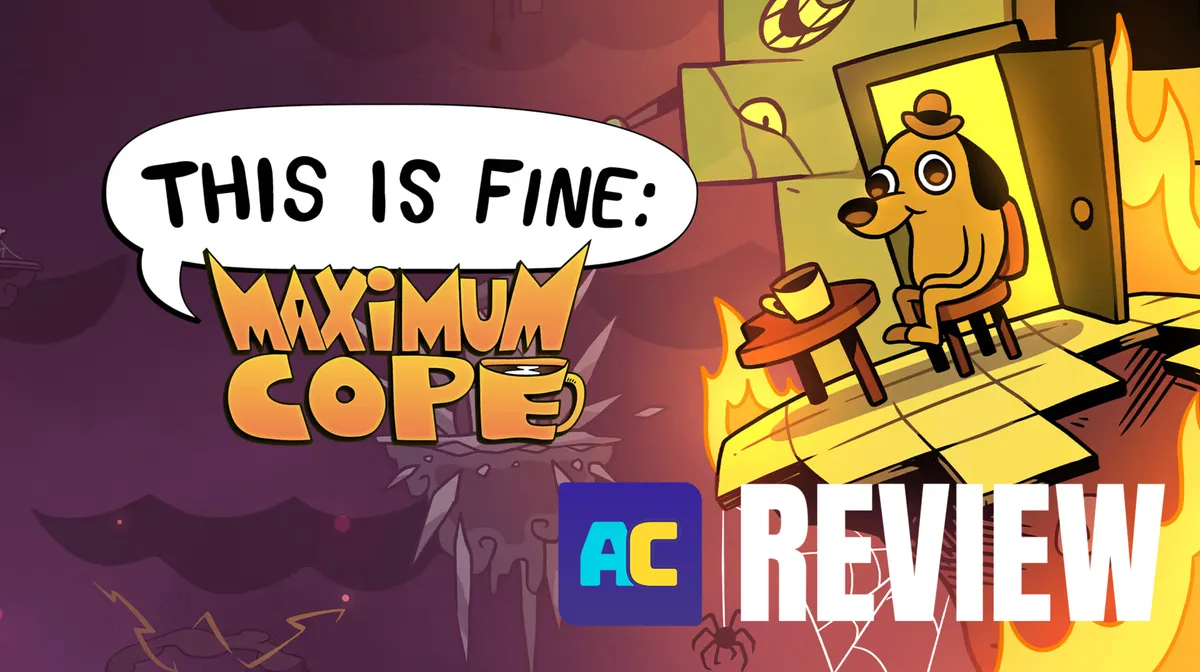
There is a particular kind of cultural pressure that comes with building a video game around one of the most recognisable memes in internet history. The risk is obvious: recognition is everything, which means you're set to deliver a game that revolves entirely around the joke and end up with something that can give you a good laugh and be forgotten the very next day.
Hero Concept, the developers behind This Is Fine: Maximum Cope, were clearly very aware of that danger, and the result is a game that is considerably more interesting and considerably more sincere than its origins might suggest. It is also, in its better moments, a very good game.
Story - Everything is Not Fine
The story, such as it is, follows Question Hound, the familiar coffee-sipping dog of KC Green's iconic 2013 webcomic, who finds himself falling through a collapsing theme park built entirely from his own anxieties. The premise is quite clever, to be honest, because it treats the meme more like a starting point around which the entire story revolves and less like the idea itself. Question Hound is no longer simply sitting in a burning room. He is inside the fire, facing it, and the game asks him, and, of course, you through him, to confront the very reason this room is set aflame.
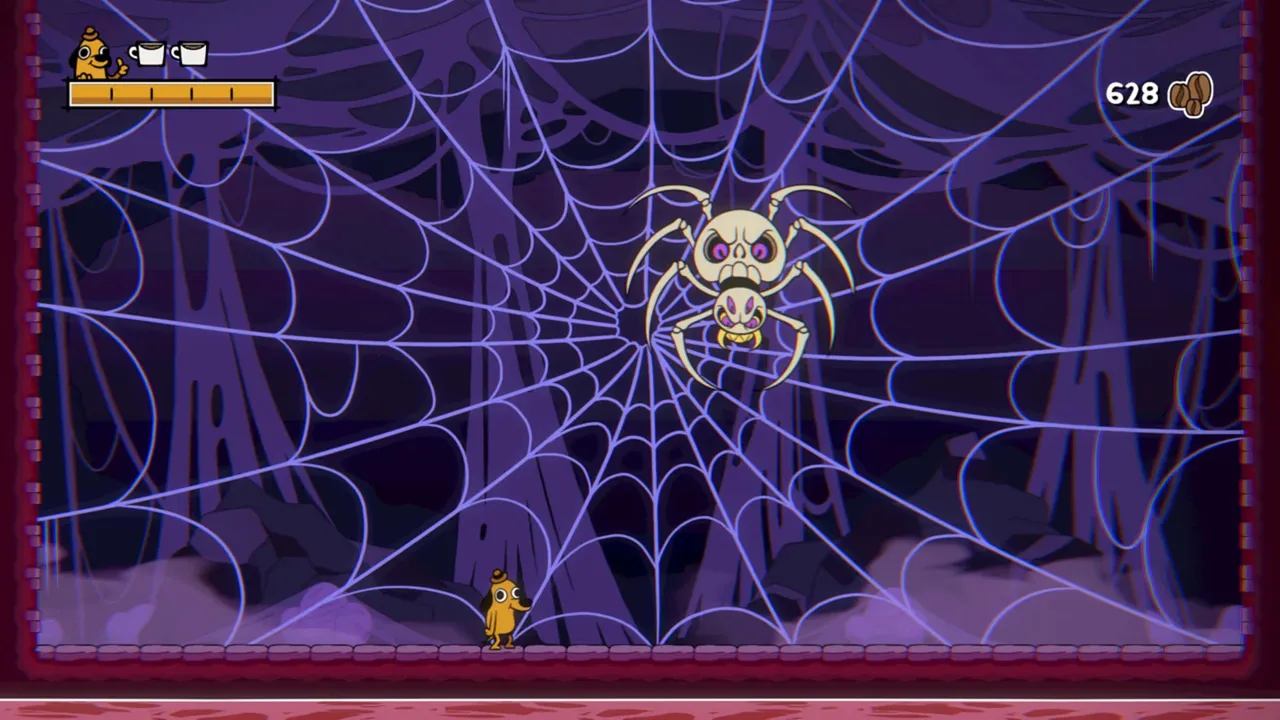
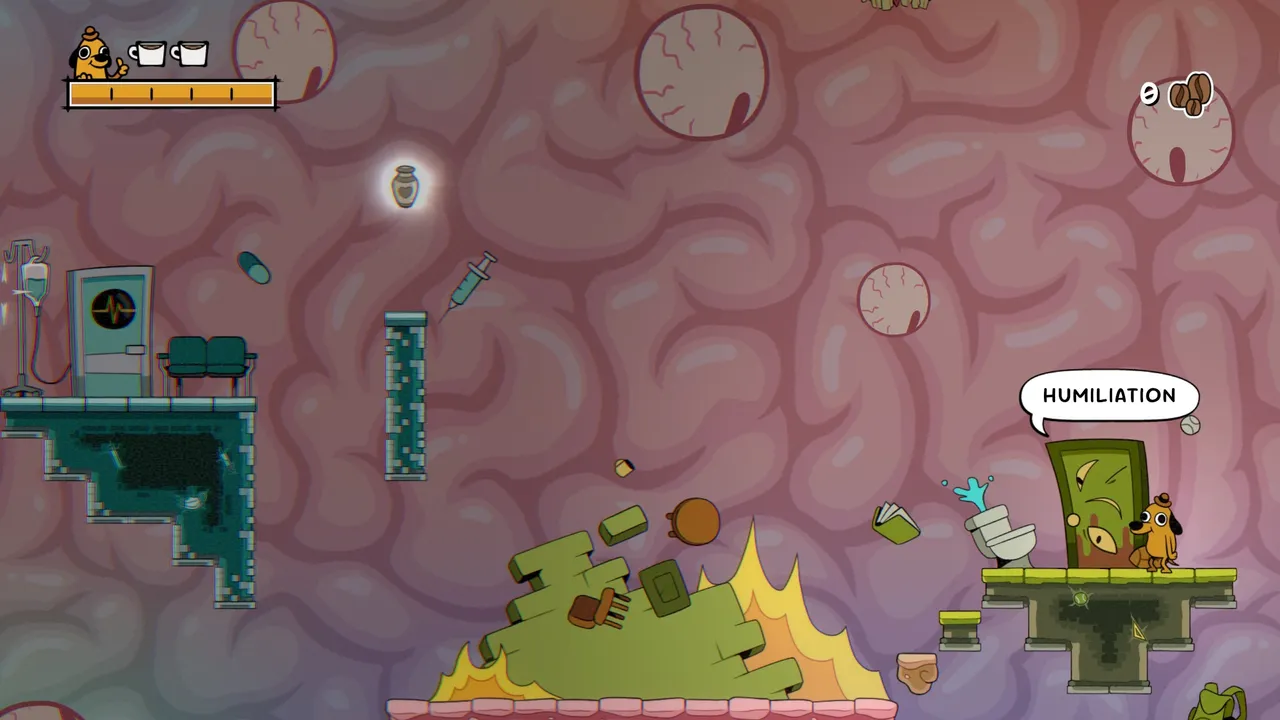
The theme park is divided into five different worlds, each one built around a specific emotional state: humiliation, fear, failure, loss, and regret. Six bosses embody these emotions in physical form, and facing them requires understanding not just their attack patterns but also the deeper anxieties they represent. It is a simple concept, but it is executed with such an amount of imagination and creativity that it left me in complete disbelief.
The story, which is just genius, does not give you clean resolutions of events, and once you beat a certain boss or finish a certain area, it magically heals you from all your pain, no. It leaves space for interpretation, which is exactly the right call and far braver than simply wrapping everything up the way many other games would definitely do.
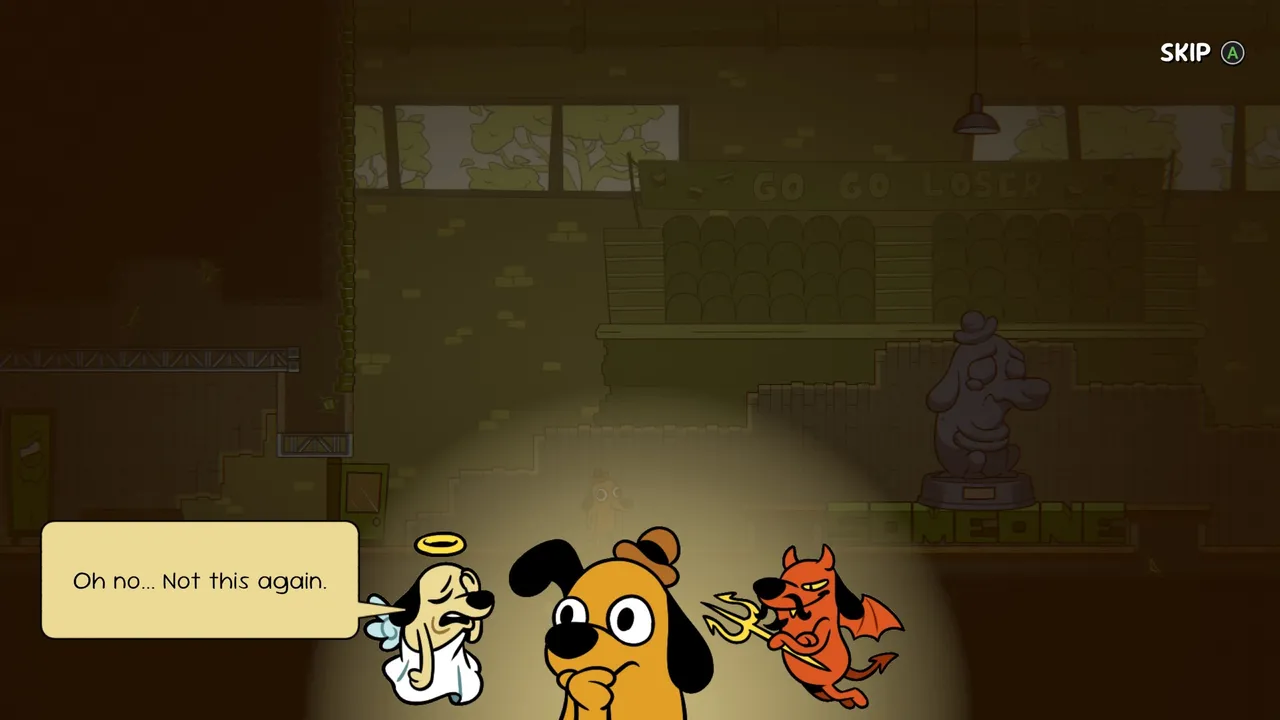
The humour, which could easily have overwhelmed everything else, is surprisingly dosed very cleverly, and that is one more good call from the developers, I must add. There are a lot of funny moments, hilarious dialogue exchanges, and visual gags that will produce those LOL moments. But the game also knows when to pull back and let something else take the wheel. That balance in storytelling is something that surprised me very positively and speaks volumes about the quality of This Is Fine: Maximum Cope's writing talent.
Gameplay - Jump, Fight, and Caffeinate
As a Metroidvania, This Is Fine: Maximum Cope follows a familiar structure set by the genre's finest. You explore interconnected areas, unlock new abilities, revisit earlier zones with expanded capabilities, and gradually push further into Question Hound's crumbling inner world. If you are well-versed in the genre, none of this will surprise you, and the game does know that very well.
However, even though the mechanics of any Metroidvania are very well-known, the game does a fantastic job in making them purposeful. The five worlds are not just thematically different; they are mechanically different as well. In the humiliation world, absurd and uncomfortable social situations are thrown at you one after another, each one more ridiculous than the last. Failure leans into collapsing platforms and punishing timing windows. Regret circles back on itself, forcing you to revisit ground you thought you had already cleared.
Every level, apart from being the story on its own, also represents different mechanics tightly connected to the story they tell, and such depth is something I definitely didn't expect from such a small indie title.
The movement is tight and responsive, and for me, this might be the most important feature of any platformer. Jumps are precise, dodges work as they should, and attacks have a clear sense of weight and timing. The environments may be surreal and often very uncomfortable, but the controls never leave you guessing.
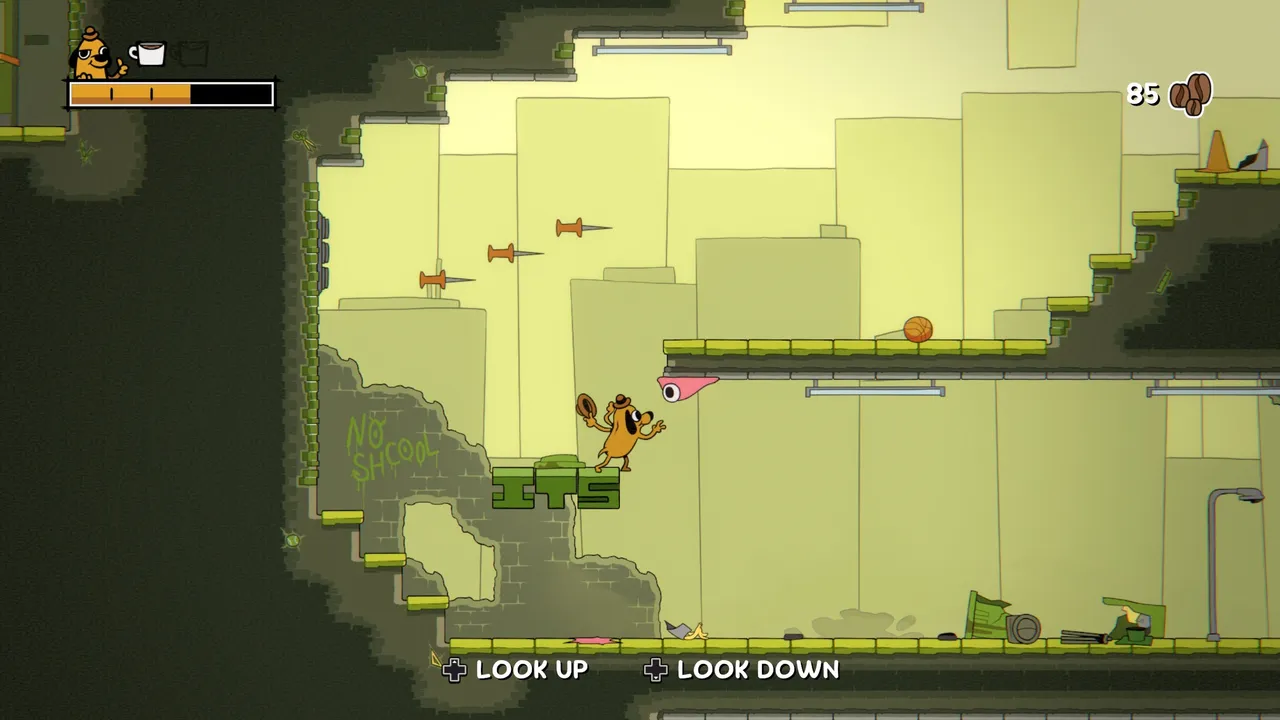
Combat is not especially complex, but it demands attention and rewards patience, and the boss encounters are where the game genuinely comes forth big time. These fights are larger, louder, and more demanding than anything else in the game, and everything you've learnt up to that point will be hard-tested in those fights. Be so damn sure about that.
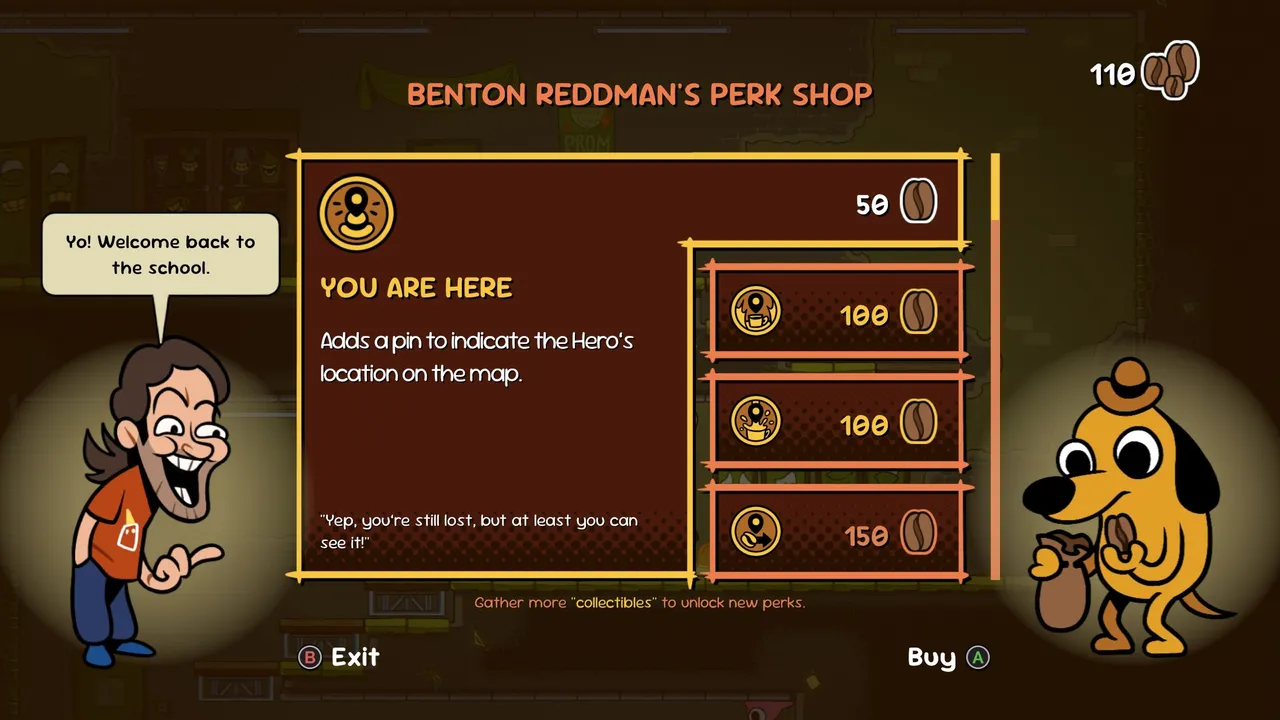
The most distinctive mechanical idea in the game is its use of coffee as both a healing and an energy resource. Coffee beans are scattered throughout the world, and your cup must be managed carefully all the time. It is a simple system, but it fits the game's themes perfectly. Coffee becomes a coping mechanism, something you reach for in difficult moments, something you can rely on too heavily or withhold from yourself at the wrong time.
Since I am a great coffee lover and cannot imagine a day that isn't started with a cup of this heavenly beverage, the very mechanics relying on coffee simply made my day the first time I ran this game. It is something very different and also something very unique and original.
The game does not entirely escape the limitations of its genre, and some aspects of its progression feel predictable, particularly for players who have spent significant time with other Metroidvanias. Certain enemy types are simply recycled in later sections. Some backtracking feels more like retracing steps than discovering something new. The combat, while solid, is not the most inventive the genre has produced. These are evident weaknesses, and they must be pointed out, even if none of them seriously undermine what the game achieves overall.
Graphics, Performance, and Sounds - Hand-Drawn Mayhem
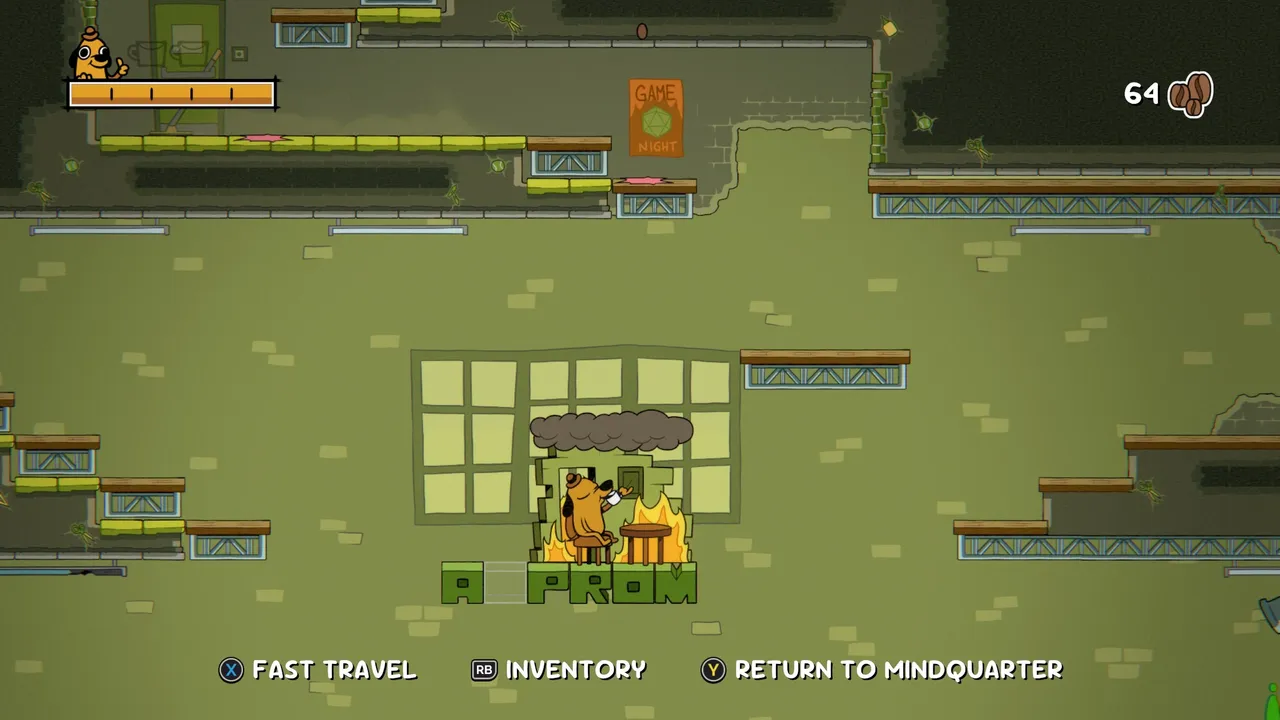
Visually, This Is Fine: Maximum Cope is original, unique, and quite confident. The hand-drawn art style gives characters and environments a fluidity and personality that suits the surreal, anxiety-ridden subject matter perfectly. Enemies range from generally funny to vaguely disturbing, flying textbooks, warped household objects, and fragments of memory that refuse to stay still, and each design feels intentional and tied to the emotional logic of its area.
The theme park framing holds everything together beautifully, which can make the game look cheerful and colourful in some instances, on one hand, and very dark and disturbing on the other, and that contrast is probably the biggest visual strength of This Is Fine: Maximum Cope.
On the technical side, the Steam version I played performed flawlessly from start to finish. Not a single crash, not a single hiccup, not a moment that gave cause for concern. The game does not offer any graphical options apart from a brightness slider, which might seem strange for a PC version, but the pre-set visual settings look perfectly okay and run even better, so the absence of additional options is something you will make your peace with quickly enough.
The soundtrack complements the tone with real skill, constantly changing between playful and unsettling, often within the same track, and the sound effects are sharp and purposeful, reinforcing gameplay feedback while adding to the atmosphere. A strange, made-up language, which sounds ridiculous, also adds some level of originality to the game, making it even more unique and special.
Conclusion
This Is Fine: Maximum Cope is a game that had every opportunity to be just 'another boring Metroidvania' and chose, at every turn, not to be. It takes an internet meme that has been reproduced and repurposed countless times across more than a decade and builds something original and meaningful out of it.
The Metroidvania structure is familiar and occasionally predictable, the combat does not reinvent the wheel, so to speak, and the movement can feel slightly sluggish in certain sections. But the thematic commitment is real, the presentation is strong, the boss fights are excellent, and the emotional honesty at its core earns the game considerably more credit than its origins might initially suggest.
This is fine. But it is also, in the best possible way, a good deal more than that.
The Good
 Clever and thematically coherent world design built around emotional states
- Tight, responsive movement and reliable controls
- Strong boss encounters that bring all the game's elements together
- Coffee mechanics add quiet thematic resonance alongside practical depth
- Restrained, well-judged humour that never overwhelms the sincerity
- Distinctive and confident hand-drawn visual style
The Bad
 The familiar Metroidvania structure offers few surprises for genre veterans
- Combat is competent but not especially inventive
- Some enemy-type repetition in later sections
- Occasional backtracking feels like retracing rather than discovery
- Movement can feel slightly sluggish in places