Trending
Since I had never had the opportunity to play a Diablo game before, the notion of reviewing Diablo 4 struck me as both intriguing and challenging—especially after learning that this sequel was adopted for players that are not too familiar with the series.
I can't say that Diablo 4 and I clicked right away, but after a few hours of adjusting, this action RPG grew on me more and more until I started furiously spending hours and hours roaming the world, slaying thousands of demons and other not-so-friendly creatures.
And after more than 40 hours spent in the demon-infested Sanctuary, I can say that I only scratched the surface of everything that Diablo 4 has to offer. And even in such a short time by Diablo standards, of course, I came to the conclusion that this is a really excellent game that, admittedly, is not to everyone's taste, but if you are a lover of RPG games, Diablo 4 will very easily get under your skin with a little getting used to it.
Story
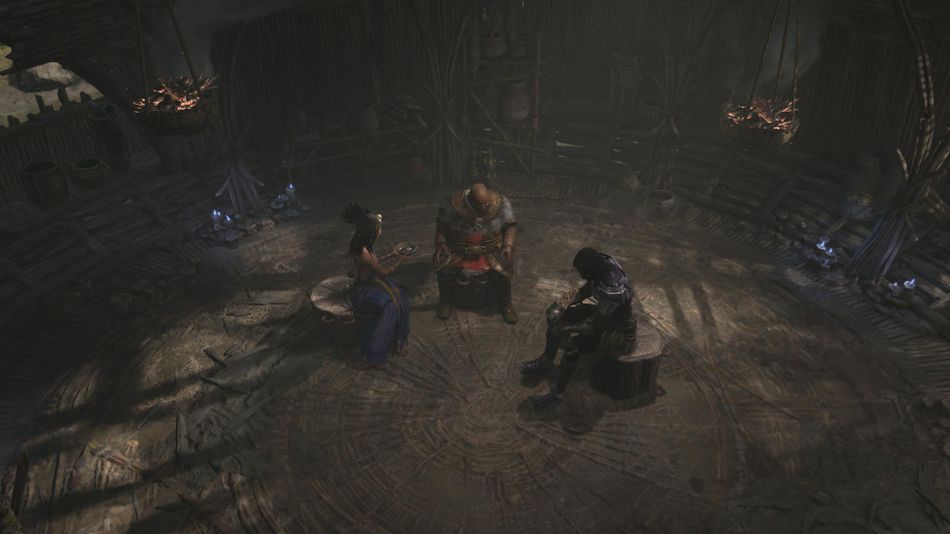
I've already mentioned that Diablo 4 is my first Diablo game, so I will try to analyse this game's story without comparing it to previous games in the franchise.
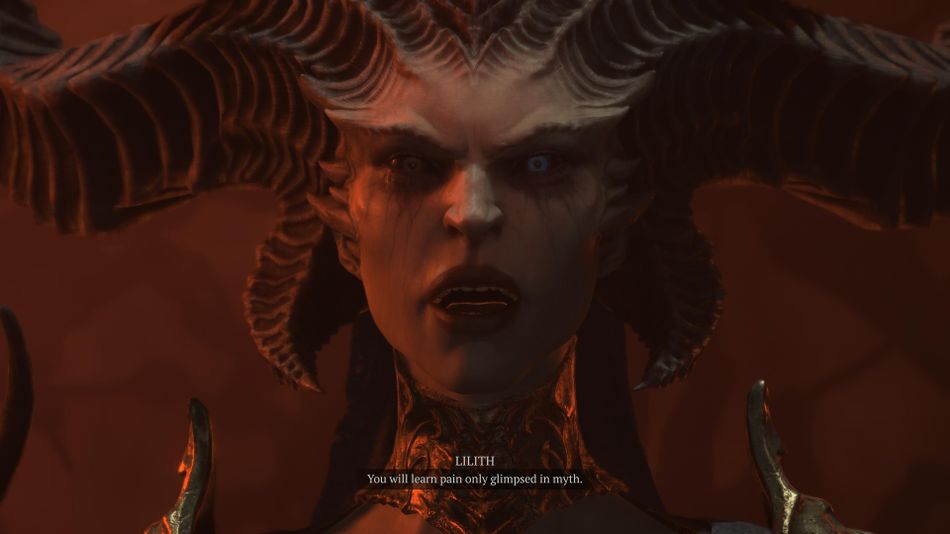
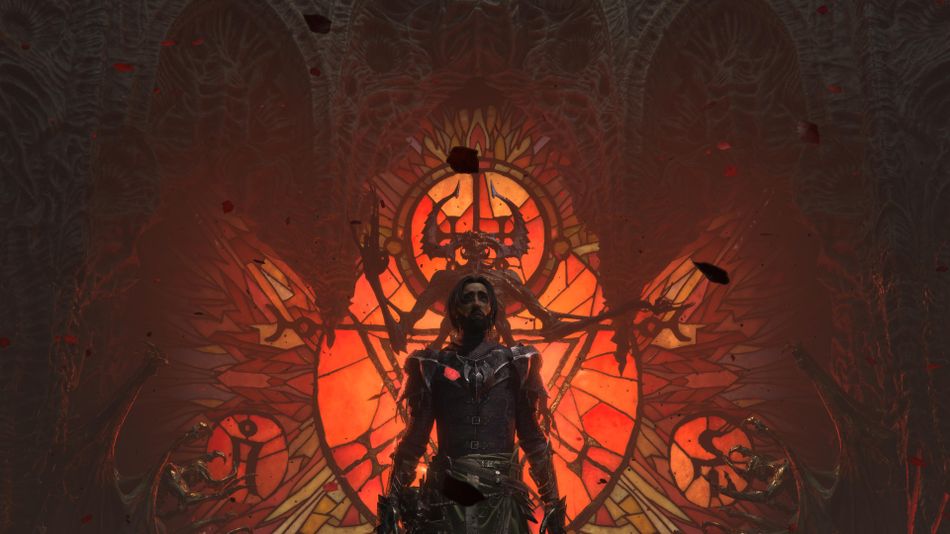
Although the story isn't Diablo 4's strongest suit, it's far from being weak or dull, as you may anticipate from certain titles of a similar genre. The story follows the hero (picked from five different classes available), who imposes himself as Sanctuary's last hope against the resurrected primordial demon Lilith, who threatens to destroy all humanity in her bloody crusade.
When you first hear this kind of introduction, you might think, "Well, we've seen this kind of story a lot before, where the good guys fight against the bad guys," but this story is completely different. In particular, our hero came into contact with the infamous Lilith's blood and is susceptible to having visions when he touches the so-called red petals.
In these visions, the protagonist takes Lilith's path, and you'll frequently find yourself thinking—at least, I did—that everything Lilith does makes sense, especially when seen from her perspective. As a result, in Diablo 4, your concept of good and evil will become quite relative. I think it's safe to say that the story's authors truly hit the mark with this one.
The story's biggest issue is not the quality of the premise or narrative but rather the way it is told. When I started playing Diablo 4, the story got my full attention and was the main reason I was so interested in playing the game as soon as the time permitted. Everything was so mysterious and intriguing that I completely ignored all side quests or other side content, only solving the main quests to figure out what would happen next.
Soon this pursuit for answers became chasing after the tail because each new quest will lead you to several new ones, and when the story was nearing its end, I became so exhausted that instead of making me intrigued, it made me restless, for lack of a stronger word.
For example, one quest will require you to repair a soulstone, and this is how it goes. The first quest will send you to retrieve the soulstone, but it will be broken, so you will have to repair it. The next quest giver will tell you to go and find some ingredients located on two different sides of the specific area required for repairing the soulstone. After you find the ingredients and bring them to the quest giver, he will tell you that he has no tools required to repair it.
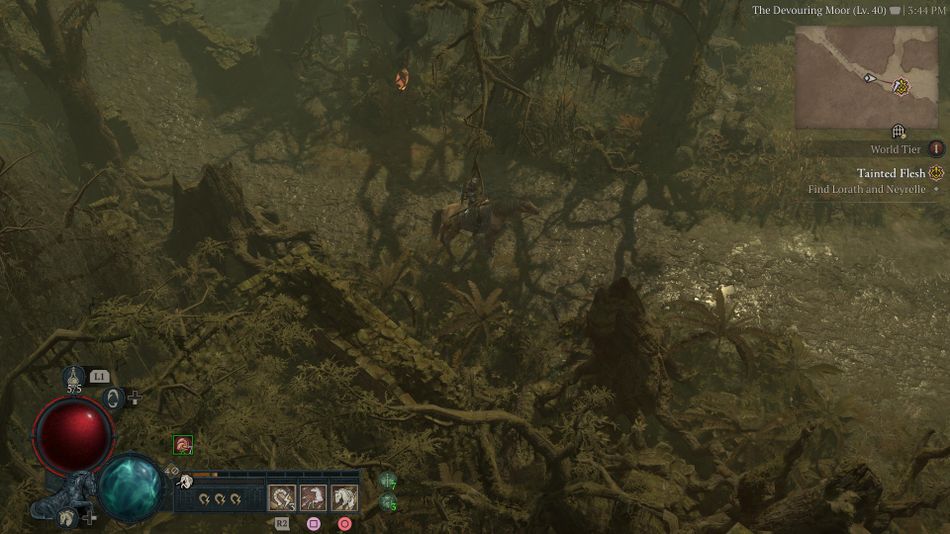
So the next quest will be to go to the nearest village to find the tools. Of course, the tools will be in a different location, so you will have to start one more quest. After you do all this tedious work, you will find out that the guy who is in charge of repairing the soulstone has a recent trauma, so he cannot focus, and to solve this problem, you're guessing, you must find some ingredients for the special tea that will help him get over his trauma and continue with his work.
As the story gets closer to the end, it stretches out more and more into similar quests that sometimes really drive you insane, so that all that intrigue and mystery slowly turns into thinking, "Is there an end to this?" Apart from that, the story is quite interesting, if a little too obvious at the end.
Gameplay
Gameplay, and combat in particular, is where Diablo 4 feels at home. As soon as you start the game, you immediately encounter proof of the game's versatility. On the first screen, you will be greeted with five classes to choose from: necromancer, barbarian, sorcerer, rogue, and druid, and each class brings a completely different gameplay experience.
So, for instance, a druid will use magic and ranged attacks; a barbarian will use force and be good in close combat; and a necromancer will be able to revive the dead and use them as an ally in the fight. Whatever class you select, you may always play the game again with another class to have a totally different experience.
Additionally, not only will different classes provide you with a unique experience, but you'll also be able to switch between a huge variety of attacks within a single class that you'll be able to acquire through a wonderfully simple and distinctive skill menu. As a result, you have a choice of five different attack types for the primary attack: a significantly stronger one that consumes the so-called essence, five more attacks, and so forth. You will be able to combine a total of five different attack techniques at your disposal to create nearly limitless attack combinations, even within a single class.
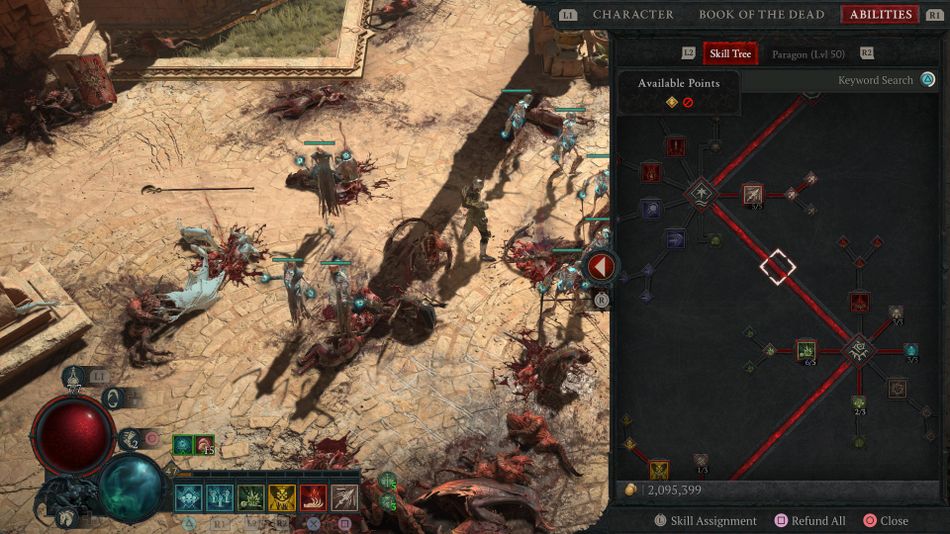
Earning skill points involves completing quests and other tasks. Every time you gain a level, you gain one skill point, which you can use to purchase a new skill. Your ultimate skill, which will particularly fortify your character, will be provided by the final skill category.
Apart from the main quests, there will be a plethora of side quests scattered all around the game's huge open world. The concept of side quests in Diablo 4 is not only to fill the game's world and add something new and meaningful to the game, but rather to widen the story and deepen an already rich game's lore.
Apart from the quests, Diablo 4's world will be filled with other activities like dungeons and cellars, which will award you with very useful loot upon their completion. Dungeons are special, usually, underground locations filled with demons with some sort of mini-boss at their end that holds a handsome reward. The interesting thing about dungeons is that you can replay them on different tiers (some sort of difficulty level), and each tier will bring you a different reward.
Although Diablo 4 is built as a multiplayer game (it cannot be played without an ongoing internet connection), the entire game, or at least the story mode, can be completed without teaming up with other players, although the game encourages you to do so at all times.
In major cities and settlements, you will meet other players the whole time and occasionally in the open world, and if you decide to engage in PvP game mode, you will be able to compete with them or against them. You will also come across events while roaming the world in which you will be prompted to help other players, and if you decide to take part in such events, even though they can be very challenging, the reward for completing them will always be worth the risk.
Diablo 4 did not disappoint in terms of equipment, whether it was armour or weaponry. There are numerous swords, shields, two-handed swords, magic wands, axes, spears, and other weapons on one side and chest armour, pants, helmets, rings, and amulets on the other side at your disposal, all of which can be upgraded. The weapons and equipment are rated according to rarity level as well, so we have regular, magical, rare, and legendary equipment.
The only minor flaw in the gameplay is possibly the boss fights, especially the fight with the main boss, whose appearance throughout the entire game was quite intimidating, and the final fight was a little disappointing, to say the least. Apart from Lilith, all other bosses are designed quite similarly, and if I can find a small criticism, it would be about boss fights.
All things considered, one RPG lover will definitely want for nothing in Diablo 4. From intuitive and very demanding combat to a beautiful and vast open world filled with all kinds of different content, everything one RPG can offer, Diablo 4 can offer too, and in terms of gameplay, Diablo 4 can definitely go side-by-side with the most successful RPGs ever made.
Graphics and Sounds
When it comes to graphics, Diablo 4 has not only surpassed its predecessors but has also surpassed any genre-related and similarly-looking game by miles.
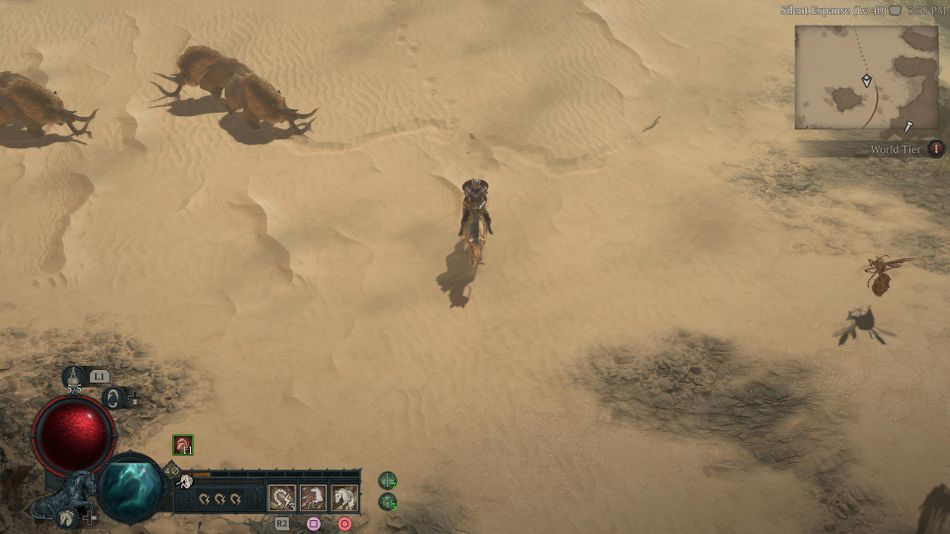
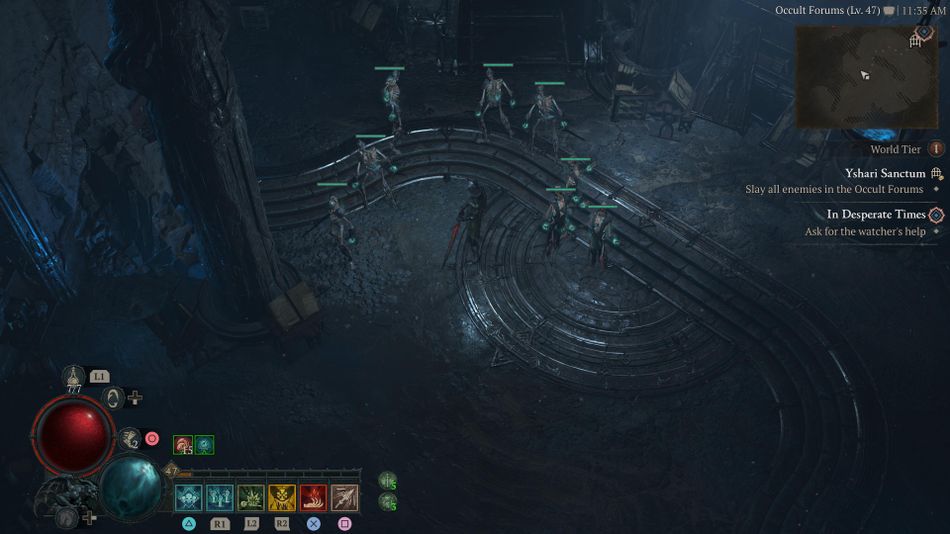
The Diablo 4 world is immense, as I've already mentioned, but the beauty of the game world is also represented in the variety of level designs. You can find everything in the new Diablo, from snowy mountains to hazy swamps, vast deserts, dense tropical forests, and completely destroyed and burned environments. And let me tell you something: each area is so beautifully and accurately represented that, despite the fact that this is a type of game in which graphics typically don't play a big role, you can still take a moment to appreciate the beauty of the setting and graphics the game has to offer.
I'd like to highlight the design of the dungeons, which seems wonderful; the only criticism I have is the repetitiveness of their design because they all look very much alike. Also worthy of appreciation is the design of the game's final levels, which I won't discuss to avoid giving away any surprises.
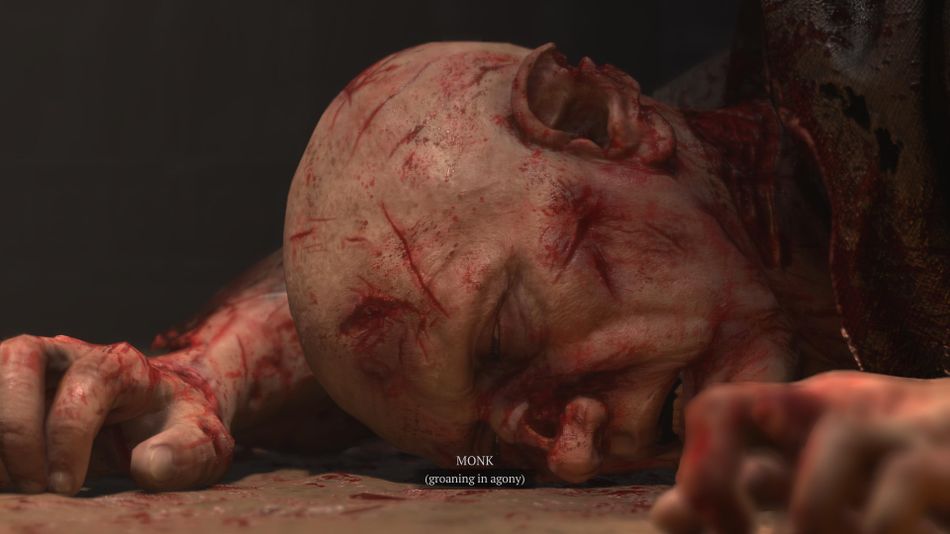
Cutscenes will also play a significant role in narrating the tale of Diablo 4. We've all seen the Hollywood-made CG clips that this series is known for, and you'll see them here and there in this Diablo sequel as well. What is most impressive, however, are those in-engine cutscenes when the game switches from an overhead perspective to a cutscene that looks more like a genuine cutscene from some AAA action-adventure title than an overhead perspective action RPG. The level of detail shown in those in-engine cutscenes is just insane.
Additionally, Diablo 4's sound is just stunning. Every track that plays in the background blends seamlessly with the setting, making it possible to identify the environment it is playing in without having to glance at the screen thanks to the unforgettable soundtrack. Other sounds really leave you in awe, particularly the sounds of battles and skirmishes. Weapon clanking, battle cries, and the screams of monsters, as they perish on the battlefield, are all expertly incorporated into the ambience of the game and significantly enhance it.
Conclusion
If you are one of those players like myself who has little or no experience with Diablo games, then Diablo 4 might seem like a big bite to swallow at the beginning, but as time passes, this game will slowly grow on you to the point where you will lose countless hours of your life without even realising it.
I cannot say that Diablo 4 is perfect because there is no such thing as a perfect game, but all the imperfections and flaws this game clearly has will remain invisible over almost perfect gameplay with one of the most satisfying combat systems in a beautiful and huge open world full of interesting things to do and places to visit.
When we combine the ability to play with five different classes and insane variations of combinations within each class, as well as four different levels of difficulty, each of which is almost a game in itself, we get a game with a huge replay value and an almost inexhaustible source of pure fun.
The Good
 Satisfying combat system
- Solid story if a little too plain
- Amazing graphics, especially during cutscenes
- Fantastic level design
- Memorable soundtrack and amazing in-game sounds
- Big and full of content open world
- Side quests that expand the game’s lore
The Bad
 The main quests will stretch out near the end
- Repetitive design of dungeons
- Mediocre boss fights