Trending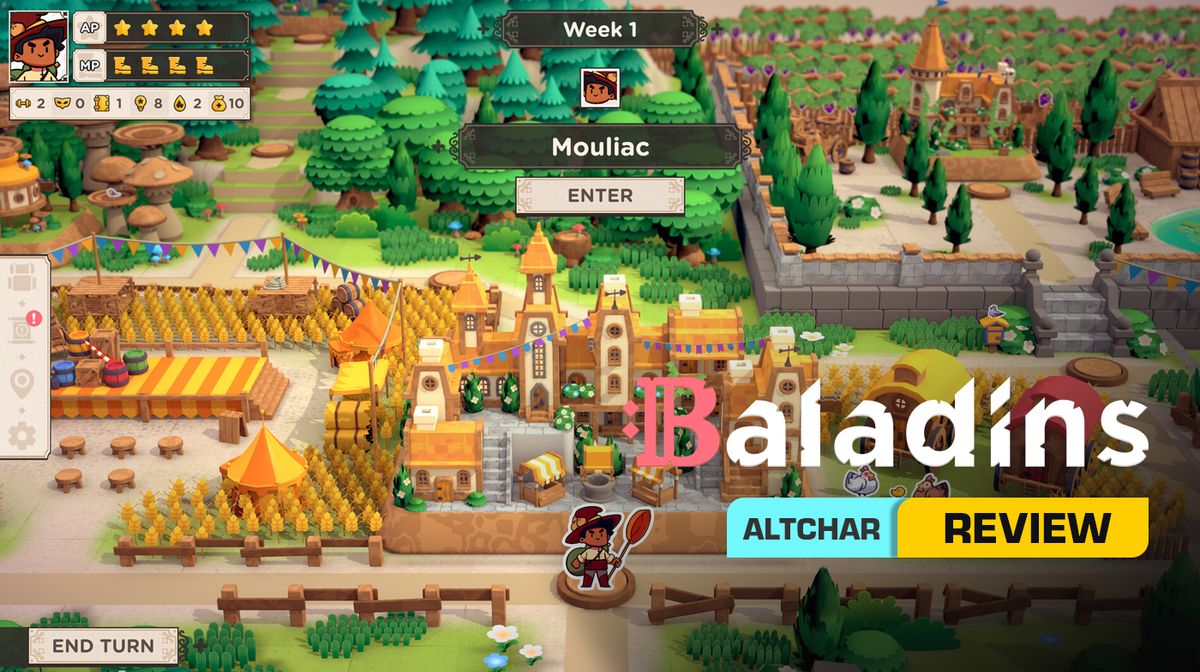
Baladins is colourful and whimsical, much like a set for a children's television show or a book. Quest endings, humour, and novelties in mechanics always managed to get me interested. To break free of Colobra's time loops was an obsession. You'll spend time accomplishing the many quests of the villagers in the pursuit of furthering the plot that must be completed within those seven weeks.
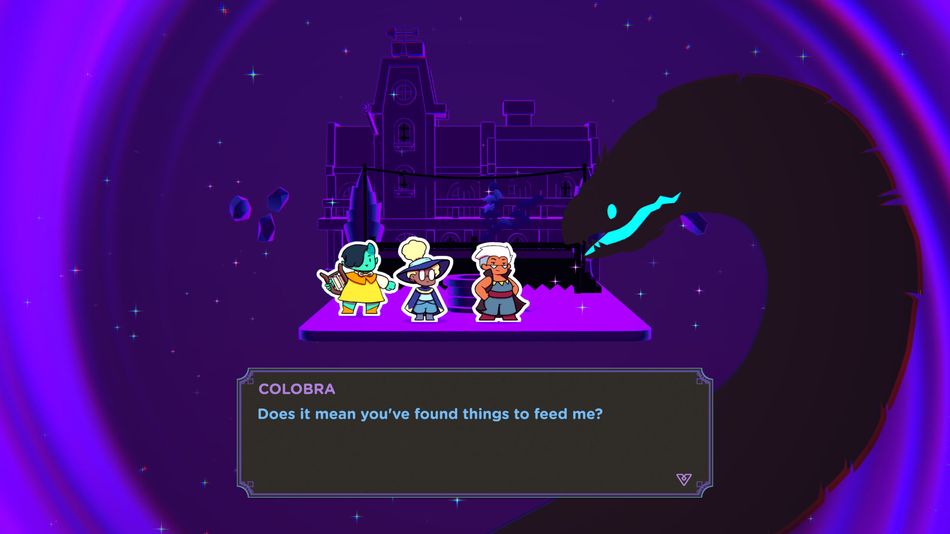
Colobra, the magical time-eating dragon sends you back in time if you do not meet the game's set objectives within those seven weeks. Now, there's something else. Not only does the dragon eat every single item you have found, but apart from keeping your well-earned stats, everything reverts in time, so you have to start the quest all over again.
This is the feature that adds an amazing twist to the gameplay mechanics of the game, as only the Baladins are aware of the time loop, while the rest of the village has no remote idea of that at all.
Each of the Baladins, meanwhile, is named for a related class: a Bard, a Cook, a Pyro, a Luxomancer and a Dancer. All of the class has specific skills and stats that are quite useful for the progress to be made through the cycle of the time loop.
Like the rest of Baladins, the skill system should be familiar to any player of role-playing games. The more numbers you have in a skill, the more chance that you will win random encounters or a good ending with your current quest. But the game also introduces different skills: destruction, creativity and finesse.
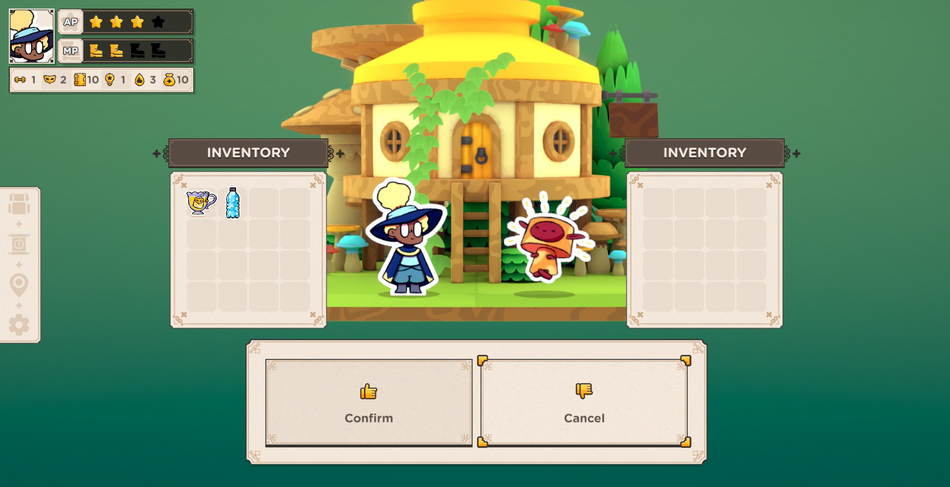
Baladins gameplay
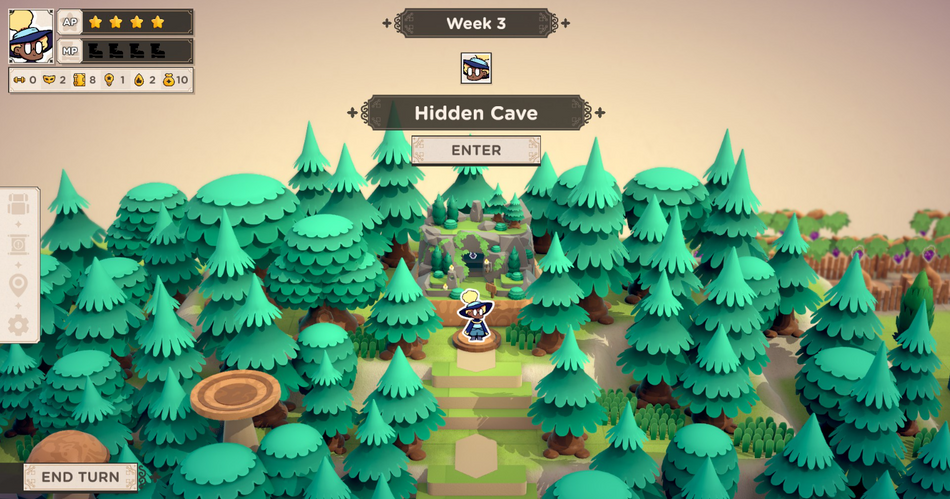
Baladins plays out like a massive board game with various towns full of different homes and areas of interest to explore. From shops to castles, you'll explore these areas collecting quests by using movement points.
When you enter a building, you'll typically be greeted by a cast of unique characters who offer various quests for you to complete, as well as practices and challenges that can increase the stats of your baladin.
In order to complete actions, you'll have a set number of action points that can be used each day. Sadly for you, the events and stats that you've collected will reset on each loop.
As you use the map to click and move around, you expend movement points to get from place to place, while you spend the action points entering sites that will increase your statistics. This is neat because sometimes you can find rumours by helping people out, like crushing grapes at the winemaker's castle.
After you've done as much as you can or you just give up, a week transpires in the game. The game happens during the seven weeks of one round and on your seventh week, you travel to the Festival of the Peace, where the Baladins are displeased with a dragon that showed up: Colobra, which I mentioned before. You must feed Colobra all but one of your items, which only stays with the character who originally obtained it.
And even though the dragon keeps sending you back in time over and over, to Colobra's distress, eventually you finally figure out what to do and gather enough food to finally prepare the Peace Festival. Note, however, that you will always want to pay very close attention to what Colobra has to say when eating your items - they often come with valuable hints, so you don't fail the next time you try.
Game length and progress
Now, let's talk about the length of the gameplay. Each loop is about 25-30 minutes. This is quite handy, as the game is pretty easy to pick up and play even in a short timeframe unless you want to complete multiple loops in one go.
Now you must be wondering about the progress, given the fact that the loop stops the day. Well, the game is aware of the activity of the quest you undertake, so you don't need to complete them again unless you fail and need an item back in your inventory. Each cycle ends with a profile update and a reminder of how your run went – how many characters have you met, etc.
The more skill points you gather, the easier it becomes to win future confrontations and challenges. Of course, this might sound a bit complicated, but it isn't. A player needs about three or four loops to fully grasp the game's mechanics. The only problem one can possibly face is handling the gameboard.
In reality and despite the doomsday scenario, Baladins is a pretty stress-free game. Yes, you play against the clock – you get limited turns before an event resets your status quo, but you always feel that you're doing well and making your way, so time is not perceived to be lost. Having said that, winning challenges can sometimes feel like a piece of cake, and it can feel like a never-ending series of fetching.
In Baladins, advancement means you travel from town to town meeting other characters who are out on some mission or trying to gain new powers or skills. You improve your character's stats through combat and your success at these combats depends on your skill and experience level, which means you either bypass the point of danger or let yourself fall and end up back at the last checkpoint, just to try all over again.
The game has multiple endings, so your outcome will be different each time, which makes it really hard to blow it. It always prompts one to try something or some different story experiment. Although it's really hard to make the best approach, the game is awfully forgiving; it lets the user change his decisions and outcomes.
This can lead to a bit of player fatigue. This problem is slightly less of an issue if you have a friend to play and talk with.
Sound and visual
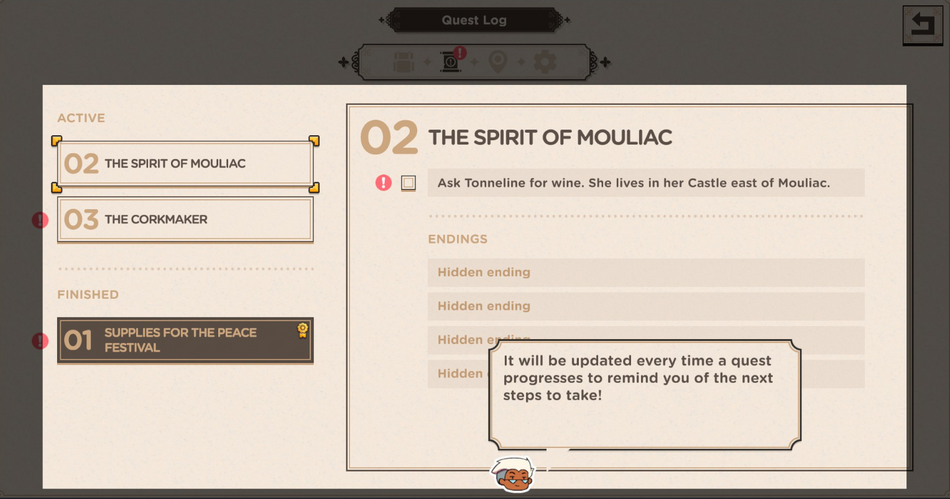
Visually, Baladins is quite cute and colourful. The animations of your Baladins will put a smile on your face and landscapes consisting of various towns, forests and meadows are all quite beautiful.
It's simple and cute, pleasing to the eye, without obnoxious colours. Writing is also decent, and there's plenty of it. Some of the dialogue does feel a little generic at times and will have you skipping through, but for the most part, it's fairly well-written.
Sound design is also satisfying. There might not be any voice acting, which would be welcomed, but the soundtrack is much like the visuals, rather whimsical and magical. I can't say any specific track stood out to me, but I wasn't reaching to turn down the volume knob either.
All told, the visual and audio design work pretty well for a tabletop RPG. Performance-wise, the game mostly runs fine, but I did come across a few bugs.
Hopefully, a few patches can remedy the situation, but regardless, there was nothing too game-breaking I discovered during my playthrough.
In the end, I'd say if you like slower-paced choose-your-own-adventure RPGs and aren't allergic to a cute visual aesthetic, maybe give this one a chance. The looping mechanic is interesting at the least, though a bit played out at this point. Even still, it's mostly a well-made product with nice visuals and sound design. All in all, a charming game that will easily take a few weeks out of your life.
The Good
 Good visuals and sound design
- Interesting looping mechanic
- Colorful gameplay
- Well-written story
The Bad
 Quests are almost always the same type
- Missions are sometimes not clear
- Sometimes the game feels unbalanced
- Limited action points slow the game pace