Trending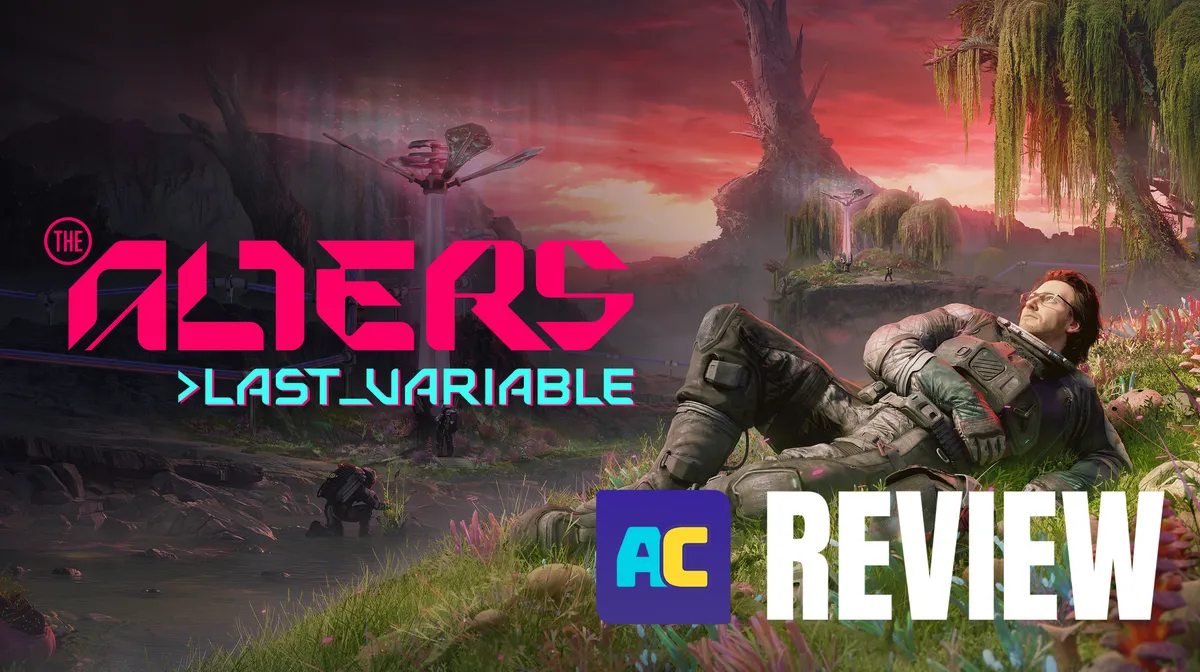
There's a trend in the video game industry that's been quietly bothering me for a while now: DLCs trying to be their own standalone games. Bigger maps, new mechanics added, and systems that can barely get recognised in the base game, all wrapped up and sold as an "expansion". I get where the developers are going from a marketing standpoint, but it misses the point entirely. If a team wants to build something fundamentally different, that's what a sequel is for. A DLC's job is to extend a story you already fell into, using tools you already understand.
The Alters: Last Variable gets this completely right. It doesn't try to be a new game. It doesn't attach the systems that don't belong. It picks up a thread the base game deliberately left dangling, hands it back to you with everything you remember intact, and asks you to sit with it for another twenty hours or so. That's it. That's the whole wisdom. And honestly, I'm really happy to see 11 Bit Studios chose to treat the first DLC for The Alters exactly this way.
Story — One Scientist, Several Versions of Himself
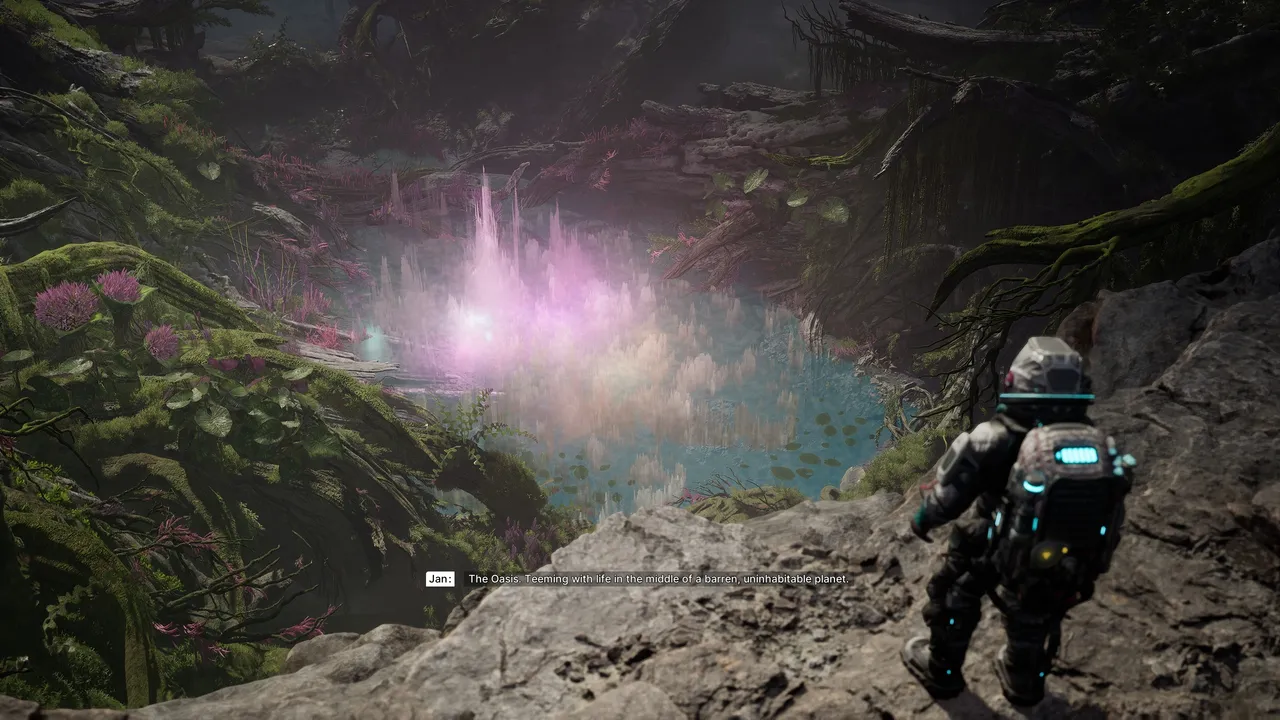
Last Variable picks up on one of the base game's more understated endings, the one where Jan the Scientist alter chooses to stay behind on the planet and not evacuate with the rest of the crew. He'd spent his entire life chasing an answer to the Oasis, a pocket of the planet where life persists despite conditions that should make that impossible, and he wasn't willing to leave without at least getting close to understanding it.
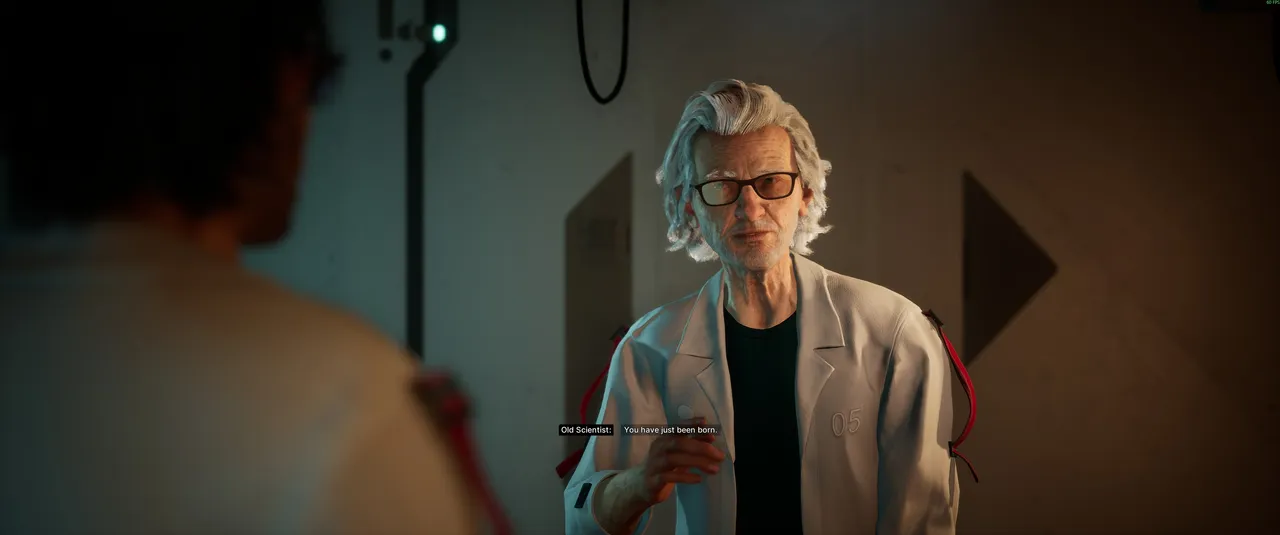
Years pass. Jan grows old. And, in true Alters fashion, he does the only thing that makes sense to him: he clones himself again, this time pulling versions of himself from earlier points in his life, each one carrying the accumulated knowledge of decades spent staring at the same unsolved problem. This whole predicament creates a small team of scientist alters, a Geologist, a Biologist, a Chemist, and a Physicist among them, all built from the same man, all convinced their particular discipline holds the key to cracking the Oasis wide open.
It's a smart premise, and it's also a much tighter one than the base game's. Where the original Alters went through hell to survive, to sustain their grief, and to do everything in their power to leave this mysterious planet with their heads still attached to their bodies, Last Variable narrows its focus almost entirely onto the mystery at the planet's core. That focus works in its favour. The tone here fits the sci-fi backbone of the series more comfortably than some of the base game's broader emotional detours did, and watching a cast of scientists who are all, fundamentally, the same stubborn man argue over methodology is a genuinely fun wrinkle. It's not a story on the level of the original, which remains one of the stronger narrative efforts in the genre. Still, it's original enough and confident enough in what it's trying to be.
Gameplay — Familiar Ground, For Better and Worse
The gameplay loop, for better or worse, hasn't changed at all, and I really don't know what the proper reaction should be on my end. Not in any meaningful sense, anyway. If you played the base game and know exactly what to expect from a day-night survival loop built around base management, resource gathering, and keeping a handful of increasingly complicated alters fed, sane, and productive, you already know what Last Variable plays like.
The ship is gone, replaced by an underground base that, functionally, does exactly what the ship did. The solar maximum threat that used to force you back inside has been swapped for a hot and cold cycle instead. During hot stretches, you're free to work toward the main objective, gather resources, and prep for what's coming. During cold cycles, you retreat into the base and rely on a cryogenic chamber to sleep through the worst of it, provided you've crafted enough radiation filters to keep the place safe in the meantime. It's the same fundamental rhythm as before, reskinned just enough to fit the new setting.
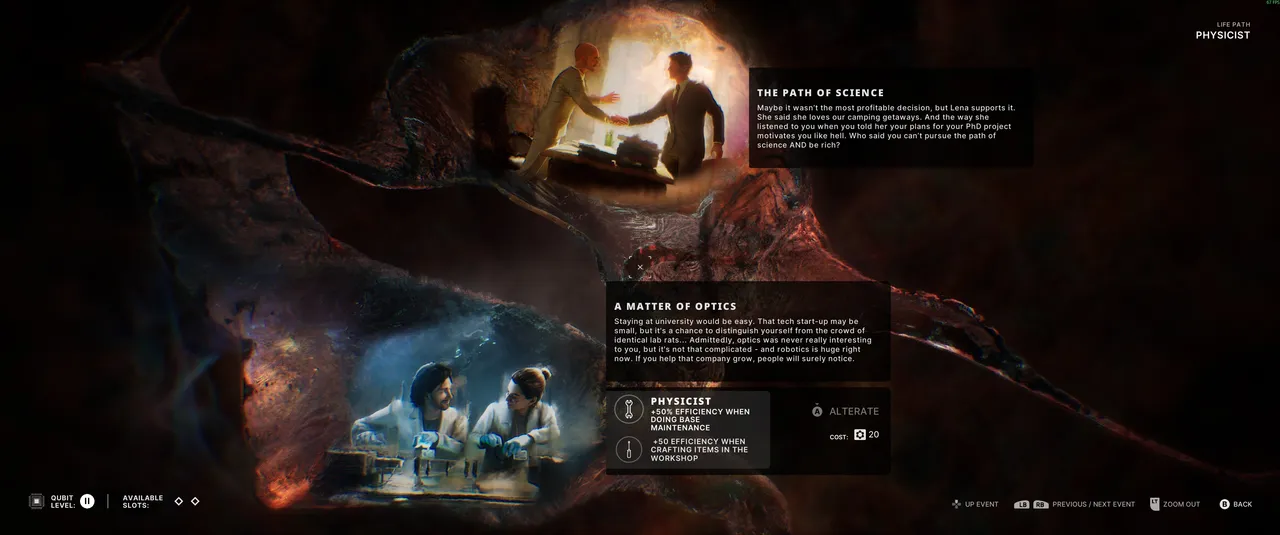
Alter creation returns too, though this time it's the scientist alone doing the cloning, and every new alter that results is, unsurprisingly, some flavour of nerd. The differences between them come down to which branch of science they specialise in, unlike the bunch of different personalities or skill sets introduced through different alters in the base game; however, this choice fits the DLC much better, making it more focused on the story.
And here's the part I have to flag clearly, because it's the same issue that kept the base game from scoring higher for me, and for a fair number of other players too: the constant pressure is still here. Every mechanic that demanded too much attention in too short a window in the original The Alters has carried over untouched. I genuinely hoped Last Variable might soften that edge a bit, maybe give players more breathing room, given that this is meant to be a smaller, more contained story. It doesn't. The task list is just as dense, the day-night cycle just as unforgiving, and the sense of constantly falling behind is exactly as present as it ever was.
To be fair, this is going to land differently depending on who's playing. Some people genuinely love that pressure-cooker feeling, and for them, more of the same is exactly the point. For me, it remains a preference issue and not an execution flaw, since the systems themselves work as intended. I just wish 11 Bit Studios had used this DLC as a chance to ease that tension slightly, even if only as an optional difficulty tweak. As it stands, everything you liked or disliked about the base game's loop is present here in full, unfiltered form.
Visuals, Performance, and Sound
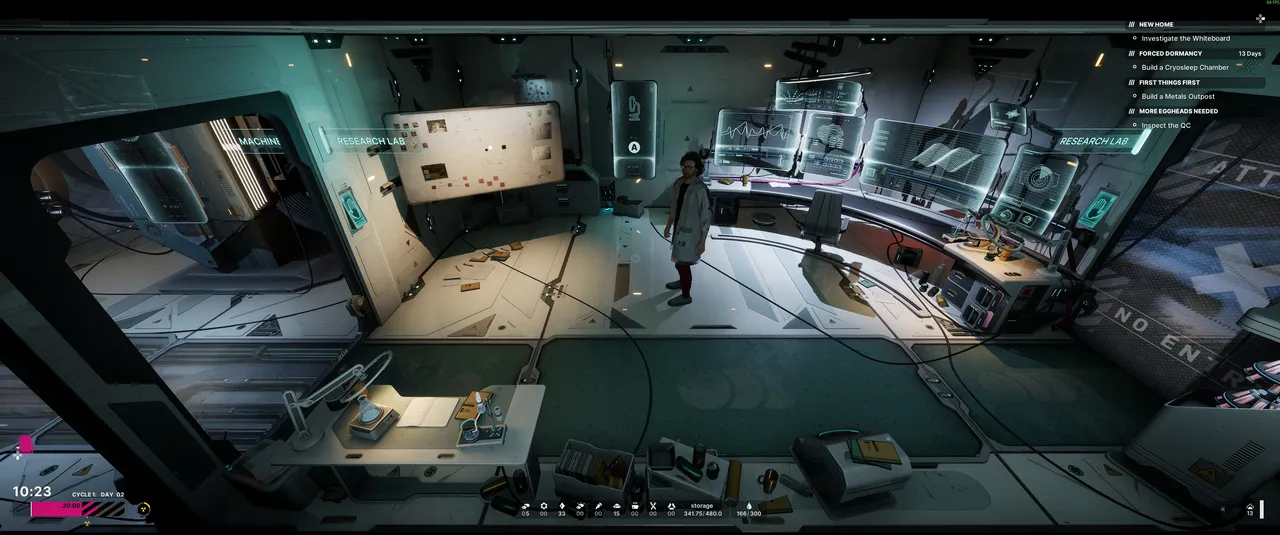
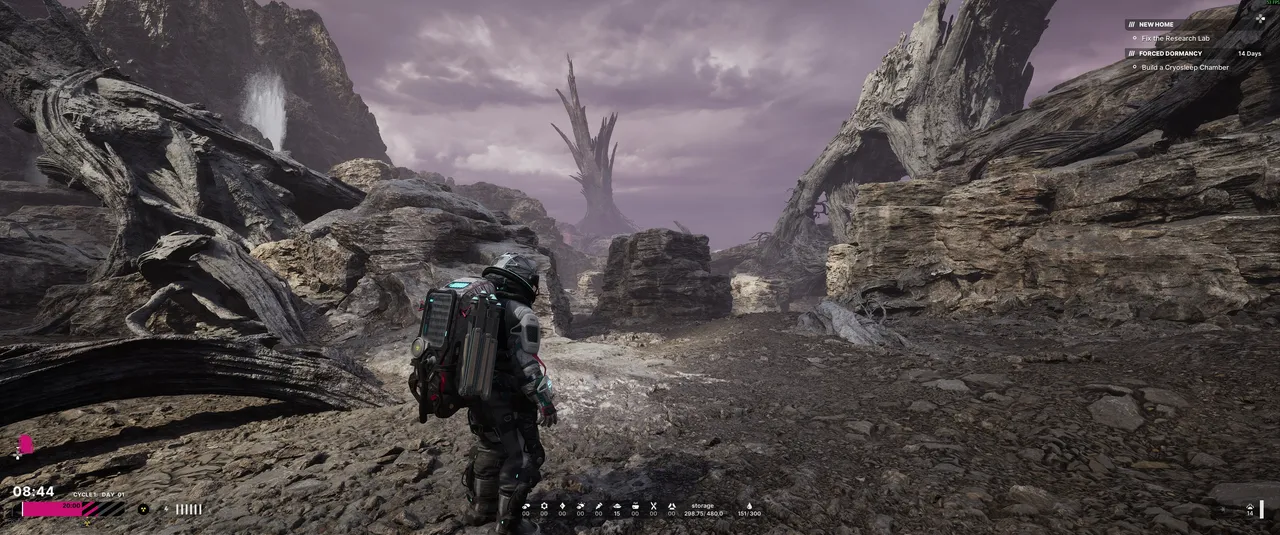
Visually, Last Variable looks exactly like the base game, which is to say it looks good, without offering anything new to point at. There's no visible jump in fidelity, no reworked lighting model, nothing that separates this from the original at a glance. That's not really a criticism, though. The Alters was already a handsome game, particularly in its detailed, almost diorama-like base interiors, and carrying that same visual identity into the DLC means it still holds up well.
Performance on my PC (which, by the way, is still the same PC that ran the base game a year ago) was similarly consistent with what the base game delivered: no stuttering, no new technical hiccups introduced by the underground base or the terraforming systems layered on top. Given how smoothly the original ran on my setup, it's good to see that reliability carried straight through into the expansion without any regression.
Sound design follows the same pattern: nothing new to report, nothing that needed fixing in the first place. The atmosphere holds, the ambient work remains solid, and if you were previously fine with the base game's audio presentation, you'll be equally fine here. It's worth noting that Alex Jordan is lending his voice to all the alters once again and that his performance is probably one of the biggest highlights of the entire game, the DLC included, of course.
Conclusion
The Alters: Last Variable is precisely what a DLC should be, and I mean that as sincere praise and not just an empty compliment. It doesn't chase the "basically a sequel" trend other studios have been leaning into. It takes a loose thread from the base game's ending, builds a smaller, sharper story around it, and hands you back every mechanic you remember, whether you like them or not. The result is a story expansion that's easy to recommend to anyone who finished the base game and wanted to know what happened to Jan the Scientist, provided you're going in with clear eyes about the gameplay loop staying exactly as demanding as it always was.
If the constant task pressure was your main issue with The Alters the first time around, nothing here will change your mind. But if that was never a dealbreaker for you, Last Variable gives you another twenty hours in a world that's still one of the more original ideas the survival genre has produced in years.
The Good
 A unique and original story focus on the Oasis mystery
- The tone fits the series' sci-fi identity well
- Every base game mechanic returns intact
- Same strong visual identity and performance
- Respects the DLC format instead of overreaching
The Bad
 The lack of option to soften the base game's relentless pace
- No new mechanics for series veterans to sink into