Trending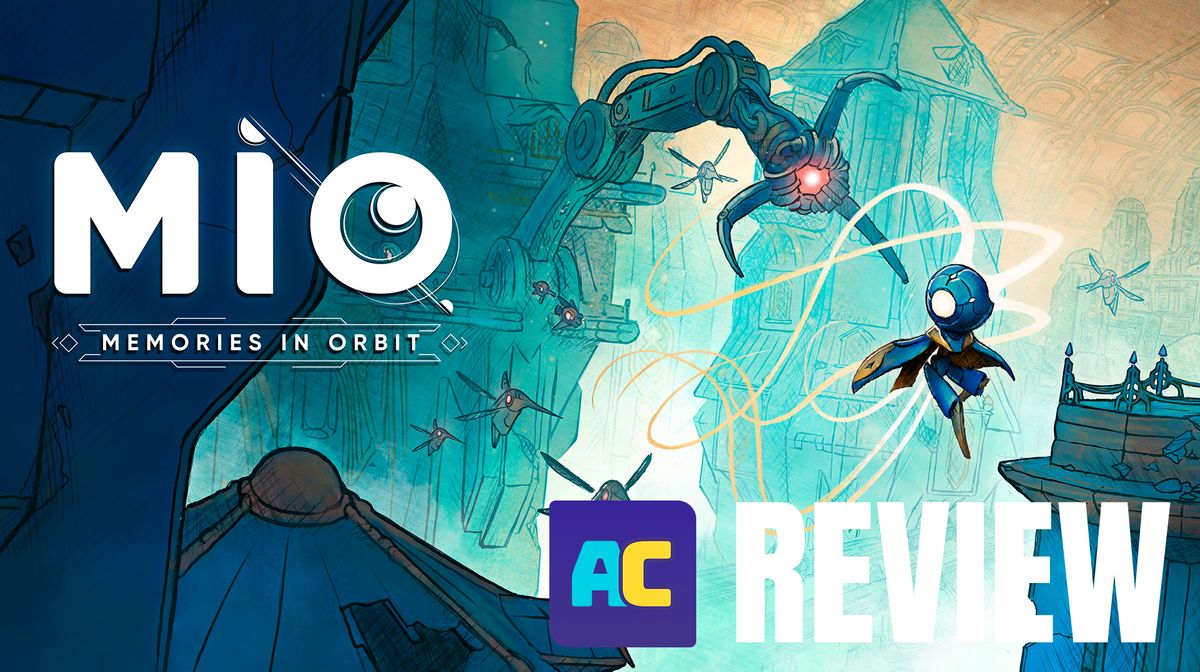
Tired of the games that make you nervous and on edge the whole time? Want to play something relaxing without needing to break something once a random enemy, let alone a boss, beats you to a pulp just because you've missed a single input? Well, in that case, friend, you're in the wrong place, because MIO: Memories in Orbit will do all this to you and then some.
As cute and inviting as this game can be, under its colourful facade hides a game that can be brutal and unforgiving; if you're not a guy with nerves of steel, gamepads will fly. I know mine has flown on several occasions, and I'm not ashamed to say it loud and clear.
Story
You know that cliché sentence written so many times by the reviewers about the Souls-like games and their cryptic, totally strange and hardly comprehensible story? The sentence that goes like this: 'The story in these games isn't important; the gameplay is where they shine the brightest,' or something like that. Here, this claim really stands.
I don't know if it was me, but I couldn't understand a thing about what this story is about. All I got was that you play as some sort of robot in a remote space station, where the robots live, after some unexplained disaster that happened to mankind. Your name is Mio, and you are a tiny, almost too fragile robot model, whose main advantage is high customisability.
In a true Souls-like way of telling a story, you'll embark on a journey to save the station from the not-so-friendly robots, who went rogue for whatever reason. On this journey, you'll meet many friendly robots who will help you accomplish your mission; some of them will even explain to you a bit about what you're actually doing, but trust me, everything will be covered in a huge veil of mystery that I simply put a story on the margins of, thinking, 'If I cannot understand it properly, I'll enjoy the gameplay at least,' and there will be so many things to enjoy, flying gamepads included.
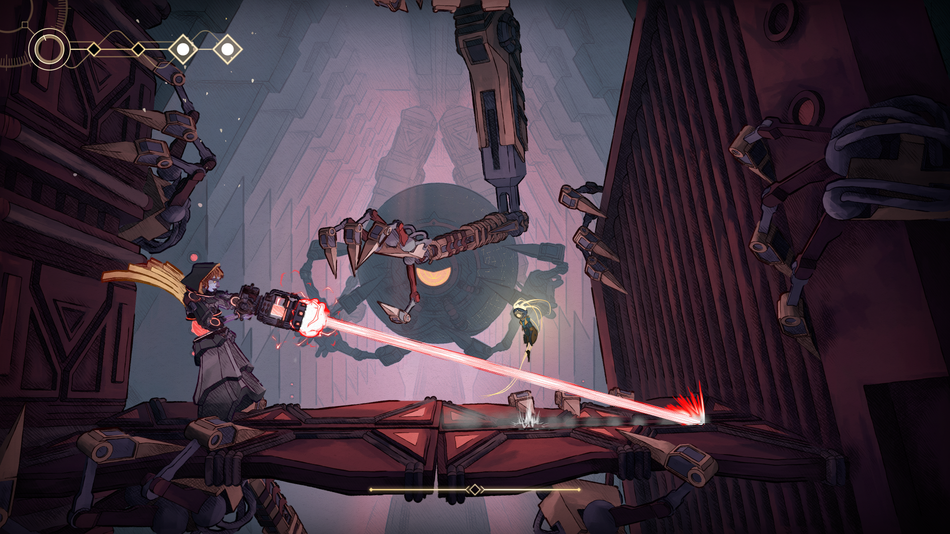
One way of expanding the lore and helping you understand the story, at least to some extent, is through numerous side missions you'll partake in. Those side missions are not tracked anywhere, and to finish them, you'll have to rely on the power of your memory. Some NPCs will ask you to do something for them, like finding some items, meeting other NPCs and helping them, and some such things, and once you meet them or find those items, you'll simply have to remember the location of the NPC in question to finish that side quest.
Also, you'll find many letters and documents that widen the story, and you'll be able to review them all from within the inventory any time you want.
The story in MIO: Memories in Orbit holds that melancholic tone, and its mystery will drive you forward, even if you're, like me, too lazy to invest enough time in it. I didn't understand much of the story, I admit, but there is something about MIO: Memories in Orbit's story that I genuinely liked, and I don't know why, but it made me quite engaged.
Gameplay
Now for the best and worst part of this game, the gameplay. If you ever played Hollow Knight games, you can have a pretty clear idea of what kind of game MIO: Memories in Orbit is. It can be labelled as a Metroidvania, a Souls-like 2D action platformer that will test your platforming and combat skills like few games can.
I said earlier that the gameplay might be the best and also the worst part of this game. The worst part is not something the game can be blamed for, though, only the skill issues, but, oh Lord, how this game will test your patience. So many things to do in one moment is just insane. Whether it's the parkour or fight encounters, or later in the game, the combination of both, such games are well-known for their brutal difficulty, but I really had a hard time on many occasions throughout my playing.
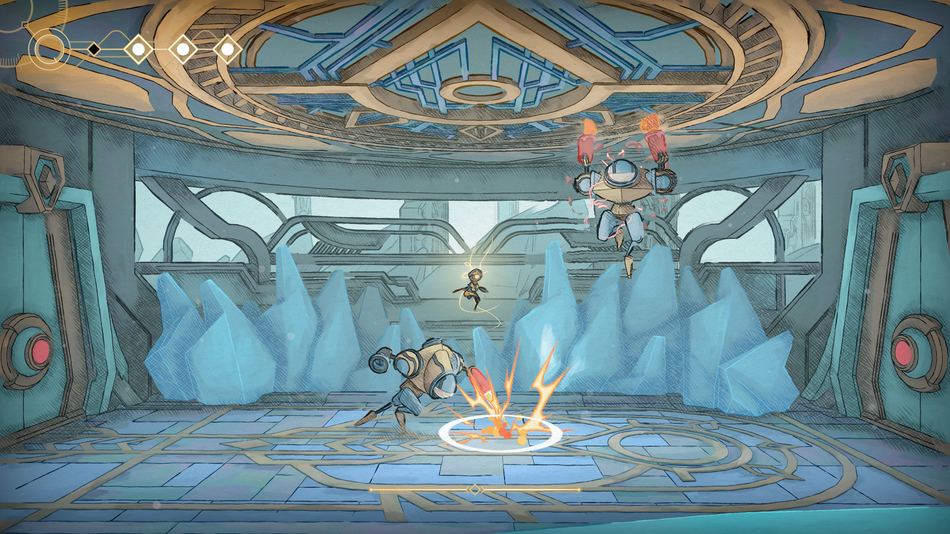
Let's first talk about the combat, which is, to be honest, quite simplified in comparison to, say, Hollow Knight: Silksong, which was the last game of this genre I played. In MIO: Memories in Orbit, you have only the attack button, which can be pressed an infinite number of times to create infinite combos for as long as you're not interrupted.
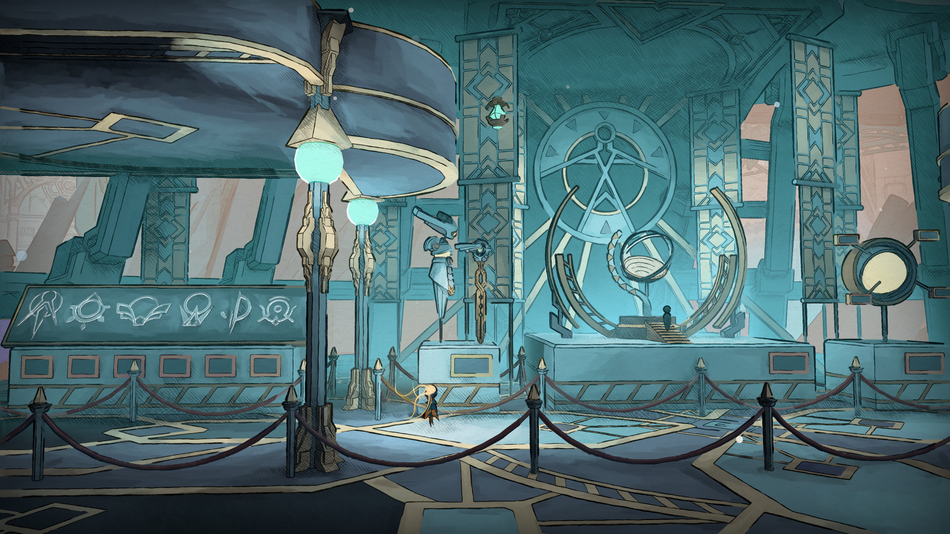
Since the game is 2D-orientated, you'll have to move and jump around to avoid attacks. Jumping is the main defensive manoeuvre in this game. Later, as part of the progress in the game, you'll get the dodge, which will ease the combat considerably, even though the dodge mechanic is a bit different from what you're used to in similar games.
Also, you'll get some sort of grappling hook for traversal, which you'll use in some arenas with dedicated items for such an action, and some flying enemies will also serve as grappling hook points, which will get verticality in combat and make it much more diverse.
Speaking of enemies, you'll meet mobs, mob groups that will need to be cleared to proceed through some areas (a mechanic seen in Hollow Knight games), which, by the way, won't respawn once you reset the area through the Nexus point (Dark Souls Bonefires), and, of course, the bosses, the most formidable enemies of the game.
The bosses are designed well and in the game's overall tone. I must say that the bosses are not that hard, and once you get the hang of the game's mechanics, many of them will be a walk in the park. For me, the biggest issue regarding combat is not including the dodge ability right from the start because a very big chunk of the game will make you run around to avoid hits, and since Mio is not the fastest robot around, it will be quite frustrating.
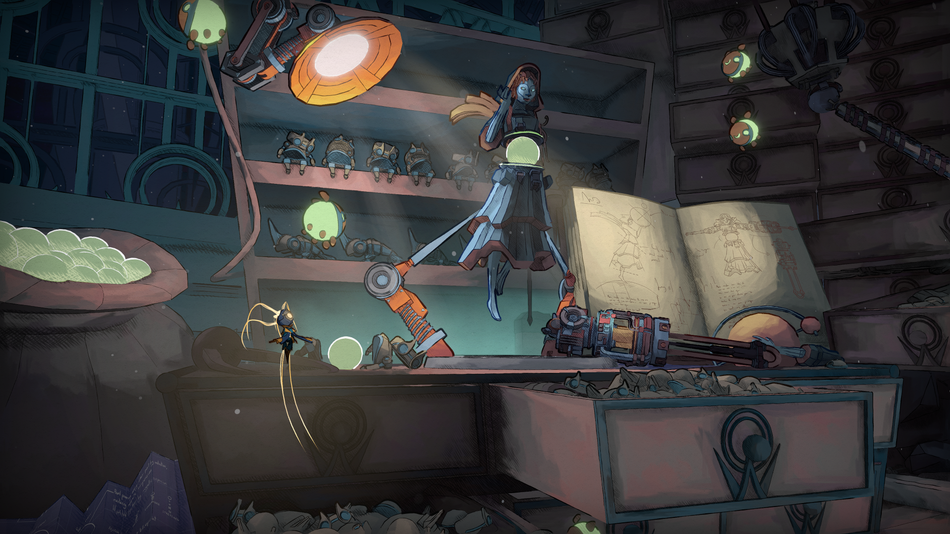
Mio's abilities can be upgraded through modifiers you can install on her inside the nexus points. Modifiers can be either bought from merchants or found through exploration. Each modifier takes some matrix space, and you'll have to pick carefully which modifier to install to best suit your playstyle.
The game features the map as well, showing all the places you can explore. Some places will be locked with blockers, which you'll unlock later, making revisiting areas much more meaningful. Also, in a true Souls-like and Metroidvania fashion, the levels are incredibly interconnected, and those famous 'locked from the other side' doors are present here as well, making exploration very interesting and engaging.
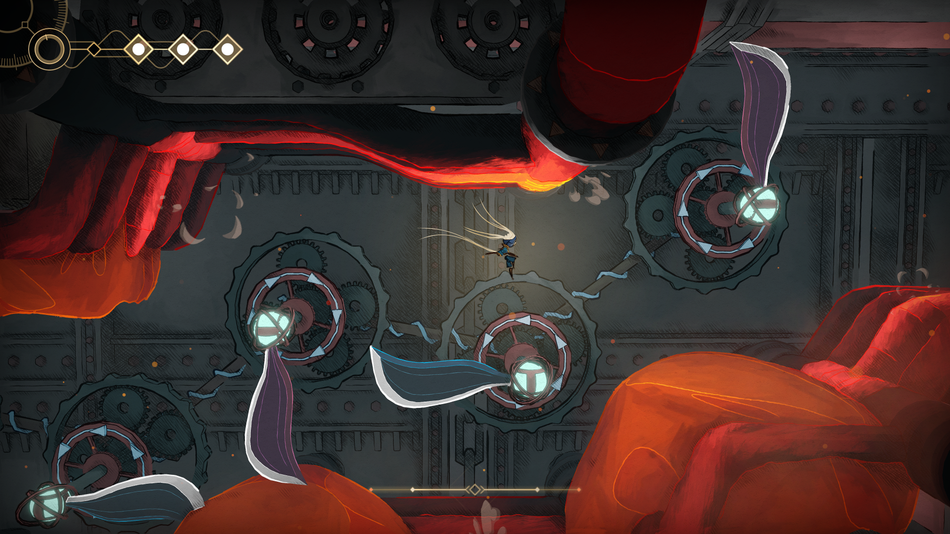
The other part of the gameplay that will be rage-infusing is inevitable platforming. You'll have simple commands like 'jump' and 'double jump', and later, you'll get more advanced ones, like Hairpin (grappling hook or tendrils) and Sail, which will allow you to slide through the air. Also, some enemies or special items will allow you to hit them from above and maintain a movement streak, which can be insanely hard and rage-inducing (here is where the gamepad flew in my case).
Those platforming sections can be a real pain in the neck, but luckily, those sections, once done, usually lead to the door or a shortcut, and once you unlock them, you won't have to repeat those sections anymore.
Graphics, Sounds, and Performance
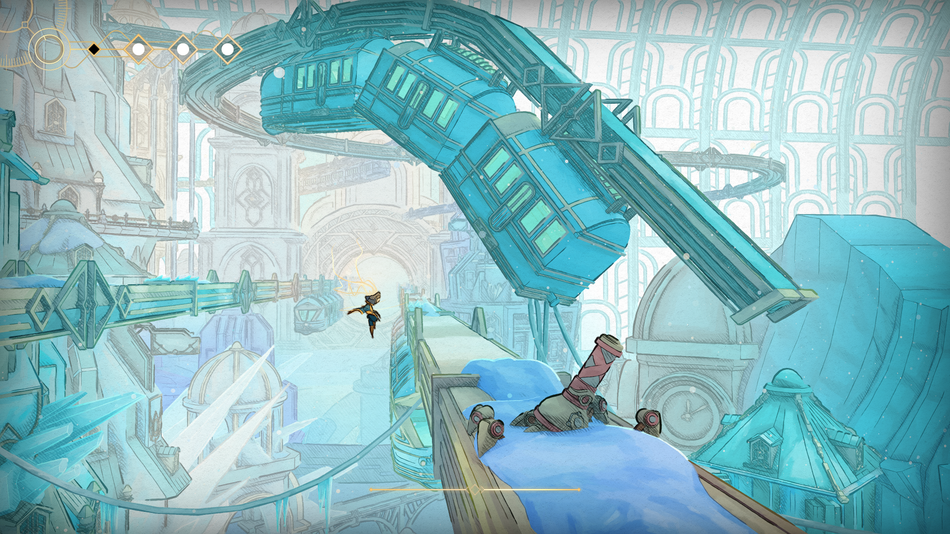
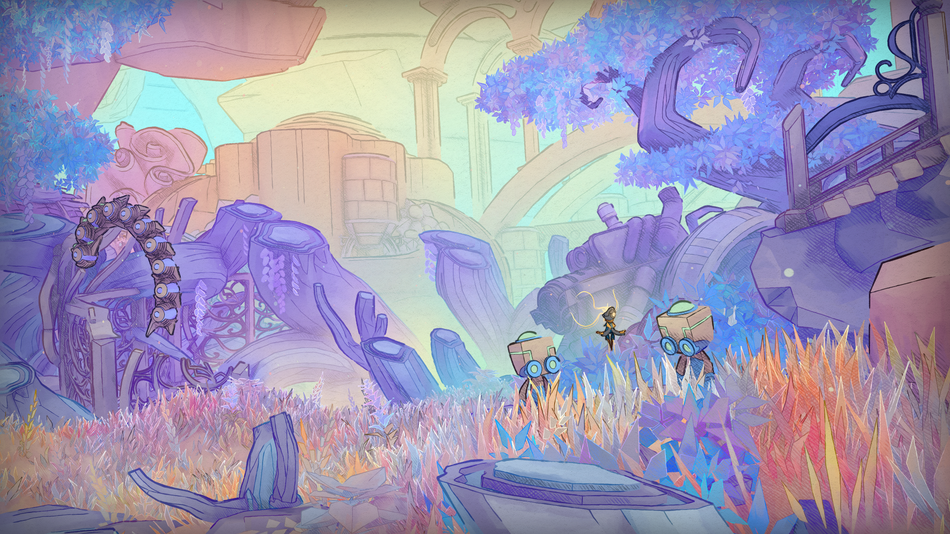
From the visual point of view, MIO: Memories in Orbit has that deceiving look which could lead you into thinking that this is a game for relaxation. The overall design is very colourful; the space station is so vivid and almost inviting; the characters look very cute and friendly, and even the enemies leave such an impression, but as I already said, it's all just a very clever facade beneath which you'll meet a very mature game that will test your skills like few are able to.
Even though the looks can be deceiving, in the case of MIO: Memories in Orbit, they seem a perfect fit for this game. The graphical style leans heavily towards hand-written-like visuals, like they're made using old cel-shade technology.
Graphically speaking, MIO: Memories in Orbit is an attractive game, but not something that will leave you in awe. The PlayStation 5 version I played on my normal PlayStation 5, not the pro one, performed just fine. There are not any graphical settings in this version, but regardless, the game runs pretty smoothly at 60 FPS, without a single hiccup or any kind of problem, which, of course, is very commendable.
The sounds, on the other hand, are just perfect and cannot be praised enough. Whether it's a fantastic soundtrack mixed with some sort of futuristic, robotic music or very well-implemented environmental sounds, the overall sound design sits perfectly with the atmosphere of MIO: Memories in Orbit. The characters don't speak in this game, but instead, they communicate over speech bubbles; however, the sounds that follow those conversations are just right and make you feel very involved in everything that is happening on screen.
Conclusion
MIO: Memories in Orbit is an entertaining game that will give you so much fun, provided you're more than averagely good at platforming and know how to fly around with your character using all the environmental advantages. If you're, like me, a more casual gamer, expect tonnes of frustrations, occasional swearing, and even flying gamepads (a piece of advice: try to throw them into cushions; this way they'll stay intact). Seriously now, MIO: Memories in Orbit can give you a challenge few games are able to, and if you're up for that, be my guest.
With a somewhat hard-to-comprehend story (maybe it's just me being not-so-smart), average yet quite solid visuals, and fantastic sound design, this game has a lot to offer. To put it simply, it isn't the same level of quality as Silksong, but it will definitely scratch that particular itch.
The Good
 Tight, responsive combat
- Well-designed boss fights
- Deep movement and traversal mechanics
- Strong Metroidvania-style level design
- Excellent soundtrack and sound design
- Distinctive hand-drawn visual style
The Bad
 Dodge ability unlocked too late
- Cryptic and hard-to-follow story