Trending
It is often said that good things are worth waiting for, and guided by this principle, I've been patiently waiting for the next installment of a new Alan Wake game. The wait was anything but brief, stretching out for a grand total of thirteen years, both in the game's universe and in real life. During this extended period, Alan Wake was declared missing until finally, after thirteen long years, he made a triumphant return, ready to set a new benchmark for narrative-driven games.
Following Remedy Entertainment's decision to postpone the game by a few weeks, supposedly to allow players to fully enjoy Spider-Man 2, I was initially sceptical, viewing it as another potential disappointment. However, what Alan Wake 2 had in store for me took me completely by surprise. Without further ado, let's delve into the intricate layers of this extraordinary mix of horror, thriller, and crime narrative and determine whether the long wait for Alan Wake 2 was worth it or not.
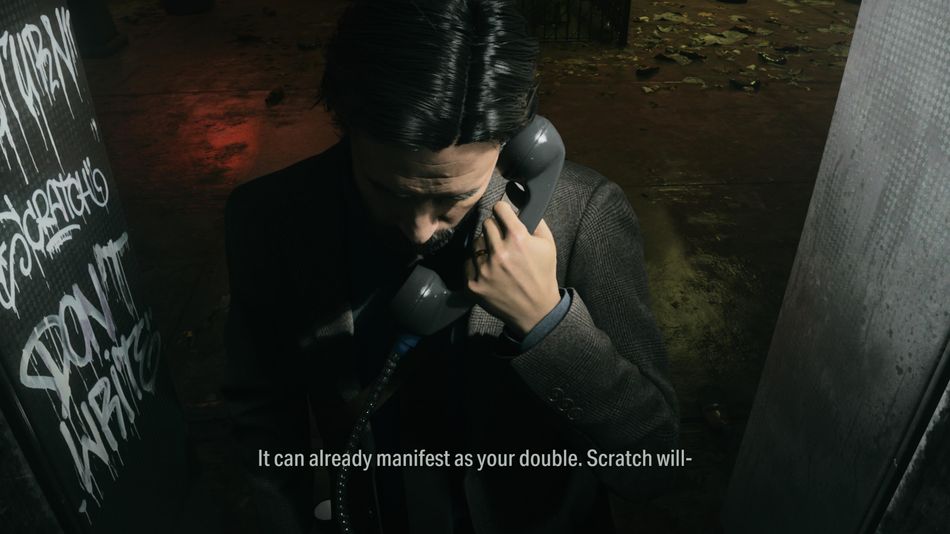
The intertwined stories of Alan Wake 2
For anyone who tracks the development of Remedy Entertainment or is a fan of their games, it's common knowledge that their stories are captivating, albeit occasionally intricate and challenging to grasp. An excellent case in point is their most recent release, Control, a superb game with a storyline that proved to be complex and occasionally quite hard to understand.
While I can't claim that the storytellers behind this game have acknowledged their past mistakes, I can confidently state that the story you'll experience in Alan Wake 2 will blow your mind away. Not only due to its intricacy and numerous plot twists, but also because of the remarkable manner in which, despite its complexity, it's narrated in a way that will keep you thoroughly engaged until the very end.
Thirteen years following the mysterious disappearance of Alan Wake, the renowned American crime novelist, in the waters of Bright Fall's lake, where supernatural forces brought his stories to life, a series of ritualistic murders commence along the shores of the nearby lake. These unsettling events piqued the interest of the FBI, leading them to send Agent Saga Anderson to the scene for a thorough investigation.
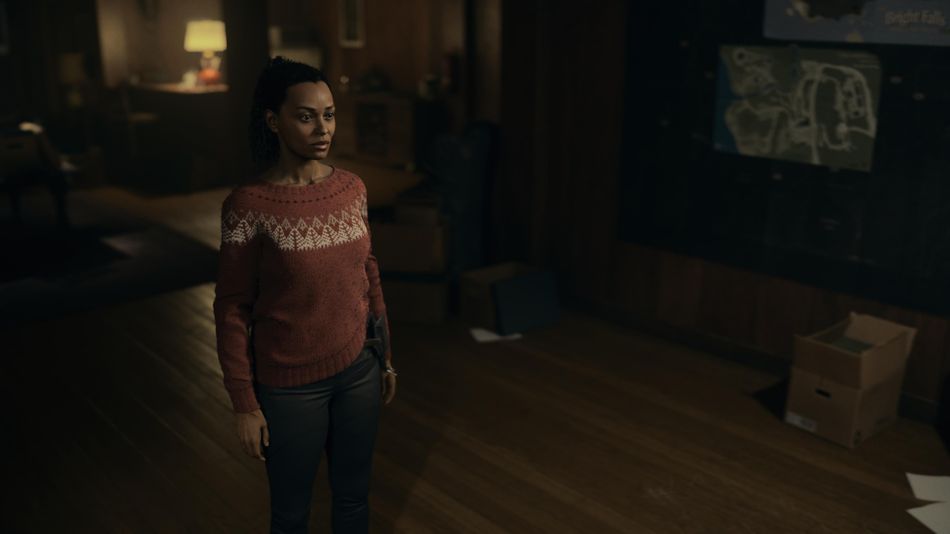
Before long, this investigation takes a supernatural turn, involving the appearance of a mysterious cult of murderers and the long-awaited return of Alan Wake after thirteen years spent in the familiar yet eerie realm known from previous games and spinoffs, the Dark Place.
Alan Wake 2 weaves a complex storytelling tapestry, featuring two closely connected stories. One revolves around Saga's journey as she delves into the case assigned to her investigation, while the other centres on Alan Wake's battle to escape the very story he authors, a tale that shapes the fates and realities of those around him.
Beyond the investigative aspect, Saga's story in Alan Wake 2 will delve into her ties to the residents of Bright Falls, her enigmatic forgotten past, and the intricate web of connections among all the characters in the game. Picture this storyline as an expansive network where each individual is intricately linked to one another, and its complexity is sure to leave you utterly captivated.
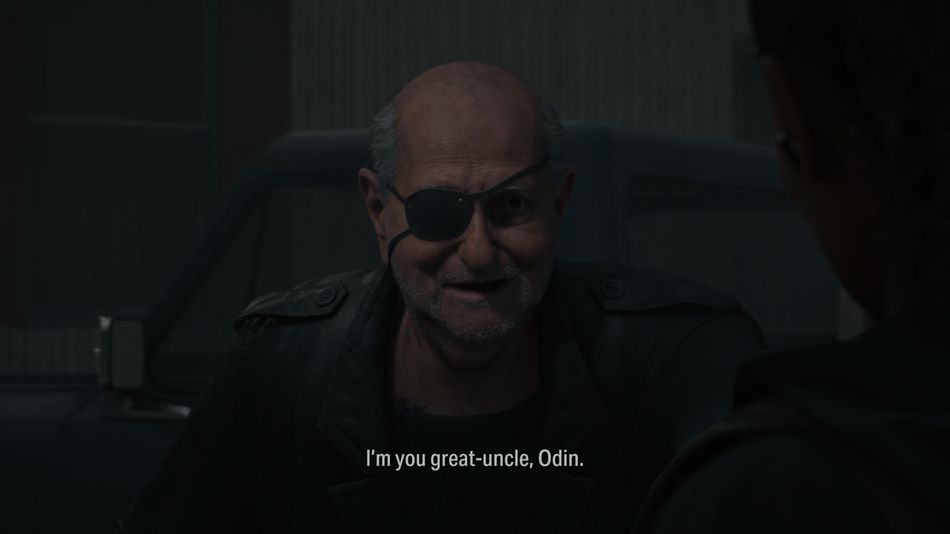
Equally noteworthy is the fact that, in addition to its ties to the original Alan Wake from 2010, Alan Wake 2 shares its universe with Control and various additional DLCs. Consequently, you'll encounter several familiar characters from Control as you progress through the story.
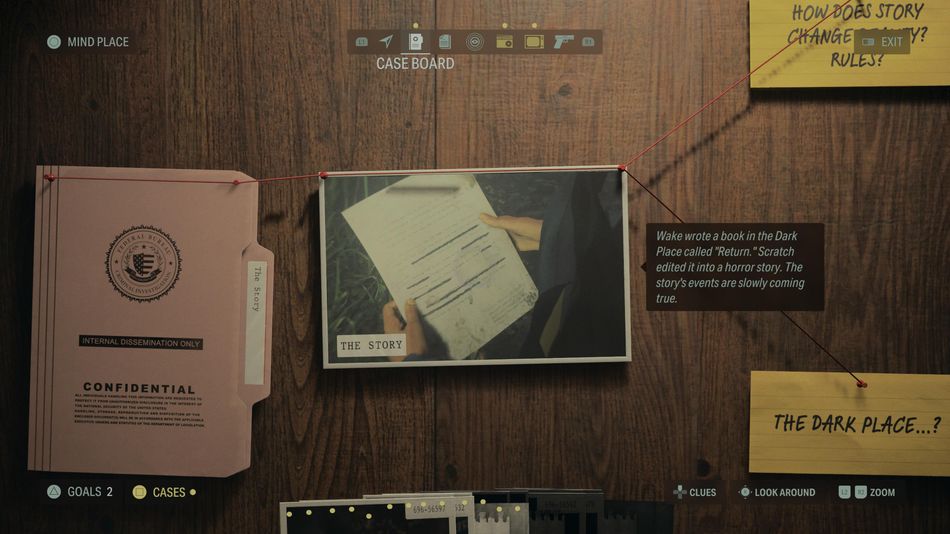
A crucial storytelling element in Alan Wake 2 revolves around the innovative technique known as "Mind Place," developed by both Saga and Alan. It takes the form of a room filled with diverse activities, with the most important ones being Saga's evidence board and Alan's story development board. This gameplay segment grants you the ability to enter Mind Place at your discretion, offering the opportunity to track the progress of ongoing cases and each character's involvement in them. This feature simplifies the narrative, making it much more comprehensible than was the case with Remedy's previous games.
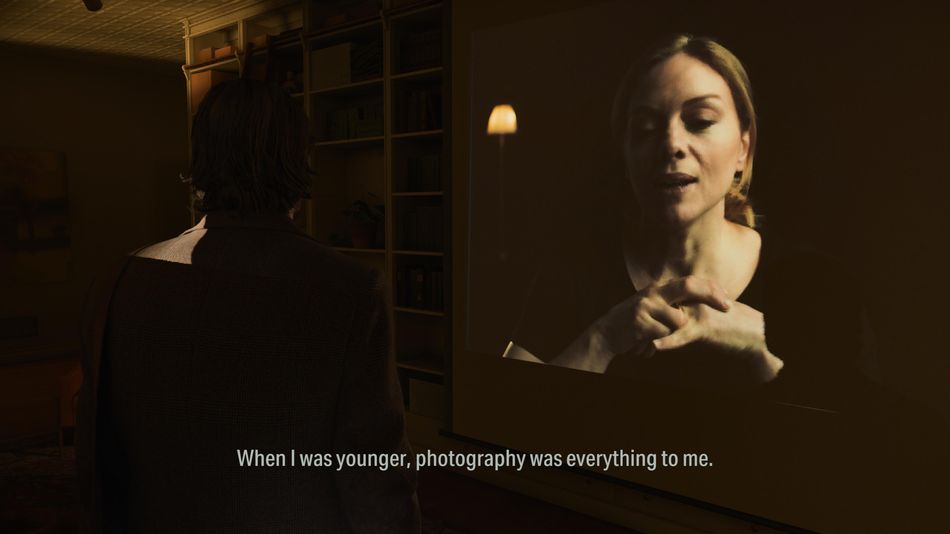
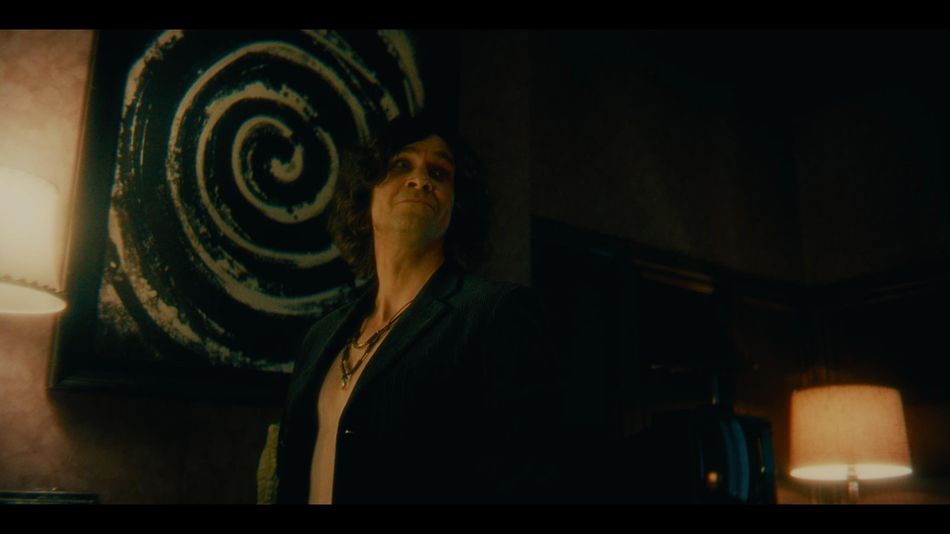
Uniquely for Alan Wake's part of the story, it employs live-action cutscenes featuring real actors, akin to a movie production. This storytelling approach isn't unfamiliar to Remedy's games, as we previously witnessed a similar concept in their game-TV series hybrid, Quantum Break.
When you consider all the elements, a game with a narrative of such exceptional quality and complexity, yet presented in a straightforward manner, has been a rare find in recent times. Even if every other aspect of the game were to be overlooked, this storytelling aspect alone would be enough to justify it entirely.
I could go on and on about the story, but I'm cautious about veering into spoiler territory or overemphasising this portion of the review. However, it's undeniable that the story of Alan Wake 2 stands as one of the finest narratives I've ever encountered in video games.
Gameplay
Given that Alan Wake is a horror game, its gameplay mechanics, stripped down to their essence, seamlessly align with the overall game concept. In this case, like its predecessors, it adopts a deliberately slow-paced third-person shooter approach. The protagonist's slow movements effectively induce a sense of unease and fear, contributing to the game's atmospheric horror experience.
It's not unusual for games to draw inspiration from other titles, occasionally incorporating specific mechanics into their own gameplay framework. Alan Wake 2 follows this trend by closely mirroring modern Resident Evil games in various aspects, including mechanics, menu layout, inventory management, character movement, and more. It's worth noting that this emulation is far from a negative trait; on the contrary, it's praiseworthy, as it seamlessly aligns with the overall game concept.
When it comes to the game's weapons, there may not be a lot of them, but the available choices are very well-designed and feel very powerful. Every shot you fire carries a remarkable sense of authenticity, thanks to the controller's responsive feedback and high-quality sound. A notable highlight worth praising is the full support for the DualSense controller, where the haptic vibrations and adaptive triggers provide a truly lifelike experience.
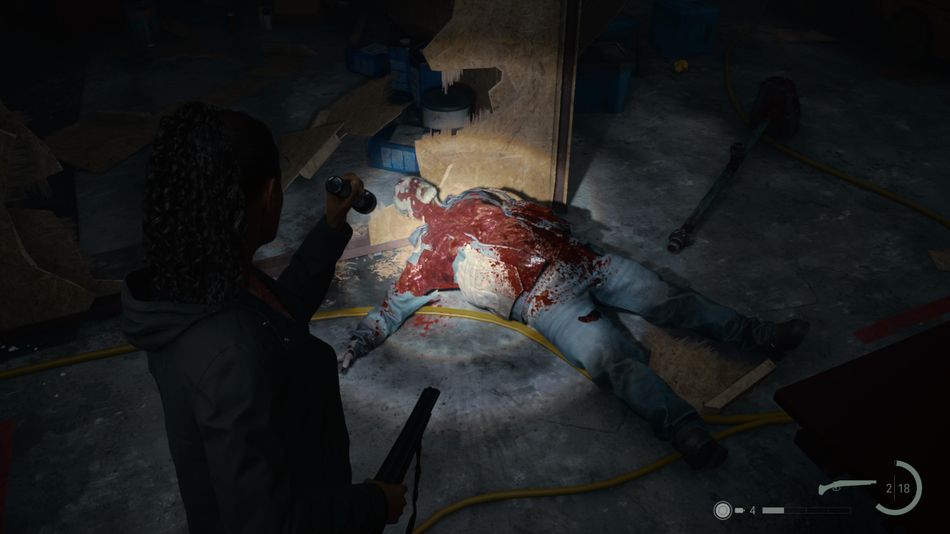
Combat mechanics remain consistent with the tried-and-true approach: weaken your enemies by exposing them to your flashlight's beam, and then conclude the confrontation with conventional weaponry. You'll also encounter various other light-based offensive options, including flashbang grenades and flares, with the flare gun serving as the ultimate game-changer in your arsenal.
The diversity in enemy design is relatively limited throughout the game. In most combat encounters, you'll find yourself facing similar adversaries, with occasional encounters against what could be loosely described as "bosses." These battles tend to ratchet up the challenge and tension, but the core combat approach remains consistent: light them up, shoot them off.
Weapons can be upgraded by using unique materials obtained from "lunchboxes" scattered throughout the game's levels. Beyond weapon upgrades, the game offers the chance to enhance the abilities of both Alan and Saga. Saga can acquire distinctive skills by equipping special charms she discovers in specific game locations, while Alan can unlock and activate unique abilities by locating particular spots inside Dark Place.
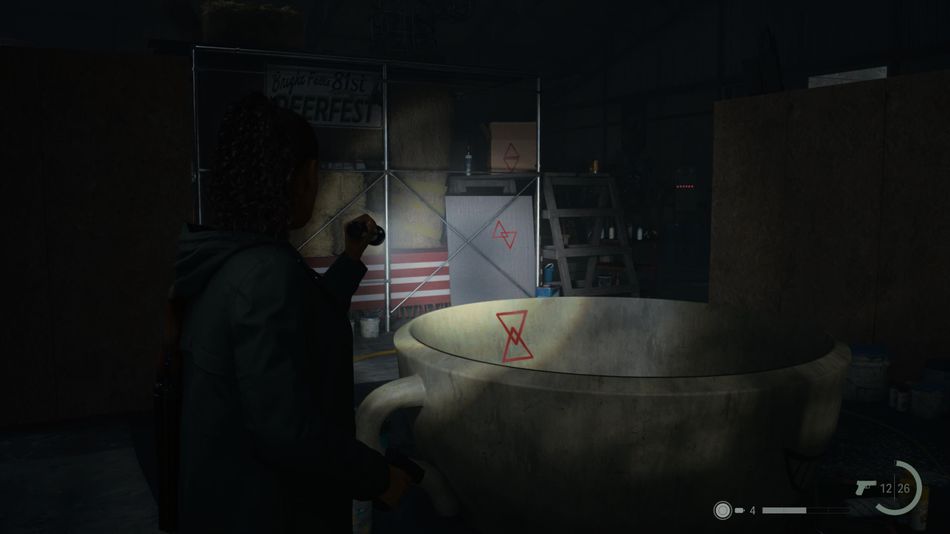
Puzzles take centre stage in Alan Wake 2, and they certainly live up to expectations with their well-crafted design and abundance. Whether you're on the hunt for collectables, resources, or new weapons or navigating your way through the game's storyline, you'll frequently encounter puzzles that prove to be far from a walk in the park. Some of these challenges will demand genuine effort and will be very hard to solve.
I've previously highlighted the significance of "Mind Place" as a storytelling device, but it's crucial to address it in the context of gameplay, this time with a somewhat negative aspect. This mechanic involves placing every collected piece of evidence on the evidence board to advance case resolutions. Unfortunately, the game repeatedly prompts you to enter the Mind Place and add each piece of evidence to the board individually. Given the substantial volume of evidence, this constant pause-and-place cycle can become quite tedious and break immersion in the gameplay.
Fortunately, the compelling narrative that unfolds alongside the evidence helps ease off the potential monotony to a certain extent. It's important to note that this mechanic is exclusive to Saga's storyline, not Alan's.
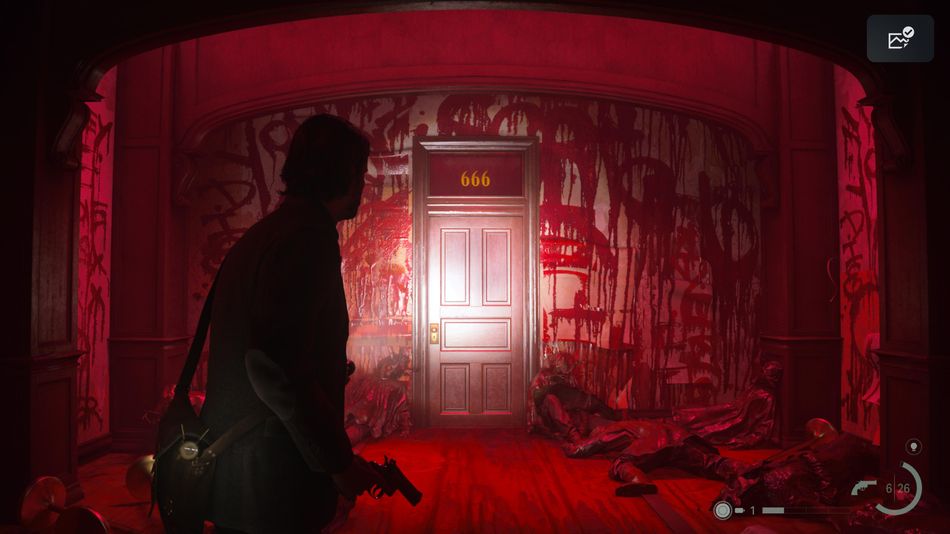
Considering that Alan Wake 2 is primarily categorised as a horror game, it's essential to discuss this aspect of the gameplay. While the game does succeed in crafting an unsettling and eerie ambience throughout, particularly noticeable in the dense forests encountered at the game's beginning, it may not be as consistently spine-tingling as one might anticipate.
Indeed, there are moments of genuine fear in the game, yet the majority of your gameplay time will be spent traversing the map without a constant sense of unease. The notably more unsettling portions of the game are with Alan Wake within the Dark Place, New York, where lurking shadows are ever-ready to pounce on you. It's worth noting that the spine-chilling "Wake!!!" managed to etch itself into my subconscious each time they caught sight of me.
One aspect that didn't sit well with me was the frequent reliance on cheap jump scares, particularly when you're in pursuit of one of the main enemies. While I understand that jump scares are a staple technique in horror games, I couldn't help but feel that they were somewhat overused. I believe there's room for more original methods to evoke unease and fear in players, and if I were to highlight any negative aspect of Alan Wake 2, it would be this particular element.
Performance, graphic and sound presentation
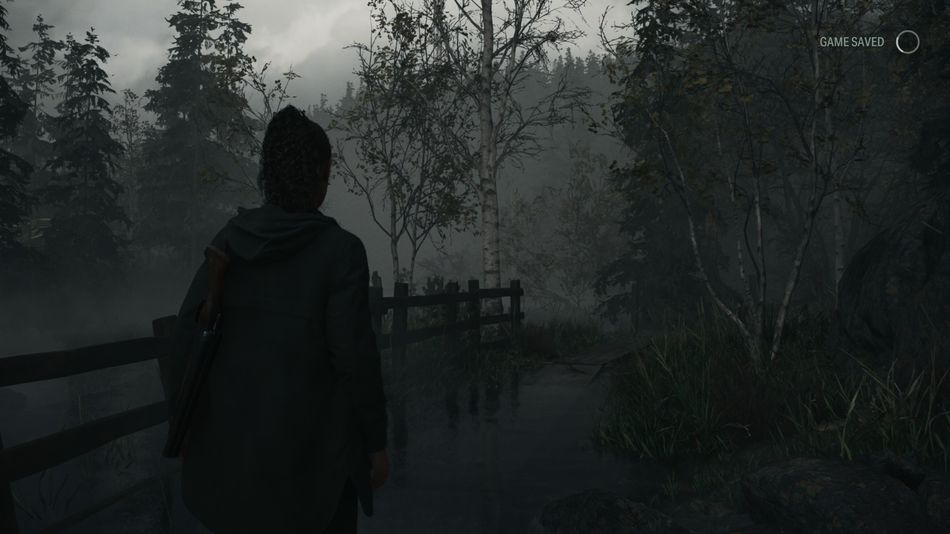
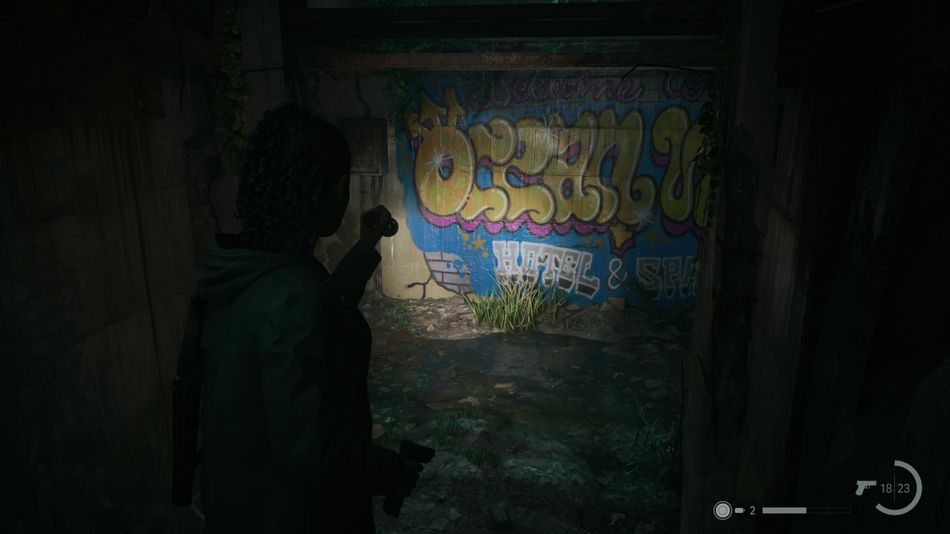
Cutting to the chase: Alan Wake 2 stands out as one of the most visually stunning and graphically refined games I've ever experienced. The graphics are of such high quality that, at times, distinguishing between live-action cutscenes and the seamlessly integrated gameplay segments becomes quite the challenge, given their incredible level of cohesion throughout numerous parts of the game.
Whether you find yourself within the lush, dense forests of Bright Falls, with their towering coniferous trees, the tranquil lakeside town, or the ominous, ghostly rendition of New York, prepare to be awestruck by the breathtaking scenery. The level design is a masterpiece of artistry and realism, to the point where I frequently questioned whether I was truly inside a game or if I watched a pre-filmed video.
The attention to detail in the characters, both primary and secondary, is truly remarkable. From their expressive facial animations to their intricately designed appearances, coupled with the utilisation of cutting-edge graphical settings, every aspect has been executed with precision. The end result is one of the most graphically refined games to date.
I experienced the game on the PlayStation 5, where there's the option to select between performance and fidelity modes. Opting for the performance mode, I can attest that, aside from the notable reduction in resolution from 4K to 1440p, there were no other notable differences. From a technical standpoint, the game has been fine-tuned to perfection.
Now, we arrive at the aspect that completely shattered my immersion in the game—a game-breaking bug I encountered during the eighth level within the Dark Place, a level that nears the end of the game. Specifically, this bug hindered my progress, as the game failed to register the necessary gameplay mechanics for creating the echo required to trigger the next scene. After reaching out to the developers, I was informed that it was a known issue that had been resolved in the launch-day version of the game. Unfortunately, the only remedy for my version was to commence a fresh playthrough with a new save file.
I should note that this issue won't influence the overall rating, as the problem has been resolved in the game. However, it's important to acknowledge my initial disappointment. Fortunately, Alan Wake 2 is a very good game, making it a relatively easy decision to go for a fresh playthrough.
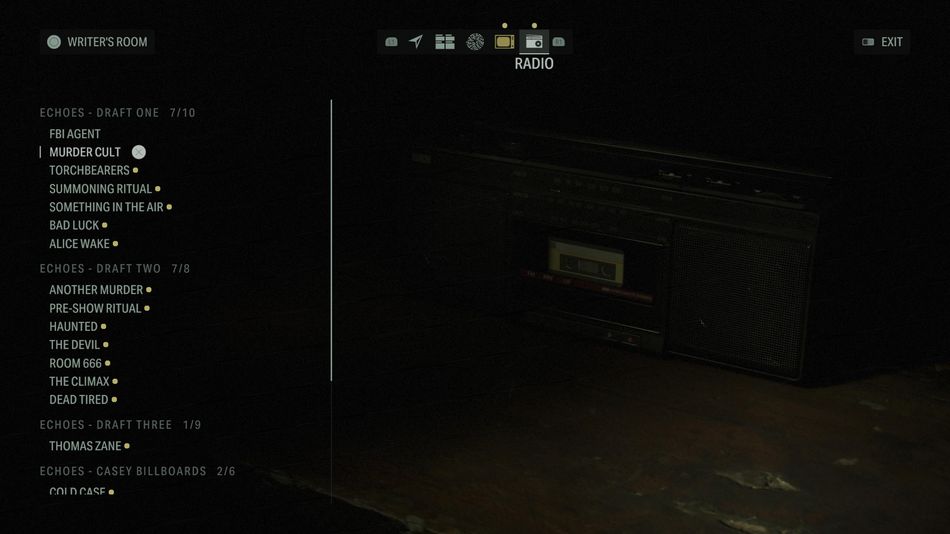
As gorgeous as the game's visual presentation is, I'd dare to say that the sound design surpasses it, primarily due to the soundtrack's sheer brilliance. At the end of each level, you're treated to the opportunity to enjoy a new, phenomenal song, and the beauty of it is that each of these songs becomes a permanent addition to the radio playlist within the Mind Place, allowing you to revisit and relish them later. Within the gameplay experience, you'll also have the privilege of enjoying the rock 'n' roll masterpieces of the band Old Gods of Asgard, whose songs are nothing short of extraordinary.
The attention to detail in the environmental sounds, eerie music, and weapon effects is second to none, collectively enhancing the already outstanding atmosphere.
I would venture to say that if not for the game-breaking bug I encountered, it would be a technically flawless game—a sentiment that I'm confident you'll share, as those issues have presumably been taken care of.
Conclusion
With all its strengths and only a handful of minor shortcomings, I'd confidently declare that Alan Wake 2 stands as one of the standout releases of this year. Every moment you'll invest in the game will undeniably be time well spent.
With its exceptional narrative, remarkably lifelike graphics and sound design, and highly enjoyable gameplay, I dare to say that Alan Wake 2 stands as Remedy's finest game to date—a noteworthy achievement considering the calibre of games Remedy has delivered. In conclusion, all that's left for me to say is this: embark on the adventure of Alan Wake 2 and relish every moment, for I assure you, you won't be disappointed.
The Good
 An extraordinary, intertwined story of Saga and Alan
- Amazing, even life-like graphic presentation
- Excellent soundtrack and good sounds in general
- Full support for DualSense
- Eerie atmosphere
- Inclusion the characters from other games that use the same universe
The Bad
 Constant use of Mind Place can be bothersome
- Overuse of cheap jump scares