Trending
October is a spooky month; this is a well-known fact, so in this month, more than in any other, the developers usually release more horror titles, hoping that they will blend in the overall atmosphere even better.
Stormmind Games and Saber Interactive likely had similar thoughts when deciding to adapt the acclaimed 2018 film A Quiet Place into a video game. The timing was both fortunate and unfortunate. On one hand, the game's release just before several major titles made it a great option for players looking for something to fill the gap. However, its launch timing was also a bit questionable, as it coincided with the release of Konami's Silent Hill 2 remake, which was a total hit, to be honest.
It's hard to gauge how much these factors influenced the ratings for A Quiet Place: The Road Ahead or how well the game truly measures up. On one hand, this horror title excels in its concept and execution, but on the other, it stumbles on some basic aspects where it really shouldn't.
A Quiet Place: The Road Ahead follows its own story not related to the one told in movies, of course, except for the sharing of the same premise. The aliens invade the earth, and they kill everything that crosses their path. Those aliens are completely blind, but they have extremely good hearing; they can hear even the slightest sounds, so the people must adapt to this new situation if they want to survive.
The story follows Alex, a girl who suffers from asthma, an illness that is extremely dangerous in a world full of aliens who can hear even heavy breathing, let alone when someone starts to cough due to an asthma attack. To make things even worse, she discovers that she is pregnant, and not so long after she even loses her boyfriend, who sacrifices himself to save her from the monsters.
You might think that I'm writing spoilers here because I uncovered a great deal of the story already. Well, you'd be wrong because all this happens only during the prologue; the real story begins after that, and even though I expected the story to be good—the horror game stories usually are—this game's story even exceeded my expectations.
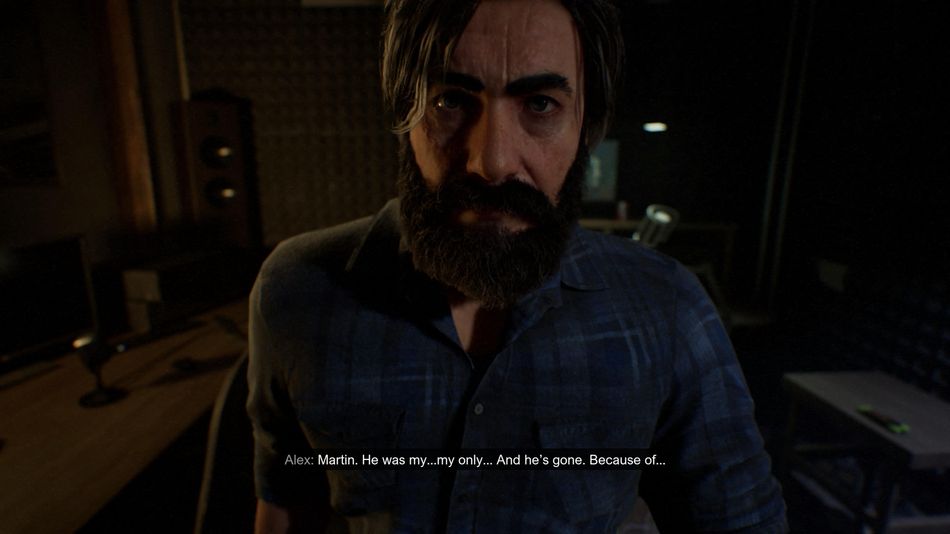
The story is very well-written, the voice acting is exceptional, and it follows a very emotional and tragic narrative that aims to touch the deepest parts of your soul. Alex's fate is a really tragic one, and during your journey through A Quiet Place: The Road Ahead, you'll definitely feel her pain and relate to her suffering.
Apart from the cinematic part of the game through which you'll discover most of its story, if you're one of those gamers who aim to find everything a game has to offer, you'll have the opportunity to find a lot of documents scattered throughout the levels that deepen the story even further.
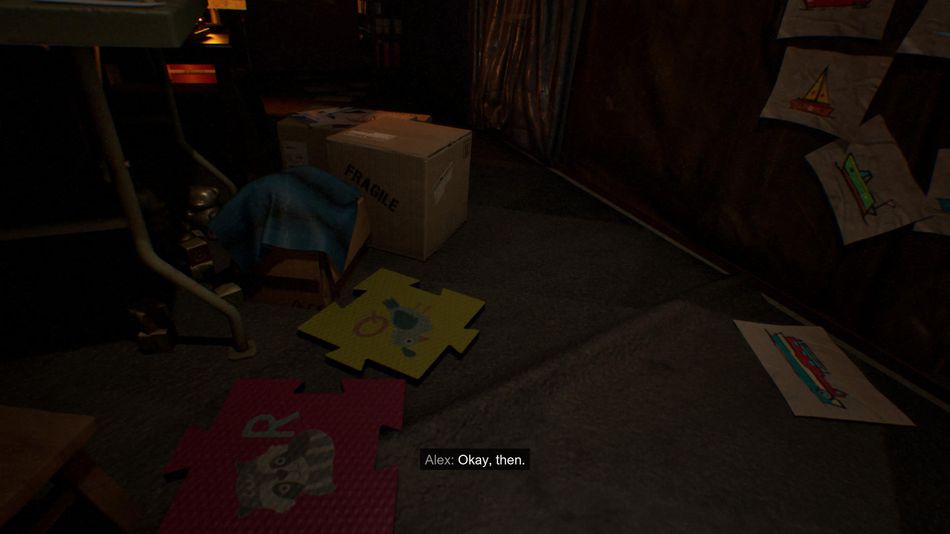
Those documents represent the biggest part of in-game collectables; you'll be finding toys, briefcases, and cassettes, and Alex will also write her own journal to simplify the story even further and make it easier to follow.
The levels are designed in a linear fashion where you'll follow a predetermined path, but during the visible encounters with the creatures, the levels will offer a bigger freedom to escape the situation the way you prefer.
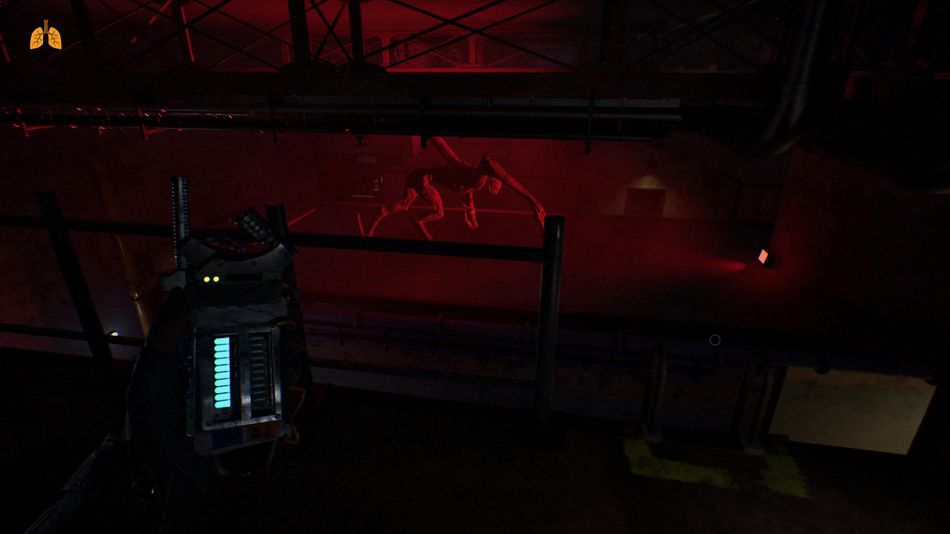
Speaking of creatures (that's what the game calls the aliens), they are the only enemies you'll encounter, but given the fact that they can't be killed the entire time during the game, you'll try to avoid them, and that'll be your only concern.
Make no mistake; you'll never be left alone. In this game, even when there are no enemies around, the enemies are around, and if you make even the slightest noise, they'll be on your heels, so the entire time while playing the game you must be extremely slow and careful.
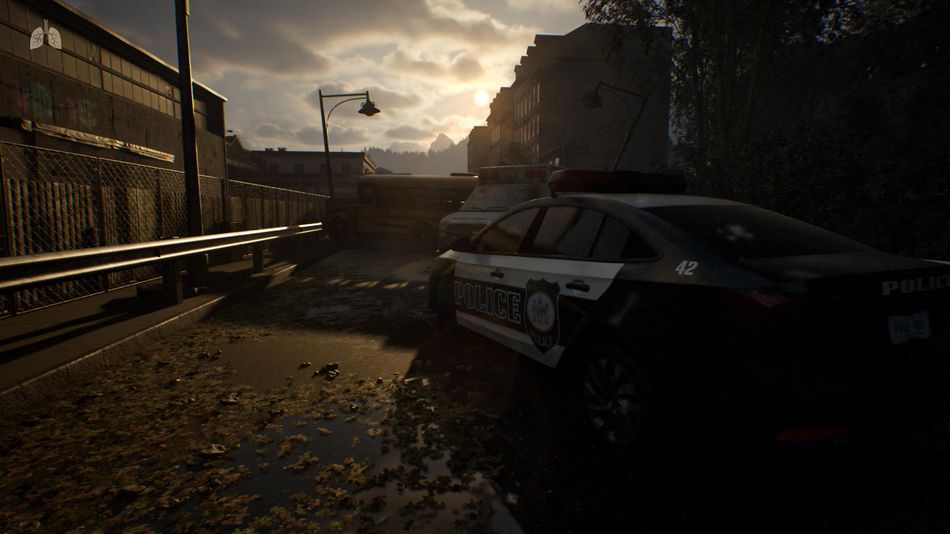
You must look where you step because the different surfaces make different noises. For example, walking on the carpet will reduce the noise of your steps, while walking over the floor or any other wooden surface will be louder. You must be careful when walking over puddles, dry leaves, broken glass, debris, or any other "noisy" surfaces because your steps will be heard.
Then, when opening doors or cabinets, you must be extremely careful and do it very slowly. While doing so, you'll hold the X button (the PlayStation controller) and move the thumbstick extremely slowly; if you try to speed up the process, the creature will hear you, and it is game over.
All those slow mechanics make the game extremely intense and will keep you on your toes the entire time during the gameplay. I remember a similar feeling when I played Alien Isolation a while ago, and these two games have a lot in common.
Throughout the levels, you'll come across noise-proof rooms where Alex will have the opportunity to relax a bit. There isn't anything special in these rooms, but once you enter one of them, you'll feel so relaxed because you'll have the opportunity to breathe again, if only for a little while.
To make the experience even more realistic, the game offers you the opportunity to include your own microphone in the voice control mechanics. If you turn this option on, you'll have to be careful not to make sounds while playing the game because your mic on the controller will register them, and they will alert the creatures.
I'm not sure that such a mechanic is included in some other games, but I must say it is definitely genius because it will immerse you in the game even further, and you'll feel like you're really a part of it.
A Quiet Place: The Road Ahead has three different difficulty levels and also a bunch of accessibility options that can be added to make the game easier or to make the experience more realistic. I played the game on easy (yes, shame on me, I will never be a true gamer), and I must say even on easy, the struggle is real.
One of the cool in-game mechanics is the phonometer, a device Alex fashioned at the beginning of the game that measures the noise produced by you versus the environmental noises. This device will be a great help for you to determine how slowly you must move to not alert the creatures.
Apart from this device, Alex will carry a flashlight, use flares, throw bricks and bottles to distract the creatures, use sandbags to create walkable paths over sound-sensitive surfaces, and maybe some other I forgot about.
In the Silent Hill 2 review I wrote earlier, I mentioned that the flashlight in this game is the worst ever. Well, I apologise because the flashlight in A Quiet Place: The Road Ahead is the most useless thing in the history of video games. Period!
The creatures here are blind, so you might think that it is safe to use a flashlight around, right? Well, it is safe, yes, but the flashlight here uses batteries that can be changed, and those batteries last about half a minute—very realistic, I must conclude.
I mean, I get that it is a game and doesn't have to be realistic, but the amount the batteries last is just ridiculous. Later in the game, you get the other flashlight that can be charged simply by pressing a button, and you guess, this produces a noise, and since you cannot pull the phonometer and the flashlight at the same time, it is impossible to know how much noise it produces. I know that whenever I tried to charge the flashlight, those monstrosities were there to wish me a good night.
I mentioned earlier that you must be aware of the creatures when they're not around, but during the gameplay, you'll encounter situations when the creatures are around and you can actually see them. In this state, the cat-and-mouse game starts.
The creatures cannot see you, but they will miraculously always track your location during those encounters, and no matter how big the place you encounter them is, they will always walk towards you. Even if you throw a bottle or a brick on the other side of the room, they will go investigate and return to bother you again. A bit unrealistic, but it is what it is.
This wouldn't be a problem at all if the close proximity of the creature makes Alex breathe harder and that worsens her asthma condition, which is, by the way, a sort of health system of this game. Her asthma is affected by fear or by physical and emotional stress, which includes carrying heavy objects like planks or ladders (in-game mechanics), climbing, crossing over objects, or anything that requires physical effort.
Once it goes into the red, you'll have to use inhalers or pills that can be found throughout the game to reduce the stress. If you fail, Alex will start to cough, and, you guess it, it's game over. But even using inhalers isn't entirely safe because they make a noise too.
Speaking of all gameplay mechanics leads us to the most important question: Is this game scary? Well, it is and it is not, depending on how you interpret the fear. A Quiet Place: The Road Ahead will make you feel uncomfortable and will build extreme tension. You'll always know that even the smallest mistake can cost you your life, so in this regard, the developers hit the mark.
However, apart from high tension, do not expect anything too scary because you won't find it in this game. You'll run into a jump scare or two during your journey, for sure, but nothing significantly intimidating.
Regarding visuals, I'll just say that not everybody will be fond of A Quiet Place: The Road Ahead. The graphics are good, but no more than that. The face models look like they are made of clay, and let me be clear, it's not a distinct art style, no. The game is designed to look as realistic as possible with very lifelike graphics.
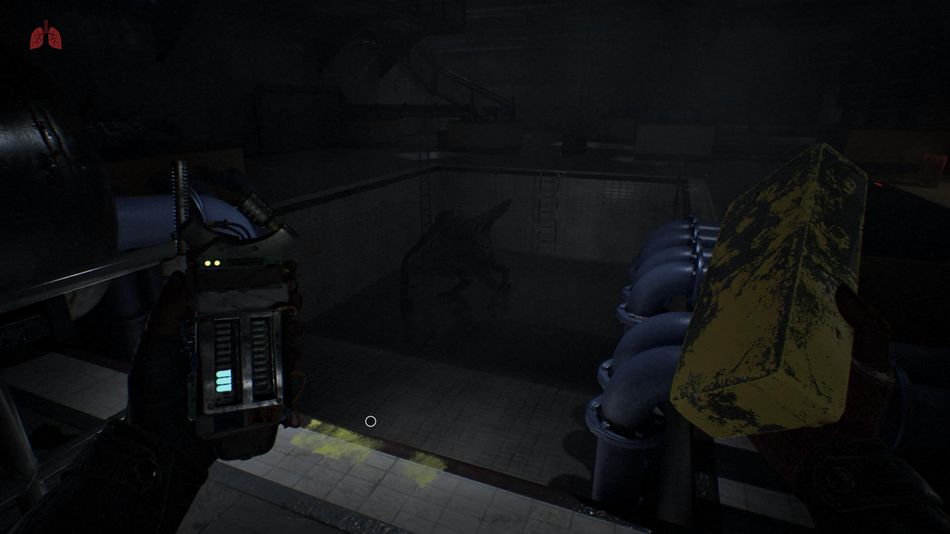
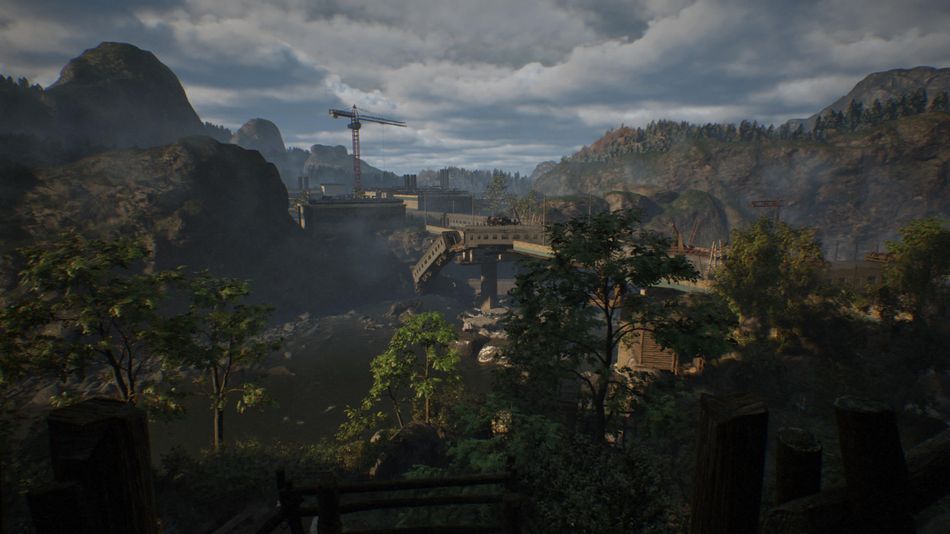
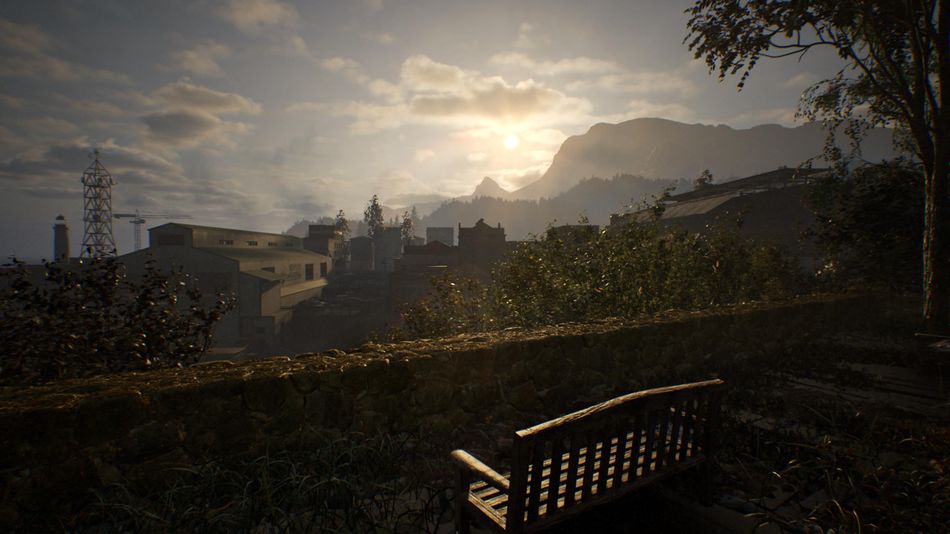
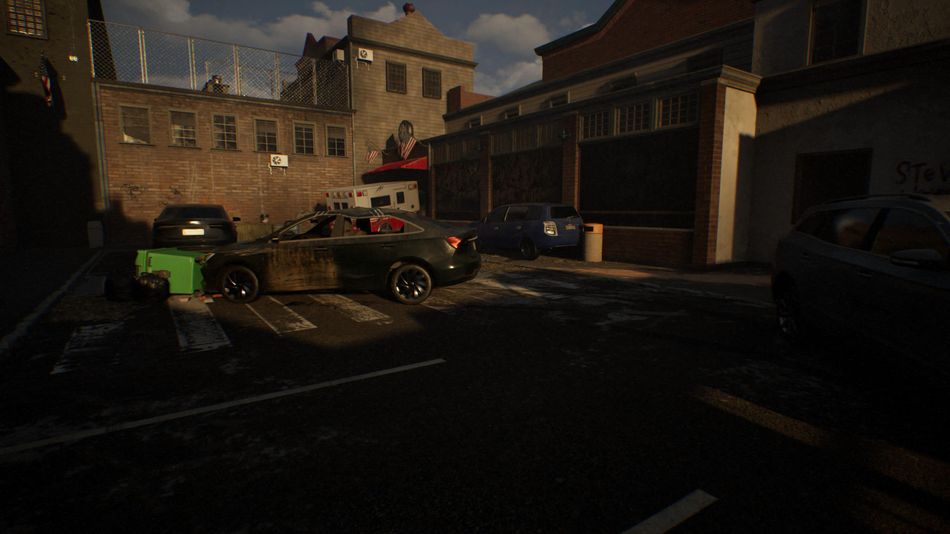
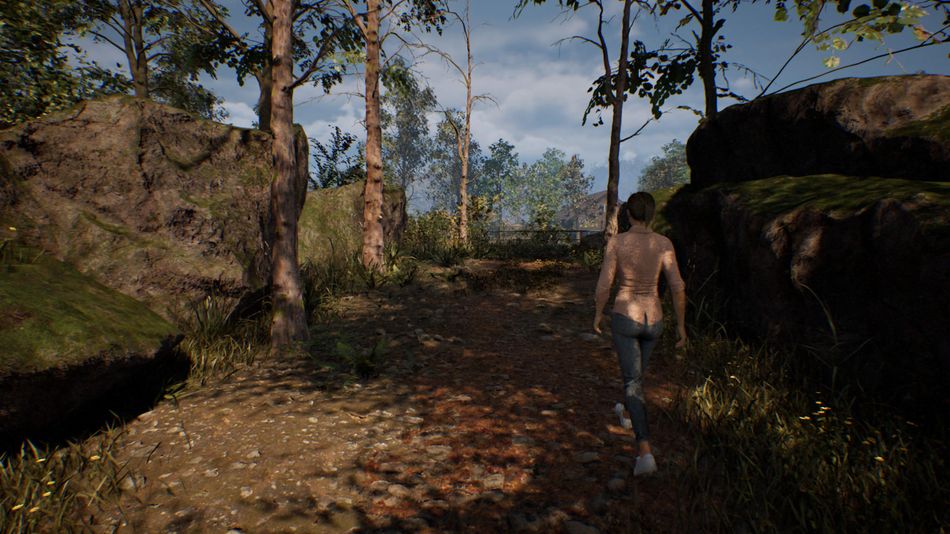
The environments are very diverse; whether you explore indoor areas like an abandoned hospital or fire station, pump station or random houses and buildings, or outdoors like dense forests, abandoned streets, and suburbs, everything is well-designed and looks quite good, but not like something you never experienced before.
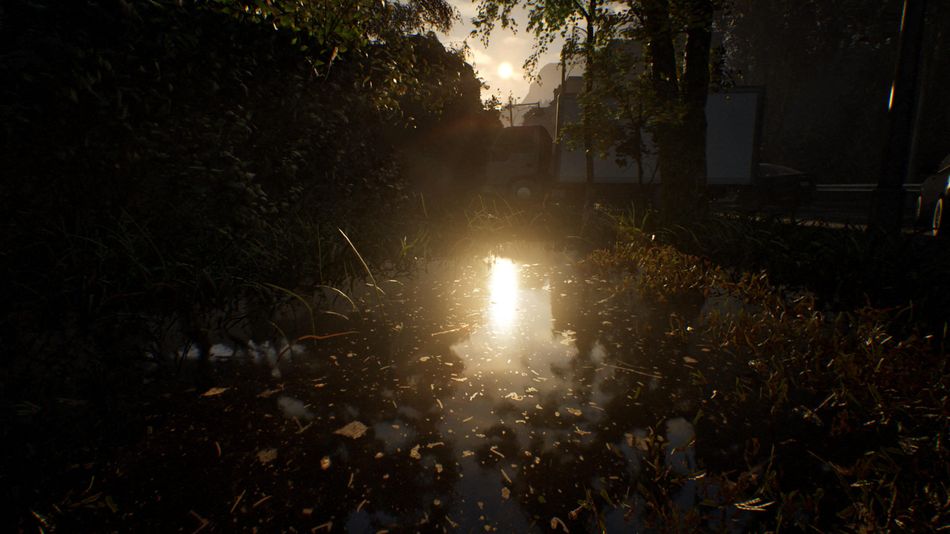
That said, credit should be given where it’s due, and in the case of A Quiet Place: The Road Ahead, the standout features of its graphics are the impressive lighting effects and notably strong reflections. These elements shine through even when the rest of the visuals are fairly standard.
I must also say that I was quite disappointed by the sound presentation. I expected better from such a game, especially because it is a movie adaptation, but the soundtrack and the sounds in general are really nothing special.
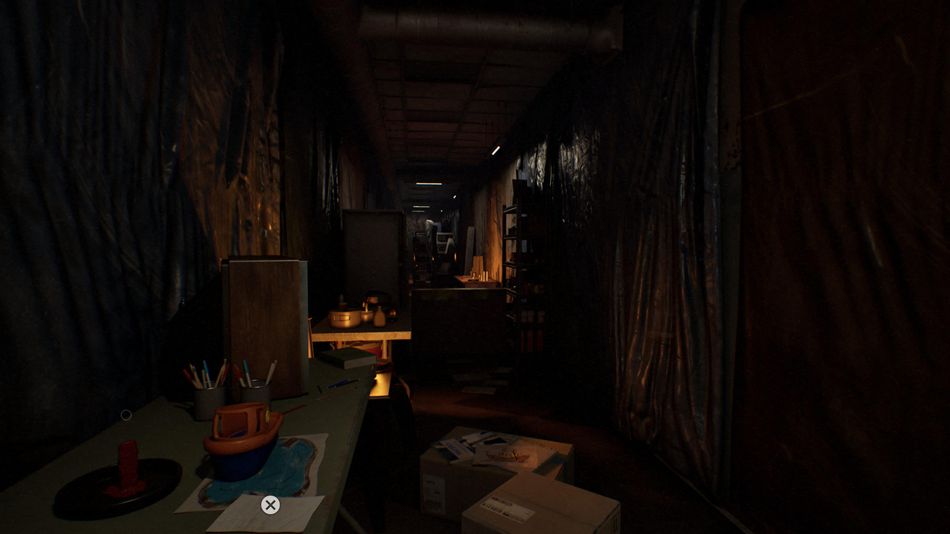
Most of the time, while in game, the silence will be dominant, and that's a good thing, actually because the game requires a great deal of concentration. From time to time, background music will play, and that music is totally forgettable.
I only noticed the music because I was actively paying attention. Otherwise, it’s so subtle and unremarkable that it didn’t stand out on its own, unlike in some games with truly exceptional soundtracks. However, a segment that really stands out when it comes to sounds is, already mentioned, a great voiceover.
Apart from that, the screams from the creatures and the sounds made when stepping on different surfaces are very good as well. Also, on the PlayStation 5, the game uses DualSense's integrated speaker that adds to the atmosphere big time. Through this speaker, you'll hear the creatures approaching, and if you're clumsy enough and step on the can, this sound will always startle you.
Conclusion
Movie adaptations in video games rarely hit the mark, but A Quiet Place: The Road Ahead is a solid game overall, though it falls short of a true horror experience. It's clear that Alien: Isolation served as a major inspiration, but when it comes to quality, these two games are miles apart.
That said, the tension throughout the game is quite effective, and for a price of just $30, A Quiet Place: The Road Ahead offers plenty of entertainment. With a playtime of around seven hours, it’s up to you to decide if the content justifies the cost. Personally, I enjoyed the atmosphere and the tension, and for that reason alone, I’d recommend it—though it’s clear the game falls short in terms of overall quality.
The Good
 Solid atmosphere and effective tension
- A well-written story with emotional depth
- Good voice acting
- Affordable price
The Bad
 Falls short as a true horror experience
- Visuals are fairly standard
- Forgettable and subtle soundtrack