Trending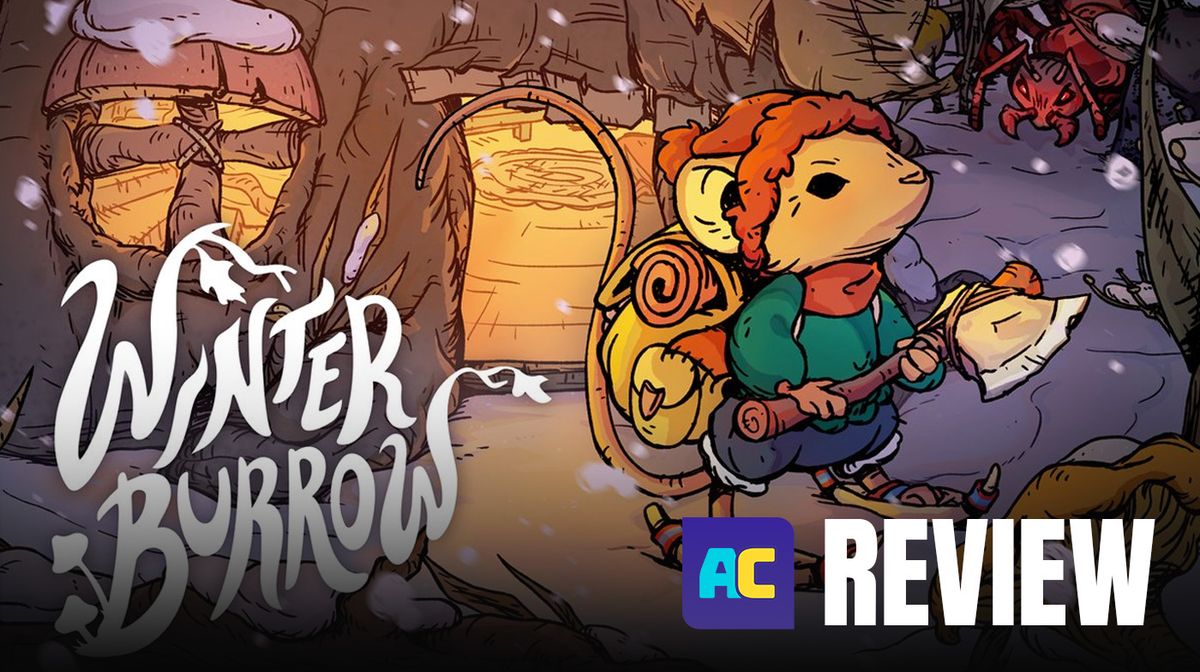
There's something undeniably appealing about returning home. Winter Burrow understands this, opening with a young mouse who ventures back to their childhood burrow after their parents passed away working themselves to exhaustion in the city. It's a melancholic setup that immediately establishes the game's bittersweet tone - you're here to rebuild not just a home, but a life that was lost.
Your aunt was supposed to maintain the burrow in your absence, but she's mysteriously vanished, leaving the place in ruins. Armed with little more than determination and a few basic tools, you set about restoring your childhood home while uncovering what happened to your missing relative. It's a premise that hooks you immediately, helped immensely by Winter Burrow's stunning hand-drawn art style that makes every snow-dusted scene feel like a living storybook illustration.
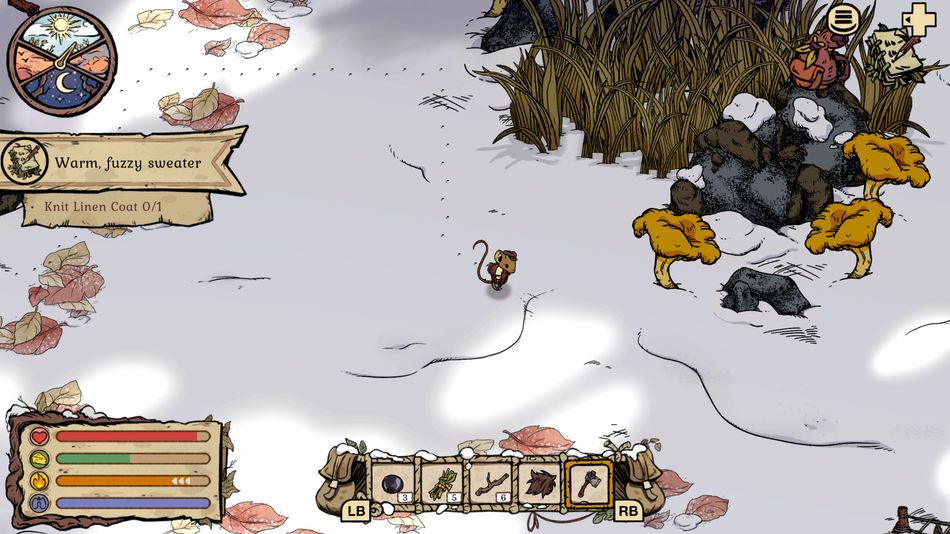
For the first few hours, Winter Burrow delivers exactly what it promises: a cosy, contemplative survival experience where gathering berries and knitting winter caps feels as satisfying as any grand adventure. The problem is that this initial charm doesn't last the full ten-hour journey.
A Forest Full of Personality
Winter Burrow's greatest strength lies in its charming characters. Each animal you encounter in the frozen forest has genuine personality and compelling stories that ground the experience in something emotionally resonant. You'll help a grieving hedgehog move past a tragic loss, assist a forgetful squirrel in recovering precious keepsakes, and mend broken relationships between a child and a father who've grown distant during the harsh winter months.
These interactions genuinely warmed my heart. There's something powerful about helping creatures struggling to survive each day in this unforgiving environment - it puts our own privileges as humans into sharp perspective. The writing never becomes saccharine or overly sentimental; instead, it finds authenticity in small moments of kindness and mutual support.
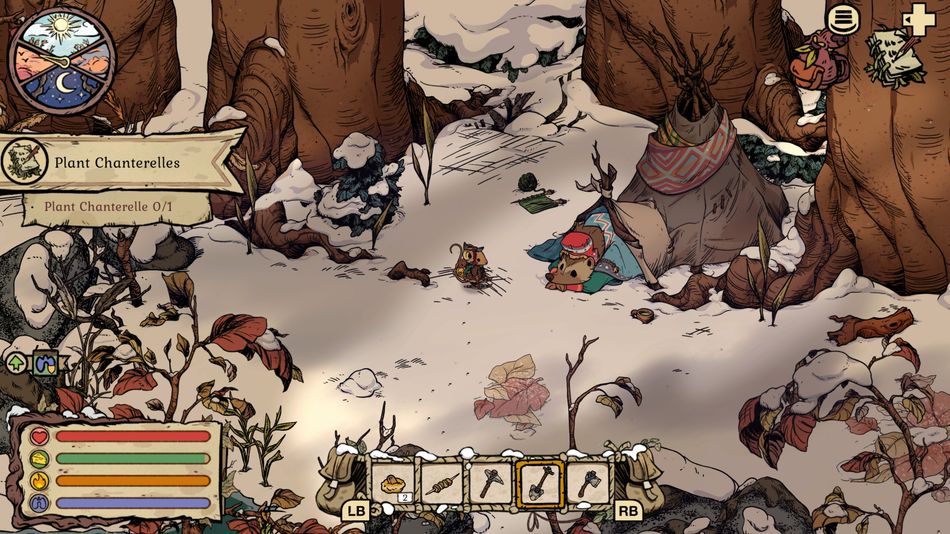
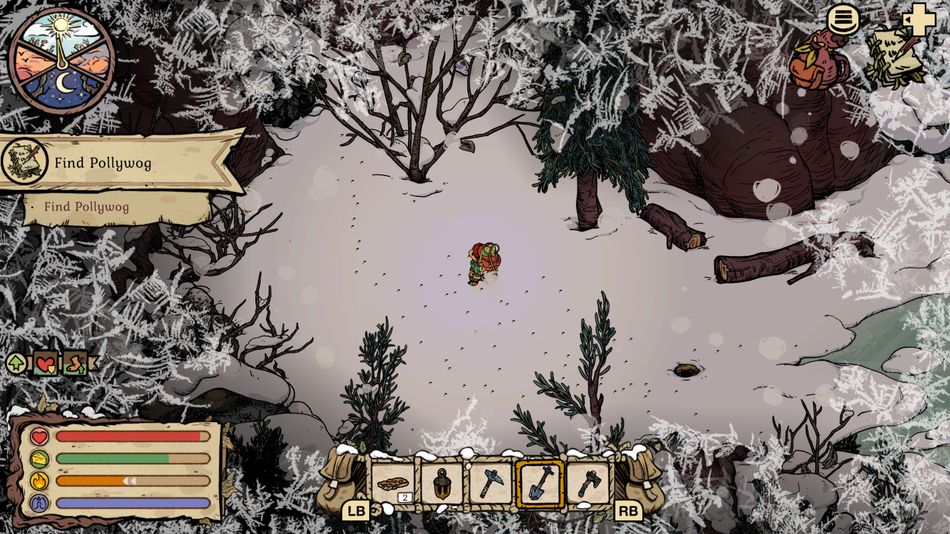
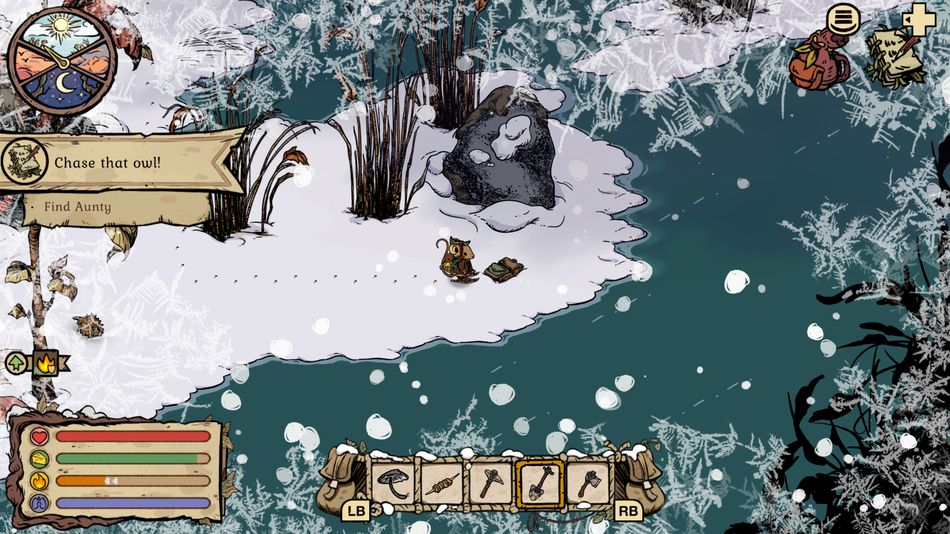
The backdrop to these stories is a large forest blanketed in perpetual winter. Snow crunches underfoot, frozen ponds glisten in pale sunlight, and gentle snowfall creates an atmosphere of serene isolation. The hand-drawn art style elevates every scene, making even the simplest gathering expedition feel picturesque. Combined with soothing flute melodies that never overstay their welcome, the presentation creates an undeniably cosy atmosphere enhanced by excellent sound design - wind whistling through branches, doors creaking on frozen hinges, footsteps crunching through fresh snow, and fire crackling in your hearth.
Survival Basics Done Well (At First)
Winter Burrow's survival systems revolve around four status bars: Health, Fullness, Warmth, and Stamina. Health drops from physical damage, hunger or extreme cold. Fullness depletes when you haven't eaten and can be restored by cooking meals. Warmth decreases when you're exposed to the cod and recovers near campfires or inside shelter. Stamina drains during hard labour like chopping wood, mining stone, fighting bugs or simply sprinting.
It's a straightforward system that initially creates engaging tension. The cold mechanic, in particular, shows promise early on. Step outside your burrow and your warmth meter begins dropping steadily. Let it fall below 50% and frost creeps across your screen edges. Hit zero and your health starts draining. During the opening hours, I found myself genuinely planning expeditions around warmth management - carefully timing my resource runs, getting excited to spot the warm glow of my burrow's windows after a freezing trek, or stumbling upon a campfire spot in the wilderness where I could sit and thaw out.
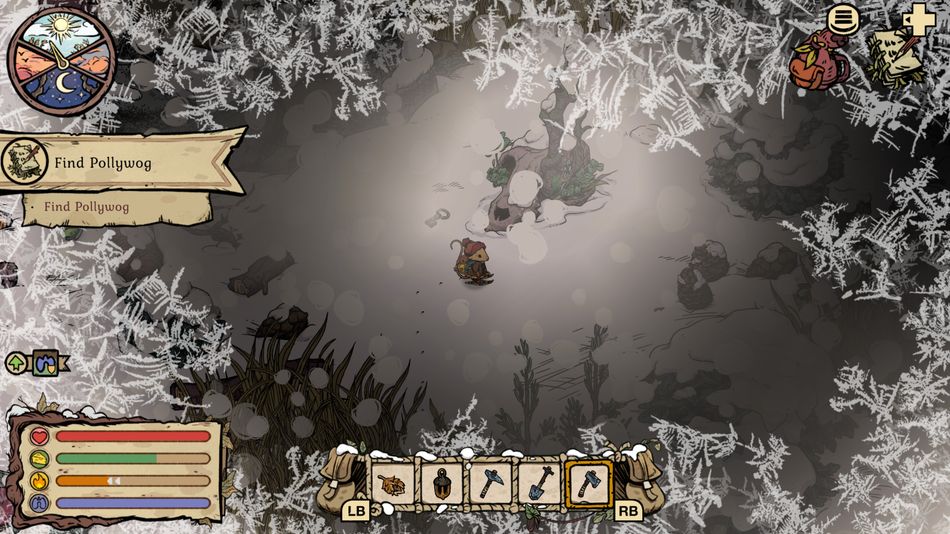
Unfortunately, this tension evaporates within two hours once you've crafted better clothing and learned to cook warming food. What could have been a defining survival mechanic becomes something you barely notice. I'd simply eat some cookies when the frost effect appeared and continue exploring without a second thought. The game never escalates the cold challenge to match your improved gear, turning what felt like a core survival element into meaningless busywork. It's a significant missed opportunity - the framework for compelling cold-weather survival exists, but the balancing doesn't support it past the early game.
Beyond warmth management, you gather resources like berries, mushrooms, nuts, branches, stones, and use them to cook food and craft furniture for your burrow's interior. Unlike many survival games, you can't build structures from scratch; instead, you furnish the existing rooms with tables, beds, chairs, and storage chests. It's a more constrained approach that suits the game's intimate scale.
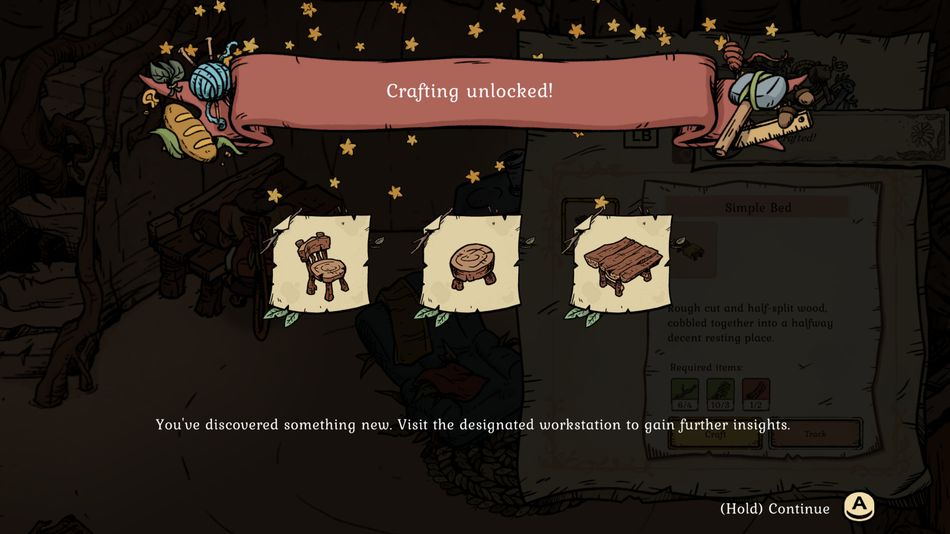
Cooking provides various buffs beyond simple sustenance. Bake a berry pie to boost pretty much every stat, brew tea to fill your warmth bar faster, or prepare hearty mushroom stew for boosted health regeneration. There's genuine satisfaction in returning home after a long expedition, lighting the fire, and preparing a meal for the next day's adventure while snow falls outside.
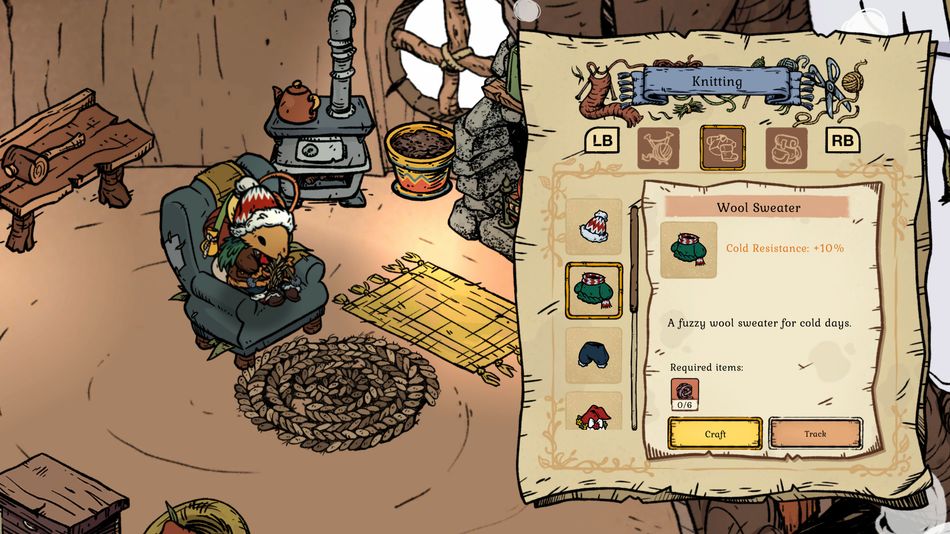
Then there's knitting, which lets you craft adorable winter clothing - scarves, caps, mittens - that provide warmth bonuses and look impossibly cute on your tiny mouse protagonist. Watching your character waddle through snowdrifts wearing a hand-knitted winter cap never stopped being endearing.
When the Chill Sets In
The cracks in Winter Burrow's foundation appear around the five-hour mark, right when you expect the gameplay to evolve and introduce new systems or challenges. Instead, it simply repeats what came before.
The core loop never changes: upgrade your tools to access new areas blocked by thicker brambles or harder stones, gather resources from these newly accessible zones, craft better equipment, and repeat. There are four distinct regions to explore, but they lack meaningful mechanical diversity. While the art style remains consistently beautiful, the snowy forests start blending together, and the activities within them stay frustratingly identical.
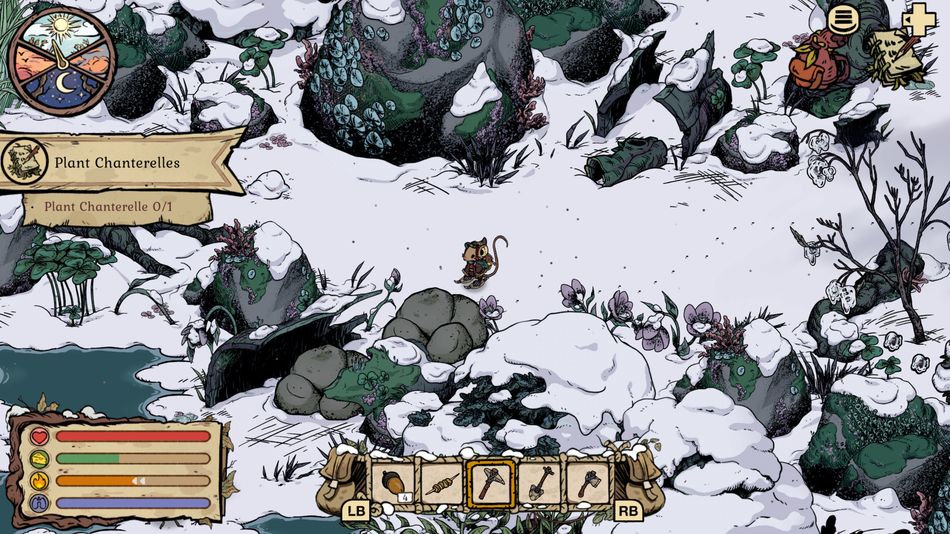
Combat exemplifies this stagnation. Armed with your axe, you'll encounter insects - beetles, ants, spiders (with an arachnophobia mode available in settings for those who need it) - scattered throughout the forest. Fighting them involves the most basic imaginable strategy: hit twice, step back, hit twice, step back. Enemies telegraph their attacks so slowly that I never died once during my entire playthrough. There are no boss fights, no unique enemy types, no ranged combat options, and no reason to engage with the system beyond clearing paths.
It's a massive missed opportunity. Imagine if the game introduced environmental puzzles that required creative solutions, or a territorial predator whose den you needed to navigate carefully using stealth and your survival skills. Instead, combat remains a mindless obstacle that adds nothing to the experience beyond forced interruptions to exploration.
Quests That Lead Nowhere
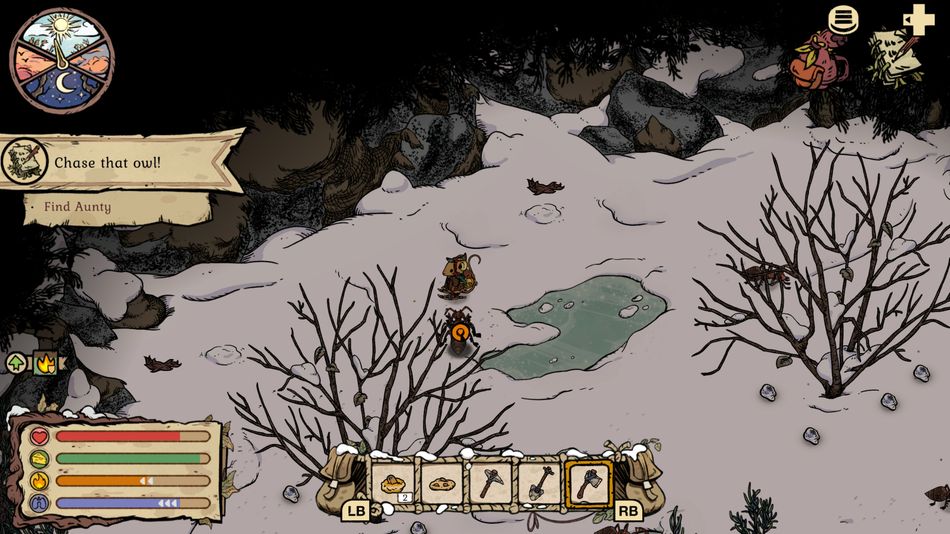
The woodland residents' stories might be well-written, but their associated quests are painfully formulaic. Nearly every side quest follows the same structure: travel to location A, speak with someone or gather specific items, return to quest giver, travel to location B for more dialogue or item delivery, repeat until the quest arbitrarily concludes.
There's no variety in objectives, no puzzles to solve, no meaningful choices that affect outcomes. The forest isn't particularly large - you can run across the entire map in about five minutes - but that doesn't make these fetch quests any less tedious. When you're traversing the same paths dozens of times for nearly identical objectives, even a small world starts feeling exhausting.
Lost Without a Map
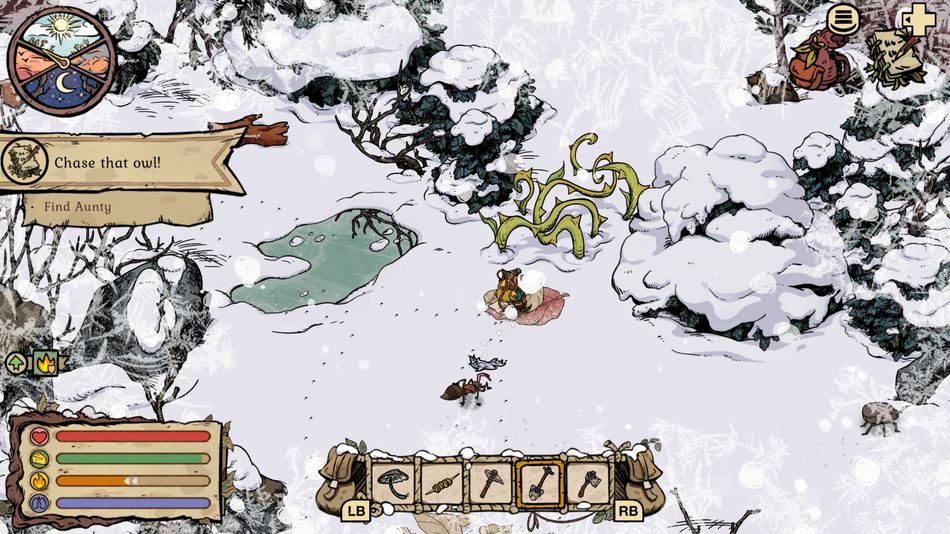
Winter Burrow's most baffling design decision is the absence of a map. Early on, when you've only explored a handful of connected areas, navigation feels manageable. But as the forest opens up and you encounter dozens of progress-blocking obstacles keeping mental track becomes genuinely frustrating.
I found myself running in circles trying to remember which area had that specific bramble patch I could now cut through, or which stone deposit required my newly upgraded pickaxe. A simple map with markers for noted obstacles would have solved this entirely, but instead, the game expects you to maintain a mental catalogue of every blocked path across four regions.
This problem compounds with certain upgrade materials. While common resources like wood and stone are easy to remember and locate, the game occasionally demands rare crafting materials with seemingly random spawn locations. I spent considerable time scouring every region hoping to stumble across specific items needed for tool upgrades, checking and rechecking familiar areas with increasing frustration. It's not the searching itself that's the problem - it's the aimless repetition of running the same paths you've traversed dozens of times, praying you'll finally spot what you need. What should have been a relaxing crafting progression becomes an irritating scavenger hunt that saps the cosy atmosphere entirely.
The game's Steam description promises "a cosy woodland survival game about restoring your childhood burrow," but by the midpoint, it felt more like a chore simulator with cute graphics. The lack of a map and randomised upgrade materials betray the cosy premise entirely, replacing relaxation with aggravation.
When Comfort Becomes Monotony
By hour eight, I just wanted Winter Burrow to end. The story's pacing drags, particularly in the second half when revelations arrive too slowly to maintain the little momentum it had. The gameplay had shown me everything it intended to offer within the first three hours, and the remaining time felt like padding - more of the same resource gathering, identical fetch quests, and brain-dead combat encounters.
What Winter Burrow desperately needed was escalation. Introduce underground caverns with environmental puzzles. Add dungeons, stealth sections, or something else to keep the gameplay fresh. Create unique set-piece encounters that test your mastery of the survival mechanics. Anything to break the monotony of "upgrade tool, access new area, gather resources, upgrade tool again."
The game's tight ten-hour runtime should work in its favour - this isn't a forty-hour epic that needs constant variety. But even at this length, the repetition becomes impossible to ignore. When a cosy game starts feeling like work, something has gone fundamentally wrong.
A Burrow Worth Visiting, Not Living In
Winter Burrow succeeds at creating an inviting world filled with characters worth caring about. The hand-drawn art style is consistently gorgeous, the soundtrack perfectly complements the snowy atmosphere, and the opening hours genuinely capture that warm, fuzzy feeling of rebuilding something precious that was lost.
But charm and atmosphere can only carry a game so far. Once the novelty fades and you're left with the core gameplay loop, Winter Burrow reveals itself as disappointingly shallow. The lack of combat depth, repetitive quest design, missing quality-of-life features like maps, and complete absence of gameplay evolution transform what could have been a cosy gem into a tedious slog.
I wanted to love this little mouse's journey. The pieces were all there - the heartfelt story about homecoming and community, the beautiful presentation, the promising survival systems. Yet somewhere between the charming beginning and the relief of reaching the credits, Winter Burrow lost its way in the very forest it asks you to explore.
If you're looking for a brief, atmospheric experience to unwind with over a weekend, Winter Burrow's first few hours deliver exactly that. Just don't expect the magic to last through to spring.
The Good
 Stunning hand-drawn art style
- Genuinely charming characters with heartfelt stories
- Soothing soundtrack and excellent sound design
- Cosy atmosphere perfectly captured in opening hours
- Adorable customisation options
- Straightforward survival systems that work well initially
The Bad
 Repetitive gameplay that never evolves past the first few hours
- Combat lacks depth and challenge
- Formulaic fetch quests despite well-written characters
- No map system makes navigation increasingly frustrating
- Four regions lack meaningful mechanical diversity
- Cold mechanic becomes trivial after early game